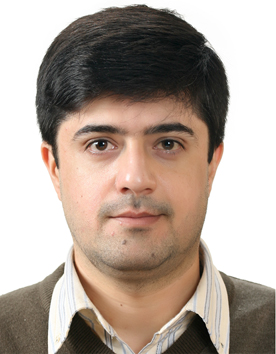
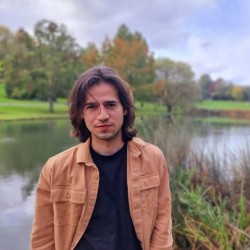
Dr. Syed Tariq Shah holds dual roles as a Research Fellow at the University of Glasgow's School of Engineering and an Associate Professor at BUITEMS' Department of Electrical Engineering in Pakistan. He earned his Master's and PhD in Electrical and Electronic Engineering from Sungkyunkwan University, South Korea (2015 and 2018). His research focuses on 5G/6G networks, Open RAN, AI-driven wireless systems, RF energy harvesting, and intelligent reflecting surfaces. He serves as an Editor for the Electronics Journal and reviews for IEEE journals. He has secured grants including the EU-funded 'Connecting the Unconnected' initiative (€190k, 2019-2021), focusing on rural internet access. His work spans 49 publications (as of 2025), emphasizing AI in network optimization, secure vehicular communication, and energy-efficient IoT solutions. Collaborations include leading institutions globally.
Dr. Antonios Antoniadis is a Lecturer in Computational Engineering Science and Director of the Computational Fluid Dynamics (CFD) Masters program at Cranfield University. He leads the VR/AR Laboratory within the Aircraft Integration Research Center and a research group focused on computational methods for fluid dynamics. His expertise spans aeronautical systems, turbulence modeling, and renewable energy technologies. Education: BEng in Automotive Engineering, University of Sussex MSc in Mechanical Engineering, University College London PhD in Aerospace CFD, Cranfield University (2013) Research Interests: Dr. Antoniadis develops cutting-edge computational frameworks for engineering challenges. His work includes high-order numerical methods on unstructured grids, data-driven turbulence models, and multi-physics simulations. Applications range from helicopter aerodynamics and wind-farm optimization to supersonic flow analysis and fluid-structure interactions in morphing UAVs. He integrates AI/ML techniques for turbulence modeling and design automation, advancing sustainable aerospace solutions. Publication Trends: Recent articles highlight advancements in rotorcraft CFD, shock absorber fluid dynamics, and high-performance solver development. Predominant themes include validation of high-order schemes for transonic flows, vortex dynamics in hovering rotors, and scalable algorithms for renewable energy systems. His work consistently bridges theoretical computational methods with industrial aerospace applications. Awards: Fellowship of the Higher Education Academy (FHEA) Labs & Teams: Dr. Antoniadis directs a VR/AR laboratory pioneering human-computer interaction for CAE applications. His research group collaborates with industry partners (e.g., BAE Systems, Airbus, Red Bull Racing) on projects involving aerodynamic prediction, multi-phase flows, and HPC parallelization.
Spencer Sherwin is Professor of Computational Fluid Mechanics and Head of the Department of Aeronautics at Imperial College London, Faculty of Engineering. He leads a prominent research group focused on high-order spectral/hp element methods and their applications in aerospace and biomedical engineering. He is Principal Investigator of the EPSRC-funded Platform for Research In Simulation Methods and has extensive collaborations with industry leaders such as McLaren Racing, Airbus, and Rolls-Royce. Ph.D., Mechanical and Aeronautical Engineering, Princeton University M.S.E., Mechanical and Aerospace Engineering, Princeton University B.Eng., Aeronautical Engineering, Imperial College London His research centers on computational fluid dynamics , particularly the development and application of high-order spectral/hp element methods (Nektar++) for complex flows. Key areas include vortical and bluff body flows , biomedical modeling of the cardiovascular system , and industrial aerodynamics . His work spans both fundamental numerical method development and real-world applications in Formula 1, turbomachinery, and vascular science. The recent articles (2024–2025) highlight a strong trend in high-fidelity simulations using spectral/hp and discontinuous Galerkin methods, with emphasis on compressible and incompressible LES/DNS , turbomachinery flows , aeroacoustics , biomedical hemodynamics , and mesh generation . There is growing integration of machine learning for turbulence closure and industrial application of high-order methods, particularly in automotive and aerospace contexts. Scientific awards include: Fellow of the Royal Academy of Engineering (FREng) Professor Sherwin has supervised numerous students and leads an active research group. He has secured significant funding, notably as Principal Investigator of the EPSRC Platform for Research In Simulation Methods. His work bridges academia and industry, with projects involving McLaren Racing, Airbus, and Rolls-Royce, focusing on aerodynamics, flow control, and simulation technology development. His research group is associated with multiple interdisciplinary networks including the Biological Fluid Mechanics , Biomedical Flows , Centre for Cardiac Engineering , ElectroCardioMaths Programme , Computational Fluid Dynamics , Space Lab , and Vascular Science Network . The group develops and maintains the Nektar++ and NekMesh open-source software platforms for high-fidelity simulation.
Mahdi Boloursaz Mashhadi is a researcher at Imperial College London's Department of Electrical and Electronic Engineering, affiliated with the Information Processing and Communications Lab. He holds a Ph.D. in Electrical Engineering from Sharif University of Technology (2018), with prior research roles at the University of Central Florida and Queen's University. His expertise spans signal processing, wireless communications, machine learning applications in communication systems, and biomedical signal processing. Dr. Mashhadi's research focuses on massive MIMO channel state acquisition , deep learning-driven pilot design , and semantic communication frameworks . His recent work explores token-domain multiple access, generative AI integration in communication systems, and federated learning optimizations. He has contributed to foundational studies in sparse signal reconstruction (e.g., iterative adaptive thresholding methods) and wearable health monitoring via PPG signals. Key achievements : Best Paper Award at EWDTS 2012, multiple grants (IEEE, national/regional), and patents (e.g., US Patent 9729160). Current projects include semantic-aware power allocation in generative communications and latency optimizations in distributed deep learning frameworks. Labs/Teams : Member of the Intelligent Systems and Networks (ISN) group at Imperial, collaborating on AI-driven communication systems and edge computing solutions. His work bridges theoretical signal processing with practical implementations in 5G/6G networks, biomedical devices, and distributed machine learning ecosystems.
George Ntavazlis Katsaros is a Research Fellow at the Institute for Communication Systems, University of Surrey, and affiliated with the 5G/6G Innovation Centre. His research project, Massively Parallel Non-Linear Processing Architectures for 6G Communications , focuses on architectural and algorithmic design of real-time, power-efficient MIMO PHY for future wireless systems and Open RAN, supervised by Konstantinos Nikitopoulos. Research Interests: Katsaros specializes in 6G wireless technologies, with emphasis on non-linear signal processing, Open RAN frameworks, and energy-efficient MIMO systems. His work bridges hardware-aware algorithm design and practical implementation challenges in 5G/6G networks, targeting scalability and real-time operability. Publication Trends: Recent articles (2022–2023) explore non-linear processing’s role in enhancing MU-MIMO throughput, reducing base-station hardware requirements, and mitigating power consumption in software-based 5G PHY layers. Key themes include Open RAN compliance, over-the-air validation, and carbon footprint optimization. Affiliations: He contributes to the 5G/6G Innovation Centre, a leading research hub advancing Open RAN standards and energy-aware PHY processing architectures.
Michele Polese is a Research Assistant Professor at the Institute for the Wireless Internet of Things (WIoT) and the Department of Electrical and Computer Engineering at Northeastern University in Boston. He holds a Ph.D. from the University of Padova (2020) and has conducted research visits at NYU, AT&T Labs, and Northeastern. His work focuses on 5G/6G wireless networks, O-RAN, mmWave/terahertz systems, spectrum sharing, and open-source networking. He leads projects funded by NTIA, O-RAN Alliance, NSF, and others. Education: Ph.D. in Information Engineering, University of Padova (2020) Visiting Researcher at NYU, AT&T Labs, and Northeastern University Research Interests: Polese specializes in Open RAN architectures , 6G wireless systems , and mmWave technologies . His work includes developing protocols for spectrum sharing between active/passive users, contributing to O-RAN technical specifications, and creating tools like Colosseum (a digital twin testbed). He also focuses on AI-driven network control and security for O-RAN systems. Key Projects: AutoRAN: Automated Open RAN Testing (CHIPS Act funding) Dynamically Adjustable Spectrum Sharing (NSF-funded) Open6G testing center and O-RAN Gym development Awards & Recognition: 2022 Mario Gerla Award for Research in Computer Science ISSNAF Young Investigator Award (2022) Best Paper Awards (CNSM 2024, VNC 2024) Labs & Teams: He leads the Wireless Networks and Embedded Systems Lab at Northeastern, focusing on experimental platforms like Colosseum and OpenRAN Gym. His team collaborates with industry partners on standards and testbeds.
José Pedro Pereira dos Santos is a Senior Postdoctoral Fellow at Ghent University's Faculty of Engineering and Architecture, Department of Information Technology (EA05). His work focuses on advancing cloud-native architectures for next-generation networks, particularly through machine learning and reinforcement learning techniques. Current role: FWO Fellow (2022-2025) for 'Predictive orchestration and distributed networking for low-latency applications in future 6G Networks' Past role: Doctoral researcher (2017-2022) at Ghent University Research interests center on Fog Computing , 6G Networks , and Container Orchestration , with emphasis on: Reinforcement Learning applications Low-latency service delivery Network-aware resource provisioning Compute Continuum optimization Recent publications demonstrate expertise in Kubernetes auto-scaling, 6G edge-cloud orchestration, and energy-efficient containerized systems. Awards and student advising details are not explicitly mentioned in the provided texts.
Abhishek Roy is a researcher at Samsung Electronics, Suwon, South Korea , with a PhD in Software Department, Sungkyunkwan University (2010) . His work focuses on 5G/6G wireless networks , Internet of Things (IoT) , and machine learning-based network optimization . His research interests span beamforming , discontinuous reception (DRX) , device-to-device (D2D) communication , and network slicing , often integrating AI/ML for predictive analytics. Key contributions include optimizing NR-Unlicensed spectrum , enhancing V2X communication efficiency, and developing O-RAN frameworks for future networks. Recent publications analyze cross-frequency beam prediction (2024), GPS-based beam selection (2023), and predictive service automation in O-RAN (2022). His work intersects network resource management with smart grid integration and disaster connectivity .
Claes Eskilsson is a researcher at Chalmers University of Technology , specifically in the Department of Mechanics and Maritime Sciences under the Marine Technology division. His work focuses on computational fluid dynamics (CFD) , wave energy converters , and mooring system dynamics for marine applications. Research Projects: MIDWEST: Multi-fidelity decision tools for wave energy systems (2015-2018) Assessment of tidal turbine noise pollution (2015-2016) Including nonlinear/viscous effects in wave energy modeling (2015-2017) Forankringslösninger for wave energy devices (2015-2017) SDWED: Structural design of wave energy devices (2013-2014) His research interests include: Computational modeling of marine systems Wave energy converter hydrodynamics High-order numerical methods (spectral/hp elements, Discontinuous Galerkin) Cavitation and erosion analysis in marine flows Multiphysics modeling of floating structures The publications span topics in wave energy converter dynamics, mooring system analysis, and CFD methodology. Key trends include 2013-2015 developments in spectral/hp element methods for coastal engineering, and 2015-2020 advancements in multi-fidelity modeling of ocean energy systems. He has collaborated extensively with institutions such as Royal Institute of Technology (KTH) , Lund University , and Technical University of Denmark (DTU) , with funding from agencies including the Swedish Energy Agency and Danish Energy Agency .
Aleksandrs Ipatovs serves as an Associate Professor at Riga Technical University, specializing in advanced communication systems and intelligent technologies. His research spans critical domains in modern digital infrastructure: Telematics and transportation electronic systems integration Computer and wireless network architectures Network communication protocols and optimization Machine learning applications for network intelligence Open RAN standardization and implementation Autonomous drone navigation systems Dr. Ipatovs maintains active scholarly engagement through verified identifiers: ORCID (0000-0002-5482-0106), Scopus (26658362500), and Web of Science (AAU-2653-2021), with professional networking via LinkedIn.
Dr. Elans Grabs is an Associate Professor at Riga Technical University's Institute of Information Technology, specializing in machine learning, network traffic analysis, and telecommunications. His work bridges digital signal processing and unmanned aerial vehicle navigation. Current research focuses on AI-driven network optimization Expertise in sensor fusion for autonomous systems Active in open RAN and wireless communication protocols His publications span topics from IoT performance modeling to laser communication algorithms for moving platforms. Recent works emphasize real-time signal processing, video traffic classification, and drone cooperation systems. While no formal awards are listed, his contributions to network traffic simulation and embedded systems design demonstrate technical depth. Articles show specialization in convolutional neural networks for streaming video analysis and wireless sensor network optimization.
Roman Jeryomins serves as a Lead Researcher at Riga Technical University (RTU), specializing in transport electronic systems, wireless networks, and Open Radio Access Network (Open RAN) technologies. His research focuses on the integration of electronic systems within transportation infrastructure, with particular emphasis on wireless communication protocols and next-generation open-standard radio access networks. This work directly contributes to advancements in intelligent transportation systems and telecommunications infrastructure modernization, addressing critical challenges in network reliability and interoperability. Dr. Jeryomins maintains active scholarly profiles across major academic databases, including ORCID (0009-0001-1281-9377), Scopus (57450836200), and Web of Science (CVX-6078-2022), demonstrating his engagement with the international research community.
Prof. Dr. Michael Rademacher is a full-time Professor of Embedded Systems and Networks at Hochschule Bonn-Rhein-Sieg (H-BRS) and Research Group Leader of 'Secure Mobile Communication' at Fraunhofer FKIE. His dual affiliation bridges academic research and applied industry solutions, focusing on wireless networks and cybersecurity. Research Focus: Rademacher's work spans wireless communication (5G, LoRaWAN), IoT security, and network protocol optimization. He leads projects like HiLeit, developing satellite-5G hybrid networks for emergency services, and DigitalTwin-4-Multiphysics-Lab for industrial simulations. His lab investigates vulnerabilities in mobile systems while creating tools like Katti for automated web threat detection. Awards & Recognition: VDI Köln Promotion Prize, 1st Place (2014) Best Master's Thesis in Computer Science, H-BRS (2014) AFCEA Bonn Study Award, 1st Prize (2014) Projects & Grants: He directs multiple funded initiatives, including HiLeit (resilient disaster communication) and Cyber Security Learning Lab. His teams develop open-source frameworks like open5Gcube for network testing and publish extensively on TLS optimization and spectrum management.