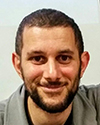
Salvatore Lorenzo is an Associate Professor of Physics of Matter at the University of Palermo's Physics and Chemistry Department. He holds the Italian National Scientific Habilitation as Full Professor in Theoretical Physics of Matter and conducts research at the intersection of quantum physics and information science. His primary research focuses on quantum computing implementations, particularly in quantum machine learning, open quantum systems dynamics, and quantum thermodynamics. He leads projects including ASpEQCt, HyQelm, and QuReCo focusing on quantum computing architectures. Recent publications demonstrate strong focus on quantum learning machines and information scrambling. His work has received over 1500 citations across more than 40 peer-reviewed papers in journals including Physical Review Letters and Optica. Service activities include editorial roles for Physical Review Letters, PRX Quantum, and Scientific Reports, and peer review for leading physics journals. He teaches Gauge Theories and Structure of Matter courses.
Daniele Militello is an Associate Professor at the University of Palermo's Department of Physics and Chemistry, specializing in quantum optics, open systems, and quantum thermodynamics. His PhD (2006) focused on quantum measurement effects, with JSPS-supported research at Waseda University on measurement impacts. Research contributions include quantum Zeno dynamics, time-dependent Hamiltonians, and noise effects in quantum systems. Recent work explores quantum synchronization in chiral networks, dissipative quantum control, and fundamental limits in quantum clocks. Publications span Physical Review, Journal of Physics, and Quantum Information journals. He has collaborated on INFN initiatives and international projects with institutions in Bristol, Madrid, and Durban. Article analysis reveals sustained focus on quantum control under decoherence, with recent expansion into biophysical applications of quantum principles. Methodological innovations include approaches beyond rotating wave approximations.
Diana Chisholm is a Postdoctoral Researcher at University of Palermo specializing in quantum information and foundations of quantum mechanics. She received her PhD from University of Palermo in 2023 under supervision of Prof. G. Massimo Palma, focusing on quantum objectivity and quantum-to-classical transition. Previously, she was Research Fellow at Queen's University Belfast. Research interests: Foundations of quantum mechanics Quantum objectivity and Darwinism Quantum thermodynamics Quantum control and quantum networks Her work explores quantum objectivity using mutual information measures and quantum computing simulations.
Lukasz Dusanowski is an Assistant Professor in the Department of Electrical and Computer Engineering at Florida State University (FSU). His research group focuses on quantum optics and nanophotonics, integrating material science, solid-state physics, and quantum information science. They engineer quantum emitters like spin qubits and defects in solids, coupled with nanophotonic structures to create quantum memories and single-photon sources for applications in quantum communication and computing. Education : Ph.D., Physics, Wrocław University of Science and Technology (2016) M.S. and B.S., Technical Physics, Wrocław University of Science and Technology (2012) Research Interests : Quantum optics, optically active spin qubits, quantum networks, and nanophotonics. His work emphasizes strain-tunable single-photon sources, Purcell-enhanced photon emission, and entanglement generation for quantum repeaters. The group explores materials like erbium ions, quantum dots, and topological insulators for scalable quantum technologies. Recent Trends in Publications : Dusanowski's work focuses on telecom-band photon generation, spin-photon entanglement, and integrated quantum photonics. Recent breakthroughs include room-temperature excitons in 2D materials and plug-and-play quantum dot systems. His research bridges fundamental physics with applied quantum engineering. Awards : Alexander von Humboldt Research Fellowship (2017) Foundation for Polish Science START Scholarship (2016) Grants & Advising : Leads the Dusanowski Group at FSU, mentoring graduate/undergraduate researchers. Open positions in quantum optics and nanophotonics are frequently available. His lab collaborates on projects funded by US and international agencies. Labs/Teams : Part of FSU's interdisciplinary quantum science ecosystem, working closely with nanofabrication and advanced spectroscopy facilities.
Kaiming Zhou is a Senior Research Fellow at Aston University's Aston Institute of Photonic Technologies (AiPT), part of the College of Engineering and Physical Sciences. His research focuses on photonics technologies, including optical fiber devices, sensors, lasers, and microfabrication. He has led numerous high-impact projects, securing over £3 million in funding from Innovate UK, ERDF, and international collaborations with Airbus, Branscan Ltd, and others. Research interests span optical fiber Bragg gratings, femtosecond laser micromachining, biosensors, and mid-infrared spectroscopy. His work emphasizes industrial applications, yielding 200+ publications and a Google H-index of 29. Key innovations include tilted fiber grating technologies and label-free biosensors for rapid detection. Projects include ERDF-funded fiber laser developments (£2.3M), Innovate UK's food quality monitoring (£184K), and EU Horizon 2020 biochemical sensing grants (€180K). International collaborations with the Royal Academy of Engineering and US Air Force Research Laboratory. Supervised 5 student projects and holds patents in fiber optic sensor systems. His lab develops advanced optical components for aerospace, healthcare, and environmental monitoring applications.
Dr. Robert Legenstein is a Full Professor and Institute Head at the Institute of Machine Learning and Neural Computation , Graz University of Technology. He serves as Speaker of the Graz Center for Machine Learning and Action Editor for Transactions on Machine Learning Research (TMLR) . His research bridges computational neuroscience and machine learning, focusing on neuromorphic computing systems that mimic biological neural networks. Research Leadership: Leads EU-funded projects like Adaptive Optical Dendrites (FET-Open) , SYNCH (FET-Proactive) , and Stochastic Assemblies in SNNs (FWF) . Scientific Contributions: Develops learning algorithms for spiking neural networks (SNNs), with applications to memristive architectures, neuroprosthetics, and energy-efficient AI systems. Key Publications: 15+ recent works on topics including dendritic computing, hardware-aware training, and context-dependent neural processing. Teaching Roles: Offers courses like Deep Learning , Principles of Brain Computation , and Data Structures & Algorithms . Contact: robert.legenstein@tugraz.at | +43 316 873 5824 | Inffeldgasse 16b/I, 8010 Graz, Austria.
Dr. Ge Jin is an Associate Professor of Geophysics and co-director of the Reservoir Characterization Project at Colorado School of Mines. His research focuses on Distributed Fiber-Optic Sensing (DFOS) applications in oil & gas, geothermal, CO2 sequestration, smart cities, and earthquake hazard, alongside machine learning and advanced seismic imaging techniques. PhD, Geophysics and Seismology, Columbia University (2014) MSc, Geophysics and Seismology, Peking University (2009) BSc, Geophysics and Computer Science, Peking University (2006) Before joining Colorado School of Mines in 2019, Dr. Jin worked five years as a research geophysicist in the oil industry. His work integrates DFOS technology with computational methods to address subsurface challenges in energy and environmental domains. His 2024 publications emphasize DFOS and machine learning for monitoring hydraulic fractures, CO2 storage, and smart infrastructure. Articles highlight Python library development (DASCore), fracture propagation dynamics, and fluid flow analysis in unconventional reservoirs. Dr. Jin's students include Garcia-Ceballos, Li, Mjehovich, Zhu, and Ning, who lead research on topics like tube wave excitation, fracture geometry inversion, and multiphase flow sensing. He teaches courses such as Introduction to DFOS and Geophysical Computing . As co-director of the Reservoir Characterization Project, he leads interdisciplinary research and field applications, addressing energy resource extraction and subsurface risk assessment through innovative sensing and data-driven approaches.
Jon Longtin is a Professor and Interim Chair in the Department of Mechanical Engineering at Stony Brook University. He has been with the university since 1996, contributing to academic leadership and cutting-edge research in thermal engineering and laser material processing. Education: Ph.D., Mechanical Engineering, University of California, Berkeley (1995) M.S., Mechanical Engineering, University of Cincinnati (1991) B.S., Mechanical Engineering, University of Cincinnati (1989) Research Interests: Thermophysical behavior measurement using laser light for liquids and solids Ultra-high-intensity laser interactions with materials for manufacturing Thermoelectric device fabrication via thermal spray and laser processing Energy-efficient thermal systems and decarbonization strategies Articles Trends: Recent work focuses on smart energy systems (e.g., automated heating stoves), free-space optical networks, and pandemic-related ventilator design. Earlier contributions include topology optimization, thermosyphon applications, and scramjet sensor development. Awards: 1996 JSPS Postdoctoral Fellowship 1997 NSF CAREER Award 1997 PECASE Award 1998 Excellence in Teaching Award Grants & Labs: Funding sources: NSF, NASA, Department of Defense (ESTCP) Research teams collaborate on energy storage, laser additive manufacturing, and thermal spray technologies.
Dr. Andreas Hein is Associate Professor and Chief Scientist at the Interdisciplinary Centre for Security, Reliability and Trust (SnT), University of Luxembourg, specializing in future space systems. Research spans interstellar mission design, autonomous transportation, and sustainable space exploration as Executive Director of the Initiative for Interstellar Studies. Key interests include disruptive space architectures, complex systems engineering, and long-duration space projects. Recipient of the Willy Messerschmitt Award and Exemplary Systems Engineering Doctoral Dissertation Award for space systems innovation. Recent publications focus on pico-satellite technologies (POQUITO mission), space nuclear propulsion, distributed satellite systems, AI governance frameworks, and orbital debris mitigation strategies. Authored 70+ peer-reviewed articles advancing space systems engineering methodologies.
Tzu-Chieh Wei is a Professor at the C.N. Yang Institute for Theoretical Physics and Department of Physics and Astronomy, Stony Brook University. He received his B.A. and M.Sc. from National Taiwan University, and his Ph.D. from the University of Illinois at Urbana-Champaign. His research focuses on quantum information science, condensed matter physics, and tensor-network methods. He has pioneered work on quantum algorithms, error mitigation, and topological phases, and led the development of Stony Brook's quantum master's program. Affiliations: C.N. Yang Institute for Theoretical Physics, Department of Physics and Astronomy, Stony Brook University Educations: B.A. and M.Sc. in Physics, National Taiwan University Ph.D. in Physics, University of Illinois at Urbana-Champaign (2004) Research Interests: Dr. Wei's work spans quantum information science (quantum computing, entanglement theory, quantum algorithms), condensed matter physics (topological phases, superconductivity, optical lattices), and tensor-network methods (MPS, PEPS). He explores applications in quantum error mitigation, quantum machine learning, and quantum many-body systems. His recent focus includes hybrid quantum-classical algorithms, entanglement detection via Green's functions, and symmetry-enriched topological phases. Articles Trends: Recent publications emphasize quantum error mitigation techniques, topological phases with non-invertible symmetries, and adaptive quantum circuits for state preparation. His work bridges theoretical frameworks (e.g., AKLT models) with experimental implementations on quantum hardware (e.g., IBM quantum computers). Awards: IBM Qiskit Certificates (2020–2023) Online Teaching Certificate (2021) International Quantum Summer Summit Participant (2021) Advising & Grants: Advised PhD students on topics like topological phases and quantum algorithms. Active in grants supporting quantum computing education and microgrid control using quantum systems. Labs & Collaborations: Leads a research group focused on quantum information theory and its applications. Collaborates with institutions like the Perimeter Institute, University of Waterloo (IQC), and IBM Quantum. Involved in outreach initiatives to introduce quantum concepts to high school students and educators.
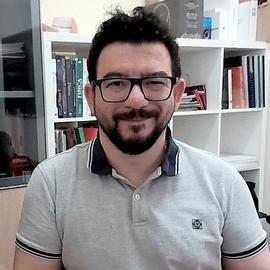
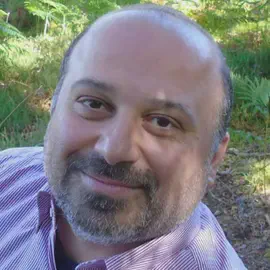
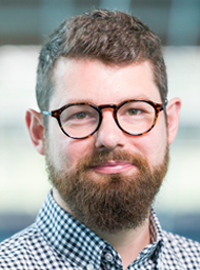
Scott Field is an Associate Professor in the Department of Mathematics at the University of Massachusetts Dartmouth, where he co-directs the Engineering & Applied Science PhD program. His research integrates gravitational wave data science, computational relativity, and high-performance computing to model astrophysical phenomena like black hole mergers. His primary research areas include developing discontinuous Galerkin methods for efficient waveform computation, creating surrogate models to accelerate gravitational wave predictions, and applying machine learning to astrophysical inverse problems. His work supports gravitational wave observatories like LIGO and LISA. He has secured substantial research funding, including NSF and ONR grants exceeding $1.6 million. Notable projects focus on neural ODE dynamics for orbital modeling and high-order methods for long-duration waveform simulations. As co-developer of the GWSurrogate Python package, he enables efficient gravitational wave data analysis. He collaborates with the Simulating eXtreme Spacetimes (SXS) consortium and contributes to the LISA mission through waveform modeling.
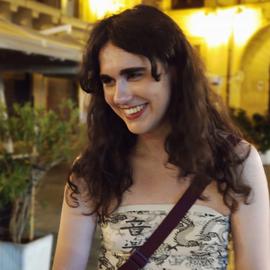
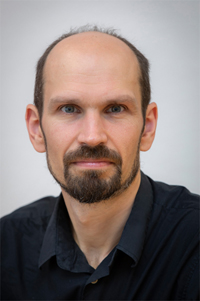
Vijay Varma is an Assistant Professor in the Department of Mathematics at the University of Massachusetts Dartmouth. His research focuses on gravitational waves, numerical relativity, and computational astrophysics. He completed his PhD at Caltech in 2019 and previously held positions as a Marie Curie Fellow at the Albert Einstein Institute and a Klarman Fellow at Cornell. Education: PhD, Caltech (2019) His primary research explores the dynamics of binary black hole systems, gravitational wave signal analysis, and surrogate modeling techniques. He develops computational tools for gravitational wave astronomy and collaborates on projects like the SXS Collaboration and Einstein Telescope initiative. Dr. Varma's publications predominantly focus on gravitational wave physics, including black hole spectroscopy, numerical relativity simulations, and waveform modeling. His most cited work involves surrogate models for gravitational wave analysis and studies of spin precession in binary systems. Scientific Awards: None reported No information is currently available regarding student advising, funded grants, or laboratory affiliations.
Eyal Schwartz is an Assistant Professor of Physics at Trinity College, leading the college's participation in the LIGO scientific collaboration. He holds a Ph.D. from Technion-Israel Institute of Technology and brings multinational research experience from Cardiff University, LIGO Livingston Observatory, University of Mississippi, and University of Otago. His research employs precision optical interferometry to study gravitational waves, quantum optics, and ultra-cold atomic systems. Current investigations focus on black hole/neutron star gravitational signatures, quantum-enhanced dark matter detection, and fundamental quantum mechanics at macroscopic scales. He leads Trinity's gravitational wave research initiatives within the international LIGO collaboration.
Jan Zimmermann is an Associate Professor at the University of Minnesota, specializing in neuroimaging, non-human primate neuroscience, and advanced MRI techniques. Her research focuses on diffusion MRI methodologies for preclinical applications, neural mechanisms underlying behavior in macaques, and the development of tools for behavioral tracking and pose estimation in primates. She leads efforts to standardize MRI protocols for non-human primates and explores the ethical and technical challenges in primate neuroscience research. Key research areas: Diffusion MRI, neuroimaging standards, primate cognition, and computational methods for animal behavior analysis. Developed tools include OpenMonkeyStudio for markerless pose estimation and OpenApePose databases. Investigates neural correlates of decision-making, reward processing, and motor control in freely moving primates. Her work bridges engineering, neuroscience, and ethics, with a focus on advancing imaging technologies and their translational potential. Recent studies address the integration of multimodal imaging (e.g., polarization-sensitive OCT with MRI) and the impact of exogenous electric fields on neural activity. Grants and collaborations involve interdisciplinary projects in neurotechnology, including hardware development for high-field fMRI and chemogenetic manipulations in non-human primates. Labs and teams: Active in primate imaging and behavior analysis groups, contributing to open-source software ecosystems for neuroscience research.
Martin Seifrid is an Assistant Professor at NC State University's Department of Materials Science and Engineering (College of Engineering). His research focuses on designing organic materials with controlled structures for applications in energy storage, healthcare, and neuromorphic computing. He leads the Data-Driven Organic Materials Lab, which develops self-driving labs powered by machine learning to accelerate materials discovery. Key areas include organic mixed ionic-electronic conductors, materials informatics, and automation through tools like Chemspyd. His work integrates synthesis, characterization, and computational methods. Recent efforts emphasize automated experimentation frameworks and open-source robotics interfaces for chemical synthesis. Notable projects include optimizing organic photovoltaic materials and understanding thin film morphology in semiconductors. Publications highlight advancements in self-driving lab systems, machine learning for material design, and novel material characterization techniques. He collaborates widely, contributing to interdisciplinary initiatives in autonomous laboratory development. His lab is equipped with state-of-the-art equipment for automated chemistry and advanced material analysis. While currently no scientific awards are listed, his research has been featured in prominent journals like Science , Chemistry of Materials , and Journal of Materials Chemistry A . He actively mentors graduate students in materials science and engineering through collaborative projects at NC State.



/prod01/production-cdn-pxl/media/umassdartmouth/mathematics/faculty/ScottField2016.jpg)
/prod01/production-cdn-pxl/media/umassdartmouth/profiles/arts-and-sciences/mathematics/2022_Milan-Vijay-Varma.jpg)