David Lopez Vilariño is a **Professor** at the **University of Santiago de Compostela**, affiliated with the **Department of Electronics and Computing** within the **Faculty of Physics**. He earned his PhD in 2001 with a thesis titled *"Active contours at the pixel level: design and implementation on cellular network architectures,"* advised by Dr. Diego Cabello Ferrer. His research focuses on **Computer Architecture**, **FPGA Acceleration**, **LiDAR Data Analysis**, and **Embedded Systems**, with notable contributions to LiDAR-based applications in urban planning, infrastructure monitoring, and medical imaging. He is part of the **ARQCOMP (Computer Architecture)** and **Artificial Vision** research groups. His work spans topics such as high-performance computing, parallel processing, and hardware optimization for vision-capable systems. Key projects include developing FPGA-based solutions for real-time video surveillance, retinal vessel analysis, and autonomous navigation systems. Publications emphasize **LiDAR data processing**, including algorithms for road detection, power line characterization, and 3D point cloud analysis. He also pioneered tools like the *Open Lidar Visualizer and Analyser* for 3D stereoscopic visualization. His expertise bridges hardware design and software development, particularly in leveraging FPGAs for embedded vision systems. No scientific awards or grants are explicitly listed, but his prolific publication record highlights sustained innovation in computer vision and geospatial technologies. His research team collaborates on projects involving manycore systems, GPU acceleration, and reconfigurable computing architectures.
Tania Landes is a Professor at the University of Strasbourg (Unistra) affiliated with the ICube Laboratory UMR 7357 CNRS/Unistra and the PAGE Group (Architectural Photogrammetry and Geomatics). Her work focuses on integrating advanced 3D modeling and geomatics techniques for urban applications. Academic Rank: Professor Institution: University of Strasbourg Research Affiliation: ICube Laboratory UMR 7357 CNRS/Unistra Research Interests : Indoor and outdoor 3D modeling with RGB-D sensors and LiDAR Semantic segmentation of point clouds for BIM (Building Information Modeling) Thermal imaging integration for urban microclimate studies Historical and cultural heritage documentation via photogrammetry Urban tree modeling and vegetation impact on thermal comfort Scan-to-BIM workflows and automation Key Projects include the TIR4sTREEt thermal infrared studies of street trees in Strasbourg and COOLTREES for quantifying urban cooling benefits from vegetation. Her publications emphasize improving 3D reconstruction workflows and modeling accuracy across domains. Scientific Contributions span 15+ years with over 50 publications, covering: Urban heat island mapping (2022 onwards) Historical building modeling (2014-2017) Mobile laser scanning applications (2020 onwards) Kinect sensor calibration for 3D modeling (2015) Microclimate simulation via LASER/F (2016) Archaeological documentation (2011)
Stephen Ramsey, an Associate Professor at Oregon State University, holds dual appointments in the School of Electrical Engineering and Computer Science (College of Engineering) and the Department of Biomedical Sciences (Carlson College of Veterinary Medicine). With a PhD in Physics from the University of Maryland, his postdoctoral training in computational genomics at the University of Washington, and professional experience at the Institute for Systems Biology and Center for Infectious Disease Research, Ramsey bridges computational methods with biomedical applications. Education : Ph.D., Physics, University of Maryland; M.S., Physics, University of Maryland; Sc.B., Mathematical Physics, Brown University Ramsey specializes in computational systems biology , focusing on bioinformatics , biomedical knowledge graphs , and precision medicine . His research integrates machine learning , gene regulatory network modeling , and multi-omics data analysis to address challenges in rare disease diagnostics , drug monitoring , and inflammatory disease mechanisms . Current work includes AI-driven biomedical translation and electrochemical biosensor development for non-invasive diagnostics . Recent publications highlight knowledge graph applications in translational biomedicine , causal network inference in clinical-environmental data integration , and cross-species cancer transcriptomics . His team develops tools like RTX-KG2 and PloverDB to standardize biomedical data sharing and semantic reasoning . Scientific Awards : 2019 Zoetis Award (Carlson College of Veterinary Medicine) 2016 NSF CAREER Award 2016 PhRMA New Investigator Award 2010 NIH K25 Mentored Quantitative Research Award Ramsey advises in computational biology courses (CS 446/546) and contributes to biomedical AI through projects like mediKanren for rare disease diagnostics . His NSF-funded research explores gene expression noise and regulatory network dynamics , while NIH and PhRMA grants support his translational medicine initiatives. He leads the Ramsey Laboratory , which develops graph-based reasoning tools for biomedical data translation and multi-omics integration . The lab's work spans comparative oncology models, electrochemical biosensors , and knowledge graph infrastructure for clinical decision support .
Katherine Sorrels is a Professor of History at the University of Cincinnati, where she also serves as Affiliate Faculty in Judaic Studies and formerly chaired the Taft Health Humanities Research Group. She specializes in modern European and North American history of medicine, disability studies, and Jewish experience, with a particular focus on Holocaust studies, scientific racism, and eugenics. Her research interests center on the intersections of medical history, disability, and Jewish experience, particularly examining how Austrian Jewish refugees transformed approaches to disability after the Holocaust. She is currently completing her book On the Spectrum: Refugees from Nazi Austria and the Politics of Disability and Belonging in Britain and America , which explores the Camphill movement founded by Austrian Jewish refugees in Scotland during WWII. Her previous book, Cosmopolitan Outsiders: Imperial Inclusion, National Exclusion, and the Pan-European Idea, 1900-1930 (2016), examined Jewish intellectuals' contributions to early European unity movements. Her scholarly output reveals consistent engagement with disability history, Jewish studies, and medical humanities, with recent publications including co-edited volumes Disability in German-Speaking Europe: History, Memory, Culture (2022) and Ohio under COVID: Lessons from America's Heartland in Crisis (2023). Her digital humanities project Disability and Belonging uses ArcGIS StoryMaps to explore debates about living arrangements for people with intellectual disabilities. National Endowment for the Humanities Fellowship (2024-2025) Gene Lewis Faculty Teaching Prize (2021) Award for Innovative Uses of Technology in Teaching (2019) Public Humanities Award from Charles Phelps Taft Research Center (2020) TOME Award for open access monograph ecosystem (2021) Sorrels actively mentors graduate students in history, with numerous MA and PhD advisees working on topics related to medical history, disability studies, Jewish history, and migration. She has secured significant research funding including multiple NEH fellowships, Taft Center fellowships, and Botstiber Foundation grants. Her community partnerships include work with Cincinnati's Holocaust and Humanity Center and Harriet Beecher Stowe House on historic garden restoration. She also leads the Stowe Garden project to restore the historic landscape around the Harriet Beecher Stowe House as an educational greenspace.
Dr. Serkan Düzgün is an Associate Professor at Gazi University's Faculty of Education, Department of Basic Education, specializing in Classroom Education. He has previously worked as a part-time lecturer at Ankara Hacı Bayram Veli University and Ankara Yıldırım Beyazıt University. PhD, Master's, and Bachelor's degrees from Gazi University Active in instructional technologies, AI in education, STEM, and neuroscience applications Key contributor to Turkey's national education projects and civil society initiatives His research focuses on the integration of artificial intelligence in pedagogical practices, robotic coding platforms for K-12 education, and the cognitive impacts of neuroscience-based teaching methods . Recent work examines distance education challenges during the pandemic, learning style adaptations, and self-regulated learning in virtual environments. Current publications emphasize AI-driven educational tools , technology-enhanced literacy instruction , and virtual classroom dynamics . His 15 most recent articles (2021-2024) span topics like robotic coding in STEM education, emotional intelligence in remote teaching, and AI applications in qualitative research. Dr. Düzgün has conducted 108 projects, advised 3 theses, and actively participates in open-access initiatives and UN Sustainable Development Goals implementation through educational technology. He also played a pivotal role in establishing the "Voice of Turkish" Radio at Yunus Emre Institute.
Professor Bradley Evans is a distinguished Earth observation and remote sensing specialist at the University of New England, where he holds a position in the Faculty of Science, Agriculture, Business and Law within the School of Environmental and Rural Science. His expertise spans environmental science, biodiversity conservation, and the application of hyperspectral imaging spectroscopy to solve real-world environmental challenges. Previously, he has held significant positions including Director of Australia's Terrestrial Ecosystem Research Network and Director of Sydney Informatics Hub at The University of Sydney. PhD in Environmental Science, Murdoch University, Western Australia, 2013 Bachelor of Science with Honours in Environmental Science, Murdoch University, Western Australia, 2009 Bachelor of Science in Energy Studies, Murdoch University, Western Australia, 2009 Advanced Diploma in Marketing Management, TAFE NSW, Bradfield College, 1999 CASA RPAS sub 25kg (Multirotor Drone) certification Professor Evans's research focuses on applying advanced remote sensing techniques to environmental monitoring and conservation. His work integrates hyperspectral imaging with ecological modeling to address critical issues such as koala habitat mapping, forest health assessment, and water quality monitoring. He has pioneered approaches using plant fluorescence to model growth patterns and has contributed significantly to NASA's OCO2 mission. His recent work emphasizes the development of open-source tools for hyperspectral imaging, making advanced remote sensing more accessible to researchers worldwide. Analysis of Professor Evans's recent publications reveals a strong trend toward practical applications of hyperspectral imaging across diverse environmental contexts. His work spans from precision agriculture applications for cotton farming to koala habitat conservation, demonstrating the versatility of remote sensing technologies. The research shows increasing integration of machine learning techniques with hyperspectral data, enhancing the accuracy and efficiency of environmental monitoring systems. There's also a notable emphasis on open-source solutions, reflecting his commitment to democratizing access to advanced remote sensing technologies. 2016 – Terrestrial Ecosystem Research Network NSW – NSW Chief Scientist Award Multiple travel scholarships from NCCARF, EUFAR, and Australian Research Council 2010 Centre of Excellence for Climate Change PhD top-up Scholarship 2008 Master class Scholarship from Wentworth Group of Concerned Scientists Professor Evans has successfully supervised numerous PhD and Master's students across multiple institutions, demonstrating strong mentorship capabilities. His research is supported by substantial grants including the $198K NSW Department of Environment Koala's in the Landscape project (2023), the University of Sydney's Koala's in the Air project ($70K), and significant funding for the OpenHSI initiative. He has been a Chief Investigator for the Australian Research Council Training Centre on CubeSats, UAVs and Their Applications, securing funding for innovative remote sensing projects. His work with NASA JPL's Surface Biology and Geology Study and collaborations with international space agencies demonstrates the global impact of his research. At the University of New England since 2023, Professor Evans has established the Earth Observation Laboratory with a special focus on water and wildlife habitat (particularly koalas) and riverine water quality. He serves as Vice President of Earth Observation Australia and participates in the AquaWatch Steering Committee for the Commonwealth Department of Defence. His laboratory actively collaborates with industry partners like HyVista Corporation and academic institutions including The University of Sydney. The lab emphasizes open-source approaches to remote sensing technology, exemplified by the OpenHSI project, which has created accessible hyperspectral imaging solutions for researchers worldwide.
Elena Simperl is a Professor at King's College London, UK, with former affiliations at the University of Southampton and Karlsruhe Institute of Technology. Her work focuses on knowledge graphs, semantic web technologies, and AI-driven data management. She leads research in collaborative knowledge engineering, dataset search, and AI ethics, contributing to projects like the TheyBuyForYou platform for public procurement transparency. Her research interests span knowledge representation, crowdsourcing, and human-AI collaboration. Notable contributions include advancing methods for knowledge graph construction, improving data quality via crowdsourced and automated approaches, and exploring the societal impact of AI systems. She has co-edited major conferences such as ISWC and ESWC, and her work bridges technical innovation with practical applications in public policy and information systems. Key projects include developing frameworks for dataset usability, AI-ready data infrastructure, and systems for fact-checking visual content. Her collaborations span academia and industry, addressing challenges in data governance, misinformation detection, and ethical AI deployment.
Prof. Dr. Katharina Helming is a Professor leading the Impact Assessment of Land Use Changes working group at the Leibniz Centre for Agricultural Landscape Research (ZALF), affiliated with Research Area 3 on Agricultural Landscape Systems. Her expertise spans interdisciplinary research on land use dynamics, sustainability assessment methodologies, and soil conservation. She holds a Diplom in Agricultural Engineering and a PhD in Agricultural Sciences. Her work focuses on evaluating soil functions, sustainable soil management, and socio-ecological interactions. Key contributions include developing frameworks for sustainability impact assessment and advancing FAIR data infrastructures for agroecosystems. Her research integrates climate change adaptation, digital agriculture, and participatory approaches. Projects include the BonaRes Repository for soil data standardization and protocol-based scenarios for future European agri-food systems (Eur-Agri-SSPs). She leads initiatives on soil health policy and digital transformation in agriculture. Her work emphasizes linking scientific insights with policy through tools like impact mapping frameworks and stakeholder engagement methodologies. Publications highlight innovations in soil data reuse, barriers to sustainable practices, and resilience in community agriculture. She contributes to international initiatives like MACSUR and FAIRagro, addressing global challenges in agri-food systems through interdisciplinary collaboration.
Lenka Benova is a Professor and Unit Head in Reproductive and Maternal Health at the University of Antwerp. Her research focuses on health-seeking behavior, maternal health, and healthcare equity in low- and middle-income countries. She holds advanced degrees from the London School of Hygiene & Tropical Medicine (MSc Demography/Health, PhD Population Health) and an MA in Middle East Studies from the American University in Cairo. Dr. Benova has extensive field experience, including roles with Médecins Sans Frontières and leadership in eldercare startups. Her work emphasizes methodological innovation, such as using geospatial tools to assess healthcare access and analyzing large-scale demographic datasets. She actively contributes to global health policy through evidence-based research on maternal mortality, violence against women, and the impacts of climate change on perinatal outcomes. Her publications span over 180 peer-reviewed articles, with recent focus areas including emergency obstetric care access, stillbirth mortality patterns, and the intersection of intimate partner violence with maternal mental health. She supervises PhD students and teaches on Masters programs, emphasizing translational research that bridges academic inquiry with real-world health system challenges.
Jerry Shannon is an Associate Professor in the Department of Geography and Department of Financial Planning, Housing and Consumer Economics at the University of Georgia’s College of Family and Consumer Sciences . His research focuses on urban development, inequality, and the use of geographic information systems (GIS) to study food and housing systems. He directs the Community Mapping Lab and co-founded the Georgia Initiative for Community Housing , employing participatory research methods to address health, equity, and community action. Education: BA in English, University of Iowa (1997) MAT in English Education, University of Iowa (1999) PhD in Geography, University of Minnesota (2013) Research Interests: Urban development and inequality, GIS, political geography, place-based health effects, participatory mapping, and community engagement. His work examines how spatial analysis and maps influence perceptions of hunger, housing, and poverty, while promoting open-source tools for community-driven projects. Article Trends: Shannon’s publications emphasize food systems , housing policy , GIS methodology , and socioeconomic disparities . Recent work includes statewide analyses of food pantry networks, historical redlining impacts, and participatory mapping for affordable housing initiatives. Outreach and Grants: He collaborates with the Atlanta Community Food Bank , Feeding Georgia , and the Georgia Department of Family and Children Services , securing funding for projects like the Georgia Hunger Study and Linnentown Community Assessment . These initiatives combine archival analysis, spatial modeling, and community partnerships to quantify historical injustices and inform policy changes. Teaching and Labs: Shannon mentors graduate students in participatory research , open-source GIS , and data visualization . The Community Mapping Lab trains students in community-engaged research, emphasizing mentorship and practical applications for local governments.
Dr. Fernando Vanegas Alvarez is a Lecturer at the School of Electrical Engineering and Robotics at Queensland University of Technology (QUT). He holds a M.Sc. in Electrical Engineering from Halmstad University and a PhD in Aerial Robotics from QUT. His research focuses on Drone Autonomy, UAV navigation in GNSS-denied environments, and AI-assisted remote sensing. Education: M.Sc. in Electrical Engineering, Halmstad University PhD in Aerial Robotics, QUT Research Interests: Dr. Vanegas' work emphasizes motion planning for UAV exploration , POMDP , SLAM , Visual Odometry , and AI-driven remote sensing applications . His projects include UAV frameworks for planetary exploration, invasive species mapping, and multi-UAV coordination in challenging environments. Scientific Awards: Advanced Queensland Industry Research Fellowship Grant (2024) Supervision & Grants: Dr. Vanegas has supervised three postgraduate students, including topics like planetary exploration UAV systems and multi-agent UAV search algorithms. He actively accepts new students for Honours, Masters, and PhD programs. His research is supported by grants and collaborations with the QUT Centre for Robotics. Teams & Affiliations: He is a core member of the QUT Centre for Robotics and contributes to the School of Electrical Engineering & Robotics. His work bridges robotics, AI, and environmental science.
Yaqub Jonmohamadi is a former Associate Investigator at the QUT Centre for Robotics. He holds a PhD in neuroimaging and has conducted postdoctoral research since 2015 in computer vision, biomedical engineering, and neuroimaging. His research interests span computer vision, deep learning, multimodal data fusion, and signal processing. He has contributed to advancements in medical imaging, robotic surgery, and neuroimaging through interdisciplinary collaborations. His work includes 3D semantic mapping for surgical robotics, illumination control in arthroscopy, and EEG-fMRI data fusion techniques. Publications focus on applying machine learning and computer vision to healthcare challenges, such as surgical scene restoration and knee arthroscopy segmentation. His research demonstrates expertise in both theoretical and applied aspects of robotics and biomedical engineering. Jonmohamadi’s GitHub repository hosts code related to his projects, reflecting a commitment to open science. He has collaborated with institutions like Elsevier and Springer on works advancing robotic surgery and medical imaging. Despite no listed awards, his academic contributions are evident through his peer-reviewed publications and technical innovations in medical robotics. His work bridges computer science and healthcare, addressing real-world surgical and diagnostic challenges.
Marloes Mul is a leading researcher in water resources management and remote sensing applications at IHE Delft Institute for Water Education. She specializes in integrating remote sensing technologies to assess water productivity, manage river basins, and address environmental flows. Her work spans transboundary water systems, drought impact analysis, and sustainable infrastructure development in regions like West Africa, Southeast Asia, and the Middle East. She has led major projects funded by FAO, World Bank, and the Dutch Ministry of Foreign Affairs, including contributions to the WaPOR remote sensing initiative and the EUROFLOW project on reservoir policies. Education: PhD in Hydrology (University of Zimbabwe, 2013) Research Interests: Her research focuses on climate change impacts on water resources, remote sensing-driven water management, equitable water allocation, and resolving transboundary water conflicts. She has pioneered methods for quantifying trade-offs in dam operations and improving water accounting frameworks to enhance sustainability. Projects & Grants: Key projects include WaPOR’s land and water productivity monitoring, the EUROFLOW dam re-operation study, and initiatives in the Volta and Pangani basins. She has secured funding from international organizations to address water scarcity and agricultural productivity challenges. Advising: Supervises a PhD student on reservoir operating policies for environmental flows. Labs/Teams: Active in IHE Delft’s water accounting team and collaborates globally on remote sensing applications for water governance.
Susan Ariel Aaronson is a Research Professor of International Affairs at George Washington University (GWU) and Director of the Digital Trade and Data Governance Hub. She leads research on AI governance, data governance, and digital trade policies as co-PI of the NSF-NIST TRAILS initiative. Her work focuses on global challenges like AI nationalism, data accuracy, and extended reality (XR). Aaronson is a GWU Public Interest Technology Scholar (2024) and Cross-Disciplinary Scholar (2017). Education: Ph.D., Johns Hopkins University. Research areas include international trade, human rights, and the governance of AI/data-driven technologies. She explores topics like AI protectionism, cross-border data flows, and the ethical implications of generative AI. Her op-eds appear in Barron’s and Fortune , and she contributes to media outlets like NPR and the BBC. Key Projects: Digital Trade Hub (mapping global data governance), TRAILS (AI governance research) Funded by: Ford Foundation, Minderoo Foundation Publications span peer-reviewed journals ( Oxford Review of Economic Policy ), policy briefs ( CIGI Papers ), and op-eds. Recent work highlights the need for rethinking trade policies to address digital-era challenges and fostering trust through inclusive governance frameworks. Awards: GWU Public Interest Technology Scholar, Cross-Disciplinary Scholar Grants: NSF-NIST TRAILS, Ford Foundation, Minderoo Foundation Labs/Teams: Leads the Digital Trade and Data Governance Hub, a global research initiative addressing data governance and AI policy.
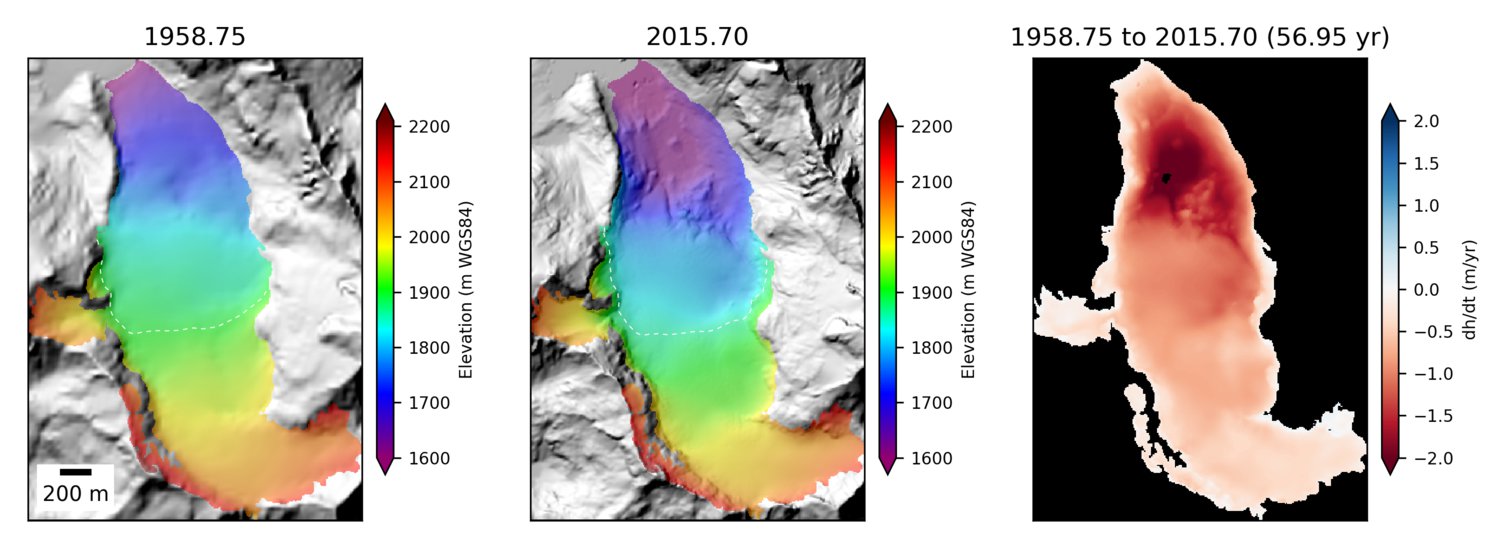
David Shean is an Associate Professor in Civil & Environmental Engineering at the University of Washington, with adjunct roles in Aeronautics & Astronautics and Earth and Space Sciences. His research focuses on remote sensing and geomatics to study Earth's cryosphere, including glaciers, snow, and ice sheets. He holds a Ph.D. from the University of Washington (2016) and advanced degrees from Brown University. Notable projects include SlideRule (cloud-based ICESat-2 processing) and NASA's High-Mountain Asia Team (HiMAT). He teaches courses like Geospatial Data Analysis with Python and Advanced Surveying. His work leverages modern data science, satellite imagery, and UAVs for high-resolution topographic analysis. Education: Ph.D., Earth and Space Sciences, University of Washington, 2016 Sc.M., Geology, Brown University, 2006 Sc.B., Geology-Physics/Mathematics, Brown University, 2004 Research Interests: Remote sensing, glaciology, planetary science, and hydrology. His work emphasizes automated data pipelines, cloud computing, and satellite stereo DEMs. Recent projects address ice shelf dynamics, snow depth mapping, and natural hazards like debris flows. His group develops open-source tools for processing NASA missions like ICESat-2 and commercial smallsat data. Labs & Teams: UW Terrain Analysis and Cryosphere Observation Lab Autonomous Flight Systems Lab eScience Institute Advising & Grants: Mentors PhD students in cryospheric science and geospatial analysis. Leads NASA-funded projects on STV mission technology, smallsat data analytics, and glacier mass balance. Collaborates with agencies like Malin Space Science Systems and Boston University.