
Dr. George Stamou is a Professor at the School of Electrical and Computer Engineering of the National Technical University of Athens (NTUA), serving as Director of the Artificial Intelligence and Learning Systems Laboratory (AILS). His expertise spans knowledge representation, machine learning, neural networks, and semantic technologies. He leads interdisciplinary initiatives such as the postgraduate program 'Data Science and Machine Learning' (2018–2022). Research Interests: Focuses on knowledge graphs, interpretable AI, semantic web applications, and multimodal learning. His work integrates formal logic systems (e.g., description logics) with modern deep learning techniques, addressing challenges in explainability, bias detection, and ethical AI applications. Publications: Over 150 articles in AI journals/conferences with an h-index of 34 (Google Scholar). Notable contributions include datasets like CHORDONOMICON (music analysis), GOSt-MT (gender bias in MT), and methodologies for counterfactual explanations in machine learning. Awards & Committees: Active in W3C and RuleML standardization bodies. Co-organized major AI conferences. Recognized for contributions to semantic interoperability and knowledge-based systems. Labs & Teams: Directs AILS-NTUA lab and collaborates with CISRI (Computer & Information Systems Research Institute). Engages in EU projects like CultureLabs (cultural heritage digitalization) andsmarty4covid (health data analysis).
جستوجوی استاد و پژوهشگر
استاد راهنما، استاد دانشگاه یا پژوهشگر مناسب برای مسیر پژوهشیتان را پیدا کنید و با او ارتباط بگیرید.
نمایش ۱-۱۵ از ۷۱۳ استاد راهنما
اطلاعات این پروفایلها از صفحات عمومی دانشگاهها جمعآوری شده و ممکن است بهروز نباشد.

- Cybersecurity
- Formal Methods
- Concurrency Theory
- +۳ مورد دیگر
Michael Goldsmith is a Senior Research Fellow at the Department of Computer Science and Worcester College, University of Oxford. He holds multiple leadership positions including Director of the Oxford Martin Programme on AI Threat Detection, Associate Director of the Cyber Security Centre, and Co-Director of the Centre for Doctoral Training in Cybersecurity. His research bridges formal methods, concurrency theory, and practical cybersecurity applications. Goldsmith's research focuses on cybersecurity analytics including threat detection, risk management, and trust frameworks. He pioneered automated cryptoprotocol analysis and investigates multidisciplinary projects spanning mathematical models to socio-technical systems. His core interests include formal verification, AI threat landscapes, privacy architectures, and security protocol design. Analysis of his recent publications reveals strong emphasis on practical cybersecurity challenges: 63% focus on threat detection (especially insider threats), 22% on trust/risk frameworks, and 15% on formal methods applications. His work consistently integrates technical security mechanisms with human factors and organizational contexts. He currently advises Ahmed Salman and has supervised 10+ students including Mary Bispham, Rodrigo Carvalho, and Elizabeth Phillips. His research teams collaborate on projects funded by Technology Strategy Board, government agencies, and industry partners. Goldsmith leads the Oxford Martin Programme on AI Threat Detection and co-directs the Centre for Doctoral Training in Cybersecurity. His research group develops tools for security visualization (CyberVis), trust metrics, and identity management frameworks.
Habib Ullahمشاهده پروفایل
دانشیار
- Computer Vision
- Machine Learning
- Deep Learning
- +۷ مورد دیگر
Habib Ullah is an Associate Professor in Data Science at the Norwegian University of Life Sciences (NMBU), Norway, where he conducts research at the intersection of computer vision and machine learning. He is affiliated with the Institute of Data Science under the Faculty of Science and Technology. He has previously held academic positions at COMSATS University Islamabad, Pakistan, and the University of Ha'il, Saudi Arabia, and served as a postdoctoral researcher at The Arctic University of Norway. Educational Background: PhD in Information and Communication Technology (Computer Vision), University of Trento, Italy (2011–2015) MSc in Electronics and Computer Engineering, Hanyang University, South Korea (2007–2009) BSc in Computer Systems Engineering, NWFP University of Engineering and Technology, Pakistan (2002–2006) Habib Ullah's research is primarily focused on computer vision and machine learning, with applications in aquaculture, agriculture, and human behavior analysis. He investigates underwater fish feeding sounds using audio classification, develops zero-shot learning models for recognizing unseen classes, and applies deep learning to detect stress in salmon via skin dot patterns. He also explores AI-driven controlled environment agriculture, leveraging sensors and automation for optimal crop growth. His work emphasizes practical AI solutions for real-world challenges in environmental and biological domains. The recent publications highlight a strong trend in leveraging deep learning for zero-shot and semi-supervised learning, particularly in computer vision tasks such as sea ice classification, crowd anomaly detection, and agricultural monitoring. His research spans remote sensing, biomedical signal processing, and human activity recognition, demonstrating interdisciplinary versatility. The keywords reflect a focus on robust feature representation, knowledge transfer, and model generalization. Scientific Awards and Funding: Industrial PhD grant 'Advancing Controlled Environment Agriculture AI' from The Research Council of Norway (Project number 354125, 2 million NOK, 2024) Team member (Coordinator-Participant) in the Battery Cell Assembly Twin (BatCAT) project funded by Horizon Europe (7 mEuro, 2023–2027) Development of an AI-Based Image Analysis System for Monitoring Plant Status (Funding: 1.8 mNOK, starting 2025) Habib Ullah actively supervises PhD projects and contributes to academic service through editorial and organizational roles. He has served as an Associate Editor for IEEE Access, Guest Editor for MDPI Remote Sensing, and Editor of the Springer book Machine Learning Techniques and Sensor Applications for Human Emotion, Activity Recognition, and Support (ML-SHEARS) . He has also been a Track Chair and Program Committee Member for several international conferences, reflecting his leadership in the academic community. His research is supported by significant grants and collaborative projects, indicating strong institutional and international engagement. He is involved in multiple research teams and projects, including the BatCAT project on battery manufacturing and AI applications in controlled environment agriculture with RIFT LABS AS. His lab work integrates deep learning, sensor fusion, and data analytics for environmental and biological monitoring systems.
Luisa Dominguesمشاهده پروفایل
استادیار
Luisa Domingues is an Assistant Professor in the Department of Information Science and Technology at ISCTE - University Institute of Lisbon. She serves as an Integrated Researcher at ISTAR-Iscte - Research Center in Information Sciences, Technologies and Architecture, specializing in Information Systems research. Her academic qualifications include a PhD in Information Science and Technology from ISCTE-IUL (2013). Her primary research interests focus on: Project Management : Methodologies, risk assessment, and knowledge sharing Database Systems : Management, interoperability, and standardization e-Government Solutions : Public sector information systems and shared services Ontological Frameworks : Particularly for architectural heritage documentation Educational Technologies : Blended learning approaches in higher education Her recent publications (2016-2024) demonstrate a strong focus on project management methodologies, knowledge transfer, and information systems in public sector contexts. Key thematic trends include PMBOK framework applications, agile methodology adoption challenges, data science project risks, and technological solutions for cultural heritage preservation. Most works employ case study research and empirical validation methods. Dr. Domingues maintains an active advising portfolio with 1 doctoral candidate and 36 master's students, primarily focusing on topics in project management, information systems, and data science applications. She has held significant academic leadership positions including: 4th Year Coordinator for Bachelor's in Computer Science and Business Management (2020-2027) Program Director for the same degree (2017-2019) At ISTAR-Iscte research center, she contributes to projects involving information systems architecture, data standardization, and knowledge management frameworks.

Ning Nanمشاهده پروفایل
دانشیار
Ning Nan is an Associate Professor at the University of British Columbia's Sauder School of Business, specifically within the Department of Accounting and Information Systems. With a BA from Peking University, an MA from the University of Minnesota, and a PhD from the University of Michigan, Dr. Nan focuses on digital business strategy, evolvable IT infrastructure, and complex adaptive systems. His research explores blockchain applications, agent-based modeling, and the intersection of AI with societal challenges like sustainability. Education: PhD in Information Systems, University of Michigan MA in Information Systems, University of Minnesota BA in Computer Science, Peking University Research Interests: Dr. Nan investigates how technology shapes organizational and societal systems, with a focus on AI ethics, sustainability through personalized recommendations, and blockchain's role in decentralized supply chains. He employs agent-based modeling to simulate complex phenomena like innovation diffusion and online community dynamics. Recent work addresses explainable AI in smart cities and carbon-reduction gamification strategies. Teaching: In 2024-2025, he teaches Data Management for Business Analytics , emphasizing practical applications of data-driven decision-making. Key Research Themes: His articles highlight trends in AI sustainability (e.g., carbon footprint impacts of recommendation systems), digital business strategy (blockchain governance, app update strategies), and foundational IS theory (hyperturbulence and IS strategy).

Elena Simperl is a Professor of Computer Science and Deputy Head of Department for Enterprise and Engagement at King's College London's Department of Informatics. She co-directs the King's Institute for Artificial Intelligence and serves as Director of Research for the Open Data Institute. As a Hans Fischer Senior Fellow at the Technical University of Munich's Institute for Advanced Study, she leads the Trustworthy Knowledge Graphs focus group and contributes to advancing human-centric AI research across European institutions. Professor Simperl obtained her doctoral degree in Computer Science from the Free University of Berlin and her diploma from the Technical University of Munich. Prior to joining King's, she held academic positions in Germany, Austria, and at the University of Southampton, and was a Turing Fellow. Her career trajectory demonstrates consistent leadership in bridging academic research with practical applications in data ecosystems. Her research sits at the critical intersection of AI and social computing, focusing on human-centric approaches to building sociotechnical systems that integrate data, algorithms, and human capabilities. She investigates how to make knowledge engineering more accessible, how to leverage collective intelligence for data quality improvement, and how to design participatory AI systems that address societal challenges like misinformation. Her work spans knowledge graphs, semantic technologies, crowdsourcing, and open data, with particular emphasis on the social dimensions of data-intensive systems and the governance frameworks needed for trustworthy AI deployment. Analysis of her recent publications reveals a strong evolution toward integrating large language models with traditional knowledge engineering practices while maintaining human oversight. There's a clear trajectory from foundational work on knowledge representation toward increasingly applied research addressing real-world challenges in media ecosystems, citizen science, and data governance, with growing attention to policy implications of AI technologies. Fellow of the British Computer Society Fellow of the Royal Society of Arts Hans Fischer Senior Fellow at TUM-IAS (2023) Ranked among top 100 most influential scholars in knowledge engineering of the last decade Included in Women in AI 2000 ranking Professor Simperl has led 14 major European and national research projects totaling millions in funding, including MediaFutures (a Horizon 2020 program tackling online misinformation), QROWD, ODINE, Data Pitch, and ACTION. She currently co-chairs the Croissant working group in ML Commons developing data standards for AI, and serves as president of the Semantic Web Science Association. Her research has directly influenced the development of data ecosystems supporting startups and citizen science initiatives across Europe, demonstrating exceptional ability to translate theoretical advances into practical impact. As Director of Research at the Open Data Institute, she oversees initiatives connecting data entrepreneurs with artists and civic organizations. Her leadership in the MediaFutures project established a data-driven innovation hub that supported 51 startups/SMEs and 43 artists through three open calls, creating a sustainable model for arts-technology collaborations addressing media challenges. Her work with the ODINE project helped create a European ecosystem for data-driven startups, demonstrating her commitment to building practical applications of open data principles.
Sotirios Liaskos is an Associate Professor in the School of Information Technology at the Faculty of Science, York University. He is a leading researcher in requirements engineering and conceptual modeling, with a focus on goal models, empirical evaluation, and model-driven engineering. Research Interests: Requirements Engineering Goal and Conceptual Modeling Empirical Software Engineering Model-Driven Design and Automation Uncertainty and Decision-Theoretic Reasoning in Models Applications in Blockchain and Reinforcement Learning His recent work emphasizes the empirical validation of modeling constructs, the integration of decision theory into goal models, and the automated generation of secure workflows and AI training environments. He has led and co-authored numerous experimental studies on model comprehensibility and semantic quality. Publication Trends: His publications consistently appear in top venues like ER, RE, and iStar. The last five years show a strong trend toward empirical evaluation of modeling languages, decision-theoretic goal models, and applications of goal modeling in emerging domains such as blockchain and reinforcement learning simulation design. Scientific Contributions: Developed frameworks for empirical evaluation of modeling language ontologies (Peira framework). Advanced decision-theoretic approaches to goal modeling under uncertainty. Pioneered model-driven methods for generating blockchain simulators and reinforcement learning environments. Conducted foundational empirical studies on the comprehensibility of contribution links and visualization alternatives in goal models. Advising and Collaboration: He has advised several researchers including Ibrahim Jaouhar, Wisal Tambosi, Mehrnaz Zhian, and Saba Zarbaf. He maintains a highly collaborative research profile with frequent co-authorship with John Mylopoulos, Shakil M. Khan, and other international researchers. He has served as a co-editor for multiple iStar workshop proceedings, indicating leadership in the goal-oriented requirements engineering community. Labs and Teams: While no specific lab name is mentioned, his work is closely associated with research groups focused on requirements engineering and conceptual modeling, likely within York University’s software engineering research cluster. His collaborations span institutions in Canada, Europe, and beyond.

- Cybersecurity
- Security Automation and Orchestration (SOAR)
- Cyber Threat Intelligence (CTI)
- +۶ مورد دیگر
Vasileios Mavroeidis is an Associate Professor in Digital Security at the Department of Informatics, University of Oslo (UiO). He specializes in security automation and orchestration (SOAR) and cyber threat intelligence (CTI) representation, reasoning, and sharing. He actively contributes to European cybersecurity initiatives, including Horizon Europe, Connecting Europe Facility, and the European Defense Fund, and serves as the primary representative of UiO at the OASIS standards development organization since 2017. Role : Associate Professor Department : Digital Security (SEC), University of Oslo Standardization Involvement : Chairman of OASIS Threat Actor Context (TAC), Leading Contributor to CACAO and OpenC2 Projects : Concordia, CyberHunt, JCOP (Joint Cyber Security Operations Platform), Oslo Analytics, P4C (Partnership for Cybersecurity) His research focuses on cyber threat intelligence (CTI), exploring its taxonomies, sharing standards (STIX, CACAO), and ontologies, with contributions to the European Union Agency for Cybersecurity (ENISA) Cybersecurity Playbooks task force. He analyzes quantum computing's impact on cryptography, develops automated threat detection systems using machine learning (e.g., recurrent neural networks for malware-generated domains), and investigates privacy issues under GDPR. Recent publications highlight his work on LLMs for code stylometry , neurosymbolic AI for cyber defense , and knowledge management systems for CACAO playbooks . His articles span 2017–2025, emphasizing formal verification, biometric data protection, and incident response automation. He collaborates with organizations like OASIS (Threat Actor Context, CACAO, OpenC2) and FIRST (Traffic Light Protocol), and participates in European research projects. His work includes standardization efforts in cybersecurity playbooks , MITRE ATT&CK representation, and quantum-resistant cryptography .
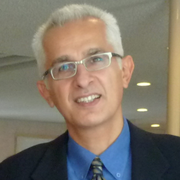
Dr. Kamran Sedig serves as a Professor in the Department of Computer Science and the Faculty of Information and Media Studies at Western University, where he directs the Insight Lab. His research focuses on designing interactive technologies to enhance human cognitive activities involving data and information, including decision making, problem solving, and learning across domains like healthcare, finance, and scientific discovery. His academic credentials include: Ph.D. in Computer Science (Human-Computer Interaction) from The University of British Columbia under Prof. Maria Klawe, with dissertation nominated for the Governor General’s Gold Medal M.Sc. in Computer Science (Artificial Intelligence) from McGill University under Prof. Renato De Mori B.Sc. in Computer Engineering and Science from Concordia University as Valedictorian with The Most Great Distinction Sedig’s research synthesizes computer science, information science, cognition theory, and game studies to develop frameworks for interactive visual tools (IVTs). He investigates human-data interaction, visual reasoning, and interactivity design to support complex cognitive tasks like medical diagnosis, financial analysis, and scientific exploration. His human-centered approach emphasizes how computational tools and humans form coordinated cognitive systems for optimal task execution. Analysis of his recent publications reveals dominant trends in health informatics applications (drug safety analytics, electronic health records) and foundational work on human-information interaction frameworks. His visual analytics systems consistently bridge theoretical models with practical tools for ontology exploration, document triage, and explainable AI, demonstrating strong interdisciplinary collaboration across medical and computational domains. Key recognitions include: Governor General’s Gold Medal nomination for doctoral research Valedictorian honors at Concordia University As Insight Lab director, Sedig mentors graduate students through courses like Human-Computer Interaction, Information Visualization, and Design of Digital Cognitive Games. His teaching philosophy emphasizes how cognitive technologies mediate human thinking processes in professional and private contexts. While specific grant details aren’t provided, his lab’s sustained output in health analytics and visual interfaces indicates robust research funding. The Insight Lab operates as a collaborative hub for developing and evaluating IVTs, with current projects including VICTORIOUS for document scoping reviews and VISEMURE for multimorbidity analysis. Sedig’s team prioritizes empirical validation of how interaction design affects cognitive load and task efficiency in real-world data-intensive environments.
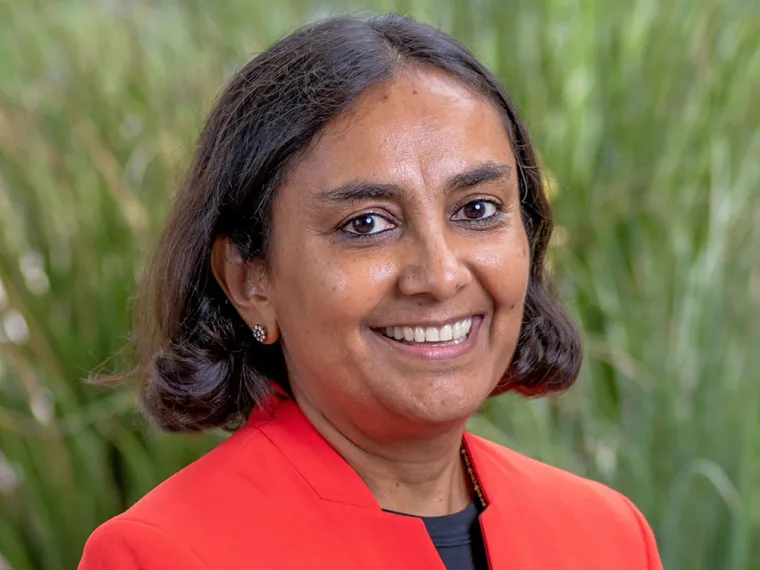
Sudha Ram is the Anheuser-Busch Endowed Professor of MIS, Entrepreneurship & Innovation at the Eller College of Management, University of Arizona. She holds joint faculty appointments as Professor of Computer Science and is a member of the BIO5 Institute and the Institute for the Environment. She is also the Director of INSITE: Center for Business Intelligence and Analytics, a leading research center in data-driven decision-making. Her research focuses on Big Data Analytics , Business Intelligence , Large Scale Network Science , and Machine Learning , with applications in healthcare, smart cities, environmental policy, and social media. She has pioneered methods in explainable AI, conceptual modeling, and multimodal data fusion, integrating statistical, ontological, and machine learning approaches. Recent publications demonstrate a strong trend in healthcare analytics (e.g., asthma, diabetes, fracture prediction), explainable AI (ROLEX, argumentation-based models), and urban/smart systems (mobility, wearables, environmental impact). Her work consistently appears in top-tier journals and conferences, reflecting sustained scholarly impact. AIS Fellow (2018) INFORMS ISS Distinguished Fellow IBM Faculty Award Peter Chen Award Best Paper Award, IEEE Smart Cities (2016) Best Paper Award, ACM Digital Health (2016) Woman of Impact Award, University of Arizona (2023) Dr. Ram has secured over $70 million in research funding from agencies like NSF, NASA, CIA, and corporations including IBM, Intel, and SAP. She has mentored numerous students and leads a multidisciplinary research team at INSITE. She has held editorial leadership roles in Information Systems Research , Journal of AIS , and is founding co-editor of the Journal of Business Analytics . She directs the INSITE Center, which fosters collaboration across business, computer science, and health domains, enabling large-scale data synthesis and knowledge discovery. The center supports projects in healthcare innovation, smart cities, and environmental policy analytics.
Rong Pan is a Professor at the School of Computing and Augmented Intelligence, Arizona State University (ASU). He holds a Ph.D. in Industrial Engineering from Pennsylvania State University (2002), an M.S. from Florida A&M University (1999), and a B.S. in Materials Science from Shanghai Jiao Tong University (1995). His research focuses on quality and reliability engineering, design of experiments, time series analysis, and statistical learning theory. Key projects involve NSF-funded research on reliability prediction, accelerated life testing, and degradation modeling. He serves as an Associate Editor for the Journal of Quality Technology and has authored over 80 publications. Courses taught include Reliability Engineering, Design of Experiments, and Statistics for Data Analysts. His academic service includes roles as a referee for IEEE Transactions and IIE journals. Research interests emphasize statistical methods for reliability improvement, with recent work on Bayesian inference models, optimal experimental design, and machine learning applications in industrial systems. Grants include collaborations with the NSF, Arizona Department of Transportation, and Science Foundation Arizona. His work bridges theoretical advancements and practical applications in manufacturing, energy systems, and semiconductor reliability. Education: Ph.D. (2002), M.S. (1999), B.S. (1995) Key Research Areas: Reliability Engineering, Bayesian Methods, Time Series, DOE Active Grants: NSF CMMI, SUNY IT Visiting Scholar Program Teaching: IEE 573 Reliability Engineering, DSE 501 Statistics Service: Journal of Quality Technology (Associate Editor), IEEE Transactions (Referee)

Dino Pedreschi is a Full Professor of Computer Science at the University of Pisa, affiliated with the Department of Computer Science (DI-UNIPI). He co-leads the Pisa KDD Lab, a joint research initiative between the University of Pisa and the Italian National Research Council’s Institute of Information Science and Technology, one of the earliest labs focused on data mining and knowledge discovery. His research spans Big Data Analytics , Social Network Analysis , Human Mobility Analysis , Privacy-by-Design , Explainable AI (XAI) , and ethical data mining . He is a pioneer in privacy-preserving data mining and has contributed significantly to understanding societal impacts of AI and big data. Recent publications highlight trends in explainable AI , fairness-aware data mining , urban mobility modeling , and socio-economic nowcasting , reflecting a strong interdisciplinary focus combining computer science, social science, and policy. Notable scientific awards include: Google Research Award on Privacy (2009) University of Pisa Ordine del Cherubino (2017) Pedreschi has played leadership roles in major conferences such as ECML/PKDD (Co-Chair 2004), ICDM (Vice-Chair 2005), and ICDE (Vice-Chair 2014). He founded the Business Informatics MSc program at the University of Pisa to train interdisciplinary data scientists. He has been a visiting scientist at the University of Texas at Austin, CWI Amsterdam, UCLA, and the Barabási Lab at Northeastern University. He actively contributes to European research initiatives including SoBigData++, FAIR, and TAILOR, and has advised on AI policy, including testimony before the Italian Parliament on AI and labor markets. He is a key member of the Pisa KDD Lab, a leading research group in data science and AI ethics, fostering collaboration between academia and public institutions.
- Philosophy
- Complexity Theory
- Materialism
- +۶ مورد دیگر
Manuel DeLanda is a New York-based cross-disciplinary theorist and artist. He holds the rank of Professor at The European Graduate School / EGS and serves as a lecturer at Princeton University's School of Architecture and Pratt Institute's Graduate Architecture and Urban Design program. His academic career includes past roles as a Fellow at Princeton's Institute for Advanced Study (2000/01) and teaching positions at the University of Pennsylvania and Columbia University. Education: BFA from the School of Visual Arts (New York), PhD from the European Graduate School (2010). Research interests span philosophy, complexity theory, materialism, science studies, and Deleuzean thought. His work integrates interdisciplinary approaches to topics like assemblage theory, urban capitalism, morphogenesis, and the philosophy of science. Key themes include the application of mathematical concepts (topology, chaos theory) to social and historical analysis, and rethinking materialist frameworks across disciplines. Notable contributions include books such as War in the Age of Intelligent Machines , A Thousand Years of Nonlinear History , and Assemblage Theory . His lectures (e.g., on economic agglomeration, urban capitalism, and Deleuzean philosophy) reflect his commitment to bridging abstract theory with empirical analysis. Labs/Teams: No specific lab affiliations mentioned, but his work is collaborative through academic networks and interdisciplinary projects in architecture, urbanism, and philosophy.

- cybersecurity
- online privacy
- Human-AI Interaction
- +۱۱ مورد دیگر
Norman Sadeh is a Professor in the School of Computer Science at Carnegie Mellon University (CMU), where he has made significant contributions to cybersecurity, privacy, and AI research. He has co-founded and co-directed several groundbreaking graduate programs at CMU, including the Privacy Engineering Program (2012-present), the Ph.D. Program in Societal Computing (2003-2013), and the MBA track in Technology Strategy and Product Management (2005-2017). Carnegie Mellon University, School of Computer Science Software and Societal Systems Department CyLab Security and Privacy Institute Manufacturing Futures Institute Dr. Sadeh received his Ph.D. in Computer Science at CMU with a major in Artificial Intelligence and a minor in Operations Research. He holds an M.Sc. in computer science from the University of Southern California and a BS/MS degree in electrical engineering and applied physics from the Free University of Brussels (Belgium) as 'Ingénieur Civil Physicien.' Professor Sadeh's research spans cybersecurity, online privacy, Human-AI Interaction, AI governance, mobile computing, the Internet of Things, user-oriented machine learning, and language technologies. He is particularly known for his pioneering work on AI-based privacy enhancing technologies, including privacy assistants, automated privacy compliance tools, and NLP-based privacy solutions. His work has influenced the design of privacy features at major technology companies including Apple, Google, and Facebook/Meta, as well as privacy policies at regulatory agencies like the Federal Trade Commission and the California Office of the Attorney General. Analysis of his recent publications shows a strong focus on practical privacy solutions, particularly in mobile and IoT contexts, with an emphasis on making privacy more usable and understandable for end users. His work bridges technical innovation with policy implications, addressing both the technological and human aspects of privacy protection. 2018 Outstanding Entrepreneur of the Year award from the Pittsburgh Venture Capital Association Test of time award by the AAAI Conference on Web and Social Media (ICWSM) Gartner Group's Magic Quadrant leader in Security Awareness Computer-Based Training for 4 consecutive years Deloitte's Technology Fast 500 recognition for 3 consecutive years Professor Sadeh has advised numerous students, including PhD candidates like Aerin (Shikhun) Zhang, whose dissertation focused on understanding diverse privacy attitudes. His research has been funded through various grants, including NSF SaTC projects, and has resulted in technologies that protect tens of millions of users worldwide. He also founded Wombat Security Technologies, which was acquired by Proofpoint in 2018 and whose technologies are used by over 75% of Fortune 100 companies. Professor Sadeh leads several research initiatives including the Privacy Engineering Program, the Usable Privacy Policy Project, the Personalized Privacy Assistant Project, and CMU's Privacy Infrastructure for the Internet of Things. His Mobile Commerce Lab and E-Supply Chain Management Lab have produced influential research that has been commercialized by major organizations including IBM, Raytheon, Boeing, and the U.S. Army.
Professor Cameron Tonkinwise is a leading international expert in Design Studies and Transition Design, currently serving as Research Director at the Design Innovation Research Centre at the University of Technology Sydney (UTS). With a career spanning institutions like Carnegie Mellon University, Parsons The New School for Design, and UNSW Australia, he has significantly influenced global design education and practice through his advocacy for systemic sustainability and social responsibility. PhD in Philosophy, Art History and Theory from the University of Sydney (1999) His research focuses on the role of design in enabling structural transformations for sustainable futures, blending Transition Design, ethical considerations, and speculative practices. Recent work examines systemic change through everyday habits, ontological design, and service systems in sharing economies. Key trends in his publications include: Transition Design frameworks for climate futures and circularity Critical analysis of sustainable practices and design ethics Systems theory applications in sociotechnical change Projects currently led by Cameron involve: Transitioning Australian banks toward inclusive financial services Designing equitable distributed energy systems Developing cool public spaces to combat urban heat