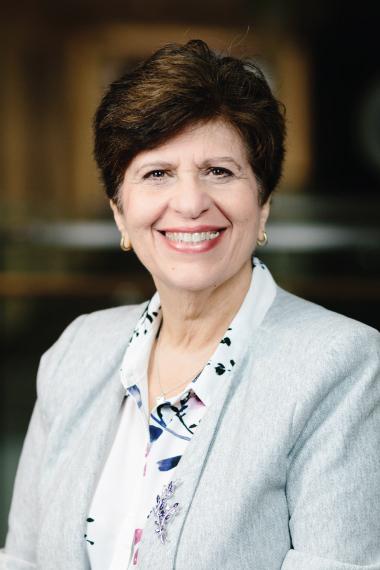
Elizabeth Sanna Barron is a Professor at the Department of Geography and Social Anthropology , Faculty of Social and Educational Sciences, Norwegian University of Science and Technology (NTNU). Her research intersects with political ecology, conservation social science, and critical physical geography, focusing on emplacement theory and its applications to sustainability. Co-PI for EMBAST (2022-2026) - NSF-funded algal bloom sustainability research Research Team Leader for Mission Mjøsa (2022-2027) - multidisciplinary freshwater management project Senior Researcher in Arctic Auditories (2021-2025) - Norwegian Research Council-funded hydrosphere study Her academic contributions include chairing IUCN's Fungal Use Specialty Group and serving as IPBES coordinating lead author. Current teaching includes advanced geography courses like GEOG8001 Theoretical Perspectives in Geography . Research spans fungal conservation epistemology, Arctic auditory ecology, and decolonial environmental frameworks. Key publication themes include: Emplacement theory development across 15+ years Water sustainability Intergovernmental biodiversity assessments Non-human agency Post-capitalist environmental models Alternative economic metrics
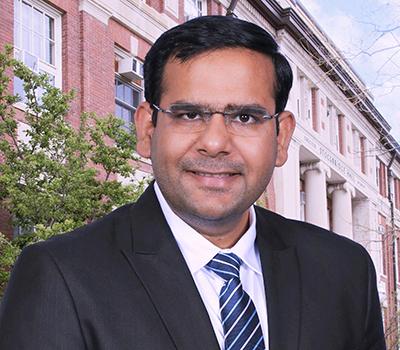
Zaiwen Feng is a researcher actively contributing to data governance, semantic modeling, and causal inference. His work focuses on knowledge graphs, graph-based methods, and service-oriented architectures through collaborations with institutions like the University of Queensland and universities in China. Research Focus : Graph Differential Dependencies, Entity Resolution, Causal Effect Estimation, and Ontology Alignment Methodologies : Machine Learning, Variational Autoencoders, Prompt Engineering, and Semantic Retrieval Application Areas : Biomedical Data, Property Graph Recommendation, and Process Model Repositories Key trends in his publications include automated semantic modeling , neural approaches for entity resolution , and causal inference with graph structures . He frequently collaborates with researchers like Keqing He, Wolfgang Mayer, and Selasi Kwashie across conferences such as HPCC, BIBM, and WISE.
Markku Keinänen is an **Adjunct Professor** at the **Department of History, Philosophy and Literary Studies** within the **Faculty of Social Sciences** at Tampere University. His research focuses on **metaphysics, formal ontology, trope theory, and the metaphysics of science**, with particular emphasis on issues like relational inherence, natural kinds, and the ontology of causal processes. He collaborates extensively with Dr. Jani Hakkarainen on foundational projects, including a forthcoming book *Tropes, Causal Processes and Natural Kinds*. Key research interests include: Analysis of trope theories and their application to substance and relation ontology Critique of E.J. Lowe's four-category ontology Formal ontological systems addressing modality and causality Keinänen has been funded by the **Finnish Cultural Foundation**, **Emil Aaltonen Foundation**, and **Kone Foundation**. His recent work critiques relation regress problems and develops trope-based solutions to ontological challenges. He teaches metaphysics courses, including an upcoming 2026 meta-ontology course. Publications span **23 articles** in leading journals like *Synthese*, *Erkenntnis*, and *Philosophical Quarterly*, co-authored with prominent philosophers like Jani Hakkarainen and Tuomas Tahko. His work bridges analytic metaphysics with scientific realism.
Dr. Ian Bayley is a Senior Lecturer in Computer Science at the School of Engineering, Computing and Mathematics, Oxford Brookes University. He serves as Subject Coordinator for MSc courses in Computing Science, Advanced Computer Science, and Computer Science for Cyber Security. His research focuses on cybersecurity, secure programming, software engineering, and design patterns, with collaborations on topics like LLM evaluation, exploratory testing for machine learning, and agent-oriented programming for microservices. He is affiliated with the Cloud Computing and Cybersecurity Group (CCC) and the Artificial Intelligence, Data Analysis and Systems (AIDAS) Institute. Teaching responsibilities include modules such as Secure Programming (undergraduate/postgraduate) and Professional Programming Practice for first-year undergraduates. He actively supervises cybersecurity projects and students, including Debalina Ghosh (LLM evaluation) and Kieren Stanton (authentication in vehicular networks). Research interests span cybersecurity patterns, software design composability, formal methods for web services, and agent-oriented approaches to microservices. Recent work explores LLM evaluation via scenario-based meta-information and testing challenges in machine learning applications. He co-leads research on design pattern composition and algebraic specifications. Publications span journals like Journal of Systems and Software and IEEE Transactions on Software Engineering , addressing topics from cybersecurity patterns to formal verification of web services. His teaching and research emphasize practical software engineering principles and cutting-edge cybersecurity practices.
Dr. Sadasivam Karuppannan is a Senior Lecturer at UniSA Creative, University of South Australia. His research focuses on urban sustainability, climate migration dynamics, cultural heritage conservation, and the socio-ecological impacts of urban design. With extensive fieldwork in South Asia and Australia, he examines how built environments influence community resilience and ecological health. His research explores: Urban green spaces and biodiversity conservation in rapidly developing cities Climate-induced migration patterns and urban adaptation strategies Sustainable housing design in tropical regions Cultural heritage preservation in post-disaster contexts Age-friendly urban infrastructure and services Dr. Karuppannan's publications demonstrate consistent focus on interdisciplinary approaches to sustainable development, particularly analyzing how policy frameworks intersect with community needs across diverse cultural contexts. Recent work emphasizes participatory planning methods and metrics for assessing urban livability. He maintains active collaborations with international researchers on projects addressing urbanization challenges in Global South contexts, particularly examining equitable resource distribution and resilience planning.
Dr. Robert Sean Pickersgill is a Senior Lecturer in Architecture at the University of South Australia (UniSA), specifically within UniSA Creative at the City West Campus. He serves as a Research Degree Supervisor and has maintained an active research profile since at least 2011, with publications extending through 2025. His academic work bridges theoretical architectural philosophy with practical digital implementation in educational contexts. Dr. Pickersgill's research program centers on digital technologies in architectural education, with particular focus on: Virtual and augmented reality applications for construction education Digital simulation environments for architectural learning The philosophical implications of digital representation in design The concept of 'monstrosity' in digital architectural forms Authenticity in virtual learning environments for construction His publication trajectory reveals an evolution from theoretical explorations of digital representation toward practical implementations in architectural education. The OnSite project represents his most sustained research effort, developing virtual site visit methodologies that address critical gaps in construction education. His recent work increasingly examines the philosophical dimensions of digital twins and their application in architectural pedagogy, showing sophisticated integration of Ihde and Verbeek's intentionality frameworks with practical educational concerns. As a Research Degree Supervisor, Dr. Pickersgill collaborates extensively with colleagues across disciplines, particularly with Damian Madigan, Andrew Lymn-Penning, and Rameez Rameezdeen. His work has been supported by educational grants including those from the Australian Office for Learning and Teaching, and has been presented at major international conferences including ACADIA and CDRF. Dr. Pickersgill is affiliated with UniSA's Natural and Built Environments Research Centre and contributes to architectural discourse through both practical implementations and theoretical explorations that challenge conventional boundaries between physical and digital architectural experiences.
Thanasis Papaioannou is a Senior Researcher at the STEcon lab at Athens University of Economics and Business (AUEB), where he has been since 2006. He concurrently teaches Python Programming and Android Programming at the University of Thessaly and Data Management in IoT at the Technological Educational Institute of Thessaly. His research focuses on smart grid demand-side management, IoT data management, gamification for energy conservation, and privacy mechanisms in distributed systems. Education: He holds a B.Sc. (1998), M.Sc. (2000) in Computer Science from the University of Crete, and a Ph.D. (2006) in Informatics from AUEB. He has held postdoctoral roles at EPFL (2008-2013) and positions at CERTH (2013-2016). Research Interests: His work spans IoT-enabled gamification for energy efficiency, decentralized management frameworks, and blockchain applications for trustworthy systems. Notable contributions include frameworks like ONTOCHAIN and CHArGED, addressing challenges in energy conservation and distributed trust. Publications: Over 65 papers in high-impact venues including IEEE Transactions on Smart Grid and ACM e-Energy. Recent work emphasizes blockchain-semantic convergence, decentralized IoT governance, and energy market coordination under uncertainty. Professional Impact: Project manager in 17 national/EU projects, with over 1200 citations. Advises on energy systems and decentralized technologies, emphasizing user-centric design and behavioral interventions.
Dr. Michèle Bowring is a retired Associate Professor in the Department of Management at the University of Guelph. She holds a PhD in Leadership Studies from the University of Leicester, an MBA from York University/Université Laval, and a BA in Psychology from Queen's University. Her roles include Graduate Coordinator for the MSc Management and PhD in Management (Organizational Leadership stream), U of G Senator, and member of the Senate Honours and Awards Committee. Previously, she held academic roles at the University of Leicester and University of Manitoba, focusing on leadership education and research ethics. Her research examines leadership and identity intersections, particularly gender, sexuality, and workplace diversity. Notable projects include investigations into sexual orientation disclosure effects on leadership relationships and discrimination dynamics. She led an OMAFRA-funded initiative to enhance leadership in Ontario's food value chain. Teaching excellence awards include the Asper School of Business Associates Award (2001) and multiple nominations for UGFA Distinguished Professor. Bowring has advised two PhD students and contributed to numerous academic committees. Her presentations span global conferences, addressing topics like LGBTQ+ identity management in hypergendered organizations and nursing leadership gender dynamics. She bridges theoretical rigor with practical applications, emphasizing inclusive leadership frameworks.
Nguyen Thanh Son is a Research Scientist at the Artificial Intelligence Initiative under the Institute of High Performance Computing (IHPC), Agency for Science, Technology and Research (A*STAR), Singapore. He holds a PhD in Information Systems from the School of Information Systems, Singapore Management University (SMU), where he was advised by Associate Professor Hady Lauw. His research focuses on natural language processing, opinionated text mining, and multimodal deep learning. Previously, he completed a visiting PhD program at Carnegie Mellon University (CMU) and an internship at IBM Research Lab in Dublin, Ireland. He also earned a Bachelor of Information Systems from the University of Engineering and Technology (UET), Vietnam National University, Hanoi, with academic distinctions in research. Research Interests: His work spans natural language processing, emotion recognition, knowledge base systems, and agentic AI. He has contributed to advancements in large language models, multimodal encoding, and retrieval-augmented systems. Grants & Awards: He secured a Singapore Aerospace Programme grant (SGD 360,000) as PI and co-led an A*STAR grant (SGD 6 million). His accolades include the SMU Presidential Doctoral Fellowship and top research prizes during his undergraduate studies. Labs & Teams: Active in IHPC's AI initiatives and collaborated with CMU and IBM on projects like sentiment analysis and ontology building. His work bridges academic research and industrial applications in AI.
Melinda Bonnie Fagan is a Professor of Philosophy at the University of Utah, holding the Sterling M. McMurrin Chair. Her research focuses on experimental practice in biology, particularly stem cell and developmental biology, explanation in science, and philosophical conceptions of objectivity and evidence. Education: B.A. in Biology (Williams College, 1992), M.A. in Philosophy (University of Texas at Austin, 2002), Ph.D. in Biological Sciences (Stanford University, 1998), Ph.D. in History and Philosophy of Science (Indiana University, 2007) Her work explores the intersection of philosophy of science, epistemology, and the history of science, with a particular emphasis on the role of values in scientific practice. She has authored numerous publications on stem cell biology, systems biology, and the philosophical implications of scientific modeling. Her recent projects include analyzing interdisciplinary collaboration in scientific research and its impact on explanatory frameworks, as seen in her forthcoming book Explanatory Particularism in Scientific Practice (Oxford University Press, 2025). Scientific Awards: Career Champions Award (2020) University Research Council Faculty Fellow Award (2018) Scholar's Award (NSF, 2014) Choice Award for Outstanding Academic Titles (2014) Grants: Collaborative Explanation Grant (NSF, 2014-2015) NSF FAGAN 2014 Grant (2014-2015) She has also contributed to debates on science and values, bioethics in stem cell research, and the social organization of scientific experiments. Her teaching includes courses on Philosophy of Biology, Science and Society, Feminist Philosophy of Science, and Theory of Knowledge.
Manish Motwani is an Assistant Professor at the School of Electrical Engineering and Computer Science, Oregon State University. His research focuses on automating software engineering practices to improve software quality, particularly in high-performance computing (HPC), REST APIs, and natural language-driven program repair. He leads the Advanced Software Engineering Research (ANSWER) lab, which is part of the Software Engineering and Human-Computer Interaction group. Education: Ph.D. in Computer Science (University of Massachusetts Amherst), Postdoctoral Fellow (Georgia Institute of Technology) Motwani's research bridges empirical analysis of software repositories with automated techniques for testing, debugging, and program repair. Key projects include: Automated Testing for HPC Applications OpenAPI Specification Generation via Static Analysis High-Quality Patch Validation Using Bug Reports JaRFLy Framework for Patch Evaluation Swami Tool for Natural Language Test Oracles RAFL and Blues Fault Localization Techniques His work addresses critical challenges such as patch overfitting, HPC bug detection, and semantic search for real-world defects. He has published in top venues like ICSE, TSE, and EMSE, and holds two U.S. patents for automated requirements and regulatory compliance tools. At Oregon State, Motwani actively mentors and seeks motivated PhD students interested in software testing, debugging, and program repair for HPC and AI/ML applications. He previously contributed to requirements engineering at Tata Research Development and Design Centre in India.
Matthew Stone is a Professor in the Department of Computer Science at Rutgers University, New Brunswick. His primary affiliations are within the School of Arts and Sciences, with cross-listed involvement in Cognitive Science and Perceptual Science. He focuses on designing conversational agents that integrate natural language understanding and generation with grounded, meaningful interactions. Key roles include teaching courses such as CS 440 (Introduction to AI) and CS 504 (Computational Modeling). His research emphasizes the computational foundations of meaning, integrating philosophy, linguistics, and AI to create systems that contextualize communication through environmental grounding, intentional reasoning, and collaborative dialogue. Notable projects include the SPUD system for natural language generation and work on multimodal interaction through gesture and facial signals. He has been funded for projects like 'Community-led Language Technology for NJ: A Design Justice Approach.' Education: PhD in Computer Science (assumed based on faculty role). Awards: Influential Paper Recognition (SIGGRAPH '94), RDI^2 Fellowship for Malihe Alikhani. Grants: Community-led Language Technology Project (2021). Stone collaborates with interdisciplinary teams and mentors students like Malihe Alikhani. His labs explore topics such as embodied conversational agents, computational pragmatics, and language grounding in robotics. Recent work emphasizes ethical and societal implications of AI, advocating for inclusive technology design.
Jay T. Johnson is the University Distinguished Professor of Geography & Atmospheric Science at the University of Kansas, serving as Associate Chair of the department and Director of the Center for Indigenous Research, Science, and Technology (CIRST). His work focuses on Indigenous geographies, cultural survival, and place-based struggles, with comparative research in North America, the Pacific, and Aotearoa/New Zealand. Johnson teaches courses in cultural geography, qualitative research methods, and Indigenous geographies, emphasizing anti-colonial pedagogies. Johnson’s research explores Indigenous methodologies, resource management, and the politics of place. Notable projects include studies on energy sovereignty in Alaska, Indigenous participation in climate science, and the ethical challenges of qualitative data sharing. He has published extensively on Indigenous knowledge systems, decolonial methodologies, and the intersections of environmental justice and racial equity. His honors include the Docking Faculty Scholar award from the University of Kansas (2019) and recognition for diversity contributions from the Association of American Geographers (2014). Johnson leads multi-institutional initiatives like the Haskell-NCAR environmental training program and the MOONS Indigenous STEM mentorship workshop. His work bridges academic and Indigenous communities through collaborative research centers like CIRST, fostering ethical partnerships and innovative methodologies. Johnson’s career reflects a commitment to Indigenous self-determination, evidenced through his advocacy for research sovereignty, place-based pedagogy, and the integration of Indigenous epistemologies into mainstream geosciences. His recent work emphasizes multispecies coexistence frameworks and the spectral agency of historical landscapes.
Knut Ivar Austvoll is an Associate Professor in the Department of Archaeology, Conservation and History at the University of Oslo, where he has held permanent academic positions since 2019, including Senior Lecturer and current Associate Professor since 2023. He previously served as a Postdoctoral Researcher at the University of Gothenburg (2021–2023) and completed his PhD at the University of Oslo in 2018. His academic journey reflects a strong foundation in Scandinavian prehistory, with degrees from the University of Oslo, Aarhus University, and the University of Stavanger. His research is centered on the social organization, political economy, and maritime interactions of Late Neolithic and Bronze Age societies in northwestern Scandinavia. He investigates how ecological factors, seafaring, and long-distance exchange networks contributed to sociopolitical complexity, utilizing theoretical frameworks such as collective action theory and political economy. His work challenges terrestrial narratives in archaeology by emphasizing the role of maritime connectivity in prehistoric Europe. The trends in his publications reveal a consistent focus on Bronze Age Scandinavia, with recent articles (2020–2025) exploring coercive and cooperative power structures, climate resilience, boat-building sites, and mobility patterns. His research integrates archaeological data with paleoclimatic and biomolecular evidence, reflecting an interdisciplinary and macro-regional approach to understanding prehistoric societies. Scientific Awards: No scientific awards explicitly mentioned in the provided text. Advising and Grants: While specific PhD students are not listed, Austvoll has contributed to academic training as Head of Research Training at the University of Oslo. He is involved in multiple research projects, including Maritime Encounters , Modeling Bronze Age Societies , SCAPES (Social Complexity and Population Entanglements), and The Heritage Experience Initiative (HEI) , indicating active grant involvement and leadership in collaborative research. Labs, Teams, and Research Groups: He is affiliated with several research groups at the University of Oslo, including Heritage, Time and Memory , Materialities – in the past and present , and Violence . The Gendering the Nordic Past group is noted as completed. His collaborative work with scholars such as Johan Ling, Mikael Fauvelle, and Christopher Prescott highlights his integration into national and international research networks.
Henry E. Smith is the Fessenden Professor of Law at Harvard Law School, leading the Project on the Foundations of Private Law. He previously taught at Yale and Northwestern Law Schools. Educated at Harvard (A.B.), Stanford (Ph.D. in Linguistics), and Yale (J.D.), he clerked for Judge Ralph K. Winter. His research focuses on property law, intellectual property, and the law and economics of private law systems. Smith emphasizes how legal structures reduce information costs and counter opportunism through modular frameworks and equity principles. He authored influential texts like Property: Principles and Policies and co-edited volumes on private law theory and equity. His work bridges legal theory with practical applications, addressing topics like hydraulic fracturing trespass, equitable remedies in corporate law, and interdisciplinary legal complexity. Smith actively contributes to legal institutions, including the American Law Institute as a Reporter for the Fourth Restatement of Property. Education: A.B. Harvard, Ph.D. Stanford (Linguistics), J.D. Yale Research Interests: Property architecture, equity as meta-law, legal complexity, and intellectual property governance Leadership: Directed Harvard’s private law initiative, served as Society for Institutional and Organizational Economics President (2015–16) Smith’s scholarship integrates philosophy, economics, and jurisprudence to analyze private law’s systemic function, advocating for frameworks that balance formalism with equitable interventions. His recent work explores Adolf Reinach’s phenomenology and network models of legal relations to explain legal system coherence.