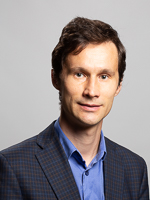
Robert Jenssen is a Professor in the Machine Learning Research Group at UiT The Arctic University of Norway and serves as the Director of Visual Intelligence , an 8-year Research Council of Norway-funded SFI center. His research focuses on solving societal challenges in healthcare, marine mapping, energy, and Earth observation through collaborations with industry and public stakeholders. Director, Visual Intelligence (SFI) Center Professor, UiT Adjunct Professor, Pioneer Centre for AI (University of Copenhagen) and Norwegian Computing Center His methodological expertise spans neural networks, information-theoretic learning, self-learning, and explainable AI (XAI). Recent work emphasizes multimodal learning, uncertainty estimation, and medical image analysis. Scientific awards include: Best Paper, Pattern Recognition Letters (2024) Dissertation Award, Norwegian AI Society (2023) Best Paper, Color and Visual Computing Symposium (2022) IEEE GRS Society Letters Prize (2013) Prize for Young Researchers, University of Tromsø (2007) He contributes to international leadership as a member of the Scientific Advisory Board (SAB) for the Max Planck Institute for Intelligent Systems, France's SequoIA AI Excellence Cluster, and Denmark's DIREC center.
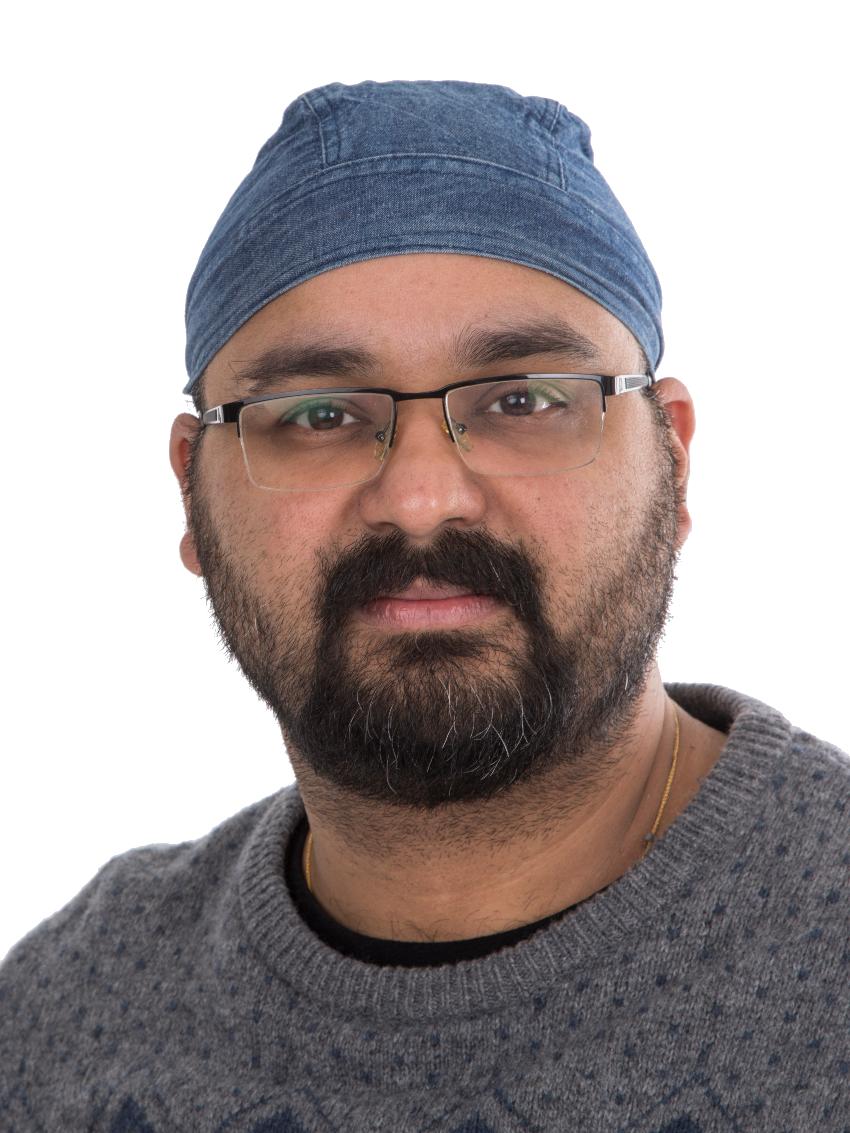
Habib Ullah is an Associate Professor in Data Science at the Norwegian University of Life Sciences (NMBU), Norway, where he conducts research at the intersection of computer vision and machine learning. He is affiliated with the Institute of Data Science under the Faculty of Science and Technology. He has previously held academic positions at COMSATS University Islamabad, Pakistan, and the University of Ha'il, Saudi Arabia, and served as a postdoctoral researcher at The Arctic University of Norway. Educational Background: PhD in Information and Communication Technology (Computer Vision), University of Trento, Italy (2011–2015) MSc in Electronics and Computer Engineering, Hanyang University, South Korea (2007–2009) BSc in Computer Systems Engineering, NWFP University of Engineering and Technology, Pakistan (2002–2006) Habib Ullah's research is primarily focused on computer vision and machine learning, with applications in aquaculture, agriculture, and human behavior analysis. He investigates underwater fish feeding sounds using audio classification, develops zero-shot learning models for recognizing unseen classes, and applies deep learning to detect stress in salmon via skin dot patterns. He also explores AI-driven controlled environment agriculture, leveraging sensors and automation for optimal crop growth. His work emphasizes practical AI solutions for real-world challenges in environmental and biological domains. The recent publications highlight a strong trend in leveraging deep learning for zero-shot and semi-supervised learning, particularly in computer vision tasks such as sea ice classification, crowd anomaly detection, and agricultural monitoring. His research spans remote sensing, biomedical signal processing, and human activity recognition, demonstrating interdisciplinary versatility. The keywords reflect a focus on robust feature representation, knowledge transfer, and model generalization. Scientific Awards and Funding: Industrial PhD grant 'Advancing Controlled Environment Agriculture AI' from The Research Council of Norway (Project number 354125, 2 million NOK, 2024) Team member (Coordinator-Participant) in the Battery Cell Assembly Twin (BatCAT) project funded by Horizon Europe (7 mEuro, 2023–2027) Development of an AI-Based Image Analysis System for Monitoring Plant Status (Funding: 1.8 mNOK, starting 2025) Habib Ullah actively supervises PhD projects and contributes to academic service through editorial and organizational roles. He has served as an Associate Editor for IEEE Access, Guest Editor for MDPI Remote Sensing, and Editor of the Springer book Machine Learning Techniques and Sensor Applications for Human Emotion, Activity Recognition, and Support (ML-SHEARS) . He has also been a Track Chair and Program Committee Member for several international conferences, reflecting his leadership in the academic community. His research is supported by significant grants and collaborative projects, indicating strong institutional and international engagement. He is involved in multiple research teams and projects, including the BatCAT project on battery manufacturing and AI applications in controlled environment agriculture with RIFT LABS AS. His lab work integrates deep learning, sensor fusion, and data analytics for environmental and biological monitoring systems.
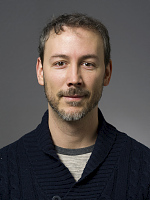
Egor Kostylev serves as an Associate Professor in the Department of Informatics within the Faculty of Mathematics and Natural Sciences at the University of Oslo. His research focuses on the theoretical foundations connecting symbolic and sub-symbolic artificial intelligence, particularly examining relationships between formal logic systems and machine learning approaches. His educational background includes an MSc (Specialist, 2005) and PhD (Candidate, 2009) from Lomonosov Moscow State University under Prof. Vladimir A. Zakharov. He subsequently held research positions at the University of Edinburgh (2010-2013) and the University of Oxford (2013-2020) before joining the University of Oslo in 2020. Kostylev's research interests center on bridging symbolic AI formalisms with sub-symbolic approaches. He investigates connections between various logics (Description Logics, Temporal Logics, Datalog), query languages (SPARQL, Regular Path Queries, OTTR), and machine learning formalisms (Graph Neural Networks, Markov Logic Networks). His work addresses critical challenges in Explainable, Trustworthy, and Green AI through theoretical foundations that connect different AI paradigms. His publication record demonstrates consistent high-impact contributions in theoretical computer science and AI, with numerous publications in top venues including AAAI, LICS, Journal of the ACM, and ICLR. His recent work shows a clear trajectory toward unifying logical reasoning with neural network approaches, particularly through graph neural networks and their connections to logical formalisms. The research spans theoretical foundations of knowledge representation, temporal reasoning in knowledge bases, and the logical expressiveness of modern neural architectures. As a research leader, Kostylev supervises multiple PhD students including Shuwen (Aurora) Liu, Maximilian Pflüger, Roxana Pop, Dongzhuoran Zhou, and Erik Snilsberg. He serves as a Research Theme Leader for the Integreat SFF: Norwegian Centre for Knowledge-driven Machine Learning. His teaching responsibilities include IN3020/4020 Database Systems courses. He leads the Data and Knowledge Management (DKM) research group at the University of Oslo, which focuses on foundational aspects of knowledge representation, database theory, and the intersection with modern machine learning techniques. The group actively collaborates with international researchers and contributes to advancing theoretical understanding of how symbolic and neural approaches to AI can complement each other.
van Khang Huynh is a Full Professor in Mechatronics and Energy Systems at the Department of Engineering Sciences , University of Agder , Norway. He is also a member of the Norwegian Academy of Technical Sciences (NTVA) and has served as an Associate Editor for IEEE Transactions on Transportation Electrification . Education: D.Sc. in Electromechanics & Electric Drives, Aalto University, Finland (2012) M.Sc. in Power Electronics and Motor Drives, Pusan National University, South Korea (2008) B.Sc. in Electrical Power Engineering, Ho Chi Minh City University of Technology, Vietnam (2002) Research Focus: His research spans applied AI in condition-based maintenance , electrical machines , power electronics , design optimization , finite element analysis , and smart energy systems . He leads the Intelligent monitoring research group and is a member of the Energy systems , Intelligent mechatronics (iTron) , and Machine design groups. Projects & Funding: Enhancing Capacity in Condition-based Maintenance of Wind Energy (ECO-WIND) Performance and Health Monitoring of Hydroelectric Power Plants Analytics for Asset Integrity Management of Windfarms Industrial Internet methods for electrical energy conversion systems monitoring and diagnostics Operational Management in Interconnected Renewable Resources with ICT Compact Electric Winches PhD Supervision: He has successfully supervised 8 PhD dissertations and mentored 2 additional PhD projects , all in areas related to mechatronics, renewable energy, and intelligent systems. Labs & Teams: He leads the Intelligent monitoring research group and collaborates closely with the Energy systems , Intelligent mechatronics (iTron) , and Machine design groups at the University of Agder.
Professor Sule Yildirim Yayilgan is a distinguished academic at the Department of Information Security and Communication Technology (IIK) within the Faculty of Information Technology and Electrical Engineering at the Norwegian University of Science and Technology (NTNU) in Gjøvik. She has held the position of Professor since 2020, following her tenure as Associate Professor from 2016-2020. Dr. Yayilgan previously served as Head of Department between 2005-2009 at HIHM (now part of NTNU). Her academic journey spans over 30 years in teaching and research, with significant contributions to interdisciplinary fields bridging AI, cybersecurity, and privacy. Her educational background includes a MSc in Computer Engineering (1995) and a PhD in Artificial Intelligence and Computer Science (2002). Dr. Yayilgan has led and participated in numerous international research projects funded by EU Horizon 2020, Eurostars, Erasmus+, and various Norwegian research councils. She currently leads the MR PET (Multidisciplinary Research group on Privacy and data protEcTion) research group and serves on the scientific board of NTNU's strategic area in Data Science. Dr. Yayilgan's research spans multiple domains with a unifying focus on ethical, legal, and privacy-preserving AI systems. Her work addresses critical challenges in health, energy, education, and security sectors through advanced AI methodologies. She has published over 100 journal and conference papers, with recent work focusing on hate speech detection, border security technology acceptance, smart grid security, and explainable AI applications. Her publications demonstrate a strong emphasis on practical implementations that balance technical innovation with societal considerations. As an active research leader, she currently oversees several significant projects including VIPA-DELF (vineyard disease detection using federated learning), METICOS (border control technology monitoring), CINELDI (intelligent electricity distribution), and AQMA (air quality monitoring). She also serves on multiple ethics boards and research integrity committees, reflecting her commitment to responsible innovation. Dr. Yayilgan has supervised numerous graduate students throughout her career, advising 41+2 (in progress) MSc students and 3+2 (periods) +6 (in progress) PhD candidates. Her administrative contributions include membership in NTNU's Research Integrity Committee, the Trondheim ACM Women Chapter, and various project management boards for EU-funded initiatives. She maintains active professional affiliations with IEEE, the International Association for Pattern Recognition, and COST Actions focused on language technologies and security research.
Sukalpa Chanda is an Associate Professor at the Department of Computer Science and Communication, Halden University College. His research focuses on Machine Learning with applications to Document Image Analysis, Computer Vision, and Video Image Analysis, including advanced methods like Zero-Shot Learning, Deep Learning, and Transformer Networks. PhD in Computer Science from NTNU Appointments: Postdoctoral Researcher at Uppsala University (2018-2019) and Groningen University (2016-2018) Research Interests: Chanda specializes in Zero-Shot and One-Shot Learning for document and image analysis, with applications in handwriting recognition, face generation, and biomedical imaging. His work bridges theoretical machine learning with practical implementations in cultural heritage preservation and healthcare diagnostics. Scientific Collaboration: He collaborates with institutions like Indian Institute of Technology (Pallakad/Patna) and leads the Hugin Munin Project under The Digital Society research priority area. His team includes Master’s students and research assistants working on Transformer Networks and generative models. Key Publications: Recent works include frameworks for zero-shot action recognition (T2L, 2025), Nordic manuscript writer identification (2023), and advanced medical image segmentation networks (PAANet, 2021). His research spans document analysis, deep metric learning, and biomedical applications.
Tomasz Wiktorski is a Professor at the Faculty of Science and Technology , University of Stavanger , where he serves as Study Program Manager for MSc and PhD programs in Computer Science and Data Science. His research integrates conventional time series analysis with deep learning for applications in biomedical data (e.g., wearable devices), oil and gas drilling automation, energy systems prediction, and cloud infrastructure optimization. Education : Not explicitly detailed in the text. Research interests span data-intensive system modeling, focusing on: Biomedical time series analysis (wearables, ECG signal correction) Drilling process optimization via transfer learning and temporal models Energy systems prediction using machine learning Cloud infrastructure monitoring Curriculum development in data science education Scientific trends reveal expertise in recurrent neural networks, support vector machines, and hybrid data modeling for sensor networks across domains like health, petroleum, and cloud computing. Leadership includes designing data science programs and contributing to the EDISON Data Science Framework for global standards.
Zhirong Yang is a Professor at the Department of Computer Science at the Norwegian University of Science and Technology (NTNU). He is affiliated with the Norwegian Open AI Lab and focuses on machine learning, information visualization, and data representation learning. His work integrates techniques like neural attention models, nonnegative matrix factorization, and dimensionality reduction algorithms such as Neighbor Embedding (NE) for visualization. Yang's research has applications in bioinformatics, medical imaging, and engineering systems. His educational background includes advanced studies in pattern recognition and computational methods, though specific details are not provided. Research collaborations span institutions globally, including work on bacterial population genomics and chromosome classification. Key contributions include scalable optimization frameworks for visualization (NE) and novel clustering algorithms using graph random walks and low-rank matrix decompositions. Yang has developed software tools like ChordMixer for sequence processing and HSSNE for robust data visualization. His recent publications emphasize advancements in attention mechanisms, sparse factorization, and medical diagnostics. He actively contributes to open-source projects and collaborates with industry on applications like subsea pipeline inspection and energy scheduling systems.
Lars Magnus Hvattum is a Professor in Quantitative Logistics at Molde University College, Faculty of Logistics. His work focuses on developing mathematical models and optimization methods for complex planning problems across various domains including transportation, maritime logistics, and sports analytics. Professor Hvattum's primary research interests span several key areas in operations research and optimization: Mathematical modeling of complex planning situations Methods to solve combinatorial optimization problems Dealing with uncertainty in planning Development of decision support systems His research portfolio demonstrates a strong focus on both theoretical and applied aspects of optimization. In recent years, he has published extensively on tabu search algorithms, vehicle routing problems, maritime inventory routing, and the application of machine learning techniques to optimization challenges. His work bridges the gap between theoretical advances in operations research and practical applications in logistics and beyond. Professor Hvattum is actively involved in multiple research groups including ABC-AI (Applied, Basic, and Conscientious Artificial Intelligence), the Center for Healthcare Operations Management, and the Energy Logistics Research Group (EneLog). His collaborative research extends across international boundaries with frequent co-authorship with researchers from various institutions worldwide.
Professor Balpreet Singh Ahluwalia is a distinguished academic at UiT The Arctic University of Norway, where he serves in the Department of Physics and Technology. His expertise lies at the intersection of advanced optical technologies and biomedical applications, with a focus on developing cutting-edge microscopy techniques for life science research. As a principal investigator of multiple high-impact research projects, including ERC-funded initiatives, he leads a dynamic research group focused on optical nanoscopy and bio-imaging. Dr. Ahluwalia's research spans several critical areas in modern optical science: Development of super-resolution optical nanoscopy techniques Quantitative phase imaging for live-cell analysis Integrated photonic circuits for biomedical applications Optical trapping and manipulation of biological specimens Raman spectroscopy for molecular fingerprinting His work has established UiT as a leading center for optical nanoscopy in Northern Europe, with particular emphasis on applications in marine biology, liver physiology, and pathogen detection. The research group has pioneered several novel approaches to high-speed, label-free imaging that overcome traditional limitations in resolution and speed. Analysis of Dr. Ahluwalia's recent publication record reveals a strong trajectory toward computational and AI-enhanced microscopy, with increasing focus on real-time imaging of dynamic cellular processes. His work bridges fundamental optical engineering with practical biomedical applications, particularly in the areas of nanoparticle-cell interactions, bacterial identification, and tissue imaging of marine organisms. Dr. Ahluwalia has received significant recognition through competitive research funding: ERC Starting Grant (16 M NOK) for high-speed chip-based nanoscopy ERC Proof-of-Concept grant (1.5 M NOK) for affordable photonic-chip based optical nanoscopy UiT Strategic Funding (13 M NOK) for Centre for Advanced Nanoscopy Multiple international collaborations including EU MSCA projects As an educator, Dr. Ahluwalia teaches FYS-8029 Optical Nanoscopy and mentors PhD students through multiple funded projects. His laboratory, part of the Ultrasound, Microwaves and Optics research group, maintains state-of-the-art facilities for optical nanoscopy, including custom-built super-resolution microscopes and integrated photonic platforms. The research environment fosters interdisciplinary collaboration between physicists, biologists, and computer scientists working toward next-generation imaging solutions.
Hyeongji Kim is a Postdoctoral Fellow at the Department of Physics and Technology within UiT The Arctic University of Norway . His research focuses on advanced machine learning techniques, particularly in metric learning and deep learning applications. Current institution: UiT The Arctic University of Norway Department: Physics and Technology Affiliation: Machine Learning Group Research Interests include: Deep Hyperspherical Metric Learning Few-Shot Medical Image Segmentation Adversarial Robustness in AI Class Hierarchy Analysis in ML Biological Imaging Applications Publication Trends show expertise in metric learning, medical imaging, and adversarial AI security. His work bridges theoretical mathematics and practical deep learning implementations, with applications in healthcare and marine biology.
Prof. Baltasar Beferull-Lozano is Professor, Chief Research Scientist/Research Professor and Head of the Signal and Information Processing for Intelligent Systems Department at Simula Metropolitan . His leadership role spans directing cutting-edge research at the intersection of data science, networked systems and artificial intelligence. Research Interests: His group pursues a broad agenda that includes Data science and machine learning Online optimization and streaming algorithms Graph signal processing and higher-order networks Intelligent sensing, signal processing and inference Cyber-physical systems and IoT In-network distributed and cooperative intelligence AI-driven networks and communication systems Across these themes, his work consistently develops mathematically rigorous yet computationally efficient frameworks that enable learning and inference on complex, dynamic networked data. Publication Trends: Over 2021-2025 he has produced a prolific stream of journal and conference papers. Recurrent topics include topological signal processing , graph neural networks , transfer learning for wireless radio mapping , online kernel methods , simplicial and higher-order models , and non-linear topology identification . These works collectively advance both theoretical foundations and practical algorithms for next-generation networked AI systems. Scientific Awards: No awards are listed in the provided text. Advising & Grants: While no explicit grants or student lists are supplied, the volume and senior authorship of publications suggest Prof. Beferull-Lozano leads a sizeable research group comprising PhD candidates and post-doctoral researchers working on externally funded projects. Labs & Teams: He heads the Signal and Information Processing for Intelligent Systems Department at Simula Metropolitan, a multidisciplinary unit focused on machine learning, signal processing and networked intelligence.
Hassan Sartaj serves as a Postdoctoral Fellow within the Department of Engineering Complex Software Systems at Simula Research Laboratory. His research bridges advanced software engineering methodologies with critical healthcare applications, focusing on medical device safety and reliability through innovative digital twin frameworks. His research profile centers on AI-driven software engineering for healthcare systems , with core expertise in digital twin creation , uncertainty-aware simulation , and LLM-enhanced testing . Key contributions include developing meta-learning approaches for medical device digital twins (MeDeT) and quantum extreme learning machines for practical software testing. His work consistently addresses real-world challenges in healthcare IoT, particularly in medicine dispensers and cancer registry systems, emphasizing safety-critical validation. Analysis of his 15 most recent publications reveals a dominant trend toward integrating foundation models with cyber-physical systems engineering . Over 70% of his 2024-2025 output explores LLMs for uncertainty identification in self-adaptive robotics, differential testing of medical rule engines, and environment simulation for digital twins. This reflects a strategic pivot toward leveraging generative AI for validating safety-critical healthcare software, with strong emphasis on practical DevOps implementation in evolving healthcare applications.
Jeremy Barnes is an Assistant Professor in the IXA Group at the University of the Basque Country (UPV/EHU), part of the HiTZ Centre. He holds a PhD in Computational Linguistics and has extensive postdoctoral experience at the University of Oslo. His research focuses on cross-lingual methods, sentiment/emotion analysis, weak supervision, and under-resourced language resources. He has contributed to projects like NorDial and NorLM, developing tools like skweak. Barnes teaches courses in computational syntax, text mining, and NLP. Education: PhD (Pompeu Fabra University), M.A. and B.A. in Linguistics Key Projects: LUMINOUS (multimodal LLMs), SANT (Norwegian sentiment analysis) His work spans structured sentiment analysis, cross-lingual transfer learning, and dialectal feature identification. He has received awards for his book Sonic Ethnography (2021) and photography (2020). Barnes advises numerous Master's theses and collaborates internationally on NLP challenges.
Sule Yildirim Yayilgan is a Professor at the Department of Information Security and Communication Technology (IIK) within the Faculty of Information Technology and Electrical Engineering at Norwegian University of Science and Technology (NTNU). With over 30 years of academic experience, she leads the MR PET research group focused on Privacy and Data Protection. PhD in Artificial Intelligence (2002) MSc in Computer Engineering (1995) Her research spans: AI/ML for health, energy, education, and security Cybersecurity & Federated Learning Explainable AI & Bias Reduction Blockchain & Multilingual NLP Recent projects include: VIPADELF : Vineyard Leaf Disease Detection with Federated Learning METICOS : EU Horizon2020 Border Control Platform LITHME : Human-Machine Era Language Technologies (COST Action CA19102) She serves on scientific boards for: NTNU Data Science Strategic Area 3DMT European Master’s Program