

Xiaoming Liu is the Anil K. and Nandita Jain Endowed Professor of Engineering and MSU Foundation Professor in the Department of Computer Science and Engineering at Michigan State University . Holding a Ph.D. from Carnegie Mellon University (2004), he leads cutting-edge research in computer vision and machine learning. Research Interests : Computer Vision Pattern Recognition Image and Video Processing Machine Learning Medical Image Analysis Multimedia Retrieval Recent Research Trends : Focus on 3D object detection and depth estimation Development of robust biometric recognition systems Integration of radar-camera fusion for autonomous systems Advancements in self-supervised and multimodal learning Exploration of adversarial AI security Creation of interpretable forgery detection frameworks Teaching : Spring 2013: CSE891-006 Computer Vision Seminar Fall 2012-2015: CSE803 Computer Vision Spring 2014-2017: CSE 471 Media Processing and Multimedia Contact Information : Email: liuxm@cse.msu.edu Office: EB 3137, Michigan State University Phone: +1 (517) 355-2359
جستوجوی استاد و پژوهشگر
استاد راهنما، استاد دانشگاه یا پژوهشگر مناسب برای مسیر پژوهشیتان را پیدا کنید و با او ارتباط بگیرید.
نمایش ۱۶-۳۰ از ۷۲۰ استاد راهنما
اطلاعات این پروفایلها از صفحات عمومی دانشگاهها جمعآوری شده و ممکن است بهروز نباشد.
Ming Yinمشاهده پروفایل
دانشیار
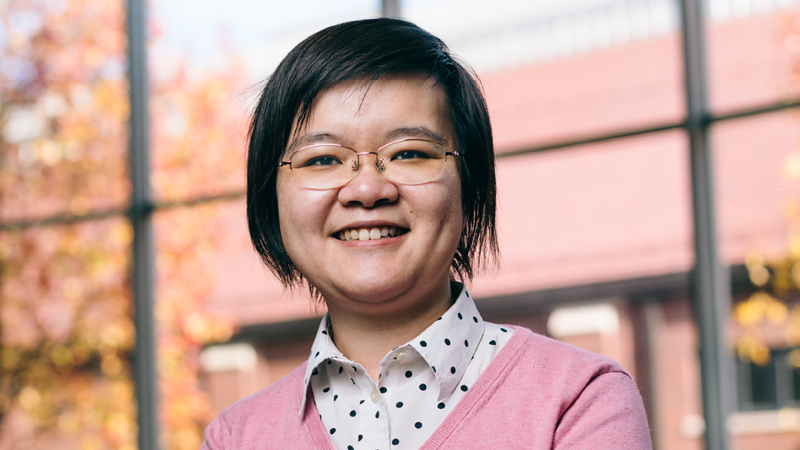
Ming Yin is an Associate Professor in the Department of Computer Science at Purdue University. Her research bridges human-computer interaction, applied artificial intelligence, computational social science, and behavioral sciences. She focuses on leveraging human behavior data to design intelligent systems that balance machine efficiency with human understanding, trust, and engagement. Education : PhD in Computer Science (Harvard University, 2017), B.E. in Computer Software (Tsinghua University, 2011) Previous Roles : Postdoctoral researcher at Microsoft Research New York City (2017–2018) Teaching : Courses on AI, Human-AI Interaction, Data Mining, and Human-Centered Computing Research Interests center on social computing, crowdsourcing, human-AI interaction, and ethical AI. She employs experimental and computational methods to study how human behavior can improve AI systems' design, fairness, and user trust. Her work has significant implications for gig economy platforms, decision support systems, and algorithmic accountability. Scientific Contributions include over 15 recent articles in top venues like CHI, IJCAI, and ACL. These works explore topics such as LLM-driven trust calibration, adversarial social influence, and ethical AI design. Her research has been recognized with the NSF CAREER Award Siebel Scholar (Class of 2017) Multiple Best Paper and Honorable Mention Awards at CHI, CSCW, and HCOMP Teaching Expertise spans courses like Introduction to Artificial Intelligence (CS 471), Human-AI Interaction (CS 592-HAI), and Data Mining (CS 573). She emphasizes project-based learning and designing systems for real-world problems, such as "learning in a new era" in her 2025 HCI course.

Mingchen Gaoمشاهده پروفایل
دانشیار
Mingchen Gao is an Associate Professor in the Department of Computer Science and Engineering at the University at Buffalo, SUNY. He serves as Program Director for the Engineering Sciences (Artificial Intelligence) MS Program and is affiliated with the Institute for Artificial Intelligence and Data Science. Previously, he was a Postdoctoral Fellow at the NIH Clinical Center's Radiology and Imaging Science Department (2014–2017). His research focuses on medical imaging informatics, computer vision, and machine learning applications in healthcare. Notable projects include NSF-funded work on continual learning and federated domain adaptation. He teaches advanced courses like CSE674 (Advanced Machine Learning) and CSE703 (Deep Learning for Medical Imaging). Dr. Gao earned his Ph.D. in Computer Science from Rutgers University (2014), advised by Dimitris N. Metaxas, and a B.S. from Southeast University, China (2007). His lab develops AI systems for medical diagnosis, with recent work on robust neural networks and federated learning frameworks. His team has produced impactful algorithms for segmentation, classification, and domain adaptation in imaging tasks. Current research includes NSF CAREER Award (2023–2028) for deployable medical diagnosis systems and collaborations on drug discovery and toxicity prediction. He advises four PhD students and has authored over 60 peer-reviewed publications in top venues like NeurIPS, CVPR, and MICCAI.
Professor Yiming Ying is a faculty member in the Faculty of Science at the University of Sydney, where he joined in December 2023. Previously, he held tenured positions at SUNY Albany (Departments of Mathematics & Statistics and Computer Science) and was a Lecturer at the University of Exeter. He completed his PhD in Mathematics at Zhejiang University (2002) and postdoctoral training at CityU Hong Kong, UCL, and University of Bristol. Research Focus His research spans statistical learning theory, optimization algorithms, trustworthy AI, and data science mathematics. Key applications include cancer informatics for early detection. His work aligns with Faculty research strengths in Data and Decisions and Decision-Making for a Sustainable Future. Recent Research Trends Analysis of recent publications shows strong focus on theoretical foundations of machine learning: differential privacy, fairness algorithms, optimization methods for AUC maximization, generalization guarantees, and robust learning techniques for adversarial settings and biological data. Awards and Honors SUNY Chancellor’s Award for Excellence (2023) University at Albany Presidential Research Award (2022) University of Exeter Merit Award (2012) Grants and Advising Significant funding includes current ARC DP250101359 (2025-2028) and multiple past NSF grants. He founded the UALBANY Machine Learning Group and currently advises PhD student Peilin LIU on operator learning.

Ian Horrocks is a Professor of Computer Science at the University of Oxford and a Fellow of Oriel College. His research focuses on knowledge representation, description logics, automated reasoning, and semantic web technologies. He has held academic positions at the University of Manchester (2003–2007) and served as Chief Scientist at Cerebra Inc. (2001–2006). Horrocks earned his BSc (1st class), MSc, and PhD in Computer Science from the University of Manchester (1981–1997). His work includes foundational contributions to ontology languages (e.g., OWL) and reasoning systems such as HermiT and ELK. He has supervised over twenty doctoral students and postdoctoral researchers. His honors include Fellowships from the Royal Society (2011), ECCAI (2009), and the British Computer Society (2005). He serves as Editor-in-Chief of the Transactions on Graph Data and Knowledge and leads initiatives in semantic web standards and knowledge graph applications. Key Roles: Editor-in-Chief (Journal of Web Semantics), Co-Chair (W3C OWL Working Group) Grants: EPSRC Senior Research Fellowship (2005), numerous international collaborations Labs: Oxford Semantic Technologies, involvement in projects like RDFox and PAGOdA
Pengtao Xieمشاهده پروفایل
دانشیار
Pengtao Xie is an Associate Professor (with tenure as of June 2025) in the Department of Electrical and Computer Engineering at the University of California San Diego. He also serves as Associate Adjunct Professor in the Division of Biomedical Informatics, Department of Medicine, and holds affiliate appointments with the Halıcıoğlu Data Science Institute, School of Biological Sciences, Shu Chien-Gene Lay Department of Bioengineering, Skaggs School of Pharmacy and Pharmaceutical Sciences, and multiple research institutes including the AI Group, Center for Machine-Intelligence, Computing and Security, Institute of Engineering in Medicine, and Institute for Genomic Medicine. Education: PhD in Machine Learning, School of Computer Science, Carnegie Mellon University Research Interests: His research focuses on machine learning inspired by human learning skills, such as self-explanation, small-group learning, and learning by teaching. He applies these techniques to large language models, foundation models, healthcare, and biomedicine. His work spans generative AI, medical imaging, protein modeling, and drug discovery. Recent Research Trends: His 2024–2025 publications emphasize generative AI for ultra-low-data medical image segmentation, multimodal large language models for biomedical applications, protein function prediction, and novel training strategies like task-adaptive pretraining and bi-level optimization for model adaptation. Scientific Awards: NIH MIRA Award (2025) NSF CAREER Award (2024) Best Graduate Teacher Award – UCSD ECE (2023) ICLR Notable-Top-5% Paper (2023) Global Top-100 Chinese Young Scholars in AI (2022) UCSD Faculty Career Development Award (2022) Tencent Faculty Award (2021) Outstanding Reviewer – ICLR (2021) AMIA Doctoral Dissertation Award Finalist (2020) Amazon AWS Research Award (2020) Tencent AI-Lab Faculty Award (2020) Innovator Award – Pittsburgh Business Times (2018) Siebel Scholarship (2014) Advising and Grants: He currently advises PhD students, postdocs, and master’s students. He has received major grants including the NIH MIRA and NSF CAREER awards, and actively mentors Schmidt AI in Science postdocs and graduate students. Teaching and Labs: He teaches ECE285 Deep Generative Models and ECE175B Probabilistic Reasoning and Graphical Models . His lab focuses on foundational and translational AI research with applications in biomedicine and healthcare.
Professor Guy Williams is a leading academic at the University of Cambridge with a focus on imaging science and clinical neurosciences, affiliated with Downing College and the Wolfson Brain Imaging Centre . Holding a PhD in Physics from his initial Natural Sciences degree, he specializes in nuclear magnetic resonance (NMR) and MRI techniques for brain imaging. Education: BA, PhD in Physics His research centers on non-invasive imaging of brain structure and function, particularly in traumatic brain injury (TBI) and dementia. His work involves developing novel MRI pulse sequences and advanced data analysis algorithms, including AI-based diagnostic tools. He leads studies on white matter integrity post-trauma, longitudinal dementia assessment, and applications of MRI in disorders of consciousness and addiction. Recent publications highlight collaborations in traumatic brain injury outcomes, AI-guided dementia prediction, and neuroimaging of post-COVID cognitive deficits. His team's work on ultra-high field laminar fMRI and distortion correction methods has advanced clinical neuroscience applications. Key techniques include diffusion tensor imaging (DTI), 7 Tesla MRI, and positron emission tomography (PET/MR). His research spans from basic NMR physics to clinical translation, with a strong emphasis on multi-site studies and real-world diagnostic implementation.

- Pattern Recognition
- Biometrics
- Machine Learning
- +۳ مورد دیگر
Anil K. Jain is a University Distinguished Professor at Michigan State University, where he has taught and conducted research for over 50 years. His work focuses on Pattern Recognition , Biometrics , and Machine Learning , with foundational contributions to fingerprint, face, and palmprint recognition. B.S., Indian Institute of Technology, Kanpur (1969) M.S. and Ph.D., The Ohio State University (1970, 1973) in Electrical Engineering His research spans Computer Vision , Deep Learning , and Biometric Security , addressing challenges in adversarial robustness , demographic bias , and generative models . Recent publications emphasize transformer-based architectures , domain adaptation , and contactless biometric systems . Scientific awards include: Inductee, National Academy of Engineering (2016) Inductee, The World Academy of Sciences (2019) BBVA Foundation Frontiers of Knowledge Award (2025) Fellowships: Guggenheim, Humboldt, Fulbright Doctor Honoris Causa: 3 universities He has authored seminal works like Introduction to Biometrics and Handbook of Face Recognition , and served as Editor-in-Chief of IEEE Transactions on Pattern Analysis and Machine Intelligence . His leadership in Forensic Science includes roles on the Defense Science Board and AAAS study teams.
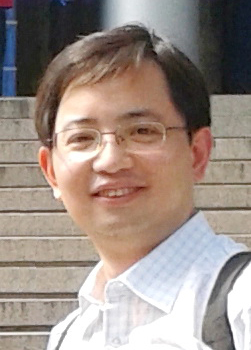
Zhou Zhi-Hua is a Professor at Nanjing University's Department of Computer Science & Technology, serving as Standing Deputy Director of the National Key Lab for Novel Software Technology and Founding Director of LAMDA (Institute of Machine Learning and Data Mining). He holds simultaneous fellowships from ACM, AAAI, AAAS, IEEE, IAPR, IET/IEE, and CCF, reflecting his exceptional contributions to computational intelligence. His educational background includes: B.Sc. in Computer Science from Nanjing University (1996) M.Sc. in Computer Science from Nanjing University (1998) Ph.D. in Computer Science from Nanjing University (2000) Zhou's research pioneers fundamental advances in machine learning theory and applications. His seminal work on ensemble methods established new frameworks for classifier combination, while innovations in multi-label learning and anomaly detection addressed critical challenges in complex data analysis. His research bridges theoretical rigor with practical implementations across diverse domains including biometrics, data mining, and computer vision, resulting in over 150 publications and 18 patents. His textbooks "Ensemble Methods" (2012) and "Machine Learning" (2016) have become standard references in the field. Analysis of his publication trajectory reveals sustained leadership in core machine learning challenges: evolving from neural network ensembles (2002) through semi-supervised learning breakthroughs (2005) to foundational work on multi-instance learning (2012) and theoretical margin analysis (2013). His recent focus demonstrates increasing sophistication in handling complex data structures while maintaining theoretical soundness. His scientific excellence is recognized through: National Natural Science Award of China (2013) PAKDD Distinguished Contribution Award (2016) IEEE ICDM Outstanding Service Award (2016) IEEE CIS Outstanding Early Career Award (2013) Microsoft Professorship Award (2006) Simultaneous fellowships from 7 major international societies Zhou provides extraordinary service to the academic community as Executive Editor-in-Chief of Frontiers of Computer Science and Associate Editor-in-Chief of Science China Information Science. He founded the ACML conference and has chaired premier events including ICDM'16 and PAKDD'14. His leadership extends to serving as General Chair for ICDM'16, Program Chair for IJCAI'15 Machine Learning Track, and Area Chair for multiple top conferences. The available text does not specify student advising details or research grants. He directs LAMDA research group at Nanjing University, which has established itself as a global powerhouse in machine learning research, and contributes significantly to the National Key Lab for Novel Software Technology's mission of developing next-generation intelligent systems.
Habib Ullahمشاهده پروفایل
دانشیار
- Computer Vision
- Machine Learning
- Deep Learning
- +۷ مورد دیگر
Habib Ullah is an Associate Professor in Data Science at the Norwegian University of Life Sciences (NMBU), Norway, where he conducts research at the intersection of computer vision and machine learning. He is affiliated with the Institute of Data Science under the Faculty of Science and Technology. He has previously held academic positions at COMSATS University Islamabad, Pakistan, and the University of Ha'il, Saudi Arabia, and served as a postdoctoral researcher at The Arctic University of Norway. Educational Background: PhD in Information and Communication Technology (Computer Vision), University of Trento, Italy (2011–2015) MSc in Electronics and Computer Engineering, Hanyang University, South Korea (2007–2009) BSc in Computer Systems Engineering, NWFP University of Engineering and Technology, Pakistan (2002–2006) Habib Ullah's research is primarily focused on computer vision and machine learning, with applications in aquaculture, agriculture, and human behavior analysis. He investigates underwater fish feeding sounds using audio classification, develops zero-shot learning models for recognizing unseen classes, and applies deep learning to detect stress in salmon via skin dot patterns. He also explores AI-driven controlled environment agriculture, leveraging sensors and automation for optimal crop growth. His work emphasizes practical AI solutions for real-world challenges in environmental and biological domains. The recent publications highlight a strong trend in leveraging deep learning for zero-shot and semi-supervised learning, particularly in computer vision tasks such as sea ice classification, crowd anomaly detection, and agricultural monitoring. His research spans remote sensing, biomedical signal processing, and human activity recognition, demonstrating interdisciplinary versatility. The keywords reflect a focus on robust feature representation, knowledge transfer, and model generalization. Scientific Awards and Funding: Industrial PhD grant 'Advancing Controlled Environment Agriculture AI' from The Research Council of Norway (Project number 354125, 2 million NOK, 2024) Team member (Coordinator-Participant) in the Battery Cell Assembly Twin (BatCAT) project funded by Horizon Europe (7 mEuro, 2023–2027) Development of an AI-Based Image Analysis System for Monitoring Plant Status (Funding: 1.8 mNOK, starting 2025) Habib Ullah actively supervises PhD projects and contributes to academic service through editorial and organizational roles. He has served as an Associate Editor for IEEE Access, Guest Editor for MDPI Remote Sensing, and Editor of the Springer book Machine Learning Techniques and Sensor Applications for Human Emotion, Activity Recognition, and Support (ML-SHEARS) . He has also been a Track Chair and Program Committee Member for several international conferences, reflecting his leadership in the academic community. His research is supported by significant grants and collaborative projects, indicating strong institutional and international engagement. He is involved in multiple research teams and projects, including the BatCAT project on battery manufacturing and AI applications in controlled environment agriculture with RIFT LABS AS. His lab work integrates deep learning, sensor fusion, and data analytics for environmental and biological monitoring systems.
Bo Hanمشاهده پروفایل
دانشیار
- Machine Learning
- Deep Learning
- Foundation Models
- +۱۱ مورد دیگر
Bo Han is an Associate Professor in the Department of Computer Science at Hong Kong Baptist University's Faculty of Science, where he leads the Trustworthy Machine Learning and Reasoning (TMLR) Group. He also holds a visiting scientist position at the RIKEN Center for Advanced Intelligence Project (RIKEN AIP) in Japan. His research focuses on developing trustworthy and efficient machine learning systems, particularly under imperfect data conditions such as noisy labels, out-of-distribution data, and weak supervision. Bo Han's research interests span Machine Learning , Deep Learning , Foundation Models , Causal Representation Learning , Weakly and Self-supervised Learning , Robustness and Security in Machine Learning , Federated Learning , and AI for Science . His work aims to build intelligent systems that can reliably learn and reason from complex, imperfect real-world data. His recent publications reveal a strong trend toward trustworthy foundation models , robust reasoning with large language models , out-of-distribution detection , privacy-preserving learning , and causal robustness . His research integrates theoretical foundations with practical applications, often published in top-tier venues like NeurIPS, ICML, ICLR, and TPAMI. Notable Awards and Honors: Outstanding Paper Award, NeurIPS Most Influential Paper, NeurIPS IEEE AI's 10 to Watch Award IJCAI Early Career Spotlight INNS Aharon Katzir Young Investigator Award Dean's Award for Outstanding Achievement RGC Early CAREER Scheme Bo Han has been actively involved in the academic community, serving as a Senior Area Chair and Area Chair for NeurIPS, ICML, and ICLR, and as an Associate Editor for IEEE TPAMI, MLJ, and JAIR. He has advised numerous PhD and research students and leads a globally distributed research group. His work is supported by major grants from RGC, NSFC, GDST, RIKEN, and industry partners including Microsoft, Alibaba, Tencent, and Baidu. He also leads research initiatives in Trustworthy Machine Learning , including projects on federated learning, model unlearning, privacy-preserving AI, and robust foundation models, often in collaboration with industry and international institutions.

Qing Caoمشاهده پروفایل
دانشیار
Qing Cao is an Associate Professor of Materials Science and Engineering at the University of Illinois at Urbana-Champaign, with courtesy appointments in Chemistry and Electrical Engineering. He leads the Cao Research Group within the Grainger College of Engineering and serves as Deputy Editor of Science Advances. Dr. Cao received his B.S. in Chemistry from Nanjing University in 2004 and his Ph.D. in Materials Chemistry from the University of Illinois at Urbana-Champaign in 2009. After working for 9 years as a research scientist at IBM Thomas J. Watson Research Center, he returned to UIUC in 2018 as a faculty member. His research focuses on developing functional nanomaterials for unconventional electronic systems, high-performance logic devices, and low-cost energy harvesting. The Cao Research Group specifically works on: nanoelectronic devices based on novel nanomaterials; next-generation memory devices for neuromorphic and in-memory computing; monolithic 3D integration for high performance electronics; high-performance printable electronic materials; and bioelectronics for healthcare applications. His work bridges materials science, chemistry, electrical engineering, and device physics. Analysis of Dr. Cao's recent publications reveals a strong focus on electrochemical memory devices for neuromorphic computing, with significant work on carbon nanotube-based electronics and novel nanomaterials. His 2023 Nature Electronics paper on CMOS-compatible electrochemical synaptic transistors demonstrates his leadership in developing hardware solutions for deep learning acceleration. His research trajectory shows a progression from fundamental carbon nanotube device physics to more applied systems for computing and sensing applications. IBM Pat Goldberg Memorial Best Paper Award (2017) IBM Master Inventor Award (2016) MIT Technology Review TR35 (2016) Forbes '30 Under 30' (2012) and 'Most Influential All-Star Alumni' (2016) Atlantic Council Millennium Fellow (2017) US Frontiers of Engineering by National Academy of Engineering (2016, 2019) 17 IBM Invention Achievement Awards (2011-2018) Dr. Cao has secured significant research funding including NSF grants 1950182 and 2139185. His research group actively recruits graduate students and postdoctoral researchers to work on cutting-edge materials and device projects. His work has resulted in over thirty research papers and fifty patents and patent applications. He teaches graduate courses including MSE 403 (Synthesis of Materials), MSE 460 (Electronic Materials I), and MSE 488 (Optical Materials). The Cao Research Group operates within the University of Illinois' world-class facilities including the Frederick Seitz Materials Research Laboratory and Holonyak Micro and Nanotechnology Laboratory. His research has received support from NSF, DoD, DOE, and industry partners including TSMC. The group's recent $2 million project focuses on developing technology to help mobile devices learn and adapt to their surroundings.
- Multilingual Grammar Engineering
- Linguistics in NLP/Computation in Linguistics
- Societal Impacts of Language Technology
- +۳ مورد دیگر
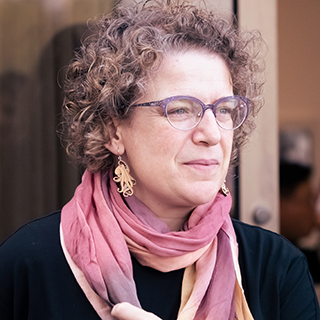
Emily M. Bender is the Thomas L. and Margo G. Wyckoff Endowed Professor in the Department of Linguistics at the University of Washington. She also holds adjunct appointments in the School of Computer Science and Engineering and the Information School. Her research spans multilingual grammar engineering, computational linguistics, societal impacts of language technology, and sociolinguistic variation. She directs the Computational Linguistics Laboratory (The Treehouse) and leads the CLMS program. Bender is a Fellow of the AAAS (2022) and previously served as Howard and Frances Nostrand Endowed Professor (2019–2022). She has authored influential textbooks on NLP fundamentals and pioneered work on data statements to mitigate bias in NLP systems. Her work integrates linguistic theory with computational methods, emphasizing ethical AI and language documentation. Education: PhD in Linguistics from Stanford University (advisor: Ivan A. Sag), AB in Linguistics from UC Berkeley, with studies at Tohoku University. Past roles include NAACL Executive Board Chair (2016–2017) and current roles in the Association for Computational Linguistics leadership. Her Erdős number is 4. Research focuses on the LinGO Grammar Matrix, automatic grammar inference from interlinear glossed text (AGGREGATION project), and societal implications of NLP technologies like large language models. She co-leads the RAISE initiative and contributes to labs like the Tech Policy Lab and Value Sensitive Design Lab. Over 30 advisees have completed PhD and MS degrees under her mentorship. Teaching includes courses on syntax for NLP, societal impacts of language tech, and computational linguistics. Her 2020 ACL paper on form-meaning distinctions in NLP has been influential in ethical discussions. Current projects include The AI CON (2025) on combating tech hype.
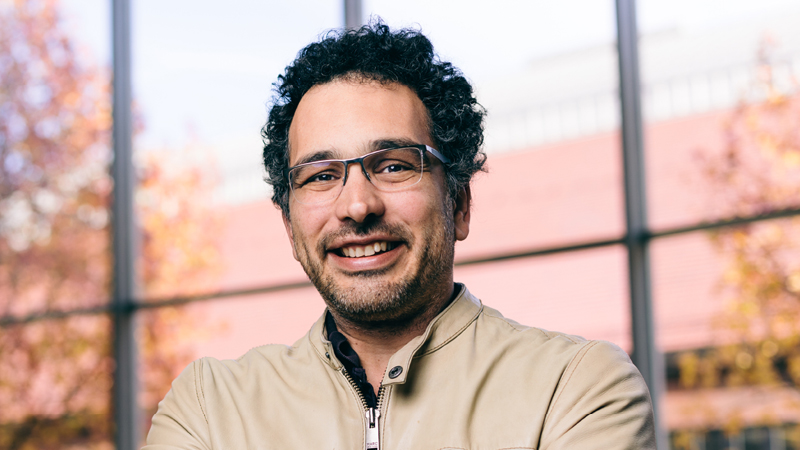
Bruno Felisberto Martins Ribeiro is an Associate Professor of Computer Science at Purdue University, joining the department in Fall 2015. His research focuses on endowing machine learning algorithms with robust invariant representations for relational and temporal data, emphasizing causal and associational tasks. Key research areas include Networking and Operating Systems, Artificial Intelligence, Machine Learning, and Natural Language Processing. He holds a Ph.D. in Computer Science from the University of Massachusetts Amherst (2010). Education: Ph.D., Computer Science, University of Massachusetts Amherst, 2010 Research Interests: Explores invariances in mathematics and machine learning to improve model robustness. Key topics include graph and tensor invariances, causal relationships, adversarial robustness, and applications in recommendation systems, robotics, and drug discovery. His lab’s work has advanced counterfactual task frameworks and causal reasoning in machine learning. Recent Contributions: Recent publications address zero-shot generalization in graph neural networks, causal discovery methods, and defenses against adversarial attacks. His work spans conferences like ICML, NeurIPS, and SIGCOMM. Awards: Best Paper Award at ACM CODASPY 2021 Best Paper Award at SIGMETRICS 2016 Best Paper Award at IEEE NetSciCom 2014 Advising & Students: Supervises current PhD students Beatrice Bevilacqua, Jincheng Zhou, and Yucheng Zhang, along with MSc student Ipsit Mantri. Notable former students include S Chandra Mouli (Meta), Yangze Zhou (Spotify), and Jianfei Gao (Vector Institute). Labs & Teams: Leads research in invariant representations and causal ML, collaborating with institutions like Stanford during his sabbatical. His work bridges theory and practice, impacting areas like network analysis and AI-driven healthcare.

Dr. Daniel J. Bauer is a Professor and Director of the Quantitative Psychology Program and L.L. Thurstone Psychometric Laboratory at the University of North Carolina at Chapel Hill. His research focuses on advancing quantitative modeling techniques for studying negative social behaviors, health outcomes, and psychopathology, with expertise in generalized and nonlinear latent variable models, including multilevel models, structural equation models, and mixture models. His work emphasizes methodological innovations such as Bayesian regularization, measurement invariance evaluation, and the integration of deep learning with psychometrics. Bauer advises doctoral students in quantitative psychology and collaborates with developmental psychology programs. He leads the Thurstone Laboratory, one of the oldest quantitative psychology training programs in the U.S., emphasizing rigorous methodological training and applications in behavioral sciences. Bauer’s research trends span computational advancements in latent variable analysis, regularization for bias detection, and dynamic modeling of developmental processes. His advising includes over a dozen doctoral students now in academia and industry roles. He contributes to labs and initiatives like the Center for Developmental Science, advancing interdisciplinary research in psychological measurement and intervention evaluation.