

Brandon M. Lucia is the Kavčić-Moura Professor of Electrical and Computer Engineering at Carnegie Mellon University and CEO/co-founder of Efficient Computer Company. He leads the Abstract research group and focuses his work on the intersection of computer architecture, systems, and programming languages. Education: Ph.D. in Computer Science and Engineering, University of Washington (2013) — advised by Luis Ceze Research Focus: Brandon's research is broadly centered on intermittent computing , edge computing , and energy-efficient architectures . Two major thrusts define his current work: Intermittent Computing: Making battery-free, energy-harvesting devices programmable and reliable despite frequent power failures. Applications include medical implants, space systems, and large-scale sensing. Orbital Edge Computing: Designing nanosatellite constellations that perform on-orbit data processing, enabling low-latency, high-resolution sensing in space-constrained environments. Scientific Awards: NSF CAREER Award (2017) IEEE TCCA Young Computer Architect Award (2019) Sloan Foundation Fellowship (2021) ASPLOS 2020 Best Paper Award OOPSLA 2015 Distinguished Paper & Artifact Awards IEEE Micro Top Picks (2016, 2018 Honorable Mention) Advising & Grants: Brandon actively advises a strong cohort of Ph.D. students including Zhuo Cheng, Bradley Denby, Souradip Ghosh, Harsh Desai, Kiwan Maeng, Emily Ruppel, and others. His group is funded by the NSF (CAREER and SHF grants), the Sloan Foundation, and industry partnerships. Labs & Teams: He directs the Abstract research group at CMU ECE, which hosts interdisciplinary projects spanning hardware design, compiler construction, and system software for ultra-low-power and space-borne computing platforms.
جستوجوی استاد و پژوهشگر
استاد راهنما، استاد دانشگاه یا پژوهشگر مناسب برای مسیر پژوهشیتان را پیدا کنید و با او ارتباط بگیرید.
نمایش ۱-۱۵ از ۱٬۰۹۵ استاد راهنما
اطلاعات این پروفایلها از صفحات عمومی دانشگاهها جمعآوری شده و ممکن است بهروز نباشد.
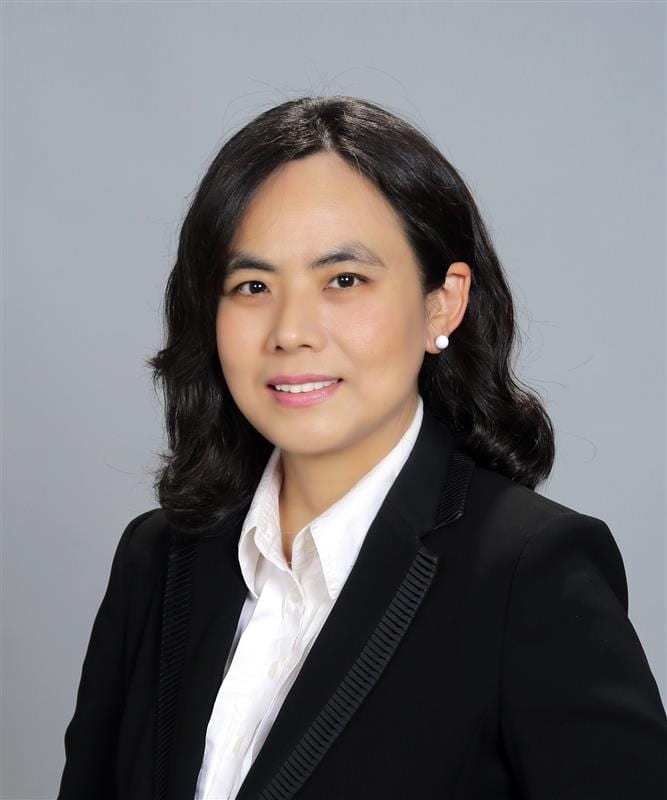
Hyesoon Kim is a Professor at the Georgia Institute of Technology , affiliated with the College of Computing and leading the HPArch research group . She co-directs the Center for Research into Novel Computing Hierarchies (CRNCH) . Her research focuses on Computer Architecture , GPU , Compilers and Runtime Systems , and Hardware Security , particularly for heterogeneous systems. Contact : hyesoon@cc.gatech.edu Location : 266 Ferst Drive, KACB 2344, Atlanta, GA Research Trends Her recent work spans RISC-V extensions for security, CUDA optimization on softcore GPUs, memory safety techniques, and energy-efficient deep learning architectures. Articles emphasize heterogeneous computing , GPU performance scaling, and IoT -oriented neural network methods. Open Source Projects She leads development of Macsim (heterogeneous architecture simulator) and Vortex (open-source GPU platform).
Jiamin Liمشاهده پروفایل
دانشیار
Dr. Jiamin Li is an Associate Professor at the School of Microelectronics, Southern University of Science and Technology (SUSTech), Shenzhen, China. She holds a Ph.D. and B.Eng. in Electrical and Computer Engineering from the National University of Singapore (NUS). Her research focuses on biomedical integrated circuits, energy harvesting, and wireless body-area networks. Education: Ph.D. and B.Eng. in Electrical and Computer Engineering from NUS Employment: Associate Professor (2024–Present), Assistant Professor (2022–2024) at SUSTech; Research Fellow at NUS Dr. Li's research addresses wireless body area powering , low-power biosignal interfaces , and intelligent biosignal processors . Her work leverages microsystem design for applications in biomedical engineering , particularly in energy-autonomous medical devices and human body-coupled communication . Her recent publications highlight advancements in concurrent power/data transmission , subharmonic pulse injection , and triboelectric energy harvesting for biomedical systems. Key venues include IEEE JSSC , Nature Electronics , and conferences like ISSCC and BioCAS. Awards: IEEE SSCS Predoctoral Achievement Award, ISSCC Best Demo Award, ASSCC SDC Best Design Award Committees: IEEE SSCS Women-in-Circuit (WiC) Committee, ISSCC Student Research Preview Committee Opportunities: Positions available for Ph.D., Master's, Postdoctoral Fellows, and Visiting Scholars
- 3D Printing
- Nanotechnology
- Biomedical Engineering
- +۴ مورد دیگر
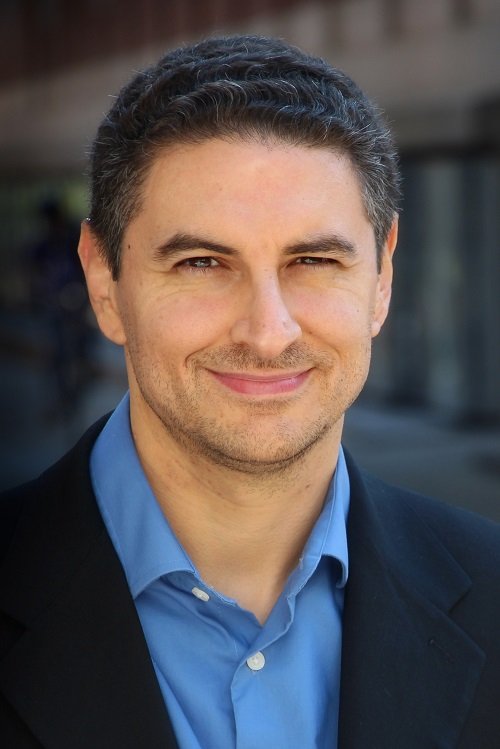
Michael McAlpine is a Professor in the Mechanical Engineering department at the University of Minnesota . He also holds affiliations with the Biomedical Engineering and Electrical and Computer Engineering departments. His research focuses on 3D printing functional materials & devices , Nanoscale inks , Biomedical devices , Bioelectronics , and Flexible Microsystems . Research Interests : 3D Printing, Biomedical Engineering, Nanotechnology, Flexible Electronics, Microfluidics Labs : ME 361/363 Contact : mcalpine@umn.edu , (612) 626-3303, ME 117 Recent Research Trends include 3D Printed Biomedical Devices , Flexible Electronics , and Bioprinting Applications . His work spans from Spinal Organoid Formation to Programmable Drug Release Capsules . Scientific Award : Circulation Research 2020 Best Manuscript Award

- Quantum Computing
- Ultracold Atoms
- Atomtronics
- +۳ مورد دیگر
Dana Anderson is a Professor of Physics and JILA Fellow at the University of Colorado Boulder. He holds dual affiliations with the Department of Physics and JILA, a joint institute between the University of Colorado Boulder and the National Institute of Standards and Technology (NIST). His research focuses on ultracold atoms, quantum computing, and atomtronics, with applications in quantum sensing and space-based experiments. He currently serves as Chief Strategy Officer (CSO) of Infleqtion (formerly ColdQuanta), a quantum technology company he co-founded. Anderson is a principal investigator in the Quantum Pathways Institute, a NASA-funded initiative to develop quantum-based Earth-sensing technologies. He collaborates with institutions like NIST, JPL, and ColdQuanta on projects such as the Cold Atom Laboratory (CAL) for space-based ultracold atom research. His work has been recognized by TIME Magazine and led to significant grants, including a $15M NASA award for quantum space research. Research interests include atomtronics (hybrid atom-electronics systems), neutral atom quantum computing, and ultracold atom gyroscopes. His group develops novel atom chip technologies, such as window atom chips enabling high-resolution imaging, and explores applications like matterwave transistors and quantum inertial sensors. Current projects include shaken lattice interferometry for navigation and Rydberg atom-based microwave sensors. Anderson has pioneered concepts like the matterwave transistor oscillator and contributed to the first neutral atom quantum computing arrays. His work bridges fundamental physics and applied technologies, with a focus on translating quantum phenomena into practical devices. He actively mentors students and postdocs in experimental atomic physics and quantum engineering.

Akhilesh Jaiswalمشاهده پروفایل
استادیار
Dr. Akhilesh Jaiswal serves as Assistant Professor of Electrical and Computer Engineering at the University of Wisconsin-Madison, where his research pioneers device-circuit co-design for next-generation computing systems. His work focuses on enabling extreme-edge intelligence through processing-in-pixel technology, in-memory computing architectures, and bio-inspired neuromorphic systems. His academic credentials include: PhD in Nano-electronics from Purdue University (2019) MS from the University of Minnesota (2014) Bachelor of Technology from Shri Guru Gobind Singhji Institute of Engineering and Technology (2011) Dr. Jaiswal's research program centers on revolutionizing edge computing through hardware innovations that integrate sensing and processing. His device-circuit co-design approach leverages alternate state variables to create energy-efficient systems for real-time applications, with particular emphasis on retina-inspired sensors and photonic memory architectures. This work bridges semiconductor physics with AI acceleration needs, targeting applications from autonomous systems to biomedical devices. Analysis of his 2023-2025 publications reveals dominant themes in photonic SRAM-based in-memory computing (40% of output), retina-inspired motion processing (30%), and secure hardware architectures (20%). His team consistently develops novel bitcell designs that enable XOR logic execution within memory arrays while maintaining compatibility with CMOS fabrication processes. Recent work shows increasing focus on biomedical applications of processing-in-pixel technology. His distinguished recognition includes: Three consecutive ISI Exploratory Research Awards (2020-2023) IEEE Brain Community Best Paper Award (2022) 27 issued US patents with multiple pending applications Nomination for USC Moore Inventor Fellowship (2022) Dr. Jaiswal actively mentors graduate researchers through ECE 790/890/990 courses while securing exploratory funding through ISI and Keston Foundation awards. His patent portfolio demonstrates exceptional translational impact, with industry game-changer classifications from USPTO. The 2022 VLSI-SoC nomination and multiple research highlights in major outlets validate his contributions to hardware security and neuromorphic vision sensors. His laboratory develops integrated hardware platforms combining magnetic tunnel junctions, photonic memory, and CMOS image sensors to create unified processing-in-sensor systems. Current projects include retina-inspired motion segmentation for event cameras and electro-optic frequency transducers for quantum computing interfaces, with strong industry collaboration through patent licensing.

Jonathan Klamkin is a Professor in the Department of Electrical and Computer Engineering at the University of California, Santa Barbara (UCSB). He also serves as the Director of the Nanofabrication Facility, overseeing advanced photonics fabrication resources. His research focuses on integrated photonics, silicon photonics, optical communications, and compound semiconductor integration. Klamkin holds a PhD in Materials from UCSB, an MS in Electrical and Computer Engineering from UCSB, and a BS in Electrical and Computer Engineering from Cornell University. His research interests span cutting-edge areas such as electronic-photonic integration, nanophotonics, and microwave photonics. He has pioneered techniques for heterogeneous integration of compound semiconductors on silicon, enabling scalable photonic systems for applications in LiDAR, high-speed communications, and quantum technologies. Notable awards include the DARPA Young Investigator Award, NASA Early Career Faculty Award, and the PIERS Young Scientist Award. His recent work emphasizes beam steering systems, high-power quantum dot lasers, and photonic integrated circuits for remote sensing and lidar. Klamkin’s lab develops both fundamental materials science and applied photonic devices, with a focus on bridging the gap between semiconductor growth and integrated system design. Key contributions include innovations in grating coupler design, antiphase boundary-free epitaxy for GaAs on silicon, and analog coherent detection for energy-efficient data centers. His research bridges photonics, electronics, and materials science to address challenges in high-performance integrated systems.
Di Zhuمشاهده پروفایل
استاد
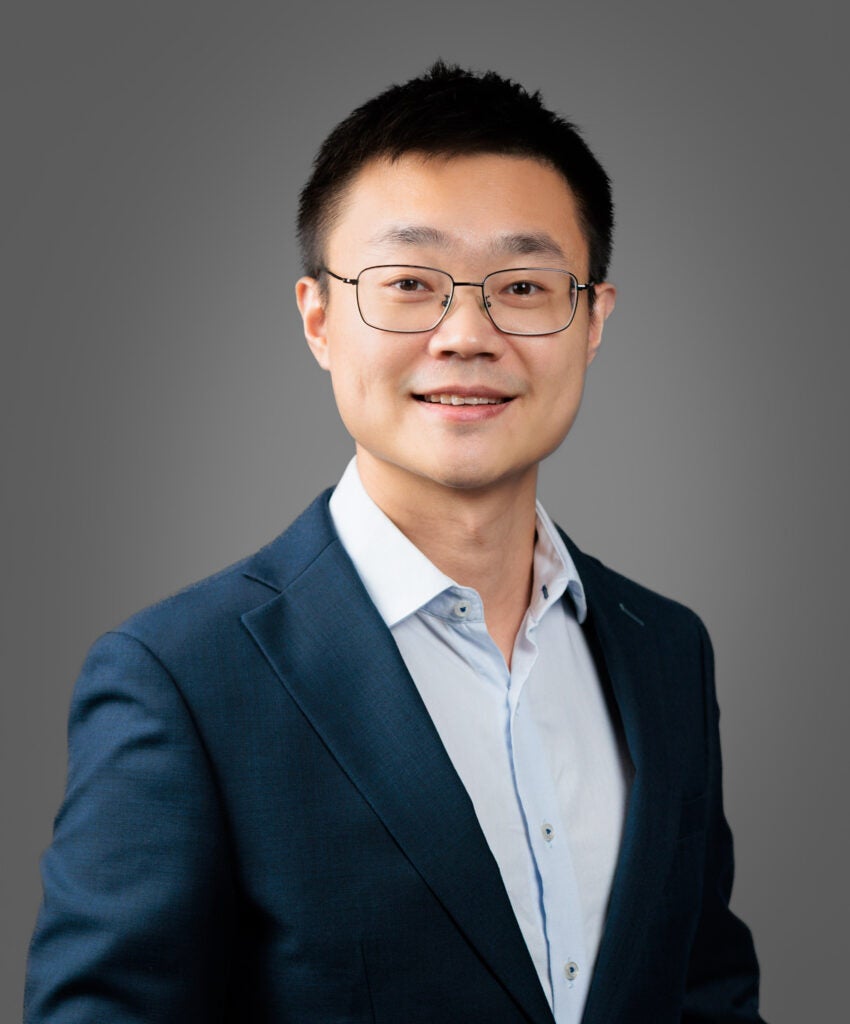
Di Zhu is a Presidential Young Professor in the Department of Materials Science and Engineering at the National University of Singapore (NUS). He holds a B.Eng. from Nanyang Technological University and M.Sc./Ph.D. from MIT, both in Electrical Engineering. His postdoctoral research at Harvard focused on lithium niobate integrated photonics and superconducting detectors. He previously worked as a research scientist and PI at A*STAR's Institute of Materials Research and Engineering (IMRE). Research Interests : Integrated quantum photonics, superconducting detectors, nonlinear optics, and nanofabrication. His group develops scalable quantum photonic devices using lithium niobate and superconducting materials, emphasizing applications in quantum computing, communication, and sensing. Awards : National Research Foundation (NRF) Fellowship Harvard Quantum Initiative (HQI) Postdoctoral Fellowship MIT Jin-Au Kong Thesis Award Advising & Recruitment : Actively recruiting postdocs, PhD students, and interns in areas like integrated photonics, quantum optics, and superconducting detectors. Positions include work on thin-film lithium niobate, quantum simulation, and microwave-optical transduction. Group website: dizhulab.org .
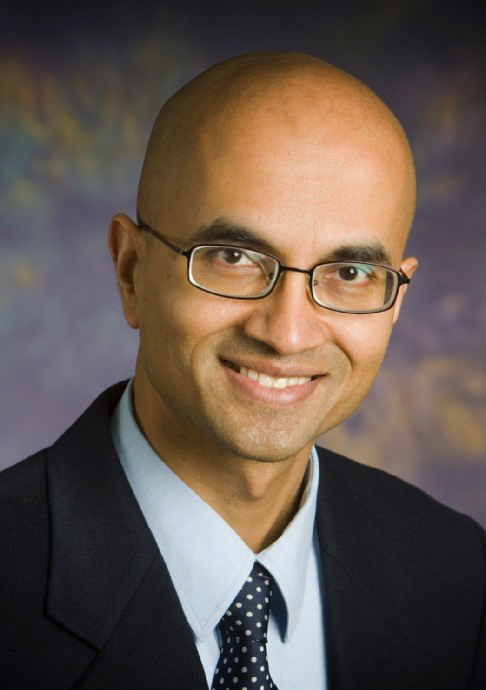
Naresh R. Shanbhag is the Jack Kilby Professor in the Department of Electrical and Computer Engineering and the Coordinated Science Laboratory at the University of Illinois at Urbana-Champaign. He serves as Director of the Systems on Nanoscale Information fabriCs (SONIC) Center and held the D.J. Gandhi Distinguished Visiting Professorship at IIT Mumbai from 2015-2020. Previously, he was a visiting faculty member at National Taiwan University (2007) and Stanford University (2014). Dr. Shanbhag received his doctorate from the University of Minnesota (1993) in Electrical Engineering. From 1993 to 1995, he worked at AT&T Bell Laboratories as the lead chip architect for AT&T's 51.84 Mb/s transceiver chips over twisted-pair wiring for Asynchronous Transfer Mode (ATM)-LAN and very high-speed digital subscriber line (VDSL) chip-sets. His research focuses on the design of energy-efficient machine learning, communications, and signal processing systems on resource-constrained embedded platforms. He explores fundamental trade-offs between energy efficiency, latency and accuracy of decision-making systems implemented in nanoscale technologies, with applications to computer vision, biomedicine, automatic target recognition, and imaging. His work spans four primary focus areas: Resource-efficient Machine Learning for the Edge, In-memory Computing (IMC), Energy-efficient High Data Rate Communications, and Shannon-inspired Statistical Error Compensation (SEC). Analysis of his recent publications reveals a strong emphasis on in-memory computing architectures (SRAM, MRAM, RRAM) for machine learning acceleration. His work consistently addresses energy-accuracy trade-offs, with increasing attention to security aspects of hardware implementations and applications to MIMO signal processing and edge AI systems. His research demonstrates a progression from theoretical foundations to practical silicon implementations. 2024 Semiconductor Research Corporation Innovation Award 2018 Semiconductor Industry Association/Semiconductor Research Corporation University Researcher Award 2018 IEEE International Symposium on Circuits and Systems Best Paper Award 2006 IEEE Fellow 1996 National Science Foundation CAREER Award Professor Shanbhag has mentored over 50 graduate students who now work at leading technology companies including Qualcomm, Amazon, Nvidia, Intel, and Apple. His research has been generously supported by the National Science Foundation, DARPA, AFRL, Semiconductor Research Corporation, Texas Instruments, Sandia National Laboratories, and industry partners including IBM, GlobalFoundries, and Intel Corporation. He led the Alternative Computational Models research theme (2006-2012) and was the founding Director of the SONIC Center (2013-2017), a 5-year multi-university center funded by DARPA and SRC. Currently, he leads research themes in the SRC and DARPA funded JUMP 2.0 Program's Center for Co-Design of Cognitive Systems and the Center for Ubiquitous Connectivity, and in the NSF IUCRC Center for Advanced Semiconductor Chips with Accelerated Performance (ASAP). As Director of the Systems on Nanoscale Information fabriCs (SONIC) Center, Professor Shanbhag leads a multidisciplinary team exploring novel computing paradigms for the nanoscale era. His group has benchmarked an extensive collection of in-memory computing and digital accelerator IC designs, maintaining a publicly available IMC benchmarking repository of metrics extracted from published IC prototypes. His research philosophy integrates concepts from information theory, statistical signal processing, detection and estimation, VLSI architectures, and digital and analog integrated circuits to develop energy-efficient systems from algorithms to silicon implementations.
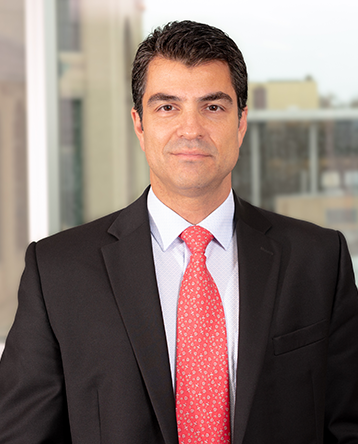
Burak Ozdoganlar is a Ver Planck Endowed Chair Professor of Mechanical Engineering at Carnegie Mellon University (CMU) and Associate Director of the Engineering Research Accelerator. He holds courtesy faculty positions in Biomedical Engineering and Materials Science and Engineering. Ozdoganlar earned his Ph.D. in Mechanical Engineering from the University of Michigan (1999), M.S. degrees from Ohio State University (1993, 1995), and a B.S. in Aeronautical Engineering from Istanbul Technical University (1991). Ph.D., Mechanical Engineering, University of Michigan (1999) MS, Mechanical Engineering, Ohio State University (1995) MS, Aeronautical and Astronautical Engineering, Ohio State University (1993) BS, Aeronautical Engineering, Istanbul Technical University (1991) Ozdoganlar’s research focuses on multi-scale manufacturing processes (macro/micro/nano), precision engineering , structural dynamics , and modal testing , with applications in biomedical device fabrication , microneedle arrays , soft electronics , and 3D ice printing for vascular networks. His work bridges computational modeling with experimental validation. Recent scientific awards include the 2023 AIMBE College of Fellows induction, ASME Fellow (2019), and NSF CAREER Award (2006). He served as interim CTO of the Advanced Robotics for Manufacturing (ARM) Institute and chaired the ASME-MED Manufacturing Equipment Technical Committee. Ozdoganlar leads projects in scalable manufacturing for implantable medical devices , bioelectric medicine , and wearable robotics . His lab develops 3D ice-printed vascular templates for tissue engineering and liquid metal circuits for soft electronics, funded by institutions like the Manufacturing Futures Institute and ARPA-H.
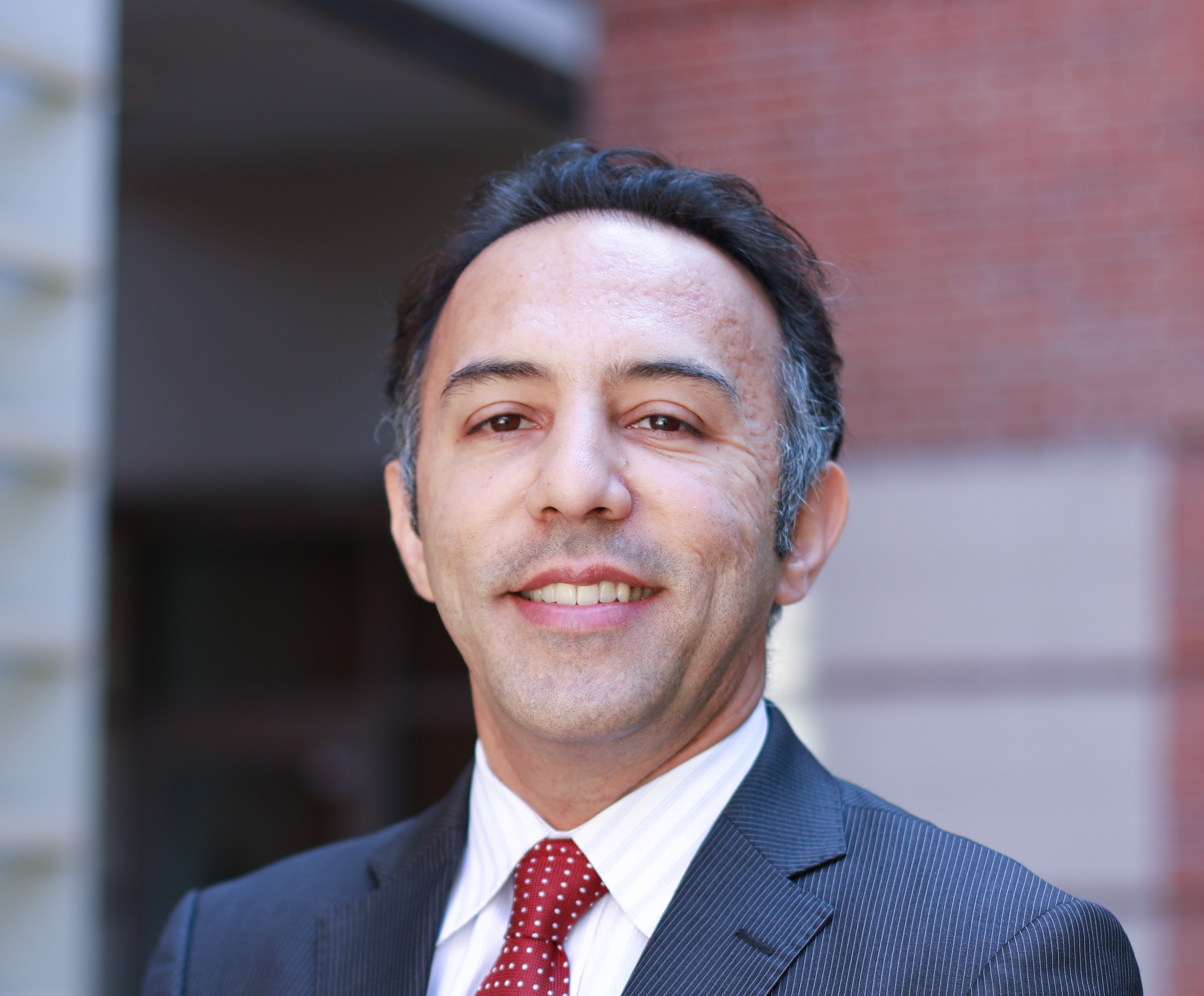
Aydin Babakhani is a Professor in the Department of Electrical and Computer Engineering at the University of California, Los Angeles (UCLA), affiliated with the College of Life Sciences. He directs the Integrated Sensors Laboratory (ISL), which focuses on the design and implementation of integrated sensors and systems. His research spans high-speed wireless communication, terahertz technology, medical implants, radar systems, and industrial monitoring solutions. Research Interests: Prof. Babakhani's work integrates silicon-based technologies with applications across multiple domains. Key areas include: Silicon mm-Wave/THz transceivers and on-chip antennas for communication and sensing Wirelessly powered medical implants for biopotential monitoring and neural stimulation THz radar systems for micrometer-resolution imaging and vibration detection Energy harvesting solutions for batteryless sensors in industrial and biomedical applications CMOS-based optoelectronic systems and photonic computing accelerators His recent publications (2021-2025) demonstrate a strong emphasis on terahertz systems, wireless power transfer, and miniaturized medical electronics. Over 80% of his latest articles involve silicon-integrated solutions for biomedical implants or THz sensing, with emerging focus on AI-accelerated photonic computing and multi-Gbps wireless links.
Zhonghai Lu is a Professor of Electronic Systems Design (specializing in Dependable and Autonomous Systems) at KTH Royal Institute of Technology, part of the Department of Electrical Engineering in the School of Electrical Engineering and Computer Science (EECS). He serves as Program Director for KTH's Embedded Systems master's program and Director of Studies at the Division of Electronics and Embedded Systems. His research focuses on Network-on-Chip (NoC), computer architecture, embedded systems, and Prognostics and Health Management (PHM) of power electronics. He leads a research group exploring in-network processing and embedded intelligence, transforming passive networks into active computational frameworks. Lu holds a BSc from Beijing Normal University (1989), MSc and PhD from KTH (2002, 2007), and an MBA in Innovation and Growth from the University of Turku (2012). He has authored over 240 scientific papers, including journal articles and peer-reviewed conferences, with notable recognitions such as Best Paper Awards at NOCS’2015 and EU HiPEAC, and a Featured Paper in IEEE Transactions on Computers (2020). He serves as Associate Editor for ACM Transactions on Architecture and Code Optimization (TACO) and has chaired major conferences like HiPEAC’2017 and NOCS’2018. His research group’s recent work includes integrating AI into hardware acceleration, fault-tolerant neural networks, and RUL estimation for power electronics using recurrent neural networks. Lu has secured grants from the Swedish Research Council and Intel Corporation and developed courses like IL2230 (Hardware Architectures for Deep Learning) and IL2233 (Embedded Intelligence), pioneering embedded AI education at KTH. Education: BSc (Beijing Normal University), MSc/PhD (KTH), MBA (University of Turku) Awards: Best Paper Awards (NOCS, EU HiPEAC), Swedish Research Council Grants, Intel Research Gifts Labs/Teams: Research Group on In-Network Processing and Embedded Intelligence
Anantha Chandrakasan is the Vannevar Bush Professor of Electrical Engineering and Computer Science at MIT, serving as Dean of the MIT School of Engineering and Chief Innovation and Strategy Officer. His research focuses on energy-efficient integrated circuits, medical devices, and AI hardware security. He leads the MIT Energy-Efficient Circuits and Systems Group, developing systems for biomedical applications, wireless communication, and quantum computing. He holds appointments at MIT's Microsystems Technology Laboratories and has contributed to collaborations like the MIT-Takeda Program in AI-driven healthcare and a partnership with GlobalFoundries for energy-efficient AI chips. His work spans implantable drug delivery systems, conformable ultrasound patches, and secure edge computing architectures. Chandrakasan's innovations include ultra-low-power circuits for IoT devices, cryptographic processors for post-quantum security, and AI accelerators for edge applications. He emphasizes interdisciplinary research bridging electrical engineering with biomedical and quantum fields, supported by leadership roles in MIT's strategic initiatives. His contributions to energy-efficient computing have led to advancements in wearable health monitors, batteryless sensors, and secure communication protocols for medical devices. Ongoing projects include THz integrated systems and AI-enhanced analog circuit design optimization.

- Nanophotonics
- Plasmonics
- Metasurfaces
- +۵ مورد دیگر
Professor Stefan Maier holds the position of Head of School in Physics and Astronomy at Monash University. Previously, he served as the Lee Lucas Chair in Experimental Physics at Imperial College London (2007–2018) and built a new chair at Ludwig-Maximilians-Universität München (2019–2022). His research focuses on nanophotonics, plasmonics, and metasurface engineering, with emphasis on optical trapping, nonlinear optics, and novel photonic devices. Education: Bachelor’s degree in Physics, Technical University of Munich M.Sc. and Ph.D. in Applied Physics, California Institute of Technology (Caltech) Research Interests: Development of metamaterials and metasurfaces for light manipulation Applications of nanophotonics in sensing, imaging, and quantum technologies Optical trapping and plasmonic catalysis Nonlinear optical phenomena in nanostructured materials Articles Trends: Recent work emphasizes bound states in the continuum (BICs), 3D nanoprinted optical platforms, and active metasurfaces with tunable properties. Key themes include hybrid nanophotonics, ultra-high-Q resonators, and plasmonic nanomaterials for energy applications. Awards: ISI Highly Cited Researcher (2017–present) Grants/Projects: Chief Investigator in the All-on-chip twisted light modulator project (2022–2025) Leadership in Monash’s nanophotonics research team Labs/Teams: Directs a multidisciplinary lab at Monash focused on integrating 3D nanofabrication with optical physics, including collaborations in metafiber development and plasmonic biosensing.

Morteza Fayaziمشاهده پروفایل
استادیار
- Electronic Design Automation (EDA)
- Machine Learning (ML) in Analog Circuit Design
- System-on-Chip (SoC) Design Automation
- +۳ مورد دیگر
Morteza Fayazi is an Assistant Professor in the Department of Electrical and Computer Engineering at the University of Utah, with an adjunct position in the Kahlert School of Computing. His research focuses on Electronic Design Automation (EDA), applying machine learning to automate analog and mixed-signal circuit design, and developing high-performance computing systems. He holds a B.Sc. from Sharif University of Technology, and M.S.E./Ph.D. degrees from the University of Michigan. His research interests include AI-driven EDA, RF/circuit automation, and energy-efficient processors. Key achievements include the MEDAL lab’s work on terahertz radars, systolic-array processors (e.g., DAP and Versa), and open-source frameworks like FASCINET and Tablext. He has received awards such as the 2024 College of Engineering Dean’s ETR Fund and the 2017 Outstanding Undergraduate Thesis Award. Teaching responsibilities include multiple iterations of the Digital System Design course (ECE/CS 3700). His work spans over 15 peer-reviewed articles in IEEE Transactions, ACM, and top conferences like ICCAD and VLSI-SOC, emphasizing automation, efficiency, and AI integration in hardware design.
فقط ۷۵۰ نتیجه اول نمایش داده میشود. برای رسیدن به نتایج دقیقتر، جستوجو را با فیلترها محدودتر کنید.