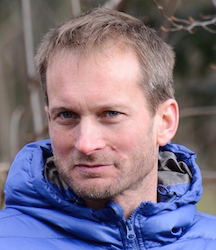
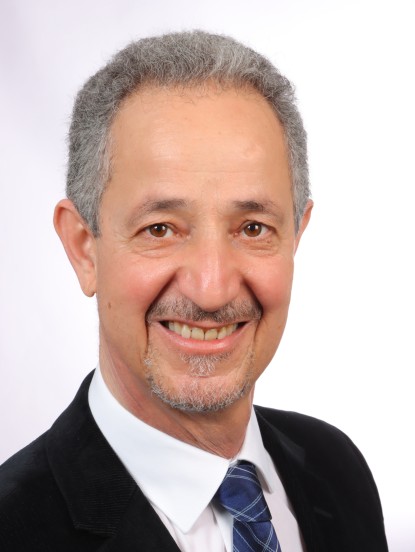
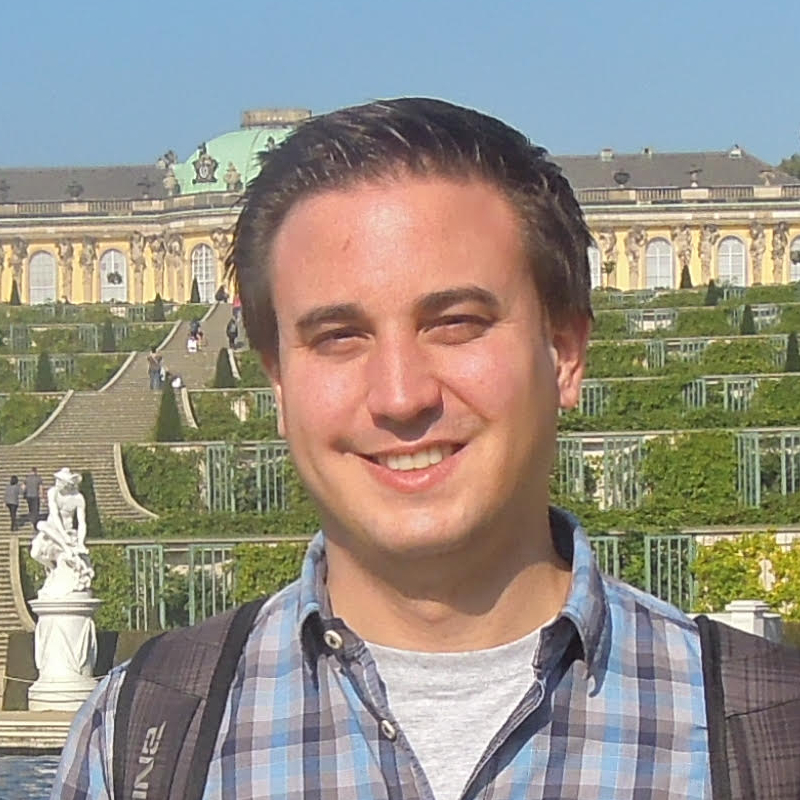
Pascal Frossard is a Full Professor at the Department of Electrical Engineering in the School of Engineering (STI) at EPFL, with a courtesy appointment in the School of Computer and Communication Sciences. He founded and directs the LTS4 laboratory since 2003, co-leads the EPFL AI Center and Swiss Data Science Center, and serves as Associate Dean for Research at STI. Research Focus: Machine Learning, Graph Signal Processing, AI Applications in Healthcare, Computer Vision Academic Leadership: IEEE Fellow, ELLIS Fellow, Conference Chair roles Key Projects: Digital Pathology for Oncology, Cardiac Digital Twins, Robust Machine Learning Research Interests: His work bridges signal processing, machine learning, and applied mathematics, emphasizing biomedical applications. Recent research includes adversarial robustness in classifiers, network representation learning, and 360-degree video analysis. Scientific Awards: IEEE Fellow ELLIS Fellow Leadership in IEEE technical committees Advising & Grants: Supervised 20+ PhD students and postdocs. Secured major grants from PHRT, Hasler Foundation, FNS-Sinergia, Armasuisse, Google, and Cisco.
Edward H. Adelson is the John and Dorothy Wilson Professor of Vision Science at MIT, affiliated with the Department of Brain and Cognitive Sciences and the Computer Science and Artificial Intelligence Laboratory (CSAIL). His research spans computer vision, human vision science, and robotics, with a focus on artificial touch sensing and tactile robotics. He has pioneered technologies like the GelSight tactile sensor, enabling high-resolution touch sensing for robots surpassing human skin sensitivity. Adelson holds a PhD in Experimental Psychology from the University of Michigan (1979) and a BA in Physics and Philosophy from Yale University (1974). His career includes roles at MIT since 1987, progressing from Associate Professor to Professor and later the Wilson Chair. He contributed to early vision theories, including the plenoptic function and motion energy models, and has been recognized with prestigious awards like the Helmholtz Prize (2013) and Rank Prize (1992). His research interests include material perception, optical sensing, and the integration of vision and touch. Key innovations include the plenoptic camera, layered representation techniques for motion analysis, and tactile sensors for robotics. Adelson has authored over 300 publications and holds numerous patents in imaging, vision, and robotics. Awards and honors include membership in the National Academy of Sciences and the American Academy of Arts and Sciences. His work bridges neuroscience and engineering, advancing both fundamental understanding and practical applications in robotics and computer vision.
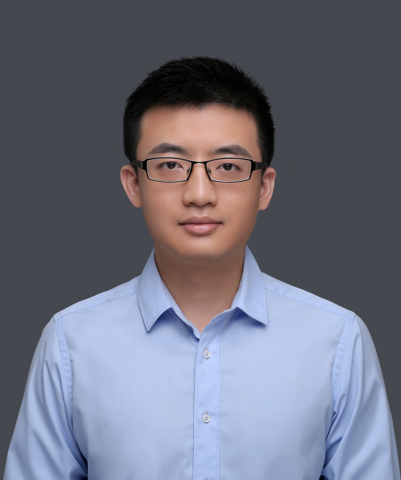
Kede Ma is an Associate Professor in the Department of Computer Science at City University of Hong Kong (CityUHK). He received his B.E. from the University of Science and Technology of China (USTC) in 2012, and MASc and Ph.D. degrees from the University of Waterloo in 2014 and 2017, respectively. From 2018 to 2019, he was a Research Associate with the Howard Hughes Medical Institute and New York University. Prof. Ma has been named to the Highly Cited Researchers list by Clarivate Analytics in 2024 and currently serves on the editorial boards of IEEE Transactions on Image Processing, IEEE Transactions on Information Forensics and Security, and IEEE Signal Processing Letters. Prof. Ma leads the Multimedia Analytics (MA) Laboratory, an interdisciplinary research group focused on computational vision, computational modeling of human visual perception, perceptual multimedia signal processing, quality assessment, and multimedia forensics. His research spans computational photography, high dynamic range imaging and rendering, omnidirectional video analysis, camera processing pipeline design, and artificial intelligence safety in multimedia systems. His work integrates machine learning techniques including reinforcement learning, generative modeling, self-supervised learning, and continual learning for multimedia signal processing applications. His recent publications demonstrate a strong focus on image quality assessment, deep learning for multimedia processing, and multimedia forensics. His work bridges theoretical computer vision principles with practical applications in multimedia systems. The research trends show increasing integration of foundation models with specialized multimedia processing tasks, particularly in quality assessment and security applications. Highly Cited Researchers list by Clarivate Analytics (2024) Best Paper Award at IEEE International Conference on Virtual Reality and Visualization (2021) Best Paper Runner-Up at International Joint Conference on Artificial Intelligence Workshop (2021) Top 10% Award at IEEE International Conference on Image Processing (2015) Finalist for the Governor General's Gold Medal, University of Waterloo (2017) Spotlight presentation at NeurIPS (2022) Highlight paper at ICCV (2025) Oral presentation at ICLR (2025) Prof. Ma advises numerous PhD students and postdoctoral fellows in the MA Laboratory. His research is supported by various grants enabling work in multimedia analytics, image processing, and computer vision. The laboratory maintains active collaborations with researchers at institutions including SUSTech, ZJU, and HIT. Current projects focus on advancing image quality assessment methodologies, developing more robust deep learning techniques for multimedia forensics, and exploring new approaches to HDR imaging and omnidirectional video processing. The Multimedia Analytics Laboratory maintains a strong focus on both theoretical foundations and practical applications of multimedia processing. Current research directions include integrating large language models with image quality assessment, developing more robust deepfake detection methods, and advancing techniques for continual learning in multimedia applications. The lab emphasizes rigorous evaluation methodologies and maintains multiple datasets for multimedia quality assessment research.
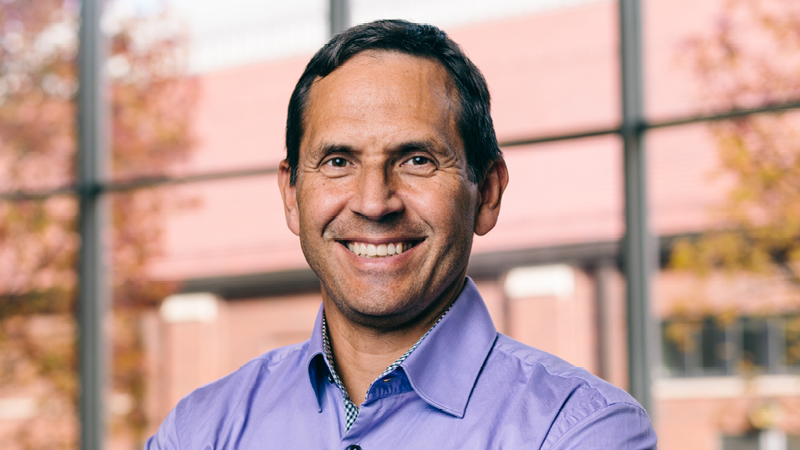
Nicolas RAGOT is an Associate Professor at CESI, affiliated with the Engineering and Numerical Tools department. He teaches Digital and embedded electronics, Microcontroller programming, System control, and Sensors at the Bachelor and Master levels. His research focuses on Environment perception for robotics and Computer vision, particularly in unconventional applications. He leads or collaborates on major research programs including ROJUNACO (2023–2025), FUSION (2023–2027), OASIS (2022–2024), and COLIBRY (2021–2024), all addressing robotics, digital twins, and industrial automation. He co-supervises PhD students Y. Feddoul, S. Ouarab, and S. Choudhary. His work spans smart mobility, assistive technologies, and energy-efficient systems. He is a member of the Secure Electronic Transactions (TES) competitiveness cluster's expert committee. Education: PhD in Computer Vision (University of Rouen, 2009), Master in Electrical Engineering (University of Paris XI, 2003), Engineering diploma (ESIGELEC, 1999). Research interests emphasize robot perception, human-robot collaboration, and extended reality integration. His publications span object detection, SLAM algorithms, and smart wheelchair systems. Current projects emphasize industrial robotics, digital twins, and real-time 3D reconstruction. Advising and grants include leadership roles in multiple research programs and co-supervision of three PhDs. His lab work focuses on Engineering and Numerical Tools, with contributions to CESI LINEACT's collaborative robotics initiatives.
Dr. Sunday Ekpo is a Senior Lecturer in Electrical & Electronic Engineering at Manchester Metropolitan University (MMU), UK. He holds multiple advanced qualifications, including a PhD in Electrical & Electronic Engineering and certifications such as Chartered Engineer (CEng) and Senior Fellow of the Higher Education Academy (SFHEA). His research focuses on Communication and Space Systems Engineering, with expertise in 5G/6G networks, satellite-cellular convergence, RF engineering, and IoT applications. He leads projects on energy-efficient wireless systems, additive manufacturing for electronics, and smart sensor development. Education: BEng (Hons) in Electrical & Electronic Engineering MSc in Communication Engineering MA in Higher Education PhD in Electrical & Electronic Engineering Research Interests: RF and microwave transceiver design Satellite communication subsystems Energy harvesting for IoT AI-driven signal processing Smart sensor systems Awards: Best Paper Award (2023) Best Overall Powerhours (British Council) Huawei’s Influential Thinkers Award (2019) Grants & Projects: £1.3m+ external grants secured Lead on Sony-funded Spresense-managed drone connectivity projects SmOp Cleantech collaborations on green wireless systems UK Space Agency and 6G policy advisory roles Labs & Teams: Leads the Advanced Electronic Design, Communication and Space Systems Engineering teams, and chairs international conferences like the Adaptive and Sustainable Science, Engineering and Technology (ASSET) series.
Daniel G. Aliaga is an Associate Professor in the Department of Computer Science at Purdue University, part of the College of Science. His research focuses on urban computing, combining computer graphics, computer vision, and AI to develop tools for urban modeling and simulation. He leads the Computer Graphics and Visualization Laboratory (CGVLAB), pioneering work in inverse procedural modeling and generative AI for urban environments. Aliaga has a PhD from the University of North Carolina at Chapel Hill and has held visiting professorships at ETH Zurich and KAUST. Education: BS (Brown University), MS & PhD (UNC Chapel Hill) Research Areas: Urban Computing, Computer Graphics, AI, Robotics Notable Projects: WUDAPT initiative, urban weather modeling, 3D reconstruction techniques His work spans interdisciplinary collaborations with urban planners, meteorologists, and engineers. Over 150 peer-reviewed publications and $42M in grants highlight his impact. Awards include the Fulbright Scholar Award and Discovery Park Fellowship. Aliaga advises numerous PhD and undergraduate researchers, contributing to startups and patents.
SATO Jun holds the position of Professor at the Department of Information Engineering (メディア情報分野) within the Faculty of Engineering at Nagoya Institute of Technology. He received his Ph.D. in Information Engineering from the University of Cambridge (1993–1996) and previously served as a Research Assistant at Cambridge (1996–1998). His research focuses on perceptual information processing and intelligent informatics, with specializations in computer vision, 3D reconstruction, and optical engineering applications. He has authored influential books like Computer Vision - Geometry of Vision (1999) and Computer Graphics (2017), and contributed to international publications such as Springer's Computer Vision: A Reference Guide (2020). Key professional roles include serving as President of the IEEE Nagoya Branch since 2023, Associate Editor of the International Journal of Computer Vision (Springer, 2010–present), and committee member for various organizations including Japan's Ministry of Education (2015–present) and the Nagoya City Business Potential Evaluation Committee (2008–2015). He has been recognized with prestigious awards including the BMVC Best Science Paper Prize (1994, 1997) and ITE Niwa-Takayanagi Prize (2015). His research extends to industrial collaborations, evidenced by patents like the "3D Information Presentation Device" (2014–2017) and "Position Detecting Device" (2016–2019). Recent work emphasizes applications in automotive safety, occluded object reconstruction, and novel imaging systems using advanced optical configurations and neural networks.
Eon Soo Lee is an Associate Professor in the Department of Mechanical and Industrial Engineering at the New Jersey Institute of Technology (NJIT). His primary research focuses on advanced materials engineering, biomedical microfluidics, and assistive technologies for individuals with disabilities. He has led federally funded projects including 'I-Corps: Multiplex Diagnostic Assay Using Interdigitated Nano-Sensing Technology' (NSF, 2023-2025) and 'Innovative Nano Catalysts for Automobile and Fuel Cell Applications' (NSF, 2018). Research Interests: Lee's work spans interdisciplinary areas including: Development of N-doped graphene/MOF composites for energy applications Microfluidic systems for blood plasma separation and antigen detection Design of accessible technologies for visually impaired users, including VR audio descriptions and remote sighted assistance systems Grants and Projects (select): National Science Foundation (2023): $500K for multiplex diagnostic assays National Science Foundation (2018): $300K for nano-catalysts in fuel cells Multiyear collaborations with industry partners on biosensor integration Innovation Highlights: Developed AIGuide: AR hand-guidance system for visual impairments Pioneered omnidirectional audio descriptions for VR music performances Published extensively in Carbon , Biomicrofluidics , and ACM/IEEE accessibility venues
Helder Araujo is a Professor at the Department of Electrical and Computer Engineering, University of Coimbra. His research focuses on Robot Vision , Computer Vision , and Medical Imaging , with applications in Capsule Endoscopy , Autonomous Driving , and Sensor Fusion . Recent publications highlight advancements in 3D Object Detection using transformer networks (e.g., RetSeg3D , DDet3D ), Medical Robotics (e.g., Self-supervised monocular pose estimation ), and Federated Learning (e.g., FAIR-FATE ). Key subfields include Transformer Models , Deep Learning , and Autonomous Navigation . His projects span Medical Imaging (e.g., Multi-Cam Capsule Endoscopy ), Autonomous Robotics (e.g., Learning to Navigate Endoscopic Capsule Robots ), and Edge Computing (e.g., Benchmarking CNN Inference on Low-Power Devices ). Grants include funding from Fundação para a Ciência e a Tecnologia (e.g., PTDC/EEI-ROB/1155/2020) and the European Commission (e.g., AdvanCed Hardware/Software Components for Embedded Vision). He has served as an invited researcher at Université Blaise Pascal (2012–2014). Peer review activities cover journals like IEEE Transactions on Pattern Analysis and Machine Intelligence and Autonomous Robots . His work bridges Medical Imaging , Autonomous Systems , and AI Fairness .
Abdelhak M. Zoubir is a Professor of Signal Processing and Head of the Signal Processing Group at Technische Universität Darmstadt, Germany. He has held leadership roles including Head of the Department of Electrical Engineering and Information Technology (2012–2014 and 2020–2022), and President of the European Association for Signal Processing (EURASIP, 2017–2018). His research focuses on statistical signal processing with applications in radar imaging, biomedical engineering, and automotive systems. Zoubir has authored over 500 publications and is a Fellow of IEEE and EURASIP. He currently leads projects on radar communication integration, robust signal processing algorithms, and radiation-hardened sensor development. Education: Dipl.-Ing. (BSc/MSc) from Fachhochschule Niederrhein and Ruhr-Universität Bochum, followed by a Dr.-Ing. (PhD) in Electrical Engineering from Ruhr-Universität Bochum (1992). Research Interests: Bootstrap techniques, robust detection/estimation, cooperative sensor networks, radar for landmine detection, and automotive safety systems. He has pioneered methods in robust statistical signal processing, including low-rank matrix completion and sparsity-aware algorithms. Recognition: Recipient of the IEEE Meritorious Service Award (2018), IEEE Signal Processing Magazine Best Paper Award (2017), and the M. Barry Carlton Award (2014). He has been a keynote speaker at major conferences such as ICASSP and EUSIPCO, and served as Editor-in-Chief of the IEEE Signal Processing Magazine (2012–2014). Current Projects: Focus on automotive radar signal processing, radiation-hardened sensors (MALTA), and distributed learning robustness. His work bridges theoretical advancements with practical applications in defense, healthcare, and automotive industries.
El Mustapha Mouaddib is a Professor in the Perception and Robotics department at Universite de Picardie Jules Verne, affiliated with Laboratory Heudiasyc (UMR CNRS 7253). His research bridges advanced robotics with cultural heritage preservation, focusing on developing novel computer vision techniques for complex documentation challenges. His primary research interests include omnidirectional vision systems , hyperspectral imaging , and 3D reconstruction methodologies , with significant emphasis on applications for cultural heritage documentation. Mouaddib's work particularly addresses challenges in temporal illumination compensation , laser scanning registration , and multi-scale digitization of historical structures, as evidenced by his extensive Notre-Dame de Paris cathedral research. Analysis of his 15 most recent publications reveals a consistent trajectory toward heritage robotics - developing specialized computer vision algorithms for cultural preservation. His work demonstrates increasing sophistication in integrating multi-modal sensor data (TLS, hyperspectral, RGB-D) solving illumination challenges in historical documentation developing adaptive robotic systems for complex environments Notably, his Notre-Dame research forms a cohesive body of work examining structural changes through advanced 3D analysis. Mouaddib actively participates in major interdisciplinary projects including SAMURAI , ASSIDUITAS , SCANBOT , ADAPT , and SUMUM , which focus on heritage digitization and robotic exploration. His collaborative approach is evident through extensive co-authorship with institutions like CNRS and international partners in Japan and Italy. His laboratory work centers on the E-Cathedrale initiative, creating comprehensive digital twins of Gothic cathedrals through multi-temporal and multi-scale documentation. This involves developing specialized hardware (like the HDROmni camera system) alongside novel algorithms for processing challenging heritage environments.
Guillaume Caron is an Associate Professor at the Université de Picardie Jules Verne (France) and holds a delegation at the CNRS-AIST Joint Robotics Laboratory (JRL) in Tsukuba, Japan. He leads the Perception team at JRL since April 2021 and co-directs the laboratory since 2022. His academic roles include being an enseignant-chercheur (lecturer-researcher) in robotic vision and habilitated to supervise research. He has collaborated with institutions like AIST, INRIA, and companies such as Kawasaki Heavy Industries and Thales Optronique SA. Research Interests : His work focuses on robotic vision systems, adaptive cameras, visual servoing, and applications in cultural heritage preservation and medical robotics. He develops advanced imaging techniques (e.g., hyperspectral, omnidirectional) and integrates them into robotic systems for tasks like autonomous navigation, object manipulation, and assistive technologies. Recent projects include spherical vision-based wheelchair assistance and teleoperated humanoid robots in nursing contexts. Publications : His most recent work addresses multimodal navigation leveraging large language models, spherical image representations for robotics, and illumination compensation in hyperspectral imaging. He also explores cybernetic avatars for telepresence and modular assistive smart wheelchairs. Responsibilities : He co-organizes workshops on e-Heritage and chairs the IAPR Technical Committee on Computer Vision for Cultural Heritage. He serves on the CNRS-AIST JRL steering committee and the AFRIF administration board. His educational roles include leading the RVI professional license program at UPJV until 2019. Labs/Teams : Active in the MIS laboratory (Amiens) and the CNRS-AIST JRL, working on projects like the Coalas neuro-rehabilitation system and the MuSeM multispectral dataset for mobile robotics.
Johannes Schneider is a researcher at the University of Bonn, affiliated with the Institute of Geodesy and Geoinformation's Department of Photogrammetry. His role includes scientific research and academic contributions in the field of computer vision and robotics. He holds a Master's degree in Geodesy and Geoinformation from the University of Bonn (2011) and has been a PhD student since 2012, supervised by Wolfgang Förstner, focusing on visual SLAM and multi-camera systems. His research interests span bundle adjustment, visual odometry, multi-camera systems, and unmanned aerial vehicle (UAV) applications. He actively contributes to the 'Mapping on Demand' project (funded by DFG) and has developed software tools like BACS (Bundle Adjustment for Camera Systems). Teaching responsibilities include lectures on '3D Coordinate Systems' and project supervision for master students. Notable achievements include the Karl Kraus Young Scientist Award (2013). His work emphasizes real-time navigation, obstacle detection, and precise 3D reconstruction using UAVs, integrating sensors like RTK-GPS, IMUs, and fisheye cameras. Recent publications highlight advancements in dense stereo matching, SLAM algorithms, and system calibration.
António Fernando Macedo Ribeiro is an Associate Professor at the Department of Industrial Electronics within the School of Engineering at the University of Minho. He is also a Senior Researcher at the Algoritmi Research Center and a member of both the IE R&D Group and CAR R&D Lab. He graduated in Computer Science (1988), earned an MSc in Industrial Robotics (1992), and a PhD in Industrial Robotics and Advanced Manufacturing Technology (1995). His academic career includes roles as department director (2013-2016) and co-director of Algoritmi (2006-2010). He founded the Robotics Laboratory (LAR) at the University of Minho and the spin-off SAR (botnroll.com). His research focuses on mobile robotics , autonomous systems , computer vision , and industrial automation . He has led over 50 projects, including RoboParty (since 2007) and RoboCup participation (since 1999). His work spans robot localization , gesture recognition , and adaptive control . Recent publications highlight trends in autonomous navigation , deep learning for robotics, and human-robot interaction . Key subfields include hexapod locomotion, multi-agent systems, tactile sensing, and 3D recognition. He has organized over 30 events like RoboCup editions and RoboParty. He actively promotes robotics education for youth through TEDx talks, school visits, and robotics clubs.
Tomonari Furukawa is a Professor and Zinn Faculty Scholar at the University of Virginia, leading the VICTOR Lab. He holds a B.Eng. in Mechanical Engineering from Waseda University (1990), an M.Eng. in Mechatronic Engineering from the University of Sydney (1993), and a Ph.D. in Quantum Engineering and Systems Science from the University of Tokyo (1996). His research focuses on robotics, computational mechanics, autonomous systems, and advanced sensor technologies. He has published over 300 papers, contributed to editorial boards, and secured grants such as the U.S. DOD DURIP grants for advanced research infrastructure. His work spans topics like autonomous robotic mapping, sensor fusion, and real-time deformation measurement for automotive safety. He has developed systems for tire tread profiling, crash deformation analysis, and 3D road surface reconstruction. Furukawa’s methodologies often integrate Bayesian approaches, neural networks, and multi-sensor data fusion to solve complex engineering challenges. His contributions to the NSF I/UCRC Centre for Tire Research highlight his impact on applied mechanics. Recipient of multiple career and paper awards, Furukawa emphasizes translational research. His VICTOR Lab explores cutting-edge robotics, including compliant bipedal designs for disaster response (e.g., DARPA Robotics Challenge) and autonomous navigation systems. Current projects leverage AI and advanced vision systems for infrastructure monitoring and human-robot collaboration.