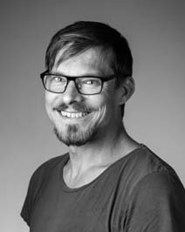
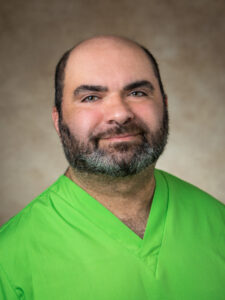
Justus Verhagen is an Associate Research Scientist at Yale School of Medicine's Department of Radiology & Biomedical Imaging, with a secondary appointment at The John B. Pierce Laboratory. His work integrates behavioral and neural methods, utilizing optogenetic imaging and stimulation in awake rodents to study food perception and olfactory processing. Education: PhD in Neuroscience, University of Delaware (2001) MSc in Cognitive Neuroscience, University of Amsterdam (1996) Dr. Verhagen's research focuses on olfactory system dynamics , particularly retronasal smell encoding, temporal coding of odor signals, and input-output relationships in olfactory bulb glomeruli. Collaborative projects include multi-modal imaging (fMRI/calcium imaging) with Fahmeed Hyder and exploration of odor navigation through the NSF-funded BRAIN Initiative. His recent publications analyze odor plume intermittency, neurovascular coupling, and advanced neural coding frameworks in olfactory systems. Key trends in his 15 most recent publications reveal expertise in olfactory bulb dynamics , optogenetic imaging , and multi-sensory integration across Neuroscience , Biomedical Imaging , and Behavioral Neuroethology disciplines.
Vikas Bhandawat is an Associate Professor at Drexel University's School of Biomedical Engineering, Science and Health Systems, where he leads the Bhandawat Laboratory. His research focuses on understanding how animal behavior emerges from the complex interaction between the nervous system, the body, and the environment, using Drosophila (fruit flies) as a model organism due to their relatively simple brain and available genetic tools. His educational background includes: MS in Chemistry (Integrated BS and MS) from Indian Institute of Technology, Kanpur, India (1993-1998) PhD in Neuroscience from Johns Hopkins School of Medicine (1999-2005), with thesis on "Elementary Events Underlying Olfactory Transduction" Postdoctoral training at Harvard Medical School (2005-2009) under Prof. Rachel Wilson Dr. Bhandawat's research spans multiple timescales of behavior, from milliseconds to minutes, with a focus on sensorimotor integration during locomotion. His lab employs a highly interdisciplinary approach combining in vivo whole-cell patch clamp recordings, imaging, quantitative behavioral measurement, biomechanics, and computational modeling. His work has revealed that fly locomotion can be decomposed into discrete "locomotor features" that are modularly affected by odors, providing insight into how sensory information transforms into action. An analysis of his recent publications shows a consistent focus on understanding the neural and biomechanical basis of locomotion across multiple timescales. His work bridges neuroscience, biomechanics, and computational approaches, with particular emphasis on odor-modulated locomotion, descending motor control, and the biomechanics of legged locomotion in Drosophila. His research demonstrates how complex behaviors emerge from relatively simple neural systems. Dr. Bhandawat has built a productive research program with numerous publications in high-impact journals including Nature Neuroscience, Neuron, eLife, and PNAS. His work has contributed significantly to our understanding of how sensory information is transformed into motor output in a relatively simple model system. His laboratory actively mentors students and researchers, employing a multi-pronged approach to study behavior. The lab seeks to create the next generation of professionals with multidisciplinary skills necessary to tackle complex real-world problems. They are particularly interested in building a diverse team of biologists, neuroscientists, and engineers to address questions spanning from sensation to action. The Bhandawat Laboratory focuses on three main research areas: 1) From Sensation to Action (algorithms and circuits underlying transformation of sensation to action), 2) Descending Motor Control (studying descending pathways in Drosophila), and 3) Biomechanics of Locomotion (understanding the mechanics of legged movement). The lab has developed innovative techniques for recording neural activity while measuring behavior and has made significant contributions to understanding how odors modulate locomotion through discrete behavioral states.
Mattias Alenius is a full Professor at the Department of Molecular Biology , Umeå University , Sweden, where he heads an active research group investigating the molecular and cellular bases of olfaction and taste. His laboratory exploits the genetic tractability of Drosophila and the physiological relevance of mouse models to uncover conserved mechanisms that govern sensory neuron specification, ciliary trafficking, and systemic feedback control of sensory perception. Research Focus His team is particularly interested in: Homeostatic control of neuronal activity and how its failure leads to neurodegenerative diseases. Olfactory and gustatory circuits —leveraging the numerically simple and genetically powerful Drosophila system. Hedgehog signaling and its role in ciliary transport of odorant receptors across species. Inter-organ communication , including gut-to-brain signaling that modulates feeding behavior. Epigenetic inheritance , exploring how paternal diet shapes chromatin states and metabolic phenotypes in offspring. Methodologically, the group integrates in vivo genetics, single-cell transcriptomics, live-cell imaging, cryo-EM, and behavioral assays to dissect these processes from molecule to organism. Scientific Output & Trends Across more than two decades, Prof. Alenius has produced a steady stream of high-impact publications in journals such as Nature Communications , Cell Reports , PNAS , Cell , PLoS Biology , and BMC Biology . His recent work (2022-2024) increasingly centers on nutrient sensing and gut-brain taste modulation , while earlier studies laid the groundwork for understanding ciliary dynamics and transcriptional codes specifying olfactory receptor choice. Collectively, the publications reveal a trajectory from developmental specification of sensory neurons to systemic metabolic control, unified by a focus on hedgehog signaling , cilia-mediated processes , and transcriptional/epigenetic mechanisms . Labs & Teams Prof. Alenius leads the Group Mattias Alenius located in rooms 6K and 6L within the hospital area at Umeå University. The group participates in the university’s Department of Molecular Biology and collaborates extensively across neuroscience and metabolism communities both nationally and internationally. Contact Email: mattias.alenius@umu.se Phone: +46 90 786 91 57
Fábio Silva is a researcher at the William James Center for Research (Social Cognition and Body Odors Team) at the University of Aveiro and serves as an invited lecturer at ISPA – Instituto Universitário. Holding a PhD in Psychology from the University of Aveiro, he maintains active research collaborations across multiple institutions while contributing to academic teaching. His research focuses on visual perception under emotional states , particularly how anxiety modulates anticipatory mechanisms and threat detection. Key areas include unconsciously processed information , social cue interpretation , and chemosignal effects on visual awareness . His work demonstrates that anxiety enhances aggression perception and alters motion ambiguity resolution, with chemosignals showing emotion-specific effects on facial recognition. Analysis of his 12 recent publications (2018-2024) reveals strong trends in threat-modulated visual processing , with 70% of studies examining anxiety's impact on social perception. His methodology frequently combines flanker tasks , point-light walkers , and chemosignal exposure to investigate cross-modal emotion processing. The research shows consistent findings that threat states prioritize detection of aggressive social cues while fear chemosignals selectively enhance fearful face recognition. His collaborative network spans multiple institutions with co-authors from University of Aveiro, ISPA, and international researchers including Gün R Semin (ISPA) and Sebastian Korb (University of Essex). Current research directions indicate expansion into disease threat perception and video game effects on emotional vigilance .
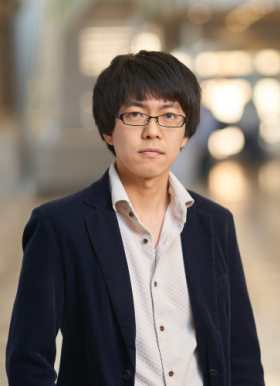
Naoki Hiratani serves as Assistant Professor of Neuroscience in the Department of Neuroscience at Washington University in St. Louis School of Medicine. His research bridges theoretical neuroscience and artificial intelligence to decipher the brain's efficiency in learning and computation. Education PhD, The University of Tokyo (2011-2016) BS, The University of Tokyo (2007-2011) Research Focus : Dr. Hiratani pioneers Neuro-AI investigations into how micro/macro connectivity patterns and complex learning mechanisms enable the brain's superior energy efficiency and data-efficient learning compared to modern AI. His work employs advanced machine learning algorithms for neural data analysis, targeting brain-inspired AI development through theoretical modeling of sensory processing, olfactory systems, and neural circuit dynamics. Publication Trends : His 2015-2023 publications reveal consistent focus on biologically plausible learning (node perturbation, STDP), neural circuit modeling (olfaction, reservoir computing), and Bayesian neural computation . Recent work emphasizes individual variability analysis and task-order optimization for continual learning. Awards Swartz Foundation Postdoctoral Fellowship (2020-2023) Japan Science Promotion Society Doctoral Fellowship (2014-2016) Top Reviewer, ICML 2025 Mentorship & Lab : Leading the Hiratani Laboratory (Neuro-AI Research Lab), he actively recruits graduate students and postdocs. Current rotation students Jeeyoung and Liangyu contribute to projects including zebrafish brain development (with Goodhill Lab) and International Brain Laboratory data analysis. The lab recently accepted work on task-order optimization for ICML 2025.
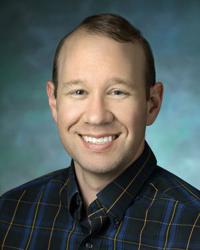
Dr. Chris John Potter is a Professor of Neuroscience at Johns Hopkins University School of Medicine, where he has been faculty since 2010. His research program investigates neural mechanisms of olfaction in disease-transmitting insects, particularly malaria mosquitoes. Dr. Potter leads the Christopher Potter Lab, developing genetic tools like the Q-system to study sensory processing and behavior. Education: Ph.D. in Genetics, Yale University (2002) B.A. in Molecular and Cell Biology, University of California, Berkeley (1996) Postdoctoral Fellowship in Neuroscience, Stanford University (2010) Research focuses on: Neural circuit basis of olfactory behaviors in Drosophila and mosquitoes Development of genetic tools for neural manipulation Chemosensory mechanisms guiding mosquito host-seeking and oviposition Translational applications for vector-borne disease control Recent publications emphasize mosquito neurobiology, genetic tool development, and olfactory coding mechanisms. His work consistently integrates molecular genetics with systems neuroscience approaches. Honors and Awards: NIH R21 Grants (NIAID 2018, NINDS 2015) Johns Hopkins Discovery Award (2017) Malaria Research Institute Pilot Award (2015) Whitehall Foundation Grant (2011) Damon Runyon Fellowship (2003) The Potter Lab ( potterlab.johnshopkins.edu ) develops transgenic approaches to study sensory processing. Current projects investigate mosquito olfactory circuits using calcium imaging, single-cell sequencing, and behavioral assays. Dr. Potter collaborates with public health researchers to translate basic discoveries into vector control strategies.
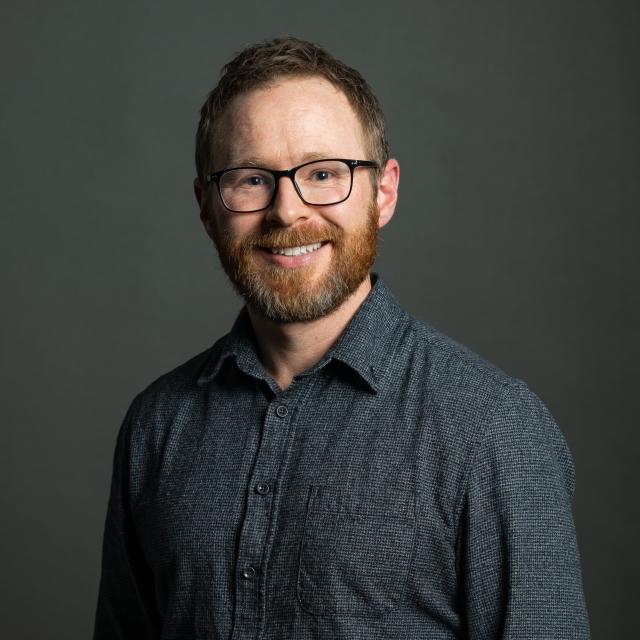
Shawn Burton serves as a Research Assistant Professor at Lehigh University, maintaining an active research laboratory in room B328 of Iacocca Hall. His work centers on neural computation within the mammalian olfactory system, leveraging the olfactory bulb as a model for understanding fundamental brain circuitry. Dr. Burton's research program investigates two critical neural mechanisms: How synaptic motifs like recurrent and lateral inhibition enable behavioral discrimination of complex odorants How parallel circuit architectures simultaneously encode complementary olfactory information streams His experimental approach integrates acute slice electrophysiology, functional imaging, genetic targeting, molecular perturbations, and behavioral assays with computational simulations to decode sensory processing principles. This multidisciplinary methodology bridges molecular, cellular, and systems-level neuroscience to reveal universal neural coding mechanisms beyond olfaction.
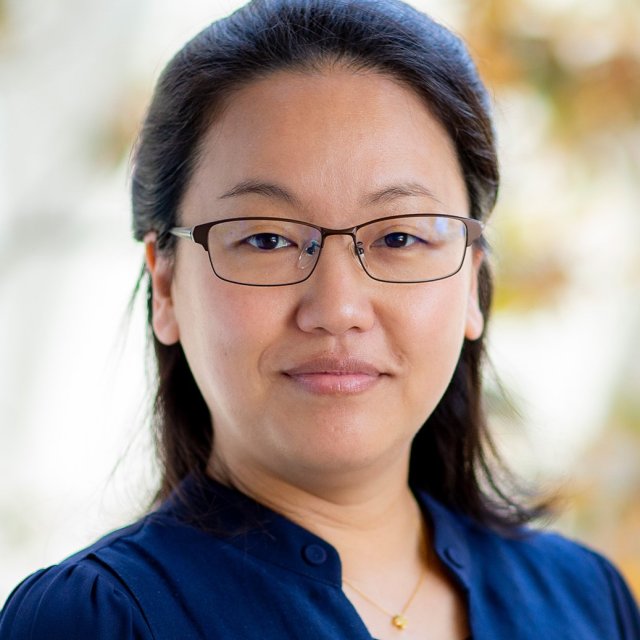
Yoojin J. Choi, Ph.D., serves as Professor of Biology at Point Loma Nazarene University (PLNU), joining the institution in 2022 after accumulating 15 years of diverse teaching experience. Previously, she held faculty positions at North Park University (2014-2022), California Baptist University, Korea University, and Seoul National University, with her academic journey beginning at Phillips Exeter Academy. Her educational background includes: Ph.D. in Neurobiology from Harvard University B.S. in Biological Sciences from the University of California, Irvine Dr. Choi's research integrates cell biology and neurobiology , particularly through studies of developing neurons and Chlamydomonas reinhardtii flagellar proteins. She actively incorporates faith-science dialogue into her scholarship, emphasizing student-centered and collaborative learning environments that extend from classroom instruction to undergraduate research mentorship. Her publication trajectory reveals an evolution from foundational neurodevelopmental research (2001-2009) toward contemporary scholarship in science education and faith integration (2014-2021), demonstrating consistent engagement with both scientific rigor and pedagogical innovation. Recognition for her contributions includes: 2024 Excellence in Teaching Award Dr. Choi has mentored student researchers since 2015 through PLNU's Summer Research Program and previous institutions, while presenting extensively at conferences including the Society for Neuroscience and National Science Teachers Association. Her professional engagement spans the Partnership for Undergraduate Life Science Education and the Lilly Fellows Program, reflecting commitment to both scientific advancement and educational community building. At PLNU, she directs a cell biology research laboratory focused on undergraduate participation and maintains active membership in the American Scientific Affiliation and Society for College Science Teachers, fostering interdisciplinary connections between scientific inquiry and broader intellectual frameworks.
Valérie Huet serves as Professor of Ancient History at the University of Brest, affiliated with the Breton and Celtic Research Center (CRBC, EA 4451). Her academic profile centers on interdisciplinary approaches bridging historical, anthropological, and visual studies of Roman antiquity. Her educational background includes a Doctorate in History and Art History from EHESS (School for Advanced Studies in the Social Sciences), an HDR (Habilitation à Diriger des Recherches) from EPHE (École Pratique des Hautes Études) in Religious Studies, and training from the École du Louvre in Museology. She currently directs the Jean-Bérard Center (UAR 3133 CNRS-EFR). Huet's research explores Roman religion through anthropological lenses, focusing on image anthropology (particularly historical and funerary reliefs), ritual practices (including sacrifice and banqueting), and bodily expressions (costume, gestures, identity construction). Her work examines how visual culture intersects with religious experience, political power (notably damnatio memoriae), and cultural identity formation in antiquity. She has pioneered approaches connecting material evidence with ritual performance theory. Her publication record demonstrates sustained engagement with Mediterranean ritual systems, evidenced through 15 recent scholarly outputs spanning archaeological analysis, iconographic studies, and theoretical frameworks. These works reveal consistent thematic threads: the materiality of religious practice, cross-cultural adaptation of religious imagery, and the political dimensions of visual representation in Roman contexts. Huet actively supervises doctoral research, currently mentoring three PhD candidates examining gentile cults in early Republican Rome, anthropological approaches to fear in Roman society, and Dougga's altars and cippi through iconographic analysis. Her academic leadership extends to directing major research centers and coordinating international collaborative projects. Director, Jean-Bérard Center (UAR 3133 CNRS-EFR) Member, CRBC Research Axes 1 (Identity Instruments) and 2 (Creation to Reuse) Coordinator, Thesaurus Cultus et Rituum Antiquorum (ThesCRA) chapters on Roman sacrifice and banquets
Dr. Ali Gheidi is a faculty member at Mercer University School of Medicine, where he conducts research focused on the neurobiological mechanisms underlying memory, aging, and addiction. His current work specifically examines how neuronal ensembles in the medial prefrontal cortex control reinstatement to cocaine seeking. His educational background includes a BA in Psychology from York University, MSc and PhD in Psychology-Neuroscience from Wilfrid Laurier University, followed by three postdoctoral fellowships: at the University of Michigan in Neurobiology of Drug Addiction, at the University of Newfoundland in Neurobiology of Memory, and at Wayne State University in Neurobiology of Drug Addiction. Dr. Gheidi's research interests center on the neurobiology of drug-reinstatement, memory formation, and the effects of aging on neural systems. His work bridges behavioral neuroscience with molecular approaches to understand how specific neural circuits contribute to addictive behaviors and cognitive processes. Recent publications demonstrate his focus on prefrontal cortex function, neuronal ensemble dynamics, and the role of neurotransmitters like norepinephrine in modulating behavior. His research portfolio includes significant publications from 2012-2024, with a recent emphasis on neuronal ensembles, prefrontal cortex function in addiction, and sex differences in drug responses. The publication trend shows consistent contributions to neuroscience literature with increasing focus on translational aspects of addiction research. Dr. Gheidi currently leads an active research program funded by NIH/NIDA through a K01 career development award (K01 DA055068) titled 'Norepinephrine modulates medial prefrontal cortex neural ensembles that control cocaine seeking behavior' (2022-2027). He also participates in the NIDA-funded T32 postdoctoral training program in drug abuse biology. Active member of the College on Problems of Drug Dependence Member of the Society for Neuroscience His laboratory appears to focus on rodent models of addiction and memory, utilizing behavioral paradigms, neural activity mapping, and pharmacological approaches to investigate the neural basis of drug-seeking behavior and cognitive function. Current work suggests collaboration with multiple neuroscience laboratories across different institutions.