Dr. Iñaki Esnaola is a Senior Lecturer at the Department of Automatic Control and Systems Engineering, University of Sheffield, and a Visiting Research Collaborator at Princeton University. He holds a MSc from the University of Navarra (2006) and a PhD from the University of Delaware (2011). His research focuses on information theory, machine learning, and cybersecurity, particularly in cyberphysical systems like smart grids. His work addresses data integrity, privacy, robust estimation, and optimal sensor placement. Research interests include: Information theory and data science, machine learning and high-dimensional statistics, cybersecurity (especially data injection attacks), privacy, robust estimation, and sensor placement optimization. Recent projects involve empirical risk minimization with regularization, stealth attacks on control systems, and compressive sensing for environmental monitoring. Key publications include studies on relative entropy in machine learning, sensor placement for sewer networks, and stealth attacks in smart grids. He leads a research group with ongoing projects in resilient cyberphysical systems and received a UKRI grant for advanced manufacturing. His work bridges theoretical foundations with real-world applications in energy systems and environmental monitoring.
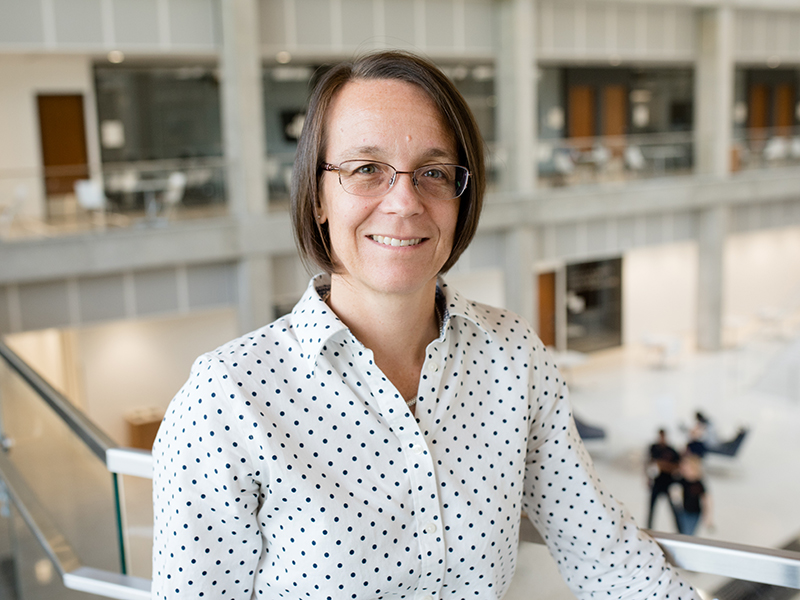
Matthew J. Hall is a Professor in the Department of Mechanical Engineering at the University of Texas at Austin , where he also holds the Louis T. Yule Fellowship in Engineering . He has been a faculty member since 1991 and is affiliated with the Cockrell School of Engineering . His research spans engine combustion processes , thermal fluids systems , engine controls , optical diagnostics , battery safety , and alternative fuels . He is particularly known for his work on cold-start emissions , spark ignition , engine friction reduction , and thermoelectric energy recovery . He teaches courses in Thermodynamics , including modeling of power cycles and HVAC systems , and has published over 150 technical articles. His recent work includes innovations in ammonia combustion , biomass gasification , and advanced engine diagnostics . Scientific Awards & Honors: Fellow of the Society of Automotive Engineers (SAE) Louis T. Yule Fellowship in Engineering Associate Editor, SAE International Journal of Engines Research Impact & Leadership: Prof. Hall leads multidisciplinary efforts in combustion science , energy systems , and sustainable propulsion . His lab has contributed to reducing engine friction by up to 40%, improving fuel efficiency at idle, and advancing the use of ammonia as a low-carbon fuel. He also explores thermoelectric generators for extending drone flight range and improving vehicle energy recovery systems.
Professor Dinos Arcoumanis FREng is a distinguished academic at City, University of London, where he has served as Professor since 2000. He previously held academic positions at Imperial College London from 1988-2000, progressing from Lecturer to Reader and ultimately to Professor of Internal Combustion Engines. At City University, he has held significant leadership roles including Head of the Aeronautical, Civil and Mechanical Engineering Department, Dean of the School of Engineering & Mathematical Sciences, Pro-Vice-Chancellor for Research and International Links, and Deputy Vice-Chancellor (Research & International) until August 2014. He remains actively involved in research and academic leadership, currently serving as Director of the International Institute of Cavitation Research and Coordinator of the World Cities World Class (WC2) University Network. Professor Arcoumanis holds undergraduate and graduate degrees in Physics, Engineering and Mechanical Engineering from the Aristotelian University of Thessaloniki, Greece (1973), the University of California at Irvine, USA (1980), and the Imperial College of Science, Technology and Medicine, London (1984), respectively. His primary research focuses on internal combustion engines, with specific expertise in combustion, exhaust emissions, and engine lubrication. Professor Arcoumanis has pioneered the application of laser diagnostics and computational fluid dynamics to study internal combustion engines, with particular interest in automotive fuels including renewable and alternative fuels. His work bridges fundamental fluid mechanics with practical engine applications, addressing critical environmental engineering challenges in the transportation sector. His recent research has expanded into cavitation phenomena, fuel cell technology, and the development of sustainable propulsion systems for future transportation needs. Professor Arcoumanis's extensive publication record demonstrates a clear evolution in research focus, beginning with fundamental studies of diesel engine combustion and progressing toward advanced fuel injection systems, alternative fuels, and environmental sustainability. His work consistently bridges theoretical fluid mechanics with practical engine applications, with recent emphasis on cavitation phenomena in fuel systems and the integration of renewable energy technologies with traditional combustion systems. The interdisciplinary nature of his research connects mechanical engineering principles with environmental science, materials science, and energy systems engineering. Professor Arcoumanis has received numerous prestigious awards and honors throughout his career: 1991 Dugald Clerk Prize of IMechE 1995 and 1998 Arch T. Colwell Merit Award of the Society of Automotive Engineers Elected Fellow of the Royal Academy of Engineering (FREng) in 2001 Honorary doctorate from St. Petersburg State Polytechnic University of Russia (2009) Professor Arcoumanis has made significant contributions to academic leadership and professional service. He founded the International Journal of Engine Research (JER) in 1999 and serves as its Editor for Europe. He has coordinated the World Cities World Class (WC2) University Network since 2010, which brings together international institutions in major cities to address research challenges in transport, global health, business, and cultural industries. He has also served as a consultant to Brussels (DG17) and Bechtel Ltd. on the Auto-oil II European Programme (1998-2000), and was appointed Ambassador-at-Large of the Hellenic Republic for Energy Policy and New Technologies in September 2012. His research has been supported by various funding bodies including the Lloyd's Register Educational Trust, which funds the International Institute of Cavitation Research that he directs. Professor Arcoumanis leads the International Institute of Cavitation Research, a partnership between City University London, Loughborough University, and Delft University of the Netherlands. He has established collaborative research teams focused on engine combustion, fuel injection systems, and alternative propulsion technologies. His research group has developed advanced experimental facilities for studying fuel spray dynamics, combustion processes, and cavitation phenomena in engine systems. These teams regularly collaborate with automotive industry partners and international research institutions to address cutting-edge challenges in engine technology and sustainable transportation.
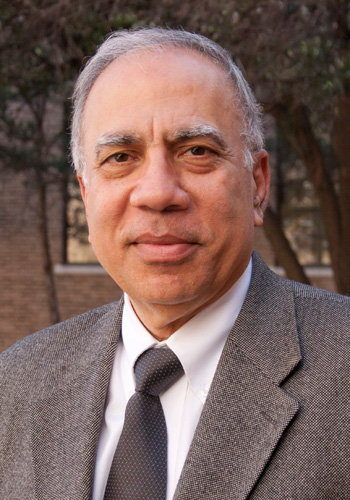
Eduardo Gildin is a Professor of Petroleum Engineering and Associate Department Head for Graduate Studies at Texas A&M University's College of Engineering. He holds the L.F. Peterson '36 Professorship and directs the university's graduate studies in petroleum engineering. His research focuses on reservoir modeling, control optimization, model reduction techniques, and CO2 sequestration. Gildin has pioneered data-driven approaches for reservoir simulation, integrating machine learning and physics-based models to enhance efficiency and accuracy. Education: Ph.D. in Aerospace Engineering, University of Texas at Austin (2006) M.S. in Mechanical Engineering, University of São Paulo, Brazil (1998) B.S. in Mechanical Engineering, Faculdade de Engenharia Industrial, Brazil (1995) Research Interests: Model reduction of large-scale dynamical systems Control and optimization of reservoir operations CO2 storage and geological carbon sequestration Machine learning applications in reservoir engineering and drilling automation Geomechanics and compaction damage evaluation Key Awards: 2020: William O. and Montine P. Head Memorial Research Award 2017-2018: Dean of Engineering Excellence Award 2013-2019: Energi Simulation Chair in Robust Reduced Complexity Modeling 2021: Distinguished Membership in Society of Petroleum Engineers Grants and Advising: Gildin has secured major funding for projects on reservoir simulation, drilling automation, and CO2 storage. He advises graduate students on topics such as surrogate modeling and reinforcement learning applications in petroleum systems. His lab collaborates with industry partners to translate research into practical tools for reservoir management and subsurface operations. Labs and Teams: He leads the Reservoir Simulation and Control Lab, focusing on advanced computational methods for reservoir optimization. His team develops open-source drilling models and collaborates globally on projects like the DREAMS (Drilling and Extraction Automated System) initiative.
Ming Zheng is a Professor in the Department of Mechanical, Automotive & Materials Engineering at the University of Windsor, Faculty of Engineering. He is the Director of the Clean Combustion Engine Laboratory and holds a Canada Research Chair in Clean Diesel Engine Technologies. He is a Fellow of both SAE and ASME and a Professional Engineer (PEng). Education: Ph.D., Mechanical Engineering, University of Calgary, Canada, 1993 M.Sc., Thermal Energy and Automotive Engineering, Tsinghua University, China, 1988 B.Sc., Mechanical Engineering, Transport Technology Institute, China, 1982 PDF, Mechanical Engineering, Hokkaido University, Japan, 1995 Dr. Zheng's research focuses on clean and high-efficiency combustion technologies for internal combustion engines. His key interests include low-temperature combustion (LTC), homogeneous charge compression ignition (HCCI), active flow control aftertreatment for emission reduction, advanced ignition systems (e.g., multi-coil, corona), alternative and biofuels (e.g., ethanol, n-butanol), combustion modeling, diagnostics, and real-time adaptive control. His work aims to achieve simultaneous reductions in NOx and soot emissions while improving fuel efficiency. The analysis of his recent publications reveals a strong and consistent research trend centered on advanced combustion strategies using alternative fuels like ethanol and n-butanol. His work extensively explores dual-fuel combustion, the impact of fuel injection strategies, and the use of advanced control algorithms (e.g., extremum seeking control) to manage complex combustion processes. A significant portion of his research is dedicated to developing and optimizing active aftertreatment systems, such as Lean NOx Traps, to handle the unique exhaust characteristics of these clean combustion modes. Scientific Awards: SAE Fellow (2016) ASME Fellow University Award for Excellence in Research, Scholarship and Creative Activity (2007 and 2005) Canada Research Chair in Clean Diesel Engine Technologies (awarded 2003) Dr. Zheng has been a prolific advisor, supervising numerous PhD and Master's students on topics ranging from biofuel testing and low-temperature combustion to aftertreatment modeling and control. His research is highly collaborative, supported by significant grants and contracts from government agencies (NSERC, Auto21, CRC) and major industrial partners like Ford, International Truck and Engine Company, and Imperial Oil. He has secured over $2.6 million in cash awards and approximately $2.1 million in-kind contributions since 2003. Dr. Zheng leads the Clean Combustion Engine Laboratory , a state-of-the-art facility equipped with multiple modern diesel engine test cells (including a Ford common-rail engine and a Yanmar single-cylinder engine), advanced emission analyzers, real-time control systems (FPGA, Can-Bus), and sophisticated diagnostic and modeling tools (LabVIEW, GT-Power, Chemkin, MATLAB/Simulink). The lab specializes in experimental research on combustion, emissions, and aftertreatment, with a focus on active flow control technologies.
María Belén Montero Rodríguez is a Professor in the Department of Physics and Earth Sciences at the Faculty of Sciences, University of A Coruña (UDC), Spain. Her work integrates applied physics with advanced polymer materials, focusing on sustainability, recycling, and functional applications in food packaging and engineering. She teaches across diverse programs including Nanoscience, Textile Technology, Industrial Design, and Environmental Management. Her research interests center on sustainable polymer systems , including biopolymers, mechanical recycling, waste valorization, rheology, nanocomposites, hybrid polymers (especially epoxy and POSS), fracture mechanics, and active packaging for food preservation. She is a key member of the Grupo de Polímeros , contributing to both fundamental and applied research. The recent publications reflect a strong trend in green materials science , with emphasis on biodegradable composites, microencapsulation of bioactive compounds, recycling of polymers, and development of hybrid nanomaterials. Her work bridges polymer chemistry, materials engineering, and environmental sustainability, often targeting industrial applications in packaging, electronics, and construction. Scientific Awards: No awards explicitly mentioned in the provided text. She actively supervises final-year and master's students, with thesis topics focusing on biopolymers, active packaging, and nanocomposite development. She participates in multiple funded research projects from national (AEI), regional (Xunta de Galicia), and European (European Commission) agencies, indicating sustained grant support. Her collaborations span institutions in Spain and internationally, often with researchers such as Luis Barral, Maite Rico, and Rebeca Bouza. She is involved in various research groups and conferences, contributing to the broader polymer science community. Laboratories and Research Teams: She is a core member of the Grupo de Polímeros at UDC, Ferrol campus, where experimental work on polymer synthesis, processing, and characterization is conducted. The group focuses on applied polymer research with industrial and environmental relevance.
Dr. Xiaoli Li is an Associate Professor in the Department of Chemical and Petroleum Engineering at the University of Kansas. Her research laboratory (PVT Lab) focuses on complex fluid behavior in energy systems, with particular emphasis on phase equilibria, gas transport phenomena, and enhanced hydrocarbon recovery techniques. She maintains active research programs in unconventional reservoirs, CO 2 geostorage, hydrate technology, and nanoscale fluid dynamics. Her core research domains include: Confined phase behavior: Thermodynamics of fluids in nanoporous media Gas transport mechanisms: Rarefied flow and apparent permeability modeling Hydrate science: Structure stability and phase boundaries CO 2 utilization: Enhanced oil recovery and geological sequestration Asphaltene dynamics: Precipitation mechanisms in EOR processes Dr. Li teaches across the petroleum engineering curriculum, including core courses: Chemical Engineering Thermodynamics (C&PE 221), Reservoir Engineering (C&PE 327), Well Logging (C&PE 528), and Petroleum Engineering Design (C&PE 628). Her instructional portfolio emphasizes fundamental thermodynamics, reservoir characterization, and practical field applications. Her publication record (35+ articles) demonstrates consistent focus on reservoir thermodynamics and transport phenomena, with recent emphasis on: CO 2 -oil interactions (2020-2023), gas hydrate stability (2020-2022), shale gas transport (2019-2021), and equation of state modifications for confined fluids (2018-2020). Research methodologies combine molecular simulations, experimental studies, and novel thermodynamic modeling approaches.
Mustafa Onur is the McMan Professor and Chair of Petroleum Engineering at The University of Tulsa, where he directs the TU Petroleum Reservoir Exploitation Projects (TUPREP). He holds a Ph.D. and M.S. in Petroleum Engineering from The University of Tulsa and a B.S. from Middle East Technical University. Previously, he held professorships at Istanbul Technical University and Universiti Teknologi Petronas (Malaysia), including a Schlumberger Chair position. Research Focus: Dr. Onur specializes in inverse problem theory, mathematical optimization, and data science applied to reservoir management, geothermal systems, and uncertainty quantification. His work integrates machine learning with traditional reservoir engineering to solve complex problems in energy extraction and carbon sequestration. Publication Trends (2024-2025): His 15 most recent articles emphasize deep learning-based reservoir surrogates, CO₂ storage optimization, geothermal energy extraction, and constrained production optimization. Key innovations include Embed-to-Control frameworks, physics-driven interwell simulators, and stochastic optimization algorithms for uncertainty management in subsurface systems. Awards & Recognition: 2010 SPE Formation Evaluation Award 2014 SPE Distinguished Member 2018 SPE Reservoir Description and Dynamics Award Leadership: As TUPREP director, he leads advanced research in reservoir exploitation, focusing on practical applications of AI and optimization in petroleum and geothermal engineering. He serves as Associate Editor for SPE Journal and Journal of Petroleum Science and Engineering .
Ashkan Jahanbani Ghahfarokhi is an Associate Professor in Reservoir Engineering at NTNU’s Department of Geosciences since 2019. He leads the CEORS Gemini Centre (CO2 Enhanced Oil Recovery & Storage) and is a core member of the BRU21 Reservoir Management group. His research focuses on data-driven subsurface modeling, CO2 storage, and optimization of oil recovery processes. Education: PhD, NTNU (2015); MEng, University of Calgary (2009); MSc/BSc, Petroleum University of Technology, Iran (2006–2009). Roles: Head of Reservoir Engineering Group (2021–2022), Project Manager for NORHED II (2022), and NTNU’s Outstanding Academic Fellow (2022–2026). Research interests include CO2-EOR/Storage, machine learning applications, proxy modeling, and reservoir simulation. He has supervised 20+ students and published over 40 journal/conference papers. Awards include DNVA postdoc scholarship (2015–2017) and PoreLab postdoc (wettability studies). Teaching: Masters/PhD courses in reservoir fluids, simulation, and geomechanics. Guest editor for Energies (AI in Oil & Gas).
Dominic Pjontek is an Associate Professor in the Department of Chemical and Biochemical Engineering within the Faculty of Engineering at Western University. He is based in Room 377 of the Thompson Engineering Building and serves as an active researcher and educator in multiphase reactor engineering. His work is conducted both on the Western University campus and at the Institute for Chemicals and Fuels from Alternative Resources (ICFAR), a specialized facility for sustainable technology development. Dr. Pjontek received his Ph.D. and B.A.Sc. in Chemical Engineering from the University of Ottawa, where he earned multiple prestigious scholarships including the NSERC Postgraduate Scholarship for Doctoral Studies and the University of Ottawa Excellence Scholarship for Graduate Studies. His research focuses on the development and optimization of multiphase reactors through experimental studies, process modeling, and scale-up considerations. Key research areas include CO 2 conversion/utilization using gas-liquid-solid reactors, fundamental understanding of interfacial area and flow behavior in multiphase reactors, and innovative sustainable technologies for converting waste streams to value-added products. His work addresses critical technological barriers in developing next-generation reactors for sustainable chemical production. Analysis of Dr. Pjontek's recent publications reveals a strong trend toward carbon dioxide conversion technologies, fluid coker optimization, and sustainable process development. His research group has published extensively on gas-liquid-solid fluidized beds, reactor fouling mechanisms, and CO 2 hydrogenation processes, with increasing focus on sustainable chemical production methods that align with global decarbonization efforts. Scientific Awards and Recognitions: R. Mohan Mathur Award for Excellence in Teaching (2018) Maurice Bergougnou Teaching Award for Heat Transfer Operations (2015-2018) NSERC Postgraduate Scholarship for Doctoral Studies Multiple University of Ottawa Excellence Scholarships NSERC Canada Graduate Scholarship for Master's Studies Dr. Pjontek actively supervises numerous graduate students working on cutting-edge projects related to multiphase reactor engineering. His research group includes multiple Ph.D. and M.E.Sc. students working on projects such as CO 2 conversion to commodity chemicals, biosurfactant production, fluid coker heater modifications, and stripper shed fouling monitoring. He has successfully graduated numerous students who have completed theses on topics including fluid coker cyclone fouling, hydrodeoxygenation processes, and particle agglomeration phenomena. His research is supported through collaborations with industry partners like Syncrude Canada Ltd. and Origin Materials, as well as government funding agencies. Dr. Pjontek's laboratory work is conducted within the Chemical and Biochemical Engineering facilities at Western University, with specialized equipment for studying multiphase reactor systems. His research group maintains collaborations with other faculty members including Cedric Briens, Lars Rehmann, and Jose Herrera, forming a strong research cluster focused on sustainable process engineering and reactor technology development.
Ellen Rathje is a Professor and Janet S. Cockrell Centennial Chair in Engineering at the University of Texas at Austin's Department of Civil, Architectural, and Environmental Engineering within the Cockrell School of Engineering. Her expertise spans geotechnical engineering with a focus on earthquake engineering, seismic response of earth structures, and liquefaction evaluation. She leads research initiatives such as DesignSafe cyberinfrastructure and TexNet Seismological Network, advancing geohazard risk assessment and computational modeling. Education: Ph.D. (1997), M.S. (1994), and B.S. (1993) in Civil Engineering from University of California, Berkeley and Cornell University. Research Interests: Dr. Rathje investigates earthquake-induced ground failures, including lateral spreading, liquefaction, and slope instabilities. Her work integrates machine learning, finite element analysis, and geospatial data to enhance predictive models for infrastructure resilience. Recent projects address induced seismicity in energy-producing regions, site amplification in Central and Eastern North America, and tailings dam failure mechanisms. Awards: Recipient of the 2022 Ralph B. Peck Award, 2018 William B. Joyner Lecture Award, and 2016 ASCE Fellow distinction. Her work has advanced open science through DesignSafe's cyberinfrastructure, supporting natural hazards research collaboration. Technical Contributions: Developed hybrid finite-element/material point methods for granular collapse modeling, probabilistic frameworks for regional landslide assessments, and neural network-based site amplification models. Active in post-earthquake reconnaissance through GEER (Geotechnical Extreme Events Reconnaissance) and TexNet operations.
Abul Kalam Hossain is a Senior Lecturer in the Department of Mechanical, Biomedical & Design Engineering at Aston University's College of Engineering and Physical Sciences. His research focuses on sustainable low-carbon fuels, renewable energy systems, and solar-driven desalination technologies. He has extensive industry experience as a mechanical engineer and has led numerous interdisciplinary projects in biofuel development, waste-to-energy conversion, and energy storage. Dr. Hossain has secured funding from UK Energy Catalyst, Innovate UK, and international collaborations, including projects in Pakistan, India, and UAE. He serves as an Associate Editor for Frontiers in Fuels and on the Scientific Advisory Board of SDEWES conferences. His work bridges academic research with practical applications in cleaner energy and water solutions. Education: BSc from Bangladesh University of Engineering and Technology (BUET), MSc and PhD in Mechanical Engineering from Cranfield University. Professional credentials include Chartered Engineer (CEng), Fellow of the Higher Education Academy (FHEA), and membership in the Energy Institute. Research themes include biofuel characterization, engine emissions control, solar desalination for arid regions, and biomass-solar hybrid systems. Key achievements include pioneering waste-derived biodiesel blends and advancing low-temperature combustion techniques. He currently supervises MSc and final-year engineering projects and teaches modules in thermodynamics, engineering science, and alternative fuels. Funding highlights: Leading roles in projects like 'CoolRun Malawi' (UK Energy Catalyst 2024) and 'Upgraded Flexi Biodiesel Fuel' (Aston Seedcorn 2021). Awards include grants for off-grid desalination in Jordan Valley and filtered drinking water systems in Pakistan. Labs/Teams: Active member of Aston's Energy and Bioproducts Research Institute (EBRI) and collaborator with institutions like Anna University (India) and American University of Sharjah (UAE). Current projects address global challenges in sustainable energy access and water security.
Farouq Ali is a Distinguished Professor in the Department of Petroleum Engineering at the University of Houston's Cullen College of Engineering. With over 40 years of experience spanning academia and industry, he is globally recognized as a leading expert in reservoir engineering and enhanced oil recovery techniques. Previously holding the Encana/Petroleum Society Chair at the University of Calgary, he has also served as a professor at Pennsylvania State University, University of Alberta, and University of Regina. His educational background includes: Ph.D. in Petroleum and Natural Gas Engineering, Pennsylvania State University M.S. in Petroleum and Natural Gas Engineering, Pennsylvania State University B.Sc. (Hons.) in Petroleum Production Engineering, Birmingham University, England B.Eng. in Electrical and Mechanical Engineering, Karachi University, Pakistan Professor Ali's research focuses on breakthrough methods for oil recovery from challenging reservoirs, particularly heavy oil systems. His pioneering work established micellar-polymer flooding as an industry standard and developed foundational steam injection techniques. Current investigations center on solvent-assisted thermal processes, pore-scale modeling of bitumen mobilization, and advanced reservoir simulation for optimizing steam-assisted gravity drainage (SAGD) and in-situ combustion. His 2015-2018 publications reveal a concentrated research trajectory toward integrating solvents with thermal recovery methods, developing non-equilibrium pore-scale simulators, and optimizing SAGD performance through analytical modeling. Key thematic clusters include solvent-steam synergies, temperature-dependent reservoir behavior, and field-scale implementation of advanced recovery techniques for oil sands and heavy oil deposits. His exceptional contributions are evidenced by prestigious accolades including: Election to the US National Academy of Engineering (2009) Anthony F. Lucas Gold Medal (SPE's highest technical honor, 2007) Kapitsa Gold Medal from Russian Academy of Sciences (1998) SPE Lester C. Uren Award (1996) Multiple SPE Distinguished Lecturer appointments Professor Ali maintains active industry engagement through over 250 reservoir studies and 30 major oilfield designs, advising governments and corporations on production strategies. His academic mentorship includes current Ph.D. candidate Seyed Mahdi Razavi, continuing his legacy of training petroleum engineering leaders. Research funding stems from extensive consulting contracts and collaborative industry projects focused on thermal recovery optimization. His laboratory investigations emphasize thermal recovery mechanisms and reservoir simulation, with current projects developing integrated solvent-steam models and advanced analytical tools for SAGD performance prediction. The research team maintains close industry partnerships for field validation of novel recovery techniques.
Dr. Mohamed Soliman is the William C. Miller Endowed Professor at the University of Houston’s Cullen College of Engineering, Department of Petroleum Engineering. He holds a Ph.D. in Petroleum Engineering from Stanford University, complemented by an M.S. and B.S. from Stanford and Cairo University respectively. His research focuses on hydraulic fracturing of unconventional reservoirs, waterless fracturing using shock waves, and advanced numerical simulation techniques. He has authored over 250 technical papers and holds 35 patents, with notable works on shale gas transport, dead oil viscosity modeling, and plasma stimulation technologies. Dr. Soliman is a Distinguished Member of the Society of Petroleum Engineers (SPE) and a Fellow of the National Academy of Inventors. He has received the Gulf Coast 2020 Distinguished Achievement Award for Petroleum Engineering Research. His work bridges theoretical models with practical applications, such as the development of machine learning tools for reservoir analysis and innovative methods for fracture closure detection using wavelet transforms. His teaching spans core petroleum engineering courses including PETR 1111 (Introduction to Petroleum Engineering), advanced production operations (PETR 6372), and well completion stimulation (PETR 5397). He actively mentors graduate students, with current advisees Ibrahim Eltaleb, M. Awad, and Fatmir Likframa. His research group collaborates on projects funded by industry and government agencies, focusing on topics like microwave-assisted heavy oil recovery and geothermal reservoir characterization. Dr. Soliman’s lab develops cutting-edge tools for analyzing fracturing pressure data and interwell connectivity through signal processing. Key collaborations involve experimental validation with institutions like the University of Houston’s Advanced Energy Research Laboratory. His recent work emphasizes sustainable energy solutions, including critiques of carbon capture limitations and innovative plasma-based stimulation techniques to enhance reservoir permeability without water use.
Jean Lachaud is a researcher at the Institute of Mechanics and Engineering (I2M) affiliated with the TREFLE - Transfers, Fluids and Energy department at the University of Bordeaux. His work focuses on thermal and mechanical behavior of porous and reactive materials, particularly in high-temperature environments. Research Interests : Porous media physics, pyrolysis modeling, thermal protection systems, acoustic wave propagation, multiscale simulations. Projects : Involved in ANR, PEPR, and European initiatives related to energy efficiency, material durability, and environmental engineering. His recent publications emphasize thermal non-equilibrium models , biomass pyrolysis , and ablative material response for aerospace applications. He develops computational tools like PATO and integrates experimental data with numerical simulations to study gasification, oxidation, and heat transfer phenomena. Contact : jean.lachaud@u-bordeaux.fr