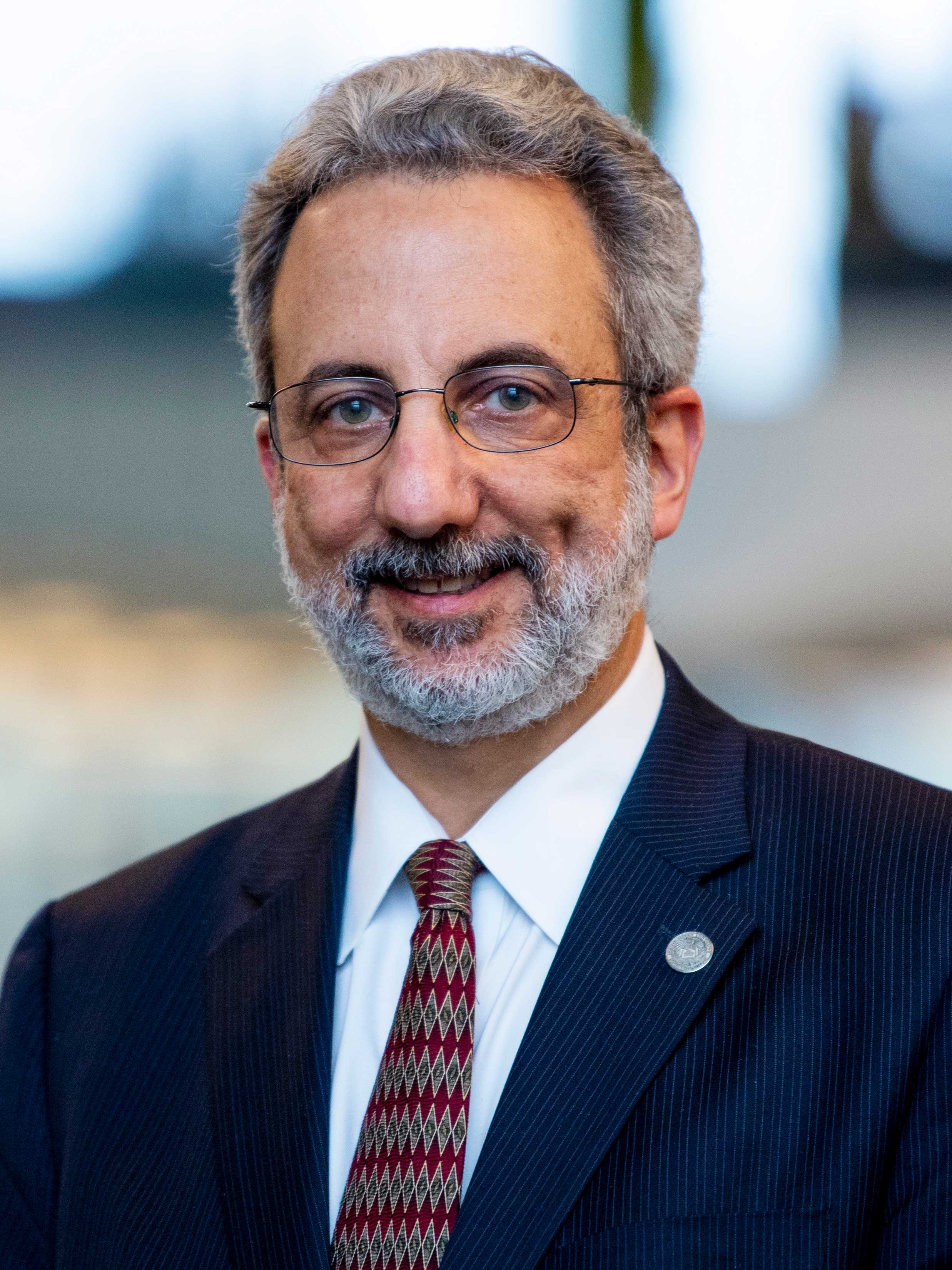
Arvind Parkhe is a Laura H. Carnell Professor of Strategy and International Business at Temple University’s Fox School of Business. He previously taught at Indiana University’s Kelley School of Business (1989–2003) and holds degrees from IIT Bombay (B.Tech.), Georgia State University (MBA), and Temple University (Ph.D.). His research focuses on strategic alliances, global supply chains, international joint ventures, and trust in cross-border partnerships. He has published in top journals like the Academy of Management Journal and Strategic Management Journal, earning awards such as the AIB Best Dissertation Award (1990) and JIBS Decade Award (2001). Teaching excellence spans all academic levels: recognized as outstanding faculty for Ph.D., MBA, and undergraduate programs. Service leadership includes Vice President of the Consortium for Undergraduate International Business Education (2014), Chair of Fox’s Strategic Management Department (2010–2020), and Managing Director of Fox MBA Programs (2005–2010). He received Temple’s Musser Outstanding Service Award (2012) and Faculty Service Excellence Award (2012). Key research contributions emphasize interorganizational networks, global competitive strategies, and trust mechanisms in alliances. His work bridges theory and practice, addressing challenges in global business operations and strategic collaboration.
Liangzhong Yao is a Professor and Director of the Smart Grid Research Institute at Wuhan University, China. He holds dual roles as Fellow of IEEE and IET, and has served in leadership positions such as Vice President of China Electric Power Research Institute (CEPRI) and Chair of IEC TC122. His expertise spans renewable energy grid integration, HVDC systems, smart grid technologies, and energy storage. Yao has led over 25 years of R&D projects with combined funding exceeding GBP 20 million and RMB 90 million, resulting in applied technologies in wind farms and HVDC grids. He has been awarded over 10 national and international accolades, including the IEC 1906 Standard Award and China Science and Technology Innovation Awards. Research focuses include AC-DC hybrid systems, distributed energy resource integration, and high-renewable energy grid operation. He has authored/co-authored 350+ publications, 60+ patents, and 4 books. Yao currently supervises 8 PhD and 10 Master's students, and serves on editorial boards of journals like CSEE Journal of Power Energy & Systems. His leadership roles in global standards bodies like IEC and CIGRE further highlight his contributions to advancing electrical engineering standards and practices.
Professor Mehmet Demirbag serves as Deputy Dean of Essex Business School and Professor of International Business at the University of Essex. Previously, he held significant leadership roles including Vice Dean (Internationalisation) and Head of Department of Strategy and Organisation at Strathclyde Business School, and Chair in International Business at the University of Sheffield Management School. His extensive academic career spans over a decade in UK higher education institutions with specialized expertise in international business strategy. Dr. Demirbag completed his Master's degree in Business Analysis at the University of Leicester and earned his PhD at the University of Bradford Management School. His educational background established the foundation for his research focus on international business phenomena, particularly regarding emerging economies and multinational enterprises. His research interests center around internationalisation of R&D activities, offshore R&D, FDI location choice, product and regional diversification strategies of MNEs, multinationals from emerging countries, international mergers and acquisitions, and reverse knowledge transfer by emerging country MNEs. These interconnected research streams examine how firms navigate global markets, particularly focusing on the strategic behavior of emerging market multinationals and their interactions with developed economies. Analysis of his recent publications reveals consistent thematic patterns across international business, strategic management, and human resource management domains. His work demonstrates particular emphasis on emerging market multinationals, cross-border knowledge transfer mechanisms, international strategic decision-making in uncertain environments, and the institutional contexts shaping multinational enterprise behavior. The interdisciplinary nature of his research bridges theoretical frameworks from international business, strategic management, and organizational studies. Professor Demirbag maintains active editorial roles as consulting editor of the Journal of International Management and advisory editor of Eurasian Business Review. He has co-guest edited special issues for numerous prestigious journals including British Journal of Management, Human Resource Management, Journal of World Business, and International Business Review, among others. His editorial contributions span research areas related to emerging market MNEs, MNEs in emerging markets, transitional periphery contexts, and human resource management in uncertain environments. As an educator, Professor Demirbag teaches International Business and International Strategic Management at undergraduate, postgraduate, and executive levels. His supervision portfolio includes doctoral candidates such as Selman Alisan Gemuhluoglu and previously guided Koushik Das Sarma to completion of their PhD in Business Administration. His research has received funding from various sources including the European Commission, and his work on FDI and SMEs has contributed to REF impact cases at both the University of Bradford and the University of Sheffield.
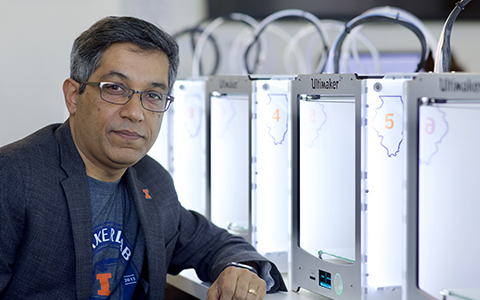
Vishal Sachdev is a Clinical Associate Professor of Business Administration at the University of Illinois at Urbana-Champaign's Gies College of Business. He serves as Director of the MS Analytics program, Director of Illinois MakerLab, and DPI Faculty in Residence. His academic roles span teaching, research, and leadership in educational technology and innovation. Education: B.A. in Mathematics, St. Stephen's College, New Delhi (1993) M.S. in International Business, Indian Institute of Foreign Trade (1996) Ph.D. in Information Systems, University of Texas at Arlington (2007) Research Interests: Dr. Sachdev focuses on technology's role in enabling collective action, cooperative production, and gamification in education. His work explores blockchain-based DAOs, 3D printing in educational settings, and the intersection of Web3 with decentralized business models. He emphasizes scalable peer-learning environments and online/blended education frameworks. Awards: Emerging Award for Excellence in Public Engagement (UIUC) List of Excellent Teachers (UIUC, multiple years) Research Excellence Award (Gies BADM, 2023) Grants & Labs: He leads Illinois MakerLab, a pioneering academic makerspace. Notable grants include Blockchain Analytics (Gies, 2023-2025), US Competitiveness in Web3 (Solana Foundation, 2022-2024), and Autodesk grants for Fusion 360 workshops. His work bridges technology, education, and innovation through applied research. Courses: Teaches courses like Blockchain Analytics, Database Design, and Digital Making Seminar, emphasizing hands-on, industry-relevant learning.
Professor Alexander Slocum holds the Walter M. May (1939) and A. Hazel May Chair in Emerging Technologies at MIT's Department of Mechanical Engineering within the School of Engineering. A distinguished educator and researcher, Slocum has made significant contributions across precision machine design, medical device innovation, and renewable energy systems. His research interests span precision machine design for medical devices and energy industry applications, with particular focus on offshore renewable energy storage systems and kinematic couplings. Slocum's work bridges theoretical mechanical engineering principles with practical applications that address real-world challenges in healthcare and sustainable energy. His recent publications demonstrate a strong emphasis on bio-inspired engineering, underwater energy storage systems, and medical device innovation. The articles reveal a consistent pattern of applying fundamental mechanical engineering principles to solve problems in healthcare delivery and renewable energy storage, often with a focus on practical implementation in resource-constrained environments. NSF Presidential Young Investigator (1987) MacVicar Faculty Fellow (1999) Massachusetts Professor of the Year Award (2000) Multiple R&D 100 Awards (1994-2010) ASME Leonardo da Vinci Award (2004) ASME Machine Design Award (2008) ASME Ruth and Joel Spira Outstanding Design Educator Award (2018) National Academy of Inventors Fellow (2021) Slocum actively mentors students through MIT's Experimental Study Group (which he directs) and his renowned 2.75/2.750 Precision Machine Design courses. His educational approach emphasizes hands-on learning and real-world problem solving, particularly through medical device design projects developed in collaboration with Boston-area clinicians. His research has been supported by significant grants from the NSF, Department of Energy, and military research agencies. His PERG (Precision Engineering Research Group) lab fosters interdisciplinary collaboration, bringing together mechanical engineers, materials scientists, and medical professionals to develop innovative solutions for healthcare and energy challenges. The lab is particularly known for its work on kinematic couplings, hydrostatic bearings, and bio-inspired engineering solutions.
Britta Glennon is an Assistant Professor of Management at the Wharton School of the University of Pennsylvania and a Faculty Research Fellow at the National Bureau of Economic Research (NBER). Her work bridges economics, management, and public policy, focusing on how immigration and cross-border innovation shape economic outcomes. Dr. Glennon received her educational training from prestigious institutions: Ph.D. in Public Policy and Management from Carnegie Mellon University M.P.P. in Public Policy from the University of Chicago B.A. in Economics and East Asian Studies from Cornell University Her research program explores the intersection of immigration policy, innovation, and multinational business strategy. Dr. Glennon has significantly advanced understanding of how skilled immigration affects firm performance, how immigration restrictions lead to offshoring of R&D activities, and how geopolitical tensions impact international scientific collaboration. Her methodology combines rigorous econometric analysis with rich datasets spanning immigration records, corporate activities, and scientific publications. She demonstrates how immigration policies shape the global geography of innovation and how multinational firms strategically respond to constraints on skilled labor mobility. Analysis of Dr. Glennon's publications reveals consistent examination of immigration policy's economic implications through multiple lenses - from macro-level effects on innovation geography to micro-level impacts on individual scientists and firms. A recurring theme is the interconnectedness of global talent flows and innovation ecosystems, demonstrating how policy changes in one country trigger complex adjustments across international borders. Her most recent work increasingly focuses on geopolitical dimensions of scientific collaboration, particularly U.S.-China research relationships. Dr. Glennon's scholarly contributions have been recognized with: Finalist, INFORMS/Org Science Dissertation Proposal Competition (2018) Her research has attracted significant external attention. She has testified as an expert witness before the U.S. Senate Committee on the Budget regarding 'Unlocking America's Potential: How Immigration Fuels Economic Growth and Our Competitive Advantage.' Her work has been cited in Congressional Testimony and has influenced policy debates on immigration and innovation. She maintains active collaborations with researchers at NBER and has contributed to influential policy briefs for organizations like the Peterson Institute. As a Faculty Research Fellow at NBER, Dr. Glennon participates in a vibrant research community focused on economic policy analysis. Her work connects with broader initiatives examining globalization, innovation, and labor markets. She regularly presents her research to academic audiences and policy makers, translating complex economic findings into actionable insights for business leaders and government officials.
Prof. Dr. Alfons J. Weichenrieder is a Professor of Economics and Public Finance at Goethe University Frankfurt . His research focuses on international corporate taxation, fiscal federalism, public debt, redistribution policies, and tax morality. He serves on multiple advisory boards including the German Ministry of Finance and Leibniz ScienceCampus MaTax . As Managing Editor of FinanzArchiv , he contributes to public finance analysis. Education : Habilitation (2001) and Ph.D. (1995) from University of Munich Research Themes : Tax havens, EU fiscal policy, corporate tax incentives, environmental FDI interactions His recent work explores pro-rich inflation dynamics , green dividend mechanisms , and taxation-induced capital distortions . Collaborative projects span institutions like Oxford University , Norwegian School of Economics , and Deutsche Bundesbank . Scientific Recognition Top-100 German researcher in economics & finance (RESEARCH.COM, 2025) International Research Fellow, Oxford CBT CESifo Research Fellow Member, Norwegian Center for Taxation
Professor Carmine Ornaghi is a Professor of Economics and Head of Department at the University of Southampton. He holds a PhD from Universidad Carlos III de Madrid (2004). His research focuses on empirical industrial organization, particularly the pharmaceutical industry, water sector, mergers and acquisitions, and firm productivity. He has advised the European Commission’s DG Comp on merger impacts and led a £385,000 ESRC grant (2019–2022) studying mergers’ effects on pharmaceutical innovation. Current projects include analyzing wage markdown power in oligopolistic markets and water consumption policies. Teaching includes undergraduate and postgraduate modules like Statistics for Economics and Industrial Economics. He supervises two PhD students and contributes to the Applied Economics research group. Notable grants include ESRC and British Academy funding. His work spans top journals such as the Journal of Economic Behavior & Organization and Journal of the European Economic Association.
Alexey Pavlov is a Professor of Petroleum Cybernetics at the Department of Geosciences and Petroleum, Norwegian University of Science and Technology (NTNU). He holds an MSc in Applied Mathematics from St. Petersburg State University, a PhD in Mechanical Engineering from Eindhoven University of Technology, and has industrial R&D experience from Statoil and Ford Motor Co. Education: MSc (Applied Mathematics, St. Petersburg State University), PhD (Mechanical Engineering, Eindhoven University) His research focuses on control systems for petroleum engineering applications, including nonlinear control theory, iterative learning control, and data-driven optimization methods. Publications reveal a strong emphasis on real-time drilling optimization, well integrity monitoring, and synchronization in networked systems. Recent work trends include machine learning integration for oil well monitoring, moment matching in model reduction, and extremum seeking control for multi-agent systems. Collaborations span institutions like Ford Motor Co., Statoil, and Eindhoven University of Technology. Current affiliations include the Department of Geosciences and Petroleum at NTNU. No scientific awards or advisee information is explicitly mentioned in the provided texts.
Taran Mari Thune is a Professor at the Centre for Technology, Innovation and Culture (Tik) at the University of Oslo. She directs INTRANSIT (Innovation Policy for Industrial Transformation, Sustainability and Digitalization), co-directs the Oslo Institute for the Research on the Impact of Science (OSIRIS), and leads the SIVAC research project on innovation in the Norwegian supplier industry. Her work focuses on innovation processes, collaboration networks, and knowledge transfer mechanisms across various sectors including healthcare and energy. Dr. Thune earned her Dr. Oecon degree from the Norwegian School of Management (BI Business School) in 2006 with a dissertation on university-industry partnerships, and holds a Master of Philosophy in Comparative and International Education from the University of Oslo (2000). Prior to joining Tik, she worked at the Nordic Institute for Studies of Innovation, Research and Education (NIFU) as a senior researcher and research director, and at the Work Research Institute in Oslo. She has been a visiting scholar at Stanford University and Ingenio at the Polytechnic University of Valencia. Her research spans multiple innovation domains with particular emphasis on: University-industry collaboration and knowledge transfer mechanisms Public sector innovation, especially in healthcare Sectoral innovation systems, particularly petroleum and energy transitions Science policy and research impact on society Academic work and the relationship between research, education, and third mission activities Analysis of Dr. Thune's recent publications reveals consistent focus on innovation dynamics across sectors. Her work examines knowledge flows between universities, public research organizations, and industry, with special attention to mechanisms enabling effective collaboration. She has made significant contributions to understanding innovation in traditional sectors like petroleum undergoing sustainability transformation, as well as in public sectors like healthcare where innovation processes differ from commercial contexts. Dr. Thune serves on the boards of OsloTech and NORSI, contributing to broader innovation policy discussions in Norway. She teaches in Tik's master's program, particularly in TIK4001 and TIK4021 courses, and supervises multiple master's and PhD students. Her research is primarily funded by the Norwegian Research Council, with involvement in multiple large-scale projects examining innovation policy, sectoral transformations, and the societal impact of research.
Assoc. Prof. Dr. Fatih Buğra Erdem is an Associate Professor at the Department of Commercial Law within the School of Law at Ankara Social Sciences University (since 2021), holding a full-time position. He also serves as a part-time faculty at Freie Universitaet Berlin 's Law School (Department of Competition Law) since 2021. Education: LL.B. in Law from Atılım University (2010-2015) LL.M. in Commercial Law from Birkbeck College, University of London (2023) Ph.D. in Commercial Law from Brunel University London (2018-2021) Postdoctoral Research at Trinity College Dublin 's Law Faculty (2024) Research Interests focus on Competition Law , Corporate Law , and Intellectual Property Law , with a particular emphasis on intersections between legal theory and practical applications in maritime contracts , corporate governance , and digital economies . Publication Trends include analyses of force majeure in maritime contracts , business judgment rules , and comparative advertising regulations , reflecting his expertise in EU competition law and innovation policy . Recent works explore blockchain technology's legal implications and cross-border consumer protection mechanisms. Advising includes supervising graduate theses on topics like crowdfunding in Turkey , social media trademark violations , and blockchain in data protection , with students such as Firuze Nazlıcan Göktolga and Kübra Nur Buyur .
Jan Bena is an Associate Professor and Chair of the Finance Division at the Sauder School of Business, University of British Columbia. He holds dual PhDs in Finance (London School of Economics) and Economics (CERGE-EI). His research focuses on innovation, corporate finance, and entrepreneurship, with notable contributions to understanding corporate innovation dynamics, ownership structures, and the interplay between finance and global markets. He leads initiatives such as the Portfolio Management Foundation Program and advises the UBC SWIFT: Sauder Women in Finance Training Program. He also holds the Bank of Montreal Chair in International Finance. His research interests span corporate innovation (process and technological), decentralized finance (DeFi), private equity ownership structures, and the impact of global factors on firm behavior. He has developed influential datasets, including the Global Corporate Patent Dataset and Process Innovation Patent Dataset, which analyze innovation trends across industries and countries. His work frequently addresses topics like multinational corporation strategies, labor market interactions, and financial market dynamics. Key contributions include studies on how employment protection laws influence innovation, the propagation of economic downturns through multinational firms, and the long-term effects of foreign institutional ownership. His articles consistently address critical questions in corporate finance, combining theoretical models with empirical evidence from large datasets. He teaches courses on entrepreneurial finance and private equity, reflecting his expertise in these areas. Bena collaborates with leading institutions and scholars globally, contributing to both academic discourse and practical frameworks for financial decision-making. His work bridges theoretical innovation with real-world applications, influencing policy and business strategies in areas like sustainability, technological transition, and corporate governance.
Tobias Geyer is a Research Professor and Privatdozent at ETH Zurich's Department of Information Technology and Electrical Engineering, with an adjunct role as Extraordinary Professor at Stellenbosch University, South Africa. He leads ABB's R&D platform for medium-voltage drives (ACS6000/6080) and serves as a Corporate Executive Engineer for power converter control methods. His career spans roles at GE Research, the University of Auckland, and ABB's Corporate Research Centre. Education: Dipl.-Ing. (ETH Zurich, 2000), Ph.D. (ETH Zurich, 2005), Habilitation (ETH Zurich, 2017). Research focuses on model predictive control (MPC), high-power converters, and grid integration strategies. Key areas include optimized pulse patterns, thermal management, and control of medium-voltage drives. Notable achievements include the IEEE Fellow distinction (2022), Semikron Innovation Award (2021), and five prize paper awards. He authored a seminal book on MPC in power electronics and serves on editorial boards for top journals. Current projects emphasize digitalization, predictive maintenance, and special applications in oil/gas and offshore wind sectors.
Jerome F. Hajjar is a University Distinguished Professor and CDM Smith Professor in the Department of Civil and Environmental Engineering at Northeastern University, with an affiliation in Marine and Environmental Sciences. He holds a PhD in Structural Engineering from Cornell University (1988) and is a licensed Professional Engineer in Illinois and Minnesota. PhD, Structural Engineering, Cornell University, 1988 MS, Structural Engineering, Cornell University, 1985 BS, Engineering Mechanics, Yale University, 1982 Hajjar’s research focuses on sustainable and resilient steel/concrete composite structures , earthquake engineering , structural stability , and large-scale experimental testing . He pioneered design for deconstruction and physics-guided machine learning for structural analysis. His work addresses climate change risks through offshore wind resilience and hurricane risk assessment. His recent publications emphasize carbon reduction strategies via steel-CLT hybrids, machine learning techniques for seismic modeling, and experimental programs on composite diaphragms. Hajjar’s projects include the STReSS Laboratory , equipped with a reinforced concrete strong floor for full-scale structural testing. 2025 William H. Wisely American Civil Engineer Award 2025 SSRC Distinguished Member Award 2021 AISC Lifetime Achievement Award 2018 Robert D. Klein Lectureship 2007 ASCE Fellow Hajjar mentors PhD students, including R. Bailey Bond (2024), and leads major initiatives like the Academic Center for Reliability and Resilience of Offshore Wind (ARROW) and the Steel Diaphragm Innovation Initiative . His advocacy extends to integrating sustainability, resilience, and equity into national building codes through roles in the Structural Engineering Institute and American Society of Civil Engineers.
Erin Baker is a Distinguished Professor in the Department of Mechanical and Industrial Engineering at the University of Massachusetts Amherst and serves as Faculty Director of the Energy Transition Institute. Her work applies operations research and economics to decision-making under uncertainty, with a strong focus on energy justice and publicly-funded energy technology R&D in the context of climate change. University: University of Massachusetts Amherst School: College of Engineering Department: Department of Mechanical and Industrial Engineering Leadership Role: Faculty Director, Energy Transition Institute Education: PhD, Engineering Economic Systems & Operations Research, Stanford University (2002) MS, Engineering Economic Systems & Operations Research, Stanford University (1998) BA, Applied Mathematics, University of California, Berkeley (1986) Professor Baker's research lies at the intersection of energy, environment, and decision science. She develops and links models to address complex energy policy and planning challenges across geographic and temporal scales. Her work emphasizes robust decision-making, energy equity, and sustainability, with applications including grid resilience in New England and developing countries, and environmental assessment of offshore wind energy. She is deeply committed to mentoring and education, having received multiple awards for advising and teaching excellence. Her research trends reflect a consistent focus on modeling under uncertainty, energy systems, and sustainability, with strong interdisciplinary links to economics, policy, and environmental science. Scientific Awards and Distinctions: NSF CAREER Award (2008) College of Engineering Outstanding Senior Faculty Award (2016) Distinguished Graduate Mentor Award (2014) Multiple IEOR Advisor of the Year Awards (2005, 2006, 2009, 2015) Finalist, C3E Award for Women in Clean Energy (2014, 2015) Energy, Environment, and Natural Resources Best Publication in Sustainability (2017) Professor Baker is an active mentor and educator, having advised numerous students, as reflected in her repeated recognition as Advisor of the Year. She has secured significant research funding, including an NSF CAREER Award, to support her work on energy technology innovation and policy. Her leadership in the Energy Transition Institute demonstrates her commitment to stakeholder-engaged, interdisciplinary research aimed at achieving a fair and rapid transition to a decarbonized energy system. She leads and collaborates with interdisciplinary teams within the Energy Transition Institute, which brings together expertise from engineering, social sciences, and the humanities to tackle the complex challenges of energy transition. Her work is highly collaborative and policy-relevant, aiming to create broadly shared benefits from the shift to net-zero energy systems.