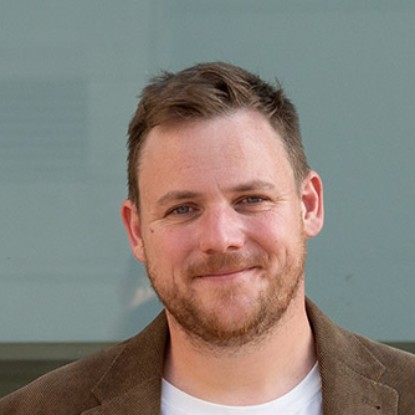
Clay Palmeira Da Silva is a Lecturer in Computing at the Department of Computer Science, School of Computing and Engineering, University of Huddersfield (United Kingdom). His research bridges foundational web technologies and emerging AI applications, with a focus on distributed systems, service interoperability, and deep learning. Research Interests: His work spans: Core Web Technologies: Web services, mobile computing, synchronization, and QoS optimization. User-Centric Systems: Multi-device UX, interoperability, and edge computing. Applied AI: Deep learning for ecological conservation (e.g., Amazonian bird detection). Publication Trends: Earlier research focused on web engineering and distributed systems (e.g., service migration, synchronization). Recent work demonstrates a pivot toward AI-driven applications in environmental science, utilizing computer vision for biodiversity monitoring.
Karen Frost-Arnold is Professor of Philosophy at Hobart and William Smith Colleges, where she has been a faculty member since 2009. She is affiliated with the Department of Philosophy and contributes to interdisciplinary programs in Gender, Sexuality, and Intersectional Justice. Education: Ph.D., Department of Philosophy, University of Pittsburgh, 2008 B.A. with Honors in Philosophy and Biology, Wellesley College, 1999 Her research centers on the epistemology and ethics of trust, particularly in digital environments. Key themes include social epistemology, the philosophy of the internet, feminist philosophy, and the epistemology of ignorance. She investigates how power, privilege, and identity shape knowledge practices online and offline. Her work critically examines trustworthiness, online moderation, echo chambers, and the ethical responsibilities of knowers in technologically mediated societies. Her recent publications and invited talks reveal a strong focus on epistemic injustice, context collapse, and the challenges of maintaining epistemic integrity in social media. She explores how digital platforms can perpetuate prejudice and how feminist epistemologies offer tools for resistance and reform. Scientific Contributions: Author of forthcoming book: Who Should We Be Online? A Social Epistemology for the Internet (Oxford University Press) Published in leading journals such as Synthese , Episteme , Hypatia , and Social Epistemology Contributor to major handbooks on trust, applied epistemology, and service-learning Karen Frost-Arnold has delivered numerous invited keynotes and talks at international conferences and universities, including the University of Pittsburgh, Cornell University, and the University of Innsbruck, reflecting her scholarly impact. She teaches courses such as 'Trust and Betrayal,' 'Feminism: Ethics & Knowledge,' and 'Ethics of Civic Engagement,' integrating her research into pedagogy. While no formal advising or grant details are listed, her extensive publication record and academic leadership suggest active mentorship and scholarly direction. She is a prominent voice in contemporary debates on digital ethics and epistemic responsibility, combining feminist insights with analytic rigor to address urgent issues in the philosophy of the internet.
Seshadri Tirunillai is an Associate Professor and the Marvin Hurley Professor of Marketing & Entrepreneurship at the C. T. Bauer College of Business, University of Houston. His research and teaching focus on digital marketing, user-generated content, advertising, marketing strategy, and sales analytics. Education: Ph.D. in Business Administration (Marketing), University of Southern California - Marshall School of Business Masters in Management, Indian Institute of Technology-Bombay, India B.E. (Hons) in Electrical and Electronics Engineering, Birla Institute of Technology and Science, Pilani, India His research lies at the intersection of marketing, data science, and digital platforms. He investigates how user-generated content influences brand perception and stock performance, how offline advertising affects online conversations, and how machine learning can extract strategic insights from big data. His work has been published in premier journals such as Journal of Marketing , Marketing Science , and Journal of Marketing Research . He frequently employs advanced analytical methods, including natural language processing and quasi-experimental designs, to derive actionable marketing insights. The recent publications reflect a consistent trend in leveraging large-scale digital data—especially social media and sales interactions—to understand consumer behavior, brand dynamics, and marketing effectiveness. His work bridges theoretical rigor with practical relevance in digital and data-driven marketing. Scientific Awards: MSI Scholar (2022) O'Dell Award (2019) Lehmann Award (2015) John A. Howard/AMA Doctoral Dissertation Award (2012) Best Paper, European Marketing Conference (2009) Best Reviewer, International Journal of Research in Marketing Best Reviewer, Journal of Interactive Marketing Finalist, Bass Dissertation Award (2014) Shankar-Spiegel Award Honorable Mention (2008) Seshadri Tirunillai has made significant contributions to marketing theory and practice through his research, editorial service, and teaching. He serves on the editorial boards of top journals including Marketing Science , Journal of Marketing Research , and Journal of Interactive Marketing . He teaches Digital Marketing Analytics (MARK 7366) at the graduate level and Introduction to Internet Marketing (MARK 3365) at the undergraduate level. His work has been supported by recognition from major marketing institutions, though specific grants are not detailed in the text. He is actively involved in academic leadership through editorial roles and professional associations, contributing to the advancement of marketing science and digital strategy research.
Tobias Stacke is a Scientist in the Department of Climate Dynamics at the Max Planck Institute for Meteorology (MPI-M) in Hamburg, Germany, working within the Climate-Biosphere Interactions group. His research focuses on Earth system modeling, particularly land surface hydrology in Arctic regions, including permafrost, soil hydrology, and wetlands. Research Interests: Dr. Stacke specializes in simulating the Earth's hydrological cycle, with emphasis on Arctic processes and their atmospheric interactions. He contributes to the development of the ICON-LAND model and the creation of sustainable, high-resolution model infrastructure for Arctic landscape representation. Publication Trends: His recent work (2021–2025) centers on permafrost dynamics, global hydrological modeling, climate feedbacks, and Earth system model evaluation. His publications frequently appear in high-impact journals such as Nature Communications , Geophysical Research Letters , and Geoscientific Model Development , often involving large international collaborations and model intercomparisons (e.g., CMIP, ISIMIP). Scientific Roles: Research Scientist, Scientific Programmer, Model Developer Model Development: HydroPy, ICON-LAND, ESMValTool contributions Advising and Grants: There is no public information indicating that Tobias Stacke has supervised students. His research has been supported through major projects such as CRESCENDO, MiKlip, Q-Arctic, and CMIP6 coordination activities at MPI-M, indicating involvement in significant funded initiatives, though specific grants are not listed. Labs and Teams: He is embedded in the Climate-Biosphere Interactions group at the Max Planck Institute for Meteorology, contributing to large collaborative modeling efforts including the development and evaluation of Earth system models. He has also been involved with the IMPRS-ESM (International Max Planck Research School for Earth System Modeling), suggesting engagement with academic training and research coordination.
Dr. Angela T. Ragusa is a Senior Lecturer in Sociology within the Department of Social Work and Arts at Charles Sturt University, Australia. Her work spans environmental sociology, health and well-being, media and communication, and social inequality. She is Editor-in-Chief of Rural Society and serves on editorial boards for several journals including Sustainability and Open Communication Journal . PhD in Sociology, Virginia Polytechnic Institute and State University (2002) MSc in Sociology, Virginia Polytechnic Institute and State University (2003) MSc in Science and Technology Studies, Virginia Tech (2000) BA (Honours) in Psychology, St Francis College (1993) Her research critically examines social change, cultural identity, and systemic influences of media, science, education, and health institutions. Key areas include environmental sustainability, mental and physical well-being, consumerism, and rural Australia. She explores how individuals negotiate social systems to produce personal, community, and policy-level change. The 15 most recent publications reflect a consistent focus on rural issues, sustainability, digital learning, and social inequality. Trends include sociological analysis of environmental behavior, cost-of-living crises as structural violence, online education challenges, and rural mental health. Her work combines qualitative and quantitative methods, often with policy implications, and is increasingly aligned with UN Sustainable Development Goals. Her scientific contributions are recognized through editorial leadership and public engagement. She has contributed to media discussions on the fourth industrial revolution, pandemic family changes, and rural health workforce challenges. As a registered supervisor, she mentors higher degree research students. Her teaching portfolio includes courses in introductory sociology, gender studies, media and globalization, environmental sociology, and advanced research methods. She has been involved in research impacting rural mental health policy in Australia. Her work is deeply embedded in rural Australia, with collaborations extending internationally, particularly in sustainability and education research. She leads research on ruralities, digital learning access, and environmental behavior, contributing to both academic discourse and public policy.
Dr. Mia Stokmans is an Associate Professor at Tilburg University's TSHD: Tilburg School of Humanities and Digital Sciences , specifically within the Department of Culture Studies . Her research focuses on cultural sociology, education, mental health, and public perception of cultural practices. She actively contributes to the Rapid Social and Cultural Transformation: Online & Offline research group. Her expertise includes analyzing holistic education's impact on student well-being , public perception of circus arts , and literacy strategies for adolescents . Recent work explores how cultural participation and educational policies shape mental health outcomes, particularly in higher education settings. Education Focus: Holistic teaching methods, student mental health, campus wellness programs. Cultural Studies: Audience analysis of traditional vs. contemporary circus, literacy trends, and consumer behavior in arts. Key publications include studies on holistic education's mental health benefits (2024), public engagement with nouveau cirque (2023), and strategies to enhance youth literacy (2022). She has also led research projects on collaborative learning in global contexts and motivational factors in cultural participation. Her work aligns with UN Sustainable Development Goals related to quality education and mental health awareness.
Markus Zanker is a full professor at the Faculty of Computer Science , Free University of Bozen-Bolzano (Italy), where he previously served as vice dean for studies and director for study programmes. He held associate professorship at Alpen-Adria-Universitaet Klagenfurt, Austria (2011-2016). Research Focus : Knowledge-based decision support systems, personalized information filtering/retrieval, product recommendation, conversational sales advisor systems, and product configurators Current Projects : Causal discovery in recommender systems, medical recommendation systems (insulin dosing, drug combinations), explainable AI for tourism and news recommendation The 15 most recent publications (2016-2025) cover topics including: Deep reinforcement learning for medical applications Causal modeling in tourism and online decision-making Explainable recommendation frameworks Session-based news and video recommendations Evaluation of open-source recommendation libraries His work also explores user interaction patterns through studies on bimodal rating statistics, collaborative explanations, and proactive recommendation engagement.
Mihaela Curmei is a researcher active in machine learning, recommender systems, and algorithmic fairness, with significant contributions to privacy-preserving methods, behavioral modeling, and optimization. Her collaborative work spans institutions and co-authors like Benjamin Recht, Georgina Hall, and Sarah Dean. Research Themes: Shape-constrained regression using polynomial optimization Privacy in matrix factorization with public features Dynamic preference modeling grounded in psychology Multi-learner systems under participation dynamics Temporal impacts of recommendation algorithms Technical Domains: Sum-of-squares programming Federated and distributed learning Stochastic reachability analysis Gradient flow-based dataset modeling Key Venues: Published in Operations Research , NeurIPS, ICML, RecSys, FAccT, and preprint archives. Her recent work (2023-2025) focuses on temporal effects in recommendations, private computation methods, and equilibrium analysis in multi-agent games. Earlier projects (2017-2021) include search engine indexing techniques (BitFunnel) and foundational studies on offline/online metric correlations in recommendation systems.
Tanya Braun is a Junior Professor in the Institute of Computer Science at the University of Münster, Department of Mathematics and Computer Science. She leads the Data Science research group, focusing on statistical-relational AI, human-aware AI, and text understanding. Her work bridges formal AI methods with real-world applications in healthcare, digital humanities, and public sector systems. Education: Bachelor's and Master's in Computational Informatics, Hamburg University of Technology Doctorate in Computer Science, University of Lübeck (2020), thesis: 'Rescued from a Sea of Queries - Exact Inference in Probabilistic Relational Models' Her research centers on probabilistic inference in relational domains , with a focus on lifted inference techniques that exploit symmetries to scale reasoning. She investigates human-aware AI , particularly how AI systems can reconcile learned models with human expectations to improve explainability and trust. Her work on text understanding addresses challenges in data-scarce settings such as digital humanities, where traditional large language models fail. She has developed methods for identifying and enriching subjective content descriptions, topic modeling in specialized domains, and feedback-driven model improvement. The 15 most recent publications highlight a strong trajectory in lifted inference, model compression, privacy-preserving AI, and explainability . Her work integrates formal AI foundations with practical concerns in high-stakes domains like healthcare. She frequently publishes in top venues such as AAAI, IJCAI, ECAI, and Artificial Intelligence, often in collaboration with Ralf Möller, Marcel Gehrke, and Jan Speller. Scientific Awards: No specific awards listed in the provided text. Tanya Braun actively advises students and leads the HAPPI project, which focuses on human-AI model reconciliation using lifted probabilistic inference. She has supervised multiple theses and mentored researchers including Jan Speller (PostDoc), Nazlı Nur Karabulut, and Sagad Hamid. She has secured funding from the Ministry of Culture and Science of North Rhine-Westphalia for her research. She is deeply involved in academic service: serving as program co-chair for KI 2025, guest-editing special issues in journals like Künstliche Intelligenz and Annals of Mathematics and Artificial Intelligence , and organizing major conferences including ICCS and KR. Labs and Teams: She leads the Data Science Group at the University of Münster, which conducts research in AI, probabilistic modeling, and data science. The group is actively involved in teaching and mentoring students in advanced AI topics.
Brahim El Boudani is a Lecturer in AR/VR and Software Engineering at London South Bank University (LSBU) within the Computer Science and Informatics department. With a PhD in Mechanical Engineering and Design, he bridges engineering principles with modern computing technologies. His academic work is complemented by extensive industry experience in IT and telecommunications, which shapes his research and teaching approaches. Dr. El Boudani's research interests span artificial intelligence, data science, and next-generation networking technologies. His work focuses on applying machine learning and deep learning to intelligent networking and smart systems, with particular emphasis on 5G/6G networks, augmented and virtual reality, and advanced data analytics. The fingerprint analysis of his research reveals strong activity in Internet-of-Things, Received Signal Strength, 5G IoT, Information Fusion, and 3D Indoor Positioning systems. His recent publications demonstrate a clear trend toward practical applications of AI in networking technologies, particularly in indoor positioning systems for 5G networks and healthcare AI applications. His work shows increasing sophistication in combining multiple AI techniques with networking protocols to solve real-world problems in constrained environments. His notable recognition includes: Named one of the top 100 influential voices in 5G (June 2022) Dr. El Boudani actively engages with the AI and tech communities through social media, conferences, and mentorship programs. His industry experience in IT and telecommunications has facilitated collaborations with international institutions and industry partners on research projects focused on AI-driven network optimization and smart systems development. His research contributes to UN Sustainable Development Goals, particularly in technology and innovation areas, focusing on how intelligent systems can address global challenges through advanced networking and AI applications.
Ostylovskaya Oksana Anatolyevna serves as Associate Professor at the Department of Modern Educational Technologies within the Institute of Psychology and Pedagogy of Socialization at Siberian Federal University. Holding a Candidate of Pedagogical Sciences degree, she brings 21 years of specialized experience in educational technology and teacher training. Her academic foundation includes: Physics Teacher qualification from Krasnoyarsk State University (1997) Advanced certifications in digital education (2020-2022): Implementation of e-learning programs (72h), Digital Professional modules (36-54h), Blended Learning course design (36h), and Online course integration models (72h) Her research focuses on the practical application of digital tools in pedagogy, with emphasis on: Didactic frameworks for e-learning environments Management processes in digital education Professional competency development for modern educators Seamless integration of online/offline instructional models Her work bridges theoretical pedagogy with actionable digital solutions for contemporary educational challenges. She teaches core courses including Didactics of e-learning, Introduction to Professional Activity, Fundamentals of Professional Activity, and Design of Educational Management Processes. Her 21-year career demonstrates sustained commitment to evolving educational methodologies through technology-enhanced approaches. Contact: oostylovskaya@sfu-kras.ru | +7 (391) 206-20-16
Prof. Dr. Johannes Müller-Lancé holds the Chair of Romance Linguistics and Media Studies (with a focus on French and Spanish) at the University of Mannheim’s Faculty of Philosophy. He has served as a professor since 2002, following academic appointments in Freiburg and Tours, and maintains expertise in language acquisition, media linguistics, and historical linguistics. Language Acquisition : Cognitive and social aspects of multilingualism, history of foreign language teaching, language contact, multilingual didactics (English and Latin collaboration) Media Linguistics : Language in online/offline journalism, orthography in new/old media, press text genres, special-interest magazines, sports reporting, advertising Language History : Historical multilingualism, morphosyntax, Vulgar Latin, orthography development in France and Spain His research projects include a media-linguistic analysis of trend sports magazines in Germany and France, and foundational work on vocabulary acquisition in Romance languages. He has held visiting lectureships at universities in Granada, Madrid (Complutense), Mexico City (UNAM), Quebec (Laval), Seville, and Cádiz. Since 2007, he works with the Stuttgart Ministry of Sciences on French teacher training reforms. He oversees the Catalan language program funded by the Institut Ramon Llull and serves as contact for the Mannheim Sports Scholarship.
Florian Müller serves as Assistant Professor for Mobile Human-Computer Interaction at Technical University of Darmstadt, leading the Urban Interaction Lab. His research pursues seamless integration of digital information, AI agents, and physical environments into unified Extended Reality (XR), with focus on novel interaction techniques for mobile XR and human-AI collaboration through body-centric, tangible, and haptic interfaces. Müller's primary research spans Extended Reality, Human-Computer Interaction, and Mobile Interaction with specialization in Haptic Interfaces, Tangible Interfaces, and Body-Centric Interaction. He investigates how multimodal sensory feedback enhances user experiences in immersive environments, particularly examining AI-driven adaptation for context-aware XR systems and the social implications of pervasive interactive technologies in urban settings. Recent publications (2024-2025) demonstrate strong interdisciplinary trends across multisensory XR (taste modulation, thermal feedback), social VR/AR applications (privacy, content sharing), and human-AI co-creation systems. Key domains include health (motor control assessment), education, and urban interaction contexts, with consistent emphasis on user experience, safety, and practical implementation challenges. Müller directs the Urban Interaction Lab at TU Darmstadt, which develops and evaluates interactive technologies for public spaces through prototyping novel mobile and XR interfaces. The lab's work emphasizes real-world deployment in urban environments, focusing on social engagement, situational awareness, and seamless interaction between physical and digital layers of city infrastructure.
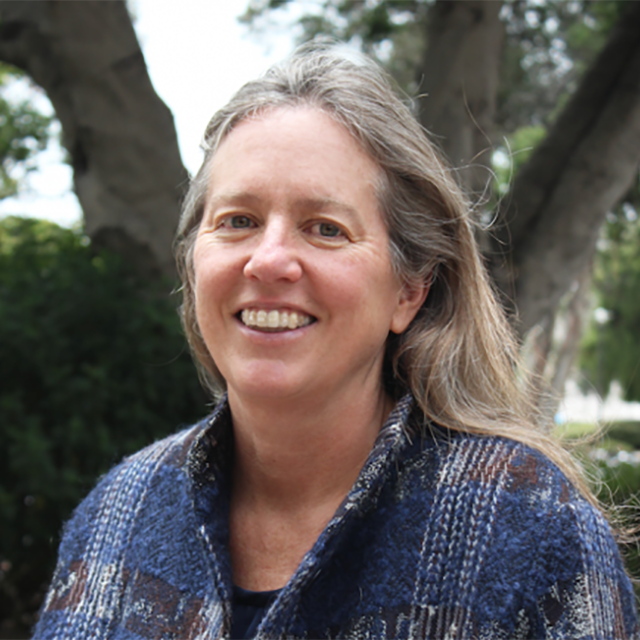
Jean Carlson is a Professor in the Department of Physics at the University of California Santa Barbara, where she heads the Complex Systems Group. Her research spans multiple disciplines including physics, neuroscience, immunology, and earth sciences, with a focus on developing theoretical frameworks for understanding complex systems. She is an active researcher with numerous publications across diverse fields and serves as a mentor to graduate students and postdoctoral researchers. Professor Carlson's research interests center around complex systems theory, with specific applications in theoretical immunology, earthquake physics, neuroscience, granular materials, amorphous solids, and Highly Optimized Tolerance (HOT). Her work on HOT explores the robust yet fragile nature of complex systems across diverse contexts from immune systems to forest fires. She has made significant contributions to understanding friction modeling through constitutive laws, particularly applying Shear Transformation Zone Theory to earthquake physics and granular materials. Her interdisciplinary approach connects physics principles to biological and environmental systems, revealing fundamental patterns in complex phenomena. Analysis of her recent publications reveals a strong trend toward interdisciplinary research that bridges physics with biological and environmental systems. Her work demonstrates consistent application of complex systems theory across diverse domains, from neural networks to earthquake dynamics to immune system function. The research shows increasing integration of computational modeling with empirical data, particularly in neuroscience applications where brain connectivity and learning dynamics are examined through network analysis. Her earthquake physics work consistently applies physical models of friction and strain localization to understand seismic phenomena, while her immunology research applies theoretical frameworks to understand immune system vulnerabilities and tradeoffs. Professor Carlson actively mentors students and postdocs across multiple disciplines, with notable collaborations including Dani Bassett in neuroscience and Nada Petrovic in disaster response modeling. Her research group has secured funding for projects spanning theoretical immunology, earthquake physics, and wildfire management. She has been involved in significant collaborative efforts such as the Network Architectures of Brain Structures and Functions program and the Physics of Climate Change Program at the Kavli Institute for Theoretical Physics at UCSB. Professor Carlson leads the Complex Systems Group at UCSB, which brings together researchers from physics, biology, and environmental science to study robustness, tradeoffs, and feedback in complex, highly connected systems. The group develops multi-scale models to capture important small-scale details and predict large-scale behavior across diverse applications including disaster response, neuroscience, theoretical immunology, earthquake physics, and granular materials. The group has been particularly active in studying Highly Optimized Tolerance (HOT) as a framework for understanding complexity across different domains.
Professor Hisao Ishibuchi is Chair Professor of Computer Science and Engineering at Southern University of Science and Technology (SUSTech) in Shenzhen, China, a role he has held since April 2017. Previously, he spent nearly three decades at Osaka Prefecture University, progressing from Research Associate (1987-1993) to Assistant Professor (1993), Associate Professor (1994-1999), and full Professor (1999-2017). He is an IEEE Fellow , served as Vice-President of the IEEE Computational Intelligence Society (2010-2013) , and is currently President of the Japan Society for Evolutionary Computation (2016-2018) . He is Editor-in-Chief of IEEE Computational Intelligence Magazine (2014-2019) and the Journal of the Japan EC Society (2014-2018). Education: Ph.D. in Engineering, Osaka Prefecture University, 1992 M.S. in Engineering, Kyoto University, 1987 B.S. in Engineering, Kyoto University, 1985 Research Focus: Professor Ishibuchi is internationally recognised as a pioneer of computational intelligence , with seminal contributions to evolutionary multi-objective optimisation , evolutionary machine learning , fuzzy systems , neural networks , and hybrid intelligent systems . He introduced the first multi-objective memetic algorithm and early methods for multi-objective fuzzy rule-based classifier design that balance accuracy and interpretability. Publications & Impact: With over 100 journal papers in top-tier venues such as IEEE Transactions on Evolutionary Computation and nearly 500 conference papers, his work has attracted more than 24 000 Google-Scholar citations and an h-index of 68. His recent articles concentrate on many-objective optimisation, fuzzy machine learning, and transfer learning techniques. Honours & Awards: IEEE Computational Intelligence Society Fuzzy Systems Pioneer Award 2019 IEEE Fellow 2014 JSPS Prize 2007 (Japan’s most prestigious mid-career award) Multiple Best Paper Awards from GECCO, FUZZ-IEEE, SCIS & ISIS, WAC, ACIIDS, HIS-NCEI, and others Teaching & Mentoring: At SUSTech he teaches Advanced Algorithms and Advanced Optimization Algorithms , covering greedy algorithms, hyper-heuristics, memetic algorithms, multi-objective optimisation, and performance assessment. His research group actively recruits post-doctoral fellows and research assistants in evolutionary computation, fuzzy systems, and neural networks. Labs & Teams: He leads the Computational Intelligence Research Group at SUSTech, maintaining active collaboration networks across Asia, Europe, and North America, and supervising several post-doctoral researchers and graduate students working on next-generation intelligent systems.