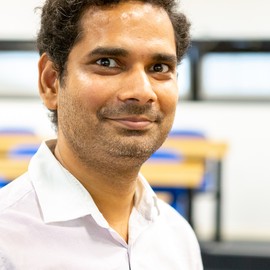
Bogdan Carbunar is an Associate Professor at the Knight Foundation School of Computing and Information Sciences , Florida International University . He directs the CaSPR lab , focusing on disinformation, censorship, online fraud, and cyberabuse through systems research, user studies, cryptography, and AI. Current research themes: Cybersecurity, Blockchain Applications, Privacy Systems Recent publication trends: Plausible Deniability, Censorship Evasion, Social Media Fraud Scientific Awards : Best Paper Award 2016 Actively mentoring PhD students and serving on multiple cybersecurity conference program committees (ACM CCSW, IEEE S&P, USENIX Security).
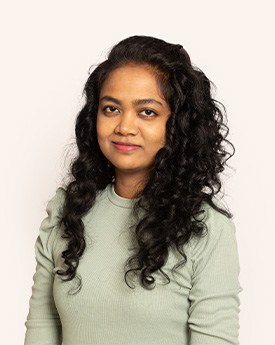
Dr. Hansi Hettiarachchi is a Lecturer in Security and Protection Science at the Department of Computing and Communications, Lancaster University. Their research focuses on developing Machine Learning approaches for Natural Language Processing (NLP) tasks, particularly emphasizing societal and human security and safety. Key areas include online event detection (e.g., temporal profiling, trigger/argument detection), online safety (offensive content detection, misinformation identification), and information extraction (named entity recognition, rule generation). They also explore Large Language Models' capabilities, multilingual NLP, low-resource language support, and model explainability. Recent research includes creating datasets like SOLD (Sinhala Offensive Language Dataset) and CODE-ACCORD (building regulatory corpus), organizing the LoResLM workshop on low-resource languages, and advancing causal event detection via corpora like Causal News. They are affiliated with SCC (Data Science) and UCREL (University Centre for Computer Corpus Research on Language), contributing to interdisciplinary projects in computational linguistics and AI ethics. Publications span NLP applications in social media monitoring, regulatory compliance, and multilingual systems. While no awards are explicitly listed, their work reflects engagement with NLP's societal impacts and technical challenges in model transparency and resource-poor languages.
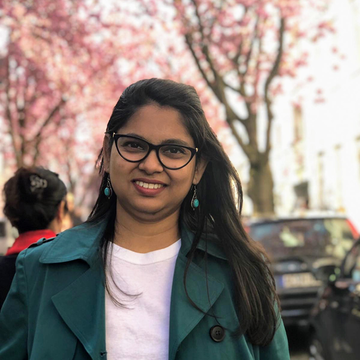
Tanu Mitra is an Associate Professor at the Information School of the University of Washington and an affiliate faculty member at the Paul G. Allen School of Computer Science & Engineering. She serves as the Founding Co-Director of RAISE, the Center for Responsibility in AI Systems and Experiences. Her research focuses on Human-Centered Artificial Intelligence and Responsible AI, combining computational techniques, social science principles, and AI methodologies to study human behavior in online systems. Her work spans three interconnected domains: Generative and Responsible AI - examining how to ensure genAI tools produce socio-demographically diverse, value-aligned content while addressing epistemic challenges Algorithmic Auditing - conducting computational audits to reveal how algorithms amplify problematic content across different cultural contexts Designing Defenses Against Problematic Information - developing socio-technical interventions like OtherTube and NudgeCred to counter misinformation Dr. Mitra's publications demonstrate leadership in examining large language models through the lens of social impact, with emphasis on value alignment, demographic biases, and cross-cultural algorithmic behaviors. Her work bridges technical AI research with practical applications for platform design and policy development. Notable projects include: Epistemic Alignment framework for user-LLM knowledge delivery Geolocation audits of YouTube for COVID-19 misinformation across US and South Africa MythTriage system for detecting opioid use disorder myths on video platforms Prior to joining the University of Washington, Dr. Mitra served as Assistant Professor in the Department of Computer Science at Virginia Tech (2017-2020) after earning her PhD in Computer Science from Georgia Tech.
H. Akın Ünver is an Associate Professor in the Department of International Relations at Ozyegin University, specializing in conflict research, computational methods, and digital crisis communication. He coordinates DE-CONSPIRATOR , a HorizonEU project involving 15 European institutions combating foreign information manipulation. He also serves as a fellow at the Carnegie Endowment's Digital Democracy Network and advises TikTok's MENA-T Security Advisory Council. PhD in Government, University of Essex (2010) Postdoctoral research: University of Michigan (2010-2012), Princeton University (2012-2014) Former Research Associate at Oxford University's Center for Technology and Global Affairs Senior Research Fellow at Alan Turing Institute's GUARD program His research spans conflict modeling , digital disinformation , and energy politics , with recent publications focusing on AI weaponization, LLM applications in social science, and technology's role in information warfare. He founded the Istanbul Twitter Developers' Community and organizes SICSS (Summer Institute in Computational Social Science) in Istanbul. Recent article trends highlight his work on: Computational approaches to diplomatic text analysis Geopolitical implications of AI trade Human rights impacts of authoritarian technologies Agent-based modeling of nonstate armed groups Automated fact-checking systems Scientific recognition includes: MESA Malcolm H. Kerr Award (2010) TÜBA Promising Scientist Award (2019) Alan Turing Institute Defense Modeling Award (2019) Society for Digital Diplomacy Best Article (2017) Oxford Cybersecurity Showcase Award (2017) He supervises research through Ozyegin's Cyber Research Program and contributes to institutions like EDAM think tank and Doğruluk Payı fact-checking initiative.
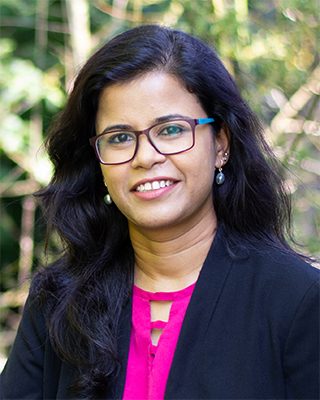
Dr. Indira Sen is a Habilitation candidate at the School of Business Administration, University of Mannheim, focusing on Natural Language Processing and computational social science. Her research bridges AI and social constructs, emphasizing bias detection, data quality, and ethical implications in Large Language Models. Key Areas: NLP, Demographic Bias, Hate Speech Detection, Social Media Analytics, AI Ethics Methodology: Theory-driven synthetic data, Robustness testing, Systematic reviews Her recent publications analyze the representativeness of LLMs, political bias, and the intersection of survey methodology with computational approaches. She leads work on validating generative models and improving content moderation systems.
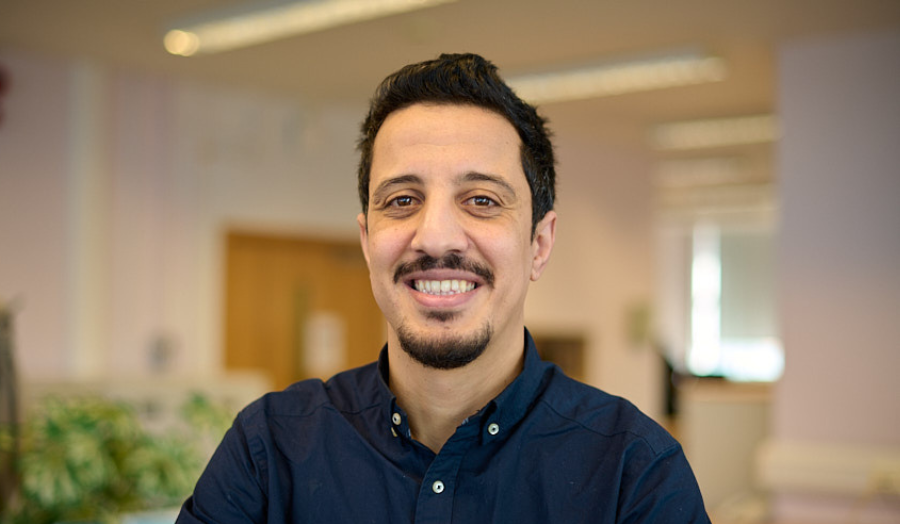
Dr. Mohamed Chahine Ghanem is an Associate Professor and Acting Director of the Cyber Security Research Centre at London Metropolitan University's School of Computing and Digital Media. He serves as Chair of the Subject Standards Board and Course Leader for the BSc in Digital Forensics and Cyber Security, which has achieved outstanding outcomes under his leadership. He holds an Engineering degree, MSc in Digital Forensics & IT Security, and a PhD in Cyber Security Engineering from City, University of London. His research focuses on applying AI to solve real-world cybersecurity challenges, particularly in digital forensics and incident response (DFIR). He has over 15 years of experience in law enforcement and corporate cybersecurity, with certifications like CISSP, GCFE, and SFHEA. Chahine leads the Digital Forensics Laboratory (an RKE platform) and supervises PhD students on topics like IoT forensics and AI-driven security automation. Research Highlights: Automation of penetration testing via reinforcement learning, steganographic evidence extraction, and cloud-based threat detection. Grants & Awards: £400k UKRI Grant application (pending), £35k CyberASAP (2020), £75k Tech Lead role in iREPORTit (2019). Professional Roles: Invited Keynote Speaker at top cybersecurity conferences, Cyber Security Advisor, and Associate Academic at University of Liverpool. Labs/Teams: Cyber Security Research Centre, Digital Forensics Laboratory.
Samuel Adekanmbi is a Lecturer in Computing at Anglia Ruskin University (ARU) Peterborough, affiliated with the Faculty of Creative and Digital Arts and Sciences and the School of Computing and Information Science. He brings over 15 years of industry experience in data and software engineering from sectors including insurance, telecommunications, and oil and gas, integrating real-world insights into his academic role. Education: MSc in Computer Science, University of Ibadan, Nigeria BSc in Computer Science, University of Ibadan, Nigeria His research focuses on Data Science for Social Good , Natural Language Processing , Machine Learning Models , and Big Data Analytics . He explores how technology can be leveraged to solve societal challenges, particularly through ethical computing and intelligent systems. As a Google Cloud Certified Data Engineer and Microsoft Cloud Ambassador for Azure, his work bridges cloud infrastructure with data science applications. The recent publication on filtering offensive language using grammatical relations reflects a trend in his work toward safe and responsible AI, particularly in social media contexts. His research combines linguistic analysis with machine learning to improve online community safety. Scientific Awards and Recognitions: Google Cloud Certified Data Engineer Microsoft Cloud Ambassador (Azure) Sam is actively involved in the tech community as the organiser of the Google Developer’s Group in Leicester, where he fosters knowledge exchange among developers. He is committed to empowering students and professionals with practical skills in computing, programming, and data analytics. His teaching spans foundational to advanced topics, including algorithms, web development, and data analytics. He serves as a module leader, ensuring high-quality learning experiences through coordinated resources and assessments. He is a member of the Nigeria Computer Society and contributes to professional development in computing. While no formal grants or advised students are listed, his leadership in academic and community initiatives underscores his dedication to education and technological advancement.
Björn Gambäck is a Professor of Language Technology at the Department of Computer Technology and Informatics, NTNU. His research focuses on computational creativity, computational linguistics, artificial intelligence, and machine learning, with a strong emphasis on natural language processing (NLP) and language technology. He actively contributes to the academic community through teaching courses such as 'Intelligent Text Analysis and Language Comprehension' and supervising master's theses. His work includes advancing techniques for sentiment analysis, code-mixed language processing, and computational creativity. Recent research highlights include developing deep learning models for code-mixed social media analysis and exploring coreference resolution in entity-level sentiment tasks. Gambäck’s contributions span interdisciplinary areas, such as applying evolutionary algorithms to media repositories and music composition. Notable collaborations include projects on hate speech detection, sarcasm annotation in tweets, and named entity recognition for low-resource languages like Amharic. His expertise bridges theoretical advancements and practical applications in NLP and computational systems.
Guy Aglionby is a part-time lecturer and PhD researcher in the Department of Computer Science and Technology at the University of Cambridge, affiliated with Homerton College. His work bridges Natural Language Processing with Knowledge Graphs to develop Explainable AI systems for commonsense reasoning tasks. PhD in Computer Science (submitted July 2025) MPhil in Advanced Computer Science BSc in Computer Science (University of Bristol) His research focuses on: Creating interpretable multi-hop reasoning models Building commonsense ontologies for structured explanations Developing machine learning pipelines for genetic analysis at Biographica Recent publication trends show expertise in: Graph-based NLP architectures Legal document analysis Counterfactual annotation methods Scientific Contributions ACL 2020 virtual conference website contributor Keynote speaker at ETH Zürich (2022) Technical co-chair for Truth and Trust Online (2020) Teaching Machine Learning & Real-world Data (LT19-LT21) Natural Language Processing (MT18-MT19) Scientific Computing (LT19-LT21) Contact: guy.aglionby@cl.cam.ac.uk | +44 (0)1223 763558
Ravi Shekhar is a Lecturer (Teaching & Research) at the University of Essex’s School of Computer Science and Electronic Engineering (CSEE). Previously, he was a Post-Doctoral Researcher at Queen Mary University of London (2019–2023), working on projects like EMBEDDIA and SoDeStream. He holds a Ph.D. from the University of Trento (2015–2019), focusing on language and vision models, and an M.S. from IIIT Hyderabad. His research spans Conversational AI, Cross-Lingual NLP, and Social Media Analysis, with a focus on ethical AI and low-resource language challenges. Education Ph.D., Language, Interaction and Computation Laboratory, University of Trento (2015–2019) M.S. (Research), Computer Science, IIIT Hyderabad (2010–2013) B.Sc. (Hons) Computer Science, Delhi University (2001–2005) Research Interests : Dr. Shekhar’s work addresses challenges in NLP and multi-modal systems, including abusive language detection, cross-lingual models, and conversational AI. He emphasizes practical applications in social media moderation and ethical AI, with contributions to datasets like CoRAL and LEDA. Key Contributions : His 2024 work on ‘Power and Vulnerability in Organisational Communication’ explores language dynamics in hierarchies, while ‘Denoising Labeled Data for Comment Moderation’ advances active learning techniques. He leads grants from Innovate UK and the EU, focusing on dialogue systems for safety-critical applications. Awards Outstanding Reviewer (EMNLP 2019) Graduate Research Assistantship (University of Trento) Institute Fellowship (IIIT Hyderabad) Advising & Grants : Supervised 8 graduate students (Master’s/PhD) and secured grants totaling £1.2M, including Innovate UK projects on commodities trading AI and harm mitigation in data systems. Active in mentoring underrepresented groups and promoting collaborative research networks. Labs & Teams : Leads the NLP research group at Essex, collaborating with institutions like UvA Amsterdam and Queen Mary. Engages in open-source projects and dataset development, emphasizing reproducibility and code sharing.
Sandra Kübler is a Professor in the Department of Linguistics at Indiana University, part of the College of Arts and Sciences. Her research focuses on computational linguistics, machine learning applications in natural language processing, and parsing of morphologically rich languages. She has led projects such as the NSF-funded SATC initiative on unsubstantiated information analysis and contributed to initiatives like the TLT workshops and SPMRL conferences. Her work spans dependency parsing, abusive language detection, and cross-lingual NLP challenges. She advises numerous PhD and Master’s students, many of whom have gone on to academic and industry roles. Her contributions include developing tools like the IUCL system for stance detection and collaborating on corpora for languages like Old Occitan and Xibe. Education details are not explicitly stated in the provided texts, but her extensive academic career and publications indicate advanced training in computational linguistics. Her research interests emphasize leveraging machine learning for linguistic analysis, particularly in under-resourced languages and social media text processing. Projects include the development of the TüBa-D/Z treebank and contributions to parser evaluation frameworks. She has organized major workshops such as the SIGMORPHON and TLT conferences, reflecting her leadership in the field. In advising, she has guided over 20 students to completion, many securing academic positions (e.g., University of British Columbia, Rose-Hulman Institute) or industry roles (e.g., JP Morgan Chase, Microsoft). Her lab activities involve collaborations with institutions like Bosch and IntraFind. Current research includes multilingual coreference resolution and fusion of hard/soft data for information reliability assessment.
Samuel Adekanmbi is a Computing Lecturer at Anglia Ruskin University's Faculty of Creative and Digital Arts and Sciences, specializing in bridging theoretical computer science with industry applications. With 15+ years in data/software engineering across insurance, telecoms, and oil/gas sectors, he leverages cloud technologies (Azure, Google Cloud) to deliver practical solutions. As a Google Cloud Certified Data Engineer and Microsoft Azure Ambassador, he actively organizes tech communities like GDG Leicester. Education: MSc Computer Science, University of Ibadan, Nigeria BSc Computer Science, University of Ibadan, Nigeria Research Focus: Combines machine learning and big data analytics for social impact. Develops NLP models for content moderation and data pipelines for enterprise systems. Advocates for ethical AI applications in insurance technology through his startup Botsurance. Awards: Recognized for Botsurance's role in financial inclusion via Ogun State/GIZ Innovation Award (2022) and EU-backed Startupbootcamp Accelerator (2022). Featured at ESG FinTech Summit (2022) and Infobip Tribe Program (2021). Advising & Initiatives: Co-founded Botsurance (insurtech startup), launched 100DaysOfCode.NG to promote coding discipline among Nigerian developers, and created LearnFirst browser extension to improve student focus. Active in UN SDG4/8 initiatives through tech education and entrepreneurship programs.
Thomas Davidson is an Assistant Professor in the Department of Sociology at Rutgers University's School of of Arts and Sciences. He received his PhD in Sociology from Cornell University in 2020 and specializes in computational sociology, with research focusing on political sociology, social movements, and digital methodologies. Dr. Davidson's research interests span three main interconnected areas: social media, populism, and far-right activism ; hate speech detection and content moderation ; and computational methodology and artificial intelligence . His work uses digital trace data from social media combined with statistical analysis and computational methods including natural language processing and machine learning. He has published extensively on how ranking algorithms shape activist opportunities, racial bias in hate speech detection systems, and the application of generative AI in sociological research. His notable scientific awards include the Eric and Wendy Schmidt Data Science for Social Good Fellowship at the University of Chicago (2016) and a Foundational Integrity Research award from Meta for experimental research on social context and hate speech judgments. His research has been featured in major media outlets including The Washington Post , Vox , New Scientist , and Wired Magazine . Dr. Davidson teaches undergraduate courses in Political Sociology, Sociology of Culture, and Data Science, and graduate courses in Computational Sociology and Statistical Methods. He has organized the first workshop on Generative AI and Sociology at Yale University and guest edited a special issue of Sociological Methods & Research on this topic. His research connects with several program areas at Rutgers including Culture and Cognition, Organizations and Networks, and Politics and Social Movements.
Professor Katrina Falkner is the Pro Vice Chancellor for Learning and Teaching at the University of Adelaide and leads the Computer Science Education Research Group (CSER). She previously served as Executive Dean of the Faculty of Sciences, Engineering and Technology, and Head of the School of Computer Science. Her roles include leading initiatives such as the CSER Digital Technologies Education Program, funded by a $7.2M government contract, and driving cultural transformation within the university. She is a Fellow of the Australian Academy of Technological Sciences and Engineering (ATSE). Affiliations: Merger Integration Management Office, Division of University Integration Research Focus: Computer Science Education, Distributed Systems Modelling, Computational Thinking in K-12 Grants: Over $26M in government and industry funding Her work addresses inequities in education and technology access, including supporting over 45,000 teachers through CSER MOOCs. Key projects include the MEDEA modelling environment for distributed systems and collaborations in conservation drones with ecology researchers. Scientific Awards: Includes EdTechSA Leader of the Year (2015), ACS Gold Award (2015), and recognition as one of Australia's top 100 innovators (2021). Advising and Grants: Supervised numerous PhD and master's students, with ongoing recruitment for projects in computational thinking and educational technology. Her grants include initiatives to expand MOOCs for mathematics and teacher training. Labs/Teams: Leads the CSER group and previously directed the Modelling & Analysis Program within CDIT (2011-2021). Current research explores NLP for learning analytics and collaborative programming environments.
Helen Yannakoudakis is a Senior Lecturer in Natural Language Processing at King's College London's Department of Informatics, affiliated with the University of Cambridge's NLIP Group. She holds a PhD from the University of Cambridge and has served as a Turing Fellow and Fellow of the Higher Education Academy. Her research focuses on machine learning for NLP, including few-shot learning, meta-learning, and societal applications like hate speech detection and educational tools. She has won the NeurIPS 2020 Hateful Memes Challenge and led the development of Write&Improve, an automated writing assessment system. Education: PhD in Natural Language Processing (University of Cambridge), MPhil in Computer Speech, Text & Internet Technology (Cambridge), BSc in Computer Science (Athens University of Economics & Business). Research Interests: Few-shot learning, multilingual NLP, abusive language detection, mental health detection, and automated language teaching. Her work bridges machine learning and education, with applications in bias mitigation and ethics in AI. Publications: Over 20 peer-reviewed papers in top venues (ACL, NeurIPS, EMNLP) covering topics like GEC, hate speech detection, and meta-learning frameworks. Recent work includes prompting LMs for language education and commonsense-enhanced transformers for comprehension. Awards & Roles: Area Chair for ACL 2025/NeurIPS 2024, co-founder of Kinhub (AI education tools), and contributor to the English Profile Programme. Her research emphasizes ethical AI and real-world societal impact.