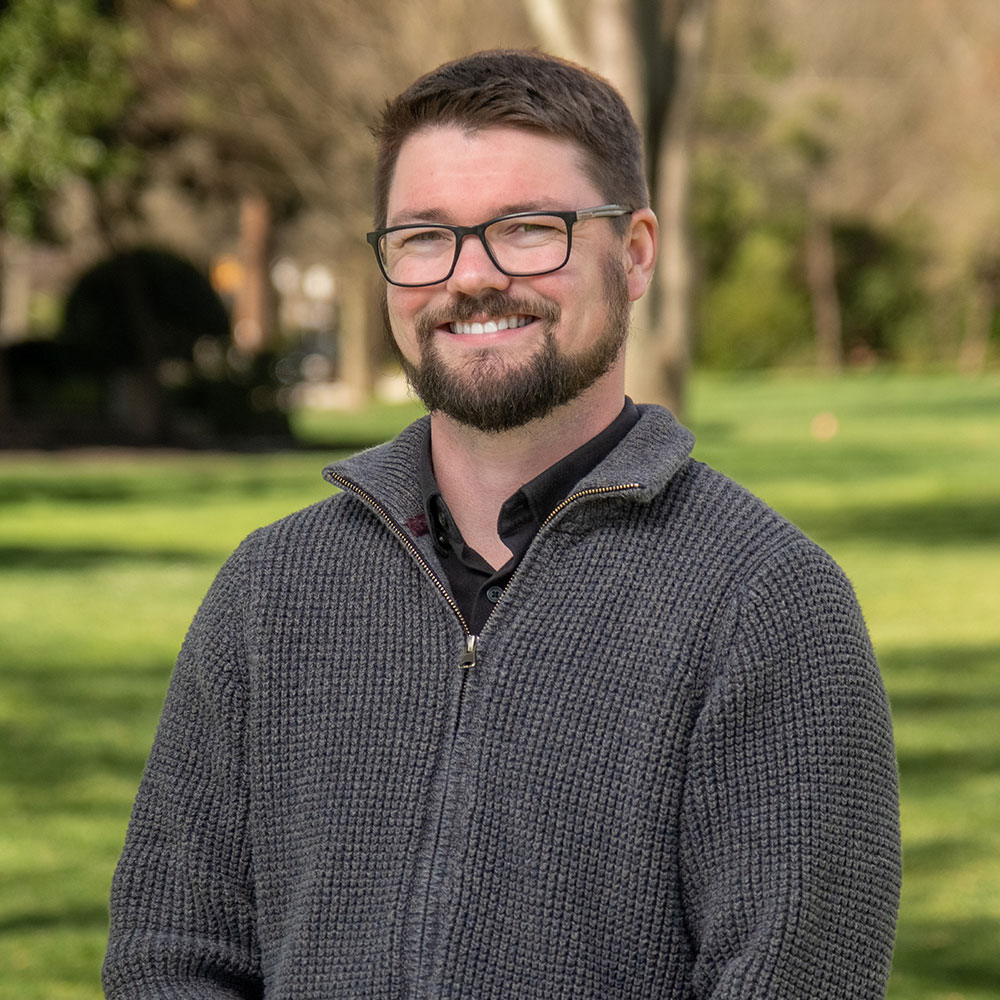
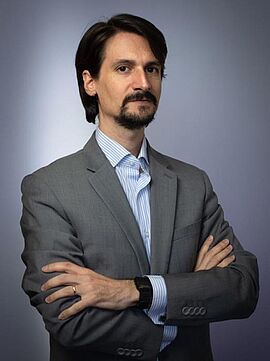
Bruno Crispo is a Full Professor in the Department of Information Engineering and Computer Science at the University of Trento. He is responsible for teaching courses such as Ethical Hacking, Network Security, and Operating Systems. His research interests span Biometrics, Cloud Computing, Cryptography, Cyber Security, Malware Detection, Privacy, and System Security. Teaching Activities: Ethical Hacking : Focuses on attack techniques, malware analysis, and security mitigation strategies. Network Security : Covers defensive and offensive network security, practical lab exercises, and soft skills in technical communication. Operating Systems : Teaches core concepts like concurrency, memory management, and file systems. Research & Expertise: Crispo’s work addresses modern security challenges across computing systems, including IoT, embedded systems, and virtualization. His contributions emphasize both theoretical foundations and practical applications in securing digital environments. Awards & Grants: No specific awards or grants are listed in the provided information. Labs/Teams: No affiliated labs or collaborative teams are explicitly mentioned.
Timo Kiravuo is a University Teacher at the Department of Computer Science, Aalto University. He holds a Diplomi-insinööri (Master of Science) degree in Tuotannon tietotekniikka from Teknillinen korkeakoulu, awarded in 1999. His research contributes to UN Sustainable Development Goals, particularly in quality education and institutional strengthening. Kiravuo's primary research focuses on cybersecurity domains including: Intrusion prevention systems and evasion techniques Critical infrastructure protection and cyber-physical security Ethernet and network security vulnerabilities Cyber warfare and defensive strategies Authorization systems and certificate management His investigations span both theoretical frameworks and practical implementations in national security contexts. Analysis of his 15 most recent publications reveals strong emphasis on cybersecurity countermeasures, with particular focus on critical infrastructure vulnerabilities (40% of works), intrusion prevention systems (20%), and cyber-physical threat modeling (20%). His research demonstrates consistent evolution from network protocol security toward complex cyber-physical defense strategies. Kiravuo actively contributes to academic communities through committee memberships for IEEE TrustCom and student research symposiums. He has provided media commentary on national cybersecurity preparedness and maintains an ORCID research profile documenting his scholarly output.
Alex Campbell is a Research Fellow at the Center for Global Security Research (CGSR) at Lawrence Livermore National Laboratory, focusing on strategic competition in cyberspace, offensive cyber strategy, norm development, and data privacy. Education: M.A. in International Affairs, Columbia University B.A. in Political Science, Columbia University Research Interests: Campbell's work investigates the geopolitical dimensions of cyber conflict, emphasizing offensive operations, international norm evolution, and data privacy challenges. His research particularly addresses strategic competition dynamics between major powers and critical infrastructure vulnerabilities in cyberspace. Publication Trends: Recent publications examine cyber incidents targeting nuclear facilities and doctrinal approaches to persistent cyber engagement. These analyses reveal complexities in attack attribution, critical infrastructure protection, and the geopolitical barriers to establishing cohesive international cyber norms. Research Environment: As part of CGSR, Campbell contributes to multidisciplinary teams tackling global security threats through evidence-based policy research and strategic analysis.
Eduardo Arriols Núñez is a Professor of Cybersecurity, Ethical Hacking, and Computer Security at the University of Technology and Design (U-Tad) and Co-founder/CEO of RootPointer, a cybersecurity startup. His academic background includes: Master's Degree in ICT Security Graduate in Computer Engineering His research centers on practical offensive security methodologies, specializing in ethical hacking, penetration testing, and Red Teaming operations. He authored "The Red Team" technical guide detailing intrusion simulation frameworks and actively conducts security assessments through BugBounty programs. With six years of international Red Team leadership experience across America, South America, and Europe, his work bridges academic theory and real-world cyber defense applications. Arriols Núñez regularly presents at premier cybersecurity conferences including RootedCON, 8.8 Security Camp, Navaja Negra, and the CCN's STIC Conference.
Brandon P. Grech serves as an Assistant Professor of Cybersecurity at Anderson University (SC) since 2020, affiliated with the Center for Cybersecurity. He teaches technical cybersecurity courses emphasizing real-world hands-on experience in both offensive and defensive operations through individual and team assignments. His academic credentials include: BS in Computer Networks and Security, University of Maryland Global Campus MS in Cyber Security and Information Assurance, National University Ed.D, Liberty University Dr. Grech's research integrates faith-based perspectives with technical cybersecurity training, focusing on educational models within Christian institutions. His work examines student experiences in undergraduate cybersecurity programs and develops practical skill-building frameworks, particularly in Linux systems administration and competition-based learning environments. His publications reveal a dual emphasis: technical skill development (Linux command-line proficiency) and pedagogical research in faith-integrated cybersecurity education. This combination highlights his commitment to producing both industry-ready professionals and spiritually grounded practitioners. No scientific awards were documented in the available materials. As cybersecurity competition coach for national events like the National Cyber League, Dr. Grech mentors students in high-stakes Capture The Flag competitions where Anderson University teams consistently achieve national recognition. His advising approach combines technical rigor with spiritual development during coursework, competitions, and office hours. The cybersecurity competition team he directs functions as a practical lab environment where students apply classroom knowledge in simulated cyber operations, fostering collaborative problem-solving skills essential for industry success.
Pierre-Emmanuel Arduin is a Lecturer at Paris Dauphine University specializing in knowledge management, information systems security, and the social impacts of digital technologies. His interdisciplinary background combines psychology, computer science, and management to address critical issues in information security and knowledge sharing. With extensive experience as a KM and IT consultant for various companies, he brings practical insights to his academic work. Arduin's research focuses on knowledge management systems, insider threats to information security, and the cognitive aspects of decision-making regarding phishing emails. His work examines how tacit knowledge influences organizational processes, particularly in extended enterprises and humanitarian contexts like food aid logistics. He investigates the intersection of technology, human behavior, and security, with particular attention to how digital tools both enable and complicate knowledge transfer. His publication record shows a strong focus on information systems security, particularly insider threats and phishing detection, while also addressing broader social implications of digital technologies. Recent work explores AI's role in security, cyber resilience modeling, and the ethical dimensions of digital transformation in humanitarian contexts. His research bridges theoretical frameworks with practical applications, often collaborating with industry partners to address real-world security challenges. Arduin has been an associate editor of the Information Systems Journal since 2020 and has contributed to numerous academic conferences across Europe. He has presented his research at institutions including ESCP Business School, IAE Paris-Est, and Universidad Politécnica de Valencia, demonstrating the international recognition of his work. His consulting experience with companies provides valuable industry perspective that informs both his research and teaching approaches. He has authored significant publications including 'Insider Threats' (2018) and 'La menace intérieure' (2018), establishing himself as an expert in information systems security. His work frequently appears in journals like Sustainability, International Transactions in Operational Research, and Information Systems Journal, reflecting his interdisciplinary approach to knowledge management and security issues.
David Fahrenkrug is an Adjunct Professor at Georgetown University, teaching graduate-level courses on strategy, net assessment, and cyber warfare. He concurrently serves as Director of Strategic Planning at Northrop Grumman’s Analysis Center, providing analytic support to senior executives on military, customer, and market issues. His work focuses on long-term national security analysis and creating advocacy materials for defense programs. Education: B.S. in Aeronautical Engineering (USAF Academy), M.S. in Aeronautics (George Washington University), PhD in Political Science (University of Chicago) Military Background: Command pilot with 2,000 flight hours in T-38, F-15C, and C-21 aircraft; retired as Senior Military Advisor to the Director of the Office of Net Assessment (OSD) Research interests emphasize cyber defense strategies, national security policy, and strategic military planning. He coordinates cross-agency studies on warfare in long-term competitions between the U.S. and adversaries, including wargame development and policy analysis. Professional Experience: 26 years active duty in the U.S. Air Force, transitioning to academia (Georgetown since 2011) and industry (Northrop Grumman since 2014). No awards explicitly listed, though his contributions to defense analysis are notable.
Dr. Darragh McCashin is an Assistant Professor in the School of Psychology at Dublin City University (DCU), serving as Chair of The Observatory on Cyberbullying, Cyberhate & Online Harassment within the Anti-Bullying Centre (ABC). His research focuses on digital mental health, technology-assisted cognitive behavioral therapy (CBT), forensic psychology, and the ethical implications of technology in clinical and forensic settings. He holds an MSc in Applied Forensic Psychology from the University of York and a PhD from University College Dublin (UCD), supported by a Marie Curie Fellowship. Education & Professional Roles: PhD in Technology-Enabled Youth Mental Health (UCD) MSc in Applied Forensic Psychology (University of York) Marie Curie Fellow (EU H2020-funded TEAM-ITN project) Taskforce Leader for Researcher Mental Health (Marie Curie Alumni Association) Co-founder of researcher mentoring platform Referent Chair of COST Action CA19117 (Researcher Mental Health Observatory) Research Interests: Technology-driven mental health interventions for youth Cyberbullying prevention and online harassment mitigation Forensic psychology applications in digital contexts (e.g., internet sexual offenses) Academic mental health and wellbeing Publications & Engagement: Over 25 peer-reviewed articles on digital mental health, pandemic responses, and forensic technology Leading initiatives like the STAIRCASE survey on researcher mental health Active member of the European Network for Problematic Internet Use (CA16207) Labs & Teams: Core member of the Anti-Bullying Centre (ABC) at DCU, collaborating with the Online-Protect research group (University of Lincoln) and the Marie Curie Alumni Association.
Dr. Frankie Grullon is an Assistant Professor in the Department of Information Systems and Cyber Security at the University of Texas at San Antonio (UTSA), part of the Alvarez College of Business. He holds a Ph.D. from the University of Fairfax, an M.S. from Excelsior College, and a B.S. from the University of Central Florida. Alongside his academic role, he serves part-time as a Cyberwarfare Officer in the United States Air Force, specializing in Information Operations and Defensive/Offensive Cyber Operations. Dr. Grullon is also a director of a non-profit organization providing free cybersecurity training to underrepresented communities. He has extensive industry experience, having held roles from help desk technician to Director of Information Technology, and is a certified instructor for SANS, ISC², EC-Council, CompTIA, PMI, and Google for Education. His research and teaching focus on cybersecurity, information assurance, AI/ML, and IT security engineering, alongside personal interests in reverse engineering and volunteering. Education: Ph.D., University of Fairfax M.S., Excelsior College B.S., University of Central Florida Professional Contributions: Dr. Grullon has contributed to developing cybersecurity programs at multiple universities, improved NSA-CAE accreditation programs, and audited courses for the U.S. Air Force. His certifications span over 34 credentials, reflecting his expertise across cybersecurity domains. He also has a background in competitive gaming,曾作为知名选手参与《Halo》和《Marvel vs. Capcom》等赛事,under institutions like Major League Gaming. Non-Profit and Community Work: He actively volunteers with non-profits to enhance cybersecurity access for underserved communities, bridging the digital divide through education and training.
Fiona Cunningham is an Assistant Professor of Political Science at the University of Pennsylvania's School of Arts & Sciences. She is also a Faculty Fellow at Perry World House and affiliated with the Center for the Study of Contemporary China and the Christopher H. Browne Center for International Politics. Additionally, she holds nonresident affiliations with the Carnegie Endowment for International Peace and the National Security College at the Australian National University. Education: Ph.D. in Political Science, Massachusetts Institute of Technology (MIT), 2018 Bachelor of Arts, University of New South Wales, First Class Honors Bachelor of Laws, University of Sydney, First Class Honors Fiona’s research lies at the intersection of technology and conflict, with a strong empirical focus on China. Her work explores how states leverage information-age military technologies—such as cyber operations, counter-space capabilities, and precision conventional weapons—to achieve coercive aims without triggering nuclear escalation. Her research contributes to broader debates on nuclear strategy, escalation dynamics, and the evolving nature of deterrence in the 21st century. Her research, which includes her acclaimed book Under the Nuclear Shadow , examines how China uses military force to achieve political objectives while avoiding catastrophic nuclear war. Her publications in top journals like International Security and Security Studies reveal patterns in Chinese strategic behavior, particularly in East Asia and the Indo-Pacific. Themes across her work include coercive diplomacy, crisis stability, and the integration of emerging technologies into military doctrine. Scientific Awards and Fellowships: Fellow, Belfer Center for Science and International Affairs, Harvard University Fellow, Center for International Security and Cooperation, Stanford University Fellow, Carnegie Endowment for International Peace Fellow, Yale University China Confucius Studies Program Research Fellow Research support from Smith Richardson Foundation, Ploughshares Fund, Stanton Foundation, Defense Threat Reduction Agency, and others Fiona has advised and mentored students in political science and international affairs, particularly in security studies. Her research has been supported by major grants from the Smith Richardson Foundation, Ploughshares Fund, MIT Center for International Studies, and the Stanton Foundation. She previously served as an Assistant Professor at George Washington University (2019–2021) and conducted over a year of fieldwork in China (2015–2017), supported by multiple fellowships. Before her Ph.D., she worked as a research associate at the Lowy Institute and was admitted to practice law in Australia. Labs and Research Groups: Security Studies Program, MIT (Research Affiliate) Perry World House, University of Pennsylvania (Faculty Fellow) Center for the Study of Contemporary China, University of Pennsylvania (Affiliate) Christopher H. Browne Center for International Politics, University of Pennsylvania (Affiliate)
Dr. Keren-Miriam Adam is a researcher at Hochschule Harz (Harz University of Applied Sciences) in the Department of Economics. Her work spans crises, conflicts, diversity, marginalization, media reporting in conflicts, sustainable knowledge transfer, leadership in crisis management, and intercultural communication. University: Hochschule Harz Department: Economics Contact: Email: kadam@hs-harz.de | Office: Room 2.307, House 2, Wernigerode | Consultation: By appointment via email Her research focuses on psychosocial response to disasters, trauma survivability, and the intersection of media coverage with social conflict. She analyzes interfaith marriages, green building policies, and knowledge transfer in police forces, blending qualitative methods and cross-cultural studies. Recent publications explore trauma narratives, German-Israeli crisis strategies, intergenerational police knowledge, and cyber defense. Her teaching includes intercultural competence, conflict management, and qualitative research methods.
Shawn Zwach is an Instructor in the Department of Computer & Cyber Sciences at Dakota State University, part of The Beacom College of Computer & Cyber Sciences. He teaches courses in software security, mobile communications, and offensive network security, with a strong emphasis on real-world problem solving and inclusive pedagogy. His educational background includes: B.S. in Cyber Operations, Dakota State University M.S. in Applied Computer Science, Dakota State University Shawn's research and development efforts focus on secure software engineering, automation, reverse engineering, and software exploitation. His projects have been adopted by faculty across campus for advising and attendance tracking, and he plans to extend his work into code analysis. His teaching philosophy emphasizes inclusivity, timely feedback, and creative problem-solving through realistic lab scenarios. Although no publications are listed, his work is applied and impactful within the academic and cybersecurity community. Notable awards include: OpenSOC Winner at DEF CON 28 (2020) Wild West Hacking Fest CTF Winner / Black Badge Holder (2019) Digital Forensics Research Workshop Forensics Challenge, Grand Champion (2018) Shawn has secured leadership roles in federally supported education initiatives, serving as Camp Director for GenCyber Teachers at DSU (2023) and Instructional Lead (2022), which reflect grant-funded contributions to cybersecurity education. He has extensive industry experience since 2012 in cybersecurity, including code assessment, forensics, and tool development, and has been teaching since 2016 at both academic and professional levels. He is affiliated with DSU’s cybersecurity ecosystem, including Madison Cyber Labs (MadLabs®), and contributes to programs supported by the NSA, DHS, and NSF. His certifications include GIAC Reverse Engineering Malware (GREM) and former GIAC Certified Forensic Examiner (GCFE).
Rolando Óscar Grimaldo Santamaría serves as PartTime Lecturer (Colaborador Asistente - Doctor Niv 2) at the Faculty of Humanities and Social Sciences, Department of Sociology and Social Work, Pontifical University of Comillas. He coordinates the Criminology program and maintains active roles as Diputado of the Ilustre Colegio de Criminólogos del Principado de Asturias and member of research group 'Seguridad y Política Criminal'. His academic credentials include: PhD in Criminology and Juvenile Delinquency (2013, University of Castilla-La Mancha) Master in Advanced Multivariate Data Analysis and Big Data (2017-2018, University of Salamanca) Licenciatura in Law and Political Science (2004, Columbus University of Panama) Licenciatura in Police Administration (2000, Peruvian National Police Academy) Grimaldo's research focuses on multivariate analysis applications in criminology , particularly for crime prevention, juvenile delinquency patterns, and security policy evaluation. His methodology bridges quantitative social research with practical law enforcement applications, evidenced by his development of Panama's Prospective Criminological Intelligence Center. His 15 most recent publications (2021-2025) demonstrate consistent specialization in multivariate crime mapping , juvenile offender profiling , and cross-cultural security policy analysis , with increasing emphasis on digital criminology and educational interventions since 2023. Scientific recognition includes: International Crime Analysis Best Practices Award (2015) Peruvian National Police 'Alférez Mariano Santos Mateos' Decoration ANECA accreditation as University Professor (2023) He advises Panamanian security ministries while maintaining academic collaborations through research stays in Brazil (2022) and Portugal (2023-2024). His teaching portfolio includes Criminology Introduction, Scientific Police, and Final Degree Projects. Grimaldo leads the Quantitative Criminology working group within Spain's Criminological Research Society and the Multivariate Analysis group of the Spanish Statistics Society, directing knowledge transfer between academic research and police practice.
Ioan BACIVAROV is a full Professor at the Department of Electronic Technology and Reliability, Faculty of Electronics, Telecommunications and Information Technology, Politehnica University of Bucharest, where he has held all academic ranks since 1971. He has introduced 12 specialized courses in reliability engineering and quality assurance. Doctorate in Reliability Engineering (Politehnica University of Bucharest, 1978) Director of the "Quality and Reliability Engineering" Advanced Studies program Coordinator of EU TEMPUS-supported "Computer-Aided Quality" laboratory His research focuses on reliability engineering , cybersecurity , and quality management for complex systems, particularly in telecommunications and electronic components. His recent publications examine AI applications in security and reliability of distributed systems. Scientific achievements include: Traian Vuia Award (Romanian Academy, 1985) Editor for Europe in Quality Engineering (USA) International collaborations as Visiting Professor at ETH Zurich and Grenoble Institute Over 15 books and 110 international journal articles He leads research projects in reliability modeling and cybersecurity frameworks while maintaining active roles in ISO standards committees and European quality organizations.
Daryl Johnson is an Associate Professor in the Department of Cybersecurity at Rochester Institute of Technology (RIT), part of the Golisano College of Computing and Information Sciences. He holds a BS from St. John Fisher College and an MS from RIT. His research focuses on computer/network security with emphasis on anonymity, covert communication, and CPS/IoT security, having published over 50 papers. He co-founded the Northeast Collegiate Cyber Defense Competition (NECCDC) and the Collegiate Penetration Testing Competition (CPTC), serving 12 years as NECCDC Red Team Captain. He has developed 13+ courses in security, networking, and systems administration, and led the creation of three departments (IT, NSSA, CSEC) and associated degrees. Education: BS, St. John Fisher College MS, Rochester Institute of Technology Research Interests: Johnson's work centers on designing and analyzing covert communication channels across protocols like MODBUS, HTTPS, DNS, and cellular networks. He explores vulnerabilities in IoT devices, network security, and offensive security techniques. His research emphasizes practical applications in cybersecurity competitions and educational tool development, such as Metasploit module creation and virtualization cluster design. Awards: Best Student Paper Award (2016) Teaching & Advising: Currently teaches courses including Cyber Defense Techniques, Computer System Security, and Covert Communications. His educational contributions include redesigning curricula and creating hands-on training methodologies for cybersecurity professionals. Labs/Teams: Involved in RIT's cybersecurity lab operations, competition infrastructure development, and collaborative research on covert channels in diverse systems.