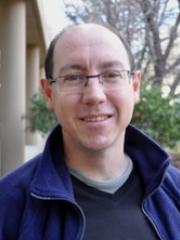
Professor Anthony Richardson is a mathematical ecologist at the University of Queensland , holding a joint position with CSIRO Environment since 2005. He leads the Mathematical Marine Ecology Lab , focusing on marine conservation through mathematical, statistical, and computational modeling. School of the Environment, Faculty of Science, University of Queensland Affiliate, Centre for Marine Science Affiliate, Centre for Biodiversity and Conservation Science Research Interests span marine spatial planning (climate-smart protected areas, 3D ocean zoning), marine ecosystem modeling (lower trophic levels, plankton-dynamics), and climate change impacts (carbon sequestration, fisheries productivity, and marine diseases). His work has been cited in IPCC Assessment Reports and emphasizes international collaboration through projects like the Global Working Group on Climate Change Synthesis . Recent Publications focus on Zooplankton's role in carbon cycling Climate-smart marine protected area design Ecosystem modeling under climate uncertainty Marine megafauna connectivity patterns Supervision is offered for >250 peer-reviewed papers and advanced projects in climate-smart conservation planning, with established funding from ARC Discovery Projects and Norwegian Polar Institute .
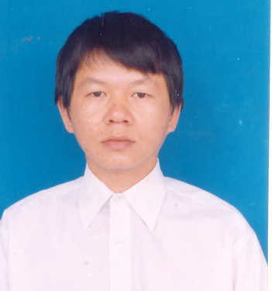
Professor Khac Duc Do is a faculty member at Curtin University, holding a position in the School of Civil and Mechanical Engineering within the Faculty of Science and Engineering. He serves in the Office of the Provost and is based at Curtin Perth campus. His research focuses on advanced control systems, nonlinear dynamics, and robotics applications in marine, aerospace, and mechanical systems. He earned a PhD with distinction in 2003 and has held prestigious fellowships including ARC Postdoctoral Fellow (2004) and ARC Australian Research Fellow (2009). His teaching includes courses like Advanced Control and Mechatronics, Navigation and Marine Control Systems, and Advanced Control Engineering. Key research interests encompass control of nonlinear systems, stochastic systems, formation control of mobile agents, fluid-structure interaction, and boundary control of PDE-governed systems. His funded projects include wave-energy converter development (2023-2026), inerter-based damper research (2019-2021), and ocean vehicle control systems. Scientific awards include ARC grants totaling over AUD 2 million. Current opportunities include scholarships in control systems/fluid-structure interaction and a postdoc position in wave-energy conversion.
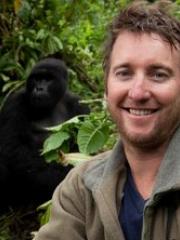
Professor Bradley D Eyre is a leading academic at Southern Cross University, serving as a Professor in the Faculty of Science and Engineering and as the Foundation Director of the Centre for Coastal Biogeochemistry (CCB). His work spans the land-ocean continuum, with a focus on carbon and nitrogen biogeochemistry in coastal and estuarine systems under global change pressures. Education: BAppSc(Hons), University of Adelaide PhD, Queensland University of Technology His research centers on ecosystem-scale biogeochemical processes, particularly the impacts of climate change, ocean acidification, and eutrophication on greenhouse gas emissions and carbonate dynamics. He employs multi-scale approaches, from field measurements to global modeling. His recent work highlights how methane and nitrous oxide fluxes alter the climate benefit of blue carbon ecosystems and how ocean acidification drives net dissolution of coral reef sediments. An analysis of his recent publications reveals a strong focus on quantifying greenhouse gas fluxes in aquatic systems, with an emphasis on upscaling methods, geomorphic controls, and climate feedbacks. His work frequently appears in high-impact journals such as Nature , Science , and Nature Climate Change , reflecting broad disciplinary influence in environmental science, biogeochemistry, and climate research. Scientific Awards and Recognitions: Fellow, Association for the Sciences of Limnology and Oceanography (ASLO), since 2018 Member, ARC College of Experts, since 2022 Deputy Chair, 2024 MPCE DECRA Panel Professor Eyre has supervised 32 PhD students to completion and currently mentors 13 more, in addition to 22 early- and mid-career researchers. His research has attracted over $20 million in funding, including 32 ARC grants (>$10 million), 11 ARC Linkage projects (> $7.5 million), and over $3 million in contract research. His collaborations span federal and state agencies, local governments, private sector partners, and multiple universities across Australia and internationally, demonstrating extensive impact on policy and practice. He leads the Centre for Coastal Biogeochemistry, which played a key role in securing SCU’s ERA Rank 5 (well above world standard) in Geochemistry. His team conducts interdisciplinary research on coastal carbon cycling, sediment dynamics, and climate change impacts, contributing significantly to national and global environmental assessments.
Professor James Watson is a leading conservation scientist and biogeographer at The University of Queensland , affiliated with the Centre for Marine Science and Centre for Biodiversity and Conservation Science. As a Professor of Conservation Science, he specializes in biodiversity policy, climate change impacts, and species recovery strategies. PhD from University of Oxford (Rhodes Scholar) Co-leader of Green Fire Science and RARES research groups Over 400 peer-reviewed publications His research focuses on ecosystem integrity , protected area effectiveness , and conservation economics , with recent work addressing mining impacts on biodiversity, climate change adaptation, and the global 30x30 initiative. He advocates for evidence-based strategies to save Australia’s rarest species. 2025-2024 research trends show expertise in tropical forest regeneration, climate-species interactions, and policy implementation gaps. Collaborative projects span scientific modeling , GIS analysis , and international conservation frameworks . International Panel on Biodiversity and Ecosystem Services (IPBES) Task Force member Research Fellow, United Nations Environment Program Senior Technical Expert, UNDP’s Nature for Development Program Founding Chair, IUCN Climate Change Specialist Group Supervision includes 12 current PhD candidates working on topics such as night parrot conservation , ecological corridors , and urban biodiversity . Completed students have addressed threatened species recovery and climate adaptation planning . He leads lab teams at Green Fire Science (www.greenfirescience.com) and RARES (https://raresgroup.com.au), focusing on applied conservation solutions.
Michael Bode is a Professor in the School of Mathematical Sciences at Queensland University of Technology (QUT). His research focuses on applying mathematical and computational methods to ecological and conservation challenges, particularly in marine ecosystems and coral reef management. He holds a PhD in Applied Mathematics from the University of Queensland. Research Interests: Professor Bode specializes in larval dispersal modeling, conservation prioritization, and the application of ecosystem models to real-world management scenarios. His work integrates disciplines like applied mathematics, statistics, and ecology to address issues such as coral reef resilience, invasive species control, and climate change impacts. Grants & Projects: Securing Antarctica's Environmental Future (2020) Conserving Coral Reef Fish and Sustaining Fisheries in the Anthropocene (2019) Tackling Pests Using Game Theory (2019) New Methods for Conserving Dispersing Species on Coral Reefs (2017) Awards: 2020 Fenner Medal (Australian Academy of Science) Eureka Prize finalist (2020) Australian Research Council Future Fellowship (2017) Labs & Teams: He leads the QUT Applied Mathematical Ecology Group (QUTAMEG), which develops quantitative tools for ecological and conservation problems. His work is published in journals like Conservation Biology , Nature Sustainability , and PLoS Biology .
Thomas Wernberg is a Professor in the School of Biological Sciences at The University of Western Australia (UWA), affiliated with the UWA Oceans Institute. His research focuses on ecological interactions in coastal marine habitats, particularly kelp forests, and their responses to climate change, marine heatwaves, and invasive species. He has held roles including Chair of UWA's Boating & Diving Safety Committee and Editor-in-Chief of Aquatic Botany . Wernberg has contributed to over 267 publications and secured 53 grants, including projects on kelp restoration and blue carbon management. He is a recipient of multiple 'Highly Cited Researcher' awards and has advised on initiatives like Seaforester . His work bridges sub-cellular to macro-ecological scales, addressing climate mitigation through marine ecosystem services. Education: MSc from Roskilde University (RUC). Previous Positions: ARC Future Fellow (2011–2015), Senior Lecturer (2015–2021), and various postdoctoral roles at UWA and other institutions. Research Themes: Climate change impacts, marine heatwaves, kelp restoration ( Green Gravel ), blue carbon, and biodiversity conservation. His lab explores resilience thresholds, ecological costs of stress, and genetic diversity's role in adaptation. Collaborations span global institutions, with active research in Arctic/Subarctic regions and Australian marine ecosystems. Grants & Projects: Includes operational upscaling of seaforestation, hydrodynamic energy attenuation studies, and blue carbon management. He leads initiatives to protect 4 million hectares of kelp forests by 2040. Awards: 2019–2022 Highly Cited Researcher (Web of Science), 2022 Senior Research Award (UWA School of Biological Sciences). Labs/Teams: Collaborates with the Great Southern Reef Foundation, Uluu Scientific Advisory Board, and international networks like the Green Gravel Action Group .
Matt Grant is a Lecturer in Public Relations at the University of Southern Queensland's School of Humanities and Communication. He holds an MPubRel qualification from USQ and has extensive professional experience in crisis communication, military public affairs, and disaster response. His work spans roles in local government, national political campaigns, and international military operations, including deployments to Iraq, Afghanistan, East Timor, and post-tsunami Banda Aceh. Research interests focus on regional communication challenges, social media impacts, and defense-media relations. He teaches courses such as Strategic Communication Planning and Social Media for Organisations. Teaching experience spans 7 years in tertiary education. Awards include the 2005 Chief of Defence Force Commendation for his role in crisis communication during the 2004 Indian Ocean Tsunami. He is a Reservist and guest lecturer at the Australian Defence Force's Command and Staff College. Notable career highlights include coordinating media for Prince William's 2011 visit to Australia, managing communications during Tropical Cyclone Larry (2006) and the 2011 Toowoomba floods, and serving as Senior Public Affairs Officer during Operation Tower in Baghdad.
Associate Professor Wing Wah Tham holds a position at the School of Banking and Finance within the University of New South Wales (UNSW) Business School . He also maintains affiliations as a Marie Skłodowska-Curie Fellow and a Tinbergen Institute Fellow . Previously, he served as an Associate Professor of Financial Econometrics at the Econometric Institute, Erasmus School of Economics (2014–2016) and as an Assistant Professor there (2009–2014). Education : PhD, University of Warwick MSc, Imperial College, UK BEng, Nanyang Technological University of Singapore Research Interests : Professor Tham specializes in econometrics , market microstructure , asset pricing , and financial innovation . His work bridges quantitative finance with applications in artificial intelligence and sustainable development goals (SDG) , focusing on reproducibility, liquidity dynamics, and policy impacts. Recent Publications span high-impact journals like Journal of Finance , Management Science , and Review of Financial Studies , addressing topics such as nonstandard errors , AI for SDG mapping , and toxic arbitrage . These works are frequently presented at American Finance Association and Econometric Society meetings. Scientific Honors : PanAngora Crowell Second Prize Midwest Finance Association Best Paper Award Literati Network Awards for Excellence ARC Discovery Projects Grant Additional Activities : He has served as a visiting scholar at the Haas Business School, UC Berkeley and National University of Singapore , with interests in triathlons and ocean swimming.
Dr. Wesley Morgan is a climate change researcher and international relations specialist affiliated with the Institute for Climate Risk & Response at the University of New South Wales (UNSW). He also holds roles with the Australian Climate Accountability Project (UNSW Human Rights Institute), the Climate Council, and the Griffith Asia Institute. His research focuses on Pacific climate diplomacy, climate security, and integrating climate change into foreign policy and national security strategies. A key theme involves Australia-Pacific collaborations under UN frameworks and the geopolitical implications of climate change in oceanic regions. Scientific Contributions Co-edited Climate Politics in Oceania: Renewing Australia-Pacific Relations in a Warming World (2024) Authored influential reports including A Fight for Survival (Climate Council, 2022) and Climate Allies (UWA, 2023) Active participant in UN climate negotiations analysis and Australia's energy strategy debates Media Engagement Regular commentator on ABC Radio and The Conversation Advocates for Australia's support of Japan's clean energy transition Highlights fossil fuels' impact on Pacific-Australia relations
Dr. David Brewster is a Senior Research Fellow at the National Security College, Australian National University, specializing in Indian Ocean and Indo-Pacific maritime security. He also holds a Distinguished Research Fellow position at the Australia India Institute, University of Melbourne. His work focuses on India’s strategic role in the Indo-Pacific, Sino-Indian naval dynamics, and regional security cooperation. Brewster frequently participates in international security dialogues and contributes to policy-oriented publications. He has authored influential books like *India’s Ocean* and edited volumes such as *India and China at Sea*, examining geopolitical competition in the Indian Ocean. His research integrates geopolitical analysis with maritime security challenges, emphasizing multilateral partnerships to address emerging threats. Qualifications include a PhD from ANU, LLM from Columbia University, and legal/economics degrees from the University of Sydney. Brewster’s expertise spans Indian Ocean security, Indo-Pacific strategy, and defense diplomacy. Key projects include analyzing Australia’s strategic engagement in the Indian Ocean and trilateral partnerships with India and France. He advocates for enhanced maritime surveillance, capacity-building in island states, and addressing geoenvironmental security challenges in the region. Recent publications explore Australia’s strategic posture, AUKUS cooperation with India, and China’s naval ambitions. Brewster’s work underscores the need for adaptive strategies in a multipolar Indo-Pacific, leveraging academic research to inform policy decisions on maritime security and geopolitical stability.
Prof Justin Seymour is a Professor in the Climate Change Cluster (C3) at the University of Technology Sydney (UTS). He leads the Ocean Microbiology Group, focusing on microbial ecology and oceanography. His research explores microbial roles in ocean ecosystems, spanning from ocean-basin dynamics to microscale interactions between microbes and marine organisms. He supervises Masters and PhD students, teaches Microbial Ecology (91170), and advises on courses like Ocean Systems and Climate Change (91156). Education: Not explicitly listed, but his academic role implies advanced degrees in microbiology or marine science. Affiliations: Faculty of Science, UTS Climate Change Cluster (C3) Research Interests: His work addresses microbial contributions to ocean biogeochemistry, including interactions between microbes and corals, fish, seagrasses, and harmful pathogens. Key themes include: Microbial Oceanography Marine Microbial Ecology Climate Change Impacts on Microbiomes Articles Trends: Recent publications emphasize climate-driven shifts in microbial communities, pathogen dynamics linked to oyster mortality, and chemotaxis mechanisms in marine bacteria. Research highlights include the role of Vibrio species in disease outbreaks and the influence of marine heatwaves on microbiology. Awards: ARC Discovery Projects (DP240100370, DP230100127, DP210101610) UTS Chancellor's Research Fellowship Gordon and Betty Moore Foundation Grant Advising & Grants: Active in securing funding (e.g., ARC, NSW Government, Fisheries grants) for projects like oyster disease resilience and microbial contamination studies. Supervises interdisciplinary teams addressing climate change and marine health challenges. Labs/Teams: Leads the Ocean Microbiology Group, collaborating internationally on microbial ecology, coral restoration, and aquaculture.
Dale Edward Squires is an economist affiliated with the Southwest Fisheries Science Center under the US NOAA Fisheries in La Jolla, California, and serves as an Adjunct Professor of Economics at the University of California San Diego . His work bridges economic analysis with marine conservation and fisheries policy. Research interests include: Marine economics and fisheries management Bycatch mitigation strategies Conservation agreements and policy frameworks Data-limited fisheries analysis Stakeholder-driven resource governance Deep sea mining regulations Recent publications focus on multidisciplinary approaches to bycatch reduction, sustainable tuna management, shark conservation frameworks, and stakeholder participation in deep-sea mining policies. His collaborations span institutions in the US, UK, Sweden, and international foundations.
Tim Stephens is Professor of International Law at The University of Sydney Law School. He specializes in international law of the sea, environmental law, and Antarctic governance, with appointments to international arbitration panels related to environmental protection. Key research domains: International ocean governance and UNCLOS implementation Climate change impacts on maritime boundaries Antarctic Treaty System under geopolitical pressure International environmental dispute resolution Recent publications analyze climate change adaptation in marine law, ocean acidification governance, and legal innovations for environmental protection. His advisory roles include: Arbitrator under the Antarctic Environmental Protocol Expert for the South Pacific Regional Fisheries Management Organisation Past President of Australian and New Zealand Society of International Law
Professor Michael Fabinyi is a distinguished academic at the University of Technology Sydney, where he serves as Professor in Social and Political Sciences within the Faculty of Design and Society. Previously, he held positions as Associate Professor (2019-2023) and Senior Lecturer (2016-2018) at the same institution. His academic journey includes significant research experience at the Australian Research Council Centre of Excellence for Coral Reef Studies at James Cook University (2010-2016), where he progressed from Postdoctoral Research Fellow to Senior Research Fellow. Professor Fabinyi completed his PhD at the Australian National University in 2009 and earned his BA (Hons.) from the University of Melbourne. His international experience is extensive, having lived and worked in China, Indonesia, Malaysia, Papua New Guinea, the Philippines, and Solomon Islands. He has held visiting appointments at Peking University (2013-14) and WorldFish in Malaysia (2015), and currently serves as an Adjunct Associate Professor at Palawan State University in the Philippines. Professor Fabinyi's research focuses on the social, political, and cultural dimensions of marine resource use and management. His work spans coastal livelihoods, agrarian change, food security in coastal contexts, seafood trade, fisheries governance, and coral reef restoration. His research approach integrates theories and methods from anthropology, development studies, and human geography, with a strong emphasis on Southeast Asian contexts, particularly the Philippines. He has developed expertise in political ecology, environmental anthropology, and the blue economy, examining how maritime zone developments impact small-scale fishing communities across Southeast Asia. His recent publications reveal a strong focus on coral reef restoration governance in Southeast Asia, small-scale fisheries contributions to global food systems, and China's role in global seafood trade. Professor Fabinyi's work consistently addresses the intersection of environmental conservation and human wellbeing, with particular attention to governance structures, equity issues, and the social dimensions of marine resource management. His research often employs ethnographic methodologies including interviews, focus group discussions, and participant observation to understand local perspectives on marine resource management. Professor Fabinyi has secured significant research funding from various sources including the Australian Research Council, Australian Centre for International Agricultural Research, and the Nippon Foundation Ocean Nexus Centre. His current projects focus on sandfish mariculture, coral reef restoration and governance in the Philippines, small-scale fisheries governance in the Philippines, edible bird's nest trade in Indonesia, and China's role in global fisheries. At UTS, Professor Fabinyi coordinates and teaches undergraduate subjects on political economy, sociology, and climate justice and policy. He actively supervises PhD students researching fisheries governance and coastal livelihoods. His work engages with multiple UN Sustainable Development Goals, particularly Life Below Water (14), No Poverty (1), Reduced Inequalities (10), Responsible Consumption and Production (12), Zero Hunger (2), and Decent Work and Economic Growth (8). Professor Fabinyi is an active contributor to international research networks, collaborating with scholars across Southeast Asia, Australia, and globally. His work bridges academic research with policy relevance, contributing to debates on sustainable ocean governance, equitable blue economy development, and effective coral reef conservation strategies that consider both ecological and social dimensions.
Professor Peter Macreadie is a global leader in marine science and sustainability at RMIT University, where he serves as Director of the Centre for Nature Positive Solutions and founder of the Blue Carbon Lab. He holds a professorial appointment in the School of Science and has held prior roles at Deakin University (2016–2024). His research focuses on leveraging nature-based solutions to mitigate climate change, including blue carbon ecosystems (mangroves, seagrasses, tidal marshes) and teal carbon innovations. He leads interdisciplinary projects in ecosystem restoration, coastal protection, and natural capital accounting, collaborating with governments, industries, and communities. Macreadie’s work spans over 250 publications in top journals like Science and Nature Climate Change , and he has attracted over $35M in research funding. His awards include the 2023 Frontiers Planet Prize and 2020 Premier’s Sustainability Award. He emphasizes translating science into actionable policies and practices, addressing challenges like microplastics, offshore infrastructure decommissioning, and citizen science engagement. Research Themes: Blue Carbon, Climate Mitigation, Ecosystem Restoration Key Projects: Mangrove restoration cost-benefit analysis, ocean alkalinity enhancement, and hybrid green-grey infrastructure He actively supervises PhD and industry projects, such as investigating microplastic impacts on blue carbon systems and feasibility of ocean alkalinity projects. His work aligns with UN Sustainable Development Goals 13 (Climate Action), 14 (Life Below Water), and 15 (Life on Land).