Rhenish Friedrich Wilhelm University of BonnGermany
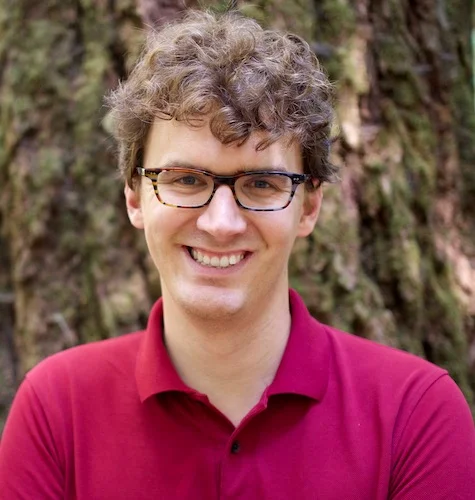
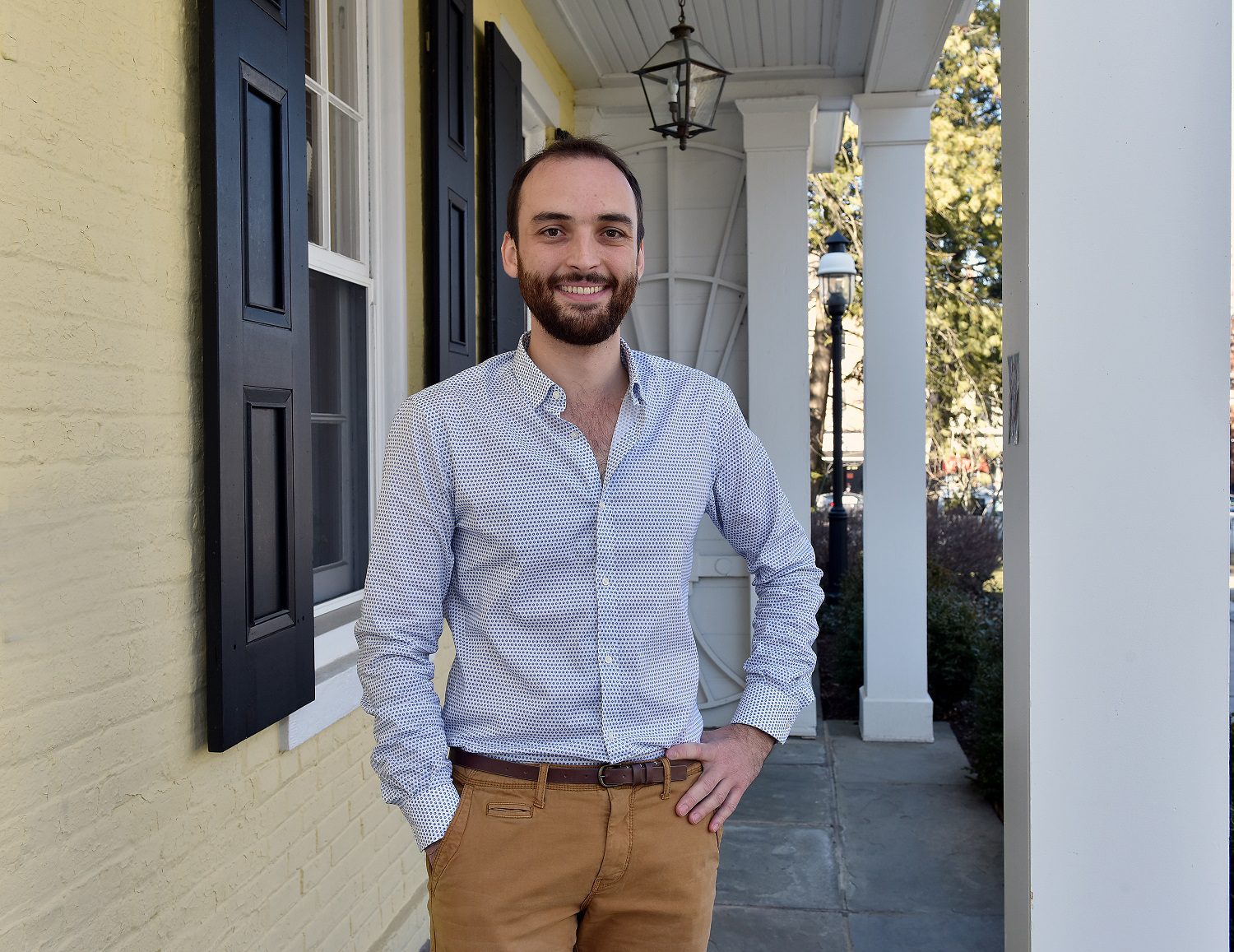
Carl Vondrick is a Professor in the Department of Computer Science at Columbia University. His research focuses on creating robust and versatile perception systems that leverage video and interaction with the natural world, with applications in 3D reconstruction, visual question answering, and robot manipulation. Former research scientist at Google Visiting researcher at Cruise Education: PhD (2017) from MIT, advised by Antonio Torralba BS (2011) from UC Irvine, advised by Deva Ramanan His research explores multimodal approaches for cross-task and cross-modal transfer, scene dynamics, audiovisual perception, interpretable models, and spatial awareness systems. The lab emphasizes zero-shot generalization and neuro-symbolic methods while addressing safety and robustness in AI systems. Key publication trends include: 2025: Video generation for robotics 2024: Differentiable rendering and cross-modal reasoning 2023: Robust perception and 3D modeling Scientific Awards: 2024 PAMI Young Researcher Award 2021 NSF CAREER Award Teaching Roles: Teaching Computer Vision II (2021-2025), Computer Vision I (2018-2019), and Representation Learning (2020-2022). Advising: Advises 8 current PhD students and has mentored 5 graduated students now at institutions like MBZUAI and UMD. The lab recruits 1-2 PhD students annually through Columbia’s PhD program. Grants and Collaborations: Funded by NSF, DARPA, Toyota Research Institute, Amazon Research, and Google.
Paul B. Kreitman is an Associate Professor at Columbia University's Department of East Asian Languages and Cultures. He specializes in 20th Century Japanese History, Environmental History, and the History of Science and Technology. 20th Century Japanese History Environmental History Commodity History Global Sovereignty Studies His research explores intersections between nature and sovereignty , with a focus on Japan's borderlands and trans-Pacific interactions. His 2018 article on Tokyo's wartime sanitation politics won the Leopold-Hidy Prize , and his 2023 monograph Japan's Ocean Borderlands redefines environmental sovereignty narratives. He teaches courses on Asian Mobilities , Indo-Pacific Geopolitics , and graduate seminars about Borderland Japan . Previously held positions include Junior Research Fellow at University of London's Institute of Historical Research and Senior Teaching Fellow at SOAS. Publications: Environmental History (2018), Cambridge University Press monograph (2023) Media Appearances: The Financial Times, The Japan Times, The New Statesman Current projects examine trans-Pacific border controls with emphasis on Japan-Hawaii connections. His work integrates environmental, technological, and geopolitical perspectives to reshape historical understanding of sovereignty dynamics.
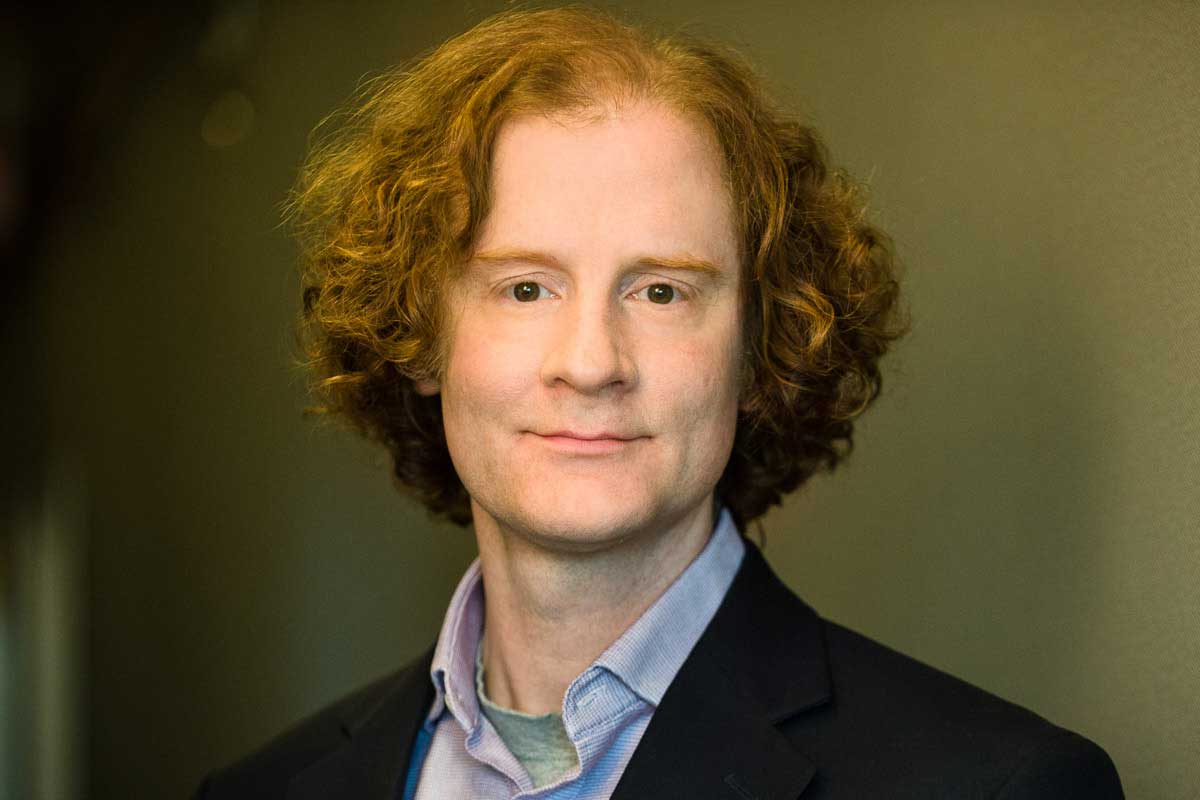
David A. Smith is an Associate Professor at the Khoury College of Computer Sciences, Northeastern University. His research focuses on Natural Language Processing (NLP) and computational linguistics, with applications in machine translation, information retrieval, digital humanities, and social sciences. He is a founding member of the NULab for Texts, Maps, and Networks, a research center focused on digital humanities and computational social sciences. Smith's work has been funded by grants from the Mellon Foundation, NEH, and IMLS, supporting projects such as the Viral Texts initiative analyzing 19th-century newspaper networks and the Oceanic Exchanges project tracking transnational information flows. He has contributed to advancements in OCR for historical texts, text reuse detection, and computational analysis of classical languages. He has advised numerous PhD students, including Shijia Liu, Si Wu, and Ryan Muther, and teaches courses like Natural Language Processing and Information Retrieval. His research has been featured in outlets like Wired and the Economist .
New Jersey Institute of Technology (NJIT)United States
Steven I-Jy Chien serves as Professor and Director of the Transportation Program within the Department of Civil and Environmental Engineering at the New Jersey Institute of Technology (NJIT). His career spans academia, government, and industry with significant contributions to transportation engineering research and practice. His educational credentials include: Ph.D. in Civil and Environmental Engineering from University of Maryland-College Park (1995) M.S. in Civil and Environmental Engineering from University of Maryland-College Park (1991) B.S. in Civil Engineering from Tamkang University (1983) Professor Chien's research focuses on transportation system resilience, sustainable transit operations, and advanced traffic modeling. His work addresses critical challenges in urban rail networks, demand-responsive transit services, and energy-efficient transportation systems. He employs sophisticated computational methods including genetic algorithms, machine learning, and Bayesian approaches to solve complex transportation problems involving network vulnerability, passenger behavior, and infrastructure optimization under uncertainty. Analysis of his recent publications reveals strong emphasis on transportation resilience against cascading failures, sustainable operations for electric transit systems, and pandemic-responsive aviation scheduling. His research spans diverse geographic contexts including major Chinese metropolitan areas and U.S. transportation networks, demonstrating global applicability of his methodologies. His professional recognition includes: 2024 Keynote Speaker at Union-Tech Lecture, National Taiwan Ocean University 2022 Keynote Speaker at International Conference of Chinese Institute of Transportation 2022 Best Poster Award from New Jersey Department of Transportation Professor Chien has secured research funding from federal agencies including the Federal Highway Administration (FHWA) where he contributed to CORSIM traffic simulation software development. His industry experience with China Engineering Consultants Inc. and Information Dynamic Inc. informs his practical approach to transportation challenges. As Transportation Program Director, he oversees curriculum development and industry partnerships that prepare students for transportation sector careers. He maintains active collaboration with transportation agencies globally, particularly through his leadership in the Transportation Program at NJIT which serves as a hub for innovation in urban mobility solutions.
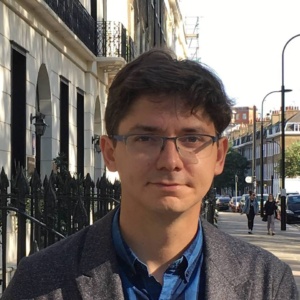
Dr Henry Moss is a Researcher at the Department of Applied Mathematics and Theoretical Physics within the School of Physical Sciences at the University of Cambridge. His work focuses on machine learning applications in climate modeling, Bayesian optimization, and Gaussian processes, bridging computational mathematics with environmental science and chemistry. His research interests include: Bayesian optimization for environmental and chemical systems Reinforcement learning in climate modeling Gaussian processes for molecular property prediction High-throughput machine learning in scientific domains Interpretable AI for coastal flooding prediction Hybrid ML-physics modeling Dr Moss's publications highlight his contributions to federated learning for climate models, sparse Gaussian process techniques, and multi-objective optimization frameworks. These works span applications in weather prediction, chemical engineering, and oceanography. Email: hwm26@cam.ac.uk
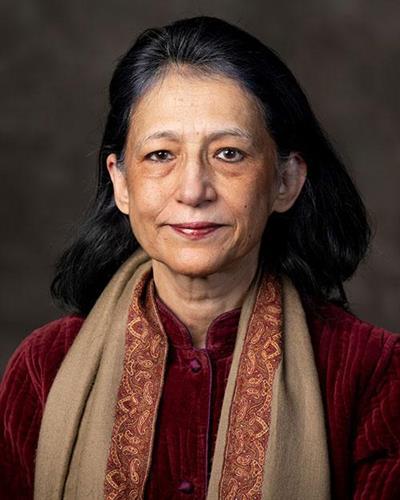
Ayesha Jalal is a distinguished Professor of History at Tufts University's School of Arts and Sciences and holds a joint appointment at The Fletcher School of Law and Diplomacy. She currently serves as the Mary Richardson Professor and directs the Center for South Asian and Indian Ocean Studies. With a career spanning over three decades, Professor Jalal has established herself as a leading scholar in South Asian history, particularly focusing on Pakistan studies, the partition of India, and Muslim political thought in the region. Professor Jalal's academic journey began with a double major in History and Political Science from Wellesley College in 1978. She then pursued doctoral studies at the University of Cambridge, earning her PhD in History in 1983. Her early career included prestigious fellowships at Trinity College, Cambridge (1980-84), the Centre of South Asian Studies (1984-87), the Woodrow Wilson Center for International Scholars (1985-86), and the Harvard Academy for International and Area Studies (1988-90). Professor Jalal's research primarily centers on South Asian history with special emphasis on Pakistan, the partition of India, and Muslim political thought. Her work explores the complex interplay between religious identity, nationalism, and state formation in the region. She has made significant contributions to understanding democratic development in Pakistan, sectarian dynamics in South Asia, and the historical connections between the Indian subcontinent and the wider Indian Ocean world. Her recent scholarship has focused on 'Oceanic Islam,' examining transregional Muslim networks and universalist aspirations that transcended colonial boundaries. Professor Jalal's extensive publication record demonstrates a consistent focus on South Asian political history, with particular attention to Pakistan's formation and development. Her recent works show a progression from studies of partition and state formation toward broader examinations of Muslim intellectual history and transregional connections. The 2020-2024 publications reveal a sophisticated engagement with themes of democratic erosion, sectarianism, and the historical roots of contemporary political challenges in South Asia, while also exploring more cultural and religious dimensions through works on Muslim enlightened thought and oceanic connections. Patrus Bukhari Award for the best English language book, The Pity of Partition , Academy of Letters, Government of Pakistan (2015) Britannica Book of the Year recognition (2015) MacArthur Fellowship (1998-2003) As an educator, Professor Jalal has mentored numerous graduate students through thesis supervision and directed research projects. Her teaching portfolio includes courses on Modern South Asia, Contemporary South Asia, Islam and the West, and specialized seminars on South Asian history. She has taught at several prestigious institutions including the University of Wisconsin-Madison, Columbia University, and Harvard University before joining Tufts in 1999. In her role as Director of the Center for South Asian and Indian Ocean Studies, she has fostered interdisciplinary research and provided guidance to emerging scholars in the field. Professor Jalal directs the Center for South Asian and Indian Ocean Studies at Tufts University, which serves as a hub for interdisciplinary research on South Asia and its connections to the wider Indian Ocean world. The center facilitates collaborative projects, hosts visiting scholars, and organizes events that bridge historical, political, and cultural perspectives on the region. Under her leadership, the center has become a prominent institution for South Asian studies, promoting dialogue between academic research and contemporary policy issues.
Tobias Bolch is a full Professor at the Institute of Geodesy, Graz University of Technology (TU Graz), Austria, specializing in cryospheric research with a focus on High Mountain Asia and the Tibetan Plateau. His work integrates advanced geodetic and remote sensing methodologies to address critical climate change impacts on glaciers and related systems. His research spans: Glacier dynamics and mass balance monitoring using InSAR and optical satellite data Rock glacier kinematics and permafrost interactions Glacial lake evolution and outburst flood hazards Climate-glacier-hydrology linkages in Central Asian river basins Long-term cryosphere reconstruction using historical satellite archives Analysis of his 2023-2025 publications reveals dominant trends in quantifying ice loss acceleration, particularly from lake-terminating glaciers, and the application of multi-sensor approaches (Sentinel, ASTER, UAV) for decadal-scale change detection. His work consistently emphasizes the hydrological consequences of glacier retreat for downstream water security across High Mountain Asia. No scientific awards or specific grant programs were documented in the provided materials. While student supervision details are absent, his position at TU Graz's Institute of Geodesy indicates active mentorship within geospatial and cryospheric research programs. His homepage (https://ifg.tugraz.at) serves as the primary hub for research dissemination through the university's PURE portal.
Max Planck Institute for Evolutionary AnthropologyGermany
Benedict King is a postdoctoral researcher in the Department of Linguistic and Cultural Evolution at the Max Planck Institute for Evolutionary Anthropology, where he contributes to the Comparative Oceanic Linguistics (CoOL) team. His research focuses on constructing phylogenetic trees of language relationships using Bayesian methods to explore language origins, spread, and evolutionary dynamics. He holds a BA in Natural Sciences from the University of Cambridge (UK), a PhD in Evolutionary Biology from Flinders University (Australia), and previously worked as a Postdoctoral Research Associate at Naturalis Biodiversity Center (Netherlands). King’s research interests bridge evolutionary biology, paleontology, and linguistics. He investigates evolutionary transitions in early vertebrates (e.g., placoderms, coelacanths) and applies computational models to study language evolution. His work emphasizes improving phylogenetic methodologies and integrating fossil evidence with statistical frameworks. Notable projects include analyzing Philippine language migrations and reconfiguring actinistian phylogenies through Devonian fish fossils. His publications reflect interdisciplinary strengths, combining vertebrate paleontology with linguistic phylogenetics. Recent work supports rapid Austronesian expansions and hybrid Indo-European language origins. Awards include the Oxford University Press Prize for Biosciences and recognition for his PhD publication. King actively engages in public science communication through platforms like The Conversation and GitHub repositories.
Dr. Sara Caputo is a British Academy Postdoctoral Fellow at the Department of History and Philosophy of Science and an Affiliated Lecturer at the Faculty of History, University of Cambridge. She serves as Director of Studies in History, History and Politics, and History and Modern Languages at Magdalene College. Her research spans transnational maritime history, the history of medicine, cartography, and imperial history. Education: PhD in History from the University of Cambridge (Robinson College), MSc in History from the University of Edinburgh, BA (Hons) in History from Cardiff University. Career Highlights: Lumley Junior Research Fellow (2019–2022), Senior Research Fellow (2022–present) at Magdalene College, Scouloudi Fellow (2018–2019), Lewis-AHRC Scholarship (2015–2018), Honorary Vice-Chancellor’s Scholar (2015–2018). Research Focus: Dr. Caputo explores maritime mobilities, knowledge exchange, and the instability of national boundaries in the British and European navies. Her work integrates transnational perspectives into the study of a quintessentially national institution, challenging notions of Britishness and foreignness. She combines qualitative and quantitative methodologies to analyze legal, social, and cultural contexts of naval service and cartographic practices. Notable Articles: Recent publications include studies on British naval medicine, the evolution of ship tracks into surveillance tools, and the transnational dimensions of naval exploration. Her articles span journals like Past & Present , English Historical Review , and Social History of Medicine , with chapters in edited volumes on transport history and postwar naval recruitment. Scientific Awards: Royal Historical Society Whitfield Prize (2024) British Commission for Maritime History Boydell & Brewer Prize (2020) Fachverband Medizingeschichte wissenschaftlichen Förderpreis (2022) International Committee for History of Technology Maurice Daumas Prize (2021) Scottish History Society Rosebery Prize (2020) Teaching and Outreach: Dr. Caputo teaches courses on the Global Eighteenth Century, Union and Disunion in Britain, and Mediterranean history. She actively participates in outreach programs with the Cambridge University Admissions Office and The Brilliant Club, focusing on widening participation in history education.
Cristina Bacchilega is a retired Professor and former Graduate Director in the Department of English at the University of Hawaiʻi at Mānoa, affiliated with the College of Languages, Linguistics, and Literature. Her research focuses on fairy tales, folklore, and their intersections with gender, colonialism, and translation. She co-edited journals like Marvels & Tales and held roles such as Department Chair (2001-2007) and Acting Graduate Program Director. Her work includes books like Legendary Hawaiʻi and the Politics of Place and Postmodern Fairy Tales: Gender and Narrative Strategies . Education: BA, University of Rome (Italy); MA and PhD, State University of New York at Binghamton. Her research interests span fairy-tale studies, folklore, gender studies, and decolonial narratives. Recent projects explore Hawaiian mo‘olelo in translation and the cognitive potential of wonder in contemporary adaptations. She co-organized international conferences on storytelling in conflict zones and co-edited special journal issues on these topics. Awards: Fulbright Fellowship (2016) IAFA Distinguished Scholarship Award (2016) Guggenheim Fellowship (2001) Her advising and grants include SSHRC postdoctoral fellowship reviews and Fulbright applications. She collaborates on projects like An Ocean of Wonder (2024) and a forthcoming book on fairy tales and justice (2025). She also engages in Hawaiian language revitalization efforts.
Fahad Ahmad Bishara is an Associate Professor at the University of Virginia , specializing in the economic and legal history of the Indian Ocean and Islamic world . His work bridges global capitalism, international law, and historical narratives of mobility. Key Books: A Sea of Debt (Cambridge, 2017) and Monsoon Voyagers (UC Press, forthcoming) Awards: Hurst Prize, Jerry Bentley Prize, Peter Gonville Stein Book Award Research Focus: Explores debt, legal systems, and trade through microhistories of ships and merchant families, with recent interests in narrative scales and conceptualizations of law in global history. Academic Collaborations: Co-authored works with Nandini Chatterjee, Hollian Wint, and others, emphasizing Persianate and Indian Ocean interconnections. Scientific Awards: J. Willard Hurst Prize (Law and Society Association) Jerry Bentley Prize (World History Association) Peter Gonville Stein Book Award (American Society for Legal History)
Kim Jae-ho serves as Associate Professor in the Department of Electronic Information and Communication Engineering at Sejong University since September 2020, concurrently directing the Metaverse Autonomous Twin Research Center (ITRC) under the Ministry of Science and ICT. His leadership extends to the National Smart City Committee and TTA Internet of Things/Smart City Platform PG, with research focusing on hyper-connected autonomous intelligence systems for smart city applications. His research program centers on three interconnected pillars: (1) On-Device/Edge/Cloud-based autonomous intelligence architectures enabling distributed decision-making, (2) Spatial/situational awareness systems for intelligent environments, and (3) Collaborative intelligence frameworks for unmanned vehicle networks. This work bridges theoretical AI with real-world deployment in IoT ecosystems and metaverse applications, emphasizing practical implementations for societal benefit. Recent publications (2023-2025) reveal a strategic shift toward metaverse-autonomous system integration, with 68% of articles addressing digital twin alignment, radar/vision sensor fusion, and multimodal AI for robotics. Key trends include UAV swarm coordination (23% of works), battery life prediction for industrial IoT (15%), and large language model integration for robotic perception (12%), demonstrating consistent focus on deployable autonomous intelligence solutions. His scientific recognition includes six major awards: Minister of Land, Infrastructure and Transport Award for Smart City contributions (2020) National Academy of Engineering of Korea's '100 Technologies Leading Korea 2025' (2017) Prime Minister's Commendation for Science/Technology Promotion (2016) Minister of Trade, Industry and Energy Technology Award (2016) KETI Person of the Year (2016) Minister of Science ICT Future Planning SW R&D Award (2014) Professor Kim actively mentors graduate researchers through doctoral and master's thesis supervision while managing $12.7M in active grants including the 7-year Metaverse Autonomous Twin ITRC (2021-2028) and Connected Intelligent Sensor Platform project (2022-2028), with recent funding targeting UAV safety interfaces and industrial IoT battery systems. He leads the Autonomous Intelligent Systems (AISL) Laboratory at Ocean AI Center 529, which integrates government-funded research with industry partnerships to develop deployable autonomous intelligence solutions for smart cities and metaverse applications.
Florian Lionnet is an Associate Professor of Linguistics in Princeton University's Council of the Humanities and Director of Undergraduate Studies. He holds a Ph.D. from UC Berkeley (2016) and joined Princeton in 2017. His research focuses on phonetics/phonology, typology, areal and historical linguistics, and language documentation, with a focus on African and Oceanic languages. Current projects include endangered languages in Chad and New Caledonia, involving annual fieldwork collaborations with anthropologists, ethnomusicologists, and archaeologists. Research interests emphasize tonal systems, phonological representation, and language contact, particularly in Laal (an isolate language), Fanya (Bua), and Khoisan languages. His work bridges theory and practice, contributing to both linguistic theory and endangered language preservation. Articles explore tone phonology, areal patterns, and subphonemic effects, with recent emphasis on Kalahari Basin and Oceanic languages. Teaching responsibilities include directing undergraduate studies in Linguistics. No awards or grants are explicitly listed, though his fieldwork suggests active research funding. His office is located at 1-S-18 Green Hall, Princeton University.
Olivia Badoi is a faculty member in the Department of English at Saint Louis University-Madrid. She holds a Ph.D. in English from Fordham University and contributes to the academic mission through teaching and research in modernist studies, graphic narratives, and ecocriticism. Education: Ph.D. in English, Fordham University M.A. in English, Wroclaw University B.A. in American Studies, University of Bucharest Dr. Badoi's research lies at the intersection of modernist literature, visual culture, and environmental thought. Her work explores how wordless narratives, particularly woodcut novels, engage with ecological themes and nonhuman agency. She introduces the concept of arboreal modernism to describe how trees and forests serve as structural and symbolic models in modernist art. Her scholarship spans ecocriticism, feminist modernism, adaptation studies, and the representation of animals and nature in media. She is currently completing her first book, Arboreal Modernism and the Woodcut Book , under contract. Her recent publications and conference presentations reveal a strong interdisciplinary trajectory, combining literary analysis with visual culture, environmental philosophy, and translation studies. Themes such as deep time, materiality, liminality, and nonverbal communication recur across her work, reflecting a sustained engagement with the boundaries between human and nonhuman, word and image, nature and culture. Scientific Awards: No scientific awards listed in the provided text. Dr. Badoi actively contributes to academic discourse through peer-reviewed publications and international conference presentations. While specific grant funding is not mentioned, her book contract and scholarly output indicate a robust research profile. She mentors students through her academic role, though no named advisees are listed. Her work is supported by her affiliation with Saint Louis University-Madrid, where she participates in scholarly events such as the Landscape, Narrative, and Deep Time conference. She is associated with academic teams and initiatives focused on modernism, adaptation, and environmental humanities, as evidenced by her conference organization and participation.
Chia-rong Wu serves as Associate Professor in the Department of Global, Cultural and Language Studies at the University of Canterbury, New Zealand, holding this position since June 2019. His academic work centers on Sinophone literature, film, and video games through postcolonial theories, Indigenous studies, diaspora, and ecocriticism frameworks. Dr. Wu earned his PhD in Comparative Literature from the University of Illinois at Urbana-Champaign. His scholarly contributions include two monographs: Supernatural Sinophone Taiwan and Beyond (Cambria Press, 2016) and Remapping the Contested Sinosphere: The Cross-cultural Landscape and Ethnoscape of Taiwan (Cambria Press, 2020). He has co-edited Taiwan Literature in the 21st Century: A Critical Reader (Springer, 2023) and is preparing The Southern Discourse in Sinophone Literature: Moving Borders (Routledge, forthcoming September 2025). His research examines cultural production across Taiwan and the Sinophone world, with particular focus on how literature, film, and video games engage with historical trauma, identity formation, and cultural politics. Recent projects explore youth narratives in Taiwanese horror video games, Indigenous perspectives on Oceanic Taiwan, and the global South discourse in Sinophone literature, revealing connections between transnational migration, racial dynamics, gender politics, and indigenous awareness. Dr. Wu serves as executive editor and Advisory Board member of Taiwan Lit and the Global Sinosphere (ISSN: 2994-6816), and holds positions on the Board of the American Association for Chinese Studies, the International Advisory Board of Interdisciplinary and Transcultural Approaches to Chinese Literature (Routledge Book Series), and the Cultural History Editorial Advisory Board (Bloomsbury Book Series). Currently supervising PhD students in Sinophone literary and cultural studies, Dr. Wu is developing a new monograph focused on transmedia narratives of youth politics, continuing his exploration of how contemporary media forms engage with political consciousness and historical memory in Taiwan and beyond.