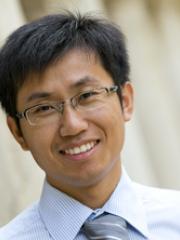
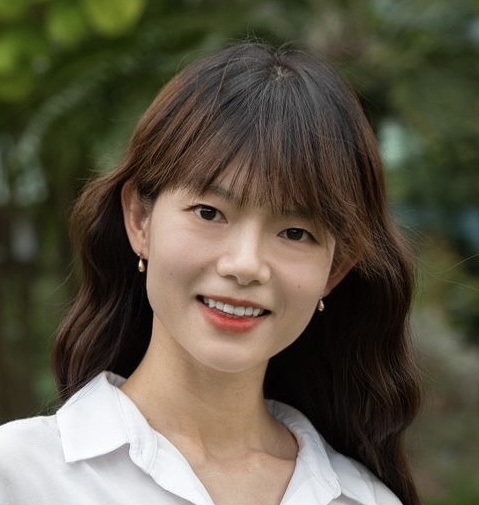
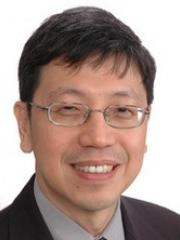
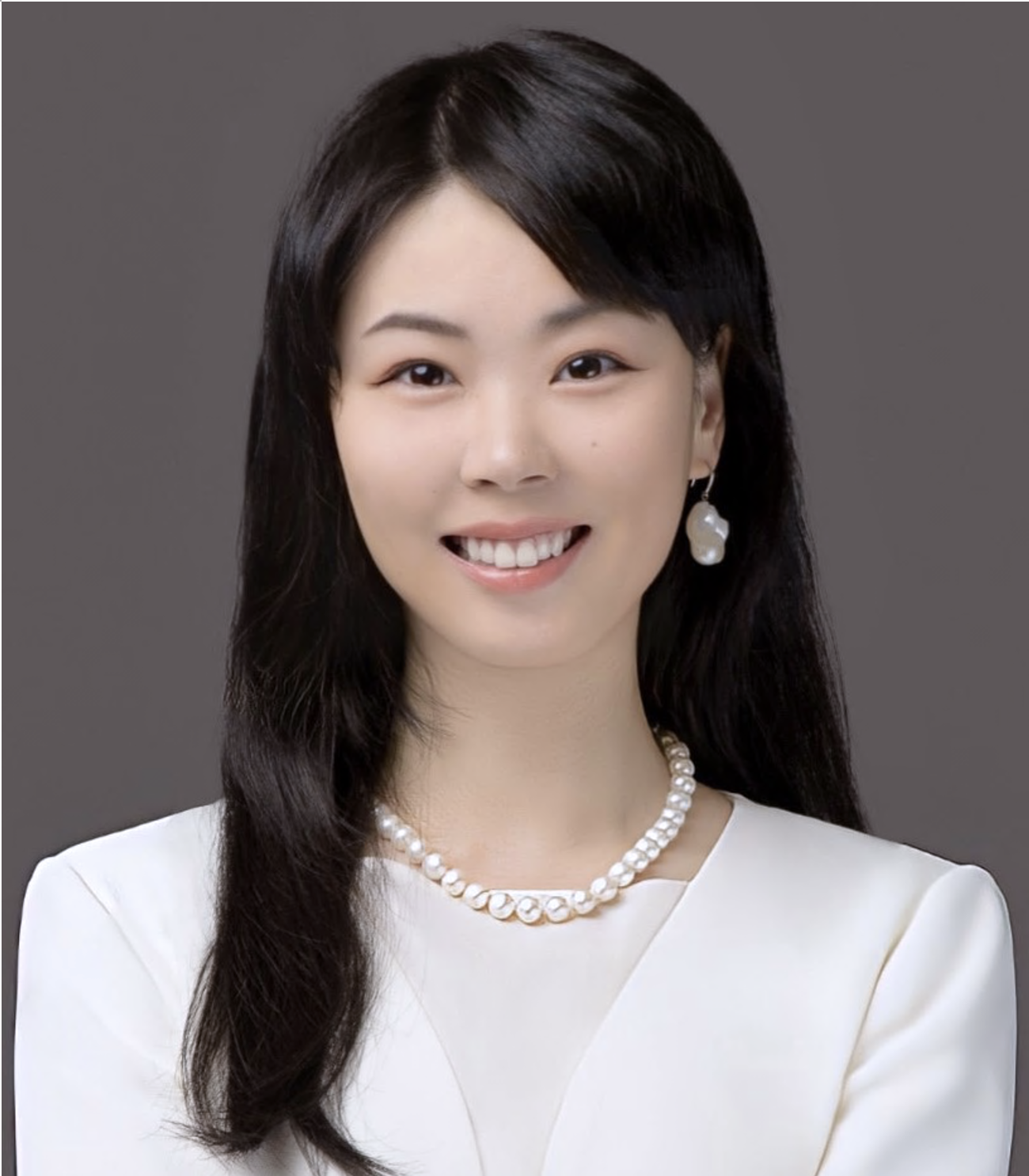
Associate Professor Wenhua Zhao is a globally recognized expert in offshore hydrodynamics and renewable energy technologies at The University of Queensland , School of Civil Engineering. With over 110 publications and 30 million AUD in secured research funding, his work bridges theoretical and practical advancements in marine engineering. Research focuses on Clean Energy , Artificial Intelligence , and Climate Change , specifically floating wind energy, floating solar, offshore aquaculture, and green hydrogen production. His 15 most recent articles (2024-2025) emphasize wave-structure interactions, gap resonance dynamics, and AI-driven wave prediction, published in top journals like Journal of Fluid Mechanics and Ocean Engineering . Scientific awards include the prestigious ARC Future Fellowship (2024-2028) and DECRA Fellowship (2019-2022) , recognizing his contributions to academia and industry. He teaches the 'Design of Offshore Energy Systems' course , training hundreds of students in coastal and ocean engineering, and serves as Deputy Editor for Ocean Engineering and Associate Editor for ASME's Journal of OMAE . Available for research supervision, Zhao actively collaborates with editorial boards of Applied Ocean Research and other Q1 journals.
Professor Tongming Zhou is a faculty member in the Department of Civil, Environmental and Mining Engineering at the School of Engineering, The University of Western Australia (UWA) . He serves as Director of the UWA Boundary Layer Wind Tunnel Laboratory and Program Chair for Civil Engineering , contributing to both academic leadership and industrial applications. His work bridges fundamental fluid mechanics with practical engineering challenges. Education : PhD in Fluid Mechanics from The University of Newcastle (1999) Teaching : Coordinates core units like CIVL2551, CIVL5551, and CIVL4402/CIVL3402 Hydraulics, emphasizing real-world application and industry collaboration Research Interests focus on: Suppression of vortex shedding and vortex-induced vibrations (VIV) in cylindrical structures Enhancement of VIV and galloping for renewable energy harvesting Wave resonance in floating LNG facilities Sloshing dynamics in tanks with Newtonian/non-Newtonian fluids Wind tunnel testing for industrial wind load analysis Recent Research Trends show interdisciplinary work combining experimental and numerical fluid dynamics, with applications to offshore engineering, maritime safety, and energy systems. His projects explore VIV in flexible risers, gas leakage effects on pipelines, and triboelectric nanogenerators for wind energy. Grants : ARC Grant (2019-2021): Development of novel inerter-based dampers ARC Grant (2013-2015): Local Scour below Offshore Pipelines ARC Grant (2011-2015): Vortex & Force Characteristics of Inclined Cylinders UWA Grant (2008): Control of Vortex Shedding with Helical Strakes Facilities Leadership : Upgraded UWA’s Boundary Layer Wind Tunnel , Hydraulic Laboratory Water Flume , and 6DOF Hexapod motion platform , acquiring advanced equipment like PIV systems and high-precision load cells.
Dr. Yi Huang is a Senior Lecturer in Climate Science at the School of Geography, Earth and Atmospheric Sciences , University of Melbourne . She holds a Ph.D. in Mathematical Sciences General from Monash University , where her work focused on cloud and precipitation systems over the Southern Ocean. Her research addresses fundamental questions in atmospheric processes, Earth's energy budget, and water cycle dynamics. She specializes in cloud-climate interactions, precipitation systems, geographical variability in atmospheric phenomena, and the application of field observations, remote-sensing data, and numerical modeling to improve weather and climate predictions. The recent Google Scholar articles suggest interdisciplinary work in solar cell materials and semiconductor physics, though this is not explicitly detailed in her official bio. The scientific awards section is currently empty due to no explicit mentions in the provided text. She has not been described as advising students or participating in specific lab teams in the scraped content.
Dr. Wesley Morgan is a climate change researcher and international relations specialist affiliated with the Institute for Climate Risk & Response at the University of New South Wales (UNSW). He also holds roles with the Australian Climate Accountability Project (UNSW Human Rights Institute), the Climate Council, and the Griffith Asia Institute. His research focuses on Pacific climate diplomacy, climate security, and integrating climate change into foreign policy and national security strategies. A key theme involves Australia-Pacific collaborations under UN frameworks and the geopolitical implications of climate change in oceanic regions. Scientific Contributions Co-edited Climate Politics in Oceania: Renewing Australia-Pacific Relations in a Warming World (2024) Authored influential reports including A Fight for Survival (Climate Council, 2022) and Climate Allies (UWA, 2023) Active participant in UN climate negotiations analysis and Australia's energy strategy debates Media Engagement Regular commentator on ABC Radio and The Conversation Advocates for Australia's support of Japan's clean energy transition Highlights fossil fuels' impact on Pacific-Australia relations
Dr. Boyin Ding is an Associate Professor at the University of Adelaide , serving as Academic Director at Haide College and researcher in the Mechanical Engineering department within the Faculty of Sciences, Engineering and Technology. He leads the Wave Energy Research initiative established in 2014, while also contributing to Robotics and Biomechanics through his work with the Flinders Medical Device Research Institute. Research Areas: Ocean Wave Energy Harvesting Control Systems for Renewable Energy 6DOF Robotic Testing Spine Biomechanics Transnational Education Programs Key Collaborations: Australia-China Joint Research Centre for Offshore Wind & Wave Energy Acoustics, Vibration and Control Research Group Scientific Awards: Australian Endeavour Fellowship Malcolm Kinnaird Engineering Excellence Award (2012) His recent publications focus on hybrid offshore energy systems, nonlinear hydrodynamics in wave energy converters, and biomechanical testing technologies. He has developed control algorithms for floating offshore wind-wave systems and pioneered 6DOF robotic platforms for medical applications. As an eligible PhD supervisor, he actively collaborates with global industries and academic institutions.
Kevin Vinsen is a Senior Research Fellow at the University of Western Australia, working in the Data Intensive Astronomy (DIA) Program of the International Centre for Radio Astronomy Research (ICRAR) since 2009. He is also affiliated with the UWA Defence and Security Institute and holds an ORCID ID of 0000-0001-5332-3784. His work focuses on translating ICRAR software capabilities into practical industry applications across diverse domains. His research interests include: Peta-scale systems High-performance Computing Machine Learning applications in multiple fields Wave and weather forecasting Digital Assistive Technologies Agricultural applications of ML Large language models Vinsen heads the Translation and Impact work of the DIA team and leads the development of Machine Learning systems. His current projects include ML for wave forecasting on the NW shelf, wind and temperature forecasting, honey traceability and provenance, and digital assistive technology for people with disabilities. His work contributes to UN Sustainable Development Goals related to industry, oceans, agriculture, food, disability, and defense. His research output demonstrates a strong trend toward applying machine learning techniques to solve real-world problems across astronomy, environmental science, agriculture, and disability support. This interdisciplinary approach showcases the versatility of his computational expertise across scientific and social domains. Vinsen has an h-index of 11 with 621 citations across 33 research outputs. As the ICRAR/UWA Summer Studentship Co-ordinator, he mentors emerging researchers and contributes to building research capacity. His collaborative network spans multiple institutions and research areas, reflecting his ability to bridge academic research with practical applications.
Associate Professor Nesimi Ertugrul is affiliated with the School of Electrical and Mechanical Engineering and the Department of Electrical and Electronic Engineering at The University of Adelaide. His research focuses on renewable energy systems, power electronics, energy storage technologies, and grid modernization. He has contributed extensively to advancing offshore wind and wave energy integration, battery management systems, and wide-bandgap device applications in mining electrification. His work emphasizes techno-economic assessments of hybrid renewable systems, optimal design of energy storage solutions, and improving grid stability with high renewable penetration. Key areas include vanadium redox flow battery optimization, thermal management of energy systems, and offshore wind resource mapping in Australia. Recent publications highlight innovations in wave energy converters, hybrid offshore energy systems, and the role of battery storage in smart grids. His research bridges theoretical advancements with practical applications, addressing challenges in energy variability, cost efficiency, and system reliability.
Professor Chien Ming Wang is the Transport and Main Roads Chair Professor of Structural Engineering at the University of Queensland (UQ) since 2017. He also holds an Adjunct Professor position at Monash University and contributes to the Centre for Marine Science within UQ’s Faculty of Science. Alumnus of the Year 2015, Monash University Chartered Structural Engineer Educational Background : Bachelor of Civil Engineering (First Class Honours), Monash University, 1978 M.Eng.Sc. and Ph.D., Monash University, 1980 & 1982 Research Focus : Pioneering Very Large Floating Structures (VLFS) with applications in floating bridges, oil storage, and aquaculture systems. His work spans structural stability, vibration analysis, optimization of arches, and nonlocal theories for nanostructures. He developed Hencky bar-chain models and Shooting-Optimization Technique for boundary value problems. Scientific Leadership : Authored 500+ journal papers, 6 books, and 4 edited volumes with over 26,000 citations. Led $10M+ in industrial projects including Blue Economy CRC initiatives. Holds multiple patents in floating structures and aquaculture systems. 2019 Nishino Medal 2019 JN Reddy Medal IStructE Singapore Structural Award for Sustainability 2016 Minister of National Development R&D Special Mention 2017 Advising & Collaborations : Supervised 28 PhD and 20 MEng students, including work with NUS , SINTEF , and PolyU . Current projects involve offshore seaweed farms, self-healing concrete, and hybrid timber-cardboard composites.
Hongwei An is a Senior Lecturer at the University of Western Australia (UWA), affiliated with the School of Engineering's Civil, Environmental and Mining Engineering Department and the UWA Oceans Institute. He holds a PhD from UWA and an ME from Dalian University of Technology. His research focuses on fluid dynamics, coastal engineering, and offshore infrastructure stability, with notable contributions to scour mechanics, sediment transport, and wave-current interactions. Education: PhD in Civil Engineering, University of Western Australia (20xx) Master of Engineering (ME), Dalian University of Technology (20xx) Research Interests: Dr. An’s work centers on fluid-structure interactions, local scour around marine structures, and the dynamics of oscillatory flows. He investigates topics like pipeline stability in coastal environments, wave modeling under ambient currents, and the environmental impacts of offshore renewable energy systems. Grants & Collaborations: Lead investigator in the ARC Research Hub for Transforming Energy Infrastructure (2021–2026) Industry partnerships: Inpex Operations Australia, MMA Offshore, Fugro Australia Labs/Teams: Active member of the UWA Oceans Institute, collaborating on projects related to marine growth stabilization, sediment dynamics, and offshore energy infrastructure resilience.
Adi Kurniawan is a Research Fellow at the University of Western Australia (UWA) in the School of Earth and Oceans, affiliated with the Marine Energy Research Australia (MERA) and the Great Southern Marine Research Facility (GSMRF). His research focuses on wave energy conversion, wave-structure interactions, and multi-objective optimization. He holds a PhD in Marine Technology from NTNU and has held roles at Aalborg University and the University of Plymouth. Kurniawan co-authored Ocean Waves and Oscillating Systems and contributes to industry standards (Standards Australia Committee EL-066) and journal editing (Journal of Offshore Mechanics and Arctic Engineering). Research Interests: Wave energy converter (WEC) design and optimization Nonlinear wave dynamics and numerical modeling Multi-objective optimization of wave farms Parametric resonance mitigation in WECs Teaching: Previously taught OCEN4007 Renewable Ocean Energy. Active in the Oceans Graduate School, covering oceanography, hydrodynamics, and marine geoscience. Collaborations: Works with industry on sponsored projects, including wave energy device modeling and power prediction. Part of the UN SDGs contributing to sustainable energy solutions (SDG 7, 13, 14). Grants: Lead investigator on projects like 'Advancing ocean renewable energy systems through physics and machine learning' and 'WaveX Albany', totaling over $2M in funding. Projects emphasize scalability, cost reduction, and environmental impact assessments. Labs/Teams: Based at the GSMRF in Albany, collaborating with international partners on WEC testing and deployment strategies.
Miao Li is a Senior Lecturer in Engineering at Charles Sturt University, affiliated with the School of Computing, Mathematics and Engineering. She is a member of the Imaging and Sensing Research Group and the Sustainability in Engineering Research Group (SERG) at the Gulbali Research Institute. Her academic journey includes a PhD in Civil Engineering from Griffith University and earlier degrees in geological and engineering geology from Chinese institutions. Doctor of Philosophy (Civil Engineering) Master of Science (Geological Engineering) Bachelor of Science (Engineering Geology) Dr Li's research spans computational mechanics, numerical modeling, wastewater treatment, and non-linear structural dynamics, with a strong focus on sustainable engineering solutions. Her work contributes to UN Sustainable Development Goals through innovations in geotechnical systems, energy storage, and low-carbon construction. She has published extensively in top journals, with recent work focusing on adaptive mesh refinement, rock damage modeling, and frost heave in soils. Her recent publications highlight a trend toward high-fidelity numerical simulations and experimental validation in geotechnical and structural systems, particularly under extreme or cyclic loading conditions. She applies computational fluid dynamics and finite element methods to solve complex engineering problems in energy, infrastructure, and environmental resilience. Executive Dean Teaching Award (2024) Fellow of Advance HE (2025) Dr Li is a registered thesis supervisor and actively mentors students through research projects and industry placements. She has secured research recognition through awards and grants, and her work is frequently covered in press and media, reflecting its real-world impact. She participates in major international conferences in ocean, offshore, and structural engineering, and contributes to editorial and academic organizing roles. She leads research initiatives within the Imaging and Sensing Research Group and SERG, focusing on smart sensing, sustainable materials, and computational modeling for resilient infrastructure.
Dr. Liya Zhao is a Senior Lecturer in the School of Mechanical and Manufacturing Engineering at the University of New South Wales (UNSW Sydney), where she leads the Dynamic Smart Structures and Energy Harvesting Laboratory. She previously held academic positions at the University of Technology Sydney (UTS), first as a Lecturer (2017) and later promoted to Senior Lecturer (2021), before joining UNSW in 2022. Her research is highly interdisciplinary, focusing on smart structures, nonlinear dynamics, and sustainable energy technologies. Education: Ph.D. in Structures & Mechanics, Nanyang Technological University, Singapore (2015) B.Eng. in Civil Engineering, Tongji University, China (2009) Research Interests: Dr. Zhao's work centers on energy harvesting from ambient sources (wind, vibration, human motion, waves), smart materials (piezoelectric, triboelectric), metamaterials, and nonlinear dynamics. She designs adaptive structures for broadband energy harvesting and vibration suppression, with applications in self-powered wireless sensor networks, structural health monitoring, and wearable devices. Her research integrates theoretical modeling, numerical simulation, and experimental validation. Publication Trends: Over the past decade, her research has evolved from fundamental electromechanical modeling toward multifunctional metastructures and real-world deployment. Her recent work emphasizes hybrid energy harvesting, nonlinear tuning for broadband response, and integration with self-powered sensing systems, reflecting a strong trend toward practical, sustainable technologies. Scientific Awards: ARC Discovery Early Career Researcher Award (DECRA), 2021–2024 World's Top 2% Scientists (Stanford University), 2020–2023 Nanyang Engineering Doctoral Scholarship (NEDS), NTU Singapore Grants & Supervision: Dr. Zhao has secured multiple competitive grants, including ARC Discovery Projects and internal university funding, as both sole and chief investigator. She actively supervises research students and welcomes motivated candidates in mechanics, dynamics, and energy systems. Her lab, Dynamic Smart Structures and Energy Harvesting Lab , fosters innovation through experimental and computational research. She also contributes to teaching, including Mechanics of Solids II and Introduction to Aircraft Engineering. Lab & Team: She leads a dynamic research group focused on next-generation smart structures, supported by state-of-the-art facilities at UNSW. Her team develops novel materials and systems for sustainable energy and sensing, aiming to bridge the gap between fundamental science and real-world applications.
Associate Professor Bryan Boruff is affiliated with the University of Western Australia (UWA), specifically within the School of Agriculture and Environment. His roles include Specialisation Coordinator for Sensing and Spatial Data Science in the Master of Environmental Science program. He holds a PhD from the University of South Carolina and has expertise in Geographic Information Systems (GIS), Remote Sensing, and environmental hazard analysis. Education: BA, MA Flor.At. PhD from University of South Carolina His research focuses on applying GIS and Remote Sensing to environmental hazards, agriculture, renewable energy, population health, and urban planning. Recent work includes studies on the impact of green spaces on children’s health and the development of spatial tools for environmental management. Recent articles explore topics such as the association between coastal proximity and child development, land use mapping in Fiji, and the role of urban vegetation in mitigating heat. These studies highlight his interdisciplinary approach, blending geospatial technologies with public health and environmental sustainability. He has secured significant funding, including over $1.6 million from ACIAR for climate-smart landscapes research and a $1.7 million National Environmental Science Program grant. Collaborations span international projects in Fiji, Cambodia, and Pakistan, addressing disaster recovery and climate resilience. Boruff is involved in initiatives like the UWA Oceans Institute and the Institute of Agriculture. His teaching includes advanced GIS and remote sensing courses, contributing to the next generation of spatial data scientists.
Professor Daniel Ierodiaconou is a marine ecologist at Deakin University, where he serves as Professor in Marine Science and leads the Deakin Marine Mapping Group. He acts as Victorian Node Leader for the Integrated Marine Observing System (IMOS), Board Director for the Great Ocean Road Coast and Parks Authority, and Coastal Lead Scientist for the CoastRI Initiative. His work combines multi-disciplinary approaches to advance marine ecosystem-based management. Doctor of Philosophy, Deakin University Bachelor of Science (Aquatic Science), Deakin University Bachelor of Science (Fisheries Management & Aquaculture), Deakin University Daniel's research focuses on Benthic Habitat Mapping , Marine Protected Areas , and Coastal Process Monitoring . His work integrates Remote Sensing , Image Classification , and Change Detection techniques to inform marine conservation and climate adaptation strategies. Recent publications highlight advancements in Seafloor Habitat Classification , Coastal Erosion Modeling , and Seagrass Restoration . Scientific awards include: 2020 Eureka Prize for Innovation in Citizen Science 2020 Victorian Coastal Award for Innovative Applied Research 2018 Victorian Coastal Award for Partnership Research 2009 Tall Poppy Award Daniel supervises 10 current doctoral students and has advised 16 PhD completions. His grants portfolio exceeds $7 million, including a $5 million NCRIS-funded CoastRI Coastal Monitoring Network. He specializes in integrating Geospatial Technologies with Marine Conservation through his leadership in citizen science drone programs and Victoria's first wave buoy network.
Professor Darla Hatton MacDonald is a Professor and Associate Head (Research & Performance) in the Department of Economics at the University of Tasmania's Tasmanian School of Business and Economics. Her research focuses on environmental and resource economics, with particular emphasis on ecosystem accounting, behavioral economics, and policy analysis. She leads projects addressing soil stewardship, Antarctic governance, marine plastic reduction, and energy transitions. Her work integrates interdisciplinary approaches to evaluate environmental policies, stakeholder preferences, and market mechanisms. Notable funded projects include studies on temperate saltwater marsh accounting (2024-2025), behavioral change in fisheries (2023-2024), and certification frameworks for soil stewardship (2022-2025). She has also contributed to policy-relevant research on Tasmania's hydrogen industry and groundwater management in mining regions. Her supervision spans doctoral projects on beetle conservation, blue economy hazards, and renewable energy transitions. Publications highlight her expertise in Antarctic ecosystem valuation, microplastic distribution, and consumer preferences for environmental policies. She engages in media outreach, notably critiquing the Murray-Darling Basin Plan's effectiveness. Her work bridges academic research with practical policy solutions for sustainable resource management.