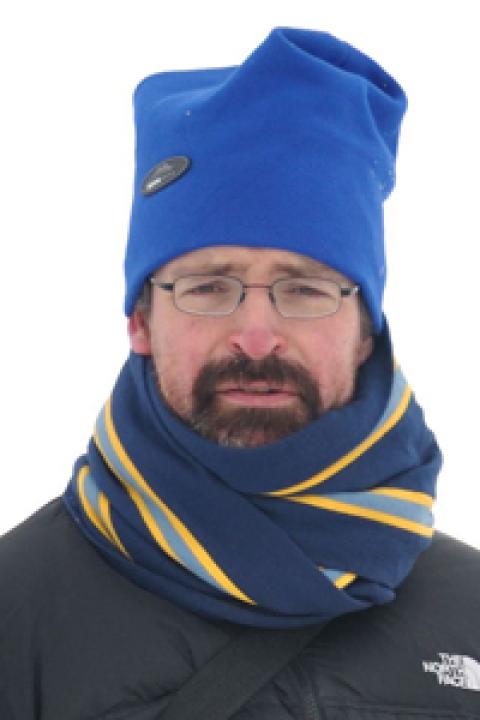
Leonardo Chamorro is a Professor in the Department of Mechanical Science and Engineering at the University of Illinois at Urbana-Champaign (UIUC), with affiliations in Earth Science and Environmental Change, Aerospace Engineering, and Civil and Environmental Engineering. His research focuses on fluid dynamics, renewable energy systems, and turbulence modeling. He holds a Ph.D. in Civil Engineering from the University of Minnesota (2010) and has held academic positions at UIUC since 2013, advancing to Full Professor in 2024. Chamorro's work spans experimental and theoretical investigations of wind and hydrokinetic energy, geophysical flows, and particle dynamics. His research group, the Renewable Energy & Turbulent Environment Group (RE-TE-G), explores topics like tidal flow multifractality, vortex dynamics, and bio-inspired robotics. Key achievements include Nature and Lab on a Chip cover articles, and contributions to turbulence modeling for tidal energy systems. He has received awards such as the Best Paper Award in Energies (2018) and recognition for pandemic-related research (2021). His editorial roles include associate editorships at journals like Journal of Renewable and Sustainable Energy and Frontiers in Energy Research . Chamorro has supervised numerous graduate students and postdocs, contributing to over 150 peer-reviewed publications since 2009.
Esteban G. Tabak is a Professor of Mathematics at the Courant Institute of Mathematical Sciences, New York University. He holds a Ph.D. in Mathematics from MIT (1992) and a Hydraulic Engineer degree from the University of Buenos Aires (1988). His research spans fluid dynamics, data science, and optimization, with notable contributions to optimal transport theory, atmospheric and ocean modeling, and machine learning methodologies. He leads the Research and Training Group in Mathematical Modeling and Simulation at NYU. Research Interests include Data Analysis, Optimal Transport, Applied Mathematics, and Physics, particularly in fluid dynamics and geophysical flows. His work bridges theoretical advancements with practical applications, such as sea ice dynamics, internal waves, and turbulence modeling. Publications highlight innovations in density estimation, constrained optimization, and energy spectrum analysis of oceanic internal waves. Collaborations span disciplines, including biomedical applications (e.g., heart transplant diagnostics) and climate science. His methodologies, such as dual ascent algorithms and prototypal analysis, emphasize data-driven solutions to complex systems. Teaching includes courses on partial differential equations, fluid dynamics, and mathematical modeling. His work has been supported by grants addressing stratified flows, internal wave energy spectra, and turbulent mixing.
Mike Grimble is a Research Professor in the Department of Electronic and Electrical Engineering at the University of Strathclyde, Faculty of Engineering. His work is centered on advanced control systems with applications across automotive, aerospace, marine, and industrial domains. He is actively involved in theoretical and applied research, particularly in nonlinear and robust control methodologies. Research Interests: Theory and application of nonlinear and robust control for multivariable systems Adaptive control and estimation methods Benchmarking and performance assessment of control systems Condition monitoring and industrial applications Real-time control and embedded systems His recent publications highlight a strong trend in applying predictive and adaptive control techniques to electric vehicles, battery systems, underwater robotics, and industrial machinery. These works emphasize real-time implementation, energy optimization, and robustness—critical for modern sustainable and autonomous systems. Scientific Recognition and Activities: Invited speaker on the benefits and challenges of advanced control in industrial applications (2013) Contributor to UN Sustainable Development Goals, particularly in sustainable industry and innovation Active research output with over 158 publications, including journals, conferences, and book chapters Research Leadership and Funding: Principal Investigator on multiple EPSRC and RSE-funded projects Co-investigator in interdisciplinary initiatives such as the Medical Devices Doctoral Training Centre Organizer of international workshops on hybrid and predictive control Labs and Research Teams: He is associated with the Industrial Control Centre at the University of Strathclyde, a leading hub for control engineering research. His collaborations span departments and institutions, involving real-time LabVIEW implementations, hardware demonstrations, and partnerships with industry players like National Instruments and Quanser Inc.
Jihyun Lee is an Assistant Professor in the Department of Mechanical and Manufacturing Engineering at the Schulich School of Engineering, University of Calgary. She was awarded the Anna Boyksen Fellowship by the Technical University of Munich Institute for Advanced Study (TUM-IAS) in 2021, hosted by Prof. Michael Zäh. Doctorate in Mechanical Engineering from University of Michigan-Ann Arbor (2016) Prior post at Korea Institute of Machinery and Materials (2016-2019) Her research focuses on mechatronics, robotics, manufacturing automation, and control systems , with applications in machine tools, additive manufacturing, and precision measurement. She integrates artificial intelligence and optimization to enhance industrial automation. Recent publications highlight work on vibration control , sensor fusion , and flexible manufacturing systems . Her team explores dynamic modeling , nanocomposite sensors , and human-in-the-loop robotics for industrial and marine applications. 2020 Remote Teaching Award, Schulich Engineering 2020 Early Achievement Award, Association of Korean-Canadian Scientists and Engineers 2018 Best Achievement Award, KIMM She supervises doctoral and master’s students at the University of Calgary, emphasizing hands-on experience and MATLAB/Python simulation skills in her lab. Her work bridges quantum logic and industrial robotics through interdisciplinary collaborations.
Dr. Nicholas Townsend is an Associate Professor at the University of Southampton, specializing in experimental hydrodynamics, marine renewable energy, and maritime robotics. He actively collaborates with the Southampton Marine and Maritime Institute and supervises PhD students in cutting-edge maritime research.
Dr. Alain Bonneville is a Lab Fellow and Geophysicist at Pacific Northwest National Laboratory (PNNL) and holds a Courtesy Professor appointment at Oregon State University's College of Earth, Ocean, and Atmospheric Sciences. With extensive experience in geological storage of CO2, geothermal energy, and geophysical monitoring techniques, Dr. Bonneville leads diverse research projects that bridge fundamental science and practical applications for energy and environmental challenges. Dr. Bonneville's educational background includes: PhD in Geophysics from the University of Montpellier, France MS in Petroleum Geophysics from IFP-School, Paris, France BS in Geology from the University of Lyon, France Dr. Bonneville's research spans several critical areas in Earth sciences and energy systems. His work on geothermal energy focuses on super-hot enhanced geothermal systems (EGS), site characterization, monitoring, and stimulation fluids. In geological CO2 storage, he investigates project management, site characterization, numerical modeling, and monitoring methods using potential fields and remote sensing. His expertise in geophysical methods includes heat flow measurements, gravity surveys, muon tomography development for borehole deployment, and remote sensing applications. Additional research areas encompass marine heat flow instrumentation development, thermal monitoring of active volcanoes, and intraplate volcanism studies in the Indian and Pacific Oceans. Dr. Bonneville has received significant recognition for his contributions to science, including: Membership in the Washington State Academy of Sciences Lab Fellow position at Pacific Northwest National Laboratory Executive Committee membership on the U.S. National Risk Assessment Partnership Scientific Committee membership at IFP-Energies Nouvelles, France He also holds two U.S. patents related to electrophilic acid gas-reactive fluids for enhanced fracturing and recovery of energy producing materials. Throughout his career, Dr. Bonneville has led significant research initiatives, including the PNNL Carbon Sequestration Initiative (2009-2013) and the European Marie Curie Research Training Network on Greenhouse Gas Removal (GRASP), which involved 14 academic and industrial institutions across 7 countries and supported 35 PhD students and post-docs. His work on the FutureGen 2.0 project demonstrates his leadership in large-scale carbon storage site characterization and monitoring program design. Dr. Bonneville maintains active collaborations with research teams at PNNL's Environmental Molecular Sciences Laboratory and works closely with Oregon State University's geoscience researchers. His laboratory work focuses on developing novel instrumentation for geophysical monitoring, particularly in the areas of muon tomography for subsurface characterization and thermal monitoring systems for geothermal and carbon storage applications.
Dr. Matthew Brookhouse is a Senior Lecturer at the Fenner School of Environment & Society, part of the Australian National University's Institute for Climate, Energy & Disaster Solutions. With a PhD in Dendroclimatology from ANU, he specializes in using forest structural complexity and tree-ring analysis to understand climate interactions and ecological responses in Australian subalpine environments. Research Focus: Sub-alpine ecology, Dendrochronology, CO2 responsiveness in eucalypt species Teaching: First-year research methods with emphasis on statistical application, advanced modeling and field botany Projects: Leading collaborative snow-gum dieback research and dendrochronological monitoring initiatives His publications span 2006-2025 with recent emphasis on machine learning applications for forest monitoring, tropical tree-ring chronologies for climate change, and climate sensitivity in Australian alpine ecosystems. Key collaborations include institutions like Australian Nuclear Science and Technology Organisation and University of Canberra researchers. Current projects focus on snow-gum woodland dieback mechanisms, high-resolution dendrometric monitoring, and integrating dendrochronology with environmental policy frameworks. He maintains active supervision of research students and contributes to both undergraduate and postgraduate curriculum development.
Professor Saskia Goes is a Professor of Geophysics at Imperial College London's Department of Earth Science & Engineering within the Faculty of Engineering. She specializes in geodynamics, subduction dynamics, and seismic hazard analysis using numerical modeling and geophysical data interpretation. Her affiliations include the Dynamic Earth and Hazards groups at the Imperial Centre for Geohazards Dynamics. Education: PhD in Geophysics from UC Santa Cruz (1995), Drs (BSc/MSc equivalent) from Utrecht University (1990). Prior roles include SNF Professor of Tectonophysics at ETH Zurich (2003-2005), Visiting Assistant Professor at the University of Michigan (1995-1996), and postdoctoral research at Utrecht University (1996-1999). Research focuses on mantle dynamics, lithosphere structure, and subduction zone processes. Her work integrates seismic imaging, machine learning, and numerical simulations to study phenomena like slab dynamics, mantle plumes, and fluid migration. Key themes include the interplay between tectonic forces and geochemical processes in continental and oceanic settings. Publications emphasize subduction zone processes, seismic tomography, and induced seismicity. She has led projects like the VoiLA initiative studying volatile recycling in the Lesser Antilles. Awards and recognition include invited lectures at leading conferences (AGU, EGU) and universities worldwide. Teaching includes undergraduate geodynamics, geohazards courses, and advanced MSc modeling modules. Active in promoting geohazard research through interdisciplinary collaboration and public engagement.
Peter Huybers is a Professor of Earth and Planetary Sciences and Environmental Science and Engineering at Harvard University , where he investigates the climate system and its societal implications, including interactions between volcanism and glaciation , extreme temperature predictability , and climate change impacts on food production . Research interests span climate change attribution , paleoclimate reconstruction , drought dynamics , crop yield modeling , and earth system feedbacks . His work often integrates art-historical analysis with climate science, as seen in studies of 19th-century air pollution through Turner and Monet paintings . Scientific awards include funding from Harvard Data Science Initiative (2023) for projects on climate change and food supply volatility Amazon Web Services (2023) grant His 20+ peer-reviewed articles since 2020 focus on climate proxies , hydrological modeling , solar forcing , and agricultural-climate interactions , with recent work in Nature , PNAS , and Science Advances . Advising : Mentored 10+ PhD students including Parker Liautaud , Duo Chan , and Marena Lin , while leading research teams with current members like Greta Berendes and Caro Park . Former staff include Jon Proctor and Lucas Vargas Zeppetello , the latter now at UC Berkeley (2024).
Nicholas Kamenos is a Professor at the Department of Ecology, Environment and Geoscience and Director of the Umeå Marine Sciences Centre (UMF) at Umeå University, Sweden. His research bridges global biogeochemical cycles and ecological responses to climate change, focusing on ecosystem engineers like coralline algae, corals, and seagrass. He works in polar to tropical regions, employing SCUBA, mesocosm experiments, and advanced analytical tools. Role: Director, Umeå Marine Sciences Centre Research Focus: Climate change impacts, ocean acidification, blue carbon, Arctic-temperate-tropical ecosystems His recent publications highlight interdisciplinary approaches to understanding marine ecosystem resilience. Research spans proxy development for historical climate reconstruction, carbon burial dynamics, and the role of calcifying organisms in carbon cycling, with applications to conservation and policy. Key grants include projects like AQUASERV (2024–2029) on service provision in marine ecosystems, Light Harvesting in Coralline Algae (2024–2027), and IRISCC (2024–2026) exploring seawater temperature changes. Collaborative work addresses coastal deoxygenation and socio-political aspects of blue carbon economies. He leads the Umeå Marine Sciences Centre, leveraging facilities like the Marine Mesocosm Facility and advanced tools (laser ablation ICPMS, isotope ratio mass spectrometry). His work integrates biological, geological, and chemical techniques to address multidisciplinary questions.
Aurora Maccarone serves as an RAEng Research Fellow within the Institute of Photonics and Quantum Sciences at Heriot-Watt University's School of Engineering & Physical Sciences. Her work focuses on advanced photonics applications for challenging environments, particularly underwater and obscured conditions. Her research expertise spans: Single-photon LiDAR systems for underwater 3D imaging Photon-counting detector arrays for depth profiling Real-time reconstruction algorithms for obscurant-penetrating imaging Quantum sensing applications in marine environments Recent publications demonstrate consistent innovation in single-photon imaging techniques, with emphasis on underwater applications (2023-2024) and obscurant penetration (2022). Her work shows strong interdisciplinary connections between optical engineering, computational imaging, and environmental sensing. Key publications reveal growing impact in underwater LiDAR technology, with multiple high-citation papers on photon-efficient imaging systems. Dr. Maccarone actively supervises PhD students and has created significant research datasets. Her collaborations span international institutions, with notable contributions to sensor hardware development and computational imaging algorithms. Recent work shows increasing integration of machine learning techniques with traditional photon-counting approaches.
Dr. Yi Huang is a Senior Lecturer in Climate Science at the School of Geography, Earth and Atmospheric Sciences , University of Melbourne . She holds a Ph.D. in Mathematical Sciences General from Monash University , where her work focused on cloud and precipitation systems over the Southern Ocean. Her research addresses fundamental questions in atmospheric processes, Earth's energy budget, and water cycle dynamics. She specializes in cloud-climate interactions, precipitation systems, geographical variability in atmospheric phenomena, and the application of field observations, remote-sensing data, and numerical modeling to improve weather and climate predictions. The recent Google Scholar articles suggest interdisciplinary work in solar cell materials and semiconductor physics, though this is not explicitly detailed in her official bio. The scientific awards section is currently empty due to no explicit mentions in the provided text. She has not been described as advising students or participating in specific lab teams in the scraped content.
Scott McDougall is an Associate Professor in the Department of Earth, Ocean & Atmospheric Sciences at the University of British Columbia (UBC). He specializes in geohazards, particularly landslides and related risks, with a focus on improving risk assessment and mitigation strategies. His work integrates field data, statistical analysis, numerical modeling, and laboratory experiments to understand landslide dynamics. Education: PhD in Geological Engineering, UBC (2006) BASc in Civil Engineering, University of Toronto (1998) Research Interests: Landslide mobility and runout modeling Tailings dam breaches and their impacts Risk evaluation frameworks for geohazards Shoreline erosion and landslide-generated waves Applications of machine learning in hazard prediction Key Contributions: Development of the UBC Geohazards Research Team to advance landslide risk reduction Leadership in the CanBreach project to improve tailings dam breach analysis Pioneering probabilistic runout prediction models for rock avalanches and debris flows Awards: Engineering Geology Best Paper Award 2024 CDA Published Paper Award Advising & Grants: Supervised over 15 graduate students and postdoctoral fellows Active industry collaborations with mining and engineering firms Funded by NSERC, Mitacs, and industry partnerships Labs & Teams: UBC Geohazards Research Team CanBreach Collaborative Research and Development Project
Zackary Johnson , the Juli Plant Grainger Associate Professor of Biological Oceanography and Marine Biotechnology at Duke University, leads interdisciplinary research at the intersection of marine microbiology and biogeochemical innovation. Affiliated with the Nicholas School of the Environment and based at the Duke Marine Laboratory , his work spans microbial ecology, algal biotechnology, and climate mitigation strategies. Education: Ph.D. in Marine Science (Duke University, 2004), B.S. in Biology (MIT, 1994) Research Interests focus on marine microbial communities, particularly the model phytoplankton Prochlorococcus , algal cultivation for sustainable bioproducts, and the ecological impacts of ocean acidification. His lab investigates microbial interactions across diverse environments—from coastal estuaries to open-ocean gyres—and develops technologies for carbon-negative aquaculture systems. Publications highlight expertise in microbial biogeography, algal biofuels, and climate-resilient marine food webs. Recent work explores drone-based ocean color sensing, Gulf Stream eddy microbiomes, and the role of Labyrinthulomycetes protists in carbon export. Scientific Awards: Juli Plant Grainger Associate Professorship DOE and NSF-funded projects Grants include high-profile initiatives like the Marine Algae Industrialization Consortium (MAGIC) and REU Site program for coastal research training. His lab maintains a dedicated research site for studying microbial dynamics and sustainable algal cultivation.
Brian Calder is a Research Professor at the Center for Coastal and Ocean Mapping, University of New Hampshire, with a strong affiliation in Ocean Engineering and Earth Sciences. He holds a Ph.D. and M.S. in Image Analysis and Electronics Communications Engineering from Heriot-Watt University. His academic work is centered on advanced methods in seafloor characterization and hydrographic data processing. Ph.D., Image Analysis, Heriot-Watt University M.S., Electronics Communications Eng, Heriot-Watt University His research focuses on the development and application of computational techniques for seabed mapping, bathymetric uncertainty modeling, and autonomous ocean sensing. He integrates machine learning, signal processing, and remote sensing to improve the accuracy and reliability of marine geospatial data. His work supports navigation safety, coastal zone management, and deep-ocean exploration. Recent publications highlight trends in automated nautical chart generalization, trusted community bathymetry systems, and wireless ocean-of-things networks for volunteer data collection. His article portfolio reveals a strong emphasis on data quality, uncertainty quantification, and algorithmic innovation in hydrography and marine geodesy. Brian Calder has received multiple research grants, primarily from NOAA and the U.S. Navy, supporting projects such as IT support for NOAA personnel at UNH, development of bathymetric uncertainty models, and autonomous mapping using Saildrone technology. These grants reflect sustained funding and recognition in the field of hydrographic science. He teaches graduate courses including Seafloor Characterization , Seabed Mapping , and Doctoral Research , indicating active mentorship and academic leadership. His work is conducted within the Center for Coastal and Ocean Mapping, a leading institution in hydrographic research, where he collaborates extensively with experts like Yuri Rzhanov, Larry Mayer, and Christos Kastrisios.