Maryline Moulin is a prominent geophysics researcher specializing in plate tectonics, continental margin evolution, and integrated seismic analysis. She has led major oceanographic campaigns including PAMELA-MOZ05/03 and MAGIC projects, focusing on passive margins in the South Atlantic and East African regions. 2003 PhD from University of Western Brittany 2016 Project Leader for PAMELA campaigns Key collaborator in 15+ international seismic studies Her research spans diverse methodologies: Wide-angle seismic (OBS) profiling Multi-channel seismic (MCS) interpretation Gravity and magnetic anomaly analysis 3D structural modeling (Placa3D) Seismo-stratigraphic analysis Recent publications (2023-2025) reveal patterns in: Proto-oceanic crust formation Passive margin segmentation Quaternary contourite systems Transform margin tectonics Deep crustal architecture
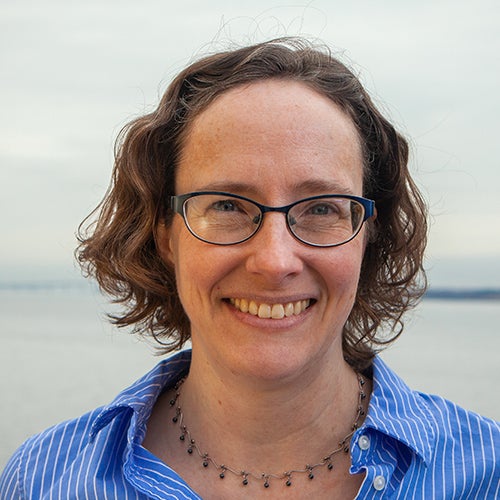
Katherine Kelley is a Professor of Oceanography at the University of Rhode Island Graduate School of Oceanography, where she directs the Micro-Analytical Geochemistry Lab and curates the Marine Geological Samples Laboratory. Her research focuses on geochemical exchanges at tectonic plate boundaries, particularly how volcanic activity reveals mantle composition and melting dynamics influenced by subducted oceanic crust and volatiles. PhD in Earth Sciences, Boston University (2004) BA in Geology, Macalester College (1997) Fulbright grant for volcanism studies in the Philippines (1997-98) Her work integrates high-temperature geochemistry, subduction zone dynamics, and volatile element cycling, with emphasis on iron oxidation states, water transport, and continental crust formation. She employs synchrotron XANES, LA-ICP-MS, and FTIR techniques to analyze volcanic glasses, minerals, and experimental samples. Recent publications highlight redox heterogeneity in mid-ocean ridge basalts (2013), mantle carbon inventory studies (2019), and Aleutian arc magma differentiation (2019). Her lab investigates tectonic-volcanic relationships through projects like the 2015 Aleutians expedition and ultra-deep arc crust drilling initiatives. 2019 NSF GeoPRISMS funding for Aleutian redox studies Deep Carbon Observatory (Sloan Foundation) support for mantle carbon research Kelley teaches courses including Subduction Zones and High-Temperature Geochemistry, and mentors graduate students in petrology and geochemical analysis. Lab alumni include PhD recipients Maryjo Brounce (2014) and Marion Lytle (2013), and MS graduates Zoe Gentes (2015) and Megan Lubetkin (2019).
Chris Yakymchuk is an Associate Professor in the Department of Earth and Environmental Sciences at the University of Waterloo. His research focuses on petrology, metamorphic geology, and crustal evolution, with fieldwork spanning Newfoundland, Tibet, and Greenland. Research Highlights: Zircon petrochronology, eclogite exhumation mechanisms, garnet deformation, and tectonic evolution of cratons and orogenic belts. Recent Publications: Explore topics such as TTG gneiss petrogenesis, high-pressure metamorphism, and calcium isotope applications in crustal processes. Collaborative Work: Involves geochronology, phase equilibrium modeling, and tectono-metamorphic studies across diverse regions.
Guochun Zhao (赵国春) is Chair Professor of Earth Sciences at The University of Hong Kong, internationally recognized for transformative work on Precambrian geology, supercontinent cycles and the tectonic evolution of the North China Craton. With an h-index exceeding 140 and more than 75 000 citations, he leads global efforts to decode Earth’s earliest crustal evolution. Research Interests Early Earth evolution and crustal formation Supercontinent assembly (Rodinia, Nuna, Gondwana) and breakup Metamorphic petrology and P-T-t paths of Precambrian terranes Tectonics of the North China Craton and East Asian blocks Planetary geology and comparative planetology His publications form the backbone of modern understanding of Neoarchean to Paleoproterozoic crustal processes, integrating field geology, metamorphic petrology, zircon geochronology and isotope geochemistry to illuminate the assembly and dispersal of continental fragments. Selected Publication Themes Zhao’s highly cited articles document the evolution of the North China Craton from Archean nucleii to 1.8 Ga final amalgamation, delineate lithotectonic provinces, and correlate Chinese crustal blocks with global Rodinia reconstructions. Recent work extends these insights to broader East Asian and planetary contexts. Scientific Awards & Recognition No specific awards are listed in the provided text; however, his citation metrics and international leadership roles imply significant peer recognition. Advising & Collaborations Zhao has mentored a large network of early-career researchers and collaborates extensively with teams at Ocean University of China, Chinese Academy of Sciences (Guangzhou, Beijing, Xi’an), Monash University, University of Glasgow, Peking University, Jilin University and many others. Co-author lists indicate active supervision of PhD students and post-doctoral researchers, although individual names are not enumerated in the text. Laboratory & Field Teams He heads a dynamic research group at HKU that integrates field mapping, high-precision geochronology (SHRIMP, LA-ICP-MS), metamorphic petrology and isotope geochemistry to tackle fundamental questions in Precambrian geodynamics.
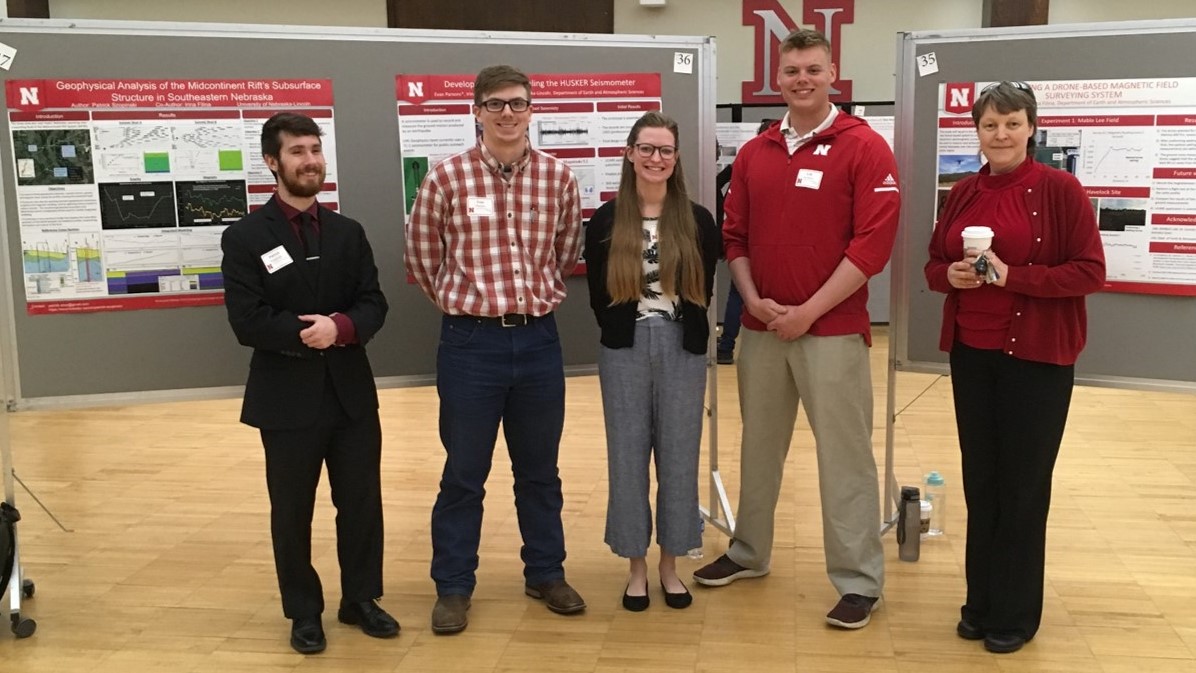
Irina Filina is an Associate Professor in the Department of Earth and Atmospheric Sciences at the University of Nebraska-Lincoln, leading the UNL Geophysics Research Group since 2016. She specializes in integrative geophysical analysis combining seismic, gravity, and magnetic data with geological constraints to study subsurface structures across diverse regions. Education: PhD in Geophysics (2007) from the University of Texas at Austin Industry Experience: 8 years in the petroleum sector before academia Research Interests span: Tectonic evolution of passive continental margins (Gulf of Mexico, Northern Atlantic, Tyrrhenian Sea) Cascadia subduction zone crustal heterogeneities and seismicity Intraplate seamounts in the central Atlantic Nebraska aquifer dynamics via microgravity and seismic surveys Her work leverages public domain datasets and field campaigns (e.g., IODP Expeditions 396/402) to resolve tectonic puzzles and inform environmental monitoring. Students in her group have won Best Student Awards at the Nebraska Academy of Sciences annually since 2017 and presented at AGU, GSA, and AAPG. She teaches Geophysics , Advanced Geophysics , and Exploration Geophysics , emphasizing hands-on learning through projects like Football-Induced Seismicity . Her outreach initiatives include summer camps and school collaborations using drone-based magnetic surveys and seismic demonstrations for K-12 engagement.
Professor ZHAO Ning is a faculty member at East China Normal University's School of Marine Sciences and State Key Laboratory of Estuarine and Coastal Research. He holds a PhD from the MIT-WHOI Joint Program in Oceanography (2017) and a BS from Nanjing University (2011). His prior positions include postdoctoral roles at the Max Planck Institute for Chemistry and Woods Hole Oceanographic Institution. His research encompasses: Paleo-ocean circulation dynamics Marine isotope geochemistry and sediment chronology Impacts of anthropogenic activity on ocean systems Deglacial climate transitions and ice sheet interactions Rifted margin evolution and oceanic crust formation Recent publications demonstrate a strong focus on reconstructing past ocean conditions using isotopic tracers, analyzing modern eutrophication impacts, and developing paleoclimate data standards. His work frequently appears in high-impact journals including Nature Communications and PNAS . Scientific Awards: Zi-jiang Outstanding Young Scholar (2020) Arctic Service Medal (2013) PAGES Travel Award (2018) National Scholarship of China (2008) Outstanding Graduate of Nanjing University (2011) He leads research at the State Key Laboratory of Estuarine and Coastal Research, focusing on coastal geochemical processes and climate interactions.
Dr Christopher Ottley serves as Chief Experimental Officer in Geochemistry and Health & Safety Co-ordinator within the Department of Earth Sciences at Durham University. With over 25 years of continuous service since 1995, he plays a critical technical and research support role in the department's analytical capabilities. His educational background includes a BSc (Hons) from The Polytechnic Wolverhampton (1986) and a PhD from Essex University (1991), followed by postdoctoral research at Imperial College London (1991-1992) and Lancaster University (1992-1995). Dr Ottley specializes in environmental analytical chemistry , with particular expertise in ICP-MS technologies for geochemical analysis. His research focuses on developing methodologies for trace element determination at low concentrations in geological materials, including rare earth elements (REE), platinum group elements (PGE), and other trace metals. His work spans diverse applications from geological provenance studies to medical research on platinum-based cancer therapies and environmental monitoring of volcanic ash and solar cell components. Analysis of his recent publications reveals a consistent focus on geochemical analysis techniques and their applications across multiple domains. His work demonstrates expertise in isotope geochemistry , trace element analysis , and analytical method development . Collaborative research spans archaeology, environmental science, medical applications, and economic geology, showcasing the interdisciplinary nature of modern geochemical research. Member of the Royal Society of Chemistry Chartered Chemist Dr Ottley supervises research students including Christina Koureta, providing guidance on analytical techniques and geochemical methodology. His technical expertise supports numerous research projects across the Department of Earth Sciences and with external collaborators at institutions including Newcastle University Cancer Research Group and Leicester University's Cancer Biomarkers and Prevention Group. As Chief Experimental Officer, he manages the geochemistry laboratory facilities and ensures health and safety compliance for analytical work. His role is central to the department's analytical capabilities, enabling high-quality research through advanced instrumentation and methodological expertise.
Harald Strauss is a Professor in the Faculty of Geosciences at the University of Münster, Germany, with over 235 publications and an h-index of 59. His research focuses on isotope geochemistry applied to marine sedimentary systems, hydrothermal environments, and early Earth processes. Current affiliations include active collaborations with research teams in Spain (Central Iberian Zone), South China Sea methane seep studies, and Oman Drilling Project investigations. Professor Strauss's research interests center on biogeochemical cycling, particularly sulfur and iron isotope systematics in modern and ancient environments. His work examines methane seep systems, hydrothermal vents, and Archean-Eoarchean geological records to understand Earth's evolution. Key methodologies include SIMS analysis of authigenic minerals, multi-isotope systematics, and experimental approaches to quantify environmental effects like sea spray on isotopic signatures. Analysis of his 15 most recent publications reveals consistent focus on isotope geochemistry applied to paleoenvironmental reconstruction, with strong emphasis on sulfur cycling in diverse settings from modern hydrothermal systems to ancient sedimentary records. His work bridges field observations, laboratory analysis, and experimental approaches to address fundamental questions in Earth system evolution. Scientific contributions include: Pioneering work on sulfur isotope patterns in ancient seep environments Insights into Eoarchean mantle processes through sulfur isotope evidence Quantification of sea spray effects on coastal isotope systems Development of pyrite trace element proxies for magmatic volatile influx Advancements in understanding hydrothermal sulfur cycling in arc/back-arc systems Professor Strauss maintains an active research program with regular fieldwork in diverse geological settings and supervision of collaborative projects. His laboratory group employs advanced geochemical techniques to investigate Earth's biogeochemical cycles across geological time, with particular strength in integrating multiple isotope systems for paleoenvironmental reconstruction. Current projects include studies of Ediacaran-Cambrian transition records and modern analog systems for early Earth processes.
Dr. Stephan Jorry is a prominent Researcher in Marine Geology and Sedimentology at the French Research Institute for the Exploitation of the Sea (Ifremer), where he leads the Carbonate Platforms and Sedimentation Research Group. With over 20 years of research experience, he has established himself as a leading expert in carbonate platform evolution, turbiditic sedimentation processes, and the impacts of climate change and sea level fluctuations on marine sedimentary systems, particularly in the Southwest Indian Ocean region. Dr. Jorry's research interests span multiple interconnected domains: the study of turbiditic sedimentation processes at millennial scales across diverse regions including the Var Canyon, La Reunion Island, East-Corsica basin, Caribbean, and Southwest Pacific and Indian Ocean basins; the responses of carbonate platforms to climate and sea level changes during the Quaternary; the Cenozoic evolution of carbonate platforms influenced by vertical movements, eustatism, and volcanism; and the groundbreaking research on the Mayotte seismo-volcanic crisis. His work uniquely integrates sedimentological analysis with tectonic, volcanic, and paleoclimatic contexts to understand complex marine systems. His publication record demonstrates consistent productivity with numerous high-impact articles in journals like Nature Geoscience, Geology, and Marine Geology. Recent work has focused extensively on the Mayotte volcanic crisis, documenting the formation of a major submarine volcanic edifice through lithosphere-scale dyke intrusion and analyzing its sedimentological impacts. His research combines field observations from numerous oceanographic expeditions with laboratory analyses to reconstruct paleoenvironmental conditions and understand modern processes. As an active participant in the international scientific community, Dr. Jorry has served as chief scientist or sedimentologist on over 20 oceanographic expeditions from 2005 to 2023, working aboard research vessels including the Marion Dufresne, Pourquoi Pas?, and L'Atalante. His leadership in these expeditions, particularly those studying the Mayotte crisis, demonstrates his standing as a field expert in marine geological investigations. He maintains extensive collaborations with researchers across France and internationally, contributing to major projects like ANR COYOTES that investigate volcanism and tectonics in the Comoros Archipelago. His laboratory work, accessible through the geo-ocean.fr platform, focuses on analyzing marine sediment cores to understand both modern processes and past environmental changes. This research provides critical insights into how carbonate platforms respond to changing environmental conditions, with implications for understanding past climate change and predicting future responses of marine systems to global warming.
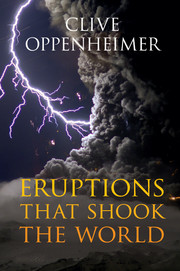
Clive Oppenheimer is a distinguished British volcanologist and Professor of Volcanology in the Department of Geography at the University of Cambridge. With a career spanning several decades, Professor Oppenheimer has established himself as a leading expert in volcanic processes, remote sensing of volcanic activity, and the historical impacts of major eruptions on climate and human societies. His academic journey began with a Bachelor of Arts in Natural Sciences Tripos from the University of Cambridge in 1986, followed by a PhD from the Open University where his thesis investigated the use of remote sensing in volcanology under the supervision of Peter Francis and David Rothery. Professor Oppenheimer's research encompasses a wide range of volcanic phenomena: Volcanic gas emissions and degassing processes, particularly SO 2 , H 2 S, and CO 2 Remote sensing techniques for monitoring volcanic activity Climate impacts of historical and prehistorical volcanic eruptions Analysis of major volcanic events such as Tambora (1815), Samalas (1257), and Toba (~74,000 years ago) Volcanic hazard assessment and risk management Interdisciplinary connections between geology, archaeology, and history His scholarly output is extensive, with numerous high-impact publications that demonstrate consistent research activity through 2023. Professor Oppenheimer's work shows particular strength in interdisciplinary research, connecting geological science with historical, archaeological, and climate science perspectives. Among his most significant contributions is the book "Eruptions that Shook the World" (2011), which explores how major volcanic events throughout Earth's history have influenced climate patterns, ecosystems, and human civilizations. This work has been widely praised for its integration of scientific rigor with historical narrative. Professor Oppenheimer maintains active research collaborations across multiple institutions including the University of East Anglia, Open University, Karnatak University, University of Oxford, and University of Orléans, reflecting the international recognition of his expertise in volcanology.