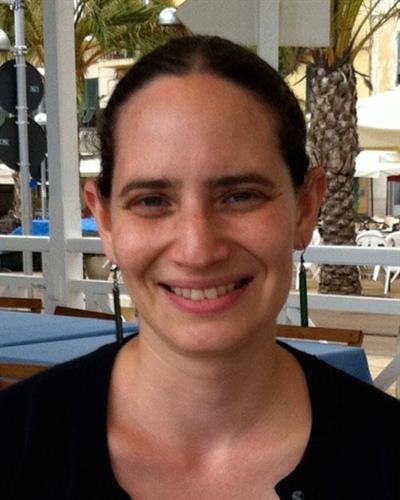
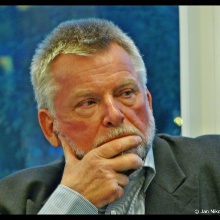
Monika Gabryś-Sławińska is a Professor at the Department of Polish Literary History , part of the Faculty of Languages, Literatures and Cultures at the University of Maria Curie-Skłodowska (UMCS). Her research spans 19th- and 20th-century Polish literature , focusing on Stefan Żeromski , historical journalism , text editing , voice emission , and museology . MA in Polish Philology (1998, UMCS) PhD in Literary Studies (2007, UMCS) Habilitation in Literary Studies (2016, UMCS) Her research interests include political commentary in historical press , media's role in cultural identity , and sociolinguistic trends . She has edited over 29 academic volumes and authored 5 monographs. Scientific awards: Bronze Cross of Merit KEN Medals (Bronze, Silver) 8 Rector's Awards (UMCS) Lublin Mayor's Medal (2019) She has participated in 5 research grants , organized 35 academic conferences , and contributed extensively to Annales UMCS as a scientific editor.
Arvind Karunakaran is an Assistant Professor at Stanford University in the Department of Management Science and Engineering. He holds affiliations with the Center for Work, Technology, and Organization (WTO) , Stanford Technology Ventures Program (STVP) , Stanford Institute for Human-centered Artificial Intelligence (HAI) , and the Digital Economy Lab (DEL) . His research focuses on authority and accountability in the workplace , particularly under technological change and human-AI augmentation. Education: Ph.D. from MIT Sloan School of Management (2018) His work employs ethnographic and field-based methods to study empirical puzzles in workplace dynamics, complemented by comparative-historical analysis and quantitative/textual data analysis . Key research areas include social/algorithmic evaluation of workers , human-AI reskilling , and conflicts in symmetrical relations . Recent publications analyze AI's impact on workplace inequality , platform governance , and crowd-based accountability . His findings are published in top journals like Administrative Science Quarterly and Organization Science . Scientific Awards & Recognitions: Best Published Paper Award (ASA, 2025) Gerard J. Tellis Best Junior Faculty Paper Award (AIM Conference, 2025) W. Richard Scott Article Award (ASA, 2024) Responsible Research in Management Award (RRBM, 2024) Future of Organizations Fellowship (2024) Professor Karunakaran advises doctoral and master's students in areas related to technology and organizations , and teaches courses on organizational behavior , organizational theory , and innovation management .
Dr. Louise Alexander is an Associate Professor in Mental Health Nursing at Deakin University's School of Nursing & Midwifery (Faculty of Health). She holds prior academic roles including Senior Lecturer (ACU, 2018–2023) and Lecturer positions (ACU and Holmesglen Institute). Her research focuses on mental health nursing workforce sustainability, stigma reduction, simulation-based education, and curriculum development. Key interests include nurse resilience, pandemic impacts on healthcare workers, and improving student attitudes towards mental illness. Education: PhD from Deakin University; GCHE qualification Certifications: University of Melbourne's Emerging Leaders & Management Program (2021–2022) Teaching: Leads courses in forensic mental health, therapeutic communication, and health promotion Research Highlights: Recent work examines pandemic trauma among nurses, alcohol consumption trends post-COVID, and leadership's role in workforce retention. Her studies emphasize qualitative methods and integrative reviews to address systemic challenges in mental health nursing education and practice. Awards/Grants: No explicit awards listed; research supported by institutional collaborations. Active in developing transition-to-practice programs and evaluating simulation-based training efficacy. Labs/Teams: Collaborates with interdisciplinary teams on mental health workforce resilience and stigma reduction initiatives. Engages in national and international nursing education networks.
Xiaoyue Shan is an Assistant Professor of Economics at the National University of Singapore (NUS), located at 1 Arts Link, AS2 #05-36. She holds a Ph.D. in Economics from the University of Zurich (2021) and previously conducted postdoctoral research at the Wharton School of the University of Pennsylvania. Her research focuses on labor economics, behavioral/experimental economics, and gender economics, employing experimental and quasi-experimental methods to study topics like gender disparities, discrimination, social interactions, and skill development. Her work explores how peer groups influence personality traits (e.g., conscientiousness, competitiveness), discrimination mechanisms in labor markets, and the impact of policies on gender dynamics. Notable studies include examining sequential spillover effects in resume evaluations and analyzing pension systems' effects on child investment in China. Teaching interests align with her research, emphasizing behavioral and experimental economics. She is reachable at x.shan@nus.edu.sg .
Nick Kapur is an Associate Professor in the Department of History at Rutgers University–Camden, within the School of Arts and Sciences. He specializes in modern Japan and East Asia, with a focus on transnational perspectives, US-Japan relations, environmental history, gender, and cultural studies including literature and film. His educational background includes a Ph.D. from Harvard University (2011), an M.A. from Stanford University (2003), and a B.A. from Stanford University (2002). Kapur's research examines the intersections of political economy, culture, and international relations in modern Japan, particularly in the postwar era. His acclaimed book, Japan at the Crossroads: Conflict and Compromise after Anpo (2018), analyzes the 1960 protests and their lasting impact on Japanese society and US-Japan relations. He has also published extensively on the Japanese student movement, environmental policy, and Meiji centennial celebrations. His recent and forthcoming articles reflect a sustained engagement with Cold War Japan, dissent, nationalism, and transnational history. Kapur is known for innovative teaching methods, including historical simulations on Pearl Harbor and samurai-era Japan. He is the founder of the Modern Japan History Association and has contributed significantly to digital humanities through projects like the Digital Archive of Japan’s 2011 Disasters and the development of educational apps. His publications from the past decade show a consistent focus on political protest, cultural memory, and international relations in 20th-century Japan. His scholarly contributions include numerous peer-reviewed articles, book chapters, translations, and book reviews in leading journals such as Diplomatic History , The Journal of Asian Studies , and The Asia-Pacific Journal . Kapur advises graduate students and teaches courses on Japanese, Chinese, and Korean history, World War II, and environmental history. He has played a leadership role in promoting Japanese studies globally and continues to be an active researcher with works forthcoming in 2025. His current projects include digital applications for historical education.
Sam Friedman is an Assistant Professor in the Department of Sociology at the London School of Economics and Political Science (LSE). His research focuses on social mobility, social class, elites, and cultural distinction. He co-authored the influential book Born to Rule , examining the transformation of the British elite over 120 years using biographical data and interviews. Friedman also explores the 'class ceiling' in professional and managerial occupations, revealing persistent class-based pay disparities. His work bridges sociology with cultural analysis, addressing how elites construct their identities and legitimize their status through 'ordinary' narratives. He directs the MSc in Inequalities and Social Science at LSE and teaches courses on class, culture, and meritocracy. Friedman has been recognized with prestigious awards, including the 2018 European Academy of Sociology Best Article Award and the 2016 ASA Inequality, Poverty and Mobility Section Best Article Award. Notable contributions include analyzing the role of private schools in elite recruitment, the gendered experiences of upward mobility, and the impact of inherited wealth ('the bank of mum and dad'). His interdisciplinary approach combines historical analysis, statistical data, and ethnographic insights to understand systemic social inequalities.
Rachel Applebaum is Associate Professor of History at Tufts University specializing in Soviet and Eastern European history, the global Cold War, and transnational studies. Her award-winning book 'Empire of Friends' examines Soviet-Czechoslovak relations through the lens of socialist internationalism. Current research investigates Russian language politics during and after the Cold War, tracing Soviet efforts to establish Russian as a global language and its legacy in Putin's 'Russian World' concept. The project has received a National Endowment for the Humanities Fellowship. Teaching covers Russian history surveys, Eastern Europe, global communism, Stalinism, and Cold War politics. Awards include the Radomír Luža Prize for Austrian/Czechoslovak history and ASEEES First Book Subvention Award.
Professor Stephen Chan is a faculty member at SOAS University of London in the Department of Politics and International Studies (POL) . With a focus on African political thought and international relations, his work critically examines postcolonialism, decoloniality, and global governance. Key research themes include: Decolonizing international relations theory Sino-African political dynamics Election observation and democratic processes Non-Western cosmopolitanism Comparative diplomatic practices His recent publications analyze the ideological ambiguity of decoloniality (2023), pluralist visions for global security (2017), and the legacy of African liberation movements (2021). He has advised multiple theses on topics ranging from parliamentary governance in Kenya/Zimbabwe to China-Africa media interactions. Notably: Critiqued the misuse of 'decoloniality' as ideological rhetoric (2023) Authored a poetic autobiography of political engagement (2022) Traced Africa's intellectual history of freedom (2021) Examined Zimbabwean elections (2017) Explored non-Western modernity (2018)
Gayle Letherby is a Visiting Professor of Sociology at the University of Plymouth’s Peninsula Medical School (Faculty of Health), and holds visiting roles at the University of Greenwich and the University of Bath’s Centre for Death and Society (CDAS). She is an Academician of the Academy of Social Sciences (since 2007) and recipient of the 2023 Lifetime Contribution to Autoethnography Award. Her research focuses on feminist methodology, health sociology, grief and bereavement, mobility studies, and criminology. She has supervised over 20 doctoral students across multiple universities, including topics like non-motherhood, occupational therapy, and gang culture in African Caribbean communities. Her teaching spans undergraduate and postgraduate levels, covering crime theory, auto/biographical research, and feminist epistemology. Notable collaborations include participatory studies on homeless individuals’ food experiences and ethnographic explorations of medical decision-making. Her interdisciplinary work bridges sociology, criminology, and health studies, with a strong emphasis on autoethnographic and creative methodologies. Recent research explores themes like grief narratives, gendered travel experiences, and the emotional dimensions of doctoral journeys. She has contributed to policy discussions on family-centred care and has been a guest lecturer globally, including at York University (Canada) and University College Cork (Ireland). Awards: Academy of Social Sciences Academician (2007), Lifetime Contribution to Autoethnography (2023) Teaching Expertise: Feminist research methods, criminology, sociology of health, gender studies Key Research Areas: Auto/biography, non-motherhood, medical sociology, mobility, grief studies
Gerhard Hirschfeld is an Honorary Professor at the Department of History, University of Stuttgart, and has served as Director of the Bibliothek für Zeitgeschichte since 1989. His research focuses on Social and Cultural History of World War I , Comparative Occupation History of World War II , 20th Century Netherlands History , and Academic Emigration post-1933 . He has been a Fellow of the Netherlands Institute of Advanced Studies in the Humanities and Social Sciences (1996/1997, 2006/2007) Fellow of the German Historical Institute London and held leadership roles including Chair of the German Committee for the History of WWII (1991–2000) and President of the International Committee for the History of WWII (2000–2010). His publications span monographs, edited volumes, and essays on occupation policies, collaboration, and exile studies. Recent works emphasize the media representation of WWI , continuity of nationalist rhetoric , and ethical dimensions of historical taboos . He contributes to journals like Zeithistorische Forschungen and Tijdschrift voor Geschiedenis . Scientific awards include Fellowships at NIAS and DHIL Editorial leadership in academic series like Zeit der Weltkriege and Schriften der Bibliothek für Zeitgeschichte and advocacy for interdisciplinary war studies.
Akanksha Mehta is a Lecturer in Gender, Race and Cultural Studies at Goldsmiths, University of London , where she co-directs the Centre for Feminist Research. She joined Goldsmiths in September 2018 after lecturing at the School of Global Studies, University of Sussex (2016-2018). Research Focus: Intersections of gender, sexuality, race, and everyday politics/violence; affective and material structures in nationalist movements; decolonial pedagogies. Key Projects: Co-founded the 'Mind the BAME Gap' initiative at Sussex; ongoing book project on right-wing women's mobilizations. Recognition: Recipient of the EISA Best Dissertation Award (2018) and Rachel Tanur Memorial Prize (2016). Publication Trends: Her work spans feminist critiques of Hindutva, queer rights in post-377 India, ethnographic analyses of right-wing women, and decolonial pedagogical frameworks. Recent outputs engage with racial justice in universities, affect theory, and visual sociology. Scientific Awards: Best Dissertation Award, EISA (2018) Rachel Tanur Memorial Prize, ISA (2016) Collaborative Work: Engages with decolonial visual practices, collective complaint mechanisms in academia, and intergenerational feminist dialogues through the podcast 'The F Less Travelled'.
Jun Uchida is the Asian Cultures and Society Professor and Professor of History at Stanford University, holding dual appointments in the Department of History and the Center for East Asian Studies. His research focuses on modern East Asian history, Japanese colonialism, migration, and diaspora. He has served as Director of the Center for East Asian Studies (2016-2019) and currently leads the Asian Cultures and Society program. Uchida holds a Ph.D. from Harvard University and has held fellowships at institutions including the Weatherhead Center for International Studies and the Social Science Research Council. His current book project traces the transpacific diasporic activities of Ōmi merchants from Shiga Prefecture, examining their roles in Japan’s imperial expansion. Key research areas include Japanese settler colonialism, colonial Korea, and transnational migration patterns. Uchida has authored influential works like Brokers of Empire (2011), which won the John K. Fairbank Prize, and has contributed to journals such as the Journal of Japanese Studies and Past & Present . Education: Ph.D. in History, Harvard University (2001) M.A. in History, University of California, Berkeley (1996) B.A. in History, Cornell University (1995) Uchida’s teaching spans modern Japanese history, colonial studies, and transpacific themes. He advises doctoral candidates and chairs graduate admissions committees. His awards include the NEH Fellowship (2019-2020) and the Stanford Pattee Fellowship (2013-2014). He maintains active roles in professional organizations such as the American Historical Association and the Association for Asian Studies.
Hazel Rose Markus is the Davis-Brack Professor in the Behavioral Sciences at Stanford University's Department of Psychology within the School of Humanities and Sciences. With a distinguished career spanning decades, she has made significant contributions to cultural psychology and the understanding of how social contexts shape self and behavior. Her work bridges academic research and practical application through her role as Faculty Director of Stanford SPARQ. Markus received her B.A. from California State University at San Diego and her Ph.D. from the University of Michigan in Psychology. Her educational background laid the foundation for her groundbreaking work in cultural psychology. Her research focuses on the role of self in regulating behavior and how the social world shapes the self. She investigates people as culturally-shaped shapers of their cultures, examining how nation or region of origin, gender, social class, race, ethnicity, religion, and occupation shape thought, feeling, and action. Her work spans multiple domains including education, healthcare, workplace environments, and social policy. Analysis of her recent publications reveals a consistent focus on cultural frameworks, particularly examining independence-interdependence cultural models. Her research increasingly addresses social inequality, educational disparities, and systemic bias through empirical studies and intervention development. She has pioneered the Culture Cycle Framework for understanding and changing cultural patterns that perpetuate inequality. Member of the National Academy of Sciences Member of the British Academy Fellow of the American Academy of Arts and Sciences American Psychological Association's Distinguished Scientific Contribution Award Donald T. Campbell Award from SPSP APS William James Award for lifetime achievement Markus actively mentors doctoral students and postdoctoral scholars, with current advisees including Leslie Remache, Enna Chen, Ayo Dada, and Efrain Garcia Sanchez. She teaches courses including Graduate Seminar in Social Psychology Research, Intergroup Communication Facilitation, and Mind, Culture, and Society. As Faculty Director of Stanford SPARQ, she leads initiatives that partner with industry leaders to tackle disparities and inspire culture change in criminal justice, economic mobility, education, and health. Her laboratory work focuses on cultural psychology, examining how cultural contexts shape cognition, emotion, and behavior across diverse populations. Through SPARQ, she connects academic research with real-world applications to address societal challenges.
Hannes Zacher is a Professor of Work and Organizational Psychology at Leipzig University's Wilhelm Wundt Institute of Psychology. He previously held academic positions at Queensland University of Technology (Australia) and the University of Groningen (Netherlands). His research focuses on occupational health, proactive employee behavior, aging in the workplace, and sustainable organizational practices. He has been awarded grants from institutions like the German Science Foundation (DFG) and the Volkswagen Foundation. Zacher earned his Ph.D. in Psychology from Justus-Liebig-University Gießen in 2009, following a Diploma (equivalent to B.Sc./M.Sc.) in Psychology from the Technical University of Braunschweig (2000–2006). His research interests include occupational health and well-being, proactive and adaptive employee behavior, aging at work and career development, and environmentally sustainable behavior in organizations. He employs methodologies such as longitudinal surveys, experience sampling, and experiments. Key themes in his work address the interplay between work environments and employee well-being, with a focus on fostering sustainable practices and mitigating age-related challenges in the workplace. Zacher leads projects such as the Centre for Digital Work and studies like 'The Role of Work in the Development of Civilization Diseases.' His publications span topics from green workplace behavior to leadership dynamics during crises. He has no listed scientific awards but has secured significant grant funding for his research. Advising and grant details reflect his commitment to impactful research, though specific student names are not provided. His lab and team efforts emphasize translating psychological insights into organizational practices for sustainability and employee well-being.
Jan O. Jonsson is a Professor of Sociology at Nuffield College, University of Oxford. His primary research focuses on social stratification, including educational inequality, class structure, and social mobility. He also studies ethnic stratification, particularly through his role as Principal Investigator (PI) for Sweden in the comparative CILS4EU project on minority schoolchildren integration. Jonsson oversees the Swedish Level-of-Living Survey (LNU), shaping his interest in welfare distribution analysis. His work bridges macro-level social structures with micro-level individual experiences, emphasizing intergenerational processes and immigrant integration. Research interests prominently feature studies on educational attainment disparities, immigrant integration dynamics in Sweden and Europe, and the social consequences of economic hardship. His recent work explores occupational aspirations among immigrant youth, mental health advantages of immigrant backgrounds, and policy impacts on child poverty during economic crises. As PI for CILS4EU, Jonsson leads a multinational study investigating educational and social integration trajectories of second-generation immigrants across Europe. His contributions include analyzing Sweden’s ‘middle way’ between social mobility and inequality patterns, and evaluating educational expansion strategies’ equity impacts. He has authored numerous articles on poverty measurement, family influences on mobility, and the role of education in socioeconomic reproduction. Key projects include the Level-of-Living Survey (LNU), which tracks welfare metrics, and comparative studies on social mobility across nations. His work frequently engages with policy implications of structural inequities, offering evidence-based insights for educational and social policies.