Dr. Annemieke Apergis-Schoute is a Lecturer in Psychology (Teaching and Research) at Queen Mary University of London, affiliated with the School of Biological and Behavioural Sciences and the Centre for Brain and Behaviour. Her research focuses on obsessive-compulsive disorder (OCD), cognitive flexibility, prefrontal mechanisms, and student mental health. She holds a PhD from New York University, where her early work explored threat learning in rats and humans using fMRI. Subsequent roles at the University of Cambridge and UCL expanded her expertise into clinical OCD studies, including deep brain stimulation trials. Her research investigates how prefrontal control deficits and inflexible learning contribute to OCD and related disorders, with a focus on adolescents and young adults. Collaborations include pioneering DBS studies targeting basal ganglia regions to reduce compulsive behaviors. She also explores connections between brain function, interoception, and mental health in daily decision-making contexts. Key publications analyze reversal learning deficits in OCD under serotonergic modulation, neuroimaging markers of cognitive rigidity, and developmental trajectories of compulsivity. Her work bridges basic neuroscience with translational clinical interventions, emphasizing early intervention strategies and cognitive-behavioral approaches.
Kiara R. Timpano is a Professor in the Department of Psychology at the University of Miami and Director of the Program for Anxiety, Stress, and OCD (PASO). She holds a PhD from Florida State University and completed postdoctoral training at Massachusetts General Hospital/Harvard Medical School. Her research focuses on cognitive and psychosocial risk factors for anxiety, OCD, and hoarding disorders, with a particular interest in transdiagnostic mechanisms. Key areas include intolerance of uncertainty, emotion dysregulation, and behavioral interventions. Timpano leads the PASO lab, collaborating with institutions like McLean Hospital, UC Berkeley, and Karolinska Institutet. She supervises graduate students (e.g., Hannah Broos, Amelia Dev) and undergraduates, mentoring over 20 trainees. Her work integrates clinical research with community health initiatives, such as pandemic behavioral studies and climate change engagement projects. She serves on the Scientific and Clinical Advisory Board of the International OCD Foundation. Timpano's research spans neuroimaging (e.g., fMRI studies of repetitive negative thinking), translational therapy development (e.g., mindfulness-integrated CBT), and public health interventions. Her 2025 study in Children journal examines transdiagnostic treatments for youth OCD/anxiety comorbidity, while 2024 Cerebral Cortex work links PTSD symptoms to neural connectivity. Collaborations emphasize global mental health challenges and evidence-based practices.
Rui M. Costa is a Professor of Neuroscience at Columbia University, with appointments in Neurology and the Mortimer B. Zuckerman Mind Brain Behavior Institute. His research focuses on understanding how molecular networks in the brain influence neural circuits to shape behaviors, particularly in action control and disorders like Autism Spectrum Disorders and Obsessive-Compulsive Disorder. Primary Affiliation: Columbia University Departments: Neuroscience, Neurology Institute: Mortimer B. Zuckerman Mind Brain Behavior Institute Research Interests Molecular and neural circuit mechanisms of action control Goal-directed actions vs. habits Behavioral disorders: Autism and OCD Neural plasticity in motor learning Publication Trends His recent work explores corticostriatal dynamics, basal ganglia pathways, and endocannabinoid modulation in habit formation. Studies also investigate Foxp2 mutations, motor learning consolidation, and two-photon imaging of neural activity in rodents.
John O'Doherty is the Fletcher Jones Professor of Decision Neuroscience at the California Institute of Technology (Caltech). He holds a B.A. from Trinity College Dublin (1996) and a D.Phil. from the University of Oxford (2000). His academic trajectory includes roles as Assistant Professor (2004–2007), Associate Professor (2007–2009), and Professor (2009–present), culminating in his current endowed chair since 2021. From 2013–2017, he served as Director of the Caltech Brain Imaging Center. Research Focus: O'Doherty’s work investigates how the brain processes decisions under uncertainty, encodes reward values, and learns from experience. His group studies neural systems involved in decision-making, including arbitration between model-based and model-free learning strategies, the role of prefrontal and striatal circuits in value representation, and social learning mechanisms. They utilize computational modeling combined with neuroimaging (fMRI) and electrophysiological techniques. Key Contributions: His research bridges cognitive neuroscience and psychiatry, addressing topics like gambling disorder, autism spectrum traits, anorexia nervosa, and obsessive-compulsive behaviors. He has pioneered studies on the neural substrates of reward prediction errors, hierarchical decision-making, and the interplay between habitual and goal-directed actions. Affiliations: Caltech Brain Imaging Center (Former Director) Leading international collaborations in neuroeconomics and computational psychiatry Grants & Funding: Extensive support from NIH, NSF, and private foundations for projects on decision neuroscience and translational mental health research.
Jonathan Britt is an Associate Professor in the Department of Psychology at McGill University, affiliated with the Faculty of Science. He leads the Britt Lab, focusing on neural circuitry underlying motivated behaviors, particularly in the context of addiction and neuropsychiatric disorders. His work combines optogenetics, electrophysiology, and behavioral tasks to study the basal ganglia's role in reinforcement learning and compulsive behavior. Research interests include the neural mechanisms of drug addiction, Tourette’s Syndrome, and obsessive-compulsive disorder, with a focus on dopamine pathways and synaptic modifications. Key methodologies involve all-optical approaches and optogenetic interrogation of neural circuits. His recent studies highlight topics like alcohol palatability, serotonergic regulation of attention, and LSD’s effects on social behavior. Articles often explore the nucleus accumbens and hippocampal interactions in reward processing. No scientific awards are explicitly listed, though his contributions to addiction neuroscience are notable. He advises no listed students and has no mentioned grants in the provided text. The Britt Lab serves as a central hub for his research activities.
Elisa Krackow is an Associate Professor in the Department of Psychology at West Virginia University, where she directs the Memory and the Law Lab. Her research integrates clinical, developmental, cognitive, and forensic psychology to study eyewitness memory, suggestibility, false memories, and juror perceptions, with a focus on children and legal applications. Dr. Krackow earned her Ph.D. from Binghamton University, State University of New York. She completed a predoctoral internship at the University of Illinois at Chicago and a postdoctoral fellowship at the University of Illinois at Urbana-Champaign. Her research interests lie at the intersection of memory and the legal system, particularly in how children recall events, the impact of suggestive questioning, and the development of interventions like Event Report Training to improve eyewitness accuracy. She also investigates the cognitive mechanisms behind false and recovered memories, the role of emotion in memory, and childhood depression with a focus on cognitive biases and intergenerational transmission. Her work has important implications for forensic interviewing, child protection, and legal policy. The 15 most recent publications reflect a consistent focus on applied memory, child eyewitness testimony, false memory creation, and interventions. The research spans cognitive, clinical, developmental, and forensic domains, often using experimental and narrative methods to explore memory accuracy, suggestibility, and emotional influences. Dr. Krackow's research has been supported by funding from NIH/NICHD, the Society for the Psychological Study of Social Issues (SPSSI), and the American Psychology-Law Society (AP-LS). She mentors graduate students in the Clinical Child doctoral program, including Benjamin Thomas, Victoria DiSciullo, and Emily Deming, who are engaged in research on juror perceptions, juvenile justice, child memory, and traumatic recall. Her lab provides training in high-quality research design across multiple psychological subfields. She teaches courses such as Child and Adolescent Development, Behavior Pathology, Behavioral and Psychological Assessment, and Clinical Child Psychology Practicum. Her lab, the Memory and the Law Lab, focuses on applied research with real-world implications for psychology, law, and child welfare.
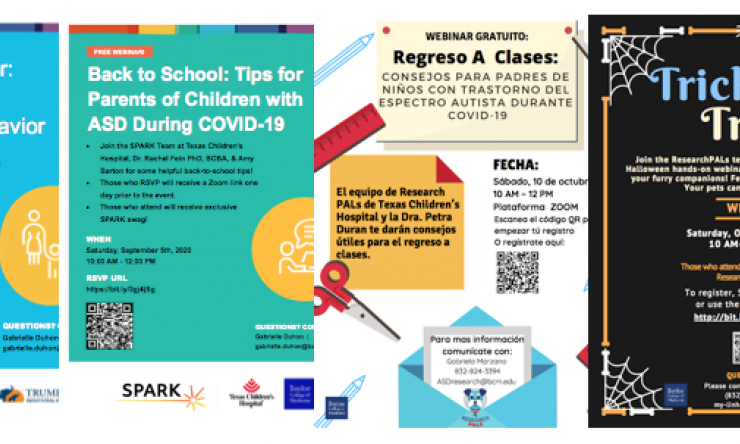
Dr. Robin Kochel is an Associate Professor at the Baylor College of Medicine , Department of Pediatrics. She leads the Kochel Lab for Clinical Autism Research , focusing on autism spectrum disorder (ASD), developmental regression, genotype-phenotype relationships, and vaccine hesitancy. Her work bridges clinical research and community engagement through collaborations with Texas Children's Hospital and SPARK for Autism. NIH Grants : R03HD080998 (Paternal Brain Responses to Infant Cues) and R03HD072102 (Carnitine Deficiency and ASD Regression) Dr. Kochel investigates parental perceptions of autism etiology, particularly vaccine-related concerns, and their impact on healthcare decisions. Her research spans genetic testing in ASD, teletherapy for anxiety management, and diversity in research recruitment . She also explores 16p11.2 chromosomal rearrangements and their links to language, cognition, and neuropsychiatric outcomes. Recent publications highlight her focus on CBT interventions for autistic youth, genetic subtypes , and cross-cultural vaccine hesitancy . Collaborators include institutions like the Simons VIP Consortium and We Rock the Spectrum . Dr. Kochel prioritizes translating findings into community resources for families and advocates for evidence-based recruitment in autism studies.
Dr Neil Bailey is a Senior Research Fellow at the Australian National University's School of Medicine and Psychology, leading innovative research at the intersection of neuroscience, psychology, and mental health. His work focuses on understanding how mental health can be improved through various interventions, particularly mindfulness practices and brain stimulation techniques. Dr Bailey's research interests include: Investigating how mindfulness meditation affects brain activity, cognition, and mental health outcomes Developing novel treatments for depression, obsessive-compulsive disorder, and schizophrenia Applying non-invasive brain stimulation techniques like rTMS and tACS for mental health conditions Using machine learning and EEG to predict treatment responses for depression Exploring psychedelic-assisted psychotherapy for mental health conditions His recent publications reveal a strong focus on EEG-based research, particularly examining neural connectivity patterns, developing advanced data processing pipelines like RELAX, and investigating the neural mechanisms underlying mindfulness meditation. Dr Bailey's work consistently bridges theoretical neuroscience with practical clinical applications, aiming to enhance treatment efficacy for various mental health conditions. Dr Bailey leads multiple research projects including ASSESS (studying psychedelic medicines), EMPACT (evaluating psychedelic-assisted psychotherapy for depression), and several TACS-related projects for depression and OCD treatment. He also serves as Head of Data Science at the Monarch Mental Health Group, applying his expertise in data analysis to real-world mental health challenges.
Prof. Dr. Funda Gümüştaş, İstanbul Okan Üniversitesi Hastanesi Çocuk ve Ergen Psikiyatri Bölümü 'nde görev yapmaktadır. Eski görev yeri Medeniyet Üniversitesi Tıp Fakültesi Çocuk ve Ergen Psikiyatrisi olup, daha önce Kocaeli Üniversitesi Tıp Fakültesi mezunudur. Eğitim: Kadir Has Lisesi (1996-1999) Kocaeli Üniversitesi Tıp Fakültesi (1999-2005) Marmara Üniversitesi Çocuk ve Ergen Psikiyatrisi (2006-2011) Araştırma Alanları: Çocuk ve Ergen Psikiyatrisi, Dikkat Eksikliği Hiperaktivite Bozukluğu (ADHD), Otizm Spektrum Bozuklukları, Öğrenme Bozuklukları, Yıkıcı Davranış Bozuklukları, Tik Bozuklukları, Obsesif Kompulsif Bozukluk, Konuşma Bozuklukları, Kaygı Bozuklukları, Depresyon, Duygu Durum Bozuklukları, Psikotik Bozukluklar, Travma Sonrası Stres Bozukluğu, Uyku Bozuklukları, Bilişsel Davranışçı Terapi, EMDR Terapisi. Makale ve Sunumlar: Uluslararası ve ulusal dergilerde ADHD, Otizm, Travma, EMDR, Aile Dinamikleri ve Teknoloji Bağımlılığı gibi konulara odaklanan yayınlar bulunmaktadır. 2018 yılında Doçent Doktor unvanını almıştır. Eğitim ve Deneyim: Türkiye Halk Sağlığı Kurumu Otizm Eylem Planı, Anna Freud Center Mentalization-Based Treatment, Psikonet Şema Terapisi, ve devam eden Sistemik Aile Terapisi gibi programlara katılmıştır. Adıyaman Üniversitesi , Trabzon Kanuni Eğitim Araştırma Hastanesi , Tekirdağ Devlet Hastanesi , Marmara Üniversitesi Eğitim Araştırma Hastanesi gibi kurumlarda uzman doktor olarak çalışmıştır.
Andreas Christian Rosén Rasmussen is a Clinical Associate Professor in the Department of Clinical Medicine at the University of Copenhagen, specializing in Psychiatry. His work bridges clinical practice and academic research with a focus on understanding complex relationships between psychiatric conditions, particularly schizophrenia spectrum disorders and obsessive-compulsive phenomena. Dr. Rasmussen's research interests span multiple critical areas of psychiatric investigation: Schizophrenia spectrum disorders and their phenomenological characteristics Self-disorders and disturbances in basic self-experience Obsessive-compulsive symptoms within psychotic disorders Neurophenomenological approaches to psychosis Pseudoneurotic symptoms in schizophrenia spectrum disorders Theoretical frameworks for psychiatric comorbidity His recent publications demonstrate a consistent focus on the intersection of phenomenology and clinical psychiatry, examining how anomalies of imagination and self-experience relate to psychotic disorders. Dr. Rasmussen employs both qualitative phenomenological methods and quantitative network analysis in his research, contributing to theoretical understanding and clinical applications. His work has gained significant attention, with publications referenced in Wikipedia pages, covered by news outlets, and widely shared across social media platforms including X and Bluesky. His collaborative research network spans multiple countries and institutions, reflecting the international nature of contemporary psychiatric research.
Allison Jane Ouimet is an Associate Professor in the Department of Psychology within the Faculty of Arts and Science at Concordia University. Her research focuses on cognitive mechanisms underlying anxiety disorders and the application of cognitive-behavioral therapy (CBT) to improve treatment outcomes. Education: Ph.D. in Clinical Psychology, Concordia University (2014) M.Sc. in Clinical Psychology, The University of Western Ontario (2007) B.A. (Honours) in Psychology, Concordia University (2004) Her research interests lie at the intersection of cognition and psychopathology, particularly examining attentional bias, dual-systems models of cognition (automatic vs. controlled processing), and emotion regulation in anxiety. She investigates how cognitive biases contribute to the development and maintenance of anxiety disorders and how such insights can refine therapeutic interventions like CBT. The most recent publications reflect a consistent focus on anxiety, emotion regulation, cognitive models, and sexual health. Her work integrates theoretical frameworks such as the Reflective-Impulsive Model with clinical practice, while also exploring applications in youth mental health, phobias, and trichotillomania. There is a strong emphasis on both implicit and explicit cognitive processes across diverse populations. While no scientific awards are listed in the provided text, her publication record in peer-reviewed journals and academic books indicates active scholarly engagement. Allison Ouimet has contributed to research mentoring through co-authorship with junior researchers (denoted by asterisks), suggesting involvement in student supervision, though formal advisees are not explicitly listed. Her work appears to be supported by academic research structures, though specific grants are not mentioned. She has contributed to edited volumes on anxiety and phobias, indicating recognition in her field. She is actively involved in research related to mental health, cognition, and behavior, with thematic clusters in anxiety disorders, emotion regulation, cognitive biases, and sexual health across developmental stages.
Eric Storch is a faculty researcher at Baylor College of Medicine's School of Medicine within the Department of Psychiatry . His research focuses on Obsessive Compulsive Disorder (OCD) , Anxiety Disorders , and Cognitive Behavioral Therapy (CBT) for pediatric populations. He leads the Eric Storch Lab , which develops innovative treatments integrating academic research and technology. Research Interests : OCD, anxiety, transdiagnostic approaches, CBT adaptation, and mental health outcomes in children and adolescents. Current Studies : LATINO Study (Latin American Trans-ancestry Initiative for OCD Genomics) explores genetic factors in Hispanic/Latino OCD populations. POWER Study examines CBT's role in discontinuing OCD medications for youth. ACES Study analyzes emotional communication in adolescents across mental health conditions. Grants : Funded by the National Institute of Mental Health (NIMH) for the LATINO Study (U01MH125050, U01MH125062) and prior NIMH grants (R01 MH093381, R01 MH093402).
Professor Andrew Thompson is Professor of Clinical Psychology (Hon) at Cardiff University’s School of Psychology and Programme Director for the Health Education and Improvement Wales (HEIW) funded Doctorate in Clinical Psychology (DClin) and Certificate in Applied Psychological Practice (CAAPs) programmes across South Wales. He is also a Consultant Clinical Psychologist with Cardiff & Vale University Health Board, HCPC-registered in both clinical and health psychology, and an accredited Cognitive Analytic Therapy practitioner. Education & Training: While specific degree details are not listed, Professor Thompson is doubly registered with the HCPC as a Clinical Psychologist and Health Psychologist, and holds practitioner-level accreditation in Cognitive Analytic Therapy, indicating extensive postgraduate clinical training. Research Interests: Professor Thompson’s work is organised around three core themes: • Psychodermatology & Body Image: investigating the psychosocial impact of visible skin conditions such as vitiligo, psoriasis, alopecia, hidradenitis suppurativa and burns, with a focus on stigma, appearance distress and body dysmorphia. • Autism Spectrum Conditions: exploring the lived experiences of autistic adults and parents, diagnostic disclosure, and the intersection of autism with parenting and employment. • Acceptance, Mindfulness & Self-Compassion Interventions: developing and evaluating self-help, ACT and compassion-focused therapies for chronic health conditions including pulmonary hypertension and dermatological disease. Publication Trends: Between 2022 and 2025 Professor Thompson has published more than 60 peer-reviewed articles, systematic reviews, meta-analyses and clinical guidelines. The dominant focus is on clinical trials and qualitative studies of psychological interventions in dermatology, cardiopulmonary and neurodevelopmental populations, with recurring keywords of mindfulness, ACT, self-compassion, stigma, body image, autism, vitiligo, psoriasis, alopecia, pulmonary hypertension, burns and qualitative methodology . Scientific Awards & Editorial Roles: Co-Editor-in-Chief, British Journal of Health Psychology (current) Former Associate Editor, British Journal of Dermatology (2015-2024) Reviewer for ESRC, NIHR, MRC and multiple journals in psychology, medicine and nursing Visiting & External Examining Appointments: Visiting Professor of Clinical Psychology, University of Sheffield (2021-present) Former Visiting Professor of Clinical Psychology, University of Hull (2014-2017) External examiner for DClin programmes at Newcastle University and Oxford University External examiner for MSc programmes at University of York and City College Thessaloniki Professional Committees & Advisory Work: Workforce & Training Sub-committee (Wales), Division of Clinical Psychology, BPS Representative to BPS Research Board, Group of Trainers in Clinical Psychology Research Board Member, Vitiligo Society Former Psychological Advisor to All-Party Parliamentary Group on Skin, Katie Piper Foundation, Scar Free Foundation Former Trustee, Changing Faces (2019-2024) Clinical & Teaching Leadership: Professor Thompson leads the South Wales DClin programme and co-leads the pilot student psychology clinic. His teaching spans research methods, ethics, psychological aspects of long-term conditions, CBT and cognitive analytic therapy, and he has developed national e-learning resources for Health Education England on psychosocial aspects of skin disease.
Professor Naomi Sweller is a leading academic at Macquarie University's School of Psychological Sciences, specializing in cognitive development and gesture-based communication. She serves as Chair of the low-risk Human Sciences Research Ethics Committee and Co-Director of Research Training in her school. Research Interests: Cognitive development across infancy to adolescence Gesture use in learning and communication Concept learning mechanisms Impact of digital communication on empathy Developmental effects of screen time and technology use Teaching: She teaches research methods and statistics in the Honours program (PSYH4418 Design and Statistics IV). Scientific Awards: Macquarie University Vice-Chancellor's Learning and Teaching Student-nominated Award (2020) Her research collaborations span diverse areas including autism spectrum disorders, classroom dynamics, and behavioral impacts of media consumption.
Susan South is a Professor in the Department of Psychological Sciences at Purdue University, where she also serves as the Director of Clinical Training and Associate Dean for Faculty Affairs . Her research bridges personality, psychopathology, and interpersonal relationships, with a focus on how marriage influences mental health. Education: PhD (2006), University of Virginia Research Interests center on gene-environment interplay in marital dysfunction and mental illness, behavior genetics of personality and relationships, and interpersonal risk factors for mild cognitive impairment. She employs longitudinal and twin studies to explore these dynamics. Recent Articles highlight her work on Hierarchical Taxonomy of Psychopathology (HiTOP) , personality disorders , and relationship dissolution , with applications to substance use , loneliness , and emotional regulation . Scientific Awards : Fellow, Association for Psychological Science Grants : NIH/NIA, Indiana CTSI, Simon Foundation