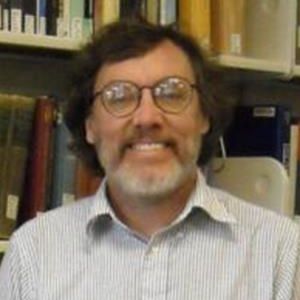
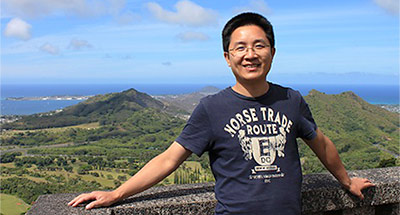
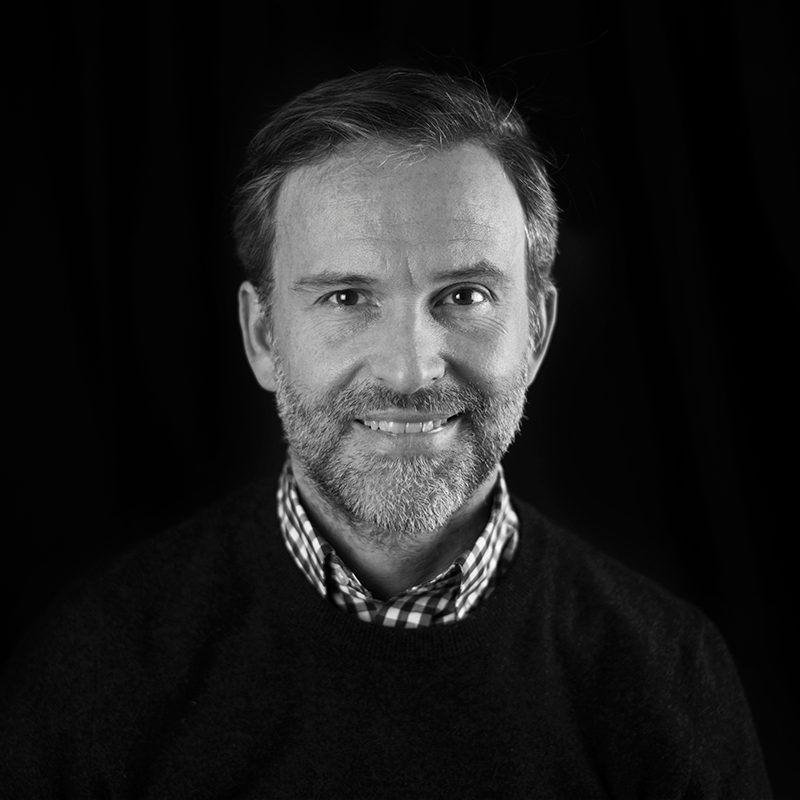
David Seckel is a Professor of Physics & Astronomy at the University of Delaware, affiliated with the College of Arts & Sciences. His research focuses on cosmic rays, neutrino astrophysics, and the development of large-scale observatories like the IceCube Neutrino Observatory and the ANITA detector. He has contributed to studies of ultra-high-energy cosmic rays, neutrino detection techniques, and cosmological implications of particle interactions. Key research areas include analyzing atmospheric and astrophysical neutrino fluxes, probing cosmic ray composition via air shower measurements, and investigating neutrino emission from active galactic nuclei. His work leverages advanced detector technologies and machine learning methods for data analysis. Collaborations include the IceCube Collaboration, RNO-G radio array, and the PUEO payload for airborne neutrino detection.
Andreas Athenodorou is an associate research scientist at the Computation-based Science & Technology Research Center (CaSToRC) of The Cyprus Institute. He holds a PhD in Theoretical Particle Physics from the University of Oxford (2004–2008) and has held postdoctoral positions at DESY Zeuthen, Swansea University, and the University of Cyprus. Prior to his current role, he was a Marie Sklodowska Curie Individual Fellow at the University of Pisa (2019–2021). He currently leads a work package in the NI4OS-Europe project. His research focuses on theoretical and computational aspects of particle physics, including lattice gauge theories, large-Nc limits, hadron structure, and beyond Standard Model physics. He specializes in applying high performance computing (HPC), data science, and machine learning to solve complex problems in quantum field theory. Notable areas include confinement dynamics via effective string theory, glueball spectroscopy, and topological susceptibility studies in QCD. His computational work spans lattice QCD simulations, development of reproducible open science workflows, and application of machine learning to phase transition analysis. He has contributed to understanding mass hierarchies in strongly-coupled systems and the neutron electric dipole moment using advanced simulation techniques. Key contributions include advancing effective string theory descriptions of flux tubes, analyzing Z_N gauge theories, and exploring β-function behaviors in SU(2) adjoint fermion systems. His work bridges fundamental theory with computational innovation, addressing both particle physics questions and methodological challenges in large-scale simulations.
Dr. Christopher DeLuca is an Associate Dean in the School of Graduate Studies and an Associate Professor of Educational Assessment at Queen’s University’s Faculty of Education. He leads the Classroom Assessment Research Team (CART) and directs the Queen’s Assessment and Evaluation Group. Previously, he served as an Assistant Professor at the University of South Florida and conducted policy research in London, England. His research focuses on the intersection of curriculum, pedagogy, and assessment within school accountability frameworks, emphasizing teacher support to enhance student learning. He holds advanced degrees from Queen’s University (BSc, B.Ed., MEd, PhD). His work has been funded by the Social Sciences and Humanities Research Council of Canada and recognized with awards such as the Queen’s Research Excellence Award and the AERA Outstanding Paper Award. Dr. DeLuca has supervised numerous graduate students, taught courses ranging from undergraduate to doctoral levels, and contributed to professional journals as an editor. His research explores teacher assessment literacy, validity theory, and global educational trends. He currently serves as Executive Editor of Assessment in Education and advocates for inclusive assessment practices.
Qi Chen is a Professor in the Department of Geography at the University of Hawaii at Mānoa, specializing in remote sensing and geospatial technologies. His office is located in Saunders Hall, and he teaches undergraduate and graduate courses including GEO 370 (UAV and Aerial Photography), GEO 388 (Introduction to GIS), GEO 470 (Remote Sensing), GEO 489 (Applied GIS), and GEO 762 (Research Seminar: Remote Sensing. His research focuses on transforming earth observation data into actionable knowledge for environmental monitoring. Primary interests include: LiDAR applications for vegetation analysis and biomass estimation Climate change impacts on land cover and coastal systems Machine learning integration with geospatial data High-resolution mapping of agricultural and forest ecosystems Drone and satellite-based environmental assessment Chen's recent publications (2020-2025) demonstrate a strong focus on advancing remote sensing methodologies, particularly through: AI-driven approaches (GANs for vegetation indices, deep learning for marine debris) Multi-sensor fusion (LiDAR with camera systems, hyperspectral-multispectral integration) Novel applications in precision agriculture and infrastructure monitoring Hawaii-specific environmental studies incorporating indigenous knowledge systems He leads the Smart Remote Sensing Lab (smartremotesensing.org) where he mentors graduate students in developing cutting-edge geospatial solutions for ecological and societal challenges.
Yafang Cheng is Director of the Aerosol Chemistry Department at the Max Planck Institute for Chemistry since 2024, with concurrent appointments as Guest Professor at Peking University (2023-) and Distinguished Guest Professor at University of Science and Technology of China (2021-). Her research integrates experimental methods , multi-scale modeling , and machine learning to advance understanding of aerosol particle dynamics and their impacts on air quality , public health , and climate change . Ph.D. in Environmental Sciences (Peking University, 2007) B.Sc. in Environmental Sciences (Wuhan University, 2001) Her work focuses on reactive nitrogen chemistry , aerosol acidity , black carbon effects , and planetary boundary layer interactions . She has developed novel instrumentation for aerosol analysis and pioneered machine learning applications in atmospheric science. Recent publications emphasize black carbon mitigation strategies (One Earth 2023), aerosol microdroplet pH (Chem 2023), and SARS-CoV-2 transmission modeling (Science 2021). These studies demonstrate interdisciplinary approaches spanning environmental chemistry , climate physics , and public health policy . Fellow: AAAS (2023), AGU (2022) Joanne Simpson Medal (AGU, 2022) Science Breakthroughs of the Year (Falling Walls, 2021) Highly Cited Researcher (Web of Science, 2021-2022) Minerva Outstanding Female Scientist Award (2014) She has mentored 38 early-career researchers (21 postdocs, 17 PhD students) who have achieved professorships , tenured positions , and international awards . Her institutional leadership includes initiating academic exchange programs between European and Chinese institutions.
Susan Land is a Professor of Education and the Associate Dean of Undergraduate and Graduate Education in the Learning, Design, and Technology Program at Penn State University's College of Education. She also serves as the Head of the Department of Learning & Performance Systems. Dr. Land earned her doctorate in Instructional Systems from The Florida State University under Dr. Michael Hannafin. Prior to Penn State, she was a postdoctoral fellow at the University of Georgia's Learning and Performance Support Laboratory and faculty at the University of Oklahoma's Instructional Psychology and Technology Program. Earlier, she worked on instructional design projects with the U.S. Air Force Academy, Citibank, and Hewlett Packard. Her research emphasizes frameworks for technology-enhanced learning environments, particularly focusing on how learners meaningfully engage with technology in student-centered contexts. She has published over 60 manuscripts and co-edited two editions of Theoretical Foundations of Learning Environments with Dr. David Jonassen, which has been reprinted repeatedly, translated into Korean, and achieved notable sales in the Instructional Technology field. Her recent publications demonstrate a clear trajectory toward mobile, context-sensitive learning in outdoor environments using proximity-based technologies like iBeacons. These studies examine children's scientific observations in arboretums, sense-making conversations in botanical gardens, and knowledge sharing in online affinity spaces, revealing patterns in how technology mediates learning experiences across different contexts. Young Scholar Award from Association for Educational Computing and Technology (AECT) Outstanding Article of the Year Award from AECT 2015 SIG-IT Best Paper Award from American Educational Research Association (AERA) Top 10 most-published/frequently-cited authors in Educational Technology Research & Development College of Education 2016 Outstanding Teaching Award Dr. Land advises graduate students and collaborates extensively with researchers including Heather Zimmerman, Priya Sharma, and Chris Millet. Her NSF-funded research with Zimmerman examines how proximity-based computing supports children's scientific sense-making in outdoor environments. She leads the Augmented and Mobile Learning Research Group, which investigates context-sensitive, place-based learning using mobile technologies and augmented reality. Her research has been supported by multiple grants from the National Science Foundation (NSF), Institute of Museum and Library Services (IMLS), and Penn State's Center for Online Innovation in Learning (COIL). Current projects include developing the Penn State Places platform for creating iBeacon-triggered content in public spaces, with applications in arboretums, children's gardens, and community engagement initiatives.
Dr. Robyn J Stiger is a Lecturer at Oxford Brookes University , specializing in Clinical Skills, Simulation & Immersive Technology . She leads a multidisciplinary team in simulation-based education, with affiliations to the Centre for Movement, Occupational and Rehabilitation Sciences (MOReS) and Oxford University Hospitals NHS Foundation Trust . PGcert in Education MSc in Physiotherapy BSc in Health Sciences Research Interests include: Prehabilitation for Upper Gastrointestinal Cancer and Critical Care outcomes Pedagogical applications of Simulation-Based Education to improve Patient Safety and Interprofessional Learning Physiotherapy interventions for Spinal Cord Injuries and Delirium in ICU Publications focus on: Systematic reviews and scoping studies on prehabilitation and critical care Simulation pedagogy in Postgraduate Healthcare Education Virtual reality applications for Muscular Activity Analysis Scientific Awards : Fellow of the Higher Education Academy (FHEA) Professional Roles : External Examiner at Birmingham University (2023–present) Executive Committee Member, Association of Simulated Practice in Healthcare (ASPiH) (2023–present) Honorary Research Physiotherapist at Oxford University NHS Foundation Trust (2019–present) External Examiner at Keele University (2020–2025)
Ingrid Mann is a Professor in Space Physics at the UiT The Arctic University of Norway , Department of Physics and Technology. She leads and participates in multiple externally funded research initiatives including the Cosmic dust injection into the upper Earth atmosphere , MXD 2 rocket project to study the mesosphere , and EISCAT Research infrastructure project . ORCID: 0000-0002-2805-3265 Member of research group Space Physics Member of projects: Intermittent fluctuations in physical systems , Maxidusty-2 , CASCADE , Codia , Boosting Space Business , and Forskningsparken 1 A216 Her research spans space and atmospheric physics , focusing on dusty plasmas , cosmic dust dynamics , and polar atmosphere interactions . She employs spacecraft observations , EISCAT radar , rocket experiments , and machine learning for data analysis. Recent publications highlight cosmic dust detection with Parker Solar Probe and Solar Orbiter , PMSE multilayer properties , and dust impact signal modeling . Her work integrates radar , optical , and spacecraft data to understand polar atmospheric systems. She teaches FYS-2000 Kvantemekanikk , FYS-2019 Sun, Planets, and Space , and supervises G-Chaser student rocket projects . Her research group contributes to EISCAT_3D infrastructure and interplanetary dust modeling . Co-edited books: Nanodust in the Solar System (2012) Small Bodies in Planetary Systems (2008) Modern Meteor Science (2005)
Konstantinos Andreadis is an Associate Professor in the Department of Civil and Environmental Engineering at the University of Massachusetts Amherst. He leads the Computational Hydrology Research Group, focusing on water resources modeling, remote sensing, data assimilation, and climate change impacts. His research spans hydrologic modeling at multiple scales, satellite-based drought monitoring, and reservoir operations analysis. Education: Engineering Diploma in Environmental Engineering (2002), Technical University of Crete MScE in Civil & Environmental Engineering (2004), University of Washington PhD in Civil & Environmental Engineering (2009), University of Washington His work integrates satellite data (e.g., SWOT, SMAP) with numerical models to study freshwater dynamics, floodplain encroachment, and machine learning applications. Key projects include flood risk assessment in urbanizing regions, drought impact analysis in forested environments, and optimizing agricultural water management. Scientific Awards: NASA Early Career Achievement Medal (2015) Professor Andreadis has mentored PhD students like Xinchen He, who successfully defended his dissertation in 2025. His research group collaborates with institutions worldwide, emphasizing data-driven solutions for global hydrology.
Brook Kennedy IDSA, NAI is a Professor in the School of Design at Virginia Polytechnic Institute and State University (Virginia Tech), specializing in Industrial Design. His research spans circular design, human health, alternative technology, biogenic materials, and biomimetic processes. As a 2025 National Academy of Inventors Senior Fellow, Kennedy has established cross-disciplinary relationships with biogenic material science faculty at the Technical University of Munich through a 2024 Global Visiting Professorship. His research interests focus on sustainable design solutions addressing global challenges. Kennedy explores how abandoned technologies can inform contemporary sustainability efforts, as evidenced by his 2023 Routledge publication Reimagining Alternative Technology for Design in the 21st Century . His work in fog harvesting materials has produced top-cited articles for Wiley-VCH and Elsevier, while his Lisbon Chair project develops biobased degradable polymers for furniture. The Fog Harp project, inspired by redwood tree needles, offers 10x greater water yield than existing fog collectors. 2025 National Academy of Inventors Senior Fellow Inductee Multiple international design awards including Red Dot Best of the Best, IDEA Gold, and European Product Design Awards Author of 176-page Routledge publication on alternative technology (2023) Co-inventor of 23+ US and foreign patents Widely covered in media including BBC, PBS Newshour, New York Times, and Smithsonian Kennedy maintains active industry collaborations, advising startups, NGOs, and companies like SC Johnson, OXO, and Nokero Solar. His Fog Harp project has been featured in the documentary Finite Water and exhibited at the Smithsonian. He teaches courses including Applied BioDesign, ID LAB, and Professional Practice, while leading Virginia Tech's BioDesign Research Group. His Macronaut smartphone loupe tool bridges design inspiration and tele-health applications, demonstrating his commitment to practical, human-centered solutions.
Professor Philip Hider is a Professor in Information and Communication Studies at Charles Sturt University, where he leads research in the Libraries Research Group. His work focuses on information organization, metadata, and library science, with significant contributions to cataloging policy, knowledge organization, and library classification systems. He has conducted research for major institutions including the National Library Board of Singapore, National Library of Australia, State Library of Victoria, and Australian government's Office for Learning and Teaching. Hider's research expertise spans information organization, knowledge organization, metadata systems, information retrieval, and library science. His work examines the theoretical and practical applications of cataloging standards, bibliographic control, and knowledge organization systems across various contexts including academic libraries, public libraries, and digital environments. A significant portion of his recent work investigates the impact of the COVID-19 pandemic on library services, the evolution of genre classification systems, and the role of metadata in digital resource discovery. Hider's publication record demonstrates consistent scholarly output with over 113 research outputs spanning from 1997 to 2025. His recent work shows a strong focus on practical applications of knowledge organization in contemporary library settings, with particular emphasis on Australian library contexts, public library services, and the challenges of cataloging emerging digital formats like YouTube videos. His research often employs comparative methodologies, examining differences between professional cataloging practices and social cataloging systems. Professor Hider serves as an active contributor to the library and information science field through his editorial work, including serving as Program Committee Chair for RAILS (Research Applications in Library and Information Science) and contributing to major journals in the field. His research group at Charles Sturt University focuses on key issues affecting library and information services, examining ways to improve library collections and understanding the evolving role of libraries in contemporary society.
Professor Georg Gottwald is a distinguished academic in the School of Mathematics and Statistics at the University of Sydney, where he has been a faculty member since 2002, progressing from Lecturer to his current position as Professor since 2013. He also holds a Visiting Professor position at the University of Surrey in the UK since 2013. His extensive research career spans dynamical systems theory, geophysical fluid dynamics, and the intersection of machine learning with complex systems. Professor Gottwald's research focuses on dynamical systems theory as an abstract formalism for studying systems evolving in time and space. His work has significant applications across diverse fields including climate modeling, biological systems, and complex networks. He is particularly known for developing methods for model reduction of complex dynamical systems, stochastic modeling approaches, and the application of machine learning techniques to dynamical systems. His research aligns with the Faculty of Science Research Strengths in Understanding the Universe, Fundamental Laws of Nature, Complex Systems, Climate and Environmental Change, Data and Decisions, and National Security. His most recent publications demonstrate a strong trajectory toward integrating machine learning with dynamical systems theory, particularly in developing stable generative models, learning dynamical systems with random feature maps, and combining data assimilation with machine learning for forecasting. His work spans pure mathematical theory to practical applications in climate science, finance, and biological systems, showing remarkable breadth while maintaining deep mathematical rigor. Future Fellowship, 'Stochastic methods in mathematical geophysical fluid dynamics', Australian Research Council, 2010-2014 Australian Research Fellowship, 'Stochastic methods in mathematical geophysical fluid dynamics', Australian Research Council, 2010-2015 (declined) Australian Research Fellowship, 'Geometric methods in geophysical fluid dynamics', Australian Research Council, 2004-2009 Professor Gottwald has successfully supervised numerous PhD and Master's students who have gone on to academic and industry positions worldwide. His current research group includes postdocs and PhD students working on machine learning for dynamical systems, stochastic model reduction, physics-informed machine intelligence, and tensor methods for scientific machine learning. He has secured multiple ARC Discovery Project grants and has been involved in significant international collaborative research projects. He is actively involved with the Sydney Dynamics Group, which he co-founded in 2007, fostering collaboration between the University of Sydney and UNSW. Professor Gottwald maintains strong editorial commitments as Associate Editor for Geophysical and Astrophysical Fluid Dynamics, SIAM Journal of Applied Dynamical Systems, and Journal of Computational Dynamics, and serves on the Editorial Advisory Board for Chaos and the Editorial Board for Physical Review E. His professional activities demonstrate leadership in the dynamical systems community through organizing workshops, seminars, and special journal issues.
Marianne Ruth Logan serves as an Adjunct Senior Lecturer, Research Associate, and Teaching Associate within the Faculty of Education at Southern Cross University. As a founding member of the Sustainability Environment and Arts in Education (SEAE) Research Centre, she drives innovative approaches to science and environmental education through school-university partnerships and child-framed methodologies. Her work centers on amplifying youth voices while addressing climate change through posthumanist and socioecological frameworks. Her academic foundation includes a BA and Graduate Diploma in Education from the University of New England, culminating in a PhD from Southern Cross University (2008). These qualifications underpin her commitment to transformative educational practices that bridge theory and community engagement. Logan's research interrogates classical science education paradigms through posthuman lenses, emphasizing the entanglement of all beings and human impacts on Earth's systems. She pioneers school-based STEM teacher preparation where learning occurs in authentic settings, fostering regional school partnerships across Southern Cross University's campuses. Her signature approaches include child/youth-framed, arts-based research in sustainability contexts and investigations into student attitudes toward science. Analysis of her 15 most recent publications reveals consistent thematic focus on youth agency in climate adaptation, socioecological learning, and innovative methodologies. Her work increasingly integrates postcolonial perspectives in Global South contexts while maintaining strong emphasis on Australian school-university partnerships and STEM-ready teacher development. Mentorship forms a critical dimension of her academic contribution, with successful supervision of PhD and Honours candidates to completion alongside current guidance of Doctor of Education students. Her pioneering school-based delivery model positions schools as central partners in teacher education, directly impacting STEM pedagogy preparation. Through the SEAE Research Centre, Logan cultivates collaborative environments where sustainability, environmental stewardship, and arts integration converge. Her 'Planting food sustainability' initiative exemplifies this approach, transforming school gardens into living laboratories for integrated STEM learning while addressing community food systems.
June-Young Kim serves as a Clinical Assistant Professor of Business Administration at the Gies College of Business, University of Illinois Urbana-Champaign. Her research focuses on organizational learning mechanisms, strategic decision-making in disruptive environments, and innovation pathways in entrepreneurship. She explores how prior experiences, analogical reasoning, and vicarious learning influence market entry strategies and technology commercialization. Her work bridges theoretical frameworks with practical applications in strategy formulation, particularly addressing paradoxes in operational experience and delayed learning from failure. Publications span topics from founding logics to market exit decisions, emphasizing adaptive organizational behaviors in dynamic markets. Though no explicit awards are listed, her research trajectory indicates contributions to understanding strategic innovation and entrepreneurial ecosystems. Advising details and grants remain unspecified in available texts. She is affiliated with the Gies College of Business, contributing to academic programs and professional development initiatives.
Prof. Indranil Gupta (Indy) is a Professor of Computer Science at the University of Illinois at Urbana-Champaign, affiliated with the Beckman Institute and ECE department. His research focuses on distributed systems, including cloud computing, IoT, and machine learning systems. He leads the Distributed Protocols Research Group (DPRG) and collaborates with industry to improve production systems. Indy is an IEEE Fellow, ACM Distinguished Scientist, and recipient of the NSF CAREER Award and multiple Best Paper Awards. Education: PhD in Computer Science from Cornell University (2004), B.Tech from IIT Madras (1998). Industry experience includes roles at Google, Microsoft Research, and IBM Research. Teaching: Teaches CS 425 (Distributed Systems), CS 525 (Advanced Distributed Systems), and a Coursera MOOC with 250K+ enrollments. Known for innovative teaching methods, including music-based CS education. Awards: Over a dozen awards including Best Paper recognitions at IC2E, CCGrid, and ICAC. His students have won NSF Fellowships, Rising Stars in EECS, and Microsoft Dissertation Grants. Service: Served as General Chair of ACM PODC 2007, PC co-chair for multiple conferences, and editorial board member for IEEE TCC and ACM TAAS. Hosts the podcast 'Immigrant Computer Scientists.' Research Impact: Contributions include fault-tolerant protocols (e.g., Zeno, SWIM), distributed ML systems, and cloud resource management techniques used by major tech companies.