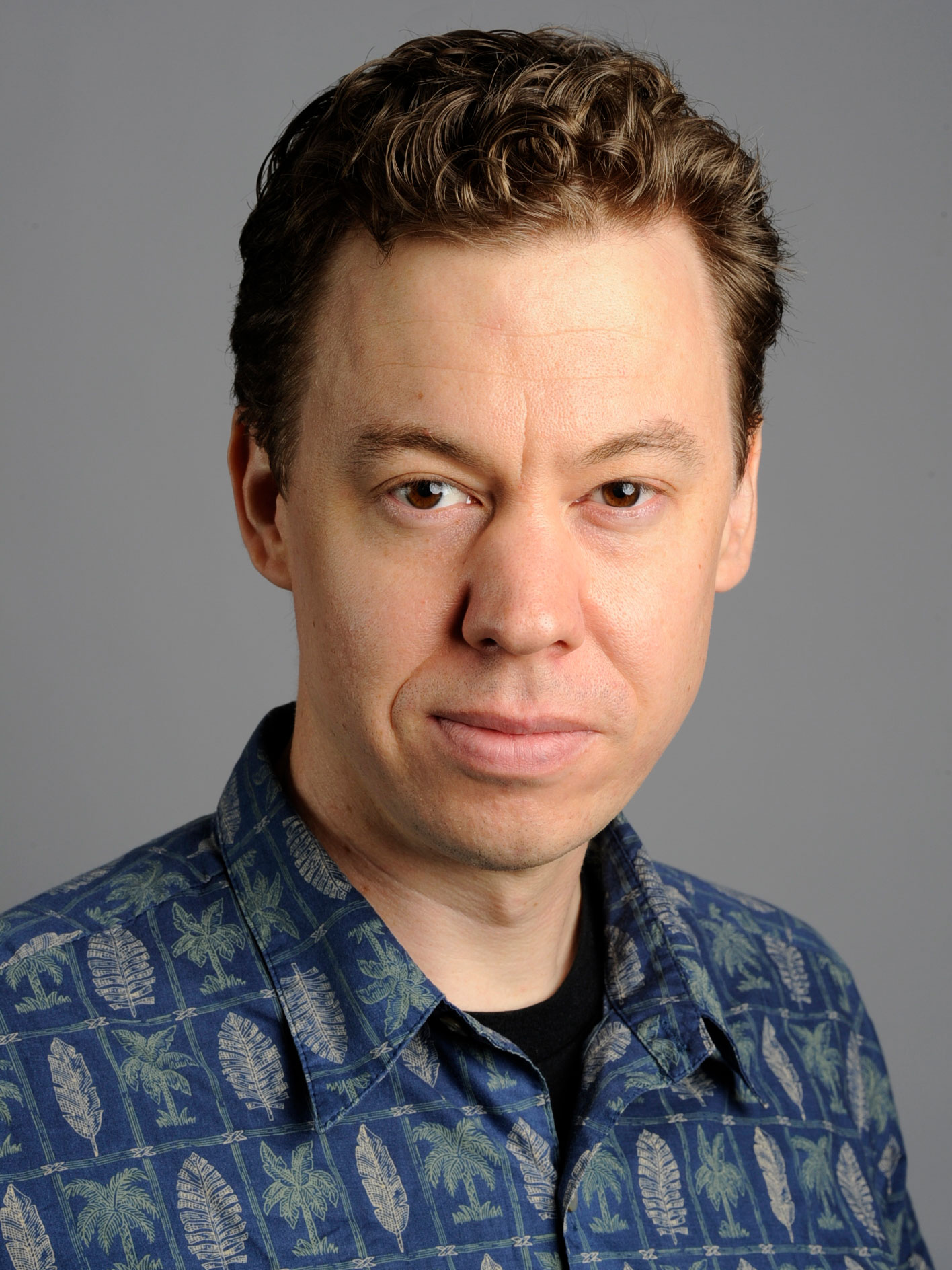
Carl Vondrick is a Professor in the Department of Computer Science at Columbia University. His research focuses on creating robust and versatile perception systems that leverage video and interaction with the natural world, with applications in 3D reconstruction, visual question answering, and robot manipulation. Former research scientist at Google Visiting researcher at Cruise Education: PhD (2017) from MIT, advised by Antonio Torralba BS (2011) from UC Irvine, advised by Deva Ramanan His research explores multimodal approaches for cross-task and cross-modal transfer, scene dynamics, audiovisual perception, interpretable models, and spatial awareness systems. The lab emphasizes zero-shot generalization and neuro-symbolic methods while addressing safety and robustness in AI systems. Key publication trends include: 2025: Video generation for robotics 2024: Differentiable rendering and cross-modal reasoning 2023: Robust perception and 3D modeling Scientific Awards: 2024 PAMI Young Researcher Award 2021 NSF CAREER Award Teaching Roles: Teaching Computer Vision II (2021-2025), Computer Vision I (2018-2019), and Representation Learning (2020-2022). Advising: Advises 8 current PhD students and has mentored 5 graduated students now at institutions like MBZUAI and UMD. The lab recruits 1-2 PhD students annually through Columbia’s PhD program. Grants and Collaborations: Funded by NSF, DARPA, Toyota Research Institute, Amazon Research, and Google.
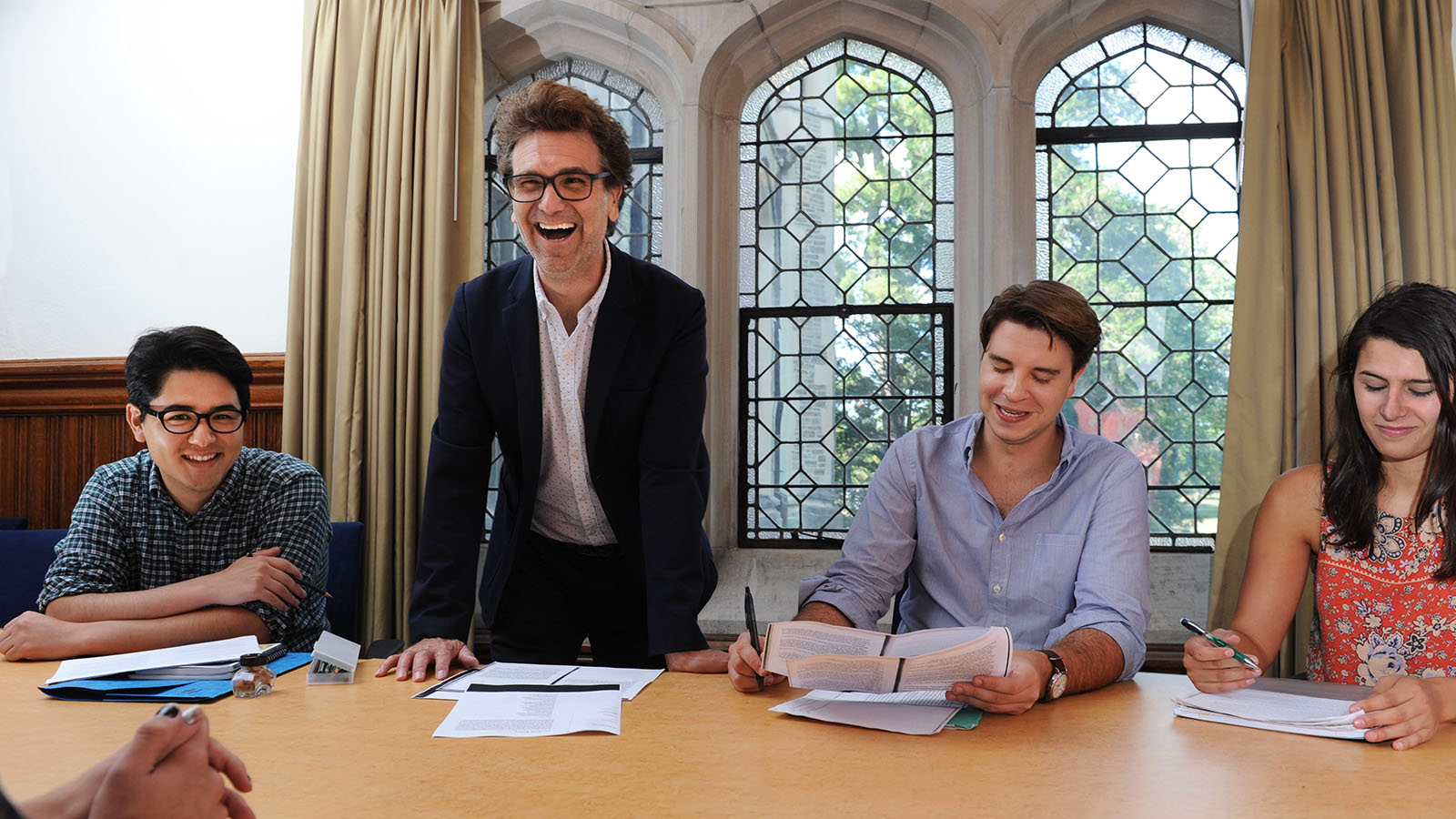
David Means is a Visiting Associate Professor of English at Vassar College, where he has taught since 2001. He holds a BA from The College of Wooster and an MFA in poetry from Columbia University. His academic work centers on creative writing, modern and contemporary fiction and poetry, and American culture. Education: BA, The College of Wooster MFA, Columbia University in the City of New York Means is a celebrated author of short fiction and novels, known for his lyrical prose, experimental narrative structures, and deep exploration of trauma, memory, and redemption. His work frequently appears in The New Yorker , Harper’s , The Paris Review , and other prestigious literary journals. His writing often returns to themes of violence, loss, and the quiet grace that emerges in their aftermath, drawing comparisons to Flannery O’Connor and Denis Johnson. His stories are marked by a nonlinear sense of time and a profound empathy for marginalized or broken characters. His recent publications include the story collection Instructions for a Funeral (2019) and Two Nurses, Smoking , with his novel Hystopia longlisted for the Man Booker Prize. His forthcoming non-fiction book, Pivot: Ruminations in the Shadow of Death , reflects on mortality and personal reflection. Selected Awards and Honors: Guggenheim Fellowship (2013) Three O. Henry Prizes Three Pushcart Prizes Los Angeles Book Prize for Fiction Finalist, National Book Critics Circle Award Finalist, Frank O’Connor International Short Story Prize Longlisted, Man Booker Prize Means has advised and influenced many emerging writers through his teaching and public readings. While specific students are not named in the sources, his role as a mentor is evident in his sustained presence in creative writing programs. He has no known research grants or lab affiliations, as his work is primarily literary and individual. He continues to publish and engage in public discourse on the nature of storytelling, including critiques of AI-generated fiction.
Marisol De La Cadena is a Professor in the Department of Anthropology at the University of California, Davis, with affiliations in Science and Technology Studies (STS). Her work bridges anthropology, political theory, and environmental thought, focusing on ontological divergence and multispecies relations in Latin America, particularly in Peru and Colombia. Department: Department of Anthropology School: College of Letters and Science University: University of California, Davis Email: mdelac@ucdavis.edu Office: Young Hall 315 Her research centers on the intersection of modern politics and non-modern or ahistorical ontologies, especially through what she calls "ontological openings." Drawing from deep ethnographic engagement with Quechua-speaking interlocutors in the Andes, she explores how earth-beings, humans, and nonhumans co-constitute worlds that exceed Western categories. Her theoretical contributions challenge conventional boundaries between nature and culture, history and timelessness, and politics and cosmology. Her recent fieldwork in Colombia examines human-cow relations on cattle ranches and in veterinary schools, situating these practices within broader ecological crises and post-conflict transitions. Her publications reveal a consistent interest in how ethnographic concepts function as both empirical observations and theoretical tools. The body of her work, including key articles like "Uncommoning Nature" and "Runa: Human but not only," reflects a deep commitment to rethinking anthropological method and theory. Her research trends emphasize ontological politics, multispecies ethnography, and the decolonization of knowledge, contributing significantly to contemporary debates in STS and anthropology. Her scientific honors include: John Simon Guggenheim Memorial Foundation Fellow (2008) Lewis H. Morgan Lecture Series Invited Speaker, University of Rochester (2011) Invited Researcher, Center for Advanced Studies, Norwegian Academy of Sciences (2015) Guest Speaker, Mellon-Sawyer Seminar, University of Cape Town (2010) She has been principal investigator on several major grants, including the John E. Sawyer Mellon-Sawyer Seminar on the Comparative Study of Cultures (2012–2016), a Wenner-Gren Conference Support Grant (2009–2010), and multiple research fellowships from the Guggenheim, Wenner-Gren, and American Philosophical Societies. These grants have enabled collaborative, transdisciplinary research on cosmopolitics, indigeneity, and the anthropology of worlds. She is affiliated with research initiatives such as the Sawyer Seminar on the Comparative Study of Cultures and contributes to global academic networks in anthropology and STS. Her work fosters dialogue between indigenous thought, continental philosophy, and ethnographic practice, creating spaces for alternative modes of knowing and being.
Lieselotte Ahnert serves as a Visiting Professor for Developmental Psychology at the Free University of Berlin's Department of Education and Psychology, specifically within the Department of Developmental Science and Applied Developmental Psychology. Her academic journey began at Humboldt University in East Berlin, where she studied psychology during a period of significant political change in the GDR. After completing her doctorate in 1982, she held various research positions including director of the Interdisciplinary Center for Applied Socialization Research (IZAS e.V.) from 1991-1996 and a visiting scientist position at the National Institutes of Health in Washington from 1996-1999. Prior to her current position at FU Berlin (since 2019), she was a Professor of Developmental Psychology at the University of Vienna from 2008-2019. Professor Ahnert's research focuses on early childhood development, attachment theory, and the specific contributions of fathers to child development. Her work examines how children develop within various caregiving contexts, including the transition from home to childcare settings, the effects of socioeconomic disadvantage on attachment security, and the unique role fathers play in children's language development and emotional regulation. She has conducted extensive research on stress responses in infants during childcare transitions and how care providers influence these responses. Her interdisciplinary approach draws from behavioral biology, genetics, neuroscience, pediatrics, and education to understand the complex interplay between genetic and environmental influences in early development. Ahnert's publication record demonstrates significant contributions to understanding father-child relationships, with recent work exploring how fathers' attachment security and education contribute to early child language skills beyond mothers' influence. Her research has also examined the 'terrible twos' phase, investigating how children cope with frustration and tantrums and how parents support them through these developmental challenges. She has published extensively in high-impact journals including Child Development, Developmental Psychobiology, and Attachment and Human Development. Professor Ahnert has received recognition for her expertise, including being commissioned to provide expertise for the Federal Chancellery of Austria in 2021. Her work has practical applications in early childhood education and intervention programs, particularly in understanding how public childcare can compensate for developmental risks in socioeconomically disadvantaged children. In addition to her research, Ahnert has made significant contributions to academic training and supervision. Her book publications, including 'It's the fathers who matter' (2023) and 'How much mother does a child need?' (2020), bridge the gap between academic research and public understanding of child development. Her work continues to influence both academic discourse and practical approaches to early childhood care and education.
Elisabet Langmann serves as Associate Professor and Department Head at Södertörn University, Sweden, specializing in Teacher Training with research bridging educational philosophy and classroom practice. Her work critically examines ethical dimensions of schooling and democratic values implementation. Langmann holds a PhD in Educational Philosophy from Örebro University (2013), where her dissertation explored pedagogical approaches to teaching tolerance while avoiding student marginalization. Her academic journey reflects deep engagement with continental philosophy and didactic theory. Her research centers on ambiguities in democratic values (tolerance, justice, responsibility) and their classroom implications, investigating how value conflicts manifest and how supportive teaching climates emerge. Methodologically, she integrates empirical classroom observations with philosophical analysis, drawing from phenomenology and critical theory to examine sensory, affective, and ethical dimensions of learning environments. Analysis of her 2021-2025 publications reveals three evolving trajectories: sustainability education exploring climate change pedagogy; sensory-phenomenological approaches to classroom climate; and continued refinement of tolerance education frameworks. These strands converge in examining how affective dissonance and bodily experiences shape ethical learning. Langmann actively secures research funding including two Swedish Research Council projects (2020-2023): as project leader for "Forms of Upbringing" investigating bodily dimensions in value conflict resolution, and as co-investigator in "How can schools reduce unequal educational opportunities?" examining school culture in disadvantaged areas. She mentors junior researchers through international networks rather than formal student supervision. She contributes significantly to academic infrastructure as board member of the Nordic Society of Philosophy of Education, co-convenor for NERA/EERA educational philosophy networks, and peer reviewer for 12+ journals including Studies in Philosophy and Education. Her leadership extends to international research collectives like PEDST and SCAPE, focusing on democratic sustainability transitions and cultural conflicts in education.
John Whitney is an Associate Professor in the Department of Mechanical and Industrial Engineering at Northeastern University's College of Engineering. He joined the university in January 2016. His research focuses on human-safe robotics, medical robotics, soft robotics, MEMS, microrobotics, and bio-inspired design, with a particular emphasis on flapping aerodynamics and insect flight mechanisms. He has led major research initiatives including the National Science Foundation-funded 'Controllable Compliance' robotic arm project and Office of Naval Research projects on haptic manipulators for explosive ordnance disposal. Whitney holds a PhD in Engineering Sciences from Harvard University (2012) and an SM in Aeronautics and Astronautics from MIT (2006). He is affiliated with Northeastern's Institute for Experiential Robotics and has contributed to advanced systems like the ANA Avatar XPRIZE robotic avatar. His work integrates interdisciplinary approaches combining mechanical engineering, control systems, and biomedical applications. Education: PhD in Engineering Sciences, Harvard University, 2012 SM in Aeronautics and Astronautics, MIT, 2006 Awards: 2023 Impact Award Finalist, International Conference on Robotics and Automation 2022-2023 College of Engineering Faculty Award Recipient His research spans teleoperation systems, haptic feedback mechanisms, and soft material manufacturing. Notable projects include a MR-safe haptic system for prostate biopsies and a novel robotic arm for contact-rich environments. His lab's work on flapping-wing microrobots draws inspiration from insect flight dynamics to improve micro air vehicle (MAV) performance. Whitney advises teams like the Northeastern Mars Rover Team and ANA Avatar XPRIZE finalists, demonstrating his commitment to hands-on student engagement. His publications emphasize practical robotics solutions for medical, industrial, and exploratory applications.
Verónica Perales Blanco is a Professor in the Department of Fine Arts at the University of Murcia's Faculty of Fine Arts, specializing in Drawing. Her artistic research explores intersections of Art/Technology/Ecology , with a focus on ecofeminism , environmental activism , and corporeal perception . PhD in Fine Arts from Universidad de Castilla-La Mancha (2005) Co-founder of Transnational Temps art collective (2001) Coordinates Drawing While Moving educational innovation project Her work addresses planetary embodiment through outdoor learning, participatory installations, and multisensory mapping. Recent publications examine AI integration in artistic practices , interspecies empathy , and ecological awareness amplification . Current affiliations include: OPEN ART research group (GID-Grupo de Innovación Docente) Active Artistic Practices and Citizenship research group Key collaborations span: Stephanie Whitelaw (walking arts) Elise Ashby (ecological mapping) Fred Adam (cosmosis workshops)
Dr. Brooke Schedneck is an Associate Professor and The W. J. Millard Professor of Religious Studies at Rhodes College, where she has taught since 2017. She specializes in Buddhism, Asian religions, and teaches courses in the Life program. Dr. Schedneck also leads the Maymester in Thailand, drawing on her extensive experience living and conducting research in Thailand for over eight years. Her research focuses on contemporary Buddhism in Thailand, with particular interests in global Buddhism, religions of Southeast Asia, gender in Asian religions, and religious tourism. Previous research has explored the modern vipassana meditation movement in Thailand's international meditation centers and tourist encounters with Buddhism in Northern Thailand. Her current research examines monastic scandals and the monastic body within Thai Buddhism. Dr. Schedneck's publications include the monograph Religious Tourism in Northern Thailand: Encounters with Buddhist Monks (University of Washington Press, 2021), which was short-listed for the EuroSEAS Humanities Book Prize 2022, and Living Theravada: Demystifying the People, Places, and Practices of a Buddhist Tradition (Shambhala Publications, 2023). She has also co-edited Buddhist Tourism in Asia (University of Hawaii Press, 2020) and authored Thailand's International Meditation Centers: Tourism and the Global Commodification of Religious Practices (Routledge, 2015). Short-listed for the EuroSEAS Humanities Book Prize 2022 Dr. Schedneck earned her Ph.D. in Religions of Asia from Arizona State University, an M.T.S. from Harvard University, and a B.A. from Boston University. Prior to joining Rhodes College, she taught study abroad students as a lecturer in Buddhist Studies at the Institute of Southeast Asian Affairs in Chiang Mai, Thailand, for four years. She has been invited to give research presentations in Thailand, Hong Kong, Singapore, and Malaysia.
Teo (Danielle) Keifert (they/them) is an Assistant Professor in the Department of Educational Psychology within the College of Education at the University of North Texas. Their work bridges learning sciences, science education, and equity-focused pedagogy, with a strong emphasis on young children's inquiry practices and sensemaking in science classrooms. Teo's research centers on expansive, culturally responsive approaches to science learning, particularly through imaginative embodiment, drawing, storytelling, and play. They investigate how family culture shapes children's ways of knowing and use design-based research and co-observation methodologies to develop ethically grounded, ecologically valid research practices. Their projects, funded by the National Science Foundation and the Spencer Foundation, explore mixed-reality technologies, teacher professional development, and pre-service teacher education through sociocultural lenses. Their recent publications reveal a consistent focus on broadening participation in science by redefining what counts as scientific practice. Themes include embodied cognition, hybrid argumentation across disciplines, equity in elementary science, and humanizing pedagogy during crises like the pandemic. Their work emphasizes relationships, curiosity, narrative, and disruption of normative assumptions in teaching and learning. Scientific Awards and Grants: Spencer Foundational Small Grant (Principal Investigator) National Science Foundation grant (Co-PI, Science through Technology Enhanced Play) McDonnell Foundation grant (Co-PI, Representations for Teachers as Learners) National Science Foundation grant (Co-PI, Equitable Science Sensemaking) Teo advises on teacher education reform and supports elementary educators in designing transformational learning experiences, particularly for multilingual learners. Their grants focus on co-designing equitable learning environments, professional learning communities, and innovative uses of technology. They are also engaged in research on faculty well-being and support during the pandemic. Teo is affiliated with research teams focused on learning in families, mixed-reality science environments, and equitable sensemaking. Their labs and collaborative projects include the Learning, Being and Doing in Families Study and partnerships with researchers like Enyedy, Danish, Pierson, and Marin.
Professor Wes Armour is a Professor of Scientific Computing at the University of Oxford and serves as the Associate Head of Department for Research in the Department of Engineering Science. He previously directed the Oxford e-Research Centre, an interdisciplinary research center within the Engineering Science Department. With over £31 million secured as PI or Co-I, his work spans supercomputing, signal processing, machine learning, computational fluid dynamics, and protein crystallography. Professor Armour's research focuses on extracting science from data through fundamental challenges in modeling, simulation, and data processing. His work draws from numerical analysis, signal processing, and machine learning to develop technologies enabling future scientific discoveries, particularly for the Square Kilometre Array (SKA) telescope. Key interests include GPU computing, high performance computing, and machine learning applications across diverse domains from radio astronomy to finance. As Director and Principal Investigator of JADE and JADE2, a 700-GPU machine, he established the UK's first national High Performance Computer facility dedicated to advancing Artificial Intelligence and Machine Learning. His research group has pioneered GPU applications across multiple fields, including Square Kilometre Array data processing, protein crystallography, and graphene simulations. Current projects span energy-efficient machine learning, stock price prediction in finance, prime number prediction in cryptography, and multi-modal CCTV data analysis. Professor Armour has been instrumental in developing real-time signal processing techniques for astronomical observations, including the ARTEMIS system for millisecond radio transient detection. His publications demonstrate consistent innovation in GPU-accelerated computing dating back to early work in 2008 on accelerating conjugate gradient routines for electron transport in graphene.
Lisa Fink is an NPS Mellon Humanities Postdoctoral Fellow and researcher in the Department of English at the University of Oregon, within the College of Arts and Sciences. Her work bridges literary studies, environmental humanities, and critical race theory. University: University of Oregon School: College of Arts and Sciences Department: Department of English Email: lfink@uoregon.edu Her research centers on human-nature and human-animal interactions shaped by US racial formation, settler colonialism, and environmental change. She explores how environmental discourse is racialized, particularly in the context of invasive species and conservation. Her current book project, "Unsettled Ecologies and Alienated Species," examines the racial politics of "Asian" carp discourse and the emergence of what she terms "redneck" conservation. She draws on Indigenous studies, decolonial theory, and black feminist thought to challenge dominant narratives of nature and belonging. Her recent publications span environmental justice, poetry, and literary analysis. Her articles in American Quarterly , ISLE , and Humanities analyze texts by M. NourbeSe Philip and Helena María Viramontes through the lens of ecological solidarity, memory, and anti-colonial resistance. Her creative work, including poetry published in Boston Review and Ecotone , further demonstrates her engagement with environmental and social themes. Scientific recognition includes: NPS Mellon Humanities Postdoctoral Fellow Lisa Fink advises on interdisciplinary research at the intersection of literature, race, and ecology. While no formal advisees are listed, her mentorship likely extends through her postdoctoral fellowship and academic collaborations. She has not received public mention of grants beyond her fellowship, but her position suggests active involvement in funded research. Her work is associated with digital humanities and public scholarship through her Academia.edu presence and publications in open-access venues. She is an active member of research communities in environmental humanities and American studies, contributing to interdisciplinary dialogues on justice, memory, and ecological belonging.
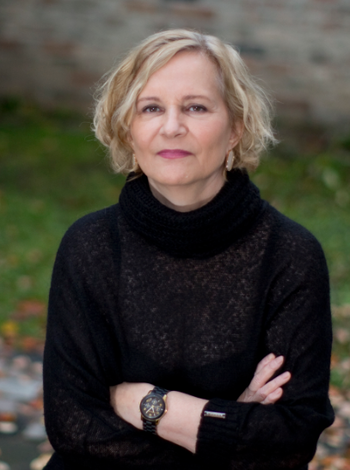
Elena Cologni is an Associate Professor of Contemporary Art and Critical Practice at the Cambridge School of Art, Anglia Ruskin University. She serves as the Cambridge School of Art Research Lead, PGR Coordinator, Panel 32 Art and Design REF 2021 and 2029 Convenor, School Research Ethics Panel Chair, and leads the Wellbeing, Care Aesthetics and Art Research and Education Unit (We CARE). She is also the ARU partnership Lead for the British Council Venice Biennale Fellowships Programme and the Art and Health Academic Lead for The Culture Capital Exchange Programme 2022-23. Her educational background includes: BA in Fine Art from Accademia di Belle Arti Brera in Milan MA in Sculpture from Bretton Hall College, Leeds University PhD in Fine Art and Philosophy from University of the Arts London, Central Saint Martin's College of Art and Design (2004) Cologni develops dialogic and situated artistic strategies for observing, recording and stimulating awareness of everyday experiences. Her interdisciplinary approach intersects artistic research with environmental psychology, care ethics, philosophy, and gender studies, resulting in dialogic sculptures, public interventions, performance scores, and drawings. Her work explores place attachment, ecofeminism, spatialized art practices, and the relationship between art, wellbeing, and care aesthetics. She is particularly interested in how artistic practice can facilitate the sharing of insights and the location of situated knowledges within our relations with one another, place, and the environment, creating instruments to stimulate awareness of everyday experiences through relational, participatory and dialogic approaches. Her publication portfolio reveals a consistent trajectory examining care ethics, dialogic practices, and the intersection of art with social and environmental concerns. She frequently investigates how artistic interventions can create spaces for dialogue about care, wellbeing, and our relationship to place and community, often bridging theoretical frameworks from feminist theory, environmental psychology, and performance studies with practical artistic applications that engage with public space, memory, and perception. Her notable recognition includes: Seeds of Attachment - The Shape of the Public's Health award - first prize - Royal Society for Public Health in collaboration with the Royal Society of Sculptors (2019) Artist Bursaries from Artists Newsletter (2018) Cologni supervises research students and has secured numerous research grants including the Practicing Feminist Care Aesthetics grant from The Getty Research Institute (2023/2025), Practices of care as ecofeminist and spatialized art funded by the Artist International Development Fund (Arts Council England and British Council 2018/19), and The Places of Memory commissioned by Universita' di Pisa (2022). She regularly collaborates with art galleries, museums, and the NHS Foundation Trust on educational activities and creative interventions that bridge art, health, and wellbeing. She leads the Wellbeing, Care Aesthetics and Art Research and Education Unit (We CARE) and coordinates the ARU Arts, Health and Wellbeing Research Network. Her work often involves community collaborations, as seen in projects like The Places of Memory, which engaged with local communities in Pisa, and Seeds of Attachment, which explored parent-child bonds in relation to place attachment through nomadic dialogic sculptures inspired by Margaret Lowenfeld's Mosaic Test.
Mark Hoover is an Associate Research Scientist and Intermittent Lecturer at the University of Michigan's Marsal Family School of Education, Department of Mathematics Education. His work focuses on disrupting systemic educational inequities through mathematics teaching and teacher professionalization, emphasizing social justice and ethical pedagogy. He draws inspiration from civil rights activist Robert Moses and education researcher Deborah Ball, whose collaborations are highlighted in his research. Hoover has held roles in both research and teaching, contributing to the development of practice-based approaches to studying teaching demands and advocating for curricula that promote civic participation. His research bridges mathematics content and pedagogy, exploring how teaching practices can address historical injustices embedded in educational systems. Research Interests: Equity in STEM education, mathematical knowledge for teaching (MKT), teacher professionalization, curriculum development, assessment design, and the intersection of mathematics education with social justice movements. He critiques oppressive educational standards and accountability systems while investigating how teaching can be reimagined to center justice. His work also explores the role of mathematicians in shaping mathematics education and the importance of tasks for assessing teaching proficiency. His scholarly output reflects a sustained engagement with equity and justice, analyzing classroom practices and teacher education through critical frameworks. Recent publications emphasize collaborative research initiatives (e.g., TWG19) and the moral dimensions of pedagogy. Grants: Recipient of the Communicating Mathematically Across Difference in the Work of Teaching Award (2018-2025). Advising: No formal advisees listed in provided materials, but his work supports professional learning communities across disciplines. Hoover is affiliated with the Connected Mathematics Project, contributing to curriculum development and its impact assessment. His contributions span both research and practical teaching, aiming to create inclusive and just educational environments.
Virginia Pallante is a Postdoctoral Researcher at the Netherlands Institute for the Study of Crime and Law Enforcement (NSCR) since 2020, specializing in ethological analysis of human behavior within criminological contexts. Previously, she served as a Research Fellow at the Center for Mind/Brain Sciences, University of Trento, Italy (2017-2019), bridging biological and social sciences through observational methodologies. Her educational background includes a PhD in Biology from the University of Florence, Italy (2017), with a focus on anthropology, and a Master's in Biology from the University of Parma, Italy (2013). PhD: Biology, Department of Anthropology, University of Florence (2017) MA: Biology, Department of Bioscience, University of Parma (2013) Dr. Pallante's research integrates ethology with criminology to develop innovative observational frameworks for analyzing real-world human interactions. Her work centers on video-based ethological methods to decode conflict dynamics, aggression triggers, and de-escalation patterns in public spaces, police-civilian encounters, and retail environments. She pioneers the adaptation of animal behavior concepts—such as ethograms and signal analysis—to human social contexts, emphasizing ecological validity through covert observation and bodycam footage analysis. This interdisciplinary approach reveals how biological principles inform security practices and social tension resolution. Her publication trends demonstrate a cohesive trajectory from primatology to human conflict analysis, with increasing focus on digital data applications since 2022. Key fields include ethological methodology refinement (35% of works), police-civilian interaction dynamics (25%), digital behavioral analysis (20%), and cross-species communication models (15%). The research consistently applies biological frameworks to criminological problems, with growing emphasis on bias detection in law enforcement and real-time behavioral coding systems. Dr. Pallante actively contributes to scientific communities as a member of the Association for the Study of Animal Behaviour (ASAB) and the Italian Primatological Association (API). Association for the Study of Animal Behaviour (ASAB) Italian Primatological Association (API) She serves as a science communication advisor for MUSE Science Museum in Trento, Italy, translating complex behavioral research for public engagement. Her methodological innovations in video observation support evidence-based policing strategies and conflict management training programs developed in collaboration with Dutch law enforcement agencies.
Celeste Kidd is an Associate Professor at the University of California, Berkeley, leading the Kidd Lab. Her research bridges computational modeling and behavioral experiments to study knowledge acquisition in young children, drawing from foundational theories by Piaget, Montessori, and Vygotsky. Education: Ph.D. in Cognitive Psychology from the University of Rochester Her work focuses on attention, curiosity, and learning dynamics, particularly how children explore and attend to information during development. She employs eye-trackers, touchscreens, and observational play studies to quantify learning processes. Recent publications highlight her exploration of belief formation, social learning, and the intersection of AI with cognitive development. Her findings inform educational technologies and clinical practices. Her lab emphasizes cross-cultural studies and computational models of curiosity, with experiments spanning infancy to adolescence. She investigates how predictability, physical cues, and linguistic structures shape cognitive growth.