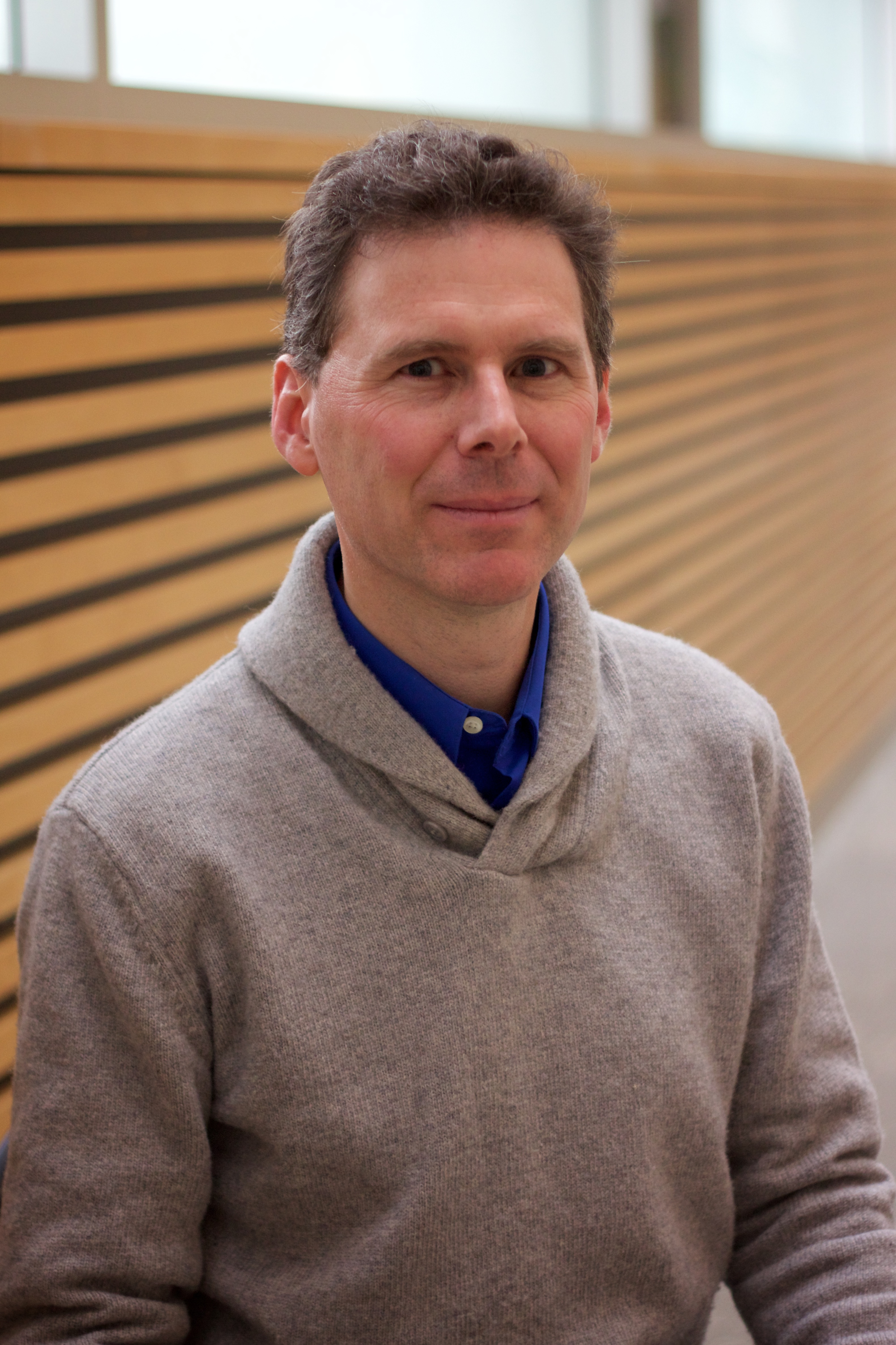
Robert Rohling is a Professor at the University of British Columbia's Faculty of Applied Science, affiliated with the Department of Mechanical Engineering and holding a joint appointment with the Department of Electrical and Computer Engineering. As Director of the Institute of Computing, Information and Cognitive Systems (ICICS), his research focuses on biomedical engineering, medical imaging, robotics, and computational methods. B.A.Sc. (UBC) M.Eng. (McGill) Ph.D. (Cambridge) Rohling's work spans three primary research areas: medical imaging (3D ultrasound, spatial compounding, elasticity reconstruction), medical information systems (radiologist navigation tools for large image datasets), and robotic calibration for surgical applications. His multidisciplinary approach integrates mechanical and electrical engineering principles with clinical needs. Rohling's publications (2020-2022) reveal trends in advanced ultrasound techniques (e.g., shear wave vibro-elastography), AI-driven image processing (cycleGAN translation), and computational optimization for diagnostic accuracy. Keywords across his work include Medical Imaging, Biomedical Engineering, Robotics, and Computational Modeling. As director of the Robotics and Control Laboratory , Rohling leads interdisciplinary collaborations with industry and clinical partners to address practical challenges in medical diagnostics and surgical robotics. His research emphasizes translating engineering innovations into clinical practice.
Celestine Mendler-Dünner is a Principal Investigator at the ELLIS Institute in Tübingen, co-affiliated with the Max Planck Institute for Intelligent Systems and the Tübingen AI Center. She leads the Algorithms and Society research group, focusing on machine learning in social contexts and the role of prediction in digital economies. Her work bridges theoretical machine learning with practical societal impact, developing tools for safe, reliable, and equitable AI ecosystems. Her educational background includes a PhD from ETH Zurich in collaboration with IBM Research, followed by an SNSF postdoctoral fellowship at UC Berkeley hosted by Moritz Hardt. She was previously a group leader at the Max Planck Institute for Intelligent Systems before joining the ELLIS Institute. Mendler-Dünner's research spans several interconnected themes including performative prediction (where predictions change the behavior they aim to predict), algorithmic collective action (how participants can steer AI systems toward common goals), and the role of LLMs in social science research. Her work combines theoretical foundations with practical implementations, addressing challenges in interactive machine learning, optimization in dynamic environments, and context-specific evaluation of AI systems. She particularly examines how algorithmic predictions mediate services and platforms at societal scale, exploring concepts of economic power in digital markets. Her publication record shows a clear evolution from system-aware machine learning algorithms (including foundational work on IBM Snap ML) toward increasingly sociotechnical questions at the intersection of machine learning, economics, and policy. Recent work focuses on measuring performative power in digital economies, evaluating LLMs as risk scores, and developing frameworks for algorithmic collective action in recommender systems and labor markets. Among her notable recognitions are the ETH Medal for her dissertation, the IBM Research Division Award, the Fritz Kutter Award, and the IBM Eminence and Excellence Award. She is an ELLIS Scholar, a fellow of the Elisabeth-Schiemann-Kolleg, and affiliated with several prestigious research programs including the International Max Planck Research School for Intelligent Systems and the Max Planck ETH Center for Learning Systems. ETH Medal (dissertation award) IBM Research Division Award Fritz Kutter Award IBM Eminence and Excellence Award SNSF Early Postdoc Mobility Fellowship Mendler-Dünner actively mentors the next generation of researchers, advising PhD student Patrik Wolf and supervising research interns including Joachim Baumann, Haiqing Zhu, and Anna Badalyan, as well as Master's student Dorothee Sigg. She serves as core faculty for the International Max Planck Research School and associated faculty for the Max Planck ETH Center for Learning Systems. Her group has secured significant research funding through fellowships and institutional support, enabling work on projects like Powermeter (measuring search engine influence) and Snap ML (resource-efficient machine learning library with over 1 million PyPI downloads). She leads the Algorithms and Society research group, which examines machine learning as part of broader sociotechnical ecosystems. The group explores human-population interactions with algorithmic systems and incorporates these insights into learning system fundamentals. Current projects include investigating economic incentives in digital platforms, developing tools for systematic LLM evaluation in social science contexts, and creating frameworks for collective action in algorithmic systems. Mendler-Dünner also co-organizes the Algorithmic Collective Action workshop at NeurIPS 2025, demonstrating her leadership in emerging research directions at the AI-society interface.
Professor Chris Holmes is a Professor of Biostatistics at the University of Oxford, where he moved from Imperial College London in February 2004. He is a Fellow at St Anne's College and works in the Department of Statistics. His research focuses on applications and statistical methods development in genomic sciences and genetic epidemiology, holding a prestigious Programme Leaders Grant in Statistical Genomics from the Medical Research Council. Prior to his position at Oxford, Professor Holmes completed his doctorate in Bayesian statistics at Imperial College London, investigating novel nonlinear pattern recognition methods. This was followed by a post-doctoral position and then a lectureship at Imperial. Before his academic career, he worked in industry for several years in scientific computing, developing techniques for real-time pattern recognition models in defense and SCADA systems. Professor Holmes has a broad interest in the theory, methods and applications of statistics and statistical modeling, with a particular foundation in Bayesian statistics which he views as providing a unified framework for stochastic modeling and information processing. His specific research interests include: Bayesian statistics and stochastic simulation Markov chain Monte Carlo methods Pattern recognition and nonlinear, nonparametric methods Spatial statistics Statistical genetics and genomics Genetic epidemiology His recent publications (2023-2025) demonstrate a strong focus on the intersection of biostatistics, artificial intelligence, and healthcare applications. His work spans multiple domains including AI-driven disease classification in neurology, genomic data analysis for health equity, machine learning tools for healthcare prediction, and addressing bias in medical AI systems. A notable trend across his research is the application of advanced statistical methods to solve pressing problems in genomics, epidemiology, and medical diagnostics, with an increasing emphasis on health equity and the ethical implications of AI in healthcare. Professor Holmes currently supervises PhD students Oscar Clivio, Sahra Ghalebikesabi, and Natalia Garcia Martin. His research is supported by multiple grants, including the MRC Programme Leaders Grant in Statistical Genomics which funds his work in statistical genomics. He is actively involved in three research groups at Oxford that reflect the breadth of his scholarly interests: Computational Statistics and Machine Learning Statistical Genetics and Epidemiology Statistical Theory and Methodology
Tapio Schneider is the Theodore Y. Wu Professor of Environmental Science and Engineering at the California Institute of Technology. His research focuses on atmospheric dynamics across Earth and other planets, climate modeling innovations, and geophysical turbulence analysis. He contributes to the Climate Modeling Alliance (CliMA) and develops advanced computational tools for climate prediction. Albert-Ludwigs-Universität Freiburg (Vordiplom, 1993) Princeton University (M.Sc. 1997, Ph.D. 2001) University of Washington, Seattle (Visiting Graduate Student, 1994-1995) His research spans climate dynamics , atmospheric turbulence , and AI-enhanced climate modeling , addressing challenges in cloud dynamics, extreme weather patterns, and planetary climate systems. Current work emphasizes hybrid machine learning-physical models and computational acceleration for high-resolution simulations. Recent publications highlight trends in AI integration for climate science, with applications in hydrology , cloud microphysics , ocean circulation , snowpack modeling , and climate tipping points . His team develops open-source tools like ClimateMachine for GPU-accelerated simulations. Scientific Recognition: Fellow, American Geophysical Union (2022) Rosenstiel Award (2019) World Economic Forum Young Scientist (2012) David and Lucile Packard Fellow (2005-2010) Alfred P. Sloan Research Fellow (2004-2006) Tapio leads climate dynamics research at Caltech, directs the Linde Center for Global Environmental Science (2011-2012), and serves as Editor for the Journal of Advances in Modeling Earth Systems . His group collaborates with NASA Jet Propulsion Laboratory (2016-2024) and Google Research (2022-present).
Jonathan W. Friedberg, M.D., M.M.Sc. is the Director of the Wilmot Cancer Institute and Professor in the Department of Medicine, Hematology/Oncology at the University of Rochester School of Medicine and Dentistry. He holds the Samuel E. Durand Chair in Medicine and leads one of the nation's premier lymphoma programs. Dr. Friedberg is internationally recognized for his expertise in lymphoma treatment, particularly in developing novel therapies and clinical trial approaches. Dr. Friedberg's research focuses on lymphoma, with particular expertise in Hodgkin lymphoma, non-Hodgkin lymphoma, Waldenstrom macroglobulinemia, and chronic lymphocytic leukemia. His work spans the entire treatment continuum from diagnosis through novel therapies including autologous stem cell transplantation and CAR-T cell interventions. He has built a comprehensive lymphoma program with expertise spanning hematopathology, radiation oncology, dermatology, and neurology, in addition to hematology and medical oncology. His research interests include developing risk-adapted treatment strategies, investigating novel therapeutic agents, and improving outcomes for patients with various lymphoma subtypes. Dr. Friedberg's extensive publication record demonstrates his leadership in lymphoma research, with recent work focusing on immunotherapy combinations, predictive modeling, risk stratification, and novel treatment approaches for various lymphoma subtypes. His research has significantly contributed to the understanding and treatment of lymphomas, particularly in developing more personalized and effective treatment strategies. Scientific Awards: Faculty Academic Mentoring Award (2012) Scholar in Clinical Research (2008) America's Top Doctors Selection (2008) Jacob Gitelman Award (2007) Lawrence A. Kohn Senior Teaching Fellow (2004-2006) Clinical Investigator Career Development Award (2003) Clinical Oncology Research Fellowship "Immunotherapy of Hodgkin's Disease" (2001-2003) Rising stars program for innovative research (2001-2003) As Director of the Wilmot Cancer Institute, Dr. Friedberg leads numerous clinical trials and research initiatives focused on advancing lymphoma treatment. He is actively involved in SWOG and has served in leadership roles for multiple clinical trials investigating novel therapies for lymphoma patients. His practice team includes Anna Morrison, R.N., and Kerri Hugelmaier, N.P., providing comprehensive care for lymphoma patients. Dr. Friedberg has established the Lymphoma Epidemiology of Outcomes (LEO) Consortium, a large observational cohort study supporting broad research on NHL prognosis and survivorship. His leadership extends to national organizations where he contributes to developing clinical practice guidelines and consensus recommendations for lymphoma treatment.
Dr. Nienke Smit is an Assistant Professor in the Department of Education at Utrecht University's Faculty of Social and Behavioural Sciences. Her research focuses on scaffolding processes, adaptive teaching, and classroom observational research from a complex dynamic systems perspective. Specializes in teacher-student interaction Expert in adaptive instruction and observational methods Collaborates with Data Science department Develops tools for classroom observation Research interests include language learning and teaching , judgment and decision-making in education , and professional development of teachers . She leads projects like Eye Get It (joint attention in classrooms) and a replication study on adaptive instruction effectiveness. Her work applies dynamic systems theory to second language development and foreign language pedagogy. Recent publications address translanguaging in multilingual classrooms, replication studies , and process-oriented research . She teaches at Utrecht's Graduate School of Teaching and works on initiatives to reduce teacher shortages through improved training programs.
Professor Sara Baker is a Professor of Developmental Psychology and Education at the University of Cambridge's Faculty of Education and a Fellow at Darwin College, where she served as Vice Master from 2021-2024. She is also a 2022 Senior Fellow in the Science of Learning with UNESCO-IBE/IBRO. Her work bridges cognitive science and educational practice, focusing on how children develop executive functions and self-regulation skills. Baker leads the Early Years Library project, co-founded the Research Centre for Play in Education, Development and Learning (PEDAL), and is a founding member of the Global Executive Functions Initiative. Sara Baker specializes in the science of learning, with research aimed at improving children's lives by identifying factors at home and school that support their agency over learning. Her work emphasizes developing executive functions and self-regulation through playful learning approaches. She uses lab-based experiments and collaborates with educators to translate cognitive science research into educational contexts. Her research spans multiple countries including the UK, USA, Mexico, Denmark, Slovakia, South Korea, Ghana, Rwanda, Nigeria, Kenya, South Africa, and more, reflecting a strong commitment to culturally relevant and globally applicable educational practices. Analysis of Professor Baker's recent publications reveals a strong focus on executive functions, self-regulation, and playful learning across diverse cultural contexts. Her work increasingly addresses cultural adaptation of assessment tools and educational practices, particularly for Global Majority countries. There's a clear trajectory from basic cognitive research toward practical applications in educational settings, with growing emphasis on teacher training, culturally relevant assessment, and the role of play in early childhood development. Her interdisciplinary approach connects developmental psychology, educational theory, and practical classroom applications. 2022 Senior Fellow in the Science of Learning with UNESCO-IBE/IBRO Professor Baker leads the doctoral program in the Faculty of Education and serves as an Academic Project Director in the School of Humanities and Social Sciences. She is the Cambridge academic lead on the Close the Gap partnership between Cambridge and Oxford, focused on postgraduate widening participation. Her research has been funded by prestigious organizations including the Newton Trust, Cambridge Humanities Research Grant, Economic and Social Research Council, LEGO Foundation, Nuffield Foundation, and Office for Students/Research England. She actively supervises doctoral students and seeks highly motivated candidates for October 2026 entry whose research aligns with her focus areas. Professor Baker co-founded and is actively involved with the Research Centre for Play in Education, Development and Learning (PEDAL), which investigates how children's play affects their development. She leads the Early Years Library project, a curated collection of evidence-based practices for early years educators, and is a founding member of the Global Executive Functions Initiative. Her work with the Connections international professional learning network focuses on self-regulation, while the Close the Gap project addresses widening participation in postgraduate education between Oxford and Cambridge.
Vicente Talanquer is a University Distinguished Professor in the Department of Chemistry and Biochemistry at the University of Arizona, College of Science. His academic journey includes a B.S., M.A., and Ph.D. in Chemistry from the Universidad Nacional Autónoma de México (UNAM), followed by postdoctoral research at the University of Chicago's James Frank Institute. He has held various academic roles, including Professor and Associate Professor at UNAM before joining the University of Arizona in 2000. His research focuses on chemistry education, particularly student reasoning, assessment, and the development of chemical thinking. Key areas include understanding how students conceptualize chemical reactions, design learning progressions, and improve formative assessment strategies. He has led initiatives such as the Instructional-Teams Model to enhance teaching practices in STEM courses. Dr. Talanquer has received numerous awards, including the ACS Award for Achievement in Research (2021) and Arizona Professor of the Year (2015). He actively contributes to national and international educational committees, editorial boards, and professional societies such as the American Chemical Society and NARST. His work emphasizes curriculum innovation, teacher preparation, and fostering equity in science education. His research is supported by grants from the National Science Foundation and the UA Provost Investment Fund, focusing on active learning, large-enrollment course redesign, and systems thinking approaches. Talanquer's publications span over 200 peer-reviewed articles, textbooks, and educational resources in chemistry education, reflecting his commitment to advancing both research and practice in the field.
Karin Allor Pfeiffer is a Professor in the Department of Kinesiology at Michigan State University (MSU) and Director of the Institute for the Study of Youth Sports. She holds additional membership in the Center for Physical Activity and Health. With a Ph.D. from MSU, her research focuses on physical activity measurement methodologies and population health interventions, particularly among children and adolescents. Her work addresses obesity prevention, environmental design impacts on activity levels, and sociocultural factors influencing youth sport participation. Education: Ph.D. in Kinesiology from Michigan State University Her research interests emphasize: - Quantitative methods for physical activity assessment - Schoolyard redesign strategies and their health impacts - Cardiometabolic risk factors in pediatric populations - Longitudinal tracking of physical fitness and health outcomes Recent work explores accelerometer fragmentation metrics, GPS-linked activity tracking, and disparities in sedentary behavior across demographic groups. She has pioneered interdisciplinary approaches integrating spatial analysis, wearable technology, and policy evaluation. Key contributions include developing the Observational System for Recording Physical Activity in Children and advancing consensus methods for accelerometer data interpretation. Her studies frequently highlight socioeconomic and environmental determinants of health behaviors. Dr. Pfeiffer collaborates with public health agencies and urban planners to translate research into actionable policies. Her lab focuses on scalable interventions for underserved communities, leveraging community-engaged methods to address greenspace accessibility and safety concerns.
Giulio Jacucci is a Professor in the Department of Computer Science at the University of Helsinki, affiliated with the Helsinki Information Technology Research Institute. He serves as a Supervisor in the Doctoral Programme in Computer Science, mentoring PhD candidates in human-computer interaction and related fields. His academic career spans over two decades with continuous research productivity from 2006 through 2025. Professor Jacucci's research interests center on Human-Computer Interaction , particularly focusing on Virtual Reality , Brain-Computer Interfaces , and Neuroadaptive Systems . His work explores how technology can adapt to users' cognitive and physiological states, with significant contributions to social virtual reality environments, embodied agents, and information retrieval systems. He investigates how virtual representations affect social behavior, time perception, and communication in digital spaces. His publication record shows a clear evolution from foundational work in information retrieval toward increasingly sophisticated neuroadaptive systems. Recent publications (2024-2025) demonstrate his leadership in examining social dynamics within virtual reality platforms, including votekicking mechanisms, mirror watching behaviors, and communication tools like mutes. His work bridges technical innovation with deep understanding of human social behavior in digital environments. Professor Jacucci currently leads multiple research projects funded by the Academy of Finland, including DataLit: Datalukutaito ja vastuullinen päätöksenteko (2023-2026) and MyModel: Selitettävyys suositusten hallinnassa (2023-2027). These projects focus on data literacy, responsible decision-making, and explainability in recommendation systems, reflecting his commitment to ethical and user-centered technology development. His research has received media attention, particularly around brain-computer interfaces and virtual reality applications, with coverage in outlets discussing how deep learning transforms mobile applications and sensor landscapes. He has presented his work at major conferences including CHI 2017 and continues to be an active contributor to the international research community.
Roles & Affiliations: Daniel J. Jacob is the Vasco McCoy Family Professor of Atmospheric Chemistry and Environmental Engineering at Harvard University. He leads the Atmospheric Chemistry Modeling Group at the Harvard John A. Paulson School of Engineering and Applied Sciences, part of the Department of Earth and Planetary Sciences. He has held academic ranks including Gordon McKay Professor (1994-2004) and Associate/Assistant Professor (1991-1994), and was a postdoc at Harvard (1985-1987). Education: Ph.D. in Environmental Engineering Science from Caltech (1985), Ingenieur Chimiste from École Supérieure de Physique et Chimie Industrielles (1981), and earlier studies at Lycee du Parc (Lyon). Research Interests: Jacob's work focuses on atmospheric chemistry, climate modeling, and air quality. Key areas include methane emissions, tropospheric ozone, satellite remote sensing, and global biogeochemical cycles. His research integrates field campaigns (e.g., SEAC4RS, ARCTAS) and chemical transport models (GEOS-Chem) to address environmental challenges like pollution and climate change. Publications & Awards: Jacob has authored over 550 peer-reviewed publications, with an H-index of 145 (ISI) and 184 (Google Scholar). Notable awards include the Haagen-Smit Prize (2010), Macelwane Medal (1994), and recognition for teaching and climate science leadership. His work on methane emissions and air quality has been featured in Nature , Science , and AGU journals. Grants & Advising: Jacob advises numerous PhD students and postdocs, many of whom hold academic or research roles globally. He leads international initiatives like the Carbon Mapper project and chairs committees for NASA and the National Academies. His grants support studies on methane detection, aerosol chemistry, and climate policy. Labs & Collaborations: The Atmospheric Chemistry Modeling Group collaborates with NASA, NOAA, and institutions worldwide. Key projects include the GEOS-Chem model, TROPOMI satellite inversion analyses, and the Integrated Methane Inversion (IMI) tool for emissions monitoring.
Amir AghaKouchak is a Chancellor’s Professor in the Department of Civil and Environmental Engineering at the Samueli School of Engineering, University of California, Irvine (UCI). He directs the Center for Hydrometeorology and Remote Sensing (CHRS) and focuses on interdisciplinary research at the intersection of hydrology, climatology, statistics, and remote sensing. B.Sc. and M.Sc. in Civil Engineering (Water Resources), K.N. Toosi University of Technology, Tehran, Iran (2001, 2005) Ph.D. in Civil and Environmental Engineering, University of Stuttgart, Germany (2010) His research aims to leverage satellite data and ground observations to advance modeling of hydrologic extremes (droughts, floods, landslides) and develop decision-support systems for water resources management. Key areas include climate change impacts , stochastic modeling , and the water-energy nexus . Recent publications highlight his work on multi-hazard analysis, groundwater decline, wildfire resilience, and climate projections. Tools like MhAST and MvCAT demonstrate his methodological contributions to copula-based and multi-hazard modeling.
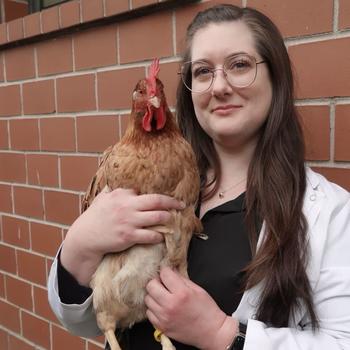
Larissa Schlegel-Pape serves as a Scientific Associate at the Department for Ornamental and Pedigree Poultry within the Farm Animal Clinic of Freie Universität Berlin's Faculty of Veterinary Medicine. Her work focuses on developing innovative methods for assessing chicken welfare through the creation of the "Stressed Chicken Scale," which aims to systematically identify stress indicators in poultry. Her research interests center on animal welfare science, specifically stress assessment in chickens using both behavioral observation and computer vision technology. She investigates how body posture, movement patterns, and other visual indicators can reliably signal discomfort or stress in poultry, with the goal of creating practical assessment tools for veterinarians and poultry farmers. Her work bridges veterinary medicine, ethology, and technological innovation, contributing to refinement research (one of the 3Rs principles) in animal husbandry. Analysis of her publications reveals a strong focus on developing and validating the Stressed Chicken Scale across multiple contexts. Her work spans methodological development, practical implementation studies, and technological integration with computer vision systems. The research demonstrates progression from conceptual framework to validation studies and practical application, with increasing sophistication in assessment techniques and broader implications for animal welfare standards in poultry farming. Schlegel-Pape actively collaborates with the Federal Institute for Risk Assessment (BfR) and participates in interdisciplinary projects involving artificial intelligence applications in agriculture. She presents her findings regularly at major German veterinary conferences including the DVG (Deutsche Veterinärmedizinische Gesellschaft) events, DACh Epidemiology conferences, and specialized poultry medicine gatherings. Her work contributes significantly to advancing animal welfare assessment methodologies and promoting refinement in poultry husbandry practices.
Reed Maxwell is the William and Edna Macaleer Professor of Engineering and Applied Science in the Department of Civil and Environmental Engineering and the High Meadows Environmental Institute at Princeton University. He serves as Director of the Integrated Groundwater Modeling Center (IGWMC) and leads a research group comprising graduate students, postdoctoral researchers, and staff. His academic appointments include concurrent roles in both the School of Engineering and Applied Science and the High Meadows Environmental Institute. Maxwell's research focuses on understanding connections within the hydrologic cycle and how they relate to water quantity and quality under anthropogenic stresses. His work centers on hard problems in hydrology including groundwater, evapotranspiration and snow. His research group uses integrated hydrologic modeling, field observations, and remote sensing products to study terrestrial freshwater systems. Key research areas include surface water and the terrestrial hydrologic cycle; interactions of the land-surface, surface water and groundwater; and human health risk assessment. Maxwell has authored more than 185 peer-reviewed journal articles with an H-Index of 66 and over 19,000 citations. His recent work emphasizes machine learning applications in hydrology, continental-scale modeling, and physically rigorous scenario generation through projects like HydroFrame and HydroGEN. He teaches courses including CEE 306/ENV 318 Hydrology: Water and Climate and CEE 586/ENV 586 Physical Hydrology. 2020 Distinguished Henry Darcy Lecturer American Geophysical Union Fellow (2019) 2018 Boussinesq Lecturer Belle van Zuylen Chair (visiting), University of Utrecht 2017 School of Mines Research Award recipient Maxwell has mentored 17 PhD students and 20 MS thesis students throughout his career. His current research group includes multiple postdocs, research software engineers, and graduate students working on projects spanning continental-scale hydrologic modeling, groundwater-stream interactions, and machine learning applications in hydrology. The IGWMC maintains an active education and outreach program including STEM fairs, school visits, and digital educational tools like the HydroFrame Education Team's virtual sandtank aquifer model.
Ashli Owen-Smith is a behavioral scientist affiliated with the School of Public Health at Georgia State University , where her research focuses on mental health disparities, suicide prevention, and integrative/complementary approaches for complex mental-physical health conditions. She works with underserved populations including refugees/immigrants, incarcerated individuals, and LGBTQ+ communities through community-based participatory research and mixed-methods frameworks. Her current projects are funded by CDC , DBHDD , and DPH . Education: Ph.D. in Behavioral Sciences (Emory, 2009), S.M. in Public Health (Harvard, 2005), B.A. in Psychology (Smith College, 2001) Her research spans mental health , trauma , suicide prevention , and mindfulness-based interventions . Recent work examines telehealth adaptations for chronic pain and mental health, vaccine hesitancy in refugee communities, and social determinants of suicide . She leads studies on gender-affirming care and health disparities in LGBTQ+ populations. Key article trends include epidemiological analysis of suicide risk factors, COVID-19 impacts on mental health, ICD-10 coding for autism, and complementary medicine in trauma recovery. Subfields span telehealth , health equity , mental-physical comorbidity , and community engagement . Students she has mentored include C.A. Scarlett , T. Griner , and M.M. Sesay . Her work integrates public health policy , clinical research , and health systems analysis .