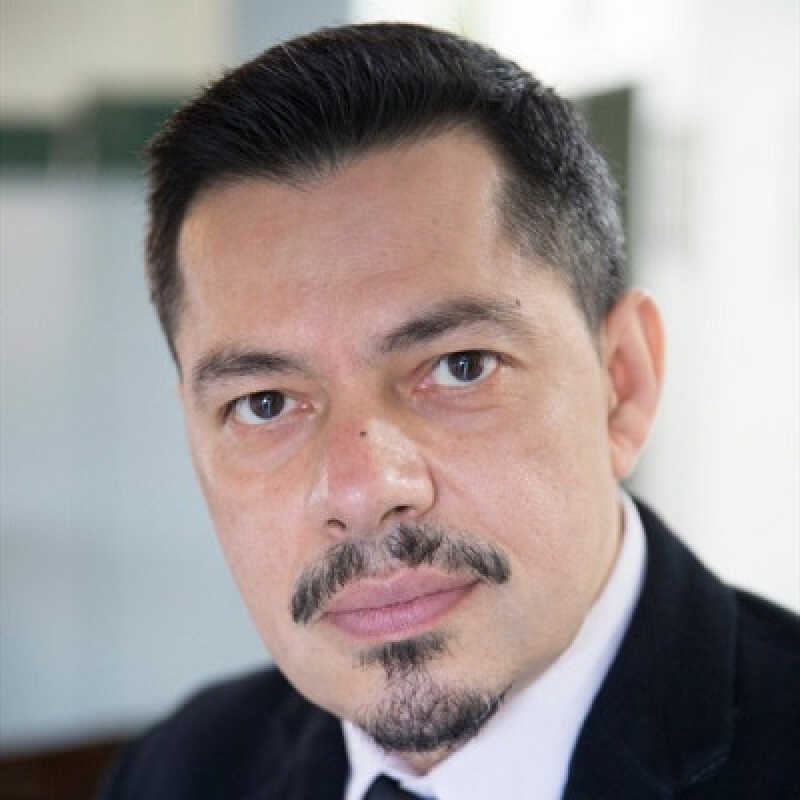
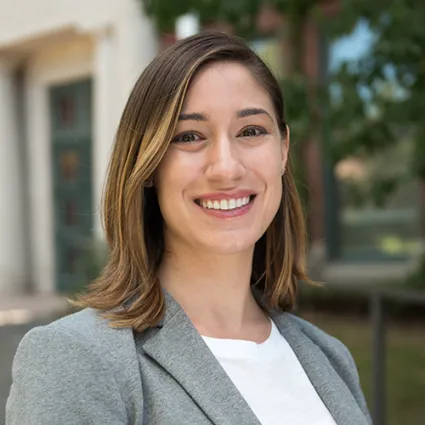
Jane Turner is a Senior Lecturer at London Metropolitan University and an acclaimed choreographer, researcher, and director of the dance company TURNING WORLDS. With a career spanning dance, theatre, film, and interdisciplinary collaborations, she merges art, science, and technology to pioneer innovative performance practices. Education: PhD in Complexity as Choreographic Model (University of Chichester, 2012) Professional Affiliations: External Examiner at University of Bedfordshire and ESART Barcelona; collaborator with Cambridge University Computer Laboratory, British Embassy Warsaw, and Imperial College London Her research focuses on self-organizing systems, complexity, and emergence in choreography, showcased through projects like Gog Magog (2020) and Marconi’s Leap (2021). Recent articles and performances highlight her work in digital performance, environmental art, and intercultural praxis. Jane’s work has earned recognition, including the Pavilion Dance South West’s Joie de Vivre Bronze Award (2016). She is a Senior Fellow of the Higher Education Academy and facilitates collaborations with organizations like Duckie, National Portrait Gallery, and CAST. Teaching Expertise: Specializes in dance, choreography, and creative practice with diverse communities, including prisoners, over-60s, and young people. Labs/Teams: Collaborates with international artists, scientists, and technologists; leads seminars at institutions like University of Cambridge and University of Essex.
Scott Anderson is an Associate Professor at the Department of Philosophy, University of British Columbia, with a focus on Ethics , Feminist Philosophy , and Social-Political Philosophy . His work bridges ethical theory and practical issues, particularly in gender relations, coercion, and the impact of technology on privacy. Education: Ph.D. from the University of Chicago. Roles: TA Coordinator in the Department of Philosophy. Research: Explores coercion, gender hierarchy, sexual autonomy, and Aristotelian ethics. Funded by SSHRC (2012–2016) for research on "The Regulation of Coercion." Teaching: Courses include Ethics, Social and Political Philosophy, Sex and Gender Philosophy, and Power and Oppression. Graduate seminars on coercion and action theory. Publications: Recent work examines torture ethics, rape as coerced sex, gender dynamics in social norms, and the philosophy of privacy.
Robert G. Lord is a Professor affiliated with Durham Business School at Durham University. Previously, he served as Distinguished Professor of Psychology at the University of Akron for 38 years. He holds a Ph.D. from Carnegie-Mellon University (1975) and has authored over 125 journal articles and books. His research focuses on leadership perceptions, motivation, complexity theory, ethical leadership, and cognitive processes in organizational behavior. Lord is a Fellow of the American Psychological Association and Association for Psychological Sciences, and has received prestigious awards for his contributions to leadership research. Education: Ph.D. in Psychology, Carnegie-Mellon University, 1975 Research Interests: Lord’s work explores leadership dynamics through cognitive and social frameworks. Key themes include leadership categorization theory, follower self-identity, complexity leadership theory, and the interplay of emotion and memory in leadership processes. He emphasizes dynamic systems approaches to understanding leader-follower interactions and has pioneered studies on leadership emergence and identity dynamics. Recent Trends in Publications: Recent work focuses on leader identity fluidity, cognitive architectures in leadership perception, and the impact of vulnerability and narcissism on leadership behaviors. His research bridges psychological theory with organizational practices, emphasizing practical applications for leadership development. Awards and Honors: 2009 Leadership Quarterly Distinguished Scholar Award 2012 SIOP Distinguished Scientific Contribution Award Fellow of APA and APS Advising and Grants: He supervises doctoral students like Carolina Bysh and has contributed to grants exploring leadership skill development, gender/race impacts on leadership, and ethical leadership frameworks. Labs/Teams: While no specific lab is named, his collaborations involve interdisciplinary teams studying leadership processes, including work with Durham Business School colleagues and international researchers in leadership and organizational behavior.
Kimberley L. Gammage is a Professor in the Department of Kinesiology at Brock University, serving as Director of the Master of Professional Kinesiology Program and the SeniorFit exercise program at the Brock-Niagara Centre for Health & Well-Being. Her research focuses on body image, particularly positive body image, and its relationship with physical activity across diverse populations including university students, older adults, and individuals with chronic conditions such as multiple sclerosis and cardiovascular disease. She employs both qualitative and quantitative methodologies to explore how exercise environments, yoga, and educational interventions can improve psychological and physiological outcomes. Recent work includes studying the impact of online fitness programming during the pandemic and cortisol responses to body image threats. Professional Affiliations: NASPSPA, SCAPPS, Digest Editor for the Journal of Sport and Exercise Psychology Certifications: Certified fitness, spin, and yoga instructor Her teaching portfolio includes courses such as Exercise Psychology, Body Image, and Programming for Older Adults. She leads initiatives like the BIAS (Body Image Awareness Seminars) program, co-created with community members to promote positive body image. Research grants include SSHRC Insight Grant ($192k) for studying positive body image across the lifespan and NSERC funding ($40k) examining psychobiological responses to social-evaluative threats.
Mike Dodd is a Professor in the Department of Psychology at the University of Nebraska-Lincoln, College of Arts and Sciences. He directs the Vision, Attention, Memory & Perception (VAMP lab) and serves as Graduate Chair in his department. A core faculty member at the Center for Brain, Biology, and Behavior (CB3), he engages in interdisciplinary research on cognition, athletic performance, and concussion studies. Research Focus: Dr. Dodd investigates visual attention mechanisms (including visual search, scene perception, and eye movement dynamics), memory systems (false memory, retrieval-induced forgetting), and interactions between cognitive networks. His work bridges cognitive neuroscience with real-world applications like workplace hazard detection. Scientific Contributions: Recent studies examine Perceptual estimation errors in dynamic displays Emotion processing in oculomotor tasks Change blindness applications to occupational safety 3D attentional warping phenomena Collaborative visual search dynamics These publications demonstrate his focus on attention-perception-memory interplay across diverse contexts. Awards & Recognition: Killam Postdoctoral Fellowship Former Editor-in-Chief of Attention, Perception, & Psychophysics Lab Activities: The VAMP lab actively explores these domains through both individual and team-based research projects. Further details about ongoing work can be found at VAMP Lab Research Page .
Alan McKee is a Professor and Head of the School of Art, Communication and English at The University of Sydney. He holds a PhD in Communication and Media Studies from the University of Glasgow. His research focuses on pornography's effects, healthy sexual development, and the role of entertainment in society. McKee has authored influential books such as What Do We Know About the Effects of Pornography After Fifty Years of Academic Research? (2022) and Objectification: On the Difference Between Sex and Sexism (2021). McKee's work bridges media studies, sexuality studies, and cultural analysis. He advocates for evidence-based policies on digital sexual literacy and has been recognized as Australia’s leading sex and sexuality researcher (2025). His recent grants include a 2024 Australian Research Council project on improving digital sexual literacy. He frequently engages with media, discussing topics like ethical pornography criteria (2023) and age verification systems (2024). His research appears in journals like New Media & Society and Culture, Health & Sexuality , emphasizing interdisciplinary collaboration between humanities and social sciences. Awards: Leading sex and sexuality researcher (Australian newspaper, 2025) Grants: 2024 ARC Discovery Project on digital sexual literacy Labs/Teams: Leads the School of Art, Communication and English at Sydney University, fostering interdisciplinary research in media and cultural studies.
Dr. Helen Ngo is an Australian Research Council DECRA Research Fellow and Lecturer in Philosophy at Deakin University's Alfred Deakin Institute, specializing in phenomenology, critical philosophy of race, and feminist philosophy. She earned her PhD from Stony Brook University (USA) and has authored The Habits of Racism (2017) and co-edited Philosophies of difference (2019). Her research examines racialized embodiment, temporalities, antiracist activism, and diasporic bilingualism through phenomenological frameworks. Current projects investigate racialized alienation and diasporic home-making practices. She has supervised doctoral research on 'Reimagining Motility' and mentors students in critical phenomenology. Major recognition includes an ARC DECRA Fellowship (2022-2024) for her project 'No place like home? A phenomenology of racialised non-belonging'. Publications consistently explore racial embodiment, temporal injustice, linguistic identity, and critiques of white supremacy.
Nils-Hennes Stear is an Assistant Professor in the Department of Philosophy at Uppsala University, specializing in aesthetics and ethics. He holds a PhD from the University of Michigan (2016) and has held postdoctoral positions at institutions including Universität Hamburg, Auburn University, and the University of Southampton. His research focuses on intersections between aesthetics and ethics, particularly cultural oppression in art, moral responsibility of artists, and feminist philosophy. Education highlights include a PhD in Philosophy (University of Michigan, 2016), MA (University of Sheffield, 2009), and BA (University of Sheffield, 2007). His teaching spans undergraduate and graduate courses on philosophical aesthetics, art ethics, and the philosophy of imagination. Key research interests include ethical evaluation of artworks, cultural appropriation in aesthetic practices, and the normative dimensions of imaginative engagement. Notable works include Autonomism (2023), Imagining in Oppressive Contexts (2023), and Fatal Prescription (2020). He has received awards such as the Australasian Journal of Philosophy Best Paper Award (2020) and has secured grants including a Humboldt Research Fellowship (€157,500) and Marie Skłodowska-Curie Fellowship (€195,455). His service includes leadership roles in academic societies and initiatives promoting diversity in philosophy. Professional activities include editorial work for Hypatia , service on ethics committees, and public engagement through films and media commentary on art ethics. His interdisciplinary approach bridges philosophy with social justice concerns in cultural production.
Sophia Choukas-Bradley is an Associate Professor in the Gender, Sexuality, & Women's Studies Program at the University of Pittsburgh, affiliated with the Kenneth P. Dietrich School of Arts and Sciences. Her research focuses on sociocultural and interpersonal influences on adolescent mental health, particularly examining how social media impacts body image, identity development, and well-being in LGBTQ+ youth. She holds a Ph.D. from the University of North Carolina at Chapel Hill and supervises graduate advisees in clinical, developmental, and social psychology. Choukas-Bradley’s work emphasizes intersectional approaches to understanding how gender, race/ethnicity, and sexual identities intersect with body image and mental health. Her lab (TAYA Lab) explores topics like minority stress among gender minorities, digital media’s role in self-objectification, and pandemic-related mental health trends. Key areas include LGBTQ+ youth resilience, social media consciousness, and feminist identity formations. Her recent publications highlight frameworks linking social media use to adolescent girls’ mental health ('The perfect storm'), longitudinal studies on appearance-related consciousness, and qualitative insights from transgender adolescents. She has contributed to theoretical reviews on digital well-being during the pandemic and co-designed interventions to reduce social isolation among rural LGBTQ+ youth. Key Research Themes: Social media psychology, body image, LGBTQ+ health, intersectionality Labs/Teams: TAYA Lab (Twitter: @TAYA_Lab) Grants: NSF CAREER grant for 'Social Media and Body Image Among Adolescent Girls' (2024) Choukas-Bradley currently does not accept new graduate students but collaborates on interdisciplinary projects across psychology, public health, and digital media studies.
Pamela June is an Associate Professor of English in the Department of English at Ohio University’s College of Arts and Sciences, Eastern Campus. She is based in Shannon Hall and contributes to interdisciplinary scholarship in feminist theory, ecofeminism, and postmodern multiethnic literature. Education: Ph.D., Indiana University of Pennsylvania M.A., Indiana University of Pennsylvania B.A., University of Pittsburgh Her research centers on feminist literary criticism, with a focus on ecofeminism, animal ethics, and the representation of fragmented female identity in contemporary literature. She explores works by Alice Walker, Toni Morrison, and Gloria Naylor through intersectional lenses of race, gender, and environmental ethics. Her scholarship also examines inclusivity in virtual education and challenges heteronormative structures in narrative. The publication trends reveal a sustained engagement with feminist and postmodern themes, particularly the ethics of care for nonhuman beings, the politics of memory, and resistance through narrative form. Her works span monographs, journal articles, and contributions to edited volumes, reflecting a deep commitment to interdisciplinary dialogue. Scientific Awards: Pamela June has advised graduate students in English and feminist studies, though specific names are not listed. Her research has been supported through academic appointments and institutional affiliations, contributing to discourse on equity in virtual learning environments and ethical literary representation. She has published on pedagogical inclusivity and the role of empathy in teaching marginalized texts. Labs and Research Teams: While no formal lab or research team is mentioned, her work suggests collaboration with scholars in ecofeminism, animal studies, and digital pedagogy through publications and interdisciplinary journals.
Cecilie Haraldseid-Driftland is an Associate Professor at the Faculty of Health Sciences , University of Stavanger , Norway, affiliated with the Department of Quality and Health Technology and SHARE- Center for Resilience in Healthcare . With a clinical background as a registered nurse, she focuses on translating resilience theory into practical applications for healthcare systems. Key Research Areas: Resilience in healthcare, collaborative learning, technology-enhanced education, patient safety, and mental wellbeing in aged care. Major Grants: Involved in the Research Council of Norway project (2018-2024, €5 million) and the EU Horizon Europe Grant Support4Resilience (S4R) (2024-2028, €6 million) targeting elderly care mental wellbeing. Leadership: Contributes to international healthcare policy development and stakeholder mapping in resilience programs. Recent Publications focus on resilience operationalization, technology-driven learning tools, and mental wellbeing interventions, with a methodology emphasis on qualitative and mixed-method studies across diverse healthcare contexts. She actively participates in global forums like the International Forum on Quality and Safety in Healthcare and collaborates on annual reports for SHARE- Center for Resilience in Healthcare.
Thomas L. Budesheim, PhD, is an Associate Professor in the Department of Psychological Science at Creighton University's College of Arts and Sciences. His office is located in the Hixson Lied Science Building (HLSB 331), and he can be contacted via email at thomasbudesheim@creighton.edu or phone at 402.280.3000. His research focuses on social psychology with emphases on: Objectification theory and gender-based perceptions Psychological mechanisms in juror decision-making Stereotype formation and prejudice dynamics Social-cognitive processes in legal contexts His publications demonstrate consistent focus on experimental social psychology, particularly examining biases in social judgments across legal and gender-related contexts. Recent work explores stereotype activation and sexual orientation prejudice. Awards include: Iggy Award (2015) - Recognized by the Office of Retention and Student Success for exceptional mentorship of first-year students
Jana Kružíková serves as Assistant Professor in the Department of Philosophy at Charles University's Faculty of Humanities, Prague, holding this position continuously since 2001 after progressing from Teaching Assistant (1999-2000) to Research Fellow (2000-2001) at the same institution. Education: Ph.D. in Philosophy, UK PedF (2003) Mgr. (Master's equivalent), PedF UJEP (1995) Her research centers on German Phenomenology with specialized focus on Martin Heidegger's philosophy and Aristotle's epistemology, complemented by historical investigations into 18th-century Czech religious minorities. This dual trajectory bridges classical philosophy and Central European intellectual history through rigorous textual analysis. Dr. Kružíková's publication record reveals sustained engagement with Heidegger's philosophy of science, particularly examining the evolution of basic concepts in scientific and theological contexts, temporal ontology in early works, and mathematization processes. Her output spans monographs, journal articles in Filosofický časopis, and contributions to edited volumes on phenomenological interpretation. She maintains international scholarly connections through a documented research stay at Technische Universität Dresden (2001-2002) supported by Quandt's Student Grant, reflecting ongoing engagement with German academic traditions.
Dr. Eduardo Vasquez is a Senior Lecturer in Forensic Psychology and Senior Academic Adviser at the School of Psychology, University of Kent. His work bridges forensic and social psychology, focusing on aggression, inter-group violence, and alcohol-related behavior. Research Interests Aggression and displaced aggression Inter-group relations (personalization, self-disclosure, inter-gang violence) Alcohol and social behavior (aggression, inter-group anxiety) Sexual objectification and domestic violence Supervision & Grants He supervises postgraduate students, including Alvaro Rodriguez and Anita Ruddle, whose work explores domestic violence proclivity and aggression predictors. Grants include funding from Kent Police (2015, £24,000) and Stockholm Police (2012, €2,500) for research on neighborhood panels and crime displacement.
Randi L. Garcia is an Associate Professor of Psychology and of Statistical & Data Sciences at Smith College, where she has taught since 2016. Her interdisciplinary work bridges social psychology and statistical methodology, with a focus on understanding how status and power dynamics in daily interactions reproduce social inequalities. She teaches courses in both the Psychology Department and the Program in Statistical and Data Sciences, including research methods, psychology of women and gender, and statistical methods for undergraduate research. Education: PhD in Social Psychology, University of Connecticut MS in Statistics, University of Connecticut BA in Psychology and Women's Studies (Double Major), University of California, Los Angeles Randi Garcia's research explores interpersonal interactions and relationships among people with different social group identities across various contexts. Her work examines sexual objectification among newly acquainted individuals, racial bias in dyadic and group interactions, and inequality in household labor. Using quantitative methods and dyadic data analysis, she investigates how daily interactions contribute to larger social inequalities. Her methodological expertise includes the Actor-Partner Interdependence Model and other advanced statistical techniques for analyzing relational data. Analysis of Garcia's recent publications reveals a consistent focus on intersectional approaches to understanding social dynamics. Her work spans social psychology, family studies, and statistical methodology, with particular emphasis on LGBTQ+ families, racial dynamics in interpersonal interactions, and gender inequality. A recurring theme is the application of sophisticated dyadic and group-level statistical models to understand how individual experiences are shaped by relational contexts. Scientific Awards: Sherrerd Prize for Distinguished Teaching, Smith College, 2019 President's Innovation Challenge, Smith College, 2018-2019 Kahn Institute short-term project, Smith College, 2018 SGA Smith College Teaching Award (untenured Faculty), 2018 Curriculum Enhancement Grant (SDS/MTH 290), Smith Botanic Garden, 2018 APA Division 49, Small Groups, Dissertation Award Finalist, 2013 Garcia serves as a Methods and Statistics Associate Editor for the Journal of Personality and Social Psychology and on the editorial board of Personality and Social Psychology Bulletin. She has advised numerous undergraduate researchers, many of whom have co-authored publications with her. Her work has been supported by various grants including the Curriculum Enhancement Grant from the Smith Botanic Garden. Garcia has developed the dyadr R package for dyadic data analysis, demonstrating her commitment to advancing methodological approaches in social psychology research. Randi Garcia leads research on sexual objectification, dyadic data analysis, and inequality in the home. She collaborates with colleagues across disciplines, particularly in the areas of LGBTQ+ family studies and racial dynamics. Her work with the dyadr R package has created valuable resources for researchers studying interpersonal relationships. She frequently conducts workshops on dyadic data analysis, including the annual Data Analysis Techniques for Interpersonal Contexts (DATIC) workshop.

.jpg)