Erin Hurley is a Professor in the Department of Drama and Theatre at McGill University's Faculty of Arts. Specializing in Quebec drama and feminist theatre, her work interrogates how theatre manages difference through performance, representation, and affect. She holds a Ph.D. from the City University of New York, an M.A. from Brown University, and an Honours B.A. from McGill University. Her research focuses on Quebecois theatre, national performatives, affect theory, and LGBTQ2IAS+ representations. Her scholarly contributions include co-authoring National Performance: Representing Quebec from Expo 67 to Céline Dion (2011) and editing volumes like Theatres of Affect (2014). She has received prestigious awards such as the Fulbright Distinguished Chair in Quebec Studies and the Royal Society of Canada’s College of New Scholars membership (2015–2022). Hurley’s research integrates public scholarship and creative practice, including collaborations on staged readings and a storymapping website documenting Quebec’s English-language theatre history. She has held SSHRC grants (2008–2011; 2015–2017; 2018–2023) and contributes to interdisciplinary research groups like CRILCQ and CIRM. Previously taught at the University of British Columbia and Brown University.
Maeva Le Roy is a Postdoctoral Fellow at ITI MAKErS, University of Strasbourg, affiliated with the SAGE laboratory (Sociétés, acteurs, gouvernement en Europe), a CNRS-University of Strasbourg joint research unit. She holds a PhD in History from the European University Institute (Florence), defended in May 2023, supervised by Stéphane Van Damme and Isabelle Laboulais. Her research focuses on the socio-history of administrative knowledge in 19th-century Europe, particularly the concept of 'l’esprit public' and the development of statistical governance. Her research interests lie at the intersection of history and political science, emphasizing the social history of the state, administrative epistemologies, bureaucratic technologies, and the circulation of knowledge in Napoleonic and post-revolutionary Europe. She investigates how categories like 'public spirit' were operationalized through surveys, reports, and tabular formats to shape state intervention and governance. Her work explores the adaptation of French administrative models in annexed territories, particularly in Northern Italy, and the role of bureaucratic practices in state formation. The trends in her recent publications reveal a consistent focus on the material and cognitive dimensions of governance. She analyzes how administrative tools—especially tables and surveys—function as both epistemic instruments shaping knowledge and political technologies transforming government practices. Her articles span journals in history and political science, demonstrating interdisciplinary engagement with themes of state surveillance, bureaucratic classification, and the construction of governmental rationalities in early 19th-century Europe. Scientific Affiliations: ITI MAKErS (Institut thématique interdisciplinaire Fabrique de la société européenne), University of Strasbourg SAGE Laboratory (Sociétés, acteurs, gouvernement en Europe), CNRS & University of Strasbourg European University Institute (Florence) – Doctoral Affiliation She has taught methodology courses in political science and sociology at Sciences Po Strasbourg and serves as the representative of non-tenured staff on the SAGE laboratory council. While no formal advisees are listed, her collaborative research projects and conference participation indicate active engagement in mentoring and academic exchange. Her work is supported by interdisciplinary research networks focused on the history of knowledge and state formation. Laboratory and Research Environment: Based at the Misha building, Esplanade Campus, University of Strasbourg Active member of SAGE’s Axis 4: State, Work, Government Systems Participates in interdisciplinary workshops and seminars on administrative history and knowledge production Engaged in the ITI MAKErS research program on the fabrication of European society
Dr. Stefanie Ullmann is a Researcher at the University of Cambridge's Minderoo Centre for Technology and Democracy . She holds a PhD in Linguistics from University of Marburg, Germany, where her thesis analyzed metaphorical framing of the 2011 Arab Spring revolutions in media/political discourse. Her research spans functional linguistics, critical theory, and digital ethics with particular focus on algorithmic bias, counterspeech strategies, and socio-political conflict discourse. Current affiliation: University of Cambridge, UK Education: PhD in Linguistics (University of Marburg, Germany) Key research areas: Critical metaphor analysis, corpus linguistics, machine translation ethics, digital democracy Recent projects: Giving Voice to Digital Democracies (AI communication impacts) Her publications include: Discourses of the Arab Revolutions in Media and Politics (Routledge, 2022) - monograph on metaphorical framing Counterspeech: Multidisciplinary Perspectives (Routledge, 2023) - co-edited volume on dangerous speech mitigation Contact: su272@cam.ac.uk
Monica Biernat is a University Distinguished Professor and Associate Chair in the Department of Psychology at the University of Kansas. She directs the Ph.D. Program in Social Psychology and leads the Stereotyping & Social Judgment Lab. Her research focuses on how stereotypes influence social judgment, particularly regarding race, gender, and intergroup dynamics. She holds a Ph.D. in Psychology from the University of Michigan and has been recognized with the University Distinguished Professor title. Education: Ph.D. in Psychology (Social), University of Michigan M.A. in Psychology, University of Michigan B.A. in Psychology and Communication, University of Michigan Research Interests: Dr. Biernat examines stereotyping, prejudice, and discrimination through the lens of shifting standards theory. Her work explores how subjective language and category-specific expectations shape evaluations of individuals from stereotyped groups. Key areas include gender bias, racial invisibility, cultural appropriation, and workplace discrimination. She employs experimental and quantitative methods to study social cognition and intergroup relations. Lab & Students: Her Stereotyping & Social Judgment Lab trains graduate students (e.g., Sol Corral, Jordan Cortesi, Emily Watkins) in empirical research. Recent Ph.D. graduates include Claire Gravelin (SUNY Geneseo) and Ariel Mosley (UC Davis). Undergraduates can join her lab through PSYC 480 credit or volunteer opportunities. Awards & Contributions: University Distinguished Professor Award for Distinguished Scientific Early Career Contributions (1999) Over 100 peer-reviewed publications addressing societal issues like gender bias in academia, cultural appropriation, and racial discrimination Teaching & Service: She teaches courses on social psychology, research methods, and attitudes. Her work impacts policy debates on diversity, equity, and inclusion in education and employment.
Dr. Timothy Welsh is a full-time Professor in the Action & Attention Lab at the University of Toronto's Faculty of Kinesiology & Physical Education , where he also serves as Associate Dean, Research since 2023. With cross-appointments from the Faculty of Physical Education and Health, his work bridges cognitive neuroscience and motor behavior research. Academic Background Ph.D. in Human Biodynamics (McMaster University, 2002) M.Sc. in Human Biodynamics (McMaster University, 1999) B.P.H.E. in Physical and Health Education (University of Toronto, 1997) Dr. Welsh's research explores neural mechanisms of goal-directed actions across typical and neurodiverse populations. His lab investigates joint action dynamics , self-objectification effects on motor performance , and cross-reality sensorimotor adaptation , with significant focus on autism and developmental coordination disorder. Recent publications (2024-2025) reveal systematic differences in motor imagery between autistic and non-autistic adults , gender-specific learning patterns , and cross-modal sensory integration challenges in mixed reality environments . These studies demonstrate his lab's expertise in combining behavioral experimentation , EEG analysis , and computational tool development like TAT-HUM. Scientific Recognition Franklin Henry Young Scientist Award Early Distinguished Career Award (NASSP) Outstanding Graduate Supervision Award As principal investigator on 15 active grants (2015-2027), including projects on digital health platforms for concussion rehabilitation and AI-assisted VR learning modules , Welsh's work impacts both basic science and applied interventions. His lab trains students at all levels through KPE 362 (undergraduate) and KIN 5514 (graduate) courses.
Laura Gonzalez is a Professor of Research and Interdisciplinary Work at the Royal Conservatoire of Scotland and an Athenaeum Research Fellow. She serves as a summer faculty member, advisor, and supervisor for the MFA and PhD residency program at Transart Institute. Her work spans performance art, medical humanities, psychoanalysis, and embodied practices, with a particular focus on hysteria studies and breathwork. Her educational background includes: PhD in Cultural Communication and Computing Research Institute (C3RI), Art and Design Research Centre, Sheffield Hallam University (2005-2010) Postgraduate Certificate in Learning and Teaching in Art, Design and Communication (2004-2005) Master of Fine Art: Drawing, Wimbledon School of Art (2000-2001) Licenciada en Bellas Artes (BA equivalent), Universidad del Pais Vasco, Spain (1995-2000) Gonzalez's research explores the intersections of performance, psychoanalysis, and medical humanities, with particular emphasis on hysteria as a cultural and embodied phenomenon. Her work investigates how knowledge is produced through the body, especially through 'illegitimate forms of knowledge' such as intuition, magic, and oracles. She examines the relationship between breath, performance, and consciousness, developing practices that connect somatic awareness with artistic expression. Her research also engages with feminist theory, exploring how women's bodies have been historically pathologized while simultaneously serving as sites of resistance and creative transformation. Her recent publications reveal a consistent trajectory exploring embodiment, hysteria, and breath as artistic and scholarly concerns. She has increasingly focused on the medical humanities, examining historical medical texts and case histories through performance. Her work demonstrates a movement from theoretical analysis of seduction in art toward practical applications of breathwork and embodied knowledge in performance contexts. The interdisciplinary nature of her scholarship bridges art practice, psychoanalytic theory, and medical history. Her notable awards and recognitions include: Shortlisted for the Adrian Howells Award For Intimate Performance (2019) Athenaeum Award – Knowledge Exchange Route (2023) Glasgow Medical Humanities Network Foundation Award (2023) Athenaeum Award for research (2021) Multiple Research Development Funds from The Glasgow School of Art (2012-2016) AHRC Collaborative Doctoral Awards (2005, 2006, 2013) Gonzalez has supervised numerous doctoral students across institutions including the Royal Conservatoire of Scotland, Glasgow School of Art, and Transart Institute. Her supervision focuses on interdisciplinary projects at the intersection of performance, visual arts, and embodied research. She has secured significant grant funding for projects exploring the relationship between imitation and dance, breath practices, and hysteria studies. Her collaborative projects often involve partnerships with medical humanities scholars, performance practitioners, and community organizations. She is actively involved in several research collectives including The Workroom (since 2017), where she develops collaborative performance projects. She co-founded @TheGlasgowJam (2015-2018), creating space for multidisciplinary arts exploration. In 2021, she created the Scottish Breath Network, fostering interdisciplinary research on breathing practices. She also co-founded the Dialectical Materialist Book Group with Ian Macbeth, exploring Marxist theory through collective reading.
Thomas P. Kelly is an Assistant Professor in East Asian Languages and Civilizations at Harvard University, where he holds a position in the Faculty of Arts and Sciences. He earned his PhD from the University of Chicago (2017) and BA from the University of Oxford (2009). Previously, he served as a Junior Fellow in the Society of Fellows at the University of Michigan. As President of the Society for Ming Studies, he actively contributes to scholarly networks in early modern Chinese studies. His research focuses on Chinese literature, material culture, and pre-modern media studies, particularly exploring the interplay between writing and material objects in the Ming and Qing periods. His monograph The Inscription of Things: Writing and Materiality in Early Modern China (2023) examines how writers engaged with materiality through inscriptions on objects. Current projects include The Unfinished Book , analyzing manuscript culture during the Ming-Qing transition, and a study of performance theory via Pan Zhiheng’s essays. His work spans late imperial drama, fiction, poetry, and prose. Key research themes include the materiality of literature, rituals in performance, and the poetics of incompletion. His publications investigate topics such as mourning rituals in early Qing theater, the cultural significance of seal carvers’ biographies, and the role of objects in Ming-Qing literary imagination. He frequently critiques the relationship between textual production and social dynamics, emphasizing how material forms shape literary meaning. His articles demonstrate a focus on interdisciplinary approaches, blending literary analysis with art history, anthropology, and cultural studies. Notable works include explorations of Hong Sheng’s Palace of Lasting Life , Su Shi’s ink-making practices, and Fang Yongbin’s calligraphic materiality. His 2024 article ' The Crying Statue in Early Qing Drama ' delves into contested staging practices of theatrical mourning rituals. Though no formal grants or labs are listed, his academic leadership (e.g., Society for Ming Studies presidency) underscores his role in fostering collaborative research. His work bridges textual analysis with broader cultural histories, positioning material objects as central to understanding Chinese literary and intellectual traditions.
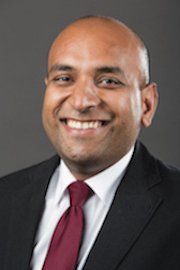
Dr. Abhishek Bhati is an Associate Professor of Political Science at Bowling Green State University (BGSU) and Director of the Asian Studies Program. He holds a B.A. in Business Economics from the University of Delhi, an M.A. in Social Entrepreneurship from the Tata Institute of Social Sciences, Mumbai, and a Ph.D. in Public Administration from the University of Nebraska at Omaha. His research focuses on nonprofit studies, international development, and public administration, with an emphasis on how nonprofits reduce social inequities and the role of government in regulating civil society. He serves on the Bowling Green City Planning Commission and as a Trustee of the Bowling Green Community Foundation, demonstrating his commitment to community engagement. Dr. Bhati teaches courses such as Introduction to Public Administration, Nonprofit Administration, and Politics & Issues of World Development. His research explores topics like the impact of social media on fundraising, diversity in nonprofit messaging, and postcolonial theory’s relevance to equity studies. Recent work includes analyses of pandemic-era government relief funds in Asia and implicit bias in charitable giving. His scholarly contributions span experimental fundraising studies, nonprofit governance, and the visual representation of beneficiaries in philanthropy. Dr. Bhati’s interdisciplinary approach bridges political science, public policy, and civil society dynamics, with a focus on both U.S. and comparative contexts. His service roles and academic leadership reflect a dedication to advancing public understanding of nonprofit ecosystems and societal equity.
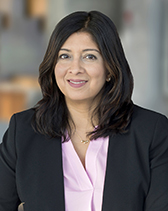
Shalini Shankar is a Professor in the Department of Anthropology at Northwestern University with a joint appointment in Asian American Studies. Her research bridges sociocultural and linguistic anthropology, focusing on race & ethnicity, diaspora and migration, youth culture, media, advertising, and semiotics, particularly within South Asian and Asian diasporas in the United States. Ph.D., New York University (2003) Email: sshankar@northwestern.edu Shankar's research examines how cultural practices intersect with immigration, neoliberalism, and media landscapes. Her work includes ethnographic studies of South Asian American youth in Silicon Valley, advertising agencies in major U.S. cities, and spelling bee participants, analyzing themes like the 'model minority' stereotype, racialized marketing, and competitive childhood. Her funded projects include National Science Foundation grants (BCS-1323769 and BCS 0924472) and a Wenner-Gren Foundation Post-Ph.D. Research Grant, supporting her books Beeline: What Spelling Bees Reveal about the New American Childhood and Advertising Diversity: Ad Agencies and the Creation of Asian American Advertising . Public Voices/OpEd Project Fellow (2014) NSF Cultural Anthropology Research Grant (2013) Wenner-Gren Post-Ph.D. Grant (2013) NSF Cultural Anthropology Research Grant (2009) Shankar's publications span journals like Journal of Linguistic Anthropology and American Anthropologist , alongside book chapters in anthologies such as Asian American Sporting Cultures . She is actively involved in professional organizations including the American Anthropological Association and Association for Asian American Studies.
Zoe Walker is a Career Development Fellow in Philosophy at Trinity College, University of Oxford. She holds a PhD (2018–2022), MPhil (2016–2017), and BA (2013–2016) in Philosophy from Cambridge University. Her research focuses on humor, comedy, and joking at the intersection of Aesthetics, Ethics, Philosophy of Language, and Philosophy of Mind, with interests in art-morality relationships and language-politics dynamics. Her recent publications include analyses of comic objectification, the role of joking in political speech, and humor sensibility. She teaches courses on General Philosophy, Moral Philosophy, Logic, Aesthetics, Ethics, and Plato’s Republic at Oxford. Walker’s work bridges philosophical theory with practical ethical and aesthetic questions.
Peter Belmi is the Scott C. Beardsley Associate Professor of Business Administration at the University of Virginia's Darden School of Business, with a courtesy appointment in the School of Engineering and Applied Science. He holds a PhD in Organizational Behavior from Stanford University. Research examines: Power dynamics in organizations Socioeconomic inequality and upward mobility Cultural barriers for underrepresented groups Psychological mechanisms reinforcing social disparities Recent publications focus on social class dynamics, workplace bias mechanisms, and organizational structures affecting mobility. Research demonstrates consistent exploration of how power structures influence individual opportunities and organizational culture. Significant honors include: Thinkers50 recognition for management thought leadership Poets & Quants '40 Best Business Professors Under 40' University of Virginia's Mead-Colley Award for teaching excellence Multiple best paper awards from professional societies Teaches MBA courses on leadership and power dynamics, while consulting with executives on organizational development across industries.
Rae Langton is a distinguished academic currently holding the Knightbridge Professor of Philosophy position at the University of Cambridge since 2017. She has held professorial roles at MIT (2004), University of Edinburgh (1999), and lecturing positions at University of Sheffield (1998) and Monash University (1990). Her career spans prestigious institutions across the UK, USA, and Australia. Knightbridge Professor of Philosophy, University of Cambridge (2017) Professor of Philosophy, University of Cambridge (2013) Professor of Philosophy, MIT (2004) Professor of Philosophy, University of Edinburgh (1999) Langton's research focuses on Ethics , Feminist philosophy , Metaphysics , and Philosophy of Law . Her work explores intersections between Kantian thought and contemporary philosophical issues, particularly through epistemological and ontological frameworks. Her publications (2012-2016) demonstrate consistent engagement with speech acts , pragmatics , and metaphysical necessity , while maintaining strong connections to Kantian humility and philosophical methodology . Scientific recognition includes: Fellow of the British Academy (2014) Prospect Magazine's World's 'Most Important' Thinkers (2014) Fellow of the American Academy of Arts and Sciences (2013)
Johannes Paßmann is Junior Professor of History and Theory of Social Media and Platforms at Ruhr University Bochum and Principal Investigator in the CRC/SFB 1472 'Transformations of the Popular' at the University of Siegen. He has held research and teaching positions at Utrecht University, the University of Basel, and the Nordic Centre for Internet & Society. His work bridges media theory, digital culture, and historical praxeology. Research Interests: Media Theory and Platform Studies History and Sociology of Social Media Praxeology and Digital Methods Web Archiving and Historical Reconstruction Paratextuality and Online Commenting Aesthetic Valuation and Recognition His recent publications analyze the social logics of likes, retweets, and comments, tracing their evolution through web archives and software histories. He emphasizes methodological innovation, particularly through the development of Technograph for analyzing archived web data. His work reveals how platform features shape social interaction, public discourse, and cultural recognition. Scientific Awards: Dirlmeyer-Preis for his dissertation Shortlisted for the Volkswagen Foundation’s Opus Primum Prize Grants and Projects: He leads the DFG-funded project 'Historical Technography of Online Commenting' and co-leads 'Medienpraxiswissen' funded by the Stiftung Innovation in der Hochschullehre. He has supervised numerous student research projects and contributes to academic service through peer review and conference organization. Labs and Teams: He is part of the CRC/SFB 1472 at the University of Siegen and collaborates closely with researchers such as Lisa Gerzen, Cornelius Schubert, Anne Helmond, and Martina Schories. Together, they develop tools and methods for qualitative digital research, particularly using web archives to reconstruct past digital practices.
Florian Reinwald is a Researcher at the Institute of Landscape Planning within the Department for Landscape, Water and Infrastructure at BOKU - University of Natural Resources and Life Sciences Vienna . His work focuses on climate change adaptation and gender-responsive urban planning , integrating green infrastructure into spatial development to create resilient cities . Projects : He leads initiatives like Climate-Sensitive Adaptive Planning and Objectification of Urban Climate Analyses , funded by federal institutions (FFG), municipalities, and national bodies. Publications : Over 78 works, including articles on urban climate mapping , policy integration , and gender-sensitive public spaces , with recent contributions in Urban Climate and Urban Forestry & Urban Greening . Media & Outreach : Featured in Austrian media (e.g., Salzburger Nachrichten , Der Standard ) discussing climate-resilient urban design and green infrastructure . Conferences : Delivered keynotes at events like the International Symposium: Designing Green and Resilient Cities and European Climate Change Adaptation Conference , emphasizing cross-disciplinary collaboration and data-driven planning .
Amelia Uelmen serves as the Director for Mission and Ministry and a Lecturer at Georgetown Law, as well as a Senior Research Fellow at Georgetown's Berkley Center for Religion, Peace, and World Affairs. She has established herself as a thought leader at the intersection of law, religion, and dialogue across differences, with particular focus on healing polarization in educational settings. Her educational background includes an S.J.D. completed in 2016 with a dissertation on the moral and legal obligations of bystanders to victims in need of emergency assistance. She earned her B.A. in American studies and J.D. from Georgetown University, as well as an M.A. in theology from Fordham University. Previously, she served as founding director of Fordham University's Institute on Religion, Law & Lawyer's Work (2001-2011) and worked as an associate with law firm Arnold & Porter (1996-2000). Uelmen's research focuses on how religious values might inform tort law, legal ethics, and legal education. She has developed significant expertise in facilitating dialogue across deep differences, with numerous publications addressing polarization healing in educational contexts. Her scholarship examines how principles of dialogue might inform debates about religion in the public square, drawing on her involvement with the Focolare Movement and Jesuit educational traditions. In her recent work, she emphasizes the importance of genuine listening as a foundational skill for critical thinking and empathy in professional and civic life. Her publications demonstrate a consistent focus on creating spaces for meaningful dialogue in increasingly polarized contexts, from classroom settings to broader societal discussions. Uelmen's work connects legal theory with practical applications for fostering understanding across differences, with particular attention to the role of spiritual and religious values in shaping constructive discourse. She has developed concrete frameworks like the '5 Steps to Healing Polarization in the Classroom' (2018) and 'Five Steps to Positive Political Dialogue' (2014). As an educator, Uelmen teaches 'Religion, Morality, and Contested Claims,' a course that helps students develop communication skills necessary for fostering understanding across profound differences. In a recent conversation published in Conversations on Jesuit Higher Education (September 6, 2024), she discussed 'the practice of listening and humanistic education today,' highlighting how faculty can model genuine listening to cultivate these skills in students. She advocates for moving beyond performative communication to create spaces where students feel safe to express vulnerability and explore differences with respect. Uelmen remains active in the Focolare Movement, which informs her approach to building unity across differences. Her recent work addresses timely challenges such as conducting meaningful dialogue during the pandemic and navigating political polarization in the aftermath of events like the Capitol Riot. She continues to develop practical approaches for fostering dialogue in increasingly polarized contexts, both within educational settings and in broader society.