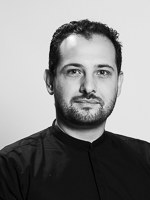
Eduard Kamburjan is a Researcher at the University of Oslo , affiliated with the Reliable Systems (PSY) and Data and Knowledge Systems (DKM) research groups. His work bridges formal methods , digital twin engineering , and knowledge graph applications . Research interests include: Formal verification of hybrid systems using deductive methods Digital twin architecture with compositional correctness guarantees Semantic lifting and ontology-driven modeling for complex systems Concurrency analysis and non-determinism in program verification Interactive visualization as serious games for formal methods His 2024-2023 publications demonstrate expertise in digital twin reconfiguration , semantic interoperability , and knowledge-based runtime enforcement . Key contributions include Crowbar for active object verification and ABS simulator toolchain for model-driven engineering. Collaborations span institutions like Springer , ACM , and IEEE , with work featured in Lecture Notes in Computer Science (LNCS) , Software and Systems Modeling (SoSyM) , and Science of Computer Programming . His research integrates RDF data management , behavioral contracts , and modular analysis for distributed systems.
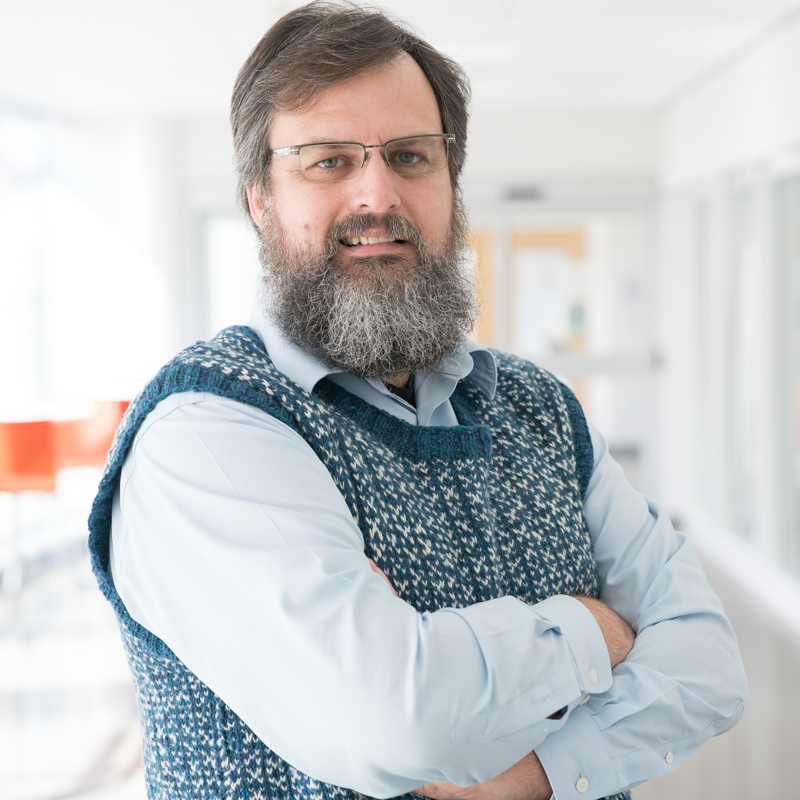
Bradley Schmerl serves as a Principal Systems Scientist in the Software and Societal Systems Department (S3D) within Carnegie Mellon University's School of Computer Science. His research advances software engineering practices for modern challenges in distributed heterogeneous systems, self-adaptation, and cyber-physical integration. He leads the ABLE research group and actively mentors students in the Masters in Software Engineering program while teaching core courses like Software Architecture and Software Engineering Practicum. Dr. Schmerl's work addresses critical challenges in composing continuously evolving software systems, including components from untrusted third parties and on-the-fly recomposition for environmental changes. His research develops reusable, analyzable tools for software composition with emphasis on model-based adaptation, uncertainty management, and cross-language integration. Key projects include Rainbow for runtime architecture reflection, Acme for formal architectural foundations, and Cyber-physical Systems research linking software models with physical dynamics. Analysis of his 2023-2025 publications reveals intensifying focus on robotics software architecture (particularly ROS-based systems), explainable AI for architectural tradeoff analysis, and configuration management in adaptive systems. Trends show growing integration of machine learning for auto-tuning, empirical studies of misconfigurations, and dimensionality reduction techniques for visualizing design spaces—consistently bridging theoretical rigor with practical tool development for real-world applications. Scientific Awards: No specific awards were documented in the source materials. Dr. Schmerl serves as Practice Area Lead and mentor in CMU's Masters in Software Engineering program, guiding client projects including Rainbow UI for self-adaptive framework interfaces, CoBot UI for telepresence robots, and Educational Telepresence Tasking Language development. His research receives support through ABLE group projects funded by grants targeting software architecture foundations, adaptation mechanisms, and cyber-physical system validation. As a core member of the ABLE research group, he directs investigations into architecture-based self-adaptation with active projects spanning Rainbow (runtime architecture models for dynamic adaptation), Acme (formal architectural styles and tools), and Cyber-physical Systems (software-physical model integration). The group also maintains legacy work in End-User Architecting, Architecture Evolution, and service-oriented platforms for intelligence analysis through SORASCS.
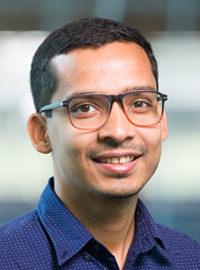
Neetesh Sharma is an Assistant Professor at the FAMU-FSU College of Engineering in the Civil & Environmental Engineering Department . His work focuses on enhancing community well-being through infrastructure resilience, socioeconomic impacts of natural hazards, and uncertainty quantification. He holds a Ph.D. (2020) and M.S. (2016) from the University of Illinois Urbana-Champaign and a B.Tech. (2010) from National Institute of Technology Tiruchirappalli, India. Research Interests include: Infrastructure Resilience and Post-disaster Recovery Socioeconomic Impacts of Natural Hazards Uncertainty Quantification in Infrastructure Systems Recent publications emphasize risk analysis, functional connectivity modeling, and seismic resilience. His work integrates mathematical frameworks with real-world applications to improve disaster preparedness and recovery strategies. Collaborative participatory approaches and digital twin technologies are key themes in his research. Current opportunities include 2 PhD student openings. Contact via email or visit his Google Scholar profile .
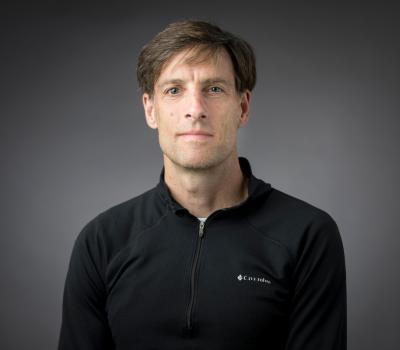
Alan Fern is a Professor of Computer Science and Robotics in the School of Electrical Engineering and Computer Science at Oregon State University. He leads research in artificial intelligence, focusing on reinforcement learning, planning, and robotics applications like humanoid robotics and agricultural AI. His work includes co-directing the Dynamic Robotics Lab and leading the AgAID National AI Institute for agricultural solutions. Fern holds a Ph.D. from Purdue University and has contributed to over 100 publications. His recognitions include the NSF CAREER Award and multiple best paper awards. Education: B.S., Electrical Engineering, University of Maine (1997) M.S. & Ph.D., Computer Engineering, Purdue University (2000 & 2004) Research Interests: His research spans machine learning, planning, and robotics. Key areas include: AI for humanoid robotics (e.g., bipedal locomotion on Cassie) Reinforcement learning algorithms and applications Agricultural AI for specialty crops Explainable AI and anomaly detection Awards: 2017 College of Engineering Research Collaboration Award 2013 AAAI Outstanding Paper Award 2006 NSF CAREER Award Advising & Labs: Supervised over 50 students. Key collaborations include the Dynamic Robotics Lab (with Jonathan Hurst) and AgAID. His teams address challenges like robot navigation, policy learning, and AI ethics. Labs/Teams: Dynamic Robotics Lab, AgAID National AI Institute, and contributions to computational sustainability initiatives.
Michele Gattullo serves as an Assistant Professor within the Department of Mechanics, Mathematics & Management at the Polytechnic University of Bari, Italy, specializing in design methods for industrial engineering (ING-IND/15). His research bridges cutting-edge extended reality technologies with practical industrial applications, focusing on human-centered solutions for manufacturing, maintenance, and workplace design. Dr. Gattullo's research portfolio centers on Augmented Reality, Virtual Reality, and Biophilic Design, with significant contributions to Human-Computer Interaction in industrial contexts. He investigates how nature-inspired elements in virtual workspaces enhance employee well-being and productivity, while simultaneously developing practical AR tools for assembly guidance, technical documentation, and maintenance support. His work uniquely integrates ergonomics, cognitive psychology, and industrial engineering to optimize human-technology interaction in complex production environments. Analysis of his 15 most recent publications reveals two dominant research trajectories: biophilic design frameworks for virtual/metaverse workspaces (2023-2025) and industrial AR authoring methodologies. The biophilic stream establishes evidence-based guidelines for digital nature integration, while the AR stream delivers validated tools like ADAM and minimal AR approaches that streamline technical documentation creation. Both trajectories emphasize user experience validation through rigorous industrial studies, demonstrating strong interdisciplinary impact across computer science, industrial engineering, and environmental psychology. Scientific Awards: No awards or honors were documented in the available sources. Advising and Grants: The provided materials contain no information regarding graduate student supervision, research grants, or funding sources. His academic profile emphasizes publication output over mentoring activities or project financing details. Laboratories and Teams: While Dr. Gattullo's research involves advanced XR technologies, the source text does not specify laboratory facilities, research groups, or collaborative teams associated with his work at Politecnico di Bari.
Daragh Byrne is an Associate Teaching Professor at the Carnegie Mellon University School of Architecture , with courtesy appointments in the School of Design and Human-Computer Interaction Institute (HCII) . Previously an Assistant Research Professor at Arizona State University’s School of Arts, Media and Engineering, he manages the NSF-funded XSEAD project and leads MakeSchools , a catalog of making practices in higher education. PhD in Digital Media from Dublin City University (2011) M.Res. in Design and Evaluation of Advanced Interactive Systems from Lancaster University B.Sc. in Computer Applications from Dublin City University His research explores experiential media systems through Internet of Things and tangible interaction design , focusing on how computational tools can capture human experience and enable multidisciplinary collaboration. Key projects include Sentient Concrete (thermochromic architectural surfaces) and Spooky Technology (speculative design around invisible technologies). He has developed CMU’s Designing for the Internet of Things course since 2016, creating hands-on curricula for connected product design. Recent publications examine creative physical computing education , AI-driven documentation systems , and XR-enabled skill training . Awards include multiple CMU research grants and the CHI 2018 Best Paper Award . He actively advises PhD and Masters students in Computational Design, emphasizing human-centered design and speculative technology research .
Professor Matt Garratt is a faculty member at the University of New South Wales (UNSW Canberra), School of Engineering and IT, serving as AI theme lead for the Defence Trailblazer Universities initiative with over $200 million in funding. His primary research focuses on sensing, guidance, and control for autonomous systems within robotics and unmanned aerial vehicles. Garratt's research spans robotics, swarm intelligence, and autonomous systems with emphasis on bio-inspired navigation techniques and adaptive flight control. His work addresses critical challenges including terrain following using vision systems, landing UAVs on moving platforms, and developing self-organizing swarms. He integrates artificial intelligence, computer vision, and machine learning to advance unmanned systems capabilities in complex environments. Analysis of his recent publications reveals strong trends in bio-inspired UAV navigation (particularly honeybee behavior modeling) and swarm robotics applications. His work increasingly incorporates deep learning for perception tasks while addressing real-world challenges like gas plume detection and adversarial robustness in 3D vision systems. The research demonstrates consistent progression toward practical implementation of autonomous systems in dynamic environments. Professor Garratt has secured over $7.7 million in external research funding as Chief Investigator on 33 grants. He actively mentors graduate students with scholarships available for Masters and PhD research in robotics and AI, focusing on: UAV path planning and adaptive control systems Swarm robotics collective motion optimization Bio-inspired autonomous navigation techniques Computer vision for robotic perception He co-founded the UNSW Canberra AIR (AI and Robotics) Group (AIR Lab), which drives research in trusted autonomy, swarm intelligence, and AI integration for defense applications. The lab develops practical solutions for autonomous systems operating in complex, real-world environments while maintaining ethical AI frameworks.
Changhyun Choi is an Assistant Professor in the Department of Electrical and Computer Engineering at the University of Minnesota (UofM), Twin Cities. His research focuses on visual perception for robotic manipulation using deep learning. Assistant Professor, UofM Electrical and Computer Engineering (2018–present) Postdoctoral Associate, MIT CSAIL (prior to 2018) Research Interests : Visual perception for robotic manipulation Deep learning for object grasping and assembly Soft manipulation techniques Object pose estimation and tracking Active perception and reinforcement learning Combining vision with manipulation Scientific Awards : NSF CAREER Award (2022) Sony Research Award (Faculty Innovation Award, 2021 & 2024) Russell J. Penrose Excellence in Teaching Award (2021) IEEE ICRA 2022 Outstanding Student Paper Award Advising & Collaborative Research : He advises 5 PhD students (Jiacheng Yuan, Alireza Rezazadeh, Houjian Yu, Ross Worobel, Mingen Li) and 2 Master's students (Chase Anderson, Nikhilanj Venkata Pelluri). His work involves grants from NSF, MnRI, and NRF (Korea).
Jürgen Sauer is a Full Professor at the University of Fribourg , affiliated with the Department of Psychology under the Faculty of Letters and Human Sciences . With over 120 publications, his research focuses on Human-Machine Interaction , Usability Testing , User Experience (UX) , and Automation Design , particularly in high-stakes environments like X-ray baggage screening and spaceflight simulations . Email: juergen.sauer@unifr.ch Phone: +41 26 300 7622 Address: RM 01 bu. C-1.117, Rue PA de Faucigny 2, 1700 Fribourg Orcid: 0000-0003-2105-1694 His research projects, funded by the Swiss National Science Foundation (FNS), include: Improving work design for airport security officers (2019-2024): Developed pictorial scales for measuring psychological constructs in security environments. Social stress and support in hybrid teams (2018-2023): Investigated machine-induced social stressors and mitigation through social support. Automation in visual inspection tasks (2014-2018): Examined adaptable automation for baggage screening and system reliability effects. Usability testing effectiveness (2012-2016): Analyzed cultural background impacts and non-usability product features influencing test outcomes. Key contributions include the Luggage Inspection Simulation (LIS) environment for modeling work environments and the development of pictorial usability scales for multilingual applicability. His work bridges ergonomics , human factors , and applied psychology , with notable collaborations with researchers like Adrian Schwaninger and Andreas Sonderegger . His recent publications (2025-2014) analyze: Human-machine performance under false alarms and miscues Social stressor dynamics in hybrid teams Usability scale animation effects Phubbing behavior in professional contexts Accessible website design for non-disabled users
Sonja Wogrin is a University Professor (Univ.-Prof.) at Graz University of Technology (TU Graz), where she has been heading the Institute for Electricity Economics and Energy Innovation since August 2021. She holds a Dipl.-Ing. in Technical Mathematics from TU Graz (2008), a Master of Science in Computation for Design and Optimization from MIT (2008), and a doctorate in Electricity Systems from Universidad Pontificia Comillas (2013). Her educational background includes: Doctorate in Electricity Systems, Universidad Pontificia de Comillas (June 2013) Dipl.-Ing. in Technical Mathematics, Graz University of Technology (October 2008) Master of Science in Computation for Design and Optimization, MIT (June 2008) Professor Wogrin's research focuses on decision support systems in the energy sector, optimization methodologies, and particularly the problem of generation capacity expansion. Her work spans several key areas including bilevel programming, capacity expansion planning, energy storage systems, and time series aggregation for energy system optimization. She has made significant contributions to understanding how to integrate renewable energy sources into power systems while maintaining economic efficiency and grid stability. Her research often addresses the challenges of decarbonizing electricity systems through advanced mathematical modeling and optimization techniques. Her recent publications demonstrate a strong focus on improving the computational efficiency of energy system models while maintaining accuracy, with particular attention to the integration of renewable energy sources, energy storage systems, and the development of resilient energy communities. She has pioneered work on time series aggregation methods that balance computational tractability with model accuracy, which is crucial for long-term energy planning under uncertainty. Professor Wogrin has received several prestigious awards and fellowships including: 4th EASE Student Award for "Co-Optimisation of energy storage technologies in tactical and strategic planning models" (2019) Beca de movilidad para investigadores "NILS Ciencia y Sostenibilidad" (2015) Beca Erasmus "Personal Docente/Investigador" de formación (2016) Beca Iberdrola de ayuda a la investigación en energía y medio ambiente (2020) She leads multiple significant research projects including EU - NetZero-Opt, RINGs, iKlimET, V2G-QUESTS, and CIDEAL, which focus on optimizing energy systems for net-zero emissions, resilient energy networks, climate and energy system modeling, vehicle-to-grid integration, and industrial decarbonization. Her work has substantial practical implications for energy policy and grid operations in Austria and beyond. Professor Wogrin collaborates extensively with industry partners including Austrian Power Grid AG, KELAG, and Netz Niederösterreich, ensuring her research addresses real-world energy challenges. Professor Wogrin leads the research group at the Institute for Electricity Economics and Energy Innovation, which develops advanced optimization models for energy systems. Her team has created the LEGO (Low-carbon Expansion Generation Optimization) model, an open-source tool for energy system optimization that has gained international recognition. The group's work spans from fundamental optimization methods to practical applications in energy system planning and operation, with a strong emphasis on computational efficiency and model accuracy.
Igor Jankovic is an Associate Professor in the Department of Civil, Structural and Environmental Engineering at the University at Buffalo's School of Engineering and Applied Sciences. His research focuses on groundwater flow and contaminant transport in heterogeneous aquifers, with particular emphasis on the impact of aquifer heterogeneity on solute movement and transport modeling. Education: PhD in Civil Engineering, University of Minnesota (1997) MS in Civil Engineering, University of Minnesota (1993) BS in Civil Engineering, University of Split, Croatia (1990) His work addresses critical issues in groundwater hydrology including: Advective transport mechanisms in heterogeneous media Breakthrough curve prediction and analysis Effective hydraulic conductivity modeling Upscaling of flow and transport parameters Application of the Analytic Element Method (AEM) for complex aquifer simulations Comparison of transport models (CTRW, MRMT) in heterogeneous environments Research trends in his publications reveal a focus on: Three-dimensional heterogeneous aquifer modeling Non-Fickian and anomalous transport behavior Impact of spatial variability on contaminant migration Development of numerical algorithms for large-scale groundwater simulations Validation of stochastic transport theories against field experiments (e.g., MADE and Borden aquifers) Interaction between physical and chemical heterogeneity in reactive transport
Dr Francesca Pianosi is an Associate Professor in Water & Environmental Engineering at the University of Bristol 's School of Civil, Aerospace and Design Engineering. She contributes to the Cabot Institute for the Environment and leads research on data analysis, mathematical modelling, and uncertainty quantification for hydrology and water engineering. Specialises in simulation and optimisation methods for water resource management Focuses on uncertainty propagation in natural hazard models Developed the open-source SAFE Toolbox for sensitivity analysis Research Trends Her recent publications (2023-2025) demonstrate expertise in: Groundwater flow and recharge in data-scarce regions Digital Twin applications for watershed management Climate change impact on landslides and droughts Multi-objective optimisation for reservoir operations Integration of machine learning with hydrological models Scientific Awards Arne Richter Award for Outstanding Young Scientists (2015) Best Research Oriented Paper - Journal of Water Resources Planning and Management (2024) Early Career Research Excellence (ECRE) award (2014) Francesca leads the Water Management and Adaptation based on Watershed Digital Twins project (2024-2027) and contributes to the USARIS project on uncertainty quantification for infrastructure systems (2023-2025).
Eilif Pedersen is a Professor and Program Leader for Marine Technology at the Norwegian University of Science and Technology (NTNU). He leads the Department of Marine Technology under the Faculty of Engineering. His research focuses on mathematical modeling, simulation of machinery systems, and energy-efficient solutions in marine and offshore contexts. He is actively involved in projects such as SEACo, SFI Smart Maritime, and ViProMa, emphasizing virtual prototyping and hybrid power systems. Key research areas include bond graph methodology, thermodynamic system modeling, and dynamic analysis of marine systems. Pedersen supervises numerous PhD and industrial projects, including studies on hybrid propulsion, wind turbine dynamics, and fuel cell integration. He has contributed to over 50 publications, with recent work addressing co-simulation techniques, energy conservation in marine systems, and emission reduction strategies. His expertise spans marine engines, fluid dynamics, and renewable energy applications. Collaborations with industry partners like Rolls-Royce and Kongsberg Digital highlight his commitment to bridging academic research with practical maritime challenges.
Massimo Zucchetti is a Full Professor at Politecnico di Torino, Department of Energy (DENERG), where he has been teaching Radiation Protection and Nuclear Power Plants. He maintains a significant international presence as a Research Affiliate at the Plasma Science and Fusion Center at MIT, a position he has held since 2005. His academic journey began at Politecnico di Torino, where he graduated in Nuclear Engineering in 1986 and completed his PhD in Energetica between 1986-1990. He progressed through the academic ranks at Politecnico di Torino from Associate Professor (1998-2002) to Full Professor (2002-present), with prior research experience at the European Commission Joint Research Centre. Zucchetti's research spans nuclear fusion engineering, radioactive waste management, and energy policy. His work focuses particularly on controlled thermonuclear fusion, nuclear safety, and radioactive waste management, with emphasis on tritium transport in fusion reactors, safety analysis of fusion power plants, and environmental impact assessment. He has led multiple significant research projects including TITANS (Tritium Impact and Transfer in Advanced Nuclear reactorS, 2022-2025), components for ITER (2008-2010), and innovative materials for fusion reactors (2004-2006). As coordinator of the IEA Program on Environmental, Safety and Economic Aspects of Fusion Power, he plays a key role in international fusion research collaboration. His recent publications show a clear trend toward practical applications of fusion technology, particularly in the ARC (Affordable Robust Compact) reactor design. These works emphasize neutronics, thermal-hydraulics, tritium management, and safety analysis for compact fusion systems. His research demonstrates increasing focus on making fusion energy more commercially viable through innovative engineering solutions while maintaining rigorous safety standards. The interdisciplinary nature of his work connects nuclear engineering with environmental science and energy policy. Fellow of Plasma Science and Fusion Center, MIT (2015-present) Research Affiliate Fellow at Laboratory for Nuclear Science, MIT (2005-2015) Nomination for 2015 Nobel Prize in Physics for research on advanced fuel nuclear fusion Editor-in-Chief of multiple journals including International Journal of Ecosystems and Ecology Science and Journal of International Environmental Application & Science Zucchetti actively mentors PhD students in the Energetica program at Politecnico di Torino, with current advisees working on topics ranging from multiphysics modeling in ARC-class reactors to innovative materials for next-generation nuclear reactors. He coordinates significant research grants from competitive funding programs including EURATOM and PRIN. His laboratory work focuses on fusion reactor components, particularly breeding blankets and tritium management systems. The TESIN research group within DENERG serves as his primary research team, working on thermal-hydraulic analysis, neutronics, and safety assessments for advanced nuclear systems.
Prof. Dr. Haris Gačanin is a faculty member at RWTH Aachen University, affiliated with the Institute for Distributed Signal Processing under the College of Electrical Engineering. His research focuses on integrating machine learning with wireless communication systems, particularly in industrial IoT, edge computing, and network optimization. Current academic rank: Professor Contact: harisg@dsp.rwth-aachen.de Research Interests: Wireless systems, machine learning, signal processing, and network optimization. Key contributions include: Adaptive resource allocation in IIoT and vehicular networks AI-driven channel estimation and feedback mechanisms Security-oriented emitter identification via metric learning Federated/transfer learning for edge environments Hardware-efficient deep learning models for mmWave and THz communications Methodological Focus: Combines reinforcement learning, attention mechanisms, and robust neural architectures with practical implementations on FPGA and vehicular systems.