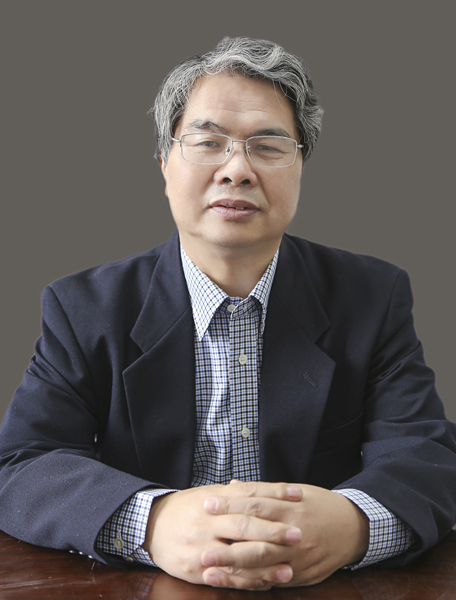
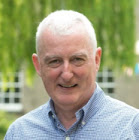
Jiao Licheng is a Distinguished Professor and Doctoral Supervisor at Xidian University, leading the School of Artificial Intelligence and the Department of Computer Science and Technology. He holds prominent roles such as Director of the Key Laboratory of Intelligent Perception and Image Understanding (Ministry of Education) and the International Joint Research Center for Intelligent Perception and Computing. His research focuses on Artificial Intelligence, Deep Learning, Evolutionary Computation, and Remote Sensing, with significant contributions to image understanding and brain-inspired computing. Education: B.E. (1982) from Shanghai Jiao Tong University, M.E. (1984) and Ph.D. (1990) from Xi'an Jiaotong University. Postdoctoral research at Xidian University (1990–1992). Research Interests include AI, Machine Learning, Image Processing, and Big Data Analysis. His work bridges theoretical advancements and practical applications, such as medical imaging, SAR image analysis, and autonomous systems. Recent articles emphasize innovations in remote sensing, deep learning architectures, and evolutionary algorithms. Awards include IEEE Fellow, IET Fellow, and the Wu Wenjun Artificial Intelligence Outstanding Contribution Award. Labs/Teams: Key Lab of Intelligent Perception, International Joint Research Center, and leadership in national innovation bases. Active in academic societies, including editorial roles in IEEE Transactions on Cybernetics and Geoscience and Remote Sensing.
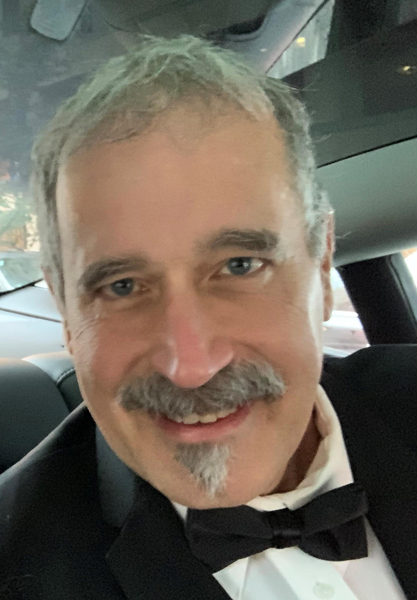
Alan Bovik is the Cockrell Family Regents Endowed Chair Professor in the Department of Electrical and Computer Engineering at The University of Texas at Austin's Cockrell School of Engineering. He also holds positions at The Institute for Neurosciences and serves as Director of the Laboratory for Image and Video Engineering (LIVE). With a career spanning over three decades at UT Austin, he has progressed from Assistant Professor (1984-1988) to Associate Professor (1988-1994) to his current position as Full Professor (1994-present). Dr. Bovik received his Ph.D. in Electrical and Computer Engineering in 1984 from the University of Illinois, Urbana-Champaign. Professor Bovik's research focuses on image and video quality assessment, visual perception, and digital media processing. He is renowned for developing groundbreaking algorithms including the Structural Similarity (SSIM) index, Visual Information Fidelity (VIF), and various blind quality assessment models like BRISQUE and NIQE. His work bridges engineering and neuroscience, creating perception-based models that optimize visual media delivery while reducing bandwidth consumption. These innovations have had profound industry impact, with his algorithms processing a significant proportion of global internet video traffic. His recent publications demonstrate continued leadership in perceptual quality assessment, with increasing focus on AI-generated content, high dynamic range (HDR) video, and novel applications in medical imaging. The research shows a clear trajectory toward more sophisticated, neural network-based quality metrics that better align with human visual perception across diverse content types. Professor Bovik has received numerous prestigious awards recognizing his contributions to the field: John Fritz Medal (2024) IEEE Edison Medal (2022) IAMB BaM Award (2022) Elected to the United States National Academy of Engineering (2022) Technology and Engineering Emmy Award (2021) IEEE Fourier Award for Signal Processing (2019) Progress Medal from The Royal Photographic Society (2019) Named Honorary Fellow of The Royal Photographic Society (2019) Primetime Emmy Award (2015) Edwin H. Land Medal from The Optical Society (2017) As Director of the Laboratory for Image and Video Engineering (LIVE), Professor Bovik has secured substantial research funding from organizations including the National Science Foundation and the National Institute for Standards and Technologies. His lab has produced numerous influential datasets including the LIVE Image and Video Quality Databases. He has mentored many successful students who have gone on to make significant contributions in academia and industry, though specific student names are not provided in the source materials. The Laboratory for Image and Video Engineering (LIVE) under Professor Bovik's direction has become a world-renowned center for research in perceptual image and video quality. The lab maintains close collaborations with major technology companies including Netflix, Amazon, and YouTube, ensuring that research has direct practical applications. LIVE has developed numerous influential tools and databases that are widely used in both academic research and industrial applications worldwide.
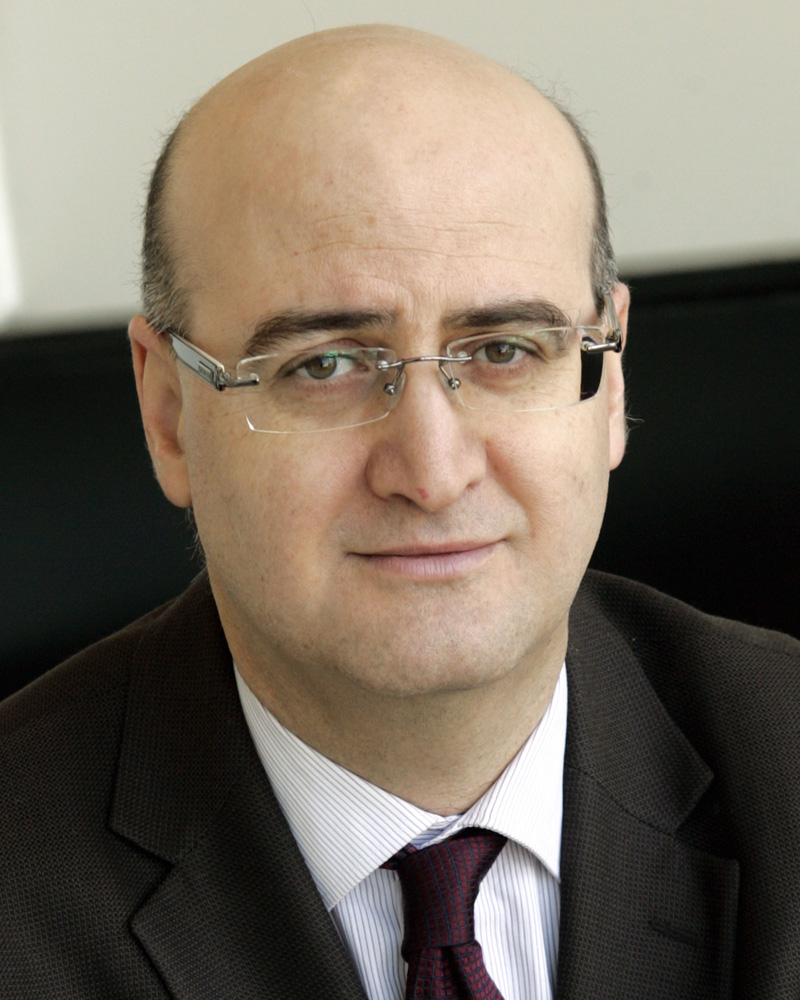
Professor Moncef Gabbouj is a distinguished academic and researcher currently serving as Professor of Signal Processing at the Department of Computing Sciences, Faculty of Information Technology and Communication Sciences, Tampere University, Finland. Previously, he held the same position at Tampere University of Technology before the merger in 2019. He has also held visiting professorships at prestigious institutions including Hong Kong University of Technology and Science, University of Southern California, and Purdue University. Ph.D. and MSc. in Electrical Engineering from Purdue University, USA (1989 and 1986) B.Sc. in Electrical Engineering from Oklahoma State University, USA (1985) Prof. Gabbouj's research spans multiple domains within signal and image processing, with a strong focus on machine learning applications. His primary research interests include artificial intelligence, machine learning, Big Data analytics, multimedia content-based analysis, indexing and retrieval, nonlinear signal and image processing, voice conversion, and video processing and coding. His work bridges theoretical advancements with practical applications across various industries, particularly in multimedia communications and biomedical applications. His extensive publication record demonstrates a clear evolution from traditional signal processing techniques toward more sophisticated machine learning and deep learning approaches. Recent work shows increasing focus on convolutional neural networks for various applications including ECG classification, video processing, financial time-series analysis, and image recognition tasks, reflecting the broader trend in the field toward deep learning methodologies while maintaining strong foundations in signal processing theory. IEEE Fellow (2011) Member, Finnish Academy of Science and Letters (2014) Knight, First Class, of the Order of the White Rose of Finland (2006) Nokia Foundation Recognition Award (2005) Nokia Foundation Visiting Professor Award (2012) Finnish Cultural Foundation for Art and Science Award (2017) TUT Foundation Grand Award (2015) Prof. Gabbouj has supervised 64 doctoral and 72 Master's theses, demonstrating his significant contribution to academic mentoring. His research has been supported by substantial funding, including research grants totaling 8.5 million Euro (2001-2015). He has served as Academy of Finland Professor during 2011-2015 and has been involved in numerous EU research projects including Horizon, ESPRIT, HCM, IST, COST, Tempus and Erasmus programs. As Editor, Guest Editor or member of the Editorial Board of 6 international scientific journals, he has significantly influenced the academic discourse in his field. He leads the Signal Analysis and Machine Intelligence (SAMI) research group at Tampere University and serves as the Finland Site Director of the NSF IUCRC funded Center for Visual and Decision Informatics. His research unit focuses on applying advanced machine learning techniques to solve complex problems in signal processing, computer vision, and multimedia analytics, with applications ranging from healthcare to multimedia communications and financial analysis.
Markus Vincze is an Associate Professor at the Institute of Automation and Control Engineering (ACIN) at Vienna University of Technology (TU Wien). He founded the Vision for Robotics (V4R) group in 1996 to advance robotic perception, particularly in real-world environments and homes. His work focuses on cognitive computer vision techniques for robotics. Education: Diplom in Mechanical Engineering (1988) and PhD (1993) from TU Wien; M.Sc. (1990) from Rensselaer Polytechnic Institute. V4R coordinates EU projects like ActIPret, robots@home, HOBBIT, and national initiatives like vision@home. Markus has edited a book on Robust Vision with Gregory Hager and authored 62 peer-reviewed journal articles and over 400 reviewed publications. His recent research explores zero-shot 6D pose estimation, sim-to-real transfer, and transparent object detection. Markus has served as program chair for ICRA 2013 and organized HRI 2017 in Vienna. He has advised numerous students and secured grants from the Austrian Academy of Sciences for work at HelpMate Robotics and Yale's Vision Laboratory. The V4R group leads innovations in robotic vision, including frameworks for synthetic data generation (Unrealgensyn), depth completion (CAGT), and educational robotics applications for sustainability. Their work spans household robotics (RH3), agricultural robotics (EdgeSoil), and human-robot collaboration.
Giles Foody is a Professor of Geographical Information Science at the School of Geography, University of Nottingham, and a member of the Rights Lab in the Faculty of Social Science. He is recognized as the UK’s most prolific and highly cited researcher in remote sensing, with a focus on interdisciplinary applications for real-world impact. Education: BSc (1st class honours) and PhD from the University of Sheffield. His research spans image classification for thematic mapping, particularly in land cover and human-induced changes. He pioneered soft image classifications, object-based methods, neural networks in remote sensing, and citizen sensors in mapping. Current projects include 'slavery from space' and Sargassum beaching analysis to meet UN SDGs. The trends in his publications highlight advancements in remote sensing, citizen science, and land cover mapping. His work integrates machine learning and geospatial analysis for social and environmental challenges. Scientific awards: IEEE Fellowship, David Landgrebe Award, Founder's Award (ISARA), multiple RSPSoc accolades, and SDG-related honors. Giles has supervised 51 research students and contributed to academic service via editorial roles, peer review leadership, and participation in national research assessment panels. His interdisciplinary work extends to European National Mapping Agencies and anti-slavery initiatives.
Johannes Brandstetter is an Associate Professor at the Institute for Machine Learning at Johannes Kepler University Linz (JKU) where he leads the "AI for data-driven simulations" research group. He is also Co-founder and Chief Scientist at Emmi AI, bridging academic research with industrial applications in AI-driven physics simulation. Brandstetter earned his PhD after working at CERN's CMS experiment on Higgs boson physics. In 2018, he transitioned to machine learning, joining Sepp Hochreiter's research group in Linz. From 2021-2023, he worked at the Amsterdam Machine Learning Lab under Max Welling and Microsoft Research, developing expertise in Geometric Deep Learning and neural surrogates for partial differential equations. He returned to JKU in October 2023 to establish his own research group. His research spans Machine Learning, Deep Learning, and Physics-Informed Machine Learning with focus areas including Neural PDE solvers, Computational Fluid Dynamics, and Climate Modeling. Brandstetter believes AI is poised to revolutionize industrial-scale simulations, potentially saving thousands of compute hours across engineering domains. His work integrates computer vision, numerical simulation, and engineering components to advance data-driven approaches. Recent publications reveal a strong trend toward foundation models for scientific applications, particularly in atmospheric modeling (Aurora), geometric deep learning, and neural surrogates for complex physical systems. His interdisciplinary work spans computer vision, climate science, computational physics, and engineering, demonstrating the versatility of his research approach. Principal Investigator for "AlKa-DL: Alpine karst spring discharge prediction" (FWF-funded, 2024-2027) Principal Investigator for Cluster of Excellence "Bilateral Artificial Intelligence" (FWF-funded, 2024-2029) Co-PI for "Fast, efficient and flexible CFD simulation through generative AI" (FFG-funded, 2025-2026) As an educator and researcher, Brandstetter actively engages with the scientific community through invited talks at major conferences including presentations on "Closing the Gap Between Scientific Foundation Models and Real-World Applications" (March 2025) and "Scientific Machine Learning for Science and Engineering" (February 2025).
Armin Kirchknopf serves as a Junior Researcher at the Media Computing Research Group within the Institute of Creative Media/Technologies, Department of Media and Digital Technologies at the University of Applied Sciences St. Pölten. His interdisciplinary work bridges artificial intelligence, computer vision, and social media analysis, with significant contributions to misinformation detection and disaster response systems. Based at Campus-Platz 1 in St. Pölten, Austria, he actively collaborates on EU-funded projects and publishes in top-tier AI venues. His educational journey spans humanities and technology: a Bachelor of Arts in Egyptology and Master of Arts in Classical Archaeology from the University of Vienna (including fieldwork at excavation sites across Austria, Germany, and Egypt), followed by a Bachelor of Science in Media Technology from FH St. Pölten. This unique background informs his human-centered AI research approach. Kirchknopf's research centers on explainable multimodal AI systems for real-world challenges. His recent work demonstrates expertise in transformer-based architectures for cross-lingual fake news detection, sexism identification, and flood monitoring through social media imagery. He pioneers techniques like Grad-CAM for object detection explainability and develops visualization tools for complex data interpretation, emphasizing transparency and social impact in AI deployment. Analysis of his 13 publications (2017-2022) reveals a strategic shift toward applied AI in societal contexts , particularly using social media data for disaster management and combating online toxicity. His projects consistently integrate computer vision with natural language processing, showing increasing sophistication in multilingual capabilities and model interpretability frameworks. His scientific recognition includes: Creative Business Award for co-developing the Tenjin learning quiz application No documented student advisement or grant leadership appears in current records, though he actively mentors through project-based collaborations. His work with the Media Computing Research Group drives innovation in educational technology and public safety applications. Kirchknopf contributes to the Media Computing Research Group's portfolio including Fake News Detection, SAiEX (Safe AI with explainable integrity), InfraBase (building footprint segmentation), and Ressel Center music therapy projects. His cross-disciplinary collaborations span computer scientists, archaeologists, and social scientists, reflecting the group's commitment to human-centric technological solutions .
Thomas Blaschke is a Research Fellow at the Department of Geoinformatics - Z_GIS, University of Salzburg. His work bridges geospatial technologies, remote sensing, and sustainable urban systems, emphasizing object-based image analysis (OBIA) as a transformative paradigm in geographic information science. Research Areas : Geoinformatics, Remote Sensing, Spatial Research, Physical Geography, Cartography Blaschke’s publications highlight advancements in OBIA techniques, sustainable landscape management, and urban monitoring using geospatial technologies. His 2014 paper on Geographic Object-based Image Analysis (GEOBIA) demonstrates its integration into modern remote sensing workflows. He has received prestigious awards including the Christian-Doppler-Preis , Marie Curie Research Grant , and Fulbright Professorship , underscoring his international impact. His projects often involve interdisciplinary collaborations, supported by grants from institutions like the European Commission and University of South Carolina. Scientific Awards : Christian-Doppler-Preis des Landes Salzburg Marie Curie Research Grant Förderungspreis der Österreichischen Geographischen Gesellschaft Fulbright Professorship Provost Grant of the University of South Carolina
Ahmet Tekalp is a Professor in the Department of Electrical and Computer Engineering at Koc University's College of Engineering since 2001. He holds dual citizenship in Turkey and the USA, with prior academic roles at the University of Rochester (1986-2005) and research positions at Eastman Kodak (1984-1987) and Rensselaer Polytechnic Institute (1981-1984). He chairs the Electronics and Informatics Group at TUBITAK since 2004 as a part-time position. B.S. (1980) in Electrical Engineering & Mathematics, Bogaziçi University M.S. (1982) and Ph.D. (1984) in Electrical, Computer, and Systems Engineering, Rensselaer Polytechnic Institute His research focuses on digital image and video processing, including video compression, motion-compensated filtering for high-resolution applications, video segmentation, object tracking, content-based video analysis, multi-camera surveillance processing, and digital content protection. He has led numerous European and U.S. grants, including FP7 STREP projects and NSF awards, emphasizing applications in sensor networks, visual databases, and medical imaging. His scholarly work spans diverse areas such as superresolution reconstruction, head gesture animation, 3DTV streaming, and reversible data hiding. He has played pivotal roles in editorial boards, including serving as Editor-in-Chief of Signal Processing: Image Communication, and has contributed to major standards bodies like ISO MPEG and ANSI NCITS. Member, Turkish Academy of Sciences (TUBA) Fellow, IEEE Fulbright Senior Scholarship (1999) TUBITAK Science Award (2004) IEEE Signal Processing Society Distinguished Lecturer (1998) He has led multiple international research collaborations and projects, including European FP6/FP7 networks and NATO programs, with substantial grant funding from NSF, NYSTAR, and industry partners like Eastman Kodak, Xerox, and Siemens.
Michael Gadermayr serves as a Senior Lecturer and Head of the Research Group within the Department of Information Technologies and Digitalisation at Salzburg University of Applied Sciences. Based at Campus Urstein (Room 423), he can be contacted via michael.gadermayr@fh-salzburg.ac.at or +43-50-2211-1341. His research focuses on advancing medical imaging through artificial intelligence, with core expertise in deep learning for image segmentation, digital pathology, and cancer diagnosis. Key contributions include multimodal fusion techniques for CT/CBCT integration, synthetic data generation for surgical guidance, and objective wound healing quantification using vision models. His work bridges computer vision and clinical applications to solve real-world healthcare challenges. Analysis of his 15 most recent publications reveals a dominant trend toward leveraging synthetic data and multimodal fusion to enhance segmentation accuracy in oncology and surgical contexts. Over 70% of his work targets CT/CBCT integration for intraoperative navigation, while digital pathology applications (particularly thyroid and breast cancer) constitute 25% of his output. Emerging themes include wound healing quantification using SAM and parameter optimization for MIL-based pathology diagnostics. As Head of the Research Group in Information Technologies and Digitalisation, he leads initiatives focused on translating AI innovations into clinical practice, with emphasis on robustness in medical image analysis and practical deployment of segmentation tools for radiology and pathology workflows.
Prof. Wilfried Kubinger serves as the Head of the Department of Electronic Engineering at the University of Applied Sciences Technikum Wien, Austria. He holds a PhD in Technical Sciences from the Technical University of Vienna (1999) and has extensive experience in research and industry. His academic roles include leading the 'Automation & Sensor Technology' competence field and managing the 'Automation & Robotics' research area. **Research Focus:** His work centers on embedded systems, machine vision, autonomous robotics, and real-time control systems. Notable projects include obstacle detection for autonomous vehicles, stereo vision algorithms, and agricultural robotics applications. He actively contributes to IEEE and OVE engineering associations. **Professional Journey:** Prior to academia, he worked at Siemens Austria (2000–2003) as a software developer and project manager, and at AIT Austrian Institute of Technology (2003–2010) managing research projects in autonomous systems. He participated in DARPA Grand Challenge/Urban Challenge as a principal scientist for vision-based obstacle detection. **Publications:** His research spans embedded vision systems, FPGA implementations, and autonomous vehicle technologies. Recent work emphasizes agricultural robotics and Industry 4.0 applications. He also leads R&D project acquisition and implementation for Technikum Wien.
Ahmet M. Tekalp is a Professor of Electrical and Computer Engineering at Koc University , Istanbul, Turkey, since 2001. Previously, he held a full-time professorship at the University of Rochester (1986-2005) and part-time roles such as Chair of the Electronics and Informatics Group at TUBITAK, Turkey. His work bridges academic and industrial research, with affiliations to institutions like Eastman Kodak Company and Rensselaer Polytechnic Institute. Education: BS (1980), Electrical Engineering & Mathematics (High Honors), Bogaziçi University MS (1982) & PhD (1984), Electrical, Computer, and Systems Engineering, Rensselaer Polytechnic Institute (RPI) Research Interests: Digital image and video processing Video compression and streaming Motion-compensated video filtering for high-resolution Video segmentation and object tracking Content-based video analysis and summarization Multi-camera surveillance video processing Digital content protection Scientific Awards: Member, Turkish Academy of Sciences (TUBA) Fellow, IEEE Fulbright Senior Scholarship (1999) TUBITAK Science Award (2004), Turkey's highest science award Grants and Contracts: FP6 Network of Excellence, SIMILAR (2003-2007), Euro 6 Million FP6 Network of Excellence, 3DTV (2004-2008), Euro 6 Million FP7 STREP projects (DIOMEDES, SARACEN) with Euro 3 Million budgets NSF grants spanning wireless sensor networks, visual databases, and MRI motion artifact suppression Industry partnerships with Eastman Kodak, Xerox, Siemens Corporate Research Professional Activities: Editor-in-Chief, Signal Processing: Image Communication (Elsevier) Member, ERC-Advanced Panel on Informatics Editorial roles in IEEE journals and other publications Active in ISO/IEC and ANSI standards committees
Antonio Rodríguez-Sánchez is an Associate Professor in the Intelligent and Interactive Systems group at the Department of Computer Science, Universität Innsbruck (since 2019). He holds a PhD from York University (2010) and has held academic roles in Austria, Canada, and Spain. His research focuses on Explainable AI, computational neuroscience, deep learning, computer vision, robotics, and medical imaging. Education: PhD in Computer Science, York University (Canada), 2010 M.Sc. in Computer Science, Universidade da Coruña (Spain), 1998 B.Sc. in Computer Science, Universidad de Córdoba (Spain), 1996 3-year Bachelor in Biology, Autonomous University of Madrid (Spain), 1998–2001 Research Interests: His work bridges AI and neuroscience, emphasizing explainable systems, medical imaging analysis, robotics, and deep learning applications. Recent trends in publications highlight advancements in healthcare AI (REM sleep disorder prediction), robotic recycling, and computer vision for environmental monitoring. Teaching & Advising: Teaches courses like Deep Learning, Computer Vision, and Algorithms. Supervises PhD/MSc students (e.g., Safoura Rezapour-Lakani, Sebastian Stabinger). Active in EU-funded projects like PaCMan (FP7-ICT) and IntellAct. Labs & Projects: Leads research in the Intelligent and Interactive Systems group, focusing on interdisciplinary AI applications. Projects include automated avalanche detection and robotic recycling systems.
Qihao Weng is a prominent academic in Earth and Cosmic Sciences, currently serving as Chair Professor at The Hong Kong Polytechnic University (since 2021) and Professor at Indiana State University's Department of Earth & Environmental Systems (since 2009). He leads the Center for Urban and Environmental Change at Indiana State and is Editor-in-Chief of the ISPRS Journal of Photogrammetry and Remote Sensing. His research focuses on urban ecology, remote sensing, and geospatial AI, addressing urban climate, land use dynamics, and environmental sustainability. Dr. Weng has received numerous accolades, including Fellowships from AAAS, IEEE, and ASPRS, and prestigious awards like the Taylor & Francis Lifetime Achievement Award (2019) and AAG Distinguished Scholarship Honors (2021). He has held visiting professorships in China and France and contributed to NASA and Japanese research initiatives. His work bridges theoretical and applied geospatial science, emphasizing interdisciplinary urban and environmental studies. As a leader in remote sensing, he has directed major research centers and advised on international projects. His grants and collaborations span climate modeling, urban heat island mitigation, and geospatial technology development. Dr. Weng’s lab at Indiana State focuses on advancing sustainable urban systems through innovative geospatial methodologies.
Vanessa Streifeneder is a Researcher at the University of Salzburg , affiliated with the Faculty of Digital and Analytical Sciences and the Department of Geoinformatics - Z_GIS . Her work combines remote sensing and machine learning to address natural hazards and climate change challenges. Research Interests : Remote Sensing, Machine Learning, Natural Hazards, Climate Change Projects : SpaDiFloVur, ReHIKE, ROGER, HOT Streifeneder's recent publications focus on glacier dynamics , rock glacier mapping , and climate impact monitoring , utilizing Earth observation and deep learning . Her work also includes agricultural sustainability and alpine infrastructure analysis . Contact: vanessa.streifeneder1@plus.ac.at