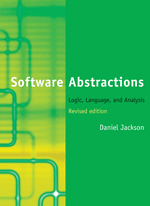
Prof. Daniel N. Jackson is a Professor of Electrical Engineering and Computer Science at MIT, serving as Associate Director of the Computer Science and Artificial Intelligence Laboratory (CSAIL) and Director of the Middle East Education Through Technology (MISTI MIT-MEET) initiative. His research focuses on software dependability, formal methods, and design analysis, particularly through the Alloy framework. Jackson emphasizes lightweight formal methods to reduce development costs and enhance software safety, with applications in cybersecurity, autonomous systems, and safety-critical software. His work includes developing tools like Bluefish for declarative diagram composition and Riffle for reactive systems. He explores ethical software design frameworks to address dark patterns and advocates for concept-centric development. Jackson's contributions span academic publications, educational initiatives, and industrial collaborations, aiming to bridge formal methods with practical software engineering challenges. Recent projects involve certified control systems for autonomous vehicles, end-to-end dependability cases, and model checking for security flaws. His research integrates interdisciplinary approaches, combining programming languages, static analysis, and human-centered design principles.
Dr. Mary Playdon is an Assistant Professor in the Nutrition & Integrative Physiology department at the University of Utah , with an adjunct appointment in Population Health Science. Her research focuses on understanding the role of diet and obesity in cancer development and prognosis, leveraging metabolomics to identify dietary biomarkers and metabolic pathways underlying cancer risk. Education & Professional Background: She holds a PhD in Chronic Disease Epidemiology from Yale University (2016), an MPH from Queensland University of Technology (2010), and a BS in Nutrition and Dietetics (2003). Her postdoctoral training at the National Cancer Institute (2018) further specialized her in metabolic epidemiology. Research Interests: Dr. Playdon’s work integrates metabolomics, epidemiology, and clinical studies to address gaps in dietary measurement accuracy. Key areas include: Developing dietary biomarkers for objective assessment of food intake Examining metabolic dysregulation (e.g., ceramides) in obesity-related cancers Studying gut microbiome interactions with eating behaviors Evaluating lifestyle interventions (diet, fasting, exercise) for cancer survivors Grants & Leadership: She leads multiple NIH-funded grants, including studies on ceramides in colorectal cancer risk and metabolic syndrome. She chairs the Diet Working Group in the NCI’s Metabolic Dysregulation and Cancer Risk (MeDoc) Consortium and participates in the NIH Consortium of Metabolomics Studies (COMETS). Recent Contributions: Over 80 peer-reviewed articles, with recent emphases on malnutrition in cancer patients, overnight fasting effects on weight, and the role of microbiome diversity in gastrointestinal cancers.
Anna-Katharina Matke-Bauer is a Lecturer in Psychology at Royal Holloway, University of London, leading the Lifespan Auditory Neuroscience Lab. Her work focuses on auditory perception across the lifespan, particularly age-related hearing loss and its cognitive implications. PhD in Experimental Psychology (2018) and MSc in Neurocognitive Psychology (2013) from Carl von Ossietzky Universität Oldenburg Research Themes: Hearing loss and cognition (EEG measurement of subcortical/cortical responses) Hearing changes during menopause transition (hormonal influence on sensory-cognitive systems) Subjective vs objective hearing loss mismatch (real-world listening challenges) Projects: Royal Society-funded study "From brainstem to cortex: Auditory brainstem responses and cognitive performance in age-related hearing loss" (2024-2025).
Lynne Marie Kohm serves as the John Brown McCarty Professor of Family Law at Regent University School of Law, where she specializes in family law, estate planning, and gender studies with a distinctive integration of Christian legal scholarship. Her work critically examines marriage, family structure, and children's rights within contemporary legal frameworks. Education: Juris Doctor, Syracuse University College of Law (1989) Theological Studies, Institute of Biblical Studies (1986) Bachelor of Arts in Philosophy, State University of New York at Albany (1980) Research Focus: Professor Kohm's scholarship consistently advocates for traditional family structures while analyzing legal developments through both doctrinal and faith-based lenses. Her research spans marriage law, estate planning for women, children's rights under international treaties, and the societal consequences of family fragmentation. She critically engages with topics like same-sex marriage, reproductive technologies, and gender equality, often arguing for legal frameworks that prioritize marital unions and parental rights. Publication Trends: Recent work demonstrates increasing focus on the intersection of family law with immigration policy, the impact of Obergefell on women and children, and critiques of international children's rights frameworks. Her scholarship frequently employs historical analysis (notably referencing Jane Austen) to contextualize contemporary family law dilemmas, while maintaining consistent advocacy for marriage as the optimal legal and social foundation for family life. Awards & Recognition: Regent University Chancellor’s Award for Faculty Excellence (Professor of the Year, 2005) Multiple Regent University teaching awards (2002-2004) Student Bar Association Professor of the Year awards (1997-1999) Book nominations for Estate Planning Success for Women Professional Service & Mentoring: As three-term President of Regent's Faculty Senate, Kohm shaped university governance and academic policy. She actively mentors female law students and trains attorneys in family restoration practices. Her professional affiliations include the Virginia State Bar Family Law Section, Christian Legal Society, Alliance Defense Fund, and Concerned Women for America. She serves as Co-Director of Regent's Oxford Study Abroad program and previously practiced law in New York with expertise in estate planning and family law. Additional Context: Kohm's six-year service with Campus Crusade for Christ informs her integration of faith and legal scholarship. She maintains active involvement in organizations advocating for traditional family values while contributing to academic discourse through extensive publications and conference presentations.
Roxane Itier, an Associate Professor in Psychology , is a leading researcher in the fields of Cognitive Neuroscience and Social Neuroscience . Her work focuses on the temporal dynamics of face perception, facial expression recognition, gaze discrimination, and their interactions, linking these processes to broader social cognition and individual traits.
Paul C. Johnson is Professor of History and Professor of Afroamerican and African Studies at the University of Michigan, where he maintains an active research program examining religious practices in the Americas, particularly Brazil and the Caribbean. His scholarly work bridges religious studies, anthropology, and cultural theory with a focus on questions of agency, embodiment, and religious transformation. Johnson's research interests center on hybrid forms of agency in religious contexts, the relationship between religion and secrecy, and church-state relations. His work explores how religious practices navigate questions of autonomy, embodiment, and cultural transmission across the African diaspora. He has developed innovative frameworks for understanding 'nearhuman' agency in religious contexts, examining how figures that operate without conscious volition become central to religious practice and revelation. His publications demonstrate a consistent trajectory exploring religious agency across different cultural contexts, with particular attention to Brazilian religious traditions, Caribbean religious movements, and transnational religious networks. Johnson's work shows increasing theoretical sophistication while maintaining deep ethnographic and historical engagement with specific religious communities. Guggenheim Fellowship (2008) Antonio Cândido Prize, Latin American Studies Association Cheiron Book Prize Honorable Mention Best Book Award, American Academy of Religion (2003) NEH Fellowship Award (2003-2004) As Editor of the interdisciplinary journal Comparative Studies in Society and History (CSSH), Johnson influences scholarly discourse across multiple disciplines. His current research continues to explore the intersections of art, religion, and material culture through his project My Mutilated Gods: Rodin, Rilke, Simmel .
Eric Leclercq is a researcher at the University of Burgundy, affiliated with the LE2I Lab in Dijon, France. His work spans database systems, social network analysis, and biomedical data integration. He has contributed extensively to polystore systems, tensor decompositions, and category theory applications in data modeling. Fields of Interest : Database Systems, Data Mining, Social Network Analysis, Big Data Analytics, Semantic Web Leclercq's recent research focuses on formal frameworks for data lakes using category theory, multi-level tensor decomposition for social network stratification, and schema migration in multi-model systems. He has published in venues like CAiSE, IDEAS, and RCIS. His collaborations include Annabelle Gillet, Marinette Savonnet, and Nadine Cullot. Notable works include Lambda+ architecture for data processing, polarization analysis in social networks, and tools for tweet collection and biomedical data integration.
Alen Biskupović , Vice Dean for Study Programmes and Associate Professor in Theatre Studies at the Academy of Arts and Culture (Josip Juraj Strossmayer University of Osijek), specializes in theatre history, drama criticism, and cultural identity. Since 2008, he has taught courses on drama and theatre history, while contributing extensively as a theatre critic to platforms like Kazalište.hr and Hrvatsko glumište. Education: PhD in Humanities (2014) and MA from Faculty of Humanities and Social Sciences (2006). Research: Focuses on marginalized aspects of theatre criticism, German-language theatre in Croatia, and cabaret studies, with a 2019 monograph Osječka kazališna kritika 1902–1945 . Publications: Over 20 scholarly works, including analyses of WWI's impact on theatre, digital media's influence on criticism, and Croatian dramatists like Miro Gavran. Editorial Roles: Former editor-in-chief of Artos journal and contributor to international theatre publications. Key Contributions: Systematizes Osijek's theatre criticism, challenges Zagreb-centric narratives in Croatian theatre scholarship, and explores interdisciplinary approaches to cabaret as a reflection of crisis-era cultural dynamics.
Dr. Vladimir Dugalić is a full professor at the Department of Practical Theology and New Evangelization, Chair of Moral Theology, Social Doctrine of the Church and Liturgy at the Catholic Faculty of Theology in Đakovo, Josip Juraj Strossmayer University in Osijek. He has served in various administrative roles including Dean of the Faculty of Theology (2018-2022), Vice-Dean for Science (2010-2014), and Vice-Dean for Education (2005-2010). Dr. Dugalić's educational background includes: Diploma in Theology from the Catholic Faculty of Theology, University of Zagreb (1989) Master's degree in Theological Sciences from the Pontifical Lateran University - Alfonsiana Academy in Rome (1993) Doctorate in Theological Sciences from the Pontifical Lateran University - Alfonsiana Academy in Rome (2001) His primary research interests focus on Moral Theology, Social Doctrine of the Church, Bioethics, Popular Religiosity, and Family and Marriage Ethics. His scholarly work examines the intersection of Catholic social teaching with contemporary social issues in Croatian society, including migration, demographic challenges, and ethical questions in biomedicine. His research often combines theological reflection with empirical studies, particularly in the areas of family life and social cohesion. His publications demonstrate a consistent focus on applying theological principles to practical pastoral situations while engaging with contemporary social science methodologies. Dr. Dugalić has been recognized with several awards including the Annual Award of the City of Đakovo for special contributions to religious and cultural life (2016), the honor of Chaplain of His Holiness (Monsignor) (2009), and various letters of appreciation for his editorial work and contributions to Catholic associations. As an educator, he has mentored 59 diploma theses, 1 master's thesis, and 3 doctoral dissertations. He has served as editor for several academic journals including 'Diacovensia – Teološki prilozi' and 'Vjesnik Đakovačko-osječke nadbiskupije.' His scholarly contributions span numerous publications including three authored books and over thirty scientific and professional articles. Dr. Dugalić is actively involved in various ecclesial and academic bodies including the Croatian Bishops' Conference, where he serves as secretary of the 'Iustitia et Pax' Commission, and the Croatian Science Foundation panel for social and humanities sciences (2020-2023).
Marianna Lazar is an Assistant Professor of Japanology at the Department of Japanology, Institute of Oriental Languages and Cultures, Faculty of Humanities and Social Sciences, Károli Gáspár Reformed University in Hungary. She also serves as a Lecturer at ELTE BTK (Eötvös Loránd University Faculty of Humanities) Department of Japan starting in 2025. Her academic career bridges Hungarian and Japanese scholarly traditions, with extensive research experience in both countries. Her educational background includes a PhD in Cultural History from Ryukoku University in Kyoto, Japan (2018), with a dissertation titled 'The development of the Four Gods cult in East Asia - A study of the Japanese Four Gods cult.' She earned her MA in Japanology from Károli Gáspár Reformed University (2013) with studies also at Kobe University's Graduate School of Humanities in Japanese Art History (2012-2013). Her BA degree is in Oriental Languages and Cultures with Japanese specialization from Károli Gáspár Reformed University (2006-2010). In 2024, she obtained an Intermediate Level Examination in Japanese Archaeology (Kōko kentei chūkyū) from Nihon Bunkazai Hogo Kyōkai. Dr. Lazar specializes in ancient Japanese history (3rd-8th centuries), Japanese archaeology focusing on decorated mound tombs, ancient Japan-Korea-China relations, the Four Gods belief system in East Asia, and cultural-historical aspects of early Onmyōdō practices. Her research demonstrates how continental cultural elements were transmitted to and adapted within Japanese society, particularly examining ritual objects, ceremonial flags, and tomb art. She has published extensively on the integration of Chinese cosmological concepts into Japanese religious and cultural practices, with particular attention to the Four Gods symbolism across historical periods. Her scholarly output reveals consistent focus on the transmission and transformation of East Asian cultural elements, particularly examining how Chinese cosmological concepts were adapted within Japanese religious and cultural practices. Her work spans from ancient tomb murals and numismatics to ceremonial objects and ritual practices, showing remarkable interdisciplinary breadth while maintaining focus on cultural transmission patterns. The articles demonstrate increasing sophistication in methodology, combining archaeological evidence with textual analysis and comparative approaches. Köztársasági ösztöndíj (KRE, 2011) Kutatói (M.A.) ösztöndíj (Japanese Government/MEXT, 2012-2013) Kutatói (Ph.D.) ösztöndíj (Japanese Government/MEXT, 2014-2016) Érdi Tudományos Díj (Érd City Government, 2023) The Asiatic Society of Japan - Young Scholars' Programme (Hugh E. Wilkinson Foundation, 2023) Szenczi Molnár Albert Senior Prize (KRE, 2025) While Dr. Lazar has not served as a primary doctoral supervisor according to the available documentation, she has been actively involved in doctoral examinations as an opponent for numerous dissertations at ELTE, covering topics ranging from Buddhist cosmology to Edo period legal texts and modern Japanese society. Her academic service includes organizing TDK (Scientific Students' Association) conferences since 2020, serving as TDK leader for Japanese, Korean, and Chinese specializations, and participating in curriculum development including the creation of Korean Language and Culture specialization courses (2022-2024). She has also been a member of the Quality Assurance Committee at KRE Faculty of Humanities and Social Sciences since 2022. Dr. Lazar is an active participant in multiple international research networks, including The Asiatic Society of Japan, European Association for Asian Art and Archaeology, European Association for Japanese Studies, and the Hungarian Academy of Sciences Committee on Oriental Studies. Her research connects Hungarian scholarship with broader East Asian academic communities through regular participation in international conferences across Europe and online presentations for Japanese institutions. Her work bridges archaeological, historical, and art historical approaches to understanding premodern Japanese culture and its continental connections.
Tobias Hansson Wahlberg is an Associate Professor of Theoretical Philosophy at the Department of Philosophy, Lund University, Faculty of Humanities and Theology. He also serves as Assistant Head of Department managing research responsibilities. He has held this associate professor position since 2015 and is currently (2024) on an RJ Sabbatical leave writing a book manuscript on social ontology. His PhD dissertation (2009), titled Objects in Time , was a compilation thesis on the metaphysics of time and persistence. He has been a visiting researcher at The Centre for Time at the University of Sydney (2006), Institute of Philosophy at the University of Neuchâtel (2017), and The Center for Philosophy of Science at the University of Pittsburgh (2018), with a planned visit to the Faculty of Philosophy at the University of Groningen in October 2024. Hansson Wahlberg's primary research focuses on social ontology and the philosophy of causation. His work examines how social entities exist and function, particularly exploring questions about collective intentionality, institutional reality, and the metaphysical status of social groups. In the philosophy of causation, he investigates concepts like causal powers, sparse vs. abundant causation, and how causal relations operate at the social level. His recent publications show a concentrated effort to develop a comprehensive theory of social ontology while integrating insights from physics with social ontology. His major research projects include 'Metaphysics and Collectivity' (ongoing), 'Causation in the Social Domain' (2016-2018), and participation in networks like the Nordic Network in Metaphysics, International Social Ontology Society, and European Network for the Philosophy of the Social Sciences. VR-funding for Social Ontology and Persistence (2011) RJ-funding for Causation in the Social Domain (2015) RJ Sabbatical leave (2024) He served as Director of Doctoral Studies (2015-2018) and has supervised PhD students. He is associated with the Cognition & Philosophy VR Lab at Lund University, indicating interdisciplinary work bridging philosophy with cognitive science using virtual reality technologies.
Professor Yale Cohen is a faculty member in the Department of Otorhinolaryngology at the University of Pennsylvania . His research focuses on auditory processing, particularly how auditory information integrates with cognitive mechanisms. Neural representation of hearing Auditory-visual integration Computational models of sensory-motor integration His laboratory, part of the Hearing Sciences Center , investigates auditory scene analysis, temporal integration, and multisensory categorization through both experimental and computational approaches. Recent publications emphasize neural correlates of auditory streaming, cortical circuit dynamics, and machine learning applications in predicting surgical outcomes.
Evan Patrick O'Connor is an Associate Professor in the Department of Astronomy at Stockholm University. His research focuses on computational astrophysics, particularly core-collapse supernovae, neutrino physics, and black hole formation. He leads research in the Computational Astrophysics group at the Department of Astronomy, where development of computational tools spans research areas from solar physics to cosmology. Dr. O'Connor received his Ph.D. from Caltech in the TAPIR group, following a bachelor's degree in Science (Physics, Honours, Co-op) from the University of Prince Edward Island. He was a postdoctoral fellow at the Canadian Institute of Astrophysics from 2012-2014 and a Hubble Fellow at North Carolina State University from 2014-2017 before joining Stockholm University. His research interests span computational astrophysics with a focus on core-collapse supernovae mechanisms, black hole formation, neutrino physics, gravitational waves, and the nuclear equation of state. He develops and utilizes sophisticated computational models to study the dynamics of compact objects and their connection to detailed microphysics. His work often involves multimessenger approaches, connecting theoretical models with potential observational signatures across neutrino, electromagnetic, and gravitational wave channels. Dr. O'Connor has made significant contributions to open-source scientific software development, creating tools like NuLib, GR1D, and various equation of state resources that have become valuable community resources. Analysis of his recent publications reveals a strong focus on understanding the complex interplay between stellar structure, nuclear physics, and explosion mechanisms in core-collapse supernovae. His research increasingly incorporates multi-dimensional effects, phase transitions in dense matter, and their observational consequences across multiple messenger channels. Recent work shows growing attention to data-driven approaches for connecting simulations with potential observations. Dr. O'Connor has received notable recognition including: Hubble Fellowship (2014-2017) He has developed and maintains several open-source tools including NuLib (neutrino interaction library), GR1D (spherically-symmetric general-relativistic hydrodynamics code), and various equation of state resources. His research group collaborates extensively with international teams studying supernova mechanisms and related phenomena, contributing to projects like SNEWS (Supernova Early Warning System). Dr. O'Connor leads the Computational Astrophysics group at Stockholm University's Department of Astronomy, which develops computational tools spanning research areas from solar physics to cosmology. The group maintains strong connections with international supernova research communities and contributes to global efforts in multi-messenger astronomy.
Eveline Deneer is an Assistant Professor in Art History at Utrecht University’s Department of History and Art History. She specializes in 18th-19th century European art with a focus on cultural transfer , historical representation , and romantic nationalism . PhD (2019) from Université Paris I - Panthéon-Sorbonne (cotutelle with TU Berlin) Doctoral fellowships at Deutsches Forum für Kunstgeschichte and Prins Bernhard Cultuurfonds Her research examines cross-border artistic exchanges and national identity formation in visual culture, particularly through: 19th-century European painting Reproductive print culture in almanacs Medievalist revivals in Romantic art Hollandish painting’s influence on French Troubadour style Key awards include: Prix Ary Scheffer 2020 (Comité de liaison des associations dix-neuvièmistes) Prix L'Art et l'Essai 2021 (Institut national d'histoire de l'art) Recent publications analyze: Historicist interior views in Rome (2025) Medieval chandelier symbolism (2023) Encyclopedic entries on Romantic nationalism (2022) Burgundian historical imagination (2021) Contact: e.a.deneer@uu.nl
François Recanati is a distinguished Professor holding the Chair of Philosophy of Language and Mind at Collège de France, where he leads significant research initiatives at the intersection of analytical philosophy, linguistics, and cognitive science. His work centers on the philosophy of language and philosophy of mind, with particular emphasis on mental representation and indexical thought. Principal Investigator of ERC-funded project 'Mental Files: New Foundations' (2024-2029) Director of 'Mind and Language' team at Jean-Nicod Institute (CNRS/ENS/EHESS) Lead researcher on ANR-funded project 'Essential Indexicality and Thoughts about Experience' (2023-2025) Recanati's research primarily focuses on the mental files framework, which examines how we think about particulars through mental representations whose reference depends on environmental relations rather than descriptive content. His work addresses foundational questions about identity and persistence conditions for mental files, seeking to resolve what he identifies as a 'foundational crisis' in the framework. He has significantly contributed to understanding indexicality, phenomenal consciousness, and the transparency of mental contents. His influential publications include the books 'Mental Files' (OUP 2012) and 'Mental Files in Flux' (OUP 2016), which have shaped contemporary debates in philosophy of mind. A recent special issue of the journal Klēsis (2025) was dedicated to his work, featuring contributions from leading scholars in the field. Gay-Lussac Humboldt Prize (2024) Extensive collaborative network across European institutions Regular contributions to major philosophy journals and conferences Recanati actively mentors doctoral and postdoctoral researchers, including recent addition Kyle Landrum to his ERC project team. He also collaborates on joint postdoctoral positions, such as the one with University Grenoble-Alpes focusing on applications of the mental file framework in philosophy of perception. His research program continues to evolve through symposia and international collaborations, with an upcoming symposium at the SoPhA Congress in Nantes University (July 2025) dedicated to 'Modes of presentation, Concepts & Mental Files'.