Trygve Reenskaug is a Professor Emeritus at the Department of Informatics, University of Oslo. His research focuses on software engineering, object-oriented programming methodologies, and the development of readable, maintainable code. He is known for contributions to the BabyUML approach, emphasizing simplicity and clarity in programming practices. His work bridges theoretical software systems modeling with practical software design principles. Publications span from foundational studies on object-oriented paradigms to critiques of code readability, reflecting a commitment to advancing both theory and application in software engineering.
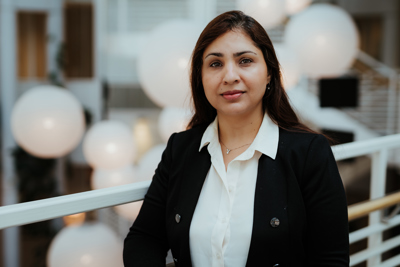
Toktam Ramezanifarkhani is an Associate Professor at Kristiania University College's School of Economics, Innovation and Technology. She teaches information security, risk management, and governance across bachelor's and master's programs. Her research spans Cybersecurity with specializations in IoT security, malware analysis, and human factors in security. Research Focus: She investigates theoretical and practical aspects of Information Security including Software Security, Vulnerability Analysis, Applied Cryptography, and Formal Methods. Recent work explores AI applications in cybersecurity and DevSecOps integration. Student Advising: Actively supervises graduate research in: IoT Security Machine Learning for Authentication Malware Analysis Formal Methods in Security Recent Publications: Her scholarly output demonstrates consistent focus on security frameworks, privacy-by-design architectures, and threat mitigation in distributed systems, with recurrent themes in IoT security and compliance mechanisms.
Gunnar Rye Bergersen is an Associate Professor in the Department of Informatics at the University of Oslo, Faculty of Mathematics and Natural Sciences. He is actively engaged in research and teaching within the Software Engineering group. His contact email is gunnab@ifi.uio.no , and he is based in room 10163 at Ole-Johan Dahl's house. His research centers on the competence and success factors of IT developers, with a strong emphasis on empirical methods. Key areas include: Measurement of programming skill and developer expertise Teamwork quality and communication in agile environments Construct validity and methodological rigor in software engineering research User journey modeling and simulation Psychometrics and educational research in computing His recent publications (2022–2024) reveal a trend toward formal modeling of user journeys using game theory and simulation, while maintaining a strong foundation in empirical evaluation of software practices. He frequently collaborates with leading researchers such as Dag Sjøberg and Tore Dybå, publishing in top-tier journals like IEEE Transactions on Software Engineering and conferences such as HICSS and XP. He teaches courses IN1030, IN2000, and IN5140, and supervises master’s students interested in empirical evaluations of software interventions. His programming language of choice is R, reflecting his methodological focus on quantitative analysis and measurement.
Volker Stolz is an Associate Professor in the Department of Informatics at the University of Oslo, Faculty of Mathematics and Natural Sciences. He is affiliated with the Reliable Systems research group, where his work centers on improving software reliability through formal methods, model transformation, and UML-based modeling. Institution: University of Oslo School: Faculty of Mathematics and Natural Sciences Department: Department of Informatics Research Group: Reliable Systems Contact: stolz@ifi.uio.no | +47 22852438 | Room GA06 9461 His research spans formal verification, concurrency, model-based testing, and programming language semantics. He has made significant contributions to deadlock detection, refactoring equivalence, runtime verification in distributed systems, and data race analysis, often using formal models such as Petri nets and active object languages. The recent publications highlight a consistent focus on software correctness , modular analysis , and automated verification techniques. Trends include the use of behavioral effects, abstract execution, and field calculus for distributed monitoring. His work frequently appears in top-tier venues like Theoretical Computer Science , Lecture Notes in Computer Science , and Journal of Logical and Algebraic Methods in Programming , indicating strong theoretical and practical impact. He collaborates extensively with researchers such as Violet Ka I Pun, Rui Wang, Lars Michael Kristensen, and Martin Steffen, reflecting an active and collaborative research profile. No scientific awards are mentioned in the provided text. There is no information available about student advising or research grants. Volker Stolz is involved in research projects related to model-based testing, formal methods, and reliable software systems, particularly through the Reliable Systems group. His work often involves building theoretical foundations and practical tools for verifying and improving software behavior in distributed and concurrent environments.
May Helen Uppstad Austad serves as a Researcher at the University of Agder's Department of Pedagogy within the Faculty of Humanities and Pedagogy. She is currently pursuing a public PhD through a collaborative research project with Lindesnes Municipality focused on working life education in lower secondary schools. Her role integrates academic research with practical municipal implementation, emphasizing co-creation with educators and students. Her research centers on vocational pedagogy and school-to-work transitions, with particular expertise in mastery models ( mestringsmodell ), dropout prevention, and transversal skills development. She investigates how working life subjects can be effectively embedded within standard secondary curricula through action research methodologies, prioritizing inclusive practices for diverse learners and vulnerable youth populations. Analysis of her 15 most recent publications (2023-2025) reveals consistent focus on practical implementation challenges in Norwegian secondary education. Key themes include resource allocation for working life subjects, development of localized curricula through teacher-student collaboration, and frameworks for building workplace relationships to support school-work transitions. Her work demonstrates strong municipal-academic partnership approaches, with recurring emphasis on mastery-oriented assessment and adaptation strategies for at-risk students. Austad actively disseminates findings through conferences like NordYrk and Profes Spring PhD symposium, though no formal scientific awards are documented. Her research is conducted within a project team involving Lindesnes Municipality personnel, teachers, and students, focusing on real-world application rather than theoretical development. While no formal advisees are listed, her collaborative methodology involves significant knowledge exchange with educational practitioners.
Olaf Owe serves as Professor II (Adjunct Professor) in the Department of Information and Communication Technology at the University of Agder since August 2020, while maintaining his primary position as full Professor at the University of Oslo since 1993. His academic trajectory includes Assistant Professorship at UCSD (1983-1987) and Research Associate at Stanford University (1981-1983), with sabbaticals at UCSC (2014/2015) and SRI/Oxford (1994/1995). His research centers on Programming and Specification Languages, with deep specialization in Language-based Security, Privacy (including GDPR compliance), and Formal Methods applied to object-orientation and distributed systems. He develops verification frameworks and modeling tools for concurrent systems, emphasizing analytical reasoning systems and simulation techniques for open architectures. Current work integrates these methodologies with emerging privacy-preserving computational paradigms. Professor Owe actively contributes to the Communication and System Security research group at UiA while serving part-time as Executive Senior Advisor at Prosa Security since February 2021. His teaching includes course IKT448, and he maintains ongoing collaborations through institutional partnerships developed during his international academic appointments.
Hans Z. Munthe-Kaas is a Professor in the Department of Mathematics at the University of Bergen. He holds several prominent academic leadership roles, including Chair of the Abel Prize Committee, Editor-in-Chief of Foundations of Computational Mathematics , President of the Norwegian Mathematical Society, and Project Leader of the RCN-Fripro project CODYSMA and the Lie–Størmer Center. His research lies at the intersection of pure and applied mathematics and computer science, with a focus on the Foundations of Computational Mathematics . Key areas include geometric integration, Lie group integrators, Lie–Butcher theory, structure-preserving algorithms for differential equations, multivariate Chebyshev polynomials, and computational algebra. He has pioneered coordinate-free algorithm design through the SOPHUS project and developed the DiffMan MATLAB toolbox for solving differential equations on manifolds. The recent publications show a strong trend in algebraic and geometric structures in numerical analysis, particularly in Lie–Butcher series , B-series , post-Lie algebras , and aromatic trees , with applications to integration on manifolds and homogeneous spaces. These works combine deep theoretical insights with practical computational implications. His scientific honors include the Esso Prize (1999) for his PhD work on numerical linear algebra and parallel algorithms. He has also led major research initiatives and collaborative projects, securing funding from the Research Council of Norway. Munthe-Kaas has advised students at the master’s level and welcomes new thesis projects. He has been active in teaching at all levels, including international courses at AIMS South Africa, CIMPA Brazil, and Morningside Center Beijing. He is also involved in public outreach through programs like 'Mattesirkelen' for high school students. He leads the Lie–Størmer Center and has developed software such as the SOPHUS C++ library and DiffMan toolbox, reflecting his commitment to bridging theoretical mathematics with computational practice.



.jpg)
