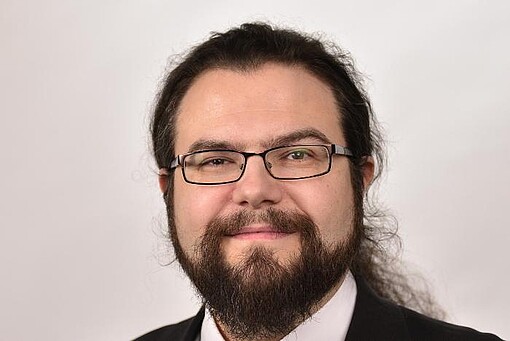
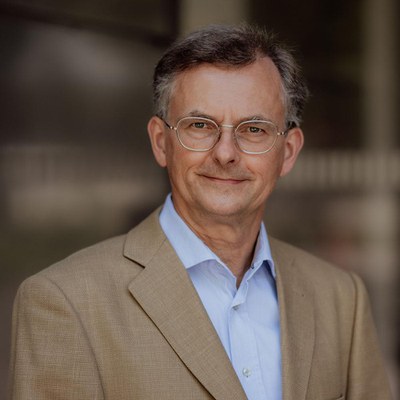
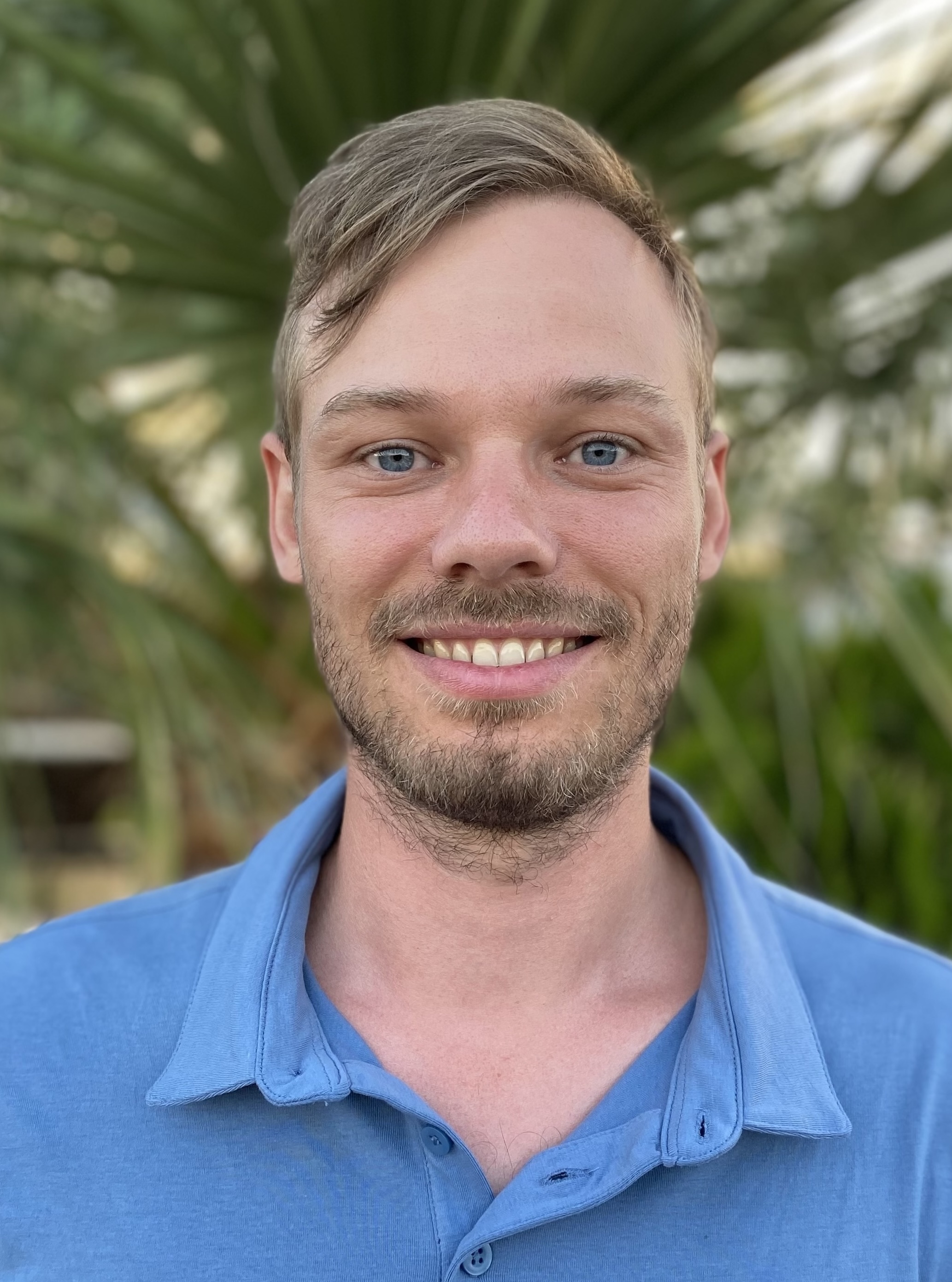
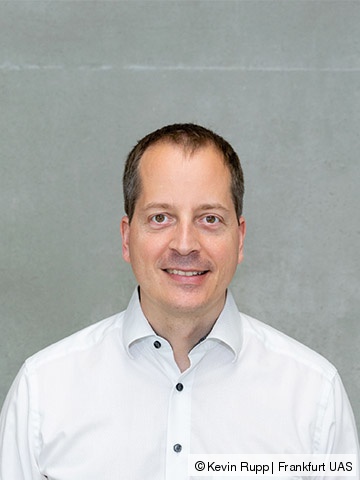
Boris Tolg is a Professor of Informatics and Mathematics at the Hamburg University of Applied Sciences , affiliated with the Faculty of Life Sciences and the Department of Biomedical Engineering. He leads the SIMLab and the Research and Transfer Centre for Medicine, Health, and Technology (FTZ MGT), while serving as Pro-Dean for Research and Digitalization. Research Focus: Simulation and virtual reality applications for mass casualty incident (MANV) training and medical education. Expertise: Digital monitoring systems, motion analysis in simulations, and combating simulator sickness. His recent work explores VR-based training tools for emergency response coordination, spine posture analysis sensors, and health impact assessments in urban planning. Publications emphasize scalable solutions for food safety control and digital transformation in healthcare education. Leadership: Chairs the Commission for Safeguarding Good Scientific Practice and contributes to organizations like the ARGH and GI.
Bernhard Heinloth, M.Sc., is affiliated with the Department of Computer Science (INF) at Friedrich-Alexander-Universität Erlangen-Nürnberg (FAU), specifically within Chair of Computer Science 4 (System Software). His research focuses on system software optimization, kernel tailoring for embedded systems, and dynamic software updates. He has contributed to projects like Luci (dynamic shared object updates), Cocoon (on-demand kernel compilation), and Honey (binary library reduction). Teaching activities include leading exercise sessions for courses such as Betriebsysteme (Operating Systems), Systemnahe Programmierung in C (Low-Level Programming), and Praktikum angewandte Systemsoftwaretechnik (Systems Software Lab). He has advised numerous master's theses on topics ranging from interrupt latency analysis to compiler-based OS optimization. His publications span academic venues like USENIX ATC, PLOS, and SBESC, with a strong emphasis on practical system software engineering. Current work continues exploring compiler-driven system optimizations and real-time kernel performance.
Prof. Dr.-Ing. Gerd-Jürgen Giefing serves as Professor of Information and Communication Technology at Georg Agricola University of Applied Sciences since 2003, concurrently leading the Electrical and Information Engineering Master's Program, Digital Signal Processing Laboratory, and serving as Deputy Head of the Software Engineering Laboratory. His academic foundation includes: Electrical engineering studies with data processing focus at University of Karlsruhe and Technical University of Munich (1983-1988) Doctorate in neuroinformatics and technical vision from Ruhr University Bochum (1988-1993) Research spans cognitive robotics with emphasis on behavior-oriented scene analysis and distributed communication frameworks, augmented reality systems, and traffic telematics applications including driver face recognition. His foundational work in biologically inspired computer vision established video-based facial capture systems using multiprocessor architectures, later evolving into cognitive robotics frameworks. Current investigations focus on brain-computer interfaces and nomadic point cloud calibration for mobile robotics. Publication trends reveal a progression from neurobiological vision models (1990s) to cognitive robotics infrastructure (2010s), consistently addressing real-world applications in automation and human-machine interaction through IEEE conference proceedings. Key recognitions: Innovation Award '94 from Bochum Technology Transfer Association European Information Technology Award 1996 from European Council for Applied Sciences and Engineering As IEEE Systems Man and Cybernetics Society member, he maintains active research leadership without documented grant specifics. His laboratory direction fosters applied research in signal processing and software engineering for cognitive systems development.
Sergio Segura is a Full Professor of Software Engineering at the University of Seville (Spain), where he leads the research line on Software Engineering within the SCORE Unit of Excellence. He is a member of the Applied Software Engineering research group and affiliated with the SCORE Lab at the I3US Institute. His research focuses on applied and tool-oriented software engineering, with particular emphasis on improving software quality and developers' productivity through automation. He actively collaborates with industry through research contracts and technical training initiatives. Segura's research interests include software testing, AI-driven software engineering, trustworthy AI, and software engineering education. His recent work shows a strong trend toward testing RESTful APIs, safety and fairness testing of large language models, and mutation testing in practice. His publications demonstrate a consistent focus on practical, tool-oriented solutions to real-world software engineering challenges. Docentia Teaching Accreditation - Excellence Mention (2025) Best Application Paper Award at AITest 2022 His student Alberto Martín won the SCIE/BBVA National Young Researcher Award 2023 Segura has supervised numerous PhD students, many of whom have achieved significant recognition including First and Second Place Winners in ACM SRC Grand Finals. He leads the TRUST4AI project focused on trustable AI-driven internet search and maintains close collaboration with industry partners such as Schneider Electric through industrial PhD programs.
Sergio Rajsbaum is a Professor (Investigador Titular "C") at the Institute of Mathematics of the Universidad Nacional Autonoma de Mexico (UNAM) in Mexico City. He has been a member of SNI (Sistema Nacional de Investigadores) nivel III. His academic career includes a visiting scientist position at MIT's Laboratory for Computer Science (1993-1995) and a Research Staff member position at Cambridge Research Laboratory of HP (1999-2002). Rajsbaum received his Computer Engineering degree from UNAM in 1985 and his PhD in Computer Science from the Technion (Israeli Institute of Technology) in 1991 under the supervision of Shimon Even. His academic genealogy traces back to Paul Erdős (Erdős number 2). Rajsbaum's research focuses on the theory of distributed computing, particularly issues related to coordination, complexity, and computability. He has made significant contributions to combinatorial topology applications in distributed systems, consensus problems, and graph theory. His work often bridges theoretical computer science with practical distributed system design. He has pioneered the use of topological methods to study distributed computing from complexity and computability perspectives. Analyzing his publication record reveals a consistent focus on fundamental problems in distributed computing, particularly consensus and set agreement. His work demonstrates a progression from basic algorithm design to more abstract topological approaches. The publications show strong collaboration patterns, especially with researchers like Achour Mostefaoui, Michel Raynal, Maurice Herlihy, and Eli Gafni. His research spans theoretical foundations, algorithm design, and practical implementations. Best Student Paper Award at ACM PODC 2008 for "New Combinatorial Topology Upper and Lower Bounds for Renaming" Long-standing editorial role as editor of the ACM SIGACT News Distributed Computing Column (2000-2007) Rajsbaum has been actively involved in the distributed computing research community, serving as program committee chair for major conferences including LATIN02, PODC03, and ENC06. He has been a steering committee member for DISC, LADC, LATIN, and PODC. His teaching includes graduate and undergraduate courses on Principles of Distributed Computing, Algorithms, Theory of Computation, and JAVA Distributed Computing at UNAM. He has mentored numerous students and contributed significantly to the academic community through conference organization and editorial work.
Prof. Dr. Torsten Brinda holds the Chair for Didactics of Informatics at the University of Duisburg-Essen's Faculty of Computer Science. His research centers on competency modeling in programming, digital education frameworks, and computer science pedagogy. He serves as chair of the GI department for computer science education and received the IFIP Service Award in 2022. Key research areas include: Modeling of digital competencies for teachers/students Automatic assessment in programming education International curriculum standards for CS education His publications (2015-2022) demonstrate consistent focus on educational informatics, featuring competency modeling studies, global CS education analyses, and contributions to the Dagstuhl Declaration on digital education. Recent work explores integrated digital competency frameworks for teacher training.
Prof. Dr. Gunnar Teege is a faculty member at the Institute for Computer Engineering within the Faculty of Computer Science at Bundeswehr University Munich. His career spans over two decades, focusing on distributed systems, virtualization, and formal verification of operating system components. He has led numerous research projects, including collaborations with institutions like the Runder Tisch GIS eV and the Bavarian State Office for Surveying and Geoinformation. Education: Diploma in Computer Science from Technical University of Munich (1985), Doctorate in Computer Science from TUM (1991) Affiliations: Member of GI (Gesellschaft für Informatik) and ACM (Association for Computing Machinery) Research interests include formal verification of software components for secure systems, virtualization frameworks, distributed systems, military communications, geospatial data interoperability via OpenGIS standards, computer-supported cooperative work (CSCW), and E-Learning platforms. His work often bridges theoretical and applied domains, particularly in defense IT systems and education technology. He has contributed to projects like Targeteam (XML-based adaptable teaching materials), HoBIT (high-security embedded systems), and MiKscHA (microkernel applications for high-security environments). His publications emphasize modularity, tailorability, and security in software design. Teaching activities at Bundeswehr University Munich include courses on operating systems, distributed systems, virtualization, and cybersecurity. Previously, he taught problem-based learning in computer science at TU Munich and developed virtual lectures for the Virtual University of Bavaria (vhb) from 2001–2005.
Mohab Hassaan is a researcher at the Chair of Computing in Civil and Building Engineering at the Technical University of Munich (TUM). He is actively involved in research projects related to artificial intelligence, building information modeling, and construction simulation. Research focus on AI-driven evacuation design and machine learning for floor plan digitization Co-author of publications in Proceedings of 35. Forum Bauinformatik (2024) and Sensors (2023) Teaching assistant for Software Lab Introduction to Object-Oriented Programming (Winter Semester 25/26) Contact via mohab.hassaan@tum.de or Room 0502.03.219 at TUM
Dr. Lars Schütze is a researcher at the Chair for Compiler Construction within the Faculty of Computer Science at Dresden University of Technology (TU Dresden). Holding a PhD in Computer Science from TU Dresden, he currently serves as a PostDoc specializing in domain-specific compilers for verifiable Full Homomorphic Encryption (vFHE) and hybrid quantum-classical computing systems. His academic credentials from TU Dresden include: Bachelor's degree in Computer Science Master's degree in Computer Science PhD in Computer Science (awarded February 2025) Schütze's research centers on advanced compiler design for emerging computational paradigms. His foundational work explores context-oriented and role-based programming languages, focusing on runtime optimization and dispatch mechanisms. Recent efforts pivot toward post-quantum security through homomorphic encryption compilers and hybrid quantum-classical computing frameworks. His research bridges theoretical language design with practical compiler implementation, emphasizing verifiable security and performance efficiency in next-generation computing environments. Publication analysis reveals a clear evolution from context-oriented programming (2017-2020) toward cryptographic compiler development (2022-2025). Early work optimized role-based dispatch systems, while recent publications establish compiler frameworks for Fully Homomorphic Encryption using MLIR infrastructure. His research consistently addresses performance bottlenecks in dynamic language features while transitioning toward quantum-resistant cryptography solutions. Scientific Awards: No awards documented in source materials Dr. Schütze supervises student theses in Homomorphic Encryption and Quantum-Classical Computing frameworks, offering projects spanning Bachelor to Master levels. His research is funded through institutional projects including (verifiable) Full Homomorphic Encryption and Hybrid Quantum-Classical Computation, though specific grant details remain undisclosed. He actively develops compiler infrastructure for encrypted computation and quantum-classical orchestration. As core personnel in TU Dresden's Chair for Compiler Construction, Schütze contributes to the RoSI project (role-based software infrastructures) and leads current initiatives in vFHE. His team collaborates on building domain-specific compiler toolchains that address quantum computing threats through post-quantum cryptographic solutions while advancing hybrid execution models for emerging hardware architectures.
Prof. Dr. sc. techn. Christoph Uhrhan is a faculty member at Furtwangen University , actively engaged in robotics research. His work focuses on robotics and flexible automation , particularly in industrial applications involving sheet metal bending , robot grippers , and human-robot interaction . With over 25 years of experience, his research spans tactile sensing, compliant mechanisms, and adaptive control systems. He maintains an office at Campus Furtwangen (Room: H 2.12) and can be contacted at Christoph.Uhrhan@hs-furtwangen.de . His research emphasizes user-oriented automation , combining passive and active features in robotic systems. Recent work includes object classification through force-sensitive fingertips using convolutional neural networks, while older contributions focus on mobile robotics and press brake automation. Key article trends show sustained focus on industrial robotics (1994-2022) with emphasis on tactile perception, compliant systems, and adaptive manufacturing. The work spans from foundational studies in sheet bending automation to modern CNN-based sensor interpretation.
Martin Brehmer is a Research Fellow at the University of Augsburg , affiliated with the Department of Business Administration under the School of Business . He contributes to the Financial Data Analytics Chair led by Prof. Dr. Jan Muntermann, focusing on information security education, generative AI applications, and gamification techniques. Education: B.Sc. in Information Systems with focus on IT Security, Dualen Hochschule Baden-Württemberg Heidenheim M.Sc. in Computer Science and Information Management, University of Augsburg Exchange Semester at Norwegian University of Science and Technology, Trondheim Research Interests: IT Security Awareness Training Measuring Information Security Behavior Generative AI in Educational Content Creation Gamification for Learning Systems Design Science Research Methodology Recent Article Trends: His work bridges cybersecurity education with behavioral science and AI, emphasizing measurable training efficacy through gamified systems, interactive media, and holistic metrics. Key themes include SME security training, scavenger hunt-based behavioral assessments, and AI-driven learning object design. Scientific Awards: 2021 ECIS Best Research-in-Progress Paper Nomination 2023 Prize for Digital Teaching, University of Augsburg 2025 Exceptional Review Service, WISP - SIG SEC Advising and Collaborations: Actively involved in academic advising as part of the Financial Data Analytics team. Participates in conference program committees (HICSS, WI, ICIS, AMCIS) and journal reviews (Computers & Education, Electronic Commerce Research).
Dr. Dominik Helm is an interim professor for Software Engineering at the University of Duisburg-Essen . His research focuses on modularization and automatic parallelization of collaborative static analyses, particularly through the OPAL framework for Java VM bytecode. He is the lead maintainer of OPAL, which aims to enhance precision, soundness, and scalability in static analysis for bug and security vulnerability detection. Helm has also received the Ernst Denert Software-Engineering-Preis (2024) for his contributions. Education : Helm earned his PhD in Computer Science from Technische Universität Darmstadt in 2023, with his thesis titled Modular Collaborative Program Analysis . His academic background includes extensive work on purity analysis, call graphs, and modular static analysis techniques. Research Interests : Helm's work bridges theoretical advancements in program analysis with practical tools. His key areas include cross-language analysis (e.g., AXA framework), modular call-graph algorithms (Unimocg), and soundness theory for analysis architectures. He emphasizes improving static analysis tools to handle complex language features and ensure robust software quality. Publications & Awards : Helm has authored/co-authored over 15 papers in top-tier conferences like ASE, ISSTA, and ESOP. His 2024 work on AXA and Unimocg showcases cross-language interoperability and modular consistency. The Ernst Denert Preis recognizes his impactful contributions to software engineering research. Technical Leadership : As OPAL's lead maintainer, Helm drives collaborative research in static analysis frameworks. His projects often involve interdisciplinary teams, reflecting his commitment to practical software engineering solutions.
Prof. Dr. Markus Grüne is a Professor for Business Administration with a focus on Business Information Systems, particularly e-Commerce and e-Business at Frankfurt University of Applied Sciences' Faculty 3: Business and Law. He serves as Coordinator for Business Information Systems and holds office hours in room 4-403. His professional background includes roles at German Bank AG as Lead IT Project Manager and Lead Functional Specialist for regulatory reporting projects. He earned his doctorate (Dr. rer. pol.) from Goethe University, Frankfurt on pricing models in 2006. Teaching focuses include Business Information Systems, e-Business, Big Data, and Data Warehouse modules. Notable courses include 'Big Data – Data Lakes and Crystal Balls' (IBIS program) and 'Process Management' which won an e-Learning Prize for blended learning implementation. Research interests span business process management, agile software development, and IT systems in finance. Key publications explore cloud computing in e-business education, banking IT systems, and workflow-based e-learning. He holds the Best Paper Award (2003) and contributed to major conferences like Bled eConference. Active in professional societies such as the Society for Computer Science, he bridges academic research with practical IT project management expertise.
Dr. Başak Aydemir is an Assistant Professor at the Department of Information and Computing Sciences , Faculty of Science, Utrecht University. She works in the Software Production Group , focusing on applying Natural Language Processing , Machine Learning , and Artificial Intelligence to Requirements Engineering problems. She obtained her Ph.D. from the University of Trento in 2016 and previously worked at Bogaziçi University (2018-2024) before rejoining Utrecht University. Software Development Requirements Engineering Conceptual Modeling Natural Language Processing Life Sciences Her research explores Requirements Engineering through NLP and AI, with recent work on Large Language Models for domain model generation, Robotic Tutors for interview training, and Creativity Techniques in requirements workshops. She investigates ethics-aware systems and multi-agent planning , emphasizing software quality and empirical validation. Recent publications span IEEE RE , REFSQ , and Empirical Software Engineering journals. Key trends include NLP-driven requirement analysis , interactive training systems , and gamified platforms for change management. She co-organized the AIRE 2024 and NLP4RE 2021 workshops. She teaches courses in Method and Model-Driven Engineering , contributes to Business Informatics programs, and is available at Room 5.82, Buys Ballot Building, Utrecht.
Joe K. Kearney is a Professor in the Department of Computer Science at the University of Iowa and the University of Minnesota. His career spans over three decades, focusing on virtual reality, computer vision, and human-computer interaction research. Key affiliations: University of Iowa (Iowa City, IA, USA), University of Minnesota (Minneapolis, MN, USA) Research domains: Virtual environments, perception-action coupling, motion capture systems, pedestrian behavior simulation Research trends show sustained contributions to immersive visualization , autonomous navigation , and human factors in virtual reality . His 2014-2025 work explores AR-based pedestrian safety systems, while earlier studies (1986-2006) established foundational frameworks for virtual environment simulation and optical flow analysis. Long-term collaborations with Jodie M. Plumert (1986-2021), James F. Cremer (1986-2009), and Pooya Rahimian (2015-2017) demonstrate consistent team research in VR cognition and autonomous systems.