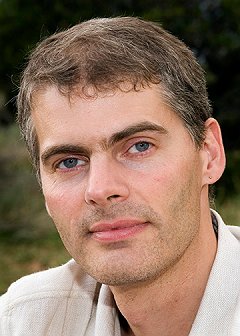
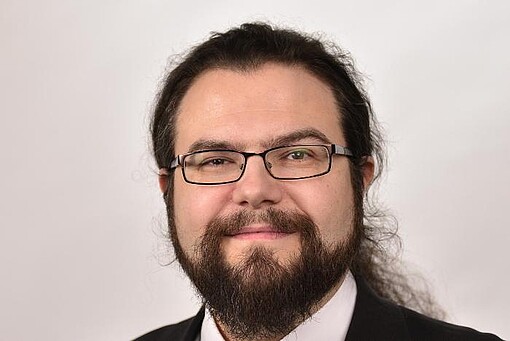
James H. Cross II is a Professor in the Department of Computer Science and Software Engineering at Auburn University's College of Engineering, with prior affiliations at the University of Nevada Las Vegas' Business School and Drexel University's College of Medicine. His research focuses on software engineering education, program visualization, reverse engineering, and educational technology. Key Roles : Software Engineering Educator, Java Pedagogy Innovator, Program Visualization Researcher His work emphasizes enhancing code comprehension through dynamic data structure visualizations (e.g., jGRASP IDE), reverse engineering methodologies, and interdisciplinary applications in software maintenance and curriculum development. Recent trends in his publications (2019–2024) include FAIR data principles, ontological frameworks, and token-based incentives for scholarly contributions. Notable collaborations include T. Dean Hendrix, Larry A. Barowski, and David A. Umphress. Affiliated with institutions like Auburn University, University of Nevada Las Vegas, and Drexel University's College of Medicine, his career spans software engineering research, educational tool development, and academic leadership.
Prof. Dr. Sonja Keller is a Professor of Practical Theology at Augustana University since 2020, previously serving as Junior Professor at the University of Hamburg (2016-2020). She holds a doctorate from the University of Zurich (2014) and has extensive pastoral experience in Zurich (2011-2016). Her research focuses on homiletics, church theory, material culture of religion, and spatial ecclesiology. She leads the research project 'Culture under the church tower' and is affiliated with the Institute for Evangelical Asceticism. Education: Studied Philosophy, Theology, and Literature in Basel and Berlin. Key academic roles include University Preacher at Hamburg (2017-2018) and Vicar (2011-2016). Her work integrates empirical religious research with practical theological methodological innovations. Research emphasizes church buildings' societal roles, digital materiality in religious communication, and postcolonial perspectives on ecclesiastical material culture. Recent projects explore spatial theology, liturgical practices, and the intersection of religion with urban public spaces. Her publications span monographs, edited volumes, and peer-reviewed articles in leading theological journals. Current supervisions include PhD projects on church building transitions and religious-cultural analysis. She collaborates with interdisciplinary teams on projects funded by the German Research Foundation (DFG).
Professor You Jae Lee is a full Professor of Korean Studies at the Eberhard Karls University of Tübingen, where he holds a W3-professorial chair. He is affiliated with the Faculty of Humanities, Institute of Asian and Oriental Studies, Department of Korean Studies. He serves as Managing Director of the Department, Director of the Center for Korean Studies, and Director of the King Sejong Institute Tübingen. His academic leadership and institutional roles underscore his central position in advancing Korean studies in Europe. Dr. phil. in History, University of Erfurt Master of Arts, Freie Universität Berlin Undergraduate studies in History, Korean Studies, Philosophy, and Political Science at Freie Universität Berlin, Humboldt-Universität Berlin, and Seoul National University Professor Lee's research lies at the intersection of modern and contemporary Korean history, postcolonial theory, Cold War dynamics, and transnational migration. His work emphasizes everyday life, diaspora formation, and the cultural history of religion and missions. He has pioneered studies on Korean labor migration to Germany, particularly focusing on miners and nurses, and explores how colonial legacies, religious movements, and Cold War geopolitics have shaped Korean society and its global diaspora. The 15 most recent publications reflect a strong thematic focus on migration, memory, and transnational encounters. His scholarly output spans Korean diaspora in Germany, Cold War solidarity, missionary history, and conceptual history. These articles demonstrate a consistent engagement with oral history, material culture, and identity formation, often bridging Korean and German historical experiences. His work is published in both Korean and German, reflecting his bilingual and binational scholarly perspective. While no formal scientific awards are listed in the provided text, Professor Lee's editorial and research leadership roles—such as directing the AKS Strategic Research Institute and curating major exhibitions—highlight his recognition in the academic community. Professor Lee has supervised numerous research initiatives, edited significant volumes, and led externally funded projects such as the AKS Tübingen Global Korea Project and the TUDOKU-Netzwerk. He has advised collaborative teams and doctoral researchers, though specific student names are not listed. His public engagement includes media appearances, podcasts, and opinion columns, extending the impact of his academic work into public discourse. He leads the AKS Strategic Research Institute and has directed the King Sejong Institute Tübingen since 2012. His team has produced exhibitions like 'Shared. Divided. United. Deutschland-Korea' and research networks such as TUDOKU-Netzwerk, focusing on everyday history in Korean studies. These initiatives reflect a collaborative, interdisciplinary approach to Korean-German historical research.
Dieter A. Fensel is a Full Professor at the Institute of Computer Science, Faculty of Computer Science, University of Innsbruck, Austria . He has held academic positions at the University of Karlsruhe, Vrije Universiteit Amsterdam, and the University of Amsterdam. He founded the Digital Enterprise Research Institute (DERI) in Galway and Innsbruck and co-founded the Semantic Technology Institute International (STI2). His work spans semantic technologies, knowledge engineering, and intelligent systems. PhD in Political Science, University of Karlsruhe (1993) Habilitation in Applied Computer Science, University of Karlsruhe (1998) Masters in Computer Science (TU Berlin) and Social Science (FU Berlin) His research interests focus on the Semantic Web, ontologies, knowledge representation, web services, and intelligent systems. He investigates how semantics can enhance data interoperability, service composition, and knowledge sharing in distributed environments. His work bridges formal methods with practical applications in e-commerce, tourism, and digital enterprises. He emphasizes the role of semantics in enabling machine-understandable content and automated reasoning across domains. The research trends in his publications and projects reveal a consistent focus on semantic technologies, from foundational work on knowledge representation (e.g., KARL language) to large-scale EU projects on data ecosystems (PlanetData, BYTE), travel (EuTravel), and energy (ENTROPY). His work evolved from theoretical AI and knowledge engineering to applied semantic web services, linked data, and digital innovation in societal domains. His scientific awards include: Carl-Adam-Petri-Award of the Faculty of Economic Sciences, University of Karlsruhe (2000) As an academic advisor, Dieter Fensel has supervised over 25 PhD students and served on numerous Master’s and PhD committees. He has led more than 100 national and international research projects with total funding in the hundreds of millions of euros, including major grants from the EU’s 7th Framework Program, Horizon 2020, and Science Foundation Ireland. These projects span domains such as big data, ambient assisted living, transportation, and digital services. He co-founded and led several research labs and teams , including: Digital Enterprise Research Institute (DERI), Galway and Innsbruck Semantic Technology Institute (STI) Innsbruck Semantic Technology Institute International (STI2) Co-founder of the European Semantic Web Conference (ESWC) and International Semantic Web Conference (ISWC) These organizations foster global collaboration in semantic technologies and have become central hubs for research, innovation, and community building in the field.
Eric Leclercq is a researcher at the University of Burgundy, affiliated with the LE2I Lab in Dijon, France. His work spans database systems, social network analysis, and biomedical data integration. He has contributed extensively to polystore systems, tensor decompositions, and category theory applications in data modeling. Fields of Interest : Database Systems, Data Mining, Social Network Analysis, Big Data Analytics, Semantic Web Leclercq's recent research focuses on formal frameworks for data lakes using category theory, multi-level tensor decomposition for social network stratification, and schema migration in multi-model systems. He has published in venues like CAiSE, IDEAS, and RCIS. His collaborations include Annabelle Gillet, Marinette Savonnet, and Nadine Cullot. Notable works include Lambda+ architecture for data processing, polarization analysis in social networks, and tools for tweet collection and biomedical data integration.
Francesca Fallucchi is an Associate Professor at Guglielmo Marconi University in Rome since 2008 and an information scientist at Georg-Eckert-Institut (GEI) since July 2017, working in the Human-Centered Technologies for Educational Media department. Her research focuses on the intersection of computer science and humanities, with particular emphasis on knowledge organization , information retrieval , semantic technologies , and big data management applied to educational media and cultural heritage. Her work bridges theoretical computer science with practical applications in digital humanities. Analysis of her recent publications (2021-2024) reveals a research trajectory spanning multiple domains: from foundational work in semantic web and NLP to emerging applications in metaverse technologies, blockchain for energy monitoring, and explainable AI for healthcare. Her work consistently demonstrates interdisciplinary approaches combining computer science with domain-specific challenges. Dr. Fallucchi has been actively involved in academic service, including organizing the 17th International Conference on Metadata and Semantics Research (MTSR 2023) and serving as editor for Computers trade magazine since 2021. Her professional activities include significant project leadership as Deputy Project Manager for Edumeres Toolbox and contributions to numerous research projects including GLOTREC, GEI-Digital, PalTex, DemoS, PVE-E, and WorldViews.
In-Young Ko serves as a Professor in the School of Computing at Korea Advanced Institute of Science and Technology (KAIST) in Daejeon, South Korea. His academic career spans over two decades with significant contributions to software and web engineering research. His educational background includes a Ph.D. in Computer Science from the University of Southern California (2003), and B.S. and M.S. degrees from Sogang University in Seoul (1990 and 1992 respectively). From 2005-2011, he contributed as adjunct faculty for Carnegie Mellon University's Master of Software Engineering program. Prof. Ko's research focuses on software engineering and web engineering , with specific expertise in service computing, service-oriented architecture, Web services, software testing, service composition/mashups, Semantic Web, and Web-based information management. His work bridges theoretical foundations with practical applications in end-user software engineering. His recent publications demonstrate continued innovation in model composition techniques and web application testing methodologies, reflecting his commitment to advancing software engineering practices. 2026 ICSE: Program Committee Member 2025 ASE: Financial Chair 2025 APSEC: Steering Committee Member 2023 APSEC: General Chair 2020 ICSE: Finance Chair Prof. Ko maintains active service to the academic community through conference organization and program committee roles, demonstrating leadership in the software engineering field while advancing research in service-oriented computing.
Jonathan Bell is an Associate Professor in Software Engineering and Software Systems at Northeastern University's Khoury College of Computer Sciences. Previously, he was faculty at George Mason University where he received a university-wide Teacher of Distinction award. Bell directs research that makes it easier for developers to create reliable and secure software by improving software testing and program analysis. His research spans several key areas in software engineering: flaky tests, fuzzing, software supply chain analysis, and continuous integration. Bell's work on accelerating software testing earned an ACM SIGSOFT Distinguished Paper Award (ICSE '14), and his contributions to the object-oriented programming community were recognized with the 2020 Dahl-Nygaard Junior Researcher Prize. His program analysis research has resulted in widely adopted runtime systems including the Phosphor taint tracking system and CROCHET checkpoint/rollback tool. His recent publications reveal a consistent focus on practical software engineering problems with empirical validation. His work increasingly addresses the challenges of modern software supply chains and dependency management, building on his earlier foundational work in testing and program analysis. The trend shows progression from specific testing problems to broader software ecosystem challenges. ACM SIGSOFT Distinguished Paper Award (ICSE '14 - Unit Test Virtualization with VMVM) Dahl-Nygaard Junior Researcher Prize (2020) NSF CAREER award recipient Teacher of Distinction award from George Mason University Bell actively serves the software engineering community through program committee work for major conferences (ICSE, ASE, FSE, ISSTA), co-organizing mentoring workshops, and contributing to open source projects. He co-founded the Clowdr open source project during the pandemic to support virtual academic conferences and subsequently co-founded a startup around it. His research has been funded by the NSA and NSF, and he serves on the Computing Research Association's Education Board.
Dr. Uwe C. Fischer is a Senior Lecturer at the University of Bamberg , affiliated with the Faculty of Human Sciences and Education and Department of General Psychology and Methodology . His work spans empirical aesthetics , community psychology , and addiction prevention , with a focus on the interplay between affective processes, statistical evaluation, and socio-ecological systems . Research Themes : Multi-level analysis of aesthetic sensitivity and kitsch perception , including cross-cultural comparisons with Japanese kawaii Design of community-based prevention programs for substance use and mental health Development of psychometric tools for assessing addiction-related family impacts Methodological Expertise : Experimental psychology Item Response Theory (Rasch scaling) Multi-level modeling Scientific Contributions : Co-developed frameworks for linking gender differences to aesthetic preferences Investigated security/arousal needs in decorative object appreciation Evaluated volunteer motivation in EU-wide addiction prevention projects Fischer’s collaborations with Professor Claus-Christian Carbon are evident through joint publications and conference presentations, particularly in experimental aesthetics and visual cognition . He has also contributed to policy-oriented research in health psychology and community interventions .
Andreas Zendler serves as Director of the Institute of Computer Science at Ludwigsburg University of Education (2023-25), where he has held various leadership positions since 2004, including Head of the Department of Computer Science (2018-2022) and Director of the Institute of Mathematics and Computer Science (2011-2016). As a Professor (C4) for Computer Science and its Didactics since 2004, he has shaped computer science education programs including the BA/MA degree program in Computer Science. Zendler earned dual doctorates - a Dr. rer. nat. in Practical Computer Science from the University of Potsdam (1997) and a Dr. phil. in Experimental Psychology from the University of Regensburg (1988), followed by his habilitation in Practical Computer Science at the University of Potsdam (2000). His academic journey spans computer science, psychology, and education, creating a unique interdisciplinary foundation for his research. His research focuses on empirical computer science didactics, software engineering for cloud computing, data science, and the digitalization of teaching through SaaS models. He investigates content and process concepts for computer science teaching, compares learning effectiveness of instructional methods, and develops research methodologies specifically for educational contexts with small sample sizes. His work bridges theoretical frameworks with practical classroom applications across STEM disciplines. Zendler's publication record reveals a consistent trajectory from foundational software engineering research toward educational applications. His recent work (2018-2025) demonstrates increasing specialization in computer science education, particularly in competence measurement frameworks like cpm.4.CSE/IRT and their adaptations for small sample sizes. His upcoming publications indicate a strategic pivot toward AI applications, exploring how LLMs and GPTs can transform both data science practices and software engineering education. Throughout his career, Zendler has served as a dissertation reviewer for Practical Computer Science since 2001 and contributed to numerous research projects funded by organizations including the European Union, the Bavarian Research Foundation, and the German Aerospace Center (DLR). His project leadership spans bioinformatics, educational informatics, and software engineering domains. His methodological expertise includes experimental design for teaching research (particularly 3-factorial designs with repeated measurements), statistical evaluation approaches for small samples, and handling missing data in educational contexts. This technical proficiency supports his broader mission to establish rigorous empirical foundations for computer science education.
Gregor Snelting is a Professor and head of the Chair of Programming Paradigms at the Karlsruhe Institute of Technology (KIT), Faculty of Computer Science, Institute for Programming Languages and Compiler Construction. His research focuses on compiler construction, program analysis, software security, and verification. His primary research interests include programming languages, compiler design, program analysis, software security, information flow control, formal verification, object-oriented and concurrent programming, and software reengineering using concept analysis. His work aims to provide solid theoretical foundations and empirical validation. The research output, particularly the 15 most recent articles, shows a strong emphasis on software security and program analysis, with a focus on information flow control in Java using the JOANA tool. There is also a significant thread on invasive computing and resource-aware parallel programming. The work combines deep theoretical contributions, such as formal semantics and correctness proofs, with practical tool development and empirical validation. Faculty Teaching Award for the course 'Practice in Software Development' Snelting leads a research group that has developed several significant tools, including JOANA for security analysis, the Praktomat system for automated grading of programming assignments, and contributions to the libFirm compiler framework. His group is a key participant in major research initiatives like the DFG Collaborative Research Center InvasIC and the DFG Priority Program RS3. He advises students and supervises theses, fostering research in programming paradigms and software security. The group is involved in several key research projects: JOANA for information flow control in Java, InvasIC for invasive computing and dynamic parallelism, Quis-Custodiet for machine-checked correctness proofs of security analyses, and the development of the libFirm compiler framework.
Prof. Dr. Carsten Lucke is a faculty member at the Technische Hochschule Mittelhessen within the Department of Mathematics, Natural Sciences and Data Processing (MND), specifically affiliated with the Department of Business Informatics . He serves as Head of the M.Sc. Business Informatics program, Chair of the Master's program committee, and Chair of the admissions committee. His primary research focuses on software engineering , enterprise architecture (with emphasis on TOGAF, NAF, ADMBw), and IT security . Research Interests: Software Architecture, Architectural Modeling, Knowledge Management in Software Projects, Enterprise Architecture Frameworks Expertise: Stakeholder-Oriented Enterprise Modeling, ERP System Integration, PHP-based Software Development His publications reflect systematic approaches to integrating security management with enterprise architecture and addressing architectural complexity in large-scale systems. While no scientific awards are documented in the provided texts, his contributions span multiple empirical studies, conceptual frameworks, and practical implementations in software engineering.
Nada Amin is an Assistant Professor of Computer Science at Harvard University's John A. Paulson School of Engineering and Applied Sciences (SEAS), where she leads the metareflection lab . Her research combines programming languages (PL) and artificial intelligence (AI), focusing on neuro-symbolic systems that are correct by construction, with applications in program synthesis, verification, and precision medicine. Harvard John A. Paulson School of Engineering and Applied Sciences (2019–Present) University Lecturer in Programming Languages at University of Cambridge (2017–2019) Doctoral and postdoctoral work at EPFL (2011–2017) Her research spans three core themes: Safer : Type systems and formal verification (Coq, Dafny, Frama-C) Faster : Multi-stage programming and interpreter collapsing techniques Easier : Neuro-symbolic AI for program manipulation and biological reasoning Key publications include: 2025: Modular Imperative with LLMs (LMPL), Multi-stage Relational Programming (PLDI) 2024: Persimmon for extensible variant types (OOPSLA) 2023: LURK for recursive knowledge (ICFP), Dolorem language growth pattern (ECOOP) Scientific honors include: Teaching Assistant Team Award (EPFL, 2015) Michigan Cambridge Research Initiative Grant (2018) ArsDigita Prize (1999) She has served on program committees for GPCE (co-chair), ICFP, PLDI, and organized workshops in metaprogramming and logic programming. Her teaching portfolio includes graduate courses on neurosymbolic programming, program synthesis, and advanced PL theory.
Benjamin C. Pierce is the Henry Salvatori Professor of Computer and Information Science in the School of Engineering and Applied Science at the University of Pennsylvania. As a Fellow of the ACM, he has made significant contributions to programming language theory and formal methods. His academic leadership includes previous editorial roles as co-Editor in Chief of the Journal of Functional Programming and Managing Editor for Logical Methods in Computer Science. His research spans multiple interconnected domains in programming language theory, with particular emphasis on type systems and their applications to security and verification. Pierce's work bridges theoretical foundations with practical implementations, most notably through his development of the Unison file synchronization tool and contributions to the Clowdr virtual conference platform. His research interests form a cohesive trajectory from foundational type theory to applied security and verification techniques. Pierce's scholarly output shows consistent focus on property-based testing, type systems, and formal verification methods. His recent publications demonstrate evolving interests in differential privacy verification, synchronization technologies, and the practical challenges of implementing formal methods in real-world systems. The progression of his work reflects both theoretical depth and practical relevance to software development challenges. Fellow of the ACM Author of influential textbooks Types and Programming Languages and Software Foundations Lead designer of the Unison file synchronizer Co-developer of the Clowdr virtual conference platform Former editorial leadership for multiple prominent programming languages journals As an educator and mentor, Pierce has contributed to the Programming Languages Mentoring Workshop (PLMW) and has served on numerous conference program committees. His academic service extends to SIGPLAN leadership roles including SIGPLAN Vice Chair and Steering Committee membership. His textbook Software Foundations has become a standard resource for teaching formal methods and proof assistants.
Boris Tolg is a Professor of Informatics and Mathematics at the Hamburg University of Applied Sciences , affiliated with the Faculty of Life Sciences and the Department of Biomedical Engineering. He leads the SIMLab and the Research and Transfer Centre for Medicine, Health, and Technology (FTZ MGT), while serving as Pro-Dean for Research and Digitalization. Research Focus: Simulation and virtual reality applications for mass casualty incident (MANV) training and medical education. Expertise: Digital monitoring systems, motion analysis in simulations, and combating simulator sickness. His recent work explores VR-based training tools for emergency response coordination, spine posture analysis sensors, and health impact assessments in urban planning. Publications emphasize scalable solutions for food safety control and digital transformation in healthcare education. Leadership: Chairs the Commission for Safeguarding Good Scientific Practice and contributes to organizations like the ARGH and GI.