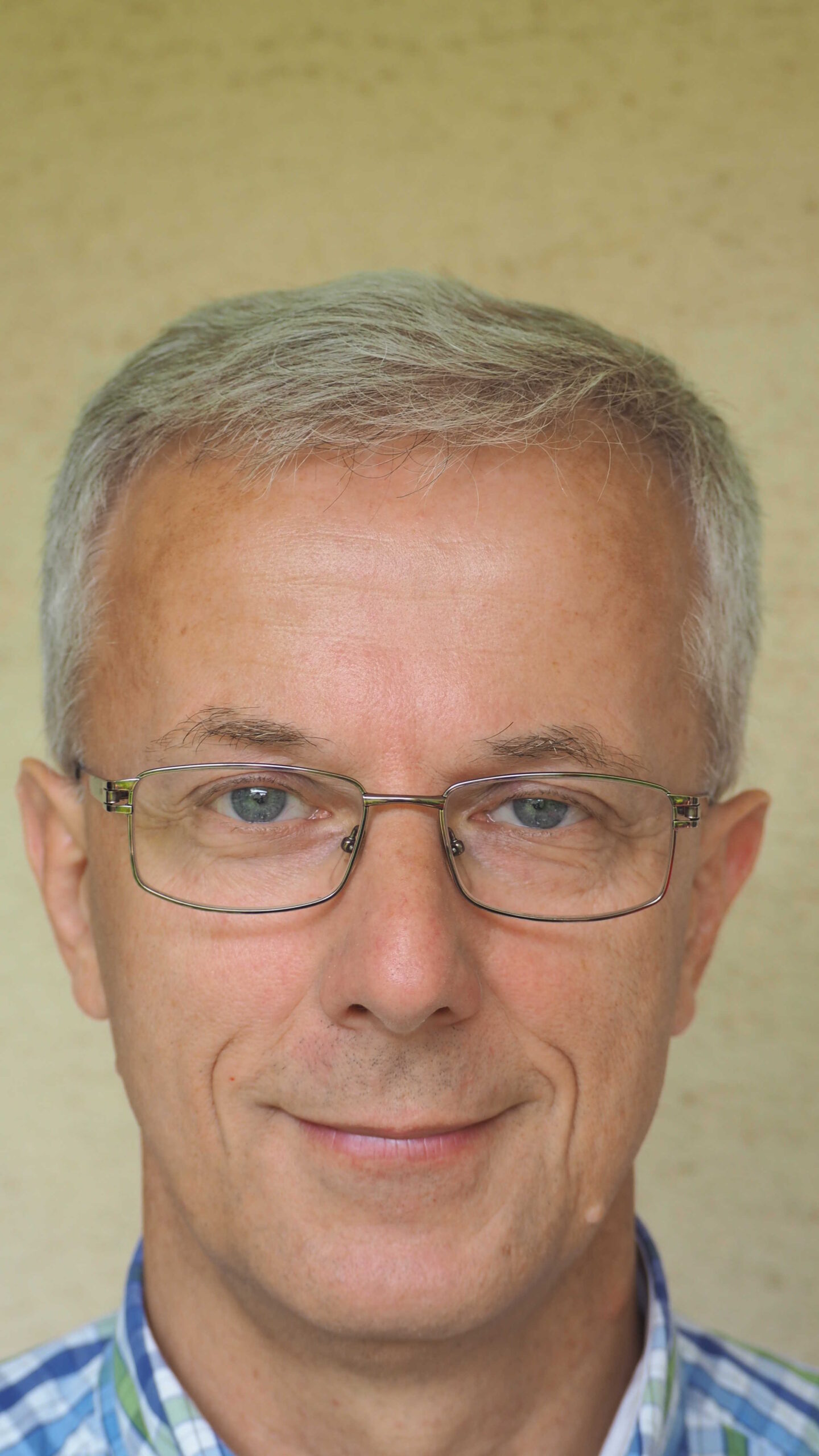
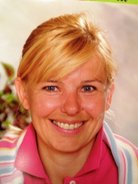
Helge Hagenauer is an Associate Professor at the Department of Computer Science, University of Salzburg, specializing in simulation methods, software engineering, and concurrent programming. His research focuses on Parallel and distributed simulation Object-oriented design patterns Ada/Java programming techniques He is affiliated with the Faculty of Digital and Analytical Sciences and works from Room 1.07 at Jakob-Haringer-Str. 2, 5020 Salzburg. Contact: hagenau@cs.sbg.ac.at | Tel: +43 662 8044-6314
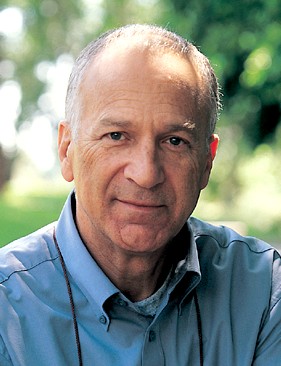
Prof. David Harel is a distinguished academic at the Weizmann Institute of Science, holding the William Sussman Professorial Chair since 1980. He has served as Head of the Department of Applied Mathematics and Computer Science (1989–1995) and Dean of the Faculty of Mathematics and Computer Science (1998–2005). He currently leads the John von Neumann Minerva Center for the Development of Reactive Systems. His scholarly contributions span theoretical computer science and applied systems engineering. Education: BSc, Bar-Ilan University (1974) MSc, Tel-Aviv University (1976) PhD, Massachusetts Institute of Technology (1978) His research bridges fundamental and applied domains, including computability theory (levels of undecidability), logics of programs (dynamic logic), database theory (query languages), and automata theory . Later work focused on software and systems engineering , visual languages, biological modeling, and innovative odor communication systems. Scientific Honors: ACM Karlstrom Outstanding Educator Award (1992) Stevens Award (1996) Israel Prize (2004) ACM SIGSOFT Awards (2006, 2008) Emet Prize (2010) Fellowships: ACM, IEEE, AAAS, Academia Europaea Harel co-founded I-Logix, Inc. (1984), whose tools (Statemate, Rhapsody, Play-Engine) influenced UML behavioral modeling. He invented statecharts and co-invented live sequence charts (LSCs) and reactive animation . His expository works include the popular science books Computers Ltd. and Algorithmics .
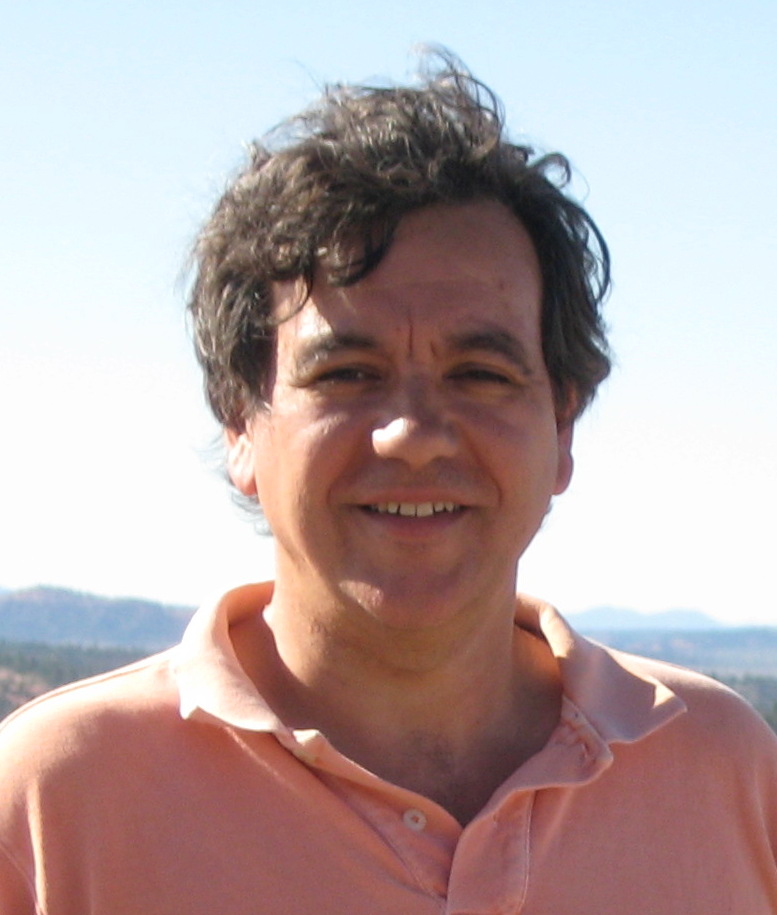
Manuel Hermenegildo is a Full Professor at the Technical University of Madrid (UPM) and Director of the IMDEA Software Research Institute in Spain. He held the Prince of Asturias Endowed Chair at the University of New Mexico (2003-2008) and was previously a project leader at MCC (1986-1989) and Adjunct Associate Professor at the University of Texas at Austin (1987-1990). Education: M.S. and Ph.D. in Computer Engineering, University of Texas at Austin (1986) Engineer's Degree in Electrical and Telecommunications Engineering, Technical University of Madrid (1981) His research spans programming language design , abstract interpretation-based analysis , parallelizing compilers , and parallel/distributed processing . His work integrates theoretical advances with practical implementations like the Ciao system and PiLLoW library. Recent publications focus on parallelization , program verification , mobile code security , and distributed programming . Key methodologies include abstract interpretation , constraint logic programming , and compiler optimization . Scientific Awards: ACM Fellow Julio Rey Pastor Prize (highest Spanish national award in Mathematics and ICT) Aritmel Prize in Computer Science President of the Association for Logic Programming He has led numerous national and international projects, served as area editor for journals like Theory and Practice of Logic Programming , and participated in EU advisory committees (ISTAG, CREST). His work on the Abstraction Carrying Code (ACC) approach advances mobile code safety and trusted computing.
Ingo Feinerer serves as an Associate Professor at Vienna University of Technology's Faculty of Informatics, specifically within the Institute of Information Systems Engineering (E192-02). His research bridges theoretical computer science and practical applications in database systems, artificial intelligence, and text mining, with significant contributions to configuration management and formal methods. His educational background includes: PhD Dissertation (2007): A formal treatment of UML class diagrams as an efficient method for configuration management Diploma Thesis (2005): Formal program verification: a comparison of selected tools and their theoretical foundations Feinerer's research focuses on database theory (particularly schema mapping and dependencies), AI-driven configuration systems using integer linear programming, and text mining infrastructure development in R. His work combines theoretical rigor with practical tool development, notably through the textcat and tm packages. The integration of formal methods in software engineering remains a consistent thread throughout his publications. Analysis of his 15 most recent publications reveals strong specialization in database constraints (40%), text mining applications (30%), and software configuration systems (30%), with increasing interdisciplinary work connecting computer science to digital humanities. His notable recognition includes: INiTS Award (2007) for technology commercialization potential Feinerer has supervised doctoral research including F. I. Chertes' work on schema mapping languages and diploma theses on UML semantics and probabilistic databases. He led major research projects HINT (2012-2017) and SEE (2012-2016) focusing on database technologies and information systems. His work demonstrates consistent funding through Austrian national research programs. As a core member of the Databases and Artificial Intelligence research group, he collaborates extensively on R package development for text analysis and contributes to international workshops on theoretical aspects of software engineering.
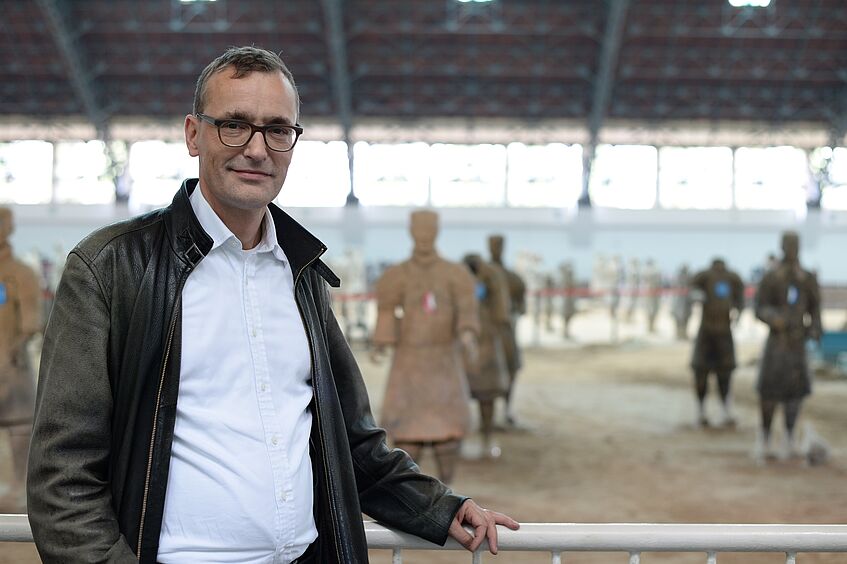
Lukas Nickel serves as Professor of Asian Art History at the University of Vienna's Faculty of History and Cultural Studies within the Institute of Art History. Previously, he held academic positions including Reader in Chinese Art History and Archaeology at SOAS (2011-2016) and Lecturer at SOAS and UCL (2004-2011), establishing him as a leading scholar in Chinese art historical studies across European institutions. His educational background includes: PhD in East Asian Art History, Heidelberg University Studies in Modern and Classical Sinology, Humboldt University Berlin Studies in Oriental Archaeology, University of Halle Nickel's research investigates fundamental questions of Asian artistic production, focusing on technological innovation in ancient Chinese bronzes, the emergence of Buddhist sculpture, and cross-cultural exchanges along early Silk Road networks. His work particularly examines Qin-Han dynasty tomb architecture as cosmological representation and the transmission of artistic techniques across Eurasia, bridging archaeological evidence with textual analysis to reconstruct historical artistic practices. Recent publications reveal consistent emphasis on material culture analysis, with growing attention to Sino-Austrian cultural connections exemplified by his 2024 work on the 1873 Vienna World's Fair. His scholarship demonstrates methodological diversity, integrating archaeological fieldwork, museum collection studies, and cross-disciplinary collaboration to address questions of cultural transmission and artistic innovation in premodern Asia. Scientific recognition includes: Leverhulme Trust Research Fellowship (2014) Election as Ordinary Member of the German Archaeological Institute (2022) As an advisor, Nickel has supervised 11 doctoral candidates (6 completed, 5 in progress) and 7 master's students, focusing on topics spanning Chinese tomb art, Buddhist iconography, and Silk Road material culture. His institutional leadership includes serving as Deputy Chair of the Doctoral Program (since 2024) and membership on international boards including the Courtauld Institute's Buddhist Art Center (2017-2020). Nickel directs collaborative archaeological projects such as the 'Temple of the White Dragon' excavations in Shandong province with the Shandong Archaeological Institute, combining field research with museum curation to advance understanding of early Chinese religious architecture and sculptural traditions.
Gabor Prinzz is a Researcher at the University of Applied Sciences Wiener Neustadt, affiliated with the Institute of Industrial Engineering and Management. His work focuses on integrating historical maintenance data with real-time sensor information to optimize industrial processes. Research projects led by Prinzz include: ReMAIntAIn : Combines object- and order-oriented data with non-stationary dynamic Bayesian networks (nsDBN) to predict component failures and resource-efficient maintenance measures in high-resource-consumption industries like aluminum casting. DigiProTrain : Develops Industry 4.0 training courses in learning factories, enhancing educational accessibility via the EIT Manufacturing Marketplace. IntelliProPS : Integrates machine learning with classical production planning methods to address volatility in manufacturing, funded by FFG's COIN program. His research intersects industrial engineering, predictive maintenance, and AI-driven automation. Prinzz collaborates with institutions like TU Wien and companies such as Fried v. Neuman GmbH and Mesify Solutions GmbH.
Brigitte Neuböck-Hubinger is a part-time lecturer at the Pedagogical University of Upper Austria , specializing in science-oriented general education. With over two decades of experience in primary education and teacher training, her work bridges academic research and practical pedagogy, focusing on Curriculum development for science education Extracurricular learning programs Citizen science initiatives for inclusivity Innovative use of language in science instruction Educational Background Magister in Pädagogik (1997–2002), University of Salzburg Magister in Psychologie (1996–1998), University of Salzburg Lehramt für Volksschule (1989–1992), Pedagogical Academy of Diocese Linz Research Interests center on enhancing science education through interdisciplinary approaches. Her projects include Serious Games 4 Energy Transition and empirical studies on textbook content. She emphasizes inclusivity in citizen science and the role of language in science comprehension. Recent Publications highlight textbook analysis, citizen science efficacy, and language-driven pedagogy. Notable collaborations include work with Johannes Kepler University and Sparkling Science initiatives. Conferences include presentations at the University of Vienna (2020) and the University of Bremen (2017), focusing on extracurricular learning and inclusivity in science education.
Ao.Univ.Prof. Dipl.-Ing. Dr.techn. Franz Puntigam is an Associate Professor at the Department of Compilers and Languages within the Faculty of Informatics at Technische Universität Wien. His research focuses on programming paradigms, type systems, object-oriented programming, and concurrent programming. He teaches courses such as Programming Paradigms, Type Systems, and Scientific Research and Writing. Dr. Puntigam’s work explores foundational aspects of programming languages, emphasizing concurrency and type system design. His research includes studies on synchronization mechanisms, contextual execution environments, and design methodologies for robotic software systems. His publications span topics like token-based synchronization, dynamic process types, and aliasing effects in object-oriented languages. He supervises numerous diploma and master’s theses on advanced topics such as concurrency in Java, type systems for configuration languages, and actor-based programming. His contributions to education and research are further reflected in his involvement with projects like migrating business software from VB to Java/Unix.
Morris J.J. Weimerskirch is a Tutor affiliated with the University of Vienna and FH Technikum Vienna. He is involved in academic programming education, specifically teaching Programming for Physicists at the University of Vienna and conducting a Warm-Up course in Electronics at FH Technikum Vienna. His work focuses on developing computational skills for STEM students through structured coursework and practical exercises. He maintains an active educational portal with course materials covering topics like Python programming, version control systems (VCS), and object-oriented programming concepts demonstrated through projects like a Connect4 game implementation. His instructional resources emphasize systematic debugging, software development cycles, and configuration management using tools like Neovim and Jupyter. No academic awards or formal research publications are explicitly mentioned in the provided materials. His current roles involve curriculum development and student mentoring in computational physics and electronics education.
Martina Seidl is a researcher and principle investigator at TU Wien's Institut für Softwaretechnik und Interaktive Systeme (E188). Her main affiliation is within the Faculty of Informatics. She leads the FAME Project (Formalizing and Managing Evolution in Model-Driven Engineering), focusing on advancing formal methods in software engineering. Her research interests include formal verification techniques, SAT/QBF solving algorithms, model-driven engineering, and automated reasoning. She has contributed to advancements in quantified Boolean formula (QBF) solving, parallel computing methodologies for logical problems, and formal methods in software model analysis. Her work spans theoretical computer science and practical applications in automated theorem proving and model checking. Notable contributions include expansion-based QBF solving approaches, parallel solving frameworks, and feature-based classifications of formal verification techniques. Seidl co-organized the QBF Gallery initiative, which curates benchmark suites for quantified Boolean formula competitions. She has also published extensively on clause redundancy optimization, blocked clause analysis, and the integration of formal methods in educational contexts like UML@Classroom.