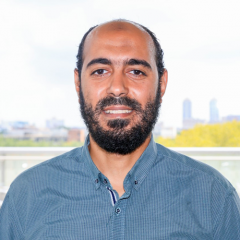
Mustafa Abdallah is an Assistant Professor at the Computer and Information Technology (CIT) department of Purdue University in Indianapolis, with a courtesy appointment at the Purdue Polytechnic Institute. He holds a PhD in Electrical and Computer Engineering from Purdue University (2022) and prior degrees from Cairo University (MS: 2016, BS: 2012). His research focuses on game theory, behavioral decision-making, explainable AI, and deep learning, applied to cybersecurity, autonomous systems, and IoT anomaly detection. His work has been recognized by the prestigious Bilsland Fellowship and grants from IEEE and IUPUI. Industrial collaborations include Adobe Research (meta-learning for time-series forecasting), Principal Financial Group (financial risk prediction using Kalman filters), and RDI Company (deep learning for pronunciation systems, resulting in a US patent). He has published extensively in top venues like IEEE S&P, IEEE TCNS, and ACM AsiaCCS.
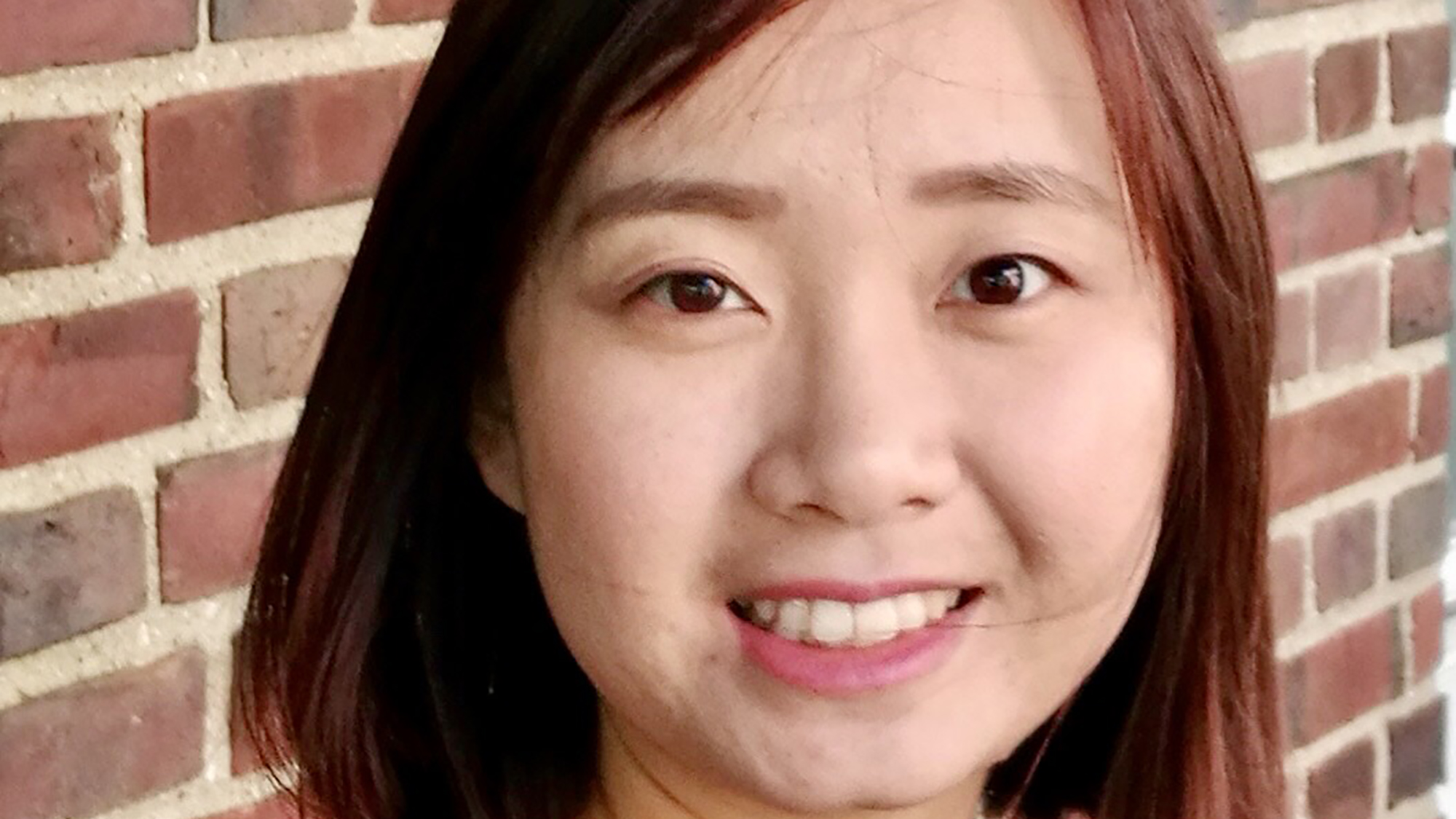
Yang Yang is a Lecturer in the Global Languages department at Massachusetts Institute of Technology (MIT). She holds a B.A. in Teaching Chinese as a Second Language from Xi’an International Studies University and an M.A. in Teaching English to Speakers of Other Languages from Adelphi University. Currently, she is pursuing a second M.A. in Teaching Chinese as a Second Language at Middlebury College. Her pedagogical interests focus on second language acquisition, Chinese language pedagogy, and cultural communication. Prior to MIT, she developed a Chinese culture and language program at Quincy Asian Resources, Inc., and served as an online tutor for the Center for Talented Youth at Johns Hopkins University. Her professional experience includes teaching at Middlebury Language Schools and creating curriculum for diverse learner demographics. Yang’s expertise emphasizes culturally responsive teaching methodologies and bridging linguistic and cultural gaps in language education. She contributes to the MIT Global Languages initiative by fostering intercultural competency and language proficiency among students. Educational Background: B.A., Teaching Chinese as a Second Language, Xi’an International Studies University (China) M.A., Teaching English to Speakers of Other Languages, Adelphi University (New York) Pursuing M.A., Teaching Chinese as a Second Language, Middlebury College Her research interests explore effective instructional strategies for heritage learners and integrating technology into language acquisition. While no specific awards are listed, her academic trajectory reflects a commitment to advancing language pedagogy through continuous professional development.
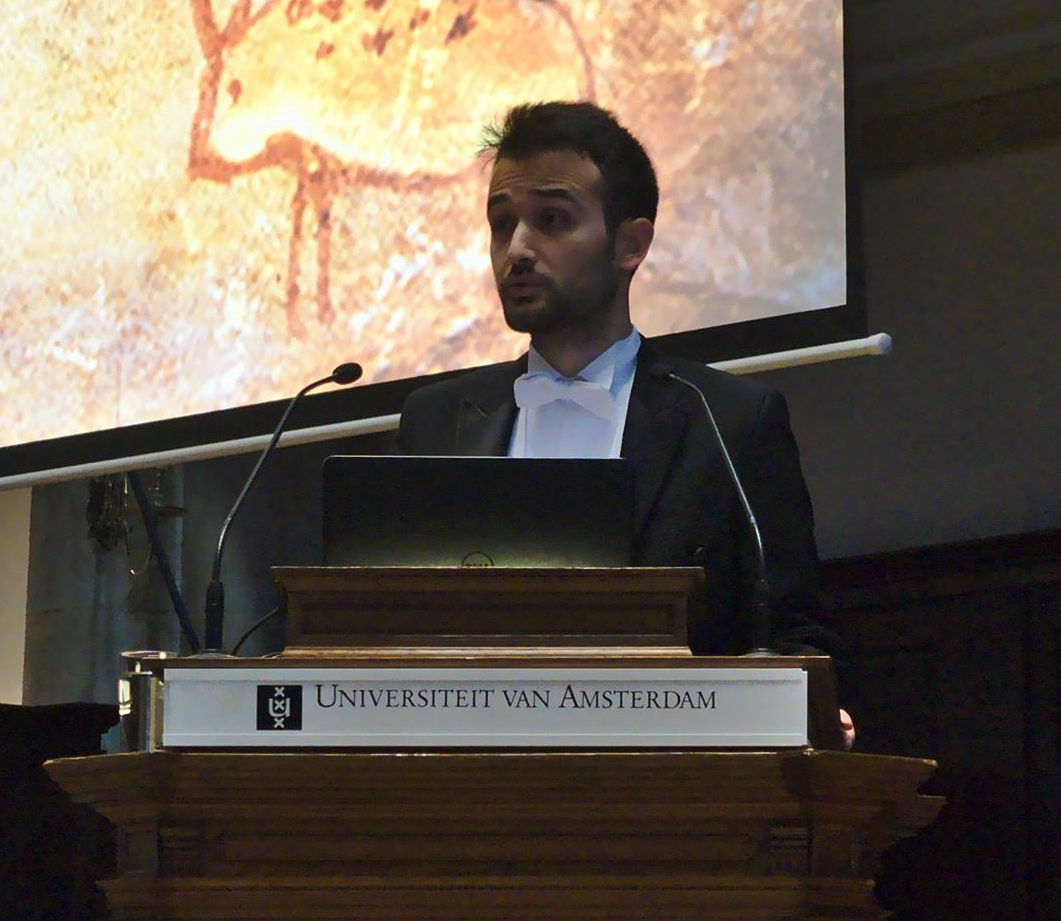
Sezer Karaoglu is a Lecturer and part-time postdoctoral researcher at the Computer Vision Group, Informatics Institute, University of Amsterdam. He is also the CTO and Co-Founder of 3DUniversum, a technology spin-off of the University of Amsterdam that provides state-of-the-art 2D/3D computer vision solutions. Additionally, he has co-founded other startups including Scanm and 3DHealthScan. Dr. Karaoglu received his PhD from the Computer Vision Group, Informatics Institute, University of Amsterdam, with research funded by the COMMIT project. His educational background includes a double master's degree: an optics, image and vision master's degree from University Jean Monnet in France and a media technology master's degree from Gjovik University College in Norway. He completed his undergraduate studies with honors at Istanbul Technical University in Telecommunication Engineering. His research focuses on Artificial Intelligence and 3D Computer Vision, with specific interests in SLAM, re-localization, 3D reconstruction, 3D object detection and segmentation, synthetic media, generative AI, deep fake creation and detection, and VR/AR technologies. His work has significant applications in healthcare, particularly in using deepfake technology for therapy for victims of sexual violence-related PTSD and moral injury, as documented in a Frontiers in Psychiatry article. Analyzing his recent publications reveals a strong trend toward neural scene reconstruction, intrinsic image decomposition, and the application of diffusion models to computer vision problems. His research increasingly integrates 3D scene understanding with language models, as evidenced by his work on language-to-3D scene generation. The applications span from healthcare (deeptherapy.ai) to media authenticity (deepfake detection) and industrial applications. ICT.OPEN Poster Award (3rd Position), Oct'13 Pascal VOC'12 Classification challenge, 2nd Position, Sep'12 Pascal VOC'12 Detection challenge, 3rd Position, Sep'12 Best project award at Nokia and CIMET project competition Outstanding reviewer at CVPR'21 PROVADA Future Startup Battle winner Best Dutch AI startup by Valuer Dr. Karaoglu has supervised numerous PhD, Master's, and Bachelor's students, demonstrating his commitment to academic mentorship. His research has attracted significant media attention, with features on Dutch national TV programs including NPO, VPRO, RTL, and international outlets like BBC News. He has received research funding through the COMMIT project during his PhD studies and has successfully translated his research into commercial applications through his startups. His work on deepfake technology has been applied in innovative therapeutic contexts through DeepTherapy.ai, showing the real-world impact of his research. Dr. Karaoglu leads research efforts at the Computer Vision Group Amsterdam and through his company 3DUniversum, which has developed applications like weScan, DeepTherapy, and FairFake.ai. His team collaborates with various institutions including the Netherlands Film Academy for grief therapy applications using deepfake technology. The DeepTherapy project represents a particularly impactful application of his work, using deepfake technology to help victims of sexual violence confront perpetrators in therapeutic settings.
Gianfranco Bertone is a Professor at the Faculty of Science, University of Amsterdam, specializing in astrophysics and theoretical physics with a focus on dark matter, black holes, and gravitational waves. His work bridges cosmology and particle physics through multi-messenger approaches. Research Interests: Dark matter detection via gravitational wave signatures Black hole binary dynamics in dark matter environments Relativistic simulations of extreme mass ratio inspirals Multi-messenger astronomy and fundamental physics Cosmological simulations for dark matter distribution Publication Trends: Recent works emphasize gravitational wave astronomy's role in dark matter studies, including waveform distortions from dark matter spikes, boson cloud effects in black hole binaries, and simulation-based inference for astrophysical observations. His research spans theoretical modeling, computational astrophysics, and observational constraints.
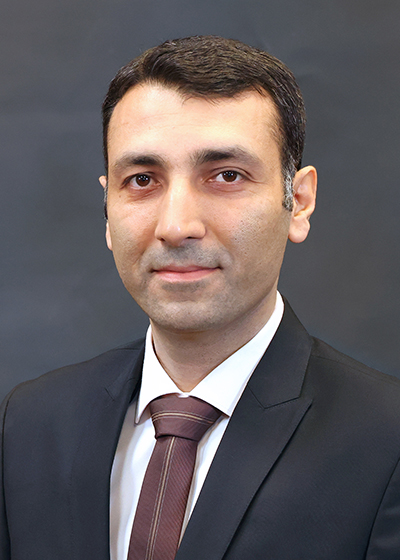
Dr. Salim Bouzerdoum is a Senior Professor of Computer Engineering at the University of Wollongong (UOW), affiliated with the School of Electrical, Computer & Telecommunications Engineering. He holds a Ph.D. and M.Sc. in Electrical Engineering from the University of Washington. His roles include former Associate Dean for Research (2007–2013) and Head of School (2004–2006). He has served on the Australian Research Council panels and held visiting professorships globally. Education: Ph.D. in Electrical & Computer Engineering, University of Washington, Seattle, USA M.Sc. in Electrical Engineering, University of Washington, Seattle, USA Research Interests: His work focuses on Artificial Intelligence , Machine Learning , and Signal & Image Processing , with applications in radar imaging, computer vision, and smart sensors. Key areas include neural networks, object detection/tracking, and compressive sensing. Recent projects include assistive navigation tools for vision-impaired individuals and underwater mine detection via sonar imaging. Grants & Funding: He leads or co-leads over 30 funded projects, including: AI-based SAR Satellite Imaging System for Oceanic Waves (AGO, 2024–2025) A portable AI-guided navigation tool for vision-impaired people (KONEKSI, 2024–2026) Deep Learning for Vessel Surveillance using Satellite Imagery (NSW Space Research Network, 2022–2023) Teaching & Supervision: With 30+ years of experience, he has supervised 38 Ph.D. and 22 master’s students, mentored 12 early-career researchers, and delivered courses like Applied Data Analytics and Neural Networks . Current supervision includes projects on deep learning for obstacle detection and semantic segmentation. Awards: Eureka Prize (2011) for Defence Science ARC College of Experts Member (2009–2011) Multiple Vice-Chancellor Research Awards (1998–1999)
Hussein Gharakhani is an Assistant Professor in the Department of Agricultural and Biological Engineering at Mississippi State University. He specializes in agricultural robotics and automation, focusing on robotic cotton harvesting systems, sensor integration, and precision agriculture applications. His research addresses challenges in end-effector design, object detection, and field testing of robotic prototypes. Dr. Gharakhani holds a Ph.D. in Biosystems Engineering from Mississippi State University, an M.S. in Mechanical Engineering of Agricultural Machinery from the University of Tehran, and a B.S. in Agricultural Machinery Engineering from the University of Tabriz. His academic background includes roles as a graduate research and teaching assistant, as well as industry experience as a research and application engineer. His research interests span robotic manipulators, artificial intelligence, 2D/3D perception, and off-road robotics. Key projects include developing vision-guided robotic harvesters, evaluating end-effectors, and exploring UAV applications in cotton farming. His work emphasizes practical solutions to enhance agricultural efficiency and sustainability through automation. No scientific awards or grants are explicitly listed in the provided text. Dr. Gharakhani’s advising and mentorship activities are not detailed here, though his academic role suggests involvement in graduate student guidance. His research is centered on advancing robotic systems for precision agriculture, with a particular focus on cotton production challenges and robotic harvesting innovations.
Yevgen Biletskiy is a Professor in the Department of Electrical and Computer Engineering at the University of New Brunswick (UNB), Fredericton. His academic roles include serving as Co-Director of the RuleML Initiative and Program Co-Chair of RuleML-2007. He holds a Ph.D. and is a licensed Professional Engineer (P.Eng.) in New Brunswick. His teaching spans graduate and undergraduate courses in software engineering, digital systems, and power electronics, including EE 6263 (Knowledge Representation for Software Engineering) and EE 6213 (Advanced Digital Systems). Research Interests: His work focuses on Knowledge-Based Systems , Artificial Intelligence , Semantic Web , Information Extraction , FPGA-based Design , and Renewable Energy . He has supervised over 40 graduate and undergraduate students, including 3 active PhD candidates, 1 completed PhD, 9 Masters, and 30+ research-based Bachelors. Publications: Over 100 peer-reviewed articles, including recent contributions on smart grid optimization, fault diagnosis in power electronics, and ontology-driven systems. Notable works include frameworks for semantic interoperability, rule-based learning systems, and FPGA applications. Professional Activities: Served as a reviewer for NSERC grants, IEEE journals (e.g., TKDE, TE), and conferences (CDC, WTAS). He has chaired tracks at international conferences and contributed to industry partnerships through consulting roles with firms like Netsphare Solutions and Vox Interactif. Labs/Teams: Active in UNB’s research initiatives involving power systems, semantic web technologies, and e-learning systems. His lab collaborates on projects like SEMESIS (semantic search systems) and advanced manufacturing post-processing techniques.
Harald Kucharek is a Research Professor in the Physics & Astronomy Department at the University of New Hampshire (UNH), part of the College of Engineering and Physical Sciences. He is affiliated with the Space Science Center and holds a dual Ph.D. in Physics from the Technical University of Munich and an M.S. in Physics from the University of Regensburg. His research focuses on heliospheric physics, interstellar medium interactions, and space plasma dynamics, leveraging data from missions like IBEX and Solar Orbiter. Dr. Kucharek's work centers on understanding the global structure of the heliosphere, interstellar neutral gas flow, and particle acceleration at shocks. He has contributed to studies of pickup ions, energetic neutral atoms (ENAs), and magnetic reconnection processes. His teaching includes courses on Space Plasma Physics and Magnetohydrodynamics of the Heliosphere. He has been involved in over 22 grants (2005–2024), including mission-related research for IMAP and interstellar probe concepts. Key research trends include analyzing IBEX observations of interstellar helium and oxygen, investigating shock dynamics and ion acceleration, and modeling the heliospheric boundary. His recent work explores the implications of hybrid simulations and multi-spacecraft data for understanding plasma behavior in extreme environments. Collaborations with institutions like NASA and ESA highlight his role in advancing space physics through both observational and theoretical contributions.
Mikel Bueno Viso is a Researcher at Cranfield University's School of Aerospace, Transport and Manufacturing, affiliated with the Centre for Robotics and Assembly. His work focuses on Robotics , Industrial Automation , and Flexible Manufacturing Systems . He holds a BSc and MSc in Industrial Engineering from the University of the Basque Country and a Robotics MSc from Cranfield University. His research centers on ROS 2-based frameworks , robot perception , and modular middleware for reconfigurable manufacturing. Key projects include developing software architectures for object detection , pose estimation , and seamless robot integration . Mikel is currently a part-time PhD candidate investigating Flexible and Reconfigurable Manufacturing . His 2024-2025 publications demonstrate applications in Reconfigurable robotic cells Modular software frameworks Industry 4.0 automation His work leverages technologies like YOLOv8 for object detection and OpenCV for pose estimation, aiming to transform traditional manufacturing through software abstraction and interoperability .
Cory Simon serves as Associate Professor in the Department of Chemical, Biological, and Environmental Engineering within Oregon State University's College of Engineering. His research integrates machine learning, optimization, and chemical engineering to advance materials discovery and environmental sensing systems. His academic foundation includes a Ph.D. in Chemical Engineering from the University of California, Berkeley and a B.S. in Chemical Engineering from The University of Akron. Simon's work centers on Bayesian methodologies for scientific challenges, featuring: Bayesian optimization for adaptive materials synthesis Statistical inversion of physical systems with uncertainty quantification Computational design of nanoporous sensor arrays Stochastic algorithms for robotic environmental monitoring Recent publications demonstrate accelerating focus on multi-fidelity optimization for molecular design and atmospheric water harvesting, bridging chemical engineering with computational science through data-driven approaches. Leading The Simon Ensemble research group, Simon champions a versatile 'buffet-style' research philosophy—drawing from mathematics, statistical mechanics, and machine learning to address interdisciplinary problems across chemistry, materials science, and environmental engineering.
Yvo Desmedt is the Jonsson Distinguished Professor in Computer Science at the University of Texas at Dallas and Director of the Cyber Security Research and Education Institute. An IACR Fellow and member of the Belgium Academy of Science, he invented e-Passports and e-Visas in 1988. His research spans cryptography, quantum computing, network security, and critical infrastructure protection. Desmedt pioneered techniques in binary software hardening including control-flow integrity and object flow integrity protections. Recent innovations include crook-sourcing for intrusion detection improvement and confidential computing for deep learning inference. His work bridges theoretical cryptography with practical security applications, earning recognition including the NSF IUCRC Technology Breakthrough Award. With over 200 publications, he has chaired major conferences including Crypto and Public Key Cryptography. Current projects examine vulnerability detection using graph learning and renewable control-flow integrity mechanisms for software security.
Souran Manoochehri is a Professor and Chair of the Department of Mechanical Engineering at Stevens Institute of Technology, within the Charles V. Schaefer, Jr. School of Engineering and Science. He joined Stevens in 1989 as an Assistant Professor, advancing to Associate Dean for Research and Technology (2004-2009) and Director of the Design and Manufacturing Institute (1990-2004). He holds a PhD (1986), MS (1983), and BS (1981) in Mechanical Engineering from the University of Wisconsin-Madison and Illinois Institute of Technology, respectively. Education: PhD, MS, and BS in Mechanical Engineering Roles: Department Chair, former Associate Dean, and co-founder of the Design and Manufacturing Institute Research: Focuses on additive manufacturing, computer-integrated design, and intelligent optimization His research integrates mathematical modeling, machine learning, and experimental studies to ensure product and process quality in manufacturing. Over his career, he has secured $30M+ in grants, authored 130+ publications, and supervised 30+ graduate students and 12 postdoctoral fellows. He is an ASME Fellow and recipient of awards including the ASME Design Engineering Division Award. Key research trends in his articles include real-time monitoring of additive manufacturing processes (e.g., melt pool analysis, acoustic emission sensors), machine learning applications in quality control, and optimization of manufacturing systems. His work addresses challenges in precision, defect detection, and process automation across 3D printing and microfluidics. Scientific Awards: ASME Fellow, ASME IDETC Award, DMC Best Presentation Grants: Over 50 contracts totaling $30M+; advising over 30 graduate students Labs/Teams: Co-founded the Design and Manufacturing Institute (DMI) at Stevens His contributions span academic leadership and industry-relevant innovation, emphasizing interdisciplinary solutions in advanced manufacturing.
Dr. Miao Pan is an Associate Professor in the Department of Electrical and Computer Engineering at the Cullen College of Engineering, University of Houston. He directs the PAN Lab (panlab.ece.uh.edu) focusing on wireless networking, security, and IoT applications. His educational background includes a B.S. in Electrical Engineering from Dalian University of Technology (2004), M.S. from Beijing University of Posts and Telecommunications (2007), and Ph.D. from the University of Florida (2012). Dr. Pan's research spans privacy-preserving deep learning, wireless networking, machine learning applications in communications, underwater systems, and cognitive radio networks. His interdisciplinary approach combines theoretical foundations with practical implementations in emerging technologies. Recent publications demonstrate strong focus on federated learning optimizations, wireless sensing innovations, and security mechanisms for next-generation systems. Key trends include energy-efficient mobile AI, robust authentication methods, and adaptive underwater networking solutions. Honors include: NSF CAREER Award (2014) 5 IEEE Best Paper Awards (2015-2019) University of Florida Graduate Fellowship (2007) He leads multiple federally funded projects and advises graduate researchers in wireless systems and security. The PAN Lab collaborates with industry partners to translate research into practical solutions for IoT and 5G/6G networks.
Praveen Tripathi is a Research Assistant Professor in the Department of Computer Science at Stony Brook University. His research focuses on Machine Learning, Data Mining, Spatio-Temporal Data Analysis, and Time Series Data Analysis. He has contributed to trajectory analysis frameworks, recommendation systems with temporal influence, and optimization algorithms. While his biography section is not detailed here, his work emphasizes practical applications of spatio-temporal data and multi-objective optimization. Awards are listed in the menu but specific details are not provided in the text. His publications span cybersecurity, trajectory analysis, and financial market dynamics, reflecting a strong interdisciplinary approach. No advising or grant information is explicitly mentioned in the provided content.
Dr. Tao (Kevin) Huang is a researcher at James Cook University's College of Science and Engineering, with expertise spanning autonomous driving, wireless communication systems, and medical imaging applications. His work integrates machine learning, sensor fusion, and multimodal data analysis to address complex challenges in vehicular networks, environmental monitoring, and healthcare technology. Research Interests: Dr. Huang's research focuses on Autonomous driving perception systems IoT-enabled vehicular networks AI for medical diagnostics and environmental sensing Signal processing and privacy-preserving communication protocols Recent Publications: His 2025 work emphasizes advancements in V2X cooperative perception, radar-LiDAR-camera fusion, and diffusion models for medical imaging. Key trends include cross-modal robustness, real-time processing for autonomous systems, and AI applications in sustainability.