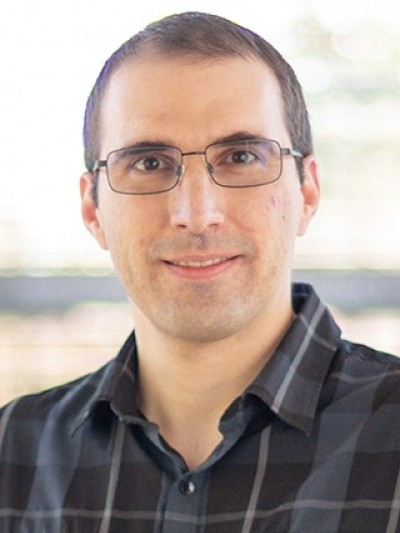
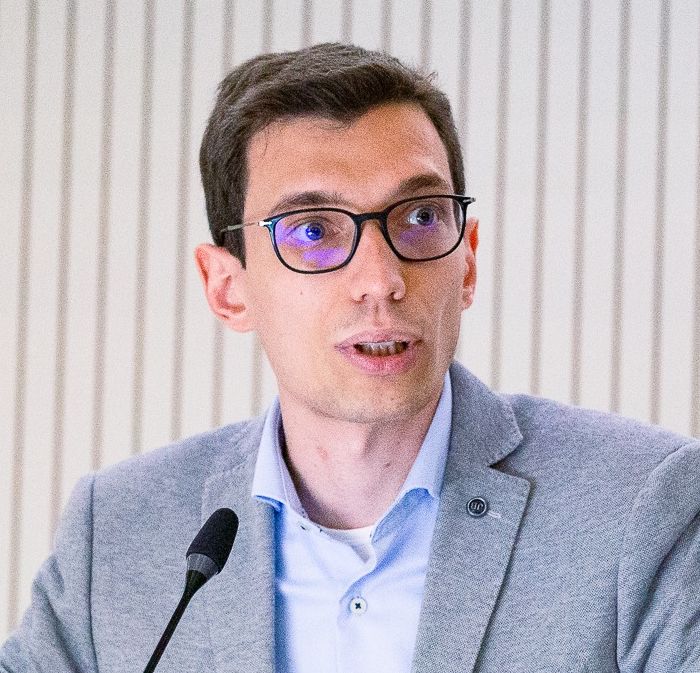
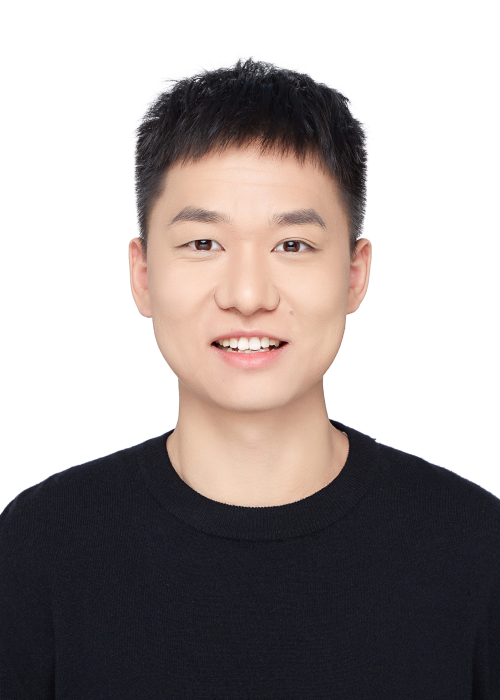
Manolis Savva is an Associate Professor in the School of Computing Science at Simon Fraser University and holds the Canada Research Chair in Computer Graphics. He specializes in 3D scene analysis, generative methods for 3D content, and computer graphics for AI. His research bridges computer graphics, vision, and robotics. Education: Ph.D. (Computer Science, Stanford University, 2016), MS (Computer Science, Stanford, 2012), B.A. (Physics & Computer Science, Cornell, 2009). Research Interests: Human-centric 3D scene analysis, generative 3D content creation, AI-driven rendering, and applications in robotics. Key projects include Habitat (Embodied AI platform), ScanNet , and ShapeNet datasets. Recent Articles: Focus on articulated object modeling, 3D scene synthesis, and AI-driven visualization. Notable work includes SceneMotifCoder (generating object arrangements) and R3DS (panoramic scene understanding). Awards: CHCCS Early Career Award (2022), ICLR 2023 Outstanding Paper Award, ICCV 2019 Best Paper Nomination, and SGP 2020 Dataset Award (ScanNet). Lab/Teams: Leads research groups in 3DLG (3D Learning and Graphics) and GrUVi (Graphics and Vision). Collaborates on projects like AI Habitat and HomeRobot .
Mustafa Kahya is a Scientific Staff member and Ph.D. candidate at the Chair of Media Technology within the Munich Institute of Robotics and Machine Intelligence (MIRMI) at the Technical University of Munich (TUM). He works under the supervision of Prof. Dr.-Ing. Eckehard Steinbach and is actively involved in research related to radar systems and machine learning. His academic background includes a B.Sc. in Computer Engineering from Istanbul Technical University (2017) and an M.Sc. in Informatics from TUM (2021). During his master's studies, he conducted research on 3D Reconstruction and Multi-view Shape from Shading at the TUM Computer Vision Group. Kahya's research focuses on Radar Image Analysis , Out-of-distribution Detection , One-Class Deep Neural Networks , Anomaly Detection , and Generative Models . His work primarily centers on applying deep learning techniques to short-range FMCW radar systems for various applications including human presence detection, facial authentication, and activity recognition. His publications demonstrate a strong trend toward real-time radar-based systems with emphasis on out-of-distribution detection capabilities. Kahya has been actively publishing in top-tier conferences and journals from 2023 through 2025, with multiple first-author publications in IEEE venues including ICASSP, ICIP, and IEEE Sensors. His research has been part of several significant projects including the Centre for Tactile Internet with Human-in-the-Loop (CeTI) and DFG-funded research on Teleoperation over 5G. As a Ph.D. candidate at the Chair of Media Technology, Kahya contributes to the research group's work in computer vision, machine learning, and radar systems. His work bridges the gap between traditional computer vision techniques and novel radar-based sensing modalities, creating opportunities for applications in environments where optical systems face limitations.
Tomaso A. Poggio is the Eugene McDermott Professor in the Department of Brain and Cognitive Sciences at the Massachusetts Institute of Technology , an investigator at the McGovern Institute for Brain Research , a member of the Computer Science and Artificial Intelligence Laboratory (CSAIL) , and the director of both the MIT Center for Biological and Computational Learning (CBCL) and the multi-institutional Center for Brains, Minds and Machines (CBMM) . Research Interests Poggio’s research is fundamentally interdisciplinary, sitting at the intersection of computational neuroscience , machine learning , and computer vision . His work is driven by the conviction that learning is the core gateway to both biological intelligence and artificial systems. Current themes include: Mathematical foundations of statistical learning theory Engineering applications in computer vision, graphics, bioinformatics, and intelligent search Computational neuroscience of visual object recognition and the ventral stream of the visual cortex Scientific Awards & Honors Eugene McDermott Professorship, MIT Advising & Grants Over three decades, Poggio has advised a large cohort of doctoral and master’s students whose theses span machine learning, computer vision, neuroscience, and bioinformatics. Representative graduates include H. Jhuang, Stanley Bileschi, Jacob Bouvrie, Jennifer Louie, M. Kouh, Sayan Mukherjee, Ryan Rifkin, Alexander Rakhlin, Thomas Serre, Gene Yeo, and many others. His research has been continuously supported by major federal and private funding initiatives, most recently through the multi-institutional Center for Brains, Minds and Machines (CBMM) headquartered at the McGovern Institute since 2013. Laboratories & Teams Poggio directs the Poggio Lab (CBCL) at MIT, an interdisciplinary group comprising neuroscientists, computer scientists, mathematicians, and engineers. The lab collaborates closely with experimental neuroscientists to develop predictive computational theories of visual cortex function and to translate those insights into practical algorithms for computer vision and machine learning.
Piotr Koniusz is a Principal Research Scientist at Data61/CSIRO and an Honorary Associate Professor at the Australian National University (ANU), with an Adjunct role at UNSW. He holds a PhD in Computer Vision from the University of Surrey (2013) and a BSc from Warsaw University of Technology (2004). His research focuses on Foundation Models, Representation Learning, and Few-shot Learning, with contributions to Graph Neural Networks and Adversarial Robustness. Key roles include Program Chair for NeurIPS’25, Senior Area Chair for ICML’25 and ICLR’25, and Workshop Co-Chair for WWW’25. Awards include the Sang Uk Lee Best Student Paper (ACCV’22) and recognition as an Outstanding Area Chair (ICLR 2021–2023). Research interests span Vision-Language Models (VLMs), Generative Adversarial Networks (GANs), and Domain Adaptation. He supervises PhD students at ANU and collaborates with industry on projects like traffic forecasting and ecotoxicology prediction.
Richard Eberhardt serves as Program Manager for the MIT Game Lab and instructor for MIT Game Lab classes at the Massachusetts Institute of Technology, where he aligns research projects with staff, equipment, and funding while mentoring student game development initiatives. His operational leadership supports the lab's mission to advance game literacy through interdisciplinary collaboration. His academic credentials include: Bachelor of Arts from the College of William & Mary Serious Games MA Certificate from Michigan State University Professional certifications: Certified Scrum Master PMI Agile Certified Practitioner Eberhardt's research investigates historical representation in games, analyzing how mechanics model historical systems and which narratives are amplified or marginalized in gaming communities. His scholarship spans serious games for mental health awareness, educational applications of VR/AR technologies, and inclusive game jam methodologies, consistently addressing public literacies through civic systems and emotional intelligence frameworks. Analysis of his 2013-2023 publications reveals sustained focus on game-based educational tools across STEM and humanities domains. His work pioneers VR simulations for photonics education, examines historical accuracy in commercial games, and develops inclusive frameworks for collaborative design events. This output demonstrates strategic integration of game mechanics with learning objectives while addressing representation gaps in historical gaming. Notable recognition includes an award for elude , the depression awareness game developed in 2010 for patients' support networks. As a mentor, Eberhardt directs student projects like elude and hosts game jams fostering community collaboration. His Agile-certified project management approach facilitates resource allocation across educational initiatives, though specific grant details remain undisclosed in available materials. The MIT Game Lab operates as his primary research ecosystem, connecting students, faculty, and community partners to explore games' transformative potential in education and social contexts through its Civic Systems, Media & Emotional Intelligence pillar.
Lorenzo Baraldi is an Associate Professor at the University of Modena and Reggio Emilia, where he leads research in deep learning, vision-language integration, and multimodal AI systems. He serves as an ELLIS Scholar and Coordinator of the Modena ELLIS Unit, and has held the position of deputy director at the Interdepartmental Center on Digital Humanities since 2021. Previously, he worked at Facebook AI Research laboratory in Paris in 2017, developing video-matching algorithms for content moderation. His research spans multiple areas including Vision-and-Language integration, Multimodal Retrieval, Image and Video Captioning, Visual-Semantic alignment, Large-Scale model development, High Performance Computing, and Embodied AI. With over 120 publications in international journals and conferences, his work demonstrates consistent contributions to advancing multimodal AI capabilities. He has served as an Associate Editor for Computer Vision and Image Understanding and Pattern Recognition, and as Area Chair for major conferences including ICCV, WACV 2026, and ACM Multimedia 2025. His recent publication record shows significant impact in the field, with multiple papers accepted to top-tier conferences in 2024-2025 including CVPR, ICCV, BMVC, ICLR, ECCV, and NeurIPS. Notably, his paper "Hyperbolic Safety-Aware Vision-Language Models" was selected as a highlight paper at CVPR 2025. His research often involves collaboration with Rita Cucchiara and other researchers at his institution. ELLIS Scholar and Coordinator of the Modena ELLIS Unit Associate Editor for Computer Vision and Image Understanding Area Chair for ICCV and major multimedia conferences Highlight paper at CVPR 2025 Professor Baraldi teaches courses in Computer Vision and Cognitive Systems, Scalable AI, and Computer Architecture for the Artificial Intelligence Engineering and Computer Engineering programs. His teaching spans both undergraduate and graduate levels, with a focus on providing students with both theoretical foundations and practical implementation skills. He has developed educational materials including Deep Learning tutorials for classroom instruction.
Christian Igel is a Professor at the Department of Computer Science, University of Copenhagen, and serves as director of the SCIENCE AI Centre . He is also a co-lead of the Pioneer Centre for Artificial Intelligence in Denmark. His academic journey includes a Doctoral degree from Bielefeld University (2002) and a Habilitation degree from Ruhr-University Bochum (2010). Igel is a Juniorprofessor (2002–2010) and has held editorial roles at journals like KI - Künstliche Intelligenz and Artificial Intelligence Journal . Doctoral degree: Faculty of Technology, Bielefeld University, Germany (2002) Habilitation degree: Department of Electrical Engineering and Information Sciences, Ruhr-University Bochum, Germany (2010) His research spans Machine Learning , focusing on Support Vector Machines , Evolution Strategies , Reinforcement Learning , Deep Neural Networks , and PAC-Bayesian Analysis . He applies these methods to Environmental Monitoring , Medical Diagnostics , and Climate Research . Recent publications highlight work on adversarial machine learning , environmentally sustainable AI , and tree resource mapping using deep learning. His scientific awards include being a ELLIS Fellow . Igel’s software tools like Shark , woody , and Multi-Planar UNet are widely used in research and industry. Notable grants and collaborations involve projects with European Lab for Learning and Intelligent Systems (ELLIS) , SCIENCE AI Centre , and international teams in Denmark , Germany , and France . His lab leadership emphasizes open-source frameworks and reproducible research. Editorial Roles: German Journal on Artificial Intelligence , Evolutionary Computation Journal , Artificial Intelligence Journal Software Projects: Shark , woody , Multi-Planar UNet , U-Time Collaborations: SCIENCE AI Centre , Pioneer Centre for Artificial Intelligence , European Lab for Learning and Intelligent Systems
Byron Boots is the Amazon Professor of Machine Learning in the Paul G. Allen School of Computer Science and Engineering at the University of Washington, where he directs the UW Robot Learning Laboratory. He also serves as a Principal Research Scientist in the Seattle Robotics Lab at NVIDIA Research and co-chairs the IEEE Robotics and Automation Society Technical Committee on Robot Learning. Dr. Boots received his Ph.D. from the Machine Learning Department in the School of Computer Science at Carnegie Mellon University, where he was a member of the Sense, Learn, Act (SELECT) Lab co-directed by Carlos Guestrin and his advisor Geoff Gordon. Prior to joining the University of Washington faculty, he was an Assistant Professor in the School of Interactive Computing within the College of Computing at Georgia Tech, and before that, he completed a post-doc in the Robotics and State Estimation Lab directed by Dieter Fox at the University of Washington. Professor Boots' research focuses on the intersection of machine learning, artificial intelligence, and robotics, with particular emphasis on developing theory and systems that tightly integrate perception, learning, and control. His work spans computer vision, state estimation, localization and mapping, high-speed navigation, motion planning, and robotic manipulation. His group develops algorithms drawing from deep learning and neural networks, nonparametric statistics, graphical models, nonconvex optimization, quantum physics, online learning, reinforcement learning, and optimal control. The research demonstrates a strong theoretical foundation while maintaining practical relevance to real-world robotic systems. His recent publications reveal a clear trend toward integrating advanced machine learning techniques with robotics, particularly in model predictive control, motion planning, and learning-based approaches to robot control. His work shows increasing focus on developing theoretically grounded methods that can handle the complex, nonlinear dynamics of real-world robotic systems while maintaining computational efficiency. The publications span top venues including ICRA, CoRL, IROS, and NeurIPS, demonstrating broad impact across multiple subfields of robotics and AI. Finalist for Best Systems Paper at Conference on Robot Learning (CoRL-2021) Multiple papers selected for oral presentations at top robotics conferences Work recognized for theoretical contributions and practical applications in robot learning As director of the UW Robot Learning Laboratory, Boots leads a vibrant research group focused on fundamental and applied research in robot learning. The lab maintains strong collaborations with NVIDIA Research and has produced numerous high-impact publications that bridge theory and practice. Professor Boots teaches courses in autonomous robotics, machine learning, and reinforcement learning, contributing to both undergraduate and graduate education at the University of Washington.
Dr. Guangliang Cheng is an Associate Professor in the Department of Computer Science at the University of Liverpool. His research focuses on deep learning, computer vision, and perception algorithms with applications in remote sensing, medical imaging, and autonomous systems. Prior to his current role, he served as a vice research director in the Autonomous Driving Group at SenseTime and completed postdoctoral research at the Aerospace Information Research Institute, Chinese Academy of Sciences. Ph.D. in Pattern Recognition from the National Laboratory of Pattern Recognition (NLPR), Institute of Automation, Chinese Academy of Sciences (CASIA) Postdoctoral Researcher at Aerospace Information Research Institute, Chinese Academy of Sciences (2017–2019) Dr. Cheng’s research integrates computer vision and deep learning to address challenges in semantic segmentation, domain adaptation, and robust detection. Recent work explores wavelet-based multimodal fusion for remote sensing and attention-guided architectures for medical imaging. His 2025 publications span journals like GIScience & Remote Sensing and Knowledge-Based Systems , emphasizing scalable solutions for geospatial and biomedical applications. In 2025, Dr. Cheng’s article trends highlight remote sensing semantic segmentation, cross-domain medical imaging, and drone-based fire detection. His collaborations span institutions such as SenseTime, Chinese Academy of Sciences, and University of Liverpool teams, focusing on frequency-domain fusion, attention mechanisms, and GPU optimization. As a supervisor, Dr. Cheng seeks highly motivated PhD students to join projects supported by scholarships including the Centres for Doctoral Training (CDT) and Duncan Norman Scholarship. He serves as Module Co-ordinator for COMP338: Computer Vision (2024–2025) and actively reviews for top-tier journals and conferences.
Xieyuanli Chen is an Associate Professor at the National University of Defense Technology (NUDT), China. He holds a Dr.-Ing. (summa cum laude) from the University of Bonn (2022), a Master's in Robotics from NUDT (2017), and a Bachelor's in Electrical Engineering from Hunan University (2015). His research focuses on robot learning, perception, and navigation, with an emphasis on LiDAR-based SLAM, autonomous systems, and semantic perception. Education: PhD: University of Bonn, 2018-2022 (supervised by Prof. Cyrill Stachniss) Master's: NUDT, 2015-2017 Bachelor's: Hunan University, 2011-2015 Research interests include robotics, autonomous systems, computer vision, and LiDAR perception. He has authored over 90 papers in top venues like TRO, RSS, ICRA, and CVPR. He serves as an Associate Editor for IEEE RA-L, ICRA, and IROS, and is a member of the RoboCup Rescue Robot League Technical Committee. Awards include the RSS Pioneer Award (2021), Best-in-Class RoboCup awards, and recognition as a World’s Top 2% Scientist (2024). His work spans LiDAR localization, moving object segmentation, and efficient semantic mapping. He advises students in robotics and autonomous systems. Labs/Teams: Active in the PRBonn group (University of Bonn) and leads research at NUDT on LiDAR-based perception systems.
Giles Foody is a Professor of Geographical Information Science at the School of Geography, University of Nottingham, and a member of the Rights Lab in the Faculty of Social Science. He is recognized as the UK’s most prolific and highly cited researcher in remote sensing, with a focus on interdisciplinary applications for real-world impact. Education: BSc (1st class honours) and PhD from the University of Sheffield. His research spans image classification for thematic mapping, particularly in land cover and human-induced changes. He pioneered soft image classifications, object-based methods, neural networks in remote sensing, and citizen sensors in mapping. Current projects include 'slavery from space' and Sargassum beaching analysis to meet UN SDGs. The trends in his publications highlight advancements in remote sensing, citizen science, and land cover mapping. His work integrates machine learning and geospatial analysis for social and environmental challenges. Scientific awards: IEEE Fellowship, David Landgrebe Award, Founder's Award (ISARA), multiple RSPSoc accolades, and SDG-related honors. Giles has supervised 51 research students and contributed to academic service via editorial roles, peer review leadership, and participation in national research assessment panels. His interdisciplinary work extends to European National Mapping Agencies and anti-slavery initiatives.
Associate Professor Mahsa Baktashmotlagh is an ARC Future Fellow at the School of Electrical Engineering and Computer Science, University of Queensland. Her research focuses on machine learning techniques applied to visual data analysis, biomedical data (e.g., antibacterial activity prediction), and cybersecurity. She holds a PhD from the University of Queensland (2014) and has contributed to over 50 peer-reviewed publications. Her research interests include domain adaptation, deep learning, and robust generalization across domains. Notable contributions include the development of DI-NIDS (a domain-invariant network intrusion detection system) and advancements in open-set domain adaptation. Her work bridges theoretical machine learning with practical applications in healthcare and computer vision. Education: PhD in Machine Learning, The University of Queensland (2014) Awards: ARC Future Fellowship (202X) Research Themes: Domain Adaptation, Cybersecurity, Biomedical AI Her recent work explores challenges in cross-domain generalization, adversarial machine learning, and scalable 3D object detection. She is actively involved in supervising graduate students and collaborates on interdisciplinary projects involving robotics and medical imaging.
Mehrtash Tafazzoli Harandi is an Associate Professor in the Department of Electrical and Computer Systems Engineering at Monash University, part of the Faculty of Engineering. His research focuses on machine learning and computer vision, particularly visual data analysis, with contributions to geometric deep learning, continual learning, and medical imaging. He holds editorial roles at IET Computer Vision , Frontiers in Imaging , and Journal of Imaging . Education & Previous Affiliations: Prior to Monash, he worked at NICTA (Canberra & Queensland Research Labs) and CSIRO-Data61. His Erdős number is 4 via a collaboration path through Richard Hartley. Research Interests: His work spans geometric learning, diffusion models, medical image analysis, and sustainable AI applications. Key areas include unlearning mechanisms in AI, 3D reconstruction compression, and robust MRI reconstruction using contrastive learning. Grants & Projects: He leads projects funded by ARC, US Air Force, and industry collaborations, including 'Can Machines Unlearn?' (ARC, A$790k) and 'Exploiting Geometries of Learning' (ARC, A$420k). His work addresses challenges in lifelong learning, model adaptation, and trustworthy AI from limited data. Awards: Recipient of Best Recognition Paper (IEEE DICTA 2013), NICTA Impact Award (2015), and multiple outstanding reviewer recognitions at top conferences. Teaching: Teaches courses on neural networks, computer vision, and advanced data analysis at Monash University. Supervises PhD students with a focus on mathematical and computational proficiency. Labs/Teams: Collaborates with the Australian Center for Robotic Vision (ACRV) and contributes to interdisciplinary projects at CSIRO-Data61. His research group explores cutting-edge AI applications in healthcare, manufacturing, and environmental sustainability.
Ryomei Iwasa serves as Associate Professor in the Department of Mathematical Sciences at the University of Copenhagen, where his research bridges algebraic geometry and algebraic topology through advanced investigations in motivic homotopy theory and cohomology frameworks. His core research spans Algebraic Geometry, Algebraic Topology, Motivic Homotopy Theory, and K-Theory, with specialized focus on motivic spectra, algebraic cobordism, and the structural relationships between cohomology theories and moduli spaces. Recent publications demonstrate deep engagement with foundational aspects of Milnor excision, cdh descent, and modulus conditions in cycle theory. Analysis of his publication trajectory reveals a concentrated effort toward geometrization of cohomology theories, particularly evident in his 2025 Journal of the American Mathematical Society paper on Conner-Floyd isomorphisms and ongoing seminar work. Collaborations with leading mathematicians including Toni Annala, Marc Hoyois, and Wataru Kai underscore his position at the forefront of these mathematical frontiers. Scientific recognition includes: ERC MOSHOT grant He actively directs a weekly seminar on geometrization of cohomology theories, structuring comprehensive explorations from filtered modules to de Rham cohomology and prismatization. The seminar program—featuring presentations by Qingyuan Bai, Adrien Morin, and Florian Riedel—demonstrates his commitment to advancing collective understanding and mentoring emerging researchers in specialized mathematical domains.
Rémi Giraud is an Associate Professor at ENSEIRB-MATMECA (Bordeaux INP) in the Electronic department, conducting research at the IMS laboratory within the Signal and Image Processing group (MOTIVE team). He is also a member of the In2Brain research group. Dr. Giraud received his M.Sc. in telecommunications from ENSEIRB-MATMECA and a Master's in signal and image processing from the University of Bordeaux in 2014, graduating with honors as top of his class. He completed his Ph.D. in computer science at the University of Bordeaux in 2017, followed by a year as Assistant Professor before becoming Associate Professor in 2018. Current position: Associate Professor at ENSEIRB-MATMECA (Bordeaux INP), Electronic department Research affiliation: IMS laboratory, Signal and Image Processing group, MOTIVE team Additional affiliation: In2Brain research group Education: PhD in Computer Science (2017, University of Bordeaux), M.Sc. in Telecommunications and Signal/Image Processing (2014, ENSEIRB-MATMECA and University of Bordeaux) His research focuses on image processing and analysis, deep learning, and computer vision, with particular expertise in (un)supervised image segmentation, colorization, matching techniques, irregular under-representations (superpixels), spatial relations, and medical imaging (3D MRI applications). His work bridges theoretical computer vision with practical medical applications, developing algorithms that enhance image understanding in both general and specialized contexts. Dr. Giraud has developed several significant methodologies including SCALP (Superpixels with Contour Adherence using Linear Path), TASP (Texture-Aware SuperPixel), DSP (Dual Superpixel Descriptors), and NNSC (Nearest Neighbor-based Superpixel Clustering). His publications demonstrate consistent advancement in superpixel segmentation techniques with increasing focus on medical imaging applications, particularly brain MRI analysis. He currently supervises multiple PhD students including Julien Walther (working on Deep Learning Models from Structural Image Representations), Eloi Navet (An AI Assembly for Neurological Disease Prediction), Edern Le Bot (Holistic Brain MRI Segmentation), and Matthieu Vilain (Semi-supervised Deep Learning for image sequences). His research has resulted in numerous publications in top-tier conferences and journals, with a clear trajectory from theoretical algorithm development to practical implementation in medical contexts.