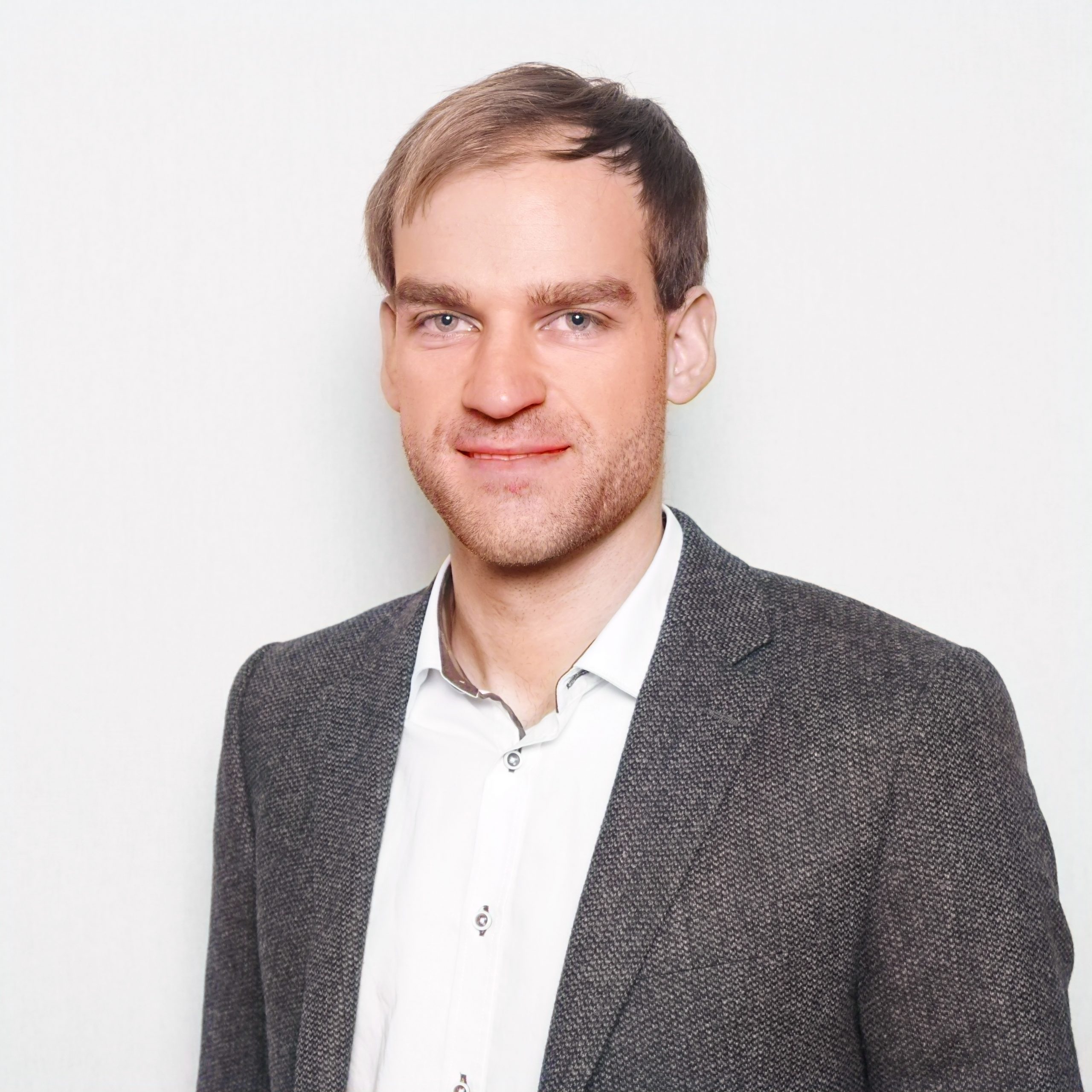
Mathias Weske is a Professor at the Hasso Plattner Institute in Potsdam, Germany. His research focuses on Business Process Management (BPM), Process Mining, Blockchain-based process execution, and Robotic Process Automation (RPA). He has contributed extensively to advancing methodologies for resource allocation in processes, decision support systems, and integrating blockchain technology into collaborative processes. Key research areas include business process analysis, data-driven case management, and healthcare process optimization. His work spans theoretical frameworks (e.g., BPMN extensions, choreography models) and practical tools (e.g., OpenBPT platform). Recent efforts emphasize RPA complexity metrics, accessibility in process modeling for visually impaired users, and democratizing RPA mining techniques. Publications frequently explore interdisciplinary applications like healthcare process mining and blockchain transaction ordering. His contributions bridge theory and practice, addressing challenges in automation, collaboration, and process intelligence across industries.
Pnina Soffer is a Professor at the University of Haifa. She specializes in Business Process Management (BPM), Process Mining, and Information Systems. Her research focuses on process-aware systems, data impact analysis, and decision support mechanisms. She has contributed to advancing techniques for analyzing business processes, including workarounds detection, data inaccuracy mitigation, and process model quality improvement. Her work integrates interdisciplinary approaches, combining computer science with organizational behavior and healthcare informatics. She frequently collaborates with leading researchers in BPM and process mining, contributing to conferences like CAiSE and BPMDS. Her recent efforts emphasize the intersection of process mining with cybersecurity and human factors, exploring how cyber risks propagate through business processes and how facial expressions can predict task performance in process mining tasks. Key research areas include conceptual modeling, event log analysis, and the application of database principles to normalize process logs. Her work aims to bridge theoretical frameworks with practical applications, such as improving clinical decision support systems through layered guideline models and enhancing process robustness against data inaccuracies.
Ioannis Brilakis is the Laing O’Rourke Professor of Construction Engineering and Director of the Construction Information Technology Laboratory at the University of Cambridge’s Department of Engineering. He holds a PhD from the University of Illinois, Urbana-Champaign and has held academic roles at the University of Michigan, Georgia Tech, and visiting appointments at Stanford and Technical University of Munich (TUM) as a Visiting Professor and Hans Fischer Senior Fellow (2019–2021). His work focuses on construction automation, digital twins, and infrastructure sensing technologies. Research interests include generating/updating digital twins for infrastructure, computer vision for construction site analysis, automated design/construction tasks, and project management technologies. Awards include the NSF CAREER Award, ASCE J. James R. Croes Medal, and ASCE John O. Bickel Award. Collaborations include projects funded by EPSRC, H2020, InnovateUK, and industry partners like BP and Trimble. His lab develops AI-driven solutions for infrastructure monitoring and BIM integration. Recent work emphasizes climate resilience of critical infrastructure and graph-based construction scheduling analysis.
Hirokazu Kato is a Professor at Kyoto University's Graduate School of Informatics, Department of Applied Mathematics and Physics. He has held academic positions at multiple institutions including Osaka University (PhD 1996), Hiroshima City University (1999-2003), and Nara Institute of Science and Technology (2003-2007). His research spans augmented and virtual reality, human-robot interaction, computer graphics, and healthcare technology. Kato has collaborated extensively with institutions like Chuo University and Nagoya University. Key research areas include AR/VR applications in social interaction, medical training, and industrial automation. He has developed systems for pain relief via robotic touch, AR-enhanced job interview training, and mixed-reality educational platforms. Over 217 publications since 1989 reflect his contributions to fields like near-eye display optimization, gesture recognition, and multimodal interaction design. Notable projects include: Augmented Reality face filters for social anxiety mitigation Huggable robots with intra-hug gesture modeling AR-based physical therapy systems using patient-specific motion simulation General software frameworks for AR industrial tasks His work bridges technical innovation with human-centric applications, emphasizing real-world usability across education, healthcare, and manufacturing domains.
Prof. Dr. Robert Wille is a Full Professor at the Technical University of Munich (TUM) in the School of Computation, Information and Technology and Chief Scientific Officer at the Software Competence Center Hagenberg GmbH . He leads the Chair for Design Automation , focusing on automatic methods for complex system design in conventional and future technologies. Studied Computer Science (Diploma) at the University of Bremen (2002-2006) Doctorate (summa cum laude) from the University of Bremen (2009) His research spans quantum computing , microfluidic biochips , field-coupled nanotechnologies , and reversible circuits , with applications in machine learning , artificial intelligence , and cyber-physical systems . Recent work includes quantum circuit verification, radar-camera fusion, and silicon dangling bond logic optimization. Robert Wille has received prestigious awards such as the ERC Consolidator Grant , Google Research Award , and Distinguished Professor appointment . He serves as Associate Editor for journals like IEEE TCAD and Springer LNCS, and has chaired conferences including DATE and ICCAD.
Katharina Bredies is a Researcher at the Design Research Lab and the Berlin University of the Arts , where she explores the intersection of electronic textiles , interaction design , and design theory . Her work emphasizes user agency and the repurposing of digital objects in everyday contexts. Education : Integrated Design (Diploma), Hochschule für Künste Bremen (2006) Current Affiliation : Berlin University of the Arts, School of Textiles (Borås, Sweden) Her research focuses on electronic textiles and the integration of traditional textile techniques with digital functionality , promoting sustainable design and social inclusivity in technology. She has contributed to 15 publications spanning topics like smart textiles , user-driven innovation , and design philosophy . Key projects include Architextiles , Cushion Pressure Sensors , and MINODU (fostering local sustainable development). Her work has been featured in DRS , CHI , and AMBIENT conference proceedings.
Sihem Amer-Yahia is a distinguished Research Professor at the University of Grenoble Alpes (affiliated with Grenoble Informatics Laboratory ), with significant contributions to database systems , data exploration , and fairness in AI . Her work bridges human-computer interaction and machine learning to create systems that enhance data-driven decision-making. Research Pillars : Algorithmic fairness, interactive data mining, recommender systems, and human-AI collaboration Recent Advances : 2023-2025 publications focus on statistically sound hypothesis testing , multi-objective recommendation , and conversational analytics Leadership : Co-organized major conferences (DASFAA 2024) and led DEI initiatives in database communities Her 15 most recent articles (2020-2025) span topics like producer fairness in recommendation , statistical hypothesis frameworks , and AI-powered education systems , with keywords covering database optimization , reinforcement learning , and ethical data mining . She actively contributes to ACM/IEEE journals and VLDB/SIGMOD conferences.
Prof. Shmuel Avidan serves as a Professor in the School of Electrical Engineering at Tel Aviv University's Iby and Aladar Fleischman Faculty of Engineering. Holding a Ph.D. from Hebrew University's School of Computer Science (1999), he brings extensive industry experience from Adobe, Mitsubishi Electric Research Labs, MobilEye, and Microsoft Research to his academic role. His educational trajectory features: Ph.D. in Computer Science, Hebrew University of Jerusalem (1999) Avidan's research centers on pixel-centric computational problems, with seminal contributions in video object tracking and 3D object modeling from 2D images. His work spans computer vision, image processing, and machine learning, emphasizing practical applications in industrial settings. Current investigations explore neural rendering, foundation models, and diffusion-based architectures for visual understanding. Recent publications (2023-2025) demonstrate concentrated innovation in neural radiance fields (NeRF), category-agnostic pose estimation, and texture-aware segmentation. These works increasingly integrate foundation models with domain-specific applications in medical imaging, autonomous systems, and materials science, reflecting a strategic shift toward scalable vision systems. Though specific awards aren't documented in source materials, his prolific publication record and sustained industry partnerships signify substantial field impact. His research group maintains active collaboration with leading technology firms, translating academic discoveries into real-world solutions. Professor Avidan mentors graduate students in computer vision while securing competitive grants for projects at the intersection of theoretical computer vision and industrial implementation. His lab focuses on developing robust algorithms for challenging visual environments, particularly in autonomous driving and medical imaging contexts. Leading an active research group within Tel Aviv University's Electrical Engineering department, he drives innovation in neural rendering and vision-language models. The team regularly contributes to premier conferences including CVPR, ICCV, and ECCV, maintaining strong industry ties through ongoing partnerships with automotive and imaging technology companies.
Hamed Alavi is a tenured Assistant Professor at the University of Amsterdam and founding member of the Digital Interaction Lab. His work bridges computer science, architecture, and urban design to develop inclusive intelligent spaces that reflect human values across architectural and urban dimensions. His educational background includes a PhD in Computer Science from the Swiss Federal Institute of Technology (EPFL) and post-doctoral research at University College London (UCL). Prior to academia, he led an educational technology start-up for eight years with global impact. Alavi's research focuses on Human-Building Interaction (HBI), exploring how intelligent environments can co-create inclusive spaces through biophilic design, physiological sensing, and human-centered methodologies. His work emphasizes socio-technical integration in smart buildings and cities, addressing neurodiversity, environmental comfort, and ethical data practices. His recent publications reveal strong trends in multisensory interaction design, urban computing, and inclusive technology development. Key themes include physiological-environmental sensing integration, AI ethics in urban contexts, and human experience frameworks for smart buildings, with growing emphasis on neurodiverse populations and biophilic elements. Scientific recognition includes: Inclusive City-Making Grant (PI, €3.8M, NWO) Best Paper Award at CHI 2025 As Principal Investigator for the NWO-funded Inclusive City-Making project, Alavi leads large-scale interdisciplinary research translating academic insights into urban solutions. His entrepreneurial background informs practical technology deployment strategies and industry-academia collaboration models. The Digital Interaction Lab, which he co-founded, serves as a research hub for intelligent environment design, bringing together computer scientists, architects, and urban planners to prototype responsive built environments through living lab methodologies and wild deployment studies.
Prof. Dr. Wolfgang Kratsch serves as Research Professor for Applied AI at Augsburg University of Applied Sciences, Director of the FIM Research Institute for Information Management, and holds a leading position in Fraunhofer FIT's Business Information Systems division. He co-founded and manages the Center for Process Intelligence, driving industry-academia collaboration in digital transformation. His educational background includes B.Sc. and M.Sc. in Business Informatics from the University of Augsburg (2017), followed by a summa cum laude doctorate in data-driven management of process networks from the University of Bayreuth (2020). University of Augsburg: B.Sc./M.Sc. Business Informatics (2017) University of Bayreuth: PhD in Data-Driven Process Network Management (2020) Dr. Kratsch's research centers on data-driven process management , focusing on data extraction, quality assurance, and AI-driven context-sensitive process optimization. His methodology emphasizes design science research yielding prototype implementations for immediate practical use. Key domains include process mining, robotic process automation, and generative AI integration in business workflows, with strong industry applicability. Core Methodology: Design Science Research Technical Focus: Event Log Generation, Object-Centric Process Mining Application Areas: Manufacturing, Healthcare, Transportation His publication trajectory (2021–2025) reveals accelerating integration of generative AI with process mining , particularly in unstructured data extraction (text/video) and automated process improvement. Recent works emphasize practical industry solutions in manufacturing error analysis, airport operations, and medical monitoring, demonstrating consistent collaboration with industrial partners like Munich Airport. No scientific awards were explicitly mentioned in the source material. Dr. Kratsch actively contributes to academia through teaching at Augsburg and Bayreuth Universities, industry project leadership, and startup mentorship. His spin-off credium GmbH (founded 2020) built a 15-person AI/data science team, reflecting his entrepreneurial approach to translating research into market solutions. Current projects prioritize practical AI deployment in serial production and process intelligence systems. Teaching: Lectures/seminars at Augsburg & Bayreuth Universities Startup Experience: credium GmbH (Data Science/AI focus) Industry Projects: Manufacturing optimization, airport operations He leads the FIM Research Institute and Center for Process Intelligence, directing multidisciplinary teams in developing process mining prototypes. His labs focus on bridging academic research with industrial deployment, particularly in video-based process monitoring and generative AI for business process design.