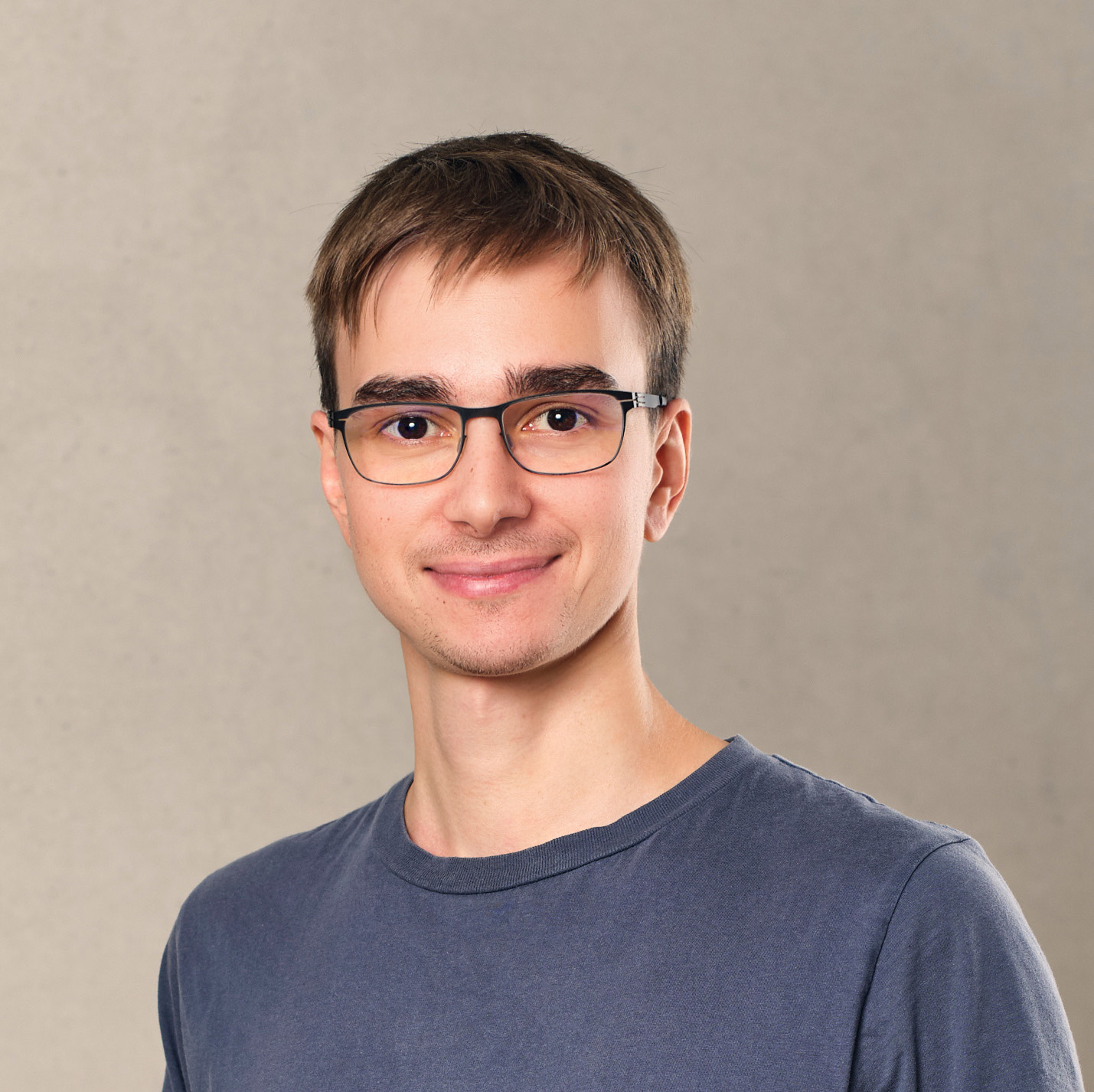
Ali Zarezade is a researcher at the Max Planck Institute for Software Systems (MPI-SWS), focusing on interdisciplinary research spanning algorithms, machine learning, and social computing. His work integrates theoretical foundations with practical applications in cyber-physical systems, distributed networks, and human-centric AI. Key research areas include human-in-the-loop machine learning, optimal control strategies for social networks, and spatio-temporal modeling of social media activity. His methods often combine stochastic control theory, sparse regression techniques, and online algorithm design to address challenges in education technology, security, and information diffusion. Prior contributions involve developing algorithms like RedQueen and Cheshire for optimizing social network activity, probabilistic models for hyperspectral unmixing, and visual tracking systems resilient to occlusions. His research bridges computational theory with real-world systems, emphasizing scalable solutions for distributed and networked environments.
Adrian Rebmann is a Researcher in the Process Analytics research group at the Data and Web Science Group, School of Business Informatics and Mathematics, University of Mannheim. He is supervised by Prof. Dr. Han van der Aa, focusing on advancing process mining methodologies through semantic event parsing and event abstraction. His work emphasizes preprocessing event data for meaningful process analysis, leveraging natural language processing and machine learning techniques. Research Interests: Process Mining, Event Data Preprocessing, Event Abstraction, Semantic Event Parsing, and Business Process Management. Teaching: Co-lecturer for Advanced Process Mining (since 2021) and Process Management and Analytics courses. Supervised Process Analysis Seminars and Team Projects. Service: PC Member of workshops like NLP4BPM and ZEUS (2021-2024), and reviewer for journals like Information Systems and conferences like ECIS and Modellierung. Labs/Teams: Active contributor to the Data and Web Science Group, focusing on Process Mining innovations and tool development (e.g., M-Viz for inductive miner visualization).
Stephan Haarmann is a doctoral researcher at the Digital Engineering Faculty (DEF) of the University of Potsdam and the Hasso Plattner Institute. His research focuses on transparent business process management, decision support systems, and blockchain applications. He completed his Master's degree in IT Systems Engineering at DEF in 2018 and began his PhD in 2018. His work addresses challenges in knowledge-intensive processes, case management, and data-driven compliance, with contributions to frameworks like fragment-based case models and DMN integration with blockchain. Awarded the 2019 Graduate Award for his master's thesis on decision-aware compliance checking. Published extensively on topics including process modeling, blockchain for decision execution, and data-object cardinality constraints. Developed tools like fcm-js for fragment-based case management. His research emphasizes system-wide integration of IT solutions with organizational processes, leveraging blockchain for transparency and formal methods for compliance verification. Key areas include decision modeling (DMN), flexible process choreography, and knowledge worker objectives.
Seyoon Jeong is a Professor in the Department of Computer Science and Engineering at Korea University's College of Engineering, with an extensive research career spanning over two decades in video coding, image compression, and computer vision. His scholarly contributions demonstrate consistent engagement with cutting-edge research topics in multimedia processing. Jeong's research primarily focuses on video and image compression technologies, with recent emphasis on Video Coding for Machines (VCM), High Efficiency Video Coding (HEVC), and machine learning applications for visual data processing. His work bridges traditional signal processing with modern AI techniques, particularly in optimizing compression algorithms for both human perception and machine vision tasks. Over the past five years, his research has increasingly concentrated on feature map compression, multi-scale processing, and the development of specialized coding techniques for machine-oriented applications. Analysis of his recent publications (2020-2024) reveals a clear research trajectory toward optimizing video coding specifically for machine vision systems rather than traditional human viewing. This emerging field addresses the challenge of efficiently transmitting visual data to AI systems that process video for tasks like object detection and scene understanding, where conventional perceptual quality metrics are less relevant. His work often involves collaboration with researchers from Korean institutions and international partners, reflecting the global nature of multimedia research. While specific awards aren't documented in the provided materials, his consistent publication record in top-tier journals and conferences (IEEE Transactions, CVPR, NeurIPS) indicates significant recognition within the multimedia research community. His research has practical applications in areas including 5G video transmission, machine vision systems, and efficient visual data processing for AI applications.
Denis Gracanin is a Professor at Virginia Tech's Department of Computer Science, College of Engineering. His research spans Human-Computer Interaction, Mixed Reality, Smart Built Environments, and Generative AI, with a focus on immersive technologies, cybersecurity, and assistive systems. Research highlights include: Developing frameworks for XR-based security in zero-trust networks Advancing real-time 3D object generation in augmented reality using generative AI Designing smart environments for stress management and mobility assistance His recent work explores AI-driven design optimization, sonification in immersive analytics, and privacy-centric IoT systems. Articles emphasize applications in healthcare, cybersecurity, and smart lighting, leveraging machine learning and multimodal data. Gracanin collaborates extensively with researchers like Kresimir Matkovic, Mohamed Azab, and Majid Behravan, publishing in top venues such as IEEE Transactions on Visualization and Computer Graphics, CHI, and VR Workshops.
João Carvalho is a Postdoctoral Researcher at the Intelligent Autonomous Systems (IAS) group within the Technische Universität Darmstadt . He obtained his PhD in Computer Science from TU Darmstadt in 2025, advised by Jan Peters, following a MSc in Computer Science from Albert-Ludwigs-Universität Freiburg and a Master's in Electrical and Computer Engineering from Instituto Superior Técnico (University of Lisbon). His work focuses on developing machine learning and reinforcement learning algorithms for robot manipulation, particularly in motion planning, grasping, and contact-rich tasks like insertions. Education: PhD in Computer Science, TU Darmstadt (2025) MSc in Computer Science, Albert-Ludwigs-Universität Freiburg Master's in Electrical and Computer Engineering, Instituto Superior Técnico (University of Lisbon) His research integrates generative models for motion planning and grasping, reinforcement learning for contact-rich tasks, and policy gradient methods with variance reduction. Recent publications highlight applications of diffusion models and tensor planning in robotics, with a focus on spatial symmetry and efficient policy generation. Key contributions include work on Motion Planning Diffusion , Grasp Diffusion Networks , and Model Tensor Planning . He actively supervises thesis students in areas related to robot learning , generative models , and residual reinforcement learning .
Cesare Alippi is a Professor at Politecnico di Milano in the Department of Electronics, Information and Bioengineering within the School of Industrial and Information Engineering. With an extensive publication record spanning over three decades from 1991 to 2025, he has established himself as a leading researcher in machine learning, particularly in graph neural networks, time series analysis, and anomaly detection. His research interests focus on developing advanced machine learning methodologies for time series analysis, graph-based learning, and anomaly detection systems. Professor Alippi's work bridges theoretical foundations with practical applications across various domains including smart systems, healthcare, and cybersecurity. His recent publications demonstrate a strong emphasis on graph-based approaches to time series forecasting, structural anomaly detection, and spatiotemporal modeling. His publication trends from 2023-2025 reveal a concentration on graph neural networks for time series applications, with significant contributions to forecasting, anomaly detection, and representation learning. These works often address challenges in spatiotemporal data, missing values, and structural pattern recognition, demonstrating both theoretical depth and practical utility. Professor Alippi has mentored numerous researchers who have become prominent collaborators, including Andrea Cini, Daniele Zambon, and Lorenzo Livi, among others. His collaborative network extends across multiple institutions and research domains.
Prof. Abhinav Valada is a Full Professor (W3) at the University of Freiburg, leading the Robot Learning Lab and serving as Chair of the IEEE RAS Technical Committee on Robot Learning. He holds affiliations with the Department of Computer Science , BrainLinks-BrainTools , and the ELLIS unit Freiburg . His research focuses on enabling robots to learn continuously through perception and interaction in complex environments, emphasizing scalable lifelong learning systems. Education: PhD (summa cum laude), University of Freiburg (2019) MS in Robotics, Carnegie Mellon University (2013) BTech in Electronics & Instrumentation, VIT University (2010) Research Interests: Robotics, machine learning, computer vision, with specializations in robot perception, state estimation, and planning. Current work emphasizes open-vocabulary scene understanding , uncertainty-aware perception , and embodied AI . Projects include multi-modal SLAM systems, neural radiance fields for robotics, and generalizable manipulation policies. Awards: IEEE RAS Early Career Award (2023) NVIDIA Research Award (2022) AutoSens Most Novel Research Award (2022) DFG Emmy Noether AI Fellowship (2021) Grants & Labs: Director of the Robot Learning Lab , co-founder of Platypus LLC (2013–2015), and collaborator on projects like SORTIE (disaster response robotics). Active in funding initiatives focusing on autonomous systems and AI ethics.
Dr. Jan Tünnermann is a Research Fellow at the Philipps-Universität Marburg , affiliated with the Department of Cognitive Psychophysiology within the Faculty of Psychology. His research focuses on Visual Foraging, Temporal-Order Perception, and Artificial Visual Attention Systems , with particular emphasis on cognitive modeling and Bayesian estimation techniques. He investigates how attentional mechanisms guide human behavior in naturalistic and experimental settings, including foraging tasks, game-like experiments, and human-computer interaction scenarios. Research Interests : Visual Attention Dynamics and Template Switching Temporal-Order Judgment and Psychophysics Cognitive Models of Attentional Resource Allocation Artificial Visual Systems Inspired by Human Perception Recent work highlights attention's role in optimizing search strategies across oculomotor and manual tasks, revealing trade-offs between speed and accuracy. He collaborates on interdisciplinary projects, such as developing sensory substitution devices for visually impaired individuals and virtual cycling environments for human-in-the-loop experiments. His publications span journals like Journal of Experimental Psychology and Cognitive Computation , with a focus on advancing computational theories of visual attention. Key Contributions : Pioneering use of the Theory of Visual Attention (TVA) in real-world experiments Model-based analysis of temporal-order judgments Development of saliency detection algorithms for artificial systems No scientific awards explicitly listed, though his work has received attention for methodological innovations in attention research.
Dieter Schmalstieg is the Alexander von Humboldt Professor of Visual Computing at the University of Stuttgart's Faculty 5: Computer Science, Electrical Engineering and Information Technology, leading the Institute for Visualization and Interactive Systems (VIS). He also holds an adjunct professorship at Graz University of Technology's Institute of Computer Graphics and Vision. His research focuses on augmented reality (AR), virtual reality (VR), computer graphics, visualization, and human-computer interaction. He earned his Dipl.-Ing. (1993), Dr. techn. (1997), and Habilitation (2001) from Vienna University of Technology. He has authored/co-authored over 400 peer-reviewed publications, with over 29,000 citations and numerous awards, including the IEEE ISMAR Career Impact Award (2020) and the IEEE Virtual Reality Technical Achievement Award (2012). His professional roles include editorial leadership in top journals like IEEE Transactions on Visualization and Computer Graphics, and steering committee memberships in major conferences like IEEE ISMAR. Research interests span AR/VR applications, situated visualization, coherent rendering, spatial interaction, and medical visualization. Notable projects include the Christian Doppler Laboratory for Handheld Augmented Reality (2008–2015), and collaborations with industry partners like Qualcomm and VRVis. He has advised over 50 PhD students, many now professors or researchers globally. Grants include the Alexander von Humboldt Professorship (2023), SNAP Mixed Reality Lab funding, and EU projects like MiReBooks (mining education). His work bridges theory and application, with impactful contributions to AR/VR systems, medical visualization tools, and GPU techniques for real-time rendering.
Veronika Lesch is a Professor and Head of the Applied Computer Science program at DHBW Mosbach. Previously, she served as a post-doctoral research group leader and doctoral researcher at the University of Würzburg's Chair of Computer Science II (Software Engineering Group). Her research focuses on self-aware computing systems, cyber-physical systems, and intelligent transportation logistics. She has supervised numerous theses on topics like platooning coordination and warehouse optimization. Notable awards include being a nominee for the 'Ingenieurinnen Preis Bayern' and recipient of the 'Würzburg Software Engineering Award'. Education: She holds a Bachelor's (2015) and Master's (2017) in Computer Science from the University of Würzburg, followed by a PhD and postdoc at the same institution. Professional roles include teaching coordination of MINT courses and supervision of software projects. Research interests span IoT, Industry 4.0 logistics, and autonomous systems optimization. Over 20 peer-reviewed publications since 2017 address challenges in adaptive systems, vehicle routing, and meta-optimization strategies. Active in reviewing for top journals/conferences like IEEE Transactions on ITS and ICPE. Supervised 15+ student theses (2018-2021) Developed FADE framework for adaptive distance estimation Contributed to Combench communication protocol benchmarking Labs/Teams: Previously part of the Software Engineering Group at Würzburg, now leading applied CS initiatives at DHBW Mosbach.
Marius Lindauer is a Professor of Machine Learning at the Department of Artificial Intelligence , Leibniz University Hannover , and Deputy Head of the Institute since 2025. Previously, he served as Spokesperson of Computer Science Professors (2023-2025) and Head of the Institute (2022-2024). PhD (Dr. rer. nat, 2010-2015), Master (2008-2010), and Bachelor (2005-2008) in Computer Science from University of Potsdam His research focuses on democratizing AI through AutoML innovations, including: Green AutoML for sustainable deep learning Human-Centered AutoML for user-centric optimization Dynamic Algorithm Configuration in reinforcement learning Generalization techniques for production and health applications Recent publications show strong multi-objective optimization trends across medical imaging , protein design , and time series forecasting , with 15+ papers in 2024-2025 at venues like NeurIPS, AAAI, and IEEE TPAMI. Key scientific awards : ERC Starting Grant (2022), NeurIPS BBO-Challenge winner (2020), multiple AutoML/ML competition victories Advisory role in 140+ publications and leadership of LUHAI Institute
Dr. Christoph von Tycowicz serves as Head of the Research Group "Geometric Data Analysis and Processing" at the Zuse Institute Berlin (ZIB), within the "Visual and data-centric computing" department of the "Mathematics of Complex Systems" division. His research bridges advanced mathematical theory with practical applications in medical imaging, biomechanics, and cultural heritage analysis. He leads multiple interdisciplinary projects connecting mathematics, computer science, and biomedical engineering, with funding from major research initiatives. Dr. von Tycowicz earned his doctoral degree from Freie Universität Berlin in 2014 with a dissertation titled "Concepts and Algorithms for the Deformation, Analysis, and Compression of Digital Shapes" under the supervision of Konrad Polthier. His educational background established the foundation for his current work in geometric data analysis and computational shape modeling. His primary research interests center on Geometric Data Analysis , Shape Analysis , and Manifold-valued Data Processing . He develops mathematical frameworks for analyzing complex shapes in medical imaging, biomechanics, and cultural heritage applications. His work bridges differential geometry with machine learning to create robust methods for shape comparison, classification, and prediction. Dr. von Tycowicz has made significant contributions to Riemannian statistical shape modeling and geometric deep learning, with applications spanning knee osteoarthritis assessment, Alzheimer's disease progression analysis, and archaeological artifact analysis. Analysis of his publication trajectory reveals a sophisticated evolution from foundational geometric methods toward integrated approaches combining differential geometry with deep learning. His recent work increasingly focuses on manifold-valued graph neural networks, shape-based disease grading systems, and longitudinal analysis of anatomical changes. There's a clear trend toward clinical translation, with growing emphasis on applying these methods to specific medical problems like osteoarthritis assessment using data from the Osteoarthritis Initiative and Alzheimer's disease progression modeling. Dr. von Tycowicz has received significant recognition for his contributions: Best Paper Honorable Mention Award @ Eurographics (2016) Best Paper Award (2020) Student Travel Award (2020) Special Mention @ ICLR Computational Geometry & Topology Challenge (2022) As a mentor, Dr. von Tycowicz has supervised doctoral and master's students including Felix Ambellan (doctoral thesis on Efficient Riemannian Statistical Shape Analysis with Applications in Disease Assessment) and Martha Paskin (master's thesis on Estimating 3D Shape of the Head Skeleton of Basking Sharks). He currently leads multiple substantial research projects including WEAR (mathematical solutions for analyzing ancient tools), Model-Regularized Learning of Complex Dynamical Behavior, and Geometric Learning for Single-Cell RNA Velocity Modeling, demonstrating strong grant acquisition capabilities across interdisciplinary domains. The Geometric Data Analysis and Processing research group, which Dr. von Tycowicz heads, develops the open-source Morphomatics library (v4.0) for statistical shape analysis. This Python library implements intrinsic manifold-based methods that maintain geometric consistency while avoiding bias from arbitrary coordinate choices. The group participates in major research networks including MATH+ and BIFOLD, and collaborates extensively with medical researchers at Charité - Universitätsmedizin Berlin and other institutions. Their work spans medical imaging (particularly knee osteoarthritis analysis), biomechanics, archaeology, and machine learning, with a unifying focus on creating geometrically principled methods for analyzing complex shape data.
Dr. Nikita Araslanov is a Postdoctoral Researcher at the Technical University of Munich (TUM) in the School of Computation, Information and Technology, Department of Informatics 9 (Computer Vision Group). He also serves as a visiting faculty member at Google. His research focuses on semantic and 3D visual inference from video data, aiming to bridge perception and understanding in complex visual scenes. Dr. Araslanov earned his PhD in Computer Science from TU Darmstadt in the Visual Inference Lab, graduating with highest distinction. He holds a Master's degree in Computer Science from the University of Bonn, where he graduated with distinction in 2016. His research spans multiple areas of computer vision, with a particular emphasis on 3D reconstruction, semantic segmentation, and deep learning approaches for visual understanding. His work often combines theoretical insights with practical applications, addressing challenges in dynamic scene understanding, vision-language correspondence, and unsupervised learning paradigms. He has made significant contributions to bundle adjustment for dynamic scenes, hierarchical semantic segmentation using hyperbolic geometry, and novel approaches to unsupervised panoptic segmentation. Dr. Araslanov's research has been recognized with several prestigious awards, including being selected as a Best Paper Candidate at ICCV 2025 for his work on dynamic scene reconstruction, and having his Scene-Centric Unsupervised Panoptic Segmentation paper designated as a Highlight Paper at CVPR 2025 (top 3% of submissions). He has also received multiple oral presentation awards at major computer vision conferences including GCPR 2024, CVPR 2024, and ICLR 2024. Actively involved in the academic community, Dr. Araslanov serves as an Area Chair for CVPR 2025. He is committed to mentoring the next generation of researchers and regularly supervises master's theses, guided research projects, and research assistant positions (HiWi). His teaching includes courses on Deep Learning for Spatial AI (Summer Semester 2025) and Computer Vision 3: Segmentation, Detection and Tracking (Winter Semester 2024/25). As a member of the Computer Vision Group led by Prof. Dr. Daniel Cremers at TUM, Dr. Araslanov collaborates with a diverse team of researchers working on cutting-edge computer vision problems. The group maintains strong connections with industry partners and contributes significantly to the advancement of computer vision research through publications at top-tier conferences and journals.
Jonas Bens is a Heisenberg Professor of Anthropology at the Institute of Social and Cultural Anthropology, University of Hamburg, where he leads research on normative pluralism, colonialism, and affective dynamics. His work bridges legal anthropology, political theory, and postcolonial studies, with fieldwork conducted in East Africa and the Indigenous Americas. His academic journey includes: Habilitation in Social and Cultural Anthropology (2021, Freie Universität Berlin) PhD in Social and Cultural Anthropology (2015, Rheinische Friedrich-Wilhelms-Universität Bonn) State Examination in Law (2013, Cologne State District Court) Magister Artium in Social and Cultural Anthropology (2012, Rheinische Friedrich-Wilhelms-Universität Bonn) Bens' research focuses on how people navigate conflicts within plural normative orders, combining ethnographic methods with analysis of legal and indigenous systems. His work examines sovereignty, justice, property, and punishment through the lens of affect and emotion, challenging Western-centric perspectives on law and politics. His theoretical approach integrates postcolonial critique with affect theory to analyze contemporary global dynamics shaped by colonialism, capitalism, and state formation. His publications reveal a strong trajectory examining the affective dimensions of legal and political processes, particularly in transitional justice contexts and museum restitution debates. Bens consistently explores how emotions shape legal practices and how legal frameworks structure emotional experiences, with increasing attention to material culture and object agency in postcolonial contexts. Scientific recognition includes: 2022 Acceptance into the Heisenberg Programme of the German Research Foundation 2021 Prize of the International Research Marketing Ideas Competition of the Federal Ministry of Education and Research 2021 Bonn Americanist Studies Award 2012 Bonn American Studies Prize Bens leads multiple significant research projects funded by the German Research Foundation (DFG), including the Heisenberg-Programme project "The Material Culture of Empire" and the CRC research project "Contested Property II." His work has established collaborative networks across Europe, Africa, and the Americas, with particular emphasis on museum restitution debates and affective dimensions of property relations. He has supervised doctoral students in the Collaborative Research Center "Affective Societies" at Freie Universität Berlin and continues to mentor emerging scholars in his current position. As part of the Collaborative Research Center "Affective Societies" at Freie Universität Berlin and now through his Heisenberg Professorship, Bens has developed interdisciplinary teams examining the intersection of emotion, law, and postcolonial critique. His current research group focuses on museum restitution debates, connecting scholars from anthropology, law, history, and museum studies to address colonial legacies in European collections.