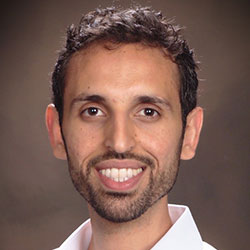
Juliana Cohen is a Professor in Nutrition and Public Health at Merrimack College’s School of Nursing and Health Sciences. Her research focuses on school nutrition policies, health disparities, and dietary interventions to improve child health outcomes. She founded the NOURISH Lab , which evaluates policies to reduce diet-related disparities in children, funded by NIH and foundations. Her work has influenced USDA school meal standards and the Community Preventive Services Task Force recommendations. Education : Sc.D. in Nutrition (Harvard), M.Sc. in Human Development and Health (Harvard), B.A. in Italian Studies (Emory) Research Areas : School nutrition, behavioral economics, health disparities, diet-cognition links Her recent publications analyze universal free school meals, chemical exposure in meals, and pandemic impacts on food programs. Awards include NIH K01 funding and Obesity Society fellowship.
Jonathan H. Cantor is a Policy Researcher and Professor of Policy Analysis at the RAND School of Public Policy . His research focuses on health policies related to substance use disorder , mental health , and health behaviors , integrating frameworks from health economics , policy analysis , and public health . He leads the Mental Health and Addiction Treatment Tracking Repository , a national longitudinal database for substance use and mental health treatment facilities. His work examines treatment availability for older adults (funded by the National Institute on Aging) and telehealth services in mental health (funded by the National Institute of Mental Health). Recent NIMH grants aim to quantify mental health crisis services supply and its impact on population health. His recent publications (e.g., JAMA , Health Affairs ) address topics like opioid treatment accessibility , telehealth disparities , and food insecurity in higher education . His research spans health equity , preventive healthcare , and modeling/simulation approaches.
Jürgen König is a full professor at the Department of Nutritional Sciences , University of Vienna, leading the Research Professorship Specialized Human Nutrition . His work bridges psychological and physiological dimensions of eating behavior, with additional focus on population-level nutritional assessment in Austria. Academic Rank: Professor Department: Nutritional Sciences Research Focus: Hunger/satiety mechanisms, Public health nutrition, Food safety Key research themes include: Psychological drivers of eating behaviors (stress, food craving, sensory cues) Physiological regulation of nutrient homeostasis National nutrition surveys assessing dietary patterns Caloric restriction and metabolic adaptation Child and adolescent hydration/nutrition policies Recent publications highlight: Mechanistic studies on caloric restriction effects (2025) Pandemic impacts on school nutrition (2024) Global obesity/diabetes trends analysis (2024) Behavioral nudging in food selection (2024) Microbiota's role in dietary interventions (2023) Contact: juergen.koenig@univie.ac.at | Sekretariat: sekretariat.ew@univie.ac.at
Dr. Megan Renna is an Assistant Professor in Clinical Psychology at the University of Southern Mississippi. She earned her Ph.D. in Clinical Psychology from Columbia University's Teachers College and completed a postdoctoral fellowship funded by the National Cancer Institute at Ohio State University Comprehensive Cancer Center. Her research focuses on the bidirectional relationship between psychological and physical health, particularly how emotion regulation and negative emotionality contribute to chronic disease risk in breast cancer survivors and healthy adults. Education: Ph.D. in Clinical Psychology (2019) and M.Ph. (2018) from Teachers College, Columbia University Training: Predoctoral internship at Duke University Medical Center Her work bridges clinical psychology, psychophysiology, and behavioral medicine through studies on inflammation, autonomic dysfunction, and cancer survivorship. Recent publications examine metabolic syndrome, smartwatch body composition metrics, and couples' health dynamics. Key research themes include stress reactivity, emotion regulation therapy, and biobehavioral pathways linking mental states to physiological outcomes. Dr. Renna teaches Advanced Psychopathology and can be reached at Megan.Renna@usm.edu. Her methodological expertise spans experimental worry inductions, longitudinal studies, and psychometric scale development, with a focus on reducing distress disorders through emotion regulation interventions.
Bruce W. Smith is an Associate Professor at the University of New Mexico, College of Arts and Sciences, Department of Psychology. His research focuses on resilience , mindfulness interventions , and positive psychology with applications in health and stress management. Ph.D., Arizona State University (2002) Director, The Phoenix Lab Email: bwsmith@unm.edu Smith's research investigates how individuals bounce back from stress and adversity, including through mindfulness , positive psychology , and narrative-based approaches like the "hero’s journey". He developed the Brief Resilience Scale , widely used in stress and health research. His work spans health psychology, examining stress responses in chronic illness (cancer, cardiovascular disease) and emergency responders (firefighters). He has also explored mindfulness-based adaptations for Latino communities and positive psychology classes that improve student well-being. Smith teaches courses in Health Psychology , Positive Psychology , and Psychology Teaching Practicum . Current graduate students in his lab include Kaitlyn Schodt and Naila deCruz-Dixon . He is not accepting new students for Fall 2025 or 2024. Key themes across his publications (2008-2023) include: Resilience measurement and applications Mindfulness in stress reduction Positive psychology interventions Cultural adaptations for mental health His work emphasizes practical applications in both clinical settings and educational environments , with a focus on undergraduate well-being and trauma-informed approaches to personal growth.
Margaret Bublitz is Associate Professor at Brown University with joint appointments in the Department of Psychiatry and Human Behavior , Department of Medicine , and Department of Obstetrics and Gynecology . She holds secondary appointments at the School of Public Health as Senior Investigator and Behavioral and Social Sciences faculty member. Dr. Bublitz earned her PhD in Clinical Psychology (2010) from the University of British Columbia, followed by postdoctoral training in Cardiovascular Behavioral Medicine at Brown Medical School. Her research focuses on: Psychological stress pathways to adverse perinatal outcomes Maternal childhood maltreatment effects on neurobiology Mindfulness interventions for hypertension and preterm birth prevention Her 15 most recent publications demonstrate expertise in perinatal mental health , sleep-disordered breathing , HPA axis regulation , and fetal neurodevelopment , with significant collaborations in neuroendocrinology and maternal-infant health disparities . Scientific recognition includes: 2024-2025 Global Fulbright Scholarship 2022 Brown Early Career Research Achievement Award Multiple NIH and foundation grants exceeding $6 million Bublitz leads NIH-funded projects examining mechanisms of mindfulness training (R01HL157288) and serves as mentor in the MORPHE Trial for digital maternal health innovations. She is a licensed psychologist and active member of Brown's Stress, Trauma and Resilience (STAR) Institute and Mindfulness Center .
Nabil Alshurafa is an Associate Professor at Northwestern University, holding joint appointments in the McCormick School of Engineering (Computer Science and Electrical and Computer Engineering) and the Feinberg School of Medicine (Preventive Medicine). He directs the HABits Lab, which focuses on developing mHealth systems to address health behaviors such as overeating, stress, and UV exposure. His work integrates wearable sensors, machine learning, and behavioral science to create passive sensing solutions. Education: PhD in Computer Science and Wireless Health (UCLA), MS and BS in Computer Science (UCLA). Research Interests: Body sensor networks, activity recognition, embedded systems, and health informatics. His lab designs wearable devices (e.g., neck-worn sensors, UV patches) and AI frameworks to detect behaviors like eating patterns and stress levels. Collaborations include domain experts in medicine and engineering to translate technical innovations into clinical interventions. Recent Projects: Developing systems for stress monitoring via ECG-PPG patches, UV exposure tracking, and just-in-time interventions for overeating. The lab emphasizes ethical design, privacy preservation, and user-centered technology. Students and Lab Team: Supervises PhD, MS, and undergraduate researchers in areas like machine learning, embedded systems, and health data analytics. Notable advisees include Rawan Alharbi (PhD candidate), Shibo Zhang (PhD student), and Wilson Wang (MS student). Labs/Teams: HABits Lab collaborates with experts in Preventive Medicine, Psychiatry, and Dermatology to advance interdisciplinary health research. Current projects include predictive analytics for weight loss and interventions targeting maternal stress during pregnancy.
Marc Erich Latoschik is a Professor in the Department of Human-Computer Interaction at the University of Würzburg, Germany. He previously held roles at Bayreuth University, Bielefeld University, and FHTW Berlin. His research focuses on virtual and augmented reality, embodiment, human-computer interaction, and applications in health, education, and social systems. Education: Completed his PhD in 2001 at Bielefeld University with a thesis on multimodal interaction in virtual reality. Research Interests: Embodied interaction, virtual embodiment, presence and plausibility in VR/AR, avatar design, social virtual reality, health applications (e.g., VR therapy for body image issues), and XR security/privacy. Active in developing frameworks like Reality Stack I/O and MAIL for VR/AR research. Key Projects: ViTraS study on body image exercises in VR, avatars for mass use via smartphone reconstruction, and motion-based biometrics in XR. Collaborates with medical teams on cybersickness detection and emergency training simulations. Labs/Teams: Leads research groups on immersive technologies and social VR applications. Involved in interdisciplinary projects combining HCI, AI, and healthcare.
John Monterosso is an Associate Professor of Psychology at the University of Southern California, specializing in addiction, motivation, and decision-making research. His work explores the neurocognitive mechanisms underlying impulse control and reward processing, with particular focus on substance use disorders and behavioral interventions. Monterosso's research integrates behavioral experiments with neuroimaging to examine decision-making processes in addiction contexts. His lab investigates how immediate rewards influence behavior and how cognitive control mechanisms can be harnessed for addiction treatment. Recent work examines the impact of e-cigarette flavors on appeal and sensory perception, obesity medication perceptions, and neural correlates of value representation. With collaborations spanning public health and neuroscience, his publications demonstrate consistent focus on translating basic psychological research into clinical applications. The methodological progression shows increasing sophistication in neuroimaging techniques and large-scale behavioral studies examining substance use patterns across diverse populations.
Professor Emma Rich is affiliated with the University of Bath as a Professor of Physical Activity and Health Pedagogy and Director of the SPHERE Research Centre (Centre for Sport, Physical Activity and Health Equality). Her work bridges sociology and education , focusing on intersections between digital health technologies , body politics , and health inequities in educational and sport contexts. University: University of Bath Role: Professor & Research Centre Director Research Interests : Emma’s expertise spans critical pedagogy , digital health studies , obesity policy critique , and gendered body narratives . She pioneers feminist new materialist approaches to analyze how digital platforms shape health identities and practices among youth. Recent Publications examine digital health’s impact on body dissatisfaction , teacher mind maps , and spatial dynamics in digitized health education. These works emphasize datafication and quantified self trends in adolescent health behaviors. Awards & Recognition : Elected Fellow of the Academy of Social Sciences (2022) Nominated for FSHI Book Prize (2024) Bristol Bath Healthcare Research Impact Award (2019) Leadership & Collaborations : She leads international projects like the Wellcome Trust-funded Digital Health Generation and DigiHealthPE (UNA Europa), collaborating with institutions across the UK, Australia, and New Zealand. Her work integrates UN Sustainable Development Goals , particularly those addressing health equity and digital inclusion .
Chen Ran, PhD, is an Assistant Professor in the Department of Neuroscience at Scripps Research in San Diego. His laboratory focuses on understanding how the brain processes internal sensory signals from visceral organs, such as hunger, satiety, nausea, and visceral pain. Using advanced techniques like in vivo two-photon calcium imaging, optogenetics, and circuit tracing, his team maps the functional architecture of brainstem circuits responsible for interoceptive processing. Key contributions include the discovery of a 'visceral homunculus' in the brainstem and the development of novel calcium indicators for high-resolution neuronal activity tracking. Education : PhD in Biology, Stanford University (2017) Bachelor of Science in Biology, Peking University (2011) Research Interests : Dr. Ran’s work integrates experimental and analytical approaches to decode how visceral stimuli are transduced into conscious sensations. Current projects investigate the coding logic of mechanical, chemical, and thermal signals from internal organs, with implications for developing therapies for obesity, diabetes, visceral pain, and eating disorders. The lab employs cutting-edge tools to visualize and manipulate neural circuits in awake behaving mice, linking circuit-level activity to physiological states. Awards & Honors : NARSAD Young Investigator Award (2022) NIH K01 Career Development Award (2023) Simons Collaboration on the Global Brain Award (2022) Harvard Brain Science Initiative Award (2021) Grants & Funding : Supported by NIH, Simons Foundation, and private philanthropy, his research bridges basic science and translational medicine. Current grants focus on brainstem circuit mapping and developing therapeutic targets for interoceptive disorders. Labs & Affiliations : Dr. Ran leads an interdisciplinary team at Scripps Research’s Neuroscience Department, collaborating with engineers, geneticists, and clinicians to advance interoceptive neuroscience.
Amy Sato is a Professor in the Department of Psychological Sciences at Kent State University , where she directs the Pediatric Health & Stress Laboratory . Her research focuses on child and adolescent obesity, eating behaviors, and pediatric weight management interventions, emphasizing family influences, stress responses, and food insecurity in at-risk populations. She collaborates with Akron Children’s Hospital on clinical studies and has received funding from the National Institutes of Health (NIH) . Education: Ph.D. in Psychology from the University of Wisconsin-Milwaukee (2009) Research Interests include: Biobehavioral responses to stress in obesity pathways Family dynamics in pediatric weight management Food insecurity among low-income youth Development of novel behavioral interventions Immigration and acculturation factors in child health Technology applications in health behavior monitoring Recent publications highlight interdisciplinary approaches to stress-obesity linkages, family-based interventions, and health disparities. She mentors graduate students in clinical and health psychology, with a focus on translational research. Her work has been recognized with the Paper of the Year award from Stress and Health (2014).
Christina Gjestvang is an Associate Professor at the Department of Sports Medicine, Norwegian School of Sport Sciences. She earned her PhD in 2022 from the same institution, researching fitness clubs as public health venues. With 23 peer-reviewed publications and over 50 invited presentations, she received the institution's research communication award in 2020. She maintains 17+ years of practical experience as a fitness instructor and chairs the Norwegian Association of Exercise Physiologists. Her research focuses on: Fitness club industry dynamics and member behaviors Exercise initiation/adherence mechanisms Women's health including pregnancy exercise Body image and mental health in fitness contexts Public health interventions through physical activity Publication analysis reveals consistent themes in exercise psychology, public health implementation, and fitness industry studies. Recent work emphasizes digital health interventions, pregnancy physiology, and disordered eating in fitness environments. Awards: Norwegian School of Sport Sciences Research Communication Award (2020) As chairman of the Norwegian Association of Exercise Physiologists, she promotes professional standards for exercise-based health interventions. Her extensive industry experience informs both research and teaching in exercise prescription methodologies.
Jonathan Little is a Professor at the University of British Columbia Okanagan , affiliated with the Faculty of Health and Social Development and School of Health and Exercise Sciences . He leads the Exercise Metabolism and Inflammation Laboratory (EMIL) , focusing on the intersection of exercise physiology, nutrition, and metabolic disorders. Hons B. Kin – McMaster University, 2005 M.Sc. – University of Saskatchewan, 2007 Ph.D. – McMaster University, 2010 Postdoctoral Fellowship – UBC, 2010-2012 His research investigates how metabolic disruptions in type 2 diabetes affect cellular inflammation and how exercise/nutritional strategies can mitigate these effects. Key areas include high-intensity interval training (HIIT) , nutritional ketosis , and immunometabolic responses . EMIL combines human clinical trials with cellular/molecular experiments, utilizing advanced tools like flow cytometry and metabolic carts. His recent publications emphasize exercise snacks (short, frequent workouts), ketone supplements , and fasting protocols for managing diabetes and obesity. He has received prestigious awards like the Killam Accelerator Fellowship and CIHR New Investigator Award . Killam Accelerator Research Fellowship (2021-2023) Canadian Society for Exercise Physiology Young Investigator Award (2020) UBC Killam Research Fellowship (2018) Michael Smith Foundation for Health Research Scholar (2018-2023) American College of Sports Medicine New Investigator Award (2016) CIHR New Investigator Salary Award (2015-2020) He supervises graduate students in HMKN 313 – Exercise Metabolism and mentors through the HMKN 499 Research Practicum . His lab (EMIL) collaborates with institutions like the BC Diabetes Research Network and serves as an Associate Editor for Applied Physiology, Nutrition and Metabolism .
Mary A. Carskadon is Professor of Psychiatry and Human Behavior at Brown University's Warren Alpert Medical School and Director of the EP Bradley Hospital COBRE Center for Sleep and Circadian Rhythms in Child and Adolescent Mental Health. Her distinguished career spans over five decades with foundational contributions to sleep science. Her educational background includes a BA in psychology from Gettysburg College (1969) and a doctorate with distinction in neuro- and biobehavioral sciences from Stanford University (1979), earned under William C. Dement. She is a distinguished alumna of Gettysburg College and holds an honorary doctor of sciences degree from that institution. Carskadon's research focuses on circadian timing systems and sleep/wake patterns in children, adolescents, and young adults. Her work on school start times has significantly influenced public health policy, prompting organizations like the American Academy of Pediatrics and CDC to advocate for later school schedules. She developed the multiple sleep latency test (MSLT) with Dr. Dement, which remains a global standard for assessing sleep disorders. Current research examines sleep-health disparities in urban children with asthma, sleep patterns in suicide risk populations, and the impact of sleep restriction on adolescent performance. Her extensive publication record shows consistent focus on adolescent sleep physiology, circadian rhythms, and public health implications. Recent work explores connections between sleep timing, mental health, and academic performance, particularly during the COVID-19 pandemic, while maintaining her foundational work on sleep measurement methodologies. Lifetime Achievement Award of the National Sleep Foundation Distinguished Scientist and Outstanding Educator Awards of the Sleep Research Society (the latter now presented in her name) 2023 Brown University Distinguished Research Achievement Award William C. Dement Academic Achievement Award (2023) V. Sagar Sethi, M.D., Mental Health Research Award Leadership in Sleep Medicine Award from American Academy of Physicians of Indian Origin-Sleep Elected Fellow of the Association for Psychological Science Elected Fellow of the American Association for the Advancement of Science Carskadon directs the NIH/NIGMS-funded Bradley Hospital COBRE Center, mentoring junior researchers in pediatric sleep and circadian rhythms. She serves as inaugural editor-in-chief of SLEEP Advances and has secured multiple NIH grants including R01 HL142058 examining ethnic differences in children's sleep patterns with asthma, P20 GM139743 for the COBRE center, and R01 HD103665 investigating sleep restriction effects using neuroimaging. Her work bridges laboratory research with real-world applications, particularly in school policy reform and health equity initiatives. She leads multiple research teams including the CLASS Study (Circadian Light in Adolescence, Sleep and School), projects on sleep disruption in urban children with asthma, and studies examining sleep's role in opioid use disorder treatment. Her laboratory continues to innovate in sleep measurement techniques while maintaining longitudinal studies on adolescent sleep patterns across developmental stages.