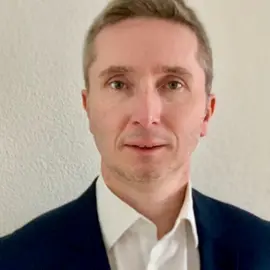
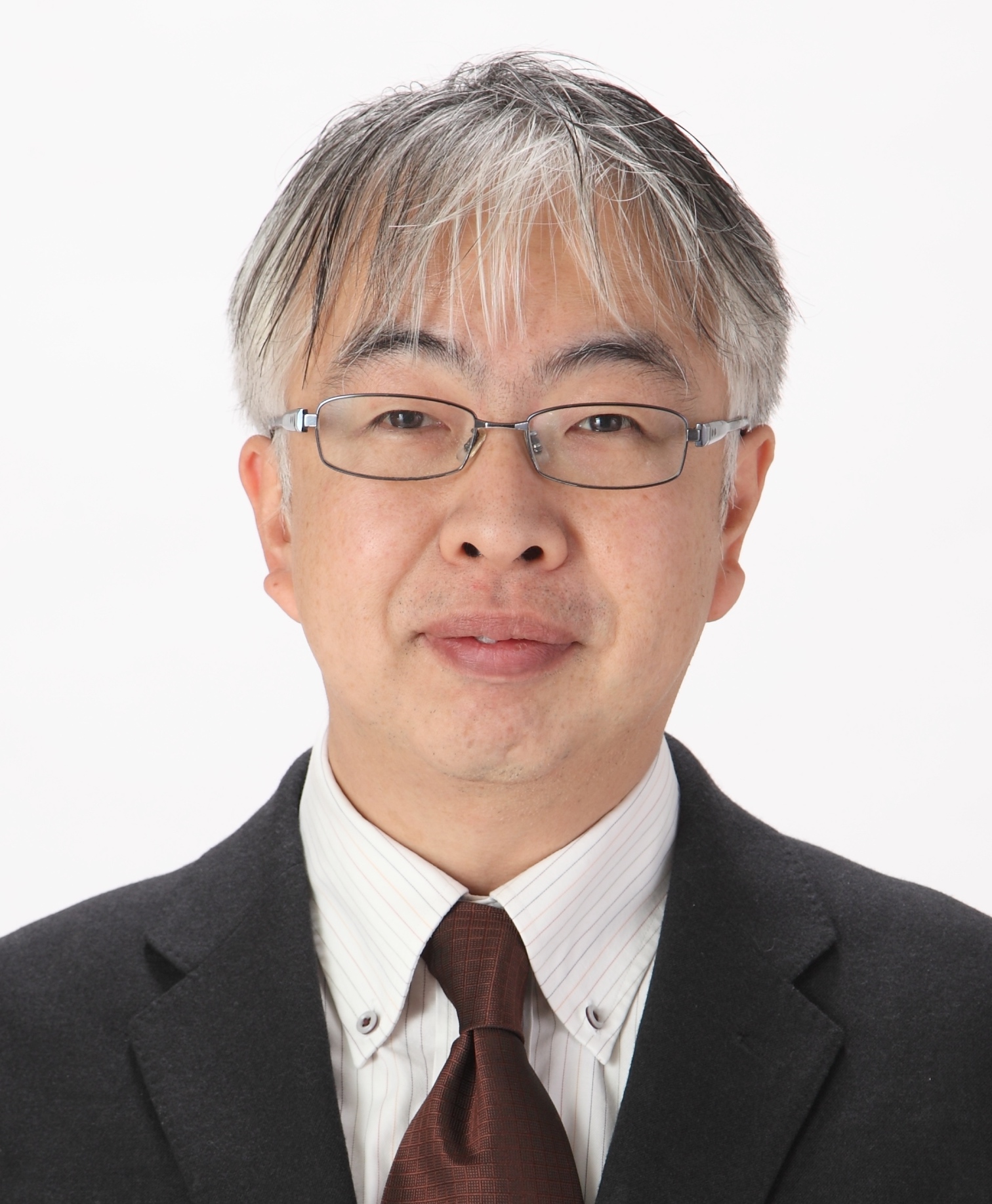
Rimvydas Aleksiejūnas is an Assistant Professor at Vilnius University's Institute of Applied Electrodynamics and Telecommunications (IAET) and affiliated with the Department of Radiophysics . His work focuses on Wireless Network Technologies , Microwave Electrodynamics , and Antenna Theory . Research Interests : Radio Wave Propagation, GNSS Systems, MIMO Channel Modeling, Electromagnetic Compatibility, Antenna Design, Radio Interference Analysis Recent Publications : 15+ works on wireless channels, UAV detection systems, and microwave engineering from 2011-2022 Awards : Galileo Masters 2020 prize (with S. Rudys and P. Ragulis) Best lecturer of Physics faculty 2018
Prof. Dr. Luciano Sarperi is a Lecturer at the ZHAW School of Engineering ’s Institute of Signal Processing and Wireless Communications , focusing on applied R&D with industry partners. His work spans Wireless Communication Systems , Mobile Networks (NR, LTE, NB-IoT), and Software Defined Radio . Expertise in GNSS Localization , Wireless Time-Synchronization , and Interference Cancellation for MIMO systems. Active in UAV navigation, RFI detection, and LoRa/Wi-Fi applications. Research Trends (2025–2004): Peer-reviewed work on MIMO Pre-coding , GNSS for Drones , Blind Signal Processing , and Wireless Standards . Patents in Multi-Cell MIMO and Channel Feedback . Education : PhD in Digital Signal Processing for MIMO-OFDM from the University of Liverpool (2007), M.Sc. in Microelectronic Systems and Telecommunications (2002). Experience : 2010–2017 at Swisscom (Research Engineer), 2007–2010 at Fujitsu Laboratories (U.K.).
Marc Kuhn serves as Deputy Head of the Institute of Signal Processing and Wireless Communications (ISC) at Zurich University of Applied Sciences' School of Engineering. He holds dual roles as Lecturer for Wireless Communication/Communications Engineering and Digital Signal Processing while leading applied research in next-generation wireless systems. His educational credentials include: Doctoral degree (Dr.-Ing.) in Communications Engineering from Saarland University (2002) Diplom-Ingenieur (Dipl.-Ing.) in Electrical Engineering from Saarland University (1998) Certificate of Advanced Studies (CAS) in Higher & Professional Education from ZHAW (2022) Marc Kuhn's research focuses on wireless signal processing challenges across multiple domains. His work addresses critical gaps in: Indoor positioning systems using UWB/WiFi/Bluetooth MIMO-OFDM for mobile networks Cooperative communication in MANETs under mobility Timing synchronization for distributed radar QoS optimization in vehicular networks Powerline communication resilience His publication trajectory (2022-2024) reveals concentrated innovation in cooperative MANET techniques, with 60% of recent work tackling synchronization imperfections through SDR implementations. Key patterns include distributed MIMO architectures for aerial systems and UWB-based localization frameworks that bypass traditional infrastructure constraints. At ZHAW's ISC institute, Kuhn leads the Communication Technology Lab's wireless group while managing the collision avoidance system project for UAVs using embedded SDR technology. His industry experience includes mobile network benchmarking at Wittneben Consult and foundational research at ETH Zurich's Communication Technology Lab spanning 12 years.
Professor Tadashi Wadayama serves in the Department of Computer Science within the Faculty of Engineering at Nagoya Institute of Technology. He holds a full professorship position and leads research initiatives in coding theory, signal processing, and deep learning applications for next-generation communication systems. Professor Wadayama received his B.E., M.E., and D.E. degrees from Kyoto Institute of Technology in 1991, 1993, and 1997 respectively. He began his academic career at Okayama Prefectural University in 1995 as a research associate and spent 1999-2000 as a visiting researcher at Essen University in Germany. He joined Nagoya Institute of Technology as an associate professor in 2004 and was promoted to full professor in 2010. He maintains active memberships in IEEE and the Institute of Electronics, Information and Communication Engineers (IEICE). His research spans multiple interconnected domains with primary focus on Coding Theory , Signal Processing for Wireless Communications , and Deep Learning applications . Professor Wadayama has made significant contributions to LDPC codes, MIMO signal detection, and the emerging field of deep unfolding techniques that bridge neural networks with traditional signal processing algorithms. His work increasingly incorporates physics-aware modeling of communication channels governed by partial differential equations. Recent research demonstrates strong interdisciplinary integration between information theory, machine learning, and communication engineering principles. Analysis of his recent publications reveals a clear trajectory toward developing foundational technologies for post-Shannon communication architectures. His work emphasizes ultra-large-scale coding, goal-oriented communication, digital homeostasis mechanisms, physics-embedded signal processing, and dual-process learning systems that combine fast reactive processing with deliberative meta-learning using LLM orchestrators. Fundamentals Review Best Author Award, IEICE, 2022 SRC 2010 Paper Award, Storage Research Promotion Organization, 2011 Professor Wadayama has successfully led multiple competitive research grants including JSPS Grant-in-Aid projects. He currently serves as Principal Investigator for the JST CRONOS project "Digital Cybernetics: Towards Next-Generation Communication Architecture" (2025-2031), which aims to develop foundational technologies supporting autonomous, adaptive, and robust large-scale AI systems. As IEEE Information Theory Workshop General Co-chair (2020-2021) and former chair of IEICE's Information Theory Research Committee (2020-2022), he maintains active leadership roles in the academic community. He leads the Wadayama Group at Nagoya Institute of Technology, which focuses on digital cybernetics and communication physics. The group develops physics-aware signal processing implementations, dual-process learning systems, digital homeostasis mechanisms, and system integration for next-generation communication architectures. His team collaborates with researchers from Kyoto University, Hiroshima University, Institute of Science Tokyo, and Tokyo University of Science, creating a robust research ecosystem focused on post-Shannon communication frameworks.
Francois Xavier COUDOUX is a Professor in the Digital Communications group at IEMN DOAE and currently serves as Director of the Electronics Department at INSA Hauts-de-France since 2020. His academic career has been primarily associated with institutions in the Hauts-de-France region, including significant roles at the University of Valenciennes and now INSA Hauts-de-France. Within IEMN, he has held leadership positions including Deputy Director of IEMN-DOAE (2010-2018), member of the IEMN Laboratory Council (2001-2011), and current member of the Scientific Council of the IEMN (2019-present). His educational background includes a Doctorate in Electronics from the University of Valenciennes (1994), Magistère in Image Engineering (1991), DEA in Electronics: imaging and ultrasound (1991), Master's in Audiovisual Communication (1990), and DEUG in Sciences (1988). Professor COUDOUX's research focuses on four main areas: end-to-end optimization strategies for multimedia transmissions over wired or wireless networks; robust MIMO-OFDM transmission of video streams; video pre- and post-processing systems; and data transmission over electrical networks. His work integrates expertise in image/video processing with telecommunications to optimize quality of service in video communication systems. He has contributed significantly to the reduction of blocking artifacts in DCT-coded images and videos, developing perceptual approaches to enhance visual quality in compressed video. His scientific contributions have been recognized through numerous publications since the early 1990s, with consistent output in prestigious journals and conferences. His research shows a clear evolution from foundational work on blocking artifact reduction to more complex systems involving MIMO-OFDM transmission and cross-layer optimization approaches. The publications demonstrate expertise spanning signal processing, image/video coding, telecommunications, and perceptual quality assessment. Among his notable achievements are leadership of the ANR TOSCANE project (2007-2010), participation in the CPER 2009-2013 CISIT research program, and two research contracts with Philips Electronics Laboratories. He has also served as a scientific expert for the ANR, AERES, and for both Walloon and Flemish regions of Belgium. Professor COUDOUX has supervised 8 PhD theses throughout his career and has been actively involved in academic service, including organizing conferences like ISIVC 2012, serving on program committees for CISST and ITST conferences, and reviewing for journals including IEEE Communications Letters and IEEE Transactions on Broadcasting. His teaching responsibilities focus on telecommunication systems, digital communications, and signal processing, particularly in image and video domains.
Kazuhiko Tamesue is an Associate Professor at the Faculty of Science and Engineering , Waseda University , with a focus on Terahertz Communication , Artificial Intelligence , and IoT Network Security . His academic journey spans academia and industry, including long-term roles at Panasonic Corporation (1991–2009) and current leadership in advanced wireless systems since 2022. Research Areas : Telecommunications, Wireless Hardware, Data Science, Machine Learning, Atmospheric Sensing Key Contributions : Pioneering 300GHz OFDM transceivers, AI-driven GNSS spoofing detection, and dual-frequency THz radar for cloud physics Projects : NICT-funded terahertz networks (2023–2024), ultra-low-latency systems (2022–2024), and security-enhancing radar technologies His 15 most recent publications (2024–2008) demonstrate expertise in (1) terahertz propagation for NTN/HAPS platforms, (2) machine learning for security (LSTM, GANs), and (3) next-generation IoT protocols (LPWAN, distributed ledger). He holds 20+ patents in antenna design, direct-conversion receivers, and power line communication. As an IEEE and IEICE member, he contributes to standards in 5G/6G and EMC.
Professor Ralf Boden is a faculty member at Dresden University of Applied Sciences (HTW Dresden) in the Faculty of Electrical Engineering. He holds a professorship for Signal Processing / Electronic Measurement Technology and serves as Coordinator for the Practical Study Semester. His research focuses on several key areas in communication technology: Visible Light Communications Modern wired home networking technologies (G.hn) Energy-efficient transmission methods using plastic optical fibers (POF) Improving the impulse noise immunity of DSL systems Professor Boden teaches a comprehensive range of courses including Signal Processing, Digital Signal Processing, Message Transmission, Modeling of Communication Systems, Computer Networks, Embedded Systems, and Operating Systems. His teaching approach emphasizes application-oriented learning with practical laboratory components, covering both direct and distance learning programs. His publication record from 2000-2019 shows a clear research trajectory from ADSL systems to modern home networking standards, particularly G.hn. The publications demonstrate consistent focus on practical implementations of communication technologies with real-world applications, especially in residential networking environments. Professor Boden collaborates with researchers including T. Dittrich, A. Bluschke, C. Jordan, and P. Rietzsch, indicating strong research partnerships. His work on projects like 'CoolPOF' shows engagement with industry-relevant research focused on improving energy efficiency in optical communications.
Ahmed Solyman serves as a Lecturer in Electrical Power Engineering at Glasgow Caledonian University, with an active research profile focused on communications and power systems engineering. His academic work shows a strong publication trajectory with significant output in recent years. Dr. Solyman's research interests center around Equalizers Engineering (91% focus), 6G Networks (85%), Systems-based approaches (82%), Fourier Transform applications (78%), Power Engineering (77%), and Multicarrier Systems (69%). His work bridges theoretical signal processing with practical applications across telecommunications and power systems. Analysis of his recent publications (2025) reveals a strong focus on advanced communication systems, with particular emphasis on OFDM technology, equalization techniques, and applications in IoT, intelligent transportation, and underwater communications. His research also spans biometric security and robotics vision systems, demonstrating interdisciplinary breadth. With an h-index of 21 and 1032 citations, Dr. Solyman maintains an active research program. His current project involvement includes the Training Hub for Clean Energy Transition Technologies in Nigeria, where he serves as a Co-Investigator developing AI-driven solutions for electricity distribution challenges. Dr. Solyman is actively engaged in multiple research areas with practical applications in modern communication and power systems, contributing to both theoretical advancements and real-world technological solutions.
Donald R. Reising serves as a Guerry and UC Foundation Professor of Electrical Engineering in the College of Engineering and Computer Science at the University of Tennessee at Chattanooga (UTC). He holds appointments in both the Electrical Engineering department and the Computational Science program, with active roles in university governance as Faculty Senate Chair (2022-2025) and member of multiple strategic committees including the PhD Computational Science Committee. B.S. in Electrical Engineering, University of Cincinnati (2006) M.S. in Electrical Engineering, Air Force Institute of Technology (2009) Ph.D. in Electrical Engineering, Air Force Institute of Technology (2012) Dr. Reising's research spans three interconnected domains: wireless security through Specific Emitter Identification (SEI) and RF fingerprinting, smart grid intelligence for real-time disturbance analysis, and radiation effects characterization in microelectronics. His work integrates machine learning with signal processing to solve critical infrastructure protection challenges, particularly in adversarial environments where traditional security measures fail. Recent publications demonstrate increasing focus on deep learning countermeasures against SEI spoofing attacks and edge-computing solutions for power grid resilience. His 15 most recent publications reveal strong emphasis on adversarial machine learning (6 articles), SEI robustness under environmental stressors (5 articles), and smart grid data analytics (3 articles), with growing interdisciplinary work in quantum correlations and transportation safety. This trajectory shows evolution from foundational RF fingerprinting techniques toward comprehensive security frameworks for critical infrastructure. IEEE Chattanooga Chapter's Outstanding Engineer Award (2022) UTC’s Outstanding University Service Award (2018) AFRL Sensors Directorate Dr. Samuel M. Burka Award (2013) Association of Old Crows Research Excellence Award (2009) MASINT Committee Academic Excellence Award (2009) Dr. Reising leads multiple research initiatives including the RF Security Lab and Smart Grid Analytics Group, securing consistent funding from DoD agencies (AFRL, ARL), NSF, and industry partners like EPRI. His service extends to advising graduate students through the Computational Science PhD program and directing undergraduate research in radiation effects characterization. Current projects focus on SEI resilience against deep learning attacks, quantum-enhanced signal processing, and edge-computing solutions for grid cybersecurity.
Berker Peköz serves as Assistant Professor in the Department of Electrical Engineering and Computer Science at Embry-Riddle Aeronautical University's College of Engineering. His expertise spans wireless communications, artificial intelligence security, and hardware systems, with significant contributions to 5G/6G technologies and aerospace applications. His educational foundation includes: B.S. in Electrical & Electronics Engineering M.S. in Electrical Engineering Ph.D. in Electrical Engineering Research focuses on cutting-edge intersections of communications and AI, particularly transformer model security, antenna-based authentication, and error-correction for emerging hardware. His work bridges theoretical innovation with practical aerospace implementations, evident in patents for antenna array geometries and publications addressing real-world challenges like contested IoT environments and spectral efficiency. Recent publications (2019-2025) show accelerating output with increasing emphasis on AI security frameworks. Scientific recognition includes: National Academy of Inventors membership (2019) Tau Beta Pi honor society induction (2018) Funding is evidenced through patent activity and consistent publications, though specific grants aren't detailed. He mentors students through undergraduate courses (EE 307 Avionics I, EE 327 Electrical Engineering Fundamentals) with likely graduate research supervision in communications security. His interdisciplinary approach connects electrical engineering fundamentals with next-generation AI and aerospace systems, positioning students for careers in secure communications and hardware innovation.