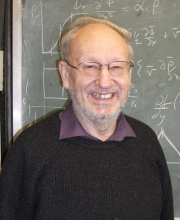
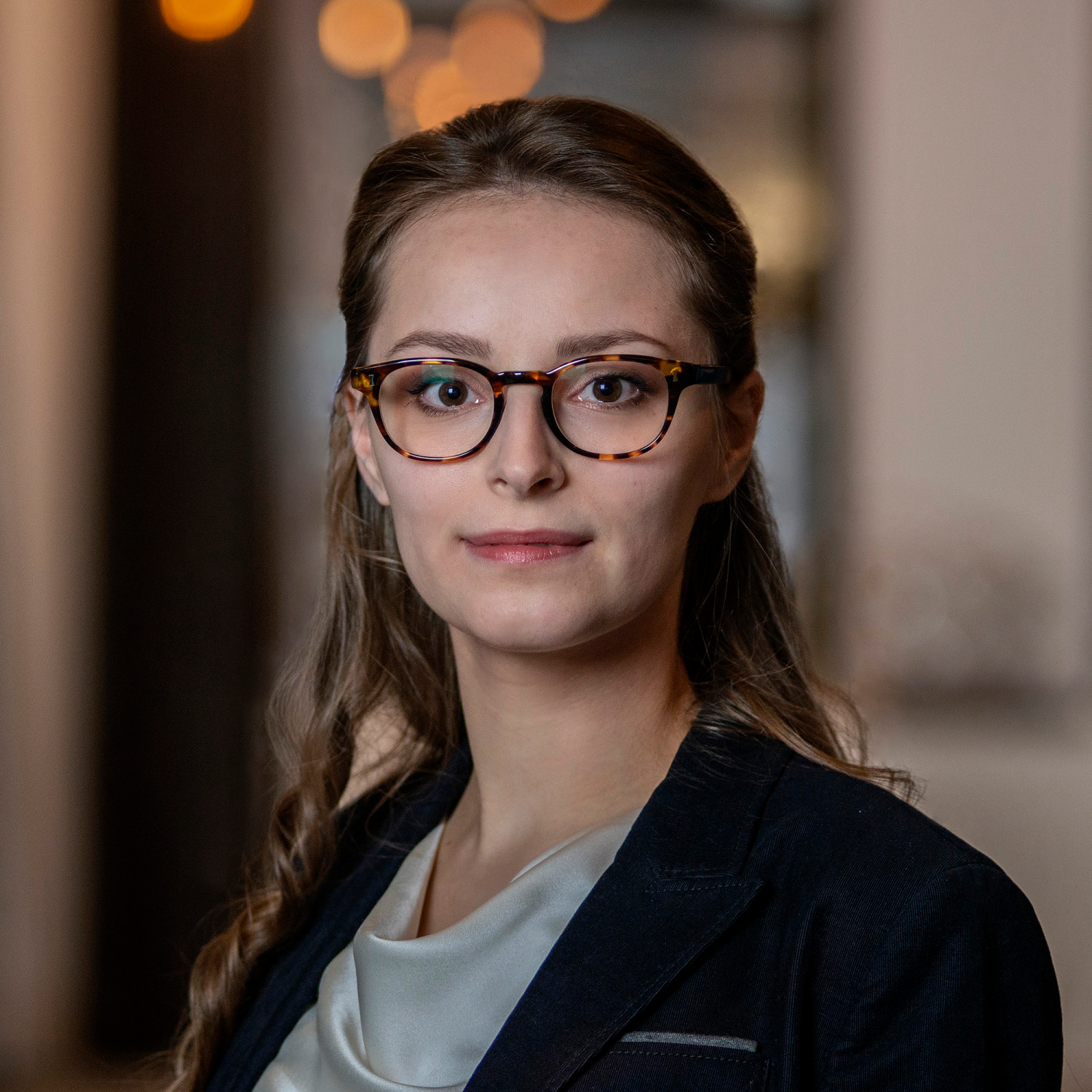
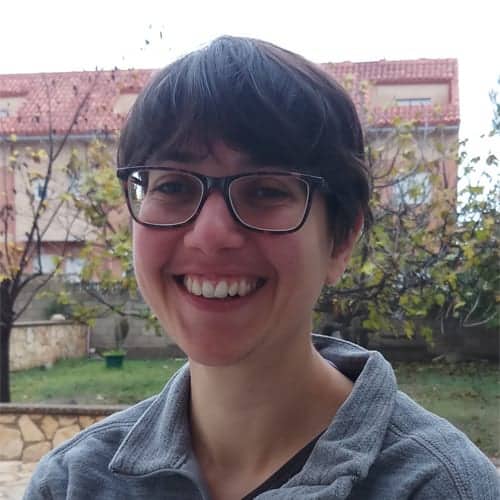
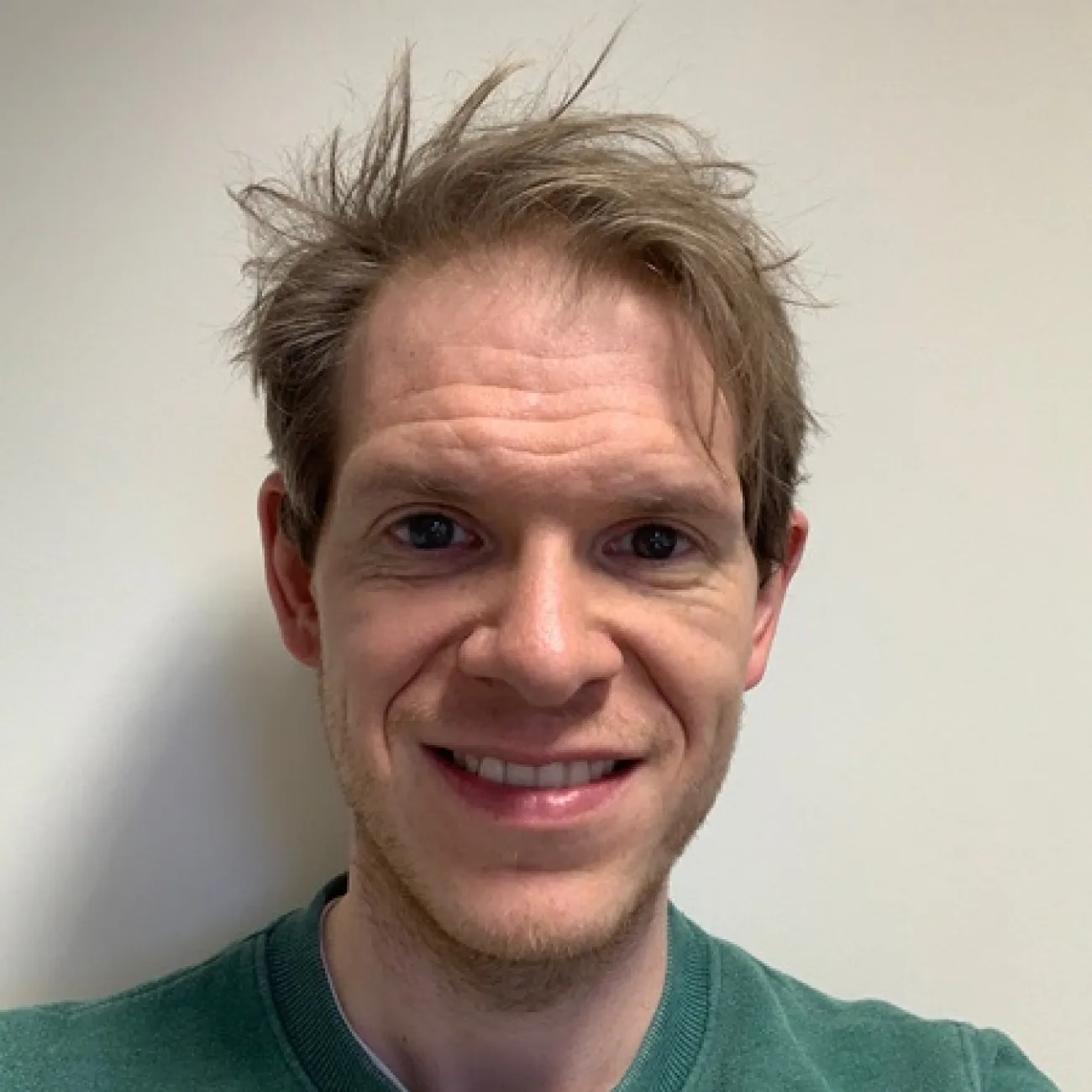
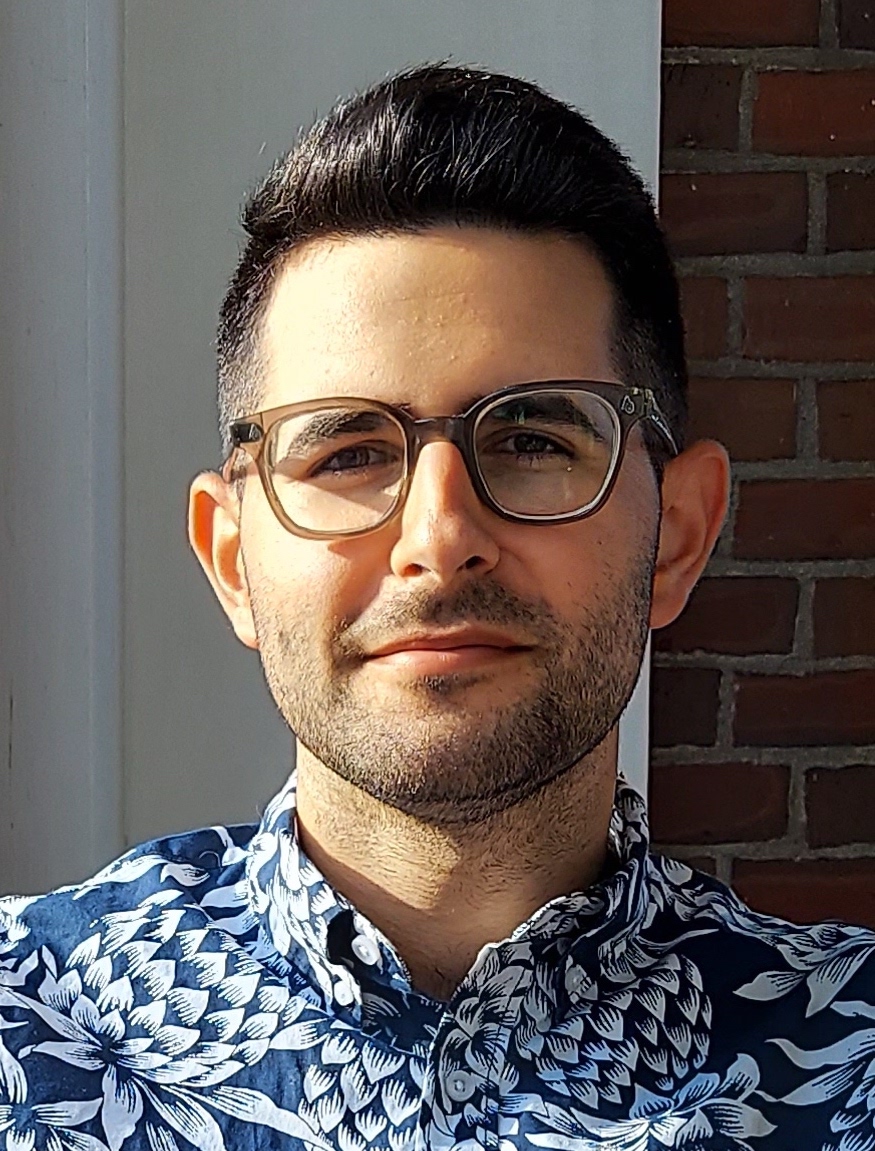
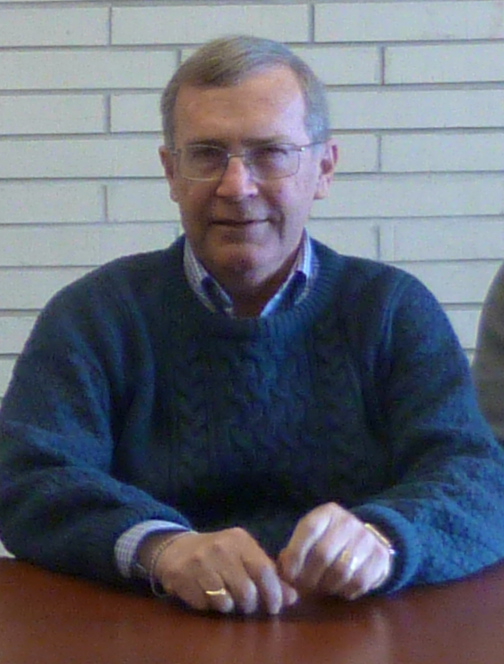
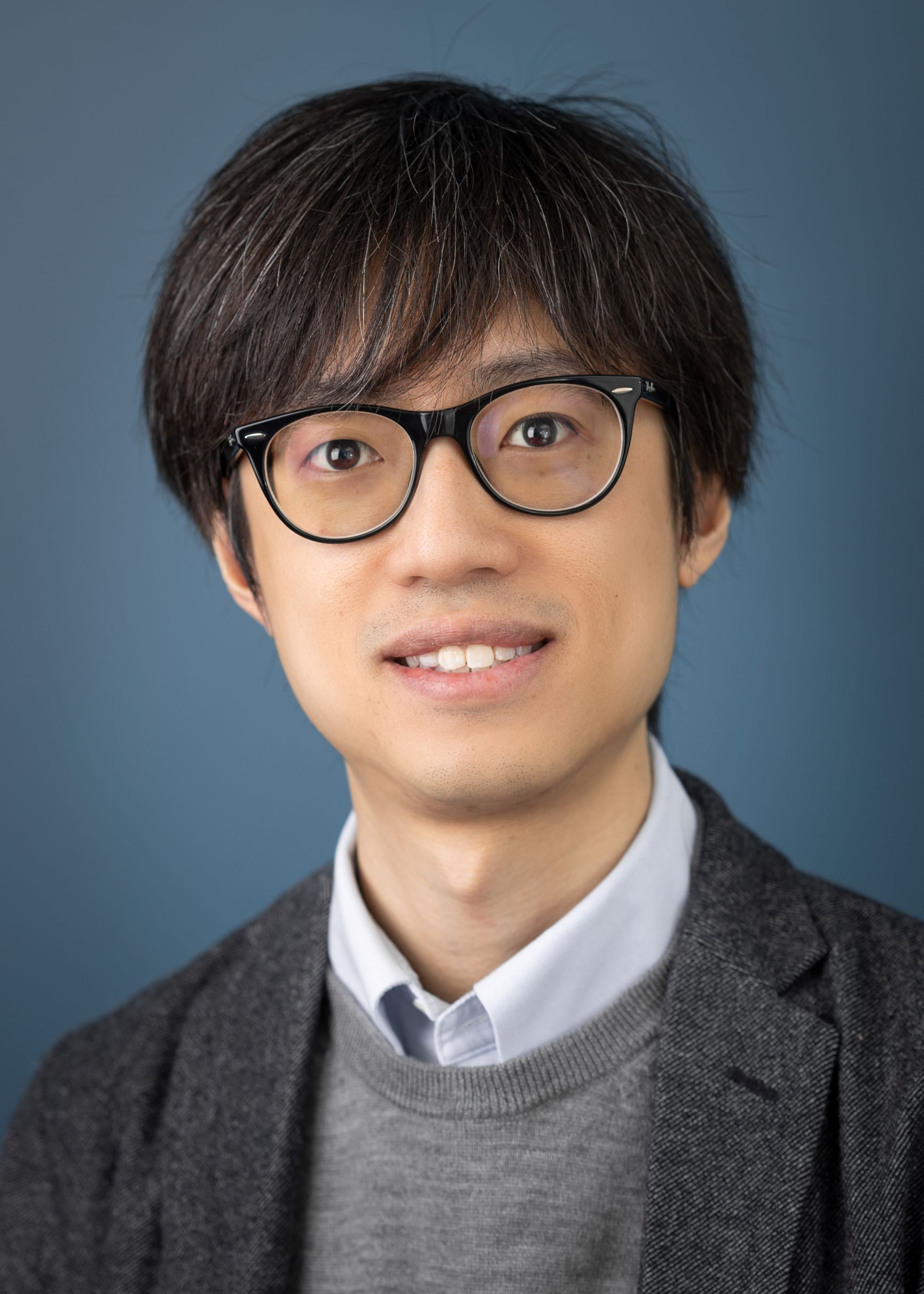
Joakim Sundnes is a Chief Research Scientist and Research Professor at the Department of Scientific Computing, Simula Research Laboratory. He specializes in computational physiology, cardiac biomechanics, and mathematical modeling of cardiovascular systems. Key Research Areas: Cardiac electromechanics, computational fluid dynamics in cardiology, uncertainty quantification in cardiac models, and mechano-electric feedback mechanisms Recent Trends: Focus on patient-specific modeling, left atrial flow dynamics, right ventricular mechanics in pulmonary hypertension, and personalized treatment simulations Scientific Contributions: Active participant in international conferences and editorial work. Co-author of multiple benchmark studies and educational texts on physiological modeling.
Vladimir Rokhlin is the Arthur K. Watson Professor of Computer Science at Yale University, with additional appointments in Applied & Computational Mathematics and Mathematics. His research focuses on fast deterministic and randomized algorithms for computational mathematics, numerical harmonic analysis, and numerical linear algebra. He holds a Ph.D. from Rice University and an M.S. from the University of Vilnius. Key research interests include the development of efficient algorithms for solving integral equations, prolate spheroidal wave functions, and high-accuracy numerical methods. His work has led to breakthroughs in fast multipole methods and low-rank matrix approximations. Rokhlin has been recognized with prestigious awards such as the 2001 Leroy P. Steele Prize, membership in the National Academies of Sciences and Engineering, and the 2014 William Benter Prize. His recent publications emphasize advancements in quadrature formulas, scattering problems, and spectral methods for partial differential equations. His contributions bridge theoretical mathematics and computational science, with applications in electromagnetics, signal processing, and engineering. Current efforts include optimizing algorithms for complex geometries and improving the efficiency of numerical linear algebra techniques.
Michael Baines is an Associate Lecturer in the Department of Mathematics and Statistics at the University of Reading, affiliated with the School of Mathematical, Physical and Computational Sciences. His research focuses on developing advanced numerical methods for solving complex physical problems, particularly in fluid dynamics and environmental modeling. His educational background and professional appointments include: Visiting Professor at University of Leeds Former Director of the Institute of Computational Fluid Dynamics (ICFD) Research interests span: Computational fluid dynamics with emphasis on moving mesh methods Numerical symmetry preservation techniques Finite element applications in nonlinear systems Environmental transport phenomena modeling His recent publications demonstrate a consistent focus on adaptive numerical methods for environmental and physical systems, with evolving applications in climate science and multiphase systems. The work shows increasing sophistication in handling coupled physical phenomena through innovative computational frameworks. Laboratory affiliations: Numerical Analysis and Computational Modelling research group
Fatemeh Yaghoobi is a Doctoral Researcher at Aalto University, affiliated with the Department of Electrical Engineering and Automation under the College of Engineering. She actively contributes to Sensor Informatics and Medical Technology research groups. Research Interests: Her work focuses on algorithm development for state estimation in nonlinear systems, leveraging Bayesian statistics and parallel computing. Key areas include probabilistic numerical methods, Kalman smoothers, and optimization techniques for machine learning applications. Publication Trends: Recent research highlights advancements in parallel-in-time computing for ODE solvers, statistical linear regression for state-space models, and iterative Kalman smoother algorithms. These publications reflect interdisciplinary applications in machine learning, signal processing, and computational mathematics. Contact: Email: fatemeh.yaghoobi@aalto.fi
Thomas Izgin is a researcher at the Institute of Mathematics, University of Kassel. He specializes in numerical analysis, focusing on the development and stability analysis of time integration schemes for differential equations. His work includes contributions to Modified Patankar-Runge-Kutta (MPRK) methods, positivity-preserving algorithms, and symbolic computation techniques like Pommaret bases for involutive Gröbner bases. Teaching: Courses on numerical methods for PDEs, ordinary differential equations, and mathematical modeling across multiple semesters, including block seminars on positivity-preserving integrators. Research: Investigates stability, convergence, and error analysis of numerical schemes, with applications to hyperbolic conservation laws, production-destruction systems, and biomathematics. Also contributes to computational physics through atomistic-continuum modeling of nanoparticle synthesis.
Fruzsina Agocs is an Assistant Professor in Computer Science at the University of Colorado, Boulder. Her research focuses on scientific computing, numerical analysis, and computational physics, particularly developing high-order numerical methods for ODEs/PDEs and early-universe physics. Previously, she was a research fellow at the Flatiron Institute's Center for Computational Mathematics and earned her PhD in cosmology from the University of Cambridge under advisors Anthony Lasenby, Mike Hobson, and Will Handley. She holds an MSci + BA in Physics. Research Highlights: Developed adaptive spectral solvers for oscillatory ODEs (e.g., riccati and oscode libraries). Advanced methods for scattering from periodic boundaries using integral equations. Investigated quantum initial conditions in curved spacetimes for inflationary cosmology. Explored computationally intensive models of closed universes and kinetic dominance in cosmology. Education: PhD in Cosmology, University of Cambridge (2021). MSci + BA in Physics, University of Cambridge. Software Contributions: Lead developer of riccati (adaptive oscillatory ODE solver). Core contributor to GAMBIT , a particle physics/cosmology collaboration tool. Outreach: Volunteer with NYC Audubon's Project Safe Flight to reduce bird-window collisions. Public science talks and articles on topics like meteor showers (in Hungarian).
Dobrik Georgiev is a Lecturer in the Department of Computer Science and Technology within the School of Technology at the University of Cambridge. His research centers on bridging algorithmic reasoning with neural architectures, focusing on how neural networks can execute and generalize algorithmic processes. His primary research interests include: Neural algorithmic reasoning and its applications to combinatorial problems Graph neural networks and hypergraph learning systems Explainable AI through concept-based interpretability Deep equilibrium models for algorithmic execution Biological data analysis using neural architectures Georgiev's publication record demonstrates consistent innovation in neural execution models, with recent work exploring bottlenecks in algorithmic reasoning (2025), multi-solution reasoning frameworks (2024), and generalization beyond synthetic graph models (2023). His research shows strong interdisciplinary connections between theoretical computer science, machine learning, and computational biology. While no formal awards are documented in available sources, his work has established significant contributions to neural algorithmic reasoning frameworks. Georgiev maintains active research collaborations through the Department of Computer Science and Technology's initiatives, particularly in the areas of machine learning and neural architectures. His technical leadership is evident in software contributions like the LENs library for logic-explained networks.
Sara Merino-Aceituno is an Associate Professor at the Faculty of Mathematics, University of Vienna, with prior academic roles at the University of Sussex and Imperial College London. Her research focuses on kinetic theory and mathematical modeling of emergent phenomena in biological, medical, and social systems. PhD in Mathematics, University of Cambridge (2015) MSc in Computer Science and Applied Mathematics, INP Grenoble (2010) BSc in Mathematics, Universitat Politècnica de Catalunya (2009) Her research interests center on understanding how macroscopic patterns arise from microscopic interactions, using tools from partial differential equations, probability, and numerical analysis. She specializes in interacting particle systems, collective dynamics, opinion formation, and cell tissue development. She collaborates closely with experimental biologists to validate and refine her models. The recent publications reflect a consistent focus on kinetic modeling of collective behavior, phase transitions, and multiscale analysis. Her work bridges abstract mathematical theory with concrete applications in biology and social sciences, often involving collaboration with interdisciplinary teams. She develops continuum limits of particle systems and investigates stability, alignment, and pattern formation in complex systems. Sara is actively involved in mentoring and science communication. She has co-authored study guides for students, leads outreach initiatives such as exhibitions at the 'Long Night of Research,' and produces educational videos. She also maintains a blog and YouTube channel to share insights on research, learning, and academic life. Co-authored guide: 'GOOD_STUDY_HABITS.pdf' with Amalio Fernández-Pacheco Created educational video 'Describing Patterns' with filmmaker Sameer Patel Regular contributor to public science events Active blogger on topics including coaching, creativity, and academic mindset She leads a research group called 'The HERD,' which investigates emergence in natural domains, focusing on mathematical models of biological and social systems. Her team includes postdoctoral researchers and students working on kinetic theory, numerical simulations, and interdisciplinary modeling projects.
Dr Jon Cockayne is a Lecturer in Statistics at the University of Southampton's Mathematical Sciences Department. His research focuses on probabilistic numerical methods, Bayesian computation, and statistical computing, particularly in numerical analysis and uncertainty quantification. He co-leads the second-year Statistical Modelling module (MATH2010). Education: Bachelor's in Mathematics from Imperial College London. PhD in Statistics at the University of Warwick under Prof. Mark Girolami, titled Bayesian Probabilistic Numerical Methods . Research Interests: Jon develops probabilistic numerical methods that integrate statistical principles into computational algorithms for uncertainty quantification. His work spans Bayesian linear solvers, radiative transfer modeling, and calibration of machine learning procedures. He collaborates on EPSRC-funded projects like Unifying Probabilistic Computation for PDEs and Linear Systems . Grants & Projects: EPSRC grant for Unifying Probabilistic Computation for PDEs and Linear Systems . Postdoctoral research at the Alan Turing Institute (2017–2019). Advising: Supervises PhD students Zoe Abbott (iPhD AI for Sustainability) and Disha Hegde (Mathematical Sciences). Labs & Teams: Member of the Statistics group and the Statistical Sciences Research Institute (S3RI) at Southampton.
Ao.Univ.Prof.in Gabriela Schranz-Kirlinger is an Associate Professor at TU Wien's Institute of Analysis and Scientific Computing (E 101), part of the Faculty of Mathematics and Geoinformation. She holds a PhD (1987) and habilitation in numerical mathematics (2009) from the University of Vienna. Her research focuses on numerical analysis, differential equations, and biomathematics, with notable contributions to stiff ODE solvers and permanence in ecological systems. She teaches Mathematics I/II for Geodesy, Differential Equations I, and Biomathematics. Active in academic service, she chairs the ÖMG Pupils' Prize jury, co-founded Fem*MA (network for women in mathematics), and advocates for equal treatment and education. Recognized for her teaching excellence, she received the 2019 Geo Education Award. Education: PhD in Mathematics (University of Vienna, 1987) Habilitation: Numerical Mathematics (2009) Key Roles: Jury Chair, Equal Treatment Committee Member, Academic Mentor Research interests include numerical methods for stiff systems, biomathematical modeling, and pedagogical innovation in STEM education. Her work spans applications from ecological dynamics to validated ODE solutions.
Victor Churchill is an Assistant Professor of Mathematics at Trinity College since 2023. He holds a Ph.D. and A.M. from Dartmouth College, an M.S. from New York University's Courant Institute, and a B.A. from Boston College. His research focuses on computational mathematics, scientific machine learning, and image reconstruction, particularly in Bayesian uncertainty quantification for synthetic aperture radar imaging and learning unknown dynamical systems using neural networks. He has held a postdoctoral position at The Ohio State University under Dr. Dongbin Xiu and previously worked at Dartmouth under Dr. Anne Gelb. Research Highlights: His work includes deep learning of PDEs, ensemble prediction for robust neural network training, and chaotic system learning from partial observations. Recent contributions address coarse time-scale observations and uncertainty quantification in SAR imaging. He was awarded the SIAM Science Policy Fellowship (2023-2024) to engage with federal science policy advocacy. Teaching: He teaches computational science courses at both undergraduate and graduate levels, integrating his research into lectures through case studies and data-driven examples. His pedagogical approach emphasizes applied computational mathematics and real-world problem-solving. Affiliations: Previously affiliated with The Ohio State University as a Visiting Assistant Professor of Scientific Computation. Active in computational math communities, including SIAM policy engagement. Personal Interests: An avid runner with marathon personal bests, he also enjoys bonsai cultivation, architectural design, and animal care. His unconventional hobbies include experimenting with hair color transformations.
Wayne Enright is a Professor of Computer Science at the University of Toronto, specializing in numerical analysis and scientific computing. His research focuses on numerical methods for ordinary differential equations (ODEs), integro-differential equations (IDEs), and delay differential equations (DDEs), with an emphasis on reliability, error analysis, and software development. He has held leadership roles, including Chair of the Department of Computer Science (1993–1998) and President of the Canadian Applied and Industrial Mathematics Society (CAIMS). Enright’s contributions include advancements in numerical software like MUSN and pioneering work on defect control and sensitivity analysis. He has received the IFIP Silver Core Award and contributed to international conferences and editorial boards. His work bridges theoretical foundations with practical applications in computational biology, engineering, and stochastic modeling. Education: BSc in Mathematics (1968, University of British Columbia) MSc in Mathematics (1969, University of Toronto) PhD in Computer Science (1972, University of Toronto) Research Interests: Enright’s work centers on developing robust numerical methods for solving ODEs, IDEs, and DDEs. He emphasizes reliable error estimation, algorithm efficiency, and software implementation. Key areas include: - Superconvergent interpolants for collocation methods - Sensitivity analysis for delay differential equations - Contouring of PDE solutions on unstructured meshes - Stochastic models in biochemical kinetics Publications: Over 150 peer-reviewed articles, including seminal works on numerical methods for differential equations and computational tools. Recent trends focus on enhancing algorithm reliability, adaptive time-stepping, and exploiting problem structure for efficiency. Awards & Recognition: IFIP Silver Core Award Past President, CAIMS Executive Member, IFIP WG2.5 on Numerical Software Editorial Board Member, ACM Transactions on Mathematical Software Grants & Collaborations: Extensive funding from NSERC and international collaborations. Leads projects integrating numerical methods with real-world applications in computational science and engineering. Labs & Teams: Head of the Numerical Analysis and Scientific Computing Group at the University of Toronto, fostering interdisciplinary research in computational mathematics and software development.
Alessia Lucca serves as a Research Fellow in the Department of Physics and Tutor for the Department of Civil, Environmental and Mechanical Engineering at the University of Trento. Her research develops advanced numerical methods for simulating blood flow dynamics in elastic and viscoelastic vascular networks, with direct applications to cardiovascular diagnostics including Fractional Flow Reserve (FFR) prediction. She actively contributes to graduate education through the Environmental and Land Engineering program. Her primary research domains include: Computational Fluid Dynamics for biological systems Numerical analysis of partial differential equations Finite volume and finite element method development Cardiovascular biomechanics modeling Scientific computing for medical applications Recent publications (2023-2025) demonstrate consistent innovation in semi-implicit and hybrid numerical schemes for blood flow simulation, particularly addressing challenges in vessel elasticity modeling and clinical FFR prediction. Her work bridges mathematical rigor with practical cardiovascular medicine through collaborations with leading researchers like Michael Dumbser and Lucas Omar Muller. The research shows strong emphasis on computational efficiency and physiological accuracy in vascular network simulations. Dr. Lucca teaches the graduate course Numerical methods for the environment , covering theoretical and practical aspects of ODE/PDE solvers for geophysical systems. The course prepares students for advanced hydrodynamics studies while emphasizing real-world limitations and potentials of environmental modeling.
Ting-Kam Leonard Wong is an Associate Professor jointly appointed at the Department of Statistical Sciences and the Department of Computer and Mathematical Sciences at the University of Toronto and University of Toronto Scarborough , respectively. He also holds a non-budgetary cross-appointment in the Department of Mathematics since May 2025. Education: PhD in Mathematics, University of Washington (2016) MPhil in Mathematics, The Chinese University of Hong Kong (2011) Research Interests: His research lies at the intersection of mathematical finance, probability theory, optimal transport, and information geometry . He explores deep theoretical questions in stochastic processes and their applications in financial modeling, market analysis, and data science. His work often involves developing geometric frameworks to understand complex probabilistic systems, including the study of Wasserstein distances, Bregman divergences, and their roles in optimization and inference. Research Trends: Across his recent publications, a clear trend emerges toward integrating geometric methods with stochastic modeling and financial applications . He has contributed to the development of new divergence measures, optimization algorithms, and portfolio frameworks. His work often bridges theoretical probability with practical tools in finance and machine learning, such as portfolio optimization, PCA under transport metrics, and scalable inference methods. Awards & Funding: NSERC Discovery Grants (2019, 2025) Connaught New Researcher Award (2020) Data Science Institute Seed Funding for Methodologists (2022) Best Paper Award, Geometric Science of Information Conference (2019) Advising & Grants: He currently supervises several PhD students including Elijah French , Madhu Gunasingam , and Amanjit Kainth . He previously co-supervised Steven Campbell , who successfully defended in 2023. His research is supported by multiple federal and institutional grants, reflecting his active role in advancing methodological research in statistics and finance. Editorial & Service Roles: He serves as an Associate Editor for the journal Information Geometry (2022–present), actively contributing to the dissemination of research in geometric methods for data science and inference.
Andrea Pozzer serves as Group Leader in the Atmospheric Chemistry department at the Max Planck Institute for Chemistry in Mainz, Germany, a position she has held since July 2012. She additionally holds an Adjunct Associate Professor position at The Cyprus Institute since April 2022 and teaches Global Biogeochemical Cycles at the International Centre for Theoretical Physics in Trieste. Her research focuses on atmospheric composition, climate interactions, and air quality using advanced numerical modeling approaches spanning from box models to Earth system models. Dr. Pozzer's research interests center on atmospheric chemistry and its interactions with physical mechanisms controlling gas and aerosol transport. Her group employs multiple modeling approaches to study atmospheric composition change, air quality impacts, and planetary health. Key research areas include biogeochemical cycles, climate-chemistry interactions, and the development of numerical models for interpreting observational data from field campaigns and satellite remote sensing. The group's work spans from process studies at specific locations to global-scale Earth system interactions. Her recent publications reveal a strong focus on air pollution health impacts, atmospheric oxidant chemistry changes from land cover conversion, biogenic volatile organic compounds in tropical regions, and advanced modeling techniques for chemical processes. The research demonstrates significant interdisciplinary connections between atmospheric science, public health, and climate policy, with particular emphasis on regional pollution impacts across Europe, Asia, and the Amazon basin. Editorial Board Member of Atmospheric Chemistry and Physics Editorial Board Member of Elementa Member of DKRZ (Deutsches Klimarechenzentrum) User Group Italian Scientific Habilitation to Full Professor for Geophysics (2016) Italian Scientific Habilitation to Associate Professor for Astrophysics (2016) Dr. Pozzer has supervised numerous students and postdoctoral researchers, many of whom have gone on to contribute significantly to atmospheric science. Her group has received computational resources through DKRZ and MPCDF supercomputing centers. Current teaching includes Atmospheric Modeling at The Cyprus Institute and Global Biogeochemical Cycles at ICTP. Her group maintains active collaborations across Europe and internationally, particularly with institutions in Italy and Cyprus. The Pozzer Group develops and applies numerical models ranging from box models to global Earth system models to analyze observational data. They maintain strong connections with field campaign data and satellite observations, with particular focus on understanding atmospheric composition changes and their health and climate implications. The group actively participates in international modeling initiatives and contributes to community modeling frameworks like MESSy.