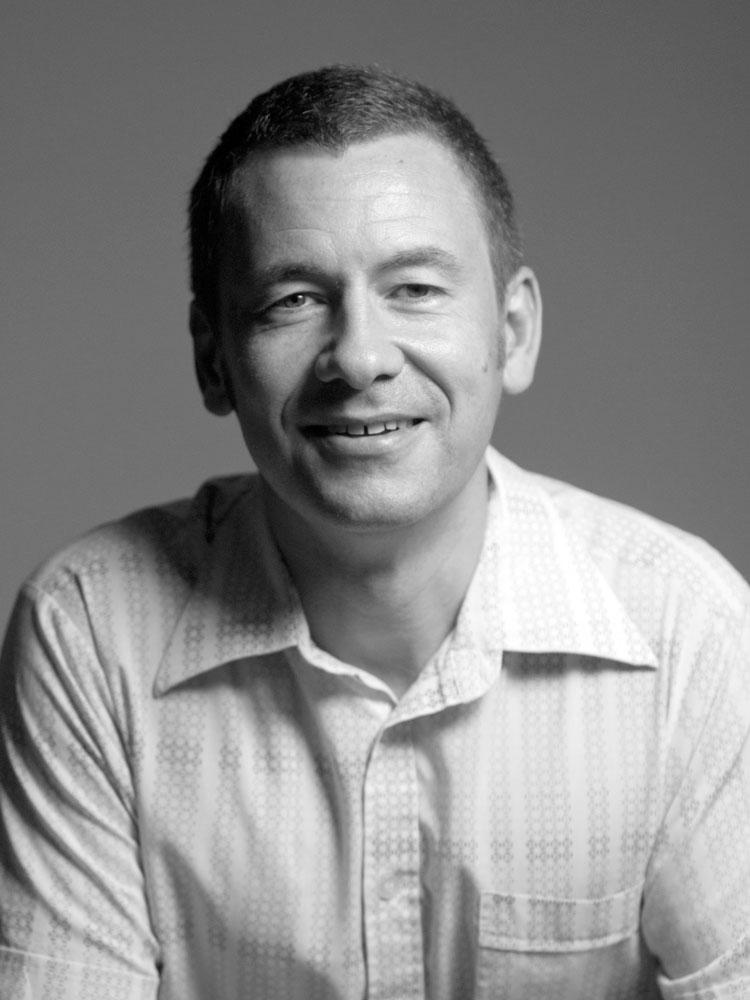
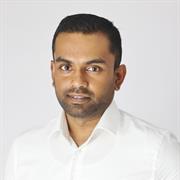
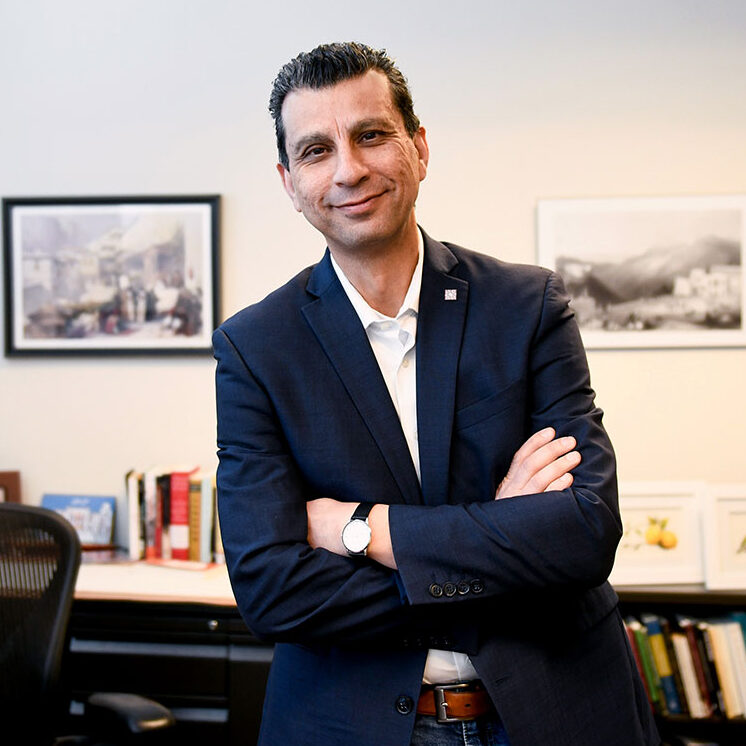
Morteza Fayazi is an Assistant Professor in the Department of Electrical and Computer Engineering at the University of Utah, with an adjunct position in the Kahlert School of Computing. His research focuses on Electronic Design Automation (EDA), applying machine learning to automate analog and mixed-signal circuit design, and developing high-performance computing systems. He holds a B.Sc. from Sharif University of Technology, and M.S.E./Ph.D. degrees from the University of Michigan. His research interests include AI-driven EDA, RF/circuit automation, and energy-efficient processors. Key achievements include the MEDAL lab’s work on terahertz radars, systolic-array processors (e.g., DAP and Versa), and open-source frameworks like FASCINET and Tablext. He has received awards such as the 2024 College of Engineering Dean’s ETR Fund and the 2017 Outstanding Undergraduate Thesis Award. Teaching responsibilities include multiple iterations of the Digital System Design course (ECE/CS 3700). His work spans over 15 peer-reviewed articles in IEEE Transactions, ACM, and top conferences like ICCAD and VLSI-SOC, emphasizing automation, efficiency, and AI integration in hardware design.
Simon Clematide is an Academic Associate at the Department of Computational Linguistics within the Faculty of Arts and Social Sciences at the University of Zurich, where he has been actively engaged in research and teaching since the early 2000s. His work spans computational linguistics, natural language processing, and text mining with a particular focus on historical document processing, multilingual applications, and practical implementations of machine learning techniques. Dr. Clematide's research interests encompass Natural Language Processing , Computational Linguistics , Text Mining , Machine Learning , Sentiment Analysis , Named Entity Recognition , and Historical Document Processing . His interdisciplinary approach bridges computer science with humanities applications, particularly in analyzing historical newspapers and multilingual corpora. His work demonstrates strong expertise in developing practical NLP systems that address real-world challenges in document analysis and language processing. Over the past five years, his publication record reveals a consistent focus on historical text processing, multilingual NLP applications, and shared task competitions. His research shows particular strength in named entity recognition for historical documents (CLEF HIPE shared tasks), grapheme-to-phoneme conversion (SIGMORPHON shared tasks), and OCR post-processing for historical newspapers. The interdisciplinary nature of his work is evident in collaborations spanning computer science, linguistics, history, and geography. Dr. Clematide has been instrumental in organizing and participating in numerous shared tasks including CLEF-HIPE (2020-2022), SIGMORPHON (2017-2021), and CoNLL-SIGMORPHON (2017-2020), where his team achieved multiple first and second places. His teaching portfolio includes courses on Text Mining, Machine Learning for NLP, Deep Learning in Language Technology, and Sentiment Analysis, demonstrating his commitment to educating the next generation of computational linguists. He has led or participated in diverse research projects including NFP 77, impresso, Citizen Linguistics Projects (tonaccent.ch, dindialaekt.ch), SPARCLING, KTI project with Eurospider, and biomedical text mining initiatives (MANTRA, SASEBio). His interdisciplinary work extends to collaborations with material scientists and social scientists on concept extraction and text zoning applications. Dr. Clematide has contributed to the development of several computational tools and resources, including finite-state morphology systems for Rumansh Grishun, Standard German, and Swiss German, as well as the CLab web-based virtual laboratory for computational linguistics. His work on crowdsourcing OCR ground truth for heritage corpora demonstrates practical solutions to real-world digitization challenges.
Prof. Dr. Thomas Stäcker is a Part-time Professor for Digital Humanities at the Department of Information Sciences, University of Applied Sciences Potsdam. He serves as Director of the University and State Library Darmstadt (since 2017) and Deputy Director of the Herzog August Library Wolfenbüttel (since 2009). His career spans roles as a librarian at Herzog August Bibliothek (since 1998) and Johannes a Lasco Library in Emden (1997-1998). Education: Master's degree in History of Philosophy and Latin (1991), doctorate (1994) from TU Braunschweig, University of Essex, and University of Osnabrück Research: Digital Humanities, digitization of early printed books, XML/TEI encoding, OCR technologies, and cultural heritage preservation Leadership: Key roles in major digitization projects (e.g., VD17, Dünnhaupt Digital) and digital library development His work bridges library science with scholarly research, emphasizing open access, digital editions, and metadata standards. He has authored/co-authored numerous monographs, including the 2015 'Grenzen und Möglichkeiten der Digital Humanities' and the 2016 Festschrift chapter on open access. Stäcker co-edited digital editions like Christoph Heidmann's Oratio de Bibliotheca Julia (2013) and maintained active engagement through blogs like 'dhd-blog.org' (2015 post on humanities research data).
Dr. Milena Dobreva is a Senior Lecturer in Information Behavior at the Department of Computer and Information Sciences, University of Strathclyde, Scotland. She holds roles in the Faculty of Science and is affiliated with the Strathclyde iSchool. Her work focuses on innovation diffusion in cultural and scientific heritage sectors, media literacy, and combating misinformation. She has led projects funded by the European Commission, including the Bulgarian Romanian Observatory of Digital Media and the LEARN & EXCHANGE initiative to develop international MOOCs on digital transformation. Her research explores user needs in digital heritage, open innovation tools for cultural institutions, and digital skills training in Sub-Saharan Africa. Professional Activities Principal Investigator on projects addressing digital divide, GLAM innovation labs, and disinformation policy. Member of the Scientific Board of DARIAH and the Europeana Network Association. Peer reviewer for journals like Transformations: A DARIAH Journal and conferences such as ACM/IEEE-CS JCDL. Research Interests Innovation labs for GLAM sectors (Galleries, Libraries, Archives, Museums). Data spaces and digital transformation frameworks for cultural heritage. Information behavior in the context of disinformation and media literacy. Open science infrastructures and policy implementation. Grants & Projects Bulgarian Romanian Observatory of Digital Media (2022–2025): Combats disinformation through regional collaboration. LEARN & EXCHANGE (2022–2024): Develops multilingual MOOCs for digital transformation skills. eCHOIng (2021–2024): Uses open innovation to revitalize cultural heritage institutions. Labs & Collaborations Co-leads GLAM innovation labs research, focusing on digital divide mitigation and heritage digitization. Active in the CEDCHE (Common European Data Space for Cultural Heritage) initiative.
Els Lefever is an Associate Professor at Ghent University, where she works with the LT3 (Language and Translation Technology) research team. Her position focuses on computational linguistics and natural language processing research, with strong ties to both theoretical and applied aspects of language technology. Dr. Lefever earned her PhD in Computer Science from Ghent University in 2012 with her dissertation titled "ParaSense: Parallel Corpora for Word Sense Disambiguation." Her academic journey began as a computational linguist at the R&D department of Lernout & Hauspie Speech Products before transitioning to academia. Els Lefever's research spans multiple areas within computational linguistics with particular expertise in multilingual natural language processing. Her work focuses on computational semantics, cross-lingual word sense disambiguation, and multilingual terminology extraction. Recent research directions include automatic detection of irony in online text, argumentation mining in social media, sentiment analysis of financial news, language modeling for low-resourced languages, and computational approaches to Byzantine Greek epigrams. Her research demonstrates a consistent pattern of bridging theoretical computational linguistics with practical applications across diverse language domains and historical periods. Professor Lefever actively supervises PhD research on several cutting-edge topics including terminology extraction from comparable corpora, event extraction and sentiment mining of financial news, language modeling for low-resourced languages, argumentation mining in social media, and the automatic detection of links between Byzantine Greek epigrams. Her supervision portfolio demonstrates her commitment to advancing multiple frontiers of computational linguistics simultaneously. As an educator, Professor Lefever teaches courses in Terminology and Translation Technology, Language Technology, Localisation, Digital Text Analysis, and Digital Humanities. Her teaching reflects her research interests, providing students with both theoretical foundations and practical skills in language technology applications. The LT3 research group, where Professor Lefever is a key member, maintains strong connections with both academic and industry partners. The group has participated in numerous international conferences and shared tasks including SemEval competitions across multiple years, demonstrating consistent contributions to benchmark datasets and evaluation methodologies in natural language processing.
Dr. Tobias Strauß is a Lecturer at the Institute of Mathematics, Faculty of Mathematics and Natural Sciences, University of Rostock. He teaches courses such as Elementary Algebra and Number Theory and Analytical Geometry, focusing on foundational mathematical concepts and their applications. His research interests span historical document analysis, machine learning, and neural networks, with a particular emphasis on handwritten text recognition (HTR) and computational solutions for cultural heritage digitization. He actively contributes to the Mathematics Society RHO eV, supporting students in mathematics competitions and enrichment programs. Dr. Strauß’s research combines computer vision and machine learning to address challenges in document analysis, including text line detection, cursive script recognition, and keyword search in historical manuscripts. His work also explores semi-supervised learning techniques and neural network architectures tailored for HTR tasks. Through RHO eV, he promotes mathematics education through weekend seminars, district clubs, and game-based learning activities, fostering student engagement and problem-solving skills. His publications highlight advancements in HTR systems, such as the CITlab Recognition & Retrieval Engine, and address topics like regular expression-based decoding and Arabic handwriting recognition. These contributions underscore his expertise in bridging theoretical mathematics with practical applications in digital humanities and education. Dr. Strauß can be contacted via tobias.strauss@uni-rostock.de or through the university’s chat platform. No formal awards or grants are noted in the provided materials, though his involvement in international competitions (e.g., ICFHR, ICDAR) reflects his scholarly engagement.
Ahmed Sabir is a postdoctoral researcher at the Institute of Computer Science , University of Tartu , focusing on AI Ethics (biases, fairness, and explainability in Large Language Models). He earned his Ph.D. in Computer Science from Universitat Politècnica de Catalunya (BarcelonaTech) in 2020 and an MSc from Kanagawa Institute of Technology under the Masuda AI lab. Current Research : Biases in LLMs, Explainable AI, Multimodal Fact-Checking Past Work : Gesture recognition, OCR correction via visual semantics, Image captioning Research Interests span Natural Language Processing , Computer Vision , and their intersection in Vision-Language Models and AI Ethics . His work emphasizes Context-aware multimodal learning Bias measurement and mitigation Efficient post-processing techniques Scientific Contributions include 15+ peer-reviewed publications at venues like ACL, EMNLP, CVPRW, and COLING, with datasets and re-ranking frameworks for vision-language tasks. Notable achievements: Driven advancements in semantic relatedness for OCR correction Developed visual grounding techniques for captioning Created benchmark datasets for text spotting Explored gender bias in genderless languages Technical Expertise includes Measurement electronics for industrial tools LaTeX thesis template development Participated in 48-hour Mobility Hackathon (2017)
Dr. Ruwan Tennakoon is a Senior Lecturer in Artificial Intelligence at RMIT University's School of Computing Technologies in Melbourne, Australia. He holds a BSc (Hons) in Electrical and Electronics Engineering from the University of Peradeniya and a PhD in Computer Vision from Swinburne University of Technology (2015). Prior to his current role, he held post-doctoral positions at RMIT School of Engineering and IBM Research. His research focuses on robust computer vision, particularly in medical imaging and industrial automation. Key areas include distribution shift challenges, large vision foundation models, and robust algorithms for low-level vision tasks. His work spans applications like medical image analysis, autonomous systems, and defect detection in manufacturing. Ruwan has supervised numerous research projects, including those on threat detection, medical imaging AI, and industrial automation. He teaches courses in computer vision and machine learning, emphasizing practical applications. His research has been published in top-tier venues such as ACM Transactions on Intelligent Systems and Technology and Medical Image Analysis .
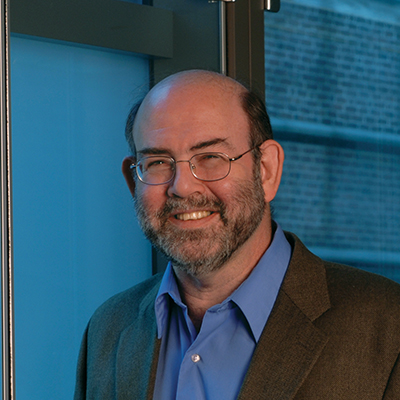
Mitch Marcus is a Professor Emeritus in the Department of Computer and Information Science at the University of Pennsylvania's School of Engineering and Applied Science. He earned his Ph.D. from MIT in 1978 and joined Penn in 1987 after working at AT&T Bell Laboratories. His research focuses on statistical natural language processing and cognitively plausible models for automatic acquisition of linguistic structure. Dr. Marcus created and led the Penn Treebank Project, which revolutionized natural language parsing accuracy. He has served as PI on multiple major projects including DARPA LORELEI and GAILA AIX, focusing on unsupervised morphology acquisition and child language acquisition simulations. Awards: Fellow of American Association for Artificial Intelligence (1992) Founding Fellow of Association for Computational Linguistics (2011) Advising: His former PhD students hold positions at institutions including MIT, Johns Hopkins, Google, and Microsoft Research. Research groups: Directed the Penn Treebank Project and co-led the OntoNotes Project. Currently collaborates on natural language understanding for human-robot interaction.
Jinying Chen, PhD is an Assistant Professor in the Department of Population and Quantitative Health Sciences at UMass Chan Medical School, specifically within the Division of Health Informatics and Implementation Science. She is affiliated with the T.H. Chan School of Medicine and contributes to the UMass Cancer Center's research initiatives. Her educational background includes: BS in Computer Science & Technology from Tsinghua University, Beijing, China ME in Computer Science & Technology from Tsinghua University, Beijing, China MS in Computer & Information Science from University of Pennsylvania, Philadelphia, PA, USA PhD in Computer & Information Science from University of Pennsylvania, Philadelphia, PA, USA Postdoctoral training in Health Informatics and Implementation Science from University of Massachusetts Medical School, Worcester, MA, USA Dr. Chen's research focuses on applying information technologies, particularly natural language processing and machine learning, to healthcare problems. Her work spans several key areas including electronic health record analysis, cancer prevention and care, smoking cessation interventions, and predictive modeling for patient outcomes. She develops methods to extract meaningful information from clinical notes, identify important medical terms for patients, and create systems that improve patient understanding of their health information. Her research has significant implications for improving healthcare delivery, patient engagement, and clinical decision support systems. Dr. Chen's publication history reveals a strategic evolution from foundational computational linguistics research toward increasingly healthcare-focused applications. Her recent work (2019-2021) emphasizes patient-centered NLP applications in electronic health records, with particular focus on understanding patient-reported outcomes, pain management, and chronic disease care. She has developed innovative approaches for medical term ranking, hypoglycemia detection from patient messages, and linking medical terminology to lay definitions, demonstrating both technical expertise and clinical relevance. She maintains active collaborations with prominent researchers including Thomas Houston, Rajani Sadasivam, and David McManus, with publications appearing in high-impact journals such as Journal of Medical Internet Research and BMC Health Services Research. Her research bridges the gap between advanced computational techniques and real-world healthcare challenges, with particular emphasis on making health information more accessible and actionable for patients and providers.
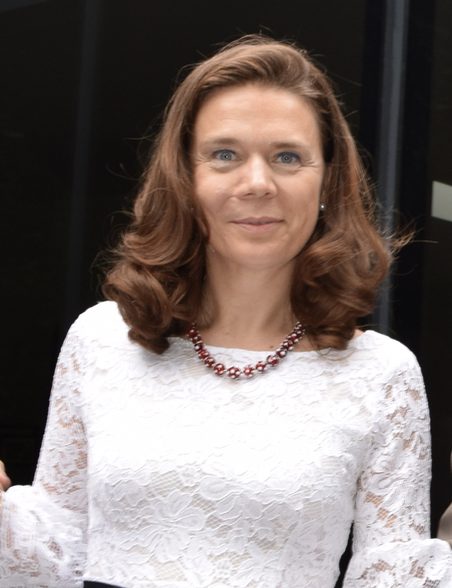
Veronique Hoste is a Full Professor of Computational Linguistics at Ghent University's Faculty of Arts and Philosophy , where she serves as Department Head of the Department of Translation, Interpreting and Communication and Director of the LT3 Language and Translation Technology Team . Her work bridges machine learning with natural language processing, focusing on semantics, discourse modeling, and practical applications in emotion detection, irony recognition, and customer service dialogue analysis. PhD in Computational Linguistics from University of Antwerp (2005) 2023-2024: Francqui Chair at Université Libre de Bruxelles 2024: Elected to Royal Flemish Academy of Belgium (KVAB) Research Interests: Specializes in machine learning approaches to coreference resolution, sentiment analysis, and multimodal emotion detection. Leads projects like FlandersAI (empathy in conversational agents), METRICS (emotion trajectories in service dialogues), and SENTiVENT (financial event extraction). Develops high-quality datasets (e.g., EmotioNL , ENCORE ) for broader NLP community use. Recent Publications span Dutch social media irony detection, Classical Chinese poetry sentiment analysis, and multimodal emotion datasets. Collaborates on interdisciplinary initiatives like NewsDNA (news recommendation) and SentEMO (commercial sentiment analysis). Scientific Awards Francqui Chair (2023-2024) KVAB Membership (2024) Outreach includes co-founding AlfaSent (LT3 spin-off for customer feedback analysis) and authoring the first Dutch-language NLP book Taaltechnologie Ontrafeld (2024). Coordinates AI education initiatives like the AI at School project.
Dr. Akram Khater is a Professor of History and holds the Khayrallah Chair in Diaspora Studies at North Carolina State University, where he also directs the Khayrallah Center for Lebanese Diaspora Studies. A native of Lebanon (born 1960), he earned a B.S. in Electrical Engineering from California Polytechnic State University, followed by M.A. and Ph.D. degrees in History from the University of California, Santa Cruz and Berkeley, respectively. His expertise spans Middle East Studies, migration and diaspora, gender, nationalism, religious history, and digital humanities. He has authored influential books like Inventing Home: Emigration, Gender and the Making of a Lebanese Middle Class and edited the International Journal of Middle East Studies . His research often bridges academic scholarship with public engagement, including a PBS documentary on Lebanese communities in North Carolina and major museum exhibitions like The Lebanese in America . Khater has received notable accolades for teaching and research, including awards from NC State and fellowships from the National Humanities Center and Fulbright Foundation. His work critically examines how migration reshapes identity, and how religious and cultural practices evolve in diasporic contexts. Education: B.S., Electrical Engineering, California Polytechnic State University M.A., History, UC Santa Cruz Ph.D., History, UC Berkeley Key Roles: Director, Khayrallah Center for Lebanese Diaspora Studies Editor, International Journal of Middle East Studies Grants & Fellowships: National Humanities Center Fellowship (20XX) American Philosophical Society Grant (20XX) Council of American Overseas Research Centers Award Public Engagement: Over 300 public lectures on Middle Eastern history Curator of widely toured exhibitions
Leonhard Wachutka is a Postdoctoral Researcher in the Chair of Computational Molecular Medicine at the Technical University of Munich (TUM) since 2020, having previously completed his PhD in the same chair from 2016 to 2020. Education: Dr. rer. nat. in Computational Molecular Medicine, Technical University of Munich, 2020 M.Sc in Physics, LMU Munich, 2013-2015 B.Sc in Physics, LMU Munich, 2009-2012 His research integrates computational biology, genomics, and molecular medicine with a focus on RNA metabolism, splicing kinetics, and cancer genomics. He develops machine learning and statistical methods for analyzing high-throughput sequencing data, particularly RNA-seq, to investigate gene regulation mechanisms, mitochondrial function, and disease pathways. His interdisciplinary approach bridges physics, molecular biology, and computer science to address complex biomedical questions. Publication trends reveal consistent innovation in computational genomics tools, including methods for cancer driver gene detection, RNA-seq aberration analysis, splicing kinetics modeling, and mitochondrial respiration quantification. His work spans cancer genomics, RNA biology, and systems biology, with strong emphasis on translational applications for understanding disease mechanisms. Scientific Awards: No awards, fellowships, or medals are mentioned in the provided text. Advising and Grants: No information is available regarding student advising or independent research grants. As a postdoctoral researcher, he contributes to projects led by principal investigator Prof. Julien Gagneur within the research group. Labs and Teams: Wachutka is embedded in Prof. Julien Gagneur's research group within the Chair of Computational Molecular Medicine at TUM. The team actively teaches courses including "Machine Learning for Regulatory Genomics" and "Computational Modelling for System Genetics," while conducting cutting-edge research at the intersection of machine learning, regulatory genomics, and molecular medicine.
Vera Danilova is a Postdoctoral Research Fellow at Uppsala University's Department of History of Science and Ideas, specializing in computational approaches to historical text analysis. Her work bridges digital humanities and natural language processing, with a focus on extracting meaningful patterns from historical periodicals and archives. Her primary research interests include: Genre classification in historical magazines (1875-1990) Post-OCR correction using large language models Cross-genre transfer learning in dependency parsing Topic modeling for medical history periodicals Development of multilingual NLP resources Recent publications reveal a strong trajectory in applying machine learning to historical document analysis, particularly in genre identification and text restoration for German and Russian periodicals. Her work frequently addresses challenges in historical OCR output and develops specialized tools like UD-MULTIGENRE for linguistic annotation. No scientific awards were documented in the provided sources. Information regarding academic advising, grant funding, or laboratory affiliations was not present in the available materials.
Gavino Scala serves as a Post-Doctoral Assistant at the Institute of Italian Studies within the Faculty of Communication, Culture and Society at the University of Italian Switzerland (USI), collaborating since March 2025 on the project "Fable, Emblem, Poem, Performance: Renaissance Word and Image Tales" under Professor G. Cirnigliaro. Her academic credentials include: PhD in Romance Philology from the University of Siena (2021), jointly supervised by the University of Zurich Certificat de spécialisation en humanités numériques (Digital Humanities Specialization Certificate) from the University of Geneva (2024) Dr. Scala's research integrates digital methodologies with medieval textual scholarship, specializing in critical editions of specula principis (mirrors for princes) and specula dominarum (mirrors for noblewomen). She examines political treatises like Egidio Romano's De regimine principum and its translations, French court propaganda (13th-14th centuries), ambassadorial literature (13th-16th centuries), and law-literature intersections in medieval contexts. Her digital humanities expertise focuses on OCR-HTR systems for medieval manuscript processing and digital edition workflows. Her seminal 2024 monograph on Henri de Gauchy's Livre du gouvernement des roys et des princes exemplifies her hybrid philological-digital approach to manuscript tradition analysis. This work anchors her publication record in medieval French political literature studies, emphasizing textual transmission, editorial methodology, and historical-linguistic evolution within didactic genres. No scientific awards or honors are documented in the available records. Dr. Scala participates in externally funded research projects without supervision responsibilities: previously in the "Les « traités d'ambassadeurs »" initiative (Universities of Fribourg/Geneva) under Professor N.-L. Perret, and currently in USI's Renaissance interdisciplinary project. Her grant involvement centers on collaborative team-based research rather than principal investigator roles. She operates within the Institute of Italian Studies' research ecosystem at USI, building on prior collaborations with medieval studies teams at Fribourg and Geneva. Current work emphasizes digital textual scholarship within Renaissance cultural production frameworks, though dedicated laboratory infrastructure isn't specified.