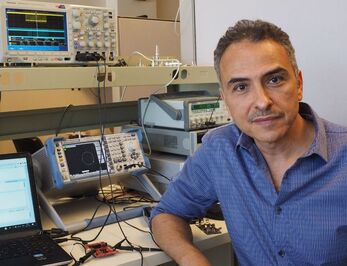
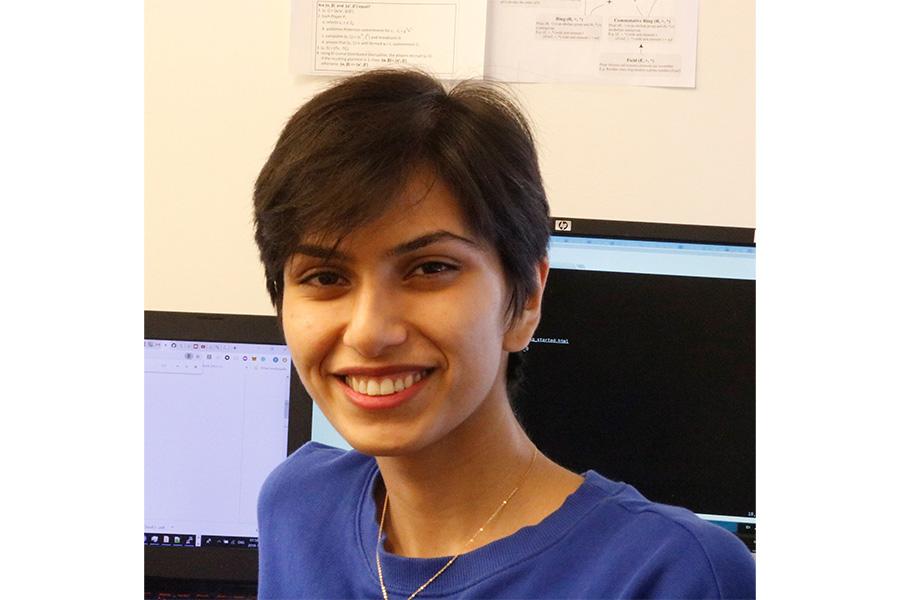
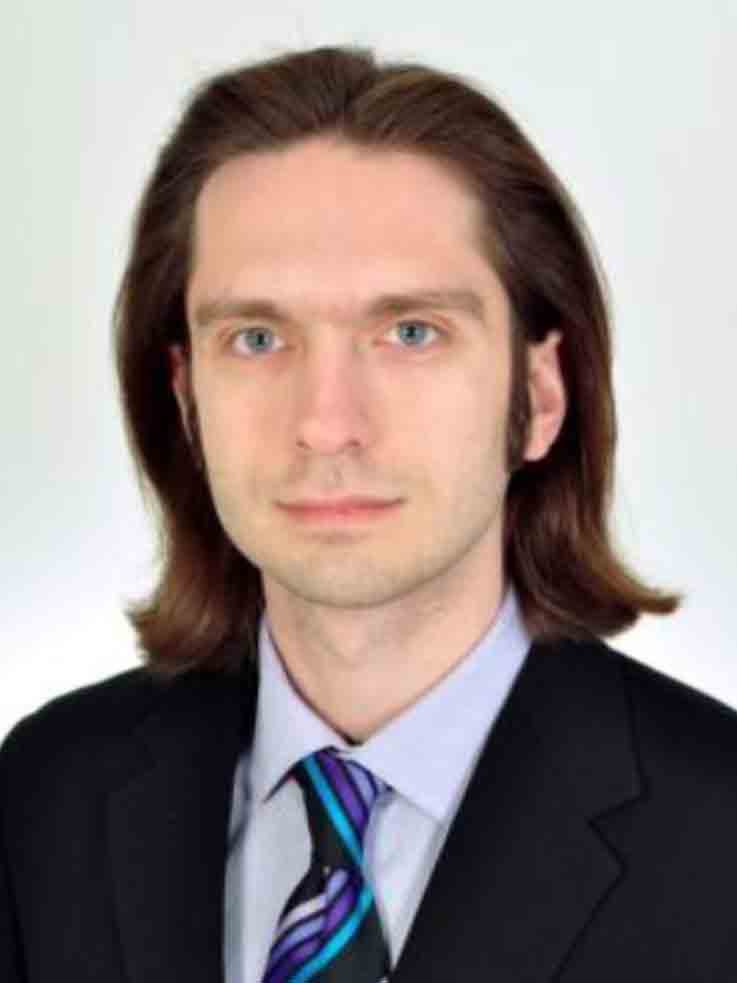
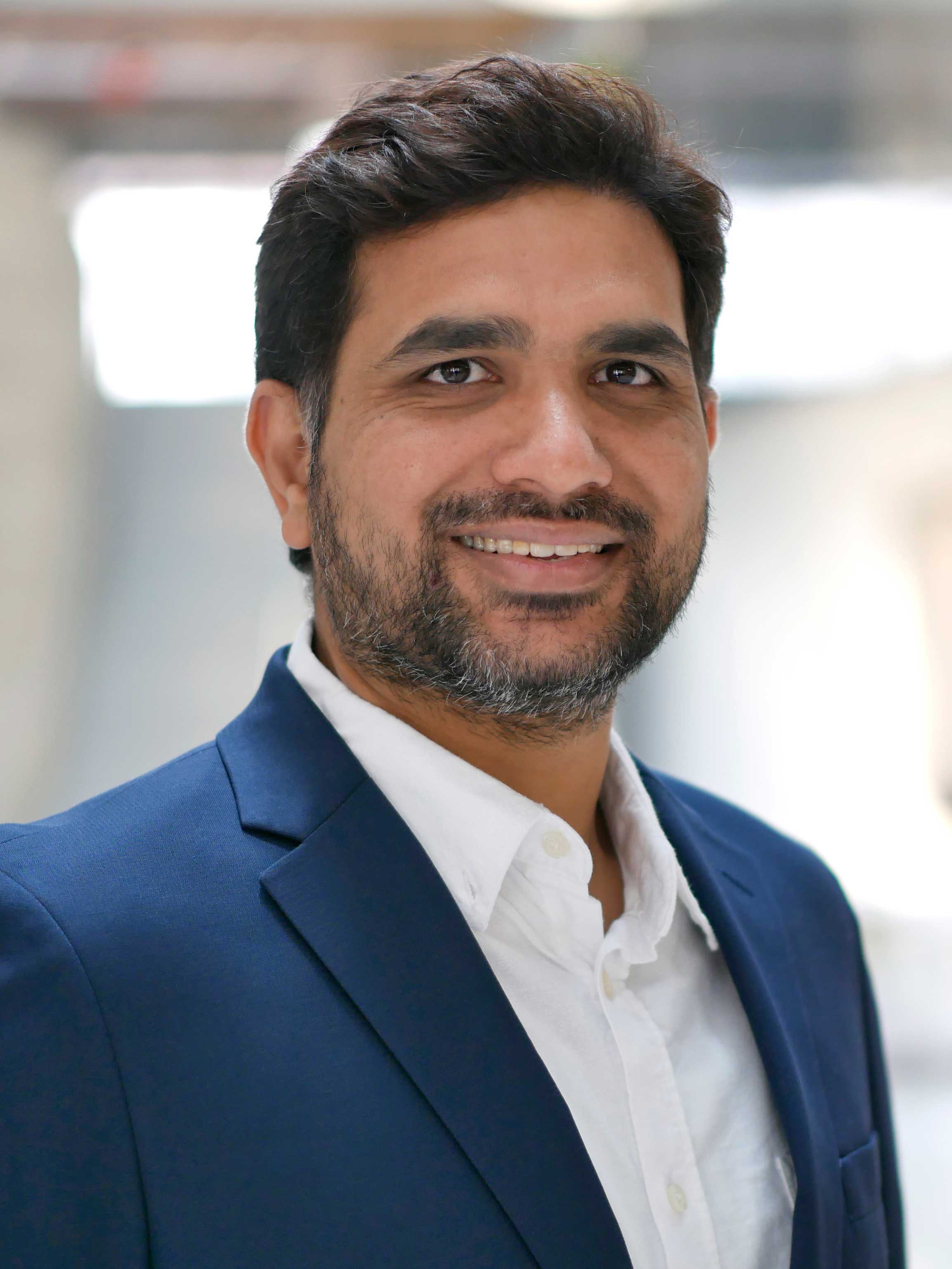
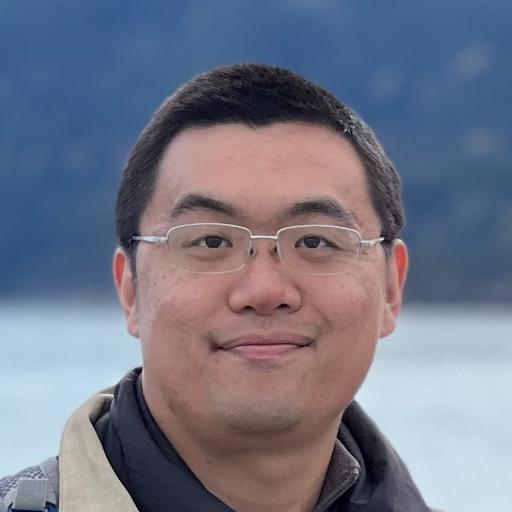
Cicek Cavdar is an Associate Professor at the School of Electrical Engineering and Computer Science (EECS) at KTH Royal Institute of Technology , Sweden. She leads the Intelligent Network Systems research group and specializes in Telecommunication Networks , with a focus on Beyond 5G/6G Mobile Networks , Energy Efficiency , and AI-Assisted Network Management . PhD in Computer Science (2009) from University of California, Davis and Istanbul Technical University Her research spans Cell-Free Massive MIMO , Reconfigurable Intelligent Surfaces (RIS) , UAV Communication Systems , and Green Network Technologies . She actively contributes to 6G Network Architecture and Non-Terrestrial Networks , including satellite and aerial systems. Recent publications highlight AI-driven network optimization for handover management, energy-aware resource allocation , and multi-agent reinforcement learning in complex communication environments. She teaches advanced courses in Communication Systems , Machine Learning , and Software Engineering at KTH.
Hossam Hassanein is a Professor and Director of the School of Computing at Queen's University. He received his B.Sc. in Electrical Engineering from Kuwait University in 1984, M.Sc. in Computer Engineering from the University of Toronto in 1986, and Ph.D. in Computing Science from the University of Alberta in 1990. He joined Queen's University School of Computing in 1999 and has established himself as a leading researcher in telecommunications and networking. Dr. Hassanein's research interests span wireless sensor networks, mobile ad hoc networks, edge computing, Internet of Things (IoT), radio resource management, and data-centric networks. His seminal contributions include pioneering work on WSN planning, load-balanced routing protocols, and energy-efficient network designs. He has championed research in IoT, developing frameworks for smart spaces that use contextual information to enhance IoT applications in healthcare, transportation, and infrastructure. His recent publications (2023-2025) demonstrate a strong focus on cutting-edge areas including extreme edge computing, vehicular networks, and AI/ML integration in networking. Research trends show increasing emphasis on practical applications in telesurgery, digital twins, and industrial IoT, addressing challenges in resource allocation, task offloading, and real-time processing in constrained environments. Dr. Hassanein has received numerous recognitions for his work: Fellow of the IEEE Queen's University School of Graduate Studies Award for Excellence in Graduate Student Supervision (2015) Multiple best paper awards from top international conferences As founder and director of the Telecommunications Research Lab (TRL), Dr. Hassanein has supervised over 75 students who have made substantial contributions in academia and industry. The TRL is one of Queen's largest research groups with extensive international collaborations. Dr. Hassanein has successfully attracted significant research funding from government and industry sources in the competitive telecommunications field. The Telecommunications Research Lab has developed innovative platforms including SPROUTS, a rugged sensor platform used in mining, steel manufacturing, and smart-grid monitoring. TRL's work has had significant impact in WSN planning, data dissemination, and resource reuse in wireless networks, with contributions featured in IEEE Wireless Communications Magazine.
Prof. Slawomir Stanczak is a Full Professor in Network Information Theory at Technische Universität Berlin and Head of the Wireless Communications and Networks department at Fraunhofer Heinrich-Hertz-Institut (HHI). His expertise spans wireless communications, signal processing, and machine learning, with a focus on 5G/6G networks and reconfigurable intelligent surfaces. He has held visiting roles at RWTH Aachen University and Stanford University, and leads initiatives like the 6G Research & Innovation Cluster and the xG-Incubator project. Education: Dipl.-Ing. in Electrical Engineering, TU Berlin (1998) Dr.-Ing. (summa cum laude), TU Berlin (2003) Habilitation (venia legendi), TU Berlin (2006) Research & Awards: Recipient of the Best Paper Award from the German Communication Engineering Society (2014) Research grants from the German Research Foundation Co-authored over 200 peer-reviewed papers and two books Chair of the ITU-T Focus Group on Machine Learning for Future Networks (2017-2020) Leadership & Projects: Chairman of 5G Berlin association since 2020 Coordinator of 6G Research & Innovation Cluster and CampusOS flagship project Project lead of xG-Incubator (StartUpConnect initiative) Teaching: Offers courses on Machine Learning and Wireless Communication at TU Berlin.
Guan-Hua (Scott) Tu is an Associate Professor in the Department of Computer Science and Engineering at Michigan State University (MSU), leading the Security, Networking, and Mobile Systems Research (SNMS) laboratory. He holds a Ph.D. from UCLA and has industry experience at MediaTek, where he contributed to wireless communication as an engineer and researcher (inventing eight US patents). His research focuses on security, IoT, mobile systems, and wireless networking, with recent emphasis on 5G/4G architecture, cellular/Wi-Fi IoT, secure cloud computing, and blockchain technologies. Education includes a Ph.D. from UCLA (2015), MS from National Taiwan University (2003), and B.Sc. from National Central University (2001). Notable achievements include NSF grants (e.g., $1.73M NTIA grant as Co-PI, $1.2M NSF SaTC grant as PI), and awards like the Best Community Paper Award Runner-Up at ACM MobiCom'22 and Google Security Reward. His work addresses vulnerabilities in emergency services (9-1-1), cellular IoT, and IMS protocols, with publications in top venues like ACM MobiCom, IEEE Transactions, and ACM CCS. Current research includes exploring non-standardized policies in 5G networks, securing O-RAN infrastructure, and safeguarding next-gen emergency services. He advises Ph.D. students and has mentored alumni now in faculty roles (e.g., Utah State University, Michigan Tech). Teaching includes courses on computer security and networks.
Azadeh Tabiban is an Assistant Professor in the Department of Computer Science at the University of Manitoba, leading the FOCUS research lab. She specializes in cybersecurity with a focus on cloud/edge security, network security, and applying machine learning to security challenges. Her work emphasizes practical solutions for real-world systems, including provenance analysis, forensics, and securing smart grids and 5G networks. Education: PhD from Concordia University (supervised by Prof. Lingyu Wang and Prof. Makan Pourzandi), followed by a postdoctoral fellowship at the University of Waterloo collaborating with Ericsson Montreal. Previously involved in the NSERC/Ericsson IRC in SDN/NFV Security Project. Research Interests: Building scalable security technologies for transparency and trustworthiness in computing systems. Key areas include provenance systems, cloud/NFV security, smart grid cybersecurity, and AI-driven security solutions. Recent projects include URGP-funded work on AI-based intrusion detection and NCC-supported 5G security collaborations with Ericsson and other universities. Awards and Grants: NSERC Discovery Grant (2024), University Research Grants Program (URGP) (2025), National Cybersecurity Consortium (NCC) Grant (2023), and Best Paper Candidate at CNS'20. Active in securing industrial partnerships and government-funded initiatives. Advising and Training: Supervises PhD and MSc students in system security and machine learning applications. Offers funded positions prioritizing underrepresented groups. Mentors undergraduate students interested in programming and practical cybersecurity solutions. Labs/Teams: Leads the FOCUS lab focused on foundational and operational cybersecurity research. Collaborates with industry partners like Ericsson and academic institutions including Waterloo and Concordia.
Dr. Hatem Abou-Zeid is an Assistant Professor in the Department of Electrical and Software Engineering at the University of Calgary, directing the WAVES Research Group. He holds adjunct positions at Queen’s University, Carleton University, and Ontario Tech University. His research focuses on AI-driven 6G networks, wireless sensing, extended reality (XR), and brain-computer interfaces (BCI). Prior to academia, he spent 7 years in industry at Ericsson and Cisco, leading projects in 5G radio access and network intelligence, resulting in 20+ patents and $3.5M+ collaborative research projects. Education: PhD in Electrical and Computer Engineering (Queen’s University), M.Sc. and B.Sc. in Electronics and Communications Engineering (Arab Academy, Egypt). Research interests span trustworthy AI for 6G, joint sensing & communication systems, and AI for immersive networking. Notable work includes foundational models for 6G radios, self-supervised learning for spectrograms, and safe reinforcement learning for network slicing. His lab explores pediatric BCI, IoT edge computing, and low-power wireless prototyping. Publications highlight contributions to AI-driven resource allocation, 5G/6G slicing, and federated learning in tactical networks. Awards include the 2023 Early Research Excellence Award and 2023 Software Engineering Professor of the Year. Advising involves 15+ students and postdocs, with collaborations spanning academia (e.g., Hotchkiss Brain Institute) and industry (Ericsson, Telus). Current openings exist for PDF/PhD researchers in AI/6G wireless systems and pediatric BCI. Labs/Teams: Director of WAVES Lab; collaborates with Ericsson Canada, Alberta Innovates, and Canadian Space Agency on applied research projects. Teaching includes advanced networking, machine learning systems, and IoT courses.
Vijay K. Shah is an Assistant Professor in the Electrical and Computer Engineering Department at North Carolina State University, leading the NextG Wireless Lab. His research focuses on advancing wireless communication and network technologies for beyond 5G/6G systems, including O-RAN architecture, spectrum management, and AI-driven network optimization. Education: Ph.D. in Computer Science, University of Kentucky (2019) Bachelor's in Computer Science and Engineering, National Institute of Technology, Durgapur (2013) Research emphasizes open radio access networks (O-RAN), mmWave testbeds, and cross-layer optimization. Recent work highlights include ORAN-Bench-13K (LLM benchmarking), ZT-RIC (zero-trust security frameworks), and Milli-O-RAN (reconfigurable mmWave networks). His contributions span O-RAN applications (xApps/rApps), satellite-terrestrial coexistence, and AI-driven positioning systems. Experimental validations include 3GPP-compliant 5G positioning and adversarial attack defenses. Publications reflect expertise in O-RAN architecture evolution, spectrum policy tools (ASCENT), and UAV-based network coordination (GLIDE). Current projects explore LEO satellite constellations and resilient disaster response networks. Labs/Teams: Head of the NextG Wireless Lab at NC State, focusing on prototype development in O-RAN, 6G, and secure AI-driven networks.
Dr. Ying He is a Senior Lecturer at the School of Electrical and Data Engineering, University of Technology Sydney (UTS). Her research focuses on wireless communication networks, particularly integrating machine learning with satellite and terrestrial systems. She holds a BEng from Beijing University of Posts and Telecommunications (2009) and a PhD from UTS (2017). Prior to her academic role, she worked on TD-LTE chip design at the Chinese Academy of Sciences. Affiliations : Faculty of Engineering and Information Technology Global Big Data Technologies Centre (GBDTC) Education : BEng in Telecommunications Engineering, Beijing University of Posts and Telecommunications (2009) PhD in Engineering (Telecommunications), UTS (2017) Her research interests include satellite communication (GEO-LEO integration), spectrum sharing, vehicular communication, and applying machine learning to physical layer algorithms. Notable contributions include optimizing beam design in LEO networks and developing secure IoT systems. She supervises PhD/Master’s students and teaches courses like CCNA and capstone projects. Funded projects span satellite networks, IoT security, and supply chain tracking. Recent grants include SmartSat CRC initiatives and collaborations with industry partners like Intel and Ericsson. Her work addresses challenges in 6G, UAV-enabled computing, and resilient quantum algorithms.
Dr. Wibowo Hardjawana is a Senior Lecturer in Telecommunications Engineering at the School of Electrical & Computer Engineering , University of Sydney. He holds a PhD from the University of Sydney and serves as an ARC DECRA Research Fellow. His research focuses on wireless network softwarisation, enabling programmable radio interfaces to address traffic elasticity in 5G/6G systems. Education : PhD (University of Sydney) Grants : ARC DP210100744 (2021), ARC DECRA DE140101114 (2014) His work spans 5G/6G network architectures , machine learning for wireless systems , and open radio interfaces . Key contributions include graph representation learning for interference management, Bayesian neural network detectors for OTFS modulation, and NOMA decoding techniques . Recent publications analyze ultra-reliable low-latency communications , UAV-enabled networks , and stochastic geometry in wireless systems . He has collaborated with institutions in China, Indonesia, and UAE, and engaged with industry partners like Telstra and Ausgrid.
Eleni Stai is an Assistant Professor at the School of Electrical and Computer Engineering, National Technical University of Athens (NTUA), affiliated with the Division of Communication, Electronic and Information Engineering. She holds advanced degrees in Electrical Engineering, Mathematics, and Applied Mathematical Sciences from NTUA and the National and Kapodistrian University of Athens. Her academic credentials include: Diploma in Electrical and Computer Engineering, NTUA (2009) B.Sc. in Mathematics, National and Kapodistrian University of Athens (2013) M.Sc. in Applied Mathematical Sciences, NTUA (2014) Ph.D. in Electrical Engineering, NTUA (2015) Dr. Stai's research integrates advanced optimization techniques with communications networks and energy systems. She develops stochastic and deterministic optimization frameworks for network resource allocation, data analytics on complex topologies, and smart-grid control applications. Her work bridges theoretical foundations with practical implementations in energy-harvesting networks, network slicing, and reinforcement learning for distributed systems. Analysis of her recent publications reveals dominant research thrusts in AI-driven network management (particularly O-RAN and network slicing), energy-integrated communications, and optimization of energy communities. A significant portion of her work addresses the convergence of 5G/6G networking with power systems, emphasizing real-time control and sustainability. Her scientific contributions have been recognized through prestigious awards: Chorafas Foundation Best Ph.D. Thesis award Thomaidis Foundation Best M.Sc. Thesis award Best Paper Award at ICT 2016 Best Presenter Award at IEEE ENERGYCON 2022 Dr. Stai serves on technical program committees for major international conferences and has co-authored the book "Evolutionary Dynamics of Complex Communications Networks". She teaches undergraduate courses in Queuing Systems, Computer Networks, and Social Network Analysis, reflecting her expertise in network theory and applications. Her research trajectory demonstrates continuous evolution from fundamental network optimization to AI-enhanced solutions for next-generation communication-energy systems. Her work builds upon her postdoctoral experience at EPFL (2016-2020) and ETH Zurich (2020-2023), where she developed advanced frameworks for communications networks and energy systems.
Dr. Dimitrios Koutsonikolas is an Associate Professor in the Electrical and Computer Engineering Department at Northeastern University, leading the WiNS Lab. Previously, he held a tenured position at the University at Buffalo. His research focuses on experimental wireless networking and mobile computing, particularly millimeter-wave systems, 5G/6G networks, energy-efficient protocols, and high-bandwidth applications like VR/AR. He has published over 80 papers in top venues (e.g., MobiCom, INFOCOM), received NSF CAREER and IEEE awards, and led major grants including an NSF-funded $3M project for an open 5G/6G testbed. His lab explores cutting-edge technologies like O-RAN, beam management, and edge computing for latency-critical applications. Education: PhD in Electrical and Computer Engineering from Purdue University (2010). Research Interests: Experimental validation of wireless protocols, mmWave networking, latency-optimized edge computing, and cross-layer design. Current projects include TARGET (5G/6G latency solutions) and the X5G testbed for open spectrum utilization. Recent Trends in Articles: Focus on 5G deployment maturity, mmWave beam management, and 6G-ready technologies like autonomous space networks. Work bridges theoretical contributions with practical implementations, leveraging testbeds for real-world validation. Awards: Notable honors include IEEE Region 1 Innovation (2019), NSF CAREER (2016), and multiple best paper awards at MobiCom, WCNC, and Globecom. Recognized for both research and teaching excellence. Grants & Labs: Principal investigator on NSF grants ($3M+), leading collaborations with IMDEA Networks and industry partners. WiNS Lab develops open-source tools for 5G testing and explores sub-THz channels. Advises over 15 students, many advancing to top tech firms (e.g., Apple, HP Labs).
Dr. Wenjuan Yu is a Lecturer at the School of Computing and Communications (SCC), InfoLab21, Lancaster University, UK. She holds a PhD in Communication Systems from Lancaster University and has held prior roles, including Research Fellow at the 5G Innovation Centre (5GIC), University of Surrey (2018–2020), and part-time Research Officer at the University of Essex (2017–2018). She is a Fellow of the Higher Education Academy and a Senior Member of IEEE. Her research focuses on communication systems, with emphasis on radio resource management, mMTC, low-latency communications, B5G/6G, MEC, and machine learning. She actively contributes to IEEE conferences as a Technical Program Committee (TPC) member and holds editorial roles, including Executive Editor for Transactions on Emerging Telecommunications Technologies (2019–2022). Current teaching includes CNSCC141 Professionalism in Practice and CNSCC365 Advanced Networking . Dr. Yu supervises PhD students in EE/CS, particularly welcoming applicants from China via CSC scholarships. Her projects include DSI-funded initiatives on sustainable AI-driven resource allocation for 6G and Smart Multi-RAT Traffic Steering for V2X systems. She leads research groups in Security Lancaster (Networks, Systems, Distributed Systems).
Adlen Ksentini is a Professor at EURECOM, a leading graduate school and research center in Sophia Antipolis, France, specializing in digital science and communication systems. His extensive research focuses on next-generation mobile networks (5G/6G), network management, and the integration of artificial intelligence with telecommunications infrastructure. Dr. Ksentini actively contributes to major EU research initiatives including 6G-BRICKS and AC3, serving as a key researcher and project leader in the development of future network architectures. Dr. Ksentini's research interests center around network slicing, intent-based networking, edge computing, and the application of machine learning to network management problems. His work bridges theoretical advancements with practical implementations in 5G/6G systems, with particular emphasis on zero-touch network management, energy efficiency optimization, quality of service assurance, and the integration of large language models with network operations. His research has significantly contributed to the development of O-RAN (Open Radio Access Network) frameworks and the evolution of network automation. His recent publication trends reveal a strategic shift toward AI-native network architectures, with increasing focus on integrating large language models (LLMs) with network management systems. His work demonstrates a clear progression from traditional network management approaches to more autonomous, AI-powered systems capable of intent-based configuration, self-optimization, and predictive maintenance. The publications show strong emphasis on practical implementations within the 6G research ecosystem, addressing critical challenges in network slicing, resource allocation, and energy efficiency. As a research supervisor, Dr. Ksentini mentors several PhD students including Abdelkader Mekrache, Karim Boutiba, Bouziane Brik, and Houda Hafi, who frequently appear as co-authors on his publications. His research is primarily funded through major EU research projects such as 6G-BRICKS (Building Reusable Testbed Infrastructures for Cloud-to-Device Breakthrough Technologies) and AC3 (which focuses on Cloud Edge Continuum). Dr. Ksentini is actively involved with the 6G-BRICKS project consortium and the AC3 project team, where he contributes to developing next-generation network architectures that integrate communication, computing, and sensing capabilities. His work within these projects focuses on creating reusable testbed infrastructures and addressing security and trust management challenges in the cloud-edge continuum.
Naveen Naik Sapavath is an Assistant Teaching Professor at Northeastern University's Electrical and Computer Engineering department. He holds a PhD from Howard University and a Master's from the Indian Institute of Science (IISc). His research focuses on next-generation cellular systems including O-RAN security, AI/ML-driven wireless optimization, and low-latency communications. He is affiliated with Northeastern's Institute for the Wireless Internet of Things. Education: PhD in Electrical and Computer Engineering, Howard University Master of Engineering in Electrical Engineering, Indian Institute of Science Research Interests: Dr. Sapavath explores cutting-edge areas such as 5G/Next-G networks, cybersecurity in wireless systems, and applying game theory to resource allocation. His work bridges theoretical advancements with practical implementations in AI-driven network architectures. Awards: IEEE CSCloud 2021 Best Student Paper Award Multiple NSF Student Travel Grants Professional Experience: Previously served as Postdoctoral Researcher at UC Davis, Researcher at George Mason University's Next G Lab, and Technical Project Manager at Iowa State University for the NSF-funded ARA project. Serves as reviewer for IEEE journals including Transactions on Cognitive Communications and Networking. Labs/Initiatives: Active contributor to Northeastern's Institute for the Wireless Internet of Things and NSF PAWR program through the ARA project.
Jun Yan is an Associate Professor and Concordia University Research Chair in Artificial Intelligence in Cyber Security and Resilience at the Concordia Institute for Information Systems Engineering (Concordia University). His research focuses on cybersecurity, smart grid systems, and AI-driven solutions for energy and communication networks. He supervises graduate students in programs such as Information Systems Security (MASc), Computer Science (MCompSc), and Information and Systems Engineering (PhD). Research Highlights : Cybersecurity of distributed energy systems, AI penetration testing frameworks, and resilient transactive energy markets. Awards : Holds a prestigious university research chair in AI-driven cybersecurity. His work integrates machine learning with domain-specific challenges in smart grids, IoT security, and multi-agent systems. Notable contributions include frameworks for detecting adversarial attacks on power systems, optimizing renewable energy integration, and developing AI tools for penetration testing. His articles reflect a strong emphasis on interdisciplinary solutions blending cybersecurity, energy systems, and advanced computing. Yan’s research also addresses policy and infrastructure challenges in sustainable energy systems, including waste management policy analysis and optimal configuration of hybrid renewable systems. He has pioneered open-source co-simulation platforms like PEMT-CoSim and Quantum-Sim for secure energy trading and quantum communication in grids. He actively engages in grant-funded projects and advises on both academic and applied aspects of cybersecurity and intelligent systems.