Dimitrios Skalkos serves as a Professor at the Department of Chemistry, University of Ioannina, holding the specific title of Professor of Innovation Management in Food Businesses. His office is located in building X2, room X2-206c on the Ioannina Campus (45110 Ioannina), and he leads the Food Chemistry Laboratory. He earned his Basic Degree in Chemistry from the University of Ioannina (1980-1985) followed by a Doctoral Degree from the University of Toledo, USA (1986-1989) with dissertation research on "Di- and Tetrahydroporphyrins: Syntheses and Antitumor Activities". Skalkos's research spans Food Business Management, Food Innovation, and Innovation Management, with specialized focus on Innovation & Entrepreneurship, Aromatic Plants, Innovative Foods, and Strategic Marketing. His work bridges academic research with industry applications in food systems, emphasizing Greek agricultural products and pandemic-era consumer behavior. His 36 publications (2020-2024) reveal strong trends in post-pandemic food innovation, consumer perception of traditional Greek foods, functional food development (particularly olive oil, cheese, and grape by-products), and sustainable agri-food supply chains. Key thematic clusters include traceability systems, bioactive properties of novel foods, and economic impacts on food choices. He has actively supervised Master's and PhD students through departmental presentations, directed 23 research programs, and organized 15 seminars and conferences. His laboratory website ( https://foods.chem.uoi.gr ) showcases ongoing food chemistry innovations.
Prof. Veronika Somoza is a leading academic in Nutritional Systems Biology, currently affiliated with the University of Vienna and Technical University of Munich (TUM). She holds a professorship in Molecular Food Science and has led key research groups such as the Institute of Physiological Chemistry and the Christian Doppler Laboratory for Bioactive Aromatics. Her career includes roles at institutions like the German Research Institute for Food Chemistry (Garching) and the University of Wisconsin-Madison. Education: Diplom (Justus Liebig University Giessen, 1991), PhD (University of Vienna, 1995), Habilitation (Kiel University, 2002) Research Focus: Bioactive food compounds, flavor chemistry, taste receptor signaling, and gastrointestinal physiology Her work bridges food science and human health, particularly in understanding how food ingredients influence digestion, inflammation, and disease. Notable contributions include discoveries on bitter peptide effects on gastric acid secretion and flavor perception modulation. Awards: FEMA Excellence in Flavor Science (2016), ACS AGFD Fellow (2020), Hans Adolf Krebs Prize (2004) Prof. Somoza has pioneered methodologies in atomic force microscopy for foodborne virus detection and developed bitterness-masking compounds for pharmaceuticals. Her interdisciplinary approach integrates nanobiophysics with nutrition to advance functional food design and clinical applications.
Dr. Jeannine Baumgartner is a Lecturer in the Department of Nutritional Sciences at King's College London and an Extraordinary Associate Professor at North-West University, South Africa. She holds an MSc and PhD in Human Nutrition from ETH Zurich, Switzerland. Key Appointments : Lecturer at King's College London (2022–present), Senior Scientist at ETH Zurich (2018–2022), Associate Professor at North-West University (2018). Research Focus : Optimal early-life nutrition for maternal/child health, iron and omega-3 fatty acid interventions, stable isotope methodologies, HIV-metabolic interactions, and mental health-diet links. Her recent work explores iron absorption dynamics in Thai children, maternal iron status in South Africa, and omega-3 fatty acids in depression. She leads an NIHR-funded project to reassess UK iron reference values. Scientific Leadership : Board Member, International Society for the Study of Fatty Acids and Lipids (ISSFAL) Editorial Board, European Journal of Clinical Nutrition
Dr. Sajid Alavi is a Professor in the Department of Grain Science and Industry at Kansas State University. He joined the faculty in 2002 after earning his Ph.D. in Food Science/Food Engineering from Cornell University (2002), M.S. in Agricultural and Biological Engineering from Penn State (1997), and B.S. in Agricultural Engineering from IIT (1995). His research focuses on extrusion processing in food, pet food, and feed applications, with expertise in rheology, food microstructure imaging, and process sustainability. He leads global projects in Africa, Brazil, India, and beyond, emphasizing sustainable food technologies and AI-driven processing innovations. Dr. Alavi is a recipient of the 2010 Young Research Scientist Award from the Cereals & Grains Association. He teaches GRSC 620 (Intro to Extrusion Processing) and GRSC 820 (Advanced Extrusion Processing), and has trained over 1,000 industry leaders through his renowned 'Extrusion Processing: Technology and Commercialization' short course. His work bridges food science and engineering, addressing challenges in plant-based meat analogs, nutrient bioavailability, and food aid product development. Key facilities associated with his work include the BIVAP Feed Quality Assurance Lab and Hal Ross Flour Mill. His research spans sensory analysis of meat alternatives, fiber utilization in pet food, and sustainability assessments of novel crops like intermediate wheatgrass. Recent studies explore insect protein in pet food, AI-driven extrusion optimization, and iron bioavailability in fortified foods. Dr. Alavi’s contributions span academic, industrial, and global food security domains, reflecting a commitment to innovative, scalable food solutions.
Simone D. Castellarin is a Professor in the Department of Applied Biology at the University of British Columbia's Faculty of Land and Food Systems, and holds the Canada Research Chair Tier 2 in Viticulture. His research focuses on the molecular and physiological mechanisms governing berry ripening and composition in grapes, blueberries, and raspberries, with emphasis on genomic regulation under environmental stressors like heatwaves and drought. PhD in Plant Biology from the University of Udine (2007) Postdoctoral training at Hochschule Geisenheim University and University of California Davis Research areas include terpene biosynthesis, jasmonate signaling, cuticular wax dynamics, and agronomic strategies for climate change mitigation. Key projects involve remote sensing for vineyard zoning , hormone application effects , and genetic studies of berry quality traits . His work spans collaborations with industry bodies like the BC Wine and Grape Council and academic partners including the Cantu Lab at UC Davis. Recent publications highlight genomic analyses of terpene synthases, water deficit impacts on metabolites, and postharvest quality assessments. Awards include the 2009 Rudolf Hermanns Prize for viticultural research. He supervises numerous PhD and Master's students, and leads the Castellarin Lab at UBC's Wine Research Centre.
Angelica Lindén Hirschberg is a Professor of Obstetrics and Gynecology (specializing in reproductive medicine) at Karolinska Institutet and a Senior Consultant in gynecological endocrinology at Karolinska University Hospital. She holds dual roles in academic leadership and clinical practice, focusing on disorders of reproductive function, endocrine-metabolic dysfunction, and hormonal conditions in women. Her affiliations include the Department of Women’s and Children’s Health, Reproductive Endocrinology and Metabolism Research Group, and the Division for Neonatology, Obstetrics, Gynaecology, and Reproductive Health. Education and Career: MD (Karolinska Institutet, 1984) PhD (Karolinska Institutet, 1989) Professor in Obstetrics and Gynecology (2007) Board member of international societies (ISGE, EMAS) Research Focus: Her translational research spans PCOS, obesity-related reproductive dysfunction, premature ovarian insufficiency, and disorders of sex development. Projects include hormonal impacts on athletic performance, immune therapy for ovarian dysfunction, and endometrial cell biology. Collaborations involve national/international networks and clinical trials (e.g., PROBES trial). Publications: Recent work emphasizes PCOS pathophysiology, menopausal health, and hormonal interventions in athletes. Key trends include single-cell profiling of endometrium, immunomodulatory therapies for POI, and non-hormonal treatments for vasomotor symptoms. Awards: King’s Seraphim Medal (2018) 2016 Grand Prize in Sport Science Appointed Royal Gynecologist (2009) Teaching and Mentorship: Coordinates courses on reproductive endocrinology, supervises PhD students (e.g., Esin Ylmaz), and chairs the PhD Study Director at her department. Authored over 25 book chapters on women’s health and sports medicine. Grants and Labs: Secured Swedish Research Council funding for POI trials. Her lab integrates experimental (Bioclinicum) and clinical (Women’s Health Research Unit) research.
Professor Ingrid Undeland leads the Marine research group at the Division of Food and Nutrition Science, Department of Life Sciences at Chalmers University of Technology. She is a distinguished researcher with expertise spanning marine food science, lipid chemistry, and blue biorefining, having established herself as a leading figure in sustainable seafood research and marine biotechnology. Her educational background includes food science studies from Linnaeus University and a PhD in bioscience from Chalmers University of Technology and SIK (now RISE). Between 1999-2002, she was a post-doctoral fellow at University of Massachusetts Marine Station, which significantly shaped her research trajectory in marine food science. Professor Undeland's research focuses on pioneering next-generation seafood through innovative value chains from seaweed, small pelagic fish, fish side streams, mussels, and microalgae. Her specialized expertise lies in marine lipids and proteins, particularly their stabilization, isolation from complex sources, and nutritional properties including digestibility. She has extensive experience with antioxidant strategies using plant-derived side streams or extracts and fundamental studies of fish hemoglobins as pro-oxidants. Her work also encompasses innovative technologies for biomass fractionation and nutrient recycling to build blue biorefineries, along with in vitro digestion models and general seafood analytics. Beyond marine research, she explores filamentous fungi as sustainable alternative food protein sources. The trends in her recent publications reveal a strong emphasis on valorizing marine resources through advanced processing techniques. Her work increasingly focuses on sustainable extraction methods for seaweed proteins, particularly Ulva fenestrata, and developing antioxidant strategies using berry side streams to stabilize fish proteins. There's a growing interest in understanding the nutritional properties and digestibility of alternative marine proteins, along with environmental assessments of processing technologies. Her research consistently bridges fundamental science with practical applications for creating sustainable seafood value chains. Swedish representative in Nordic Lipidforum, WEFTA, and EuCheMS Editorial board member of Journal of the Aquatic Food Product Technology Member of the National Committee for Nutrition and Food Science at the Royal Swedish Academy of Sciences Co-founder of the startup company AquaFood H-index of 47 according to Google Scholar Professor Undeland has an extensive record of academic mentorship, having supervised or currently supervising 23 PhD students, 14 postdoctoral researchers, and examining over 25 MSc students. Her research is supported by numerous grants, including the WaSeaBi Project which focuses on valorizing seafood side-streams through holistic value chain design. She collaborates with various industry partners and academic institutions across Europe. Her laboratory includes technicians Dr. Karin Larsson and Dr. Rikard Fristedt, and she leads a dynamic research team working on multiple projects related to marine biorefining and sustainable seafood development. Her research group operates within well-equipped facilities at Chalmers University, with specialized laboratories for marine food analysis, protein extraction, lipid oxidation studies, and in vitro digestion modeling. The team also maintains cultivation systems for seaweed and filamentous fungi, enabling integrated research from raw material production to final product development.
Professor Jill Edmondson serves as a Professor of Ecosystem Sustainability and NERC Knowledge Exchange Fellow at the School of Biosciences, University of Sheffield, where she has been a Senior Lecturer since 2021. Her research focuses on enhancing ecosystem sustainability and resilience in urban and agricultural contexts through interdisciplinary approaches bridging soil science, plant ecology, and social dimensions. Her core research pillars include: Urban Horticulture , where she leads the national MYHarvest citizen science project quantifying home-grown food production while assessing ecosystem co-benefits and soil pollutant risks; Soil Carbon Dynamics , specializing in black carbon's role in urban soil carbon sequestration; and Urban Forest Ecology , investigating how pollution and infrastructure encasement impact tree health and ecosystem services like heat mitigation. Her work consistently integrates field studies with policy-relevant applications for city planning. Analysis of her 2020-2025 publications reveals intensifying focus on climate adaptation, with dominant themes including urban food security quantification, soil contaminant bioavailability, green infrastructure performance, and urban tree resilience. Methodologically, she pioneers citizen science integration and interdisciplinary field measurements, yielding actionable insights for urban sustainability policy. Her major recognitions include: NERC Knowledge Exchange Fellow (2022-present) EPSRC Living with Environmental Change Fellow (2016-2021) Professor Edmondson supervises undergraduate literature reviews and research projects across multiple programs (MBiolSci, MEnvSci, MSc, MRes), mentoring the next generation of sustainability scientists. Her grant portfolio features competitive fellowships supporting urban ecosystem research with direct policy applications through partnerships with local governments and environmental NGOs. She directs the MYHarvest citizen science initiative and collaborates extensively with the University of Sheffield's Institute for Sustainable Food, leading a multidisciplinary team spanning soil science, ecology, and engineering to develop evidence-based strategies for resilient urban ecosystems.
Trond Vidar Hansen is a Professor at the Department of Pharmacy, University of Oslo , and leads the LIPCHEM research group . He collaborates with institutions including the University of Bergen and Vestlandets Innovasjonsselskap through the VITADEL project, which recently received NOK 5,000,000 in verification support from the Research Council of Norway. His research focuses on the synthesis and biological evaluation of specialized pro-resolving lipid mediators derived from omega-3 fatty acids, with applications in inflammation resolution, neuroinflammation, and drug development. University : University of Oslo Department : Department of Pharmacy Research Group : LIPCHEM Collaborations : University of Bergen, Vestlandets Innovasjonsselskap Research Interests : H Hansen's work centers on the organic synthesis of bioactive lipid derivatives, particularly pro-resolving mediators from omega-3 polyunsaturated fatty acids. His team investigates their roles in inflammatory disease models , neuroinflammation , and PPAR receptor activation , aiming to develop therapeutic agents for conditions like chronic pain, diabetes, and neurodegenerative disorders. The research integrates stereoselective chemistry , biochemical profiling , and pharmacological evaluation to validate these mediators' clinical potential. Recent Awards : 2025: NOK 2,000,000 verification support from Research Council of Norway 2025: Co-leader of NOK 5,000,000 VITADEL project Publications : His articles (2015–2024) reveal a focus on stereoselective synthesis of resolvins, protectins, and maresins, with applications in anti-inflammatory and neuroprotective therapies . Key subfields include omega-3 metabolite profiling , PPAR agonist design , and biosynthetic pathway elucidation , often utilizing human cell models and mouse disease models . Collaborative projects emphasize commercialization of academic research and translational medicine .
Pedro Carlos De Barros Fernandes is an Associate Professor at Universidade Lusófona , Deputy Director of the 1st cycle in Biotechnology, and an integrated researcher at the Institute of Bioengineering and Biosciences (iBB-IST). He holds a PhD in Biotechnology (1999) and a Master in Biotechnology/Biochemical Engineering (1994) from Universidade Técnica de Lisboa (IST), along with a Chemical Engineering degree from IST (1989). A member of the Order of Engineers (ID 24667), he co-founded Biotrend, a Portuguese bioprocess development company. Education PhD in Biotechnology (1999), Universidade Técnica de Lisboa MSc in Biotechnology (1994), Instituto Superior Técnico BSc in Chemical Engineering (1989), Instituto Superior Técnico Research Interests span biocatalysis, enzyme immobilization for food and pharmaceutical applications, marine biotechnology, microfluidic device development for biosensing, and steroid bioconversions using mycobacterial systems. His work integrates process engineering principles with sustainable bioprocessing techniques. Publication Trends show a focus on microreactor technology, enzyme stabilization in non-conventional media, marine-derived biocatalysts, and food waste valorization. Key themes include biocatalytic process intensification, aqueous two-phase systems for biomolecule purification, and sustainable carbon sources for biopolymer production. Scientific Awards UTL/Santander Totta Scientific Award in Biological Engineering (2011) Advising has included supervision of 5 doctoral theses and over 32 master’s theses. His expertise extends to peer-reviewing scientific articles and evaluating R&D projects. Labs & Teams are associated with iBB-IST (Institute of Bioengineering and Biosciences) and BioRG (Universidade Lusófona), with contributions to the Ciência Viva program for science dissemination.
Anne Berit C. Samuelsen serves as Associate Professor at the Department of Pharmacy, University of Oslo, where she also holds the position of Head of Education. Her academic foundation includes a Cand.pharm. degree and Dr.scient. doctorate, establishing her expertise in pharmaceutical sciences. Her research centers on polysaccharides from natural sources—particularly higher plants, cereals, and fungi (Basidiomycota)—with specialized focus on β-glucans. Key interests include carbohydrate chemistry, pharmacognosy, and the development of biopolymer-based pharmaceutical applications. Her work bridges fundamental structural characterization with practical drug delivery solutions, notably through liposome coating technologies and immunomodulatory compound development. Recent publications reveal a strong trajectory in fungal polysaccharide research, particularly with Pleurotus eryngii and Albatrellus ovinus species. Her team employs advanced techniques like diffusion-ordered NMR spectroscopy to analyze polysaccharide structures while investigating biological activities related to immune receptor binding (Dectin-1, Toll-like receptors) and therapeutic applications. This work demonstrates consistent output in high-impact journals including Carbohydrate Polymers and ACS Applied Bio Materials . She actively contributes to academic instruction through courses such as FARM1150 (Pharmaceutically Oriented Biochemistry), FARM3100 (Pharmacognosy), and FARM5200 (Use of Biopolymers in Pharmaceuticals). Her leadership extends to the Bioactive Natural Substances and Health Effects (BioNatH) research group and the Glyconor Consortium, where she investigates natural product applications for health improvement.
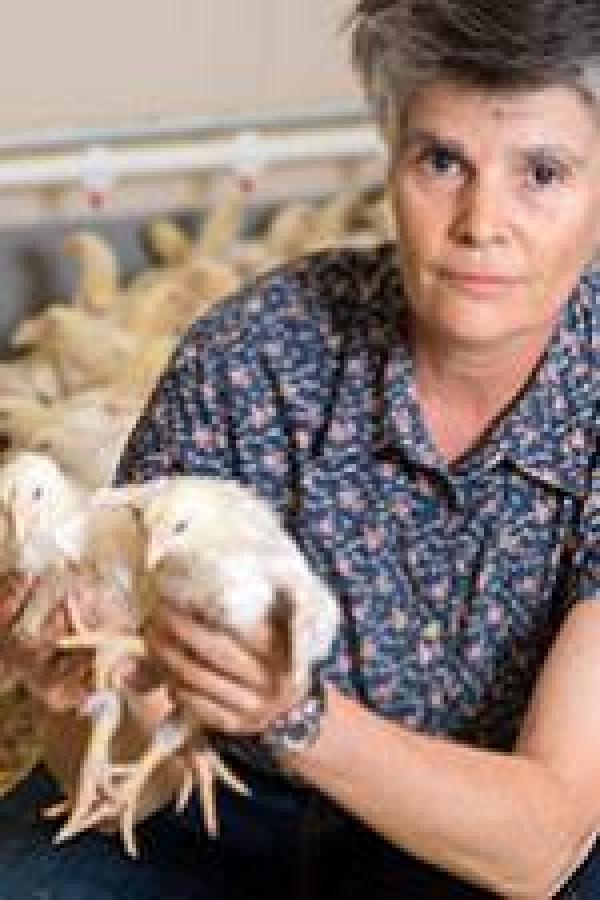
Dr. Roselina Angel is a Professor in the Department of Animal and Avian Sciences at the University of Maryland's College of Agriculture and Natural Resources. With expertise in poultry nutrition, she holds a PhD in Poultry Nutrition from Iowa State University and has been with the university since 1998, initially joining as an Assistant Professor. Research Focus Areas Calcium and phosphorus metabolism in poultry Phytase and enzyme supplementation Environmental impact reduction Nutritional strategies for exotic animals Feed additive efficacy Mineral utilization optimization Her recent publications (2025–2023) concentrate on mechanistic modeling of mineral digestibility, circadian nutrient regulation in laying hens, and the environmental implications of poultry nutrition. These studies frequently examine interactions between dietary calcium/phosphorus ratios, phytase application, and ingredient selection across broilers and laying hens.
Joonhyuk Suh is an Assistant Professor in the Department of Food Science & Technology at the University of Georgia's College of Agricultural & Environmental Sciences. His research focuses on applying analytical chemistry and metabolomics/flavoromics to enhance food flavor, quality, and safety. Research Interests : Multidisciplinary food chemistry analysis Metabolite and flavor profiling Nut and fruit quality evaluation Dairy product flavor chemistry Food safety biomarkers Recent Publication Trends (2025-2022) show expertise in: Metabolomic evaluation of agricultural products Flavor chemistry in tropical fruits and nuts Food processing safety and contaminant analysis Plant-based food characterization Microbiome and nutritional interventions
Alberta N.A. Aryee, PhD is an Associate Professor in the Department of Human Ecology (Food Science & Biotechnology) at Delaware State University (DSU). She holds a PhD from McGill University and completed postdoctoral research at Agriculture and Agri-Food Canada. Her research focuses on the impact of natural products and bioactive compounds on nutrition, health, and metabolic diseases, with particular emphasis on food processing effects, functional food development, and biofortification strategies. Education: Postdoctoral Research: Agriculture and Agri-Food Canada PhD: McGill University (Dissertation: Enzyme Immobilization and Biodiesel Production) MSc: McGill University (Thesis: Lipase Purification) BSc (Hons): Kwame Nkrumah University of Science and Technology Research Interests: Food science, functional ingredients, nutraceuticals, fermentation science, lipid technology, and sustainable food systems. She explores how processing impacts food matrices, bioavailability of nutrients, and the application of nanotechnology and machine learning in food analysis. Recent Research Trends: Her work spans encapsulation of bioactives, plant-based food innovation, and leveraging AI for nutrient prediction. Studies include optimizing hempseed processing, analyzing fermented cassava chemistry, and designing smart food packaging. Awards: 2020 DSU Faculty Excellence in Research 2018 Hornet Award (Early College High School) Mini Grant for hands-on food science education Advising & Grants: Mentors students in food chemistry and product development. Collaborates on grants focused on value-added food products from agricultural byproducts. Leads experiential learning programs integrating global food challenges. Labs & Teams: Based in DSU’s Baker Annex, her lab focuses on lipid science and functional food formulation. Collaborates with industry partners on sustainable food technologies and nanodelivery systems.
Prof. Dr. Laura Nyström is a Full Professor of Food Biochemistry at ETH Zurich's Department of Health Sciences and Technology (D-HEST), part of the Institute of Food, Nutrition and Health (IFNH). She leads a research group focused on sustainable food systems, dietary fiber mechanisms, and plant-based material utilization. Her career includes tenure as Assistant Professor (2009–2016) and Associate Professor (2016–2021) before her promotion to Full Professor in 2022. She also chairs the D-HEST department since 2022. Education: MSc (2002) and DSc (2008) in Food Sciences from the University of Helsinki, Finland. Postdoctoral research (2008–2009) in Cereal Technology at the same institution. Research Interests: Healthy and sustainable foods via plant-based materials Health-promoting dietary fiber interactions Genetic diversity of grains and crop utilization Antioxidant extraction from olive mill waste (co-founding Gaia Technologies GmbH) Development of analytical methods for food chemistry Scientific Contributions: Over 70 publications, 3 book chapters, and 2 patents ERC Starting Grant (2015), AOCS Young Scientist Award (2017), and ETH Zurich Leadership Award (2018) Advising & Innovation: Guided interdisciplinary research teams on food chemistry and sustainability Co-developed industrial partnerships for food waste valorization Labs & Initiatives: EPNOE (European Polysaccharide Network) collaborations HealthFerm citizen science project on sourdough fermentation