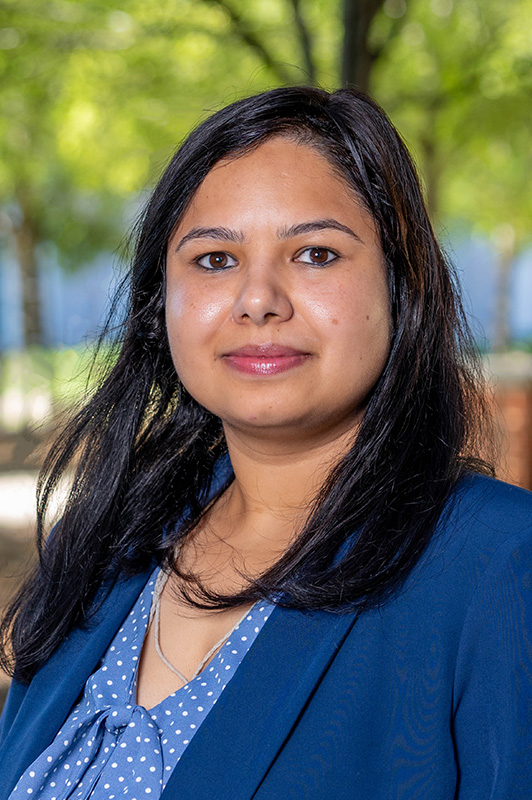
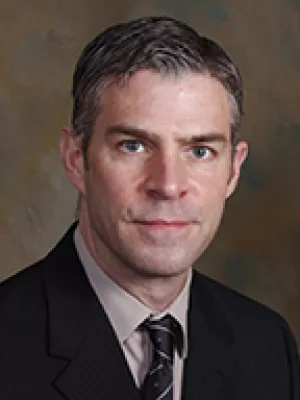
Neha Sharma is an Assistant Professor in the Department of Civil and Environmental Engineering at Auburn University. Her research focuses on nutrient recovery, electrochemical resource recovery, water reuse, trace metal cycling, and pollutant fate and removal.
University of Illinois Urbana-ChampaignUnited States
Dr. Jeremy Guest is the Levenick Professor in Civil and Environmental Engineering (and courtesy appointment in Chemical & Biomolecular Engineering) at the University of Illinois Urbana-Champaign (UIUC). He serves as Associate Director for Research at the Institute for Sustainability, Energy, and Environment (iSEE) and leads the Center for Advanced Bioenergy and Bioproducts Innovation (CABBI). His research focuses on advancing circular bioeconomies through sustainable sanitation systems, resource recovery from wastewater, and biofuel/bioproduct development from lignocellulosic biomass. Guest's work emphasizes Quantitative Sustainable Design (QSD) methodologies to bridge engineering innovation with policy and investment decisions. Education: PhD in Environmental Engineering (University of Michigan, 2012); MS (Virginia Tech, 2007); BS (Bucknell University, 2005). Research interests include wastewater treatment innovation, nutrient recovery, bioenergy systems design, and sustainable agriculture practices. Key contributions include the EcoRecover phosphorus recovery process, the QSDsan modeling platform, and leadership in CABBI's $262.5M DOE-funded initiative. Guest has secured funding from NSF, US EPA, USDA, and the Bill & Melinda Gates Foundation. Recognitions include the NSF CAREER Award, 2021 James J. Morgan Early Career Award, and the Paul L. Busch Award. He advises over 15 graduate students and leads multiple high-impact projects like the NEWgenerator sanitation system and oilcane biorefinery integration. Lab/Group: Guest Research Group focuses on experimental, computational, and policy-oriented research to solve global sustainability challenges. Current projects address algae-based wastewater treatment, fecal sludge management in low-income regions, and precision fermentation systems development.
Mary K. Firestone is Professor of the Graduate School in the Department of Environmental Science, Policy and Management at UC Berkeley. Her research revolutionized understanding of soil microbial processes, particularly oak regeneration techniques and microbial mediation of carbon/nitrogen cycling in terrestrial ecosystems. Firestone's work examines microbial responses to environmental change, including drought, rewetting, and warming scenarios. Her lab develops innovative methods like quantitative stable isotope probing (qSIP) to trace microbial activity in complex soil environments. Research spans grassland, rangeland, and agricultural ecosystems. Honors include election to the National Academy of Sciences (2017), Soil Ecology Society Career Achievement Award (2017), and American Geophysical Union Fellowship (2016). She holds the Betty and Isaac Barshad Chair in Soil Sciences. Current PhD candidates and postdoctoral researchers in the Firestone Lab investigate viral-bacterial interactions in soil, mycorrhizal carbon transfer, and drought impacts on soil carbon persistence. Field studies at California's Hopland Research Center examine grassland responses to climate variability.
Joel S. Hayworth is an Associate Professor in the Department of Civil Engineering at Auburn University's College of Engineering. His research focuses on environmental and ecosystem restoration, particularly in estuarine, terrestrial, and freshwater systems. He leads the Estuarine Environments Research Program (EERP), which investigates the fate of endocrine-disrupting chemicals (EDCs), PFAS, and oil spill residues in coastal environments. Dr. Hayworth's educational background includes a PhD in Civil Engineering (Hydrology/Hydraulics) from Auburn University, an MS in Hydrology from the University of Nevada, Las Vegas via the Desert Research Institute, and a BS in Geophysics from the University of California, Santa Barbara. He previously worked at the Tennessee Valley Authority Engineering Laboratory and the U.S. Air Force Research Laboratory, and founded Hayworth Engineering Science in 1999 before returning to academia in 2010. His research interests span environmental engineering, hydrology, hydraulics, estuarine science, pollutant fate and transport, and chemical fingerprinting. He has developed advanced analytical methods for detecting EDCs and PFAS in water, sediment, and biota. His work integrates field studies, laboratory experiments, and environmental modeling to understand complex hydrologic, geologic, chemical, and biological processes in human-impacted ecosystems. The 15 most recent articles highlight a strong trend in environmental contaminant analysis, particularly focusing on PFAS, oil spill residues, and endocrine disruptors. His research combines analytical chemistry with environmental modeling and field monitoring, often in collaboration with interdisciplinary teams. Key themes include the development of UHPLC-MS/MS and GC-MS/MS methods, fate and transport modeling of pollutants, and ecological risk assessment in estuarine systems. Dr. Hayworth's scientific contributions are supported by funding from agencies such as the Gulf Coast Ecosystem Restoration Council (RESTORE Council). His work has led to significant publications in journals like Science of the Total Environment , Marine Pollution Bulletin , and Water . He actively mentors students and collaborates with researchers like T.P. Clement, G.F. John, and V. Mulabagal. His projects, such as the restoration assessment of Cotton Bayou and Terry Cove, demonstrate applied science for environmental problem-solving. He has developed state-of-the-art analytical laboratories and partnered with coastal communities for long-term monitoring. His laboratory, the Estuarine Environments Research Program (EERP), conducts multi-year studies on endocrine disruptors in estuaries, develops innovative sampling and analysis methods, and trains the next generation of environmental engineers and scientists. The team works across disciplines to address complex environmental challenges in the Gulf Coast region.
Chao Wang is an Associate Professor at the Department of Chemical and Biomolecular Engineering within the Whiting School of Engineering at Johns Hopkins University. He also serves as the Director of the Nano Energy Laboratory and the department’s Master’s Admissions Director. His research focuses on sustainable energy systems and nanomaterials for CO2 capture and conversion, electrocatalysis, thermocatalysis, and green chemical engineering. Education: Bachelor’s degree, University of Science and Technology of China (2004) Doctorate, Brown University (2009) Wang’s research targets efficient energy conversion and storage via nanomaterials with tailored atomic structures, emphasizing catalytic activity, selectivity, and stability. His group explores electrochemical and thermochemical processes for reduced carbon footprints, including CO2 and methane conversion, ammonia recovery, and phosphorus/nitrogen nutrient recycling using zeolite-based systems. Recent publications (2021–2024) highlight his work in high-entropy alloys, solid-state battery materials, CO2 electroreduction, and biomedical nanotechnologies. Collaborative efforts span catalysis, nanoparticle dynamics, and environmental applications. Grants include a $1M DOE award for multi-university research, a $625K DOE grant for electrified transportation systems, and $3M in startup funding for carbon-removal technology commercialization. Alumni under his mentorship include Ph.D. graduates like Michael J. Manto (2018) and Master’s students like Mitchell Keller (2018), with notable achievements in catalyst development for ammonia/phosphorus recovery and industry placements at Grace & Co. and GEA Engineering.
Dr. Appala Raju Badireddy is an Associate Professor in the Department of Civil and Environmental Engineering at the University of Vermont (UVM), and Director of the Water Treatment & Environmental Nanotechnology (WTEN) Laboratory. He is also co-founder and CTO of Secure Surgical Solutions LLC, and a founding member of Vermont Initiative for Biological and Environmental Surveillance (VIBES). His research focuses on sustainable membrane processes, environmental nanotechnology, nanometrology, and water security. Education: Ph.D., Environmental Engineering, University of Houston (2003-2009) M.Tech., Chemical Engineering, Indian Institute of Technology Madras (2001-2003) B.Tech., Chemical Engineering, Jawaharlal Nehru Technological University Hyderabad (1997-2001) Postdoctoral Research, Duke University (2009-2014) under Prof. Mark Wiesner Research Interests: Sustainable Membrane Processes: Water/wastewater treatment, desalination, anti-fouling strategies, and resource recovery. Environmental Nanotechnology: Nano-enabled sensors, remediation, and implications of nanomaterials in ecosystems. Environmental Chemodynamics: PFAS fate/transport, nutrient cycling, and contaminant toxicity. Water Security: Real-time monitoring systems and soil health assessments. His work integrates lab-scale innovations with field applications, emphasizing interdisciplinary collaboration. Recent Research Trends: Recent publications highlight advancements in PFAS remediation, electric-field enhanced filtration, and living lab approaches to precision agriculture. He explores nanomaterials for water treatment while addressing their environmental implications through novel detection methods like ED-HSI microscopy. Labs & Initiatives: WTEN Lab: Focuses on nanotechnology-driven water solutions. VIBES: Develops environmental surveillance tools for public health. Secure Surgical Solutions: Applies nanotechnology to medical devices.
State University of New York at BuffaloUnited States
Ian Bradley is an Assistant Professor in the Department of Civil, Structural and Environmental Engineering at the University at Buffalo, State University of New York. His research focuses on creating sustainable biological processes to address needs in engineered and natural systems for water and wastewater treatment and resource recovery. Education: PhD in Environmental Engineering, University of Illinois at Urbana-Champaign (2017) MS in Environmental Engineering, University of Illinois at Urbana-Champaign (2011) MS in Civil Engineering (Structures), University of Illinois at Urbana-Champaign (2010) Research Interests: Dr. Bradley specializes in microalgal-based nutrient recovery, wastewater surveillance for public health monitoring, PFAS degradation using nanomaterials, and sustainable resource recovery systems. His work integrates biological processes with environmental engineering to optimize wastewater treatment efficiency and develop predictive models for water quality and health outcomes. Publications: His recent research includes advancements in microalgal cultivation (EcoRecover process), wastewater-based epidemiology for SARS-CoV-2 tracking, and computational enzyme design for PFAS remediation. These studies demonstrate interdisciplinary expertise spanning environmental engineering, biotechnology, and public health analytics.
Noah Molotch is a Professor of Geography at the University of Colorado Boulder, where he serves as Director of the Mountain Hydrology Group and is a Fellow of INSTAAR (Institute of Arctic and Alpine Research). His research and teaching focus on hydrologic processes in mountainous regions with expertise in snow hydrology, remote sensing, and ecohydrology. Molotch earned his Ph.D. from The University of Arizona in 2004. His research utilizes ground-based observations, remote sensing, and computational modeling to understand hydrological processes, particularly snow distribution and water-carbon-nitrogen fluxes in mountain ecosystems. His work has significant implications for sustainable resource management and environmental policy. His recent publications show a strong focus on snow water equivalent estimation, snowmelt timing impacts on forest productivity, and the development of advanced remote sensing techniques for monitoring mountain hydrology. His research increasingly addresses climate change impacts on water resources, with particular attention to the Western United States. Fellow of INSTAAR Art+Science fellowship in partnership with artist Hannah Taylor Molotch advises numerous graduate students and leads significant research projects including those funded by NASA and NSF. His Mountain Hydrology Group operates field sites across the Western U.S., including Storm Peak Laboratory and Niwot Ridge Long Term Ecological Research Program. The group produces near-real-time snow water equivalent estimates and contributes to the Snow Today website at the National Snow and Ice Data Center.
Dr. Patrick J. McNamara is an Associate Professor in the Department of Civil, Construction and Environmental Engineering at Marquette University's College of Engineering. He directs the McNamara Research Group, which focuses on understanding how chemicals from consumer products impact public health and the environment once they pass through water treatment systems. His research bridges environmental engineering and microbiology to address critical water quality challenges facing modern infrastructure. Dr. McNamara's educational background includes: Ph.D., 2012, Civil Engineering, University of Minnesota, Twin Cities M.S., 2008, Environmental and Water Resources Engineering, University of Texas at Austin B.S., 2006, Civil Engineering (Minor - Spanish for the Business Professions), Marquette University His research program investigates how consumer product chemicals impact engineering treatment processes that rely on healthy bacteria to treat water. The McNamara Research Group develops non-traditional treatment processes to remove these chemicals from water and mitigate their environmental effects. His work spans antibiotic resistance in water systems, micropollutant removal technologies, pyrolysis of biosolids, PFAS contamination, and electrochemical treatment processes. Specific areas include the impact of corrosion inhibitors on antibiotic resistance, removal of chemicals via drinking water treatment, environmental antibiotic resistant bacteria, beneficial biosolids reuse, and pyrolysis applications. Dr. McNamara's publication record demonstrates a strong focus on emerging water quality challenges, particularly the intersection of chemical contaminants and antibiotic resistance. His recent work examines corrosion inhibitors' impact on antibiotic resistance in drinking water, PFAS mitigation through advanced treatment processes, and environmental drivers of antibiotic resistance in stormwater systems. His research combines fundamental microbiology with practical engineering solutions to address complex water quality issues. Dr. McNamara has received numerous honors and awards: 2022 OCOE Outstanding Researcher Award from Marquette University Marquette University's Campus 2020 KEEN Rising Star Faculty Scholar Award from Provost Office (2019) Central States Water Environment Association Bill Boyle Outstanding Educator Award (2018) Way Klingler Young Scholar Award (Marquette University, 2018) Excellence in Review Award – Environmental Science & Technology (2017) Dr. McNamara has secured significant research funding as Principal Investigator on multiple projects, including NSF grants focused on mitigating antibiotic resistance in drinking water and studying the environmental impacts of quaternary ammonium compounds. His current research portfolio includes projects on PFAS removal through novel electrocoagulation-peroxidation processes, designing green stormwater infrastructure to combat antibiotic resistance, and removing contaminants from greywater using electrocoagulation technology in collaboration with industry partners like Kohler Company. The McNamara Research Group at Marquette University maintains strong collaborations with researchers across multiple institutions and works closely with water utilities and industry partners to translate research findings into practical solutions for water treatment challenges. Their work addresses critical infrastructure needs while protecting environmental and public health through innovative engineering approaches.
Dr. Liang Yu is an Adjunct Professor at Washington State University (WSU) within the College of Agricultural, Human, and Natural Resource Sciences (CAHNRS), Department of Biological Systems Engineering. He holds roles as a Guest Editor for the Journal of Fermentation (Energy Converter-Anaerobic Digestion), Faculty Senator for Non-Tenure Track Faculty, Anti-Hazing Advisory Committee member, and Review Committee member for undergraduate research scholarships at WSU. His research focuses on biorefinery-based industrial symbiosis and the circular economy, employing multi-scale mathematical modeling (molecular simulation, CFD, bioprocess control, machine learning) to optimize anaerobic digestion systems. His work aims to convert organic waste (animal manure, food waste) into renewable natural gas, fertilizers, and bioproducts. He has secured funding from the DOE and USDA, with over 60 peer-reviewed publications and five patents. Key research themes include hydrothermal pretreatment, ammonia recovery, microbial community dynamics, and techno-economic analysis. Recent articles emphasize anaerobic digestion innovation, biodesulfurization, and biohydrogen production. His contributions bridge environmental engineering, biotechnology, and sustainable systems design. Dr. Yu’s grants and patents reflect a commitment to applied sustainability solutions, with projects addressing agricultural waste valorization and energy recovery. Collaborative efforts drive his work, integrating computational modeling with experimental validation for scalable bioenergy systems.
Dr. Larry Moore is a Professor of Civil Engineering at the University of Memphis, specializing in environmental engineering with a focus on wastewater treatment optimization, water quality modeling, and energy conservation in water treatment plants. He holds a B.S. from the University of South Alabama (1973) and M.S./Ph.D. in Environmental Engineering from Mississippi State University (1974/1983). His career spans over 33 years of teaching and applied research, addressing wastewater challenges for over 200 industries in Tennessee through the UT Center for Industrial Services. Research interests include water quality modeling of streams (e.g., Loosahatchie River studies), optimization of municipal/industrial wastewater treatment plants, and energy efficiency improvements in water treatment facilities. Collaborative projects with the Tennessee Department of Environment and Conservation and the U.S. Department of Energy have driven energy savings in over 24 treatment plants. Dr. Moore has served as President of the Kentucky-Tennessee Water Environment Association (KTWEA) and received the prestigious Leary Jones Award (2009) for his contributions to the wastewater profession, inducting him into the KTWEA Hall of Fame. Teaching responsibilities include advanced graduate courses such as Biological Wastewater Treatment, Water Quality Modeling, and Solid Waste Management. Awards include multiple 'Superior Performance in University Research' recognitions (1985-1989) and the 1990 Civil Engineering Outstanding Research award. He actively mentors graduate students in applied wastewater research and has advised numerous M.S. and Ph.D. candidates focusing on treatment plant optimization and emerging technologies. Professional Affiliations: Life Member of Water Environment Federation, KTWEA Pretreatment Certification Committee (since 2000), Tennessee Water and Wastewater Operator Certification Board (since 2007) Key Projects: Operational guidance for Memphis' Maxson WWTP, energy conservation studies across 24 plants, and aeration system design improvements Community Impact: Operator training programs, NPDES permit compliance support, and industrial wastewater problem resolution
Dr. Yuanzhi Tang is the Georgia Power Professor at the Georgia Institute of Technology with joint appointments in the School of Earth and Atmospheric Sciences and School of Civil and Environmental Engineering. He directs the Center for Critical Mineral Solutions, co-founded the Georgia Partnership for Essential Minerals, and serves as Associate Co-Director of Interdisciplinary Research at the Brook Byers Institute for Sustainable Systems. He is also Co-Editor-in-Chief of Chemical Geology and Associate Editor of Geochimica et Cosmochimica Acta . His research investigates molecular-scale interfacial processes in natural and engineered systems, focusing on: Contaminant fate/transport at microbe-mineral-water interfaces Biogeochemical cycling of metals and nutrients Resource recovery from waste streams Synchrotron applications in environmental science Recent publications emphasize rare earth element recovery, waste valorization, and sustainable energy materials, employing advanced spectroscopic techniques to understand reaction mechanisms. Professor Tang leads an active research group with multiple postdoctoral researchers, graduate students, and undergraduates. His externally funded projects include: NSF: Rare earth elements in sedimentary systems DOE: Critical metal recovery from waste streams NASA: Manganese oxide formation mechanisms DoD: Rare earth separation technologies
Yangyang Zhao is a Research Fellow at Princeton University, affiliated with the Resplandy Research Group. His work focuses on climate science and ocean biogeochemistry, particularly coastal hypoxia and nitrous oxide dynamics in the Northern Indian Ocean. Research Interests Interactive marine carbon, nitrogen, and oxygen biogeochemistry Coastal and ocean deoxygenation processes Impact of climate change and human activities on oceanic oxygen dynamics Regional biophysical ocean modeling for nitrous oxide variability Publications Overview Yangyang’s publications span 2012–2025, emphasizing coastal hypoxia, nitrous oxide dynamics, CO2 fluxes, and marine environmental changes. His work integrates observational data with high-resolution physical-biogeochemical models, addressing climate-ocean interactions and anthropogenic impacts. Laboratory Affiliation Yangyang is part of the Resplandy Research Group at Princeton University, which investigates climate science and ocean biogeochemistry through multidisciplinary approaches.
University of California, San FranciscoUnited States
Dr. Stanley J. Rogers is a Professor in the Department of Surgery at the University of California, San Francisco (UCSF), School of Medicine. He holds the Ruth M. Dunn Endowed Chair in Minimally Invasive Surgery and the His Majesty King Bhumibol Adulyadej, Rama IX Distinguished Professorship of Global Surgery. He serves as Interim Division Chief of General Surgery and directs the Bariatric Surgery Center, Liver Tumor Ablation Program, and Minimally Invasive Surgery Program. He is also a staff and trauma surgeon at Zuckerberg San Francisco General Hospital and Trauma Center, where he leads videoendoscopic surgery. University: University of California, San Francisco School: School of Medicine Department: Department of Surgery Role: Professor, Interim Division Chief, Director Email: stan.rogers@ucsf.edu Dr. Rogers' research and clinical expertise focus on minimally invasive and bariatric surgical techniques, particularly laparoscopic surgery, sleeve gastrectomy, gastric bypass, and liver tumor ablation. His work explores the metabolic and skeletal consequences of bariatric procedures, with a strong emphasis on calcium metabolism, bone health, and gut microbiome changes. He has contributed extensively to understanding complications and outcomes in gastrointestinal and metabolic surgery. His recent publications show a consistent trend in studying the long-term metabolic and skeletal impacts of bariatric surgery, particularly comparing sleeve gastrectomy and gastric bypass. Key themes include bone mineral density changes, calcium absorption, hormonal regulation (e.g., PYY), and the role of the gut microbiome. Many studies involve collaborations with endocrinologists and metabolic researchers, reflecting a multidisciplinary approach to surgical outcomes. Scientific Awards and Honors: Honorary Fellow, Royal College of Surgeons (2016) His Majesty King Bhumibol Adulyadej Rama IX Distinguished Professor of Global Surgery, UCSF (2012) Ruth M. Dunn Endowed Chair in Minimally Invasive Surgery, UCSF (2011) Fellow, American College of Surgeons (1995) Dr. Rogers has supervised numerous residents and fellows and is actively involved in clinical training. He has served as Principal Investigator and Co-Investigator on multiple NIH-funded grants, including studies on calcium absorption, sleeve gastrectomy effects, and anti-reflux surgery. His work has significant implications for improving postoperative care and long-term outcomes in bariatric patients. He is affiliated with several key programs at UCSF, including the Bariatric Surgery Center, the Liver Tumor Ablation Program, the Minimally Invasive Surgery Program, the Comprehensive Cancer Center, and the Institute for Global Health Sciences. His leadership extends to clinical trials on endoscopic techniques and bariatric revision surgery.
Andrew J. Schuler is an Associate Professor in the Department of Civil Engineering at the University of New Mexico, where he has been since 2007. His research focuses on microbial processes in wastewater treatment and bioremediation, with particular emphasis on modeling distributed bacterial states, biofilm dynamics, and integrating molecular methods with environmental engineering. He teaches courses in water/wastewater treatment (CE 335) and biological wastewater treatment (CE 536). Ph.D., Civil and Environmental Engineering, University of California at Berkeley (1998) M.S., Civil and Environmental Engineering, UC Berkeley (1993) B.S., Civil Engineering, University of Colorado at Boulder (1987) Dr. Schuler's research addresses critical challenges in biological wastewater treatment , including: Microbial storage products and density effects on solids separation Agent-based modeling of bacterial state distributions Integrated fixed-film activated sludge (IFAS) systems Photolytic and microbial degradation of Superfund chemicals His recent publications explore biofilm surface chemistry , algae-based wastewater treatment , and computational modeling of microbial communities . Notable funded projects include NSF CAREER grants, NIEHS Superfund subprojects, and North Carolina Biotechnology Center collaborations. National Science Foundation CAREER Award (2004) Paul L. Busch Award (2008) AEESP/CH2M HILL Outstanding Doctoral Dissertation Award (1999) Japan Society for the Promotion of Science Postdoctoral Fellowship (1999) Dr. Schuler leads the Schuler Laboratory , which investigates microbial dynamics in wastewater treatment systems, develops the DisSimulator agent-based modeling tool, and provides practical solutions for activated sludge settling problems through density analysis. Current funding supports advanced research in biofilm optimization and sustainable water reuse technologies.