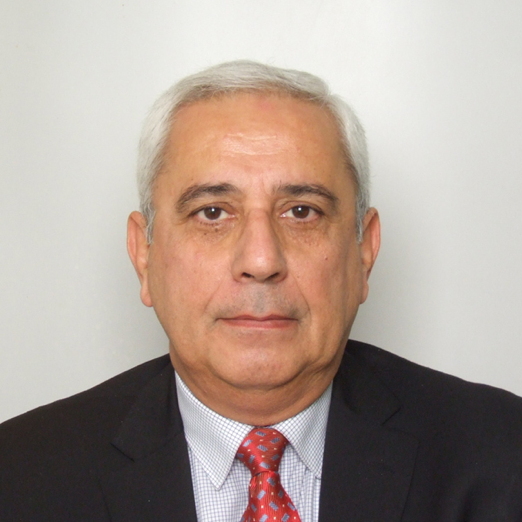
Professor Andrew J Hogg is a faculty member at the School of Mathematics, University of Bristol. He is affiliated with the Cabot Institute for the Environment, specializing in fluid mechanics and applied mathematics. His research spans environmental phenomena, including volcanic ash clouds, debris flows, and sediment transport in coastal regions. Education: M.A., Ph.D.(Cantab.) His research focuses on mathematical modeling of two-phase flows in natural environments. Key areas include: Volcanic ash dispersion and plume dynamics Granular segregation in industrial and geological settings Suspended sediment transport in rivers and coasts Viscoplastic material behavior in mudflows and debris flows Recent work examines coherent turbulent eddies, yield stress transitions, and environmental impacts of engineering structures. Publications highlight interdisciplinary approaches combining analytical, numerical, and experimental methods. Current projects address volcanic plume rise, viscoplastic slumps, and sediment transport models. He collaborates with earth science and engineering departments locally and internationally.
Nasser Darabiha is a Professor of Exceptional Class at CentraleSupélec's EM2C Laboratory. His career includes significant leadership roles such as Director of the Franco-Brazilian LIA (CNRS) Energy and Environment since 2016, President of the Technical Committee of GENCI, and membership in the Scientific Council of FRAE (Foundation for Research in Aeronautics and Space). Previously, he served as Director of the EM2C Laboratory (2002–2009), Dean of the Ph.D. School at École Centrale Paris (2011–2012), and Head of the Department of Energy (2005–2008). Education: Habilitation, Polytechnic Institute of Toulouse (1994) Ph.D. in Combustion, École Centrale Paris (1984) M.S. in Energy, École Centrale Paris (1981) Specialization Diploma in Energy, École Centrale Paris (1980) B.S. in Mechanical Engineering, Sharif University of Technology, Iran (1975) Research Focus: Darabiha's expertise spans theoretical/numerical modeling of combustion phenomena (laminar/turbulent flames, soot reduction, chemical kinetics tabulation) and experimental methods (laser diagnostics, signal processing). His work advances fundamental understanding of reactive flows in aerospace propulsion, energy systems, and pollutant mitigation. Publication Trends: His recent articles predominantly explore advanced combustion modeling techniques (LES/DNS), soot/PAH dynamics, plasma-assisted ignition, and alternative fuel chemistry. Computational fluid dynamics, particularly lattice Boltzmann methods and chemical mechanism optimization, feature prominently alongside experimental validations of high-pressure combustion systems. Awards & Honors: Officer in the Order of Academic Palms (2012) Knight in the Order of Academic Palms (2005) Leadership & Advising: He directs the Franco-Brazilian LIA consortium and has supervised numerous Master/PhD students. His grants include leadership of large-scale computational projects through GENCI. He established the EM2C Laboratory as a leading combustion research facility during his directorship. Laboratories & Teams: Leads research groups at EM2C Laboratory focusing on turbulent combustion modeling, plasma ignition, and soot formation. Collaborates internationally through the Franco-Brazilian LIA on sustainable energy solutions.
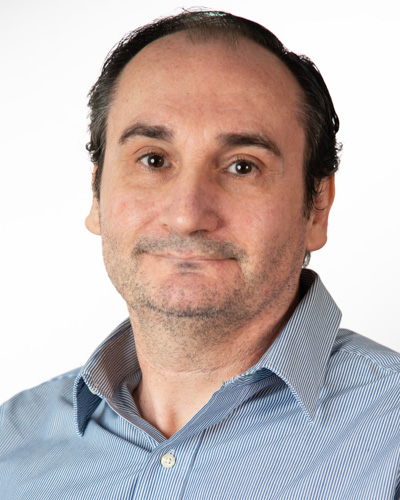
Dr. Mark Woodgate is a Research Associate in the Autonomous Systems & Connectivity research group at the School of Engineering, University of Glasgow. His research focuses on computational fluid dynamics applications for rotorcraft and helicopter aerodynamics, with extensive publications spanning over two decades. His research interests include: Computational Fluid Dynamics for rotorcraft applications Rotor blade design and optimization Helicopter aerodynamics and dynamics Wind turbine analysis High-fidelity CFD/CSD methods Dr. Woodgate's recent publications demonstrate a strong focus on advanced computational methods for rotorcraft analysis and design. His work frequently involves collaboration with George Barakos and other researchers at the University of Glasgow. Key research trends include the application of harmonic balance methods, adjoint optimization techniques, and the development of efficient CFD solvers for rotorcraft applications. His research has significant implications for helicopter design, tiltrotor aircraft, and wind turbine technology. Scientific contributions: Development of implicit hybrid methods for rotorcraft flow computation Analysis of rotor blade stall and flutter phenomena Simulation techniques for helicopter ditching scenarios Optimization frameworks for rotor blade planform design Dr. Woodgate has supervised research students, including Dada, Oyedoyin Samuel, who worked on 'Machine Learning for Flying Vehicles - Demonstration for autonomous fire-fighting aircraft.' His work bridges traditional aerospace engineering with emerging computational techniques and applications.
Josselin Ouf is a researcher at Delft University of Technology (TU Delft), specializing in geomechanics and numerical modeling of subsurface processes. His work focuses on fracture reactivation, reservoir cooling, and injection-induced permeability changes in geothermal systems. Primary Affiliation: Delft University of Technology Research Interests: His research explores the interplay between fluid flow and mechanical deformation in fractured geological formations, with applications to geothermal energy systems. Key areas include: Numerical multi-physics analysis of fractures Fault reactivation mechanisms Hydro-mechanical coupling in reservoirs Cold water injection impacts Micro- to macro-scale modeling transitions Publication Trends: Recent work emphasizes computational verification of fracturing processes, field validation through hydraulic testing at the Grimsel Test Site, and analytical methods for predicting fracture permeability evolution under thermal and hydraulic stresses.
Dr. Lars Bittrich is a Research Fellow at the Leibniz Institute of Polymer Research Dresden (IPF Dresden), working in the Department of Tailored Lightweight Composites within the Division of Polymer Materials Engineering. He collaborates closely with Prof. Dr.-Ing. A. Spickenheuer, the head of his department, and is actively involved in research on composite materials, numerical modeling, and simulation. Dr. Bittrich's primary research interests focus on: Numerical modeling and simulation of composite structures Optimization of fiber-reinforced composite materials Automated experimental data analysis Resin transfer molding and infiltration processes Variable-axial composite laminates and structural optimization His work bridges computational methods with practical applications in lightweight composite manufacturing, contributing significantly to advancements in the field of polymer materials engineering. Analysis of Dr. Bittrich's recent publications (2019-2025) reveals a strong focus on computational approaches to composite material design and characterization. His research shows increasing integration of machine learning techniques with traditional finite element analysis, particularly for understanding fiber-matrix interactions. There's also a clear progression toward more complex manufacturing processes like tailored fiber placement and additive manufacturing of multi-matrix composites. His work frequently intersects with environmental applications, particularly in microplastic analysis techniques. Dr. Bittrich has been involved in several significant research projects including: EU project "EMBROIDERY" DFG project "OptiTex" DFG project "MerVa" These projects reflect his expertise in advanced composite manufacturing techniques and computational modeling approaches. Dr. Bittrich is part of the research team working on innovative approaches to composite material design and manufacturing within the Tailored Lightweight Composites department. His work contributes to the broader mission of the Division of Polymer Materials Engineering, which focuses on the entire life cycle of polymer materials from synthesis to recycling.
Prof. Andrei Metrikine serves as Professor in the Department of Offshore Engineering within the Faculty of Civil Engineering and Geosciences at Delft University of Technology. His research spans structural dynamics, offshore engineering, and renewable energy systems with particular focus on marine applications. His research interests include offshore engineering, structural dynamics of railways and foundations, soil-structure interaction, wave energy conversion, and renewable energy systems. His work integrates analytical modeling, numerical simulation, and experimental validation to address complex challenges in marine environments, particularly concerning dynamics of structures interacting with soils and waves. Recent publications (2025) demonstrate strong emphasis on offshore energy applications, including development of the HAMS-MREL open-source solver for hydrodynamic analysis, investigation of instability mechanisms in high-speed transportation systems, and optimization of wave energy converter arrays. His research trends show increasing focus on renewable energy integration and environmental compatibility of offshore installations. He received the David Hislop Award in 2022 for contributions to sand dynamics, 3D FE modeling, and lateral stiffness analysis. Prof. Metrikine has supervised 28 students and led significant projects including VALID (Verification through Accelerated testing Leading to Improved wave energy Designs, 2020-2023). He served as Editor-in-Chief of the Journal of Sound and Vibration (2018-2020) and editorial board member for the International Journal of Railway Technology (2018-2019). He directs the Marine Renewable Energies Lab (HAMS-MREL), developing open-source computational tools for hydrodynamic analysis of marine renewable energy systems and offshore structures.
Dr Rabea Elmazuzi is a Senior Lecturer at the University of Salford's School of Science, Engineering & Environment, affiliated with the Informatics research centre. With over 30 years of mathematical expertise, she joined Salford in 2010 establishing the mathematics degree programme and advanced to Teaching Fellow in 2020, leading the Financial Mathematics programme until 2023. Her academic credentials include: BSc in Mathematics MSc in Pure Mathematics (dissertation on Topology) from University of Tripoli PhD in Fluid Dynamics from University of Salford (2011) on Oscillatory Oseenlets Her research pioneers fast numerical solutions for Boundary Integral Equations and Partial Differential Equations using wavelet/multiwavelet techniques, with groundbreaking applications in biological fluid dynamics including micro-robotic propulsion systems and micro-organism locomotion. She also develops wavelet-based solvers for high-dimensional PDEs in machine learning contexts. Analysis of her publications (2004-2023) reveals an evolutionary trajectory from foundational boundary element methods toward sophisticated micro-robotic motion modeling. Her work consistently employs Fourier expansions and Green's integral representations to solve oscillatory fluid problems, with recent focus on energy-efficient non-reciprocal swimming motions in Stokes flow. Dr Elmazuzi implements innovative teaching practices through formative feedback systems and manages the nationwide "Levelling up" scheme providing teaching experience for mathematics students. She represents Salford University in the Greater Manchester academic consortium alongside Manchester Metropolitan University and University of Manchester.
Arnold Van Rooijen is a Lecturer in Coastal Engineering and ARC Early Career Industry Fellow at The University of Western Australia's School of Earth and Oceans and UWA Oceans Institute. With 15 years of experience in coastal engineering research, education, and consultancy, he employs laboratory, numerical modeling, and field techniques to advance understanding of coastal physical processes including ocean waves, currents, and sediment transport. Education: PhD in Coastal Engineering, "Wave and current induced flows in aquatic vegetation canopies," The University of Western Australia (2015-2019) MSc in Coastal Engineering, "Modeling sediment transport in the swash zone," Delft University of Technology (2008-2011) BSc in Civil Engineering, Delft University of Technology (2005-2008) Dr. Van Rooijen's research focuses on quantifying how marine habitats and bio-engineered structures protect against coastal flooding and erosion. His work spans coastal hydro-morphodynamic processes, beach and dune erosion, long-term coastal evolution, and nature-based coastal protection systems, with specific expertise in processes around mangroves, seagrass, shellfish reefs, and salt marshes. His research contributes to UN Sustainable Development Goals related to climate action and life below water. His recent publications reveal a strong emphasis on wave attenuation mechanisms, sediment transport dynamics, and the effectiveness of nature-based solutions for coastal protection. The research shows increasing integration of field observations with advanced numerical models to predict coastal responses to environmental changes, with particular attention to Australian coastal environments and marine habitats. Scientific Recognition: Oceans Graduate School Early-Career Research Award (2022) ARC Early Career Industry Fellowship (2023) Dr. Van Rooijen leads multiple research initiatives including his ARC Early Career Industry Fellowship project (2024-2030), hydrodynamic energy attenuation research with seaweed aquaculture (2024-2027), and projects on coastal resilience through community engagement (2024-2025) and climate change impacts on Western Australia's intertidal habitats (2023-2024). He maintains active collaborations across Australian research institutions and government agencies. His research methodology combines physical experiments in wave tanks, field measurements, and sophisticated numerical modeling approaches, building on his prior industry experience at Deltares (2011-2020) where he worked as a Coastal Engineer before joining UWA.
Dr. Lin Li is an Associate Professor in Marine/Ocean Technology at the Faculty of Science and Technology , University of Stavanger . With a PhD from NTNU and degrees from Shanghai Jiao Tong University , she leads research in marine structural dynamics, aquaculture-hydrodynamics, and offshore wind integration. PhD Marine Technology (NTNU) MSc Design and Construction of Ships/Ocean Structures (Shanghai Jiao Tong University) BSc Naval Architecture and Ocean Engineering (Shanghai Jiao Tong University) Her research focuses on: Dynamic analysis of marine structures Design of aquaculture systems Hydrodynamic modeling for offshore wind Statistical wave analysis Recent publications highlight advancements in: Hybrid offshore fish cage-wind turbine systems Metocean condition modeling Subsea spool deployment methods Extreme response prediction techniques She actively contributes to international marine technology conferences and applies open-source tools for hydrodynamic validation.
Dominik Meidner is a Senior Lecturer at the Chair of Optimal Control at the Technical University of Munich (TUM), part of the School of Computation, Information and Technology. He leads the Department of Mathematics as Department Manager since 2025. His research focuses on optimal control of partial differential equations (PDEs), numerical methods for PDE-constrained optimization, adaptive finite element methods, and software development for scientific computing. He has authored numerous publications and contributed to software like Gascoigne and RoDoBo. His academic roles include teaching Analysis courses and supervising over 30 theses since 2009. Key awards include the 2019 Dozentenpreis and the Felix-Klein-Lehrpreis 2010. His work bridges theoretical developments with practical applications in fluid-structure interaction, fractional diffusion, and error estimation. Education: PhD (2008, Heidelberg University), Diplom (2003, Heidelberg University). Research Interests: Optimal control, numerical analysis, finite elements, PDE-constrained optimization, adaptive discretization. Software Contributions: Gascoigne (finite element toolkit), RoDoBo (optimization library). Key Activities: Co-organizer of OCIP workshops, member of the TUM-MCLQST cluster, and contributor to academic infrastructure projects.
Kenneth Jansen is a Professor in the Department of Aerospace Engineering Sciences at the University of Colorado, holding the Denver Business Challenge Endowed Professorship. He serves as Director of the Aerospace Mechanics Research Center (AMReC) and specializes in computational fluid dynamics (CFD), turbulence modeling, and aerodynamic performance analysis. His research focuses on: Turbulent boundary layers under pressure gradients and curvature Large eddy simulation (LES) and direct numerical simulation (DNS) of aerospace flows Data-driven turbulence closure models for CFD Hypersonic and supersonic flow analysis Active flow control for aerodynamic efficiency Mesh adaptation and high-performance computing Recent publications highlight his work on jet interactions, wind tunnel simulations, and multifidelity modeling. Awards include the Denver Business Challenge Endowed Professorship. Jansen leads projects involving the PHASTA finite element solver and contributes to exascale computing initiatives (ECP applications). His collaborations span experimental and computational studies for aerodynamic flow control and medical CFD applications.
Guillermo Araya is the Wayne and Julie Fagan Endowed Professor and Associate Professor in the Mechanical Engineering Department at the University of Texas at San Antonio (UTSA). He leads the Computational Turbulence and Visualization Lab (CTV Lab) , focusing on high-fidelity numerical simulations of turbulent flows, scientific visualization, and HPC applications. His research bridges fluid dynamics, aerospace engineering, and immersive technologies like VR/AR for education and research. Affiliations : Klesse College of Engineering, CTV Lab Director Education : Ph.D. in Mechanical Engineering, Rensselaer Polytechnic Institute (RPI), 2008 Research Interests : Turbulent boundary layers, hypersonic flows, DNS/LES, VR/AR visualization, flow separation mechanisms, and HPC infrastructure. He emphasizes translating complex fluid dynamics phenomena into educational tools for K-12 and university students. Recent Technical Contributions : Development of the Narwhalito GPU cluster (2025) for large-scale DNS simulations. Recent work includes studies on wall-curvature effects in supersonic flows (APS 2024), periodicity detection in turbulent boundary layers (AIAA 2024), and coherent structure analysis in crossflow jets (AFOSR-funded). Awards : PECASE (2023), NSF CAREER (2019), AIAA Associate Fellow (2021) Grants & Collaborations : PI or Co-PI on $2.8M+ in grants (AFOSR, DoD, NSF). Collaborates with institutions like Los Alamos National Lab and the University of Colorado. Supervises a diverse team of graduate/undergraduate researchers and postdocs. Labs/Teams : CTV Lab (founded 2023) specializes in HPC, DNS, and immersive visualization tools. Hosts workshops and training programs for students in supercomputing and fluid dynamics.
Mohammad Masoudi is a Postdoctoral Fellow at the University of Oslo , Department of Geosciences, Section for Environmental Geosciences. His research focuses on CO2 and H2 storage , water-rock interactions , and pore-scale modeling of reactive transport in subsurface environments. Education PhD in Geosciences (University of Oslo, 2021) M.Sc. in Reservoir Engineering (University of Tehran, 2016) B.Sc. in Reservoir Engineering (Petroleum University of Technology, 2014) His work addresses salt precipitation , mineral nucleation , and permeability-porosity relationships during carbon and hydrogen storage. Recent publications highlight microfluidic experiments , thermodynamic modeling , and environmental implications of subsurface energy systems. Key projects include Hystorm (hydrogen storage in petroleum reservoirs), SaltPreCO2 (salt precipitation kinetics), and Polish-Norwegian CCS Network (carbon capture technologies). He collaborates with the CO2 Storage research group at UiO.
Liuchi Li is an Assistant Professor of Civil and Environmental Engineering at Princeton University, affiliated with the HMEI (likely High Meadows Environmental Institute). His research focuses on the mechanics of complex material systems, including granular media, fracture mechanics, and metamaterial design. He integrates computational and experimental techniques such as synchrotron X-ray imaging and phase-field simulations to study material behavior across scales. Research interests include understanding contact mechanics in granular systems, dynamic fracture in brittle solids, and metamaterial applications for environmental resilience. His work spans disciplines like solid mechanics, soft matter physics, and optical diagnostics to bridge micro-scale phenomena with macro-scale engineering solutions. Key projects involve analyzing crack propagation in glass-ceramics at velocities of ~1500 m/s using 5 Mfps imaging, and exploring material heterogeneity effects in fracture dynamics. He develops novel architected materials with tunable stiffness for sustainable infrastructure applications. His research team employs advanced methods like Shack–Hartmann wavefront sensing and coupled material-point/level-set simulations to address challenges in geomechanics, fluid-structure interactions, and adaptive material systems. No scientific awards are explicitly mentioned, and his advising/grants activity is not detailed here.
Alejandro Aguirre Ruz is a researcher affiliated with the Universitat Politècnica de Catalunya (UPC), specifically within the Departament d'Enginyeria Civil i Ambiental at the Escola Tècnica Superior d'Enginyeria de Camins, Canals i Ports de Barcelona (ETSECCPB) . His work focuses on advanced computational mechanics, particularly in finite element methods for structural analysis and fluid-structure interaction problems. He is part of the research groups ANiComp - Anàlisi Numèrica i Computació Científica and (MC)² - Mecànica de Medis Continus i Computacional . His research emphasizes stabilized finite element formulations for thin structures, including solid-shell elements, Reissner-Mindlin plates, and Timoshenko beams. Key contributions include variational multiscale methods and stress-displacement analyses in both infinitesimal and finite strain regimes. He has published in high-impact journals like Applied Mathematical Modelling and Finite Elements in Analysis and Design , with recent work extending to 2025 on fluid-structure interaction applications. Aguirre Ruz defended his doctoral thesis in 2023 titled Numerical approximation of thin structures using stabilized mixed formulations... , supervised by Professors Ramon Codina and Joan Baiges. He actively collaborates with researchers such as Inocencio Castañar and Zorrilla Martínez, contributing to projects like the Anàlisi Numèrica i Computació Científica initiative funded under the Supòrt a la Recerca program. His technical expertise bridges theoretical developments in numerical methods with practical engineering applications, addressing challenges in structural dynamics and multiphysics systems.