Dr. Sanghyun Lee is an Associate Professor of Mathematics specializing in computational methods for multi-physics problems in porous media. His research develops mathematical frameworks for coupled thermo-hydro-mechanical-chemical processes. Core research areas include: Phase-field fracture propagation in complex media Enriched Galerkin methods with local conservation properties Data assimilation for subsurface flow systems Recent publications present novel techniques for fracture modeling in porous media and thermo-poroelasticity simulations. Applications span energy resource recovery, geological storage, and environmental engineering. The research integrates high-performance computing with finite element methods to model multi-scale phenomena. Dr. Lee develops open-source simulation tools for scientific and industrial applications.
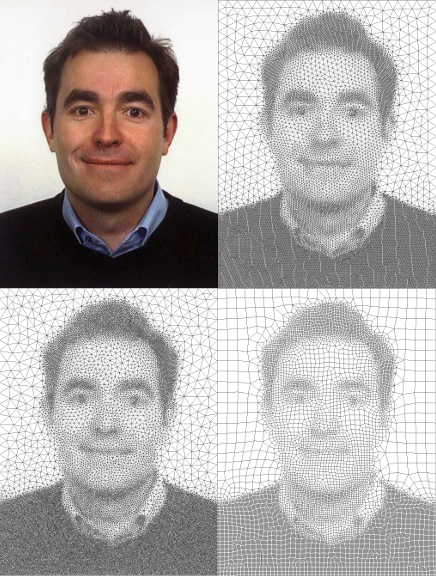
Prof. Christophe Geuzaine is a Full Professor in the Department of Electrical Engineering and Computer Science at the University of Liège , Belgium. He previously held academic positions at Case Western Reserve University (Assistant Professor of Mathematics) and California Institute of Technology (Postdoctoral Scholar in Applied and Computational Mathematics). Research Focus: Computational electromagnetism, biomedical/geophysical modeling, and open-source software development (Gmsh, GetDP) Teaching: Courses in electromagnetic energy conversion, scientific computing, and multiphysics projects Location: Montefiore Institute B28, Quartier Polytech 1, Liège, Belgium His research employs ONELAB tools for high-temperature superconductivity ( Life-HTS ), photonics ( ONELAB-Photonics ), and domain decomposition ( GetDDM ). Current work emphasizes large-scale time-harmonic wave simulations and quantum computing applications.
Martin Lind is an Assistant Professor of Mathematical Analysis at Karlstad University. His research focuses on advanced topics in mathematical analysis, including discrepancy theory, functions of bounded variation, approximation theory, and multiscale systems. He holds a PhD from Karlstad University (2013) and completed a post-doctoral fellowship at the University of South Carolina (2014-2015). Education: PhD in Mathematics, Karlstad University, 2013 His work bridges pure and applied mathematics, addressing problems in number theory, functional analysis, and numerical methods. Key research themes include: Discrepancy estimates for pseudorandom sequences Properties of functions with bounded variation (p-variation, Lambda-variation) Nonlinear approximation methods using splines Analysis of multiscale elliptic-parabolic systems His recent publications (2020-2024) emphasize number-theoretic aspects of sequences and their applications in quasi-Monte Carlo methods. He collaborates actively on applied projects like pollution reduction modeling with photocatalytic materials. Notable contributions include: Developing variational characterizations of Sobolev spaces Establishing convergence rates for semidiscrete Galerkin schemes Exploring Fubini-type properties in multivariate analysis
John Sous is an Assistant Professor of Applied Physics at Yale University. His research focuses on complex quantum systems with strong correlations, exploring novel functionalities for future technologies such as energy materials. Key areas include correlated quantum matter (quantum materials, ultracold atoms/molecules) and dynamical nonlinear systems (optically driven quantum systems, neural learning models). He has been awarded the AFOSR Young Investigator Program Award (2024-2027) and the Gordon and Betty Moore Foundation Postdoctoral Fellowship (2022-2023). His work bridges theoretical physics and computational methods, with recent contributions to superconductivity theory, polaron dynamics, and topological protection mechanisms. Notable research trends include investigation of bipolaronic superconductivity mechanisms, electron-phonon coupling effects, and quantum many-body systems under optical excitations. His studies often leverage advanced computational tools like the Generalized Green's function Cluster Expansion Python package. Collaborations with experimental groups and interdisciplinary efforts in AI applications (e.g., benchmarking foundation models) highlight his cross-cutting research approach. Key Awards: Nevill Mott Prize (2024), AFOSR YIP (2024), Moore Fellowship (2022) Grant activities include Yale Engineering seed funding for AI-driven physics research. His advisory work focuses on graduate students in condensed matter and quantum physics domains.
Professor Wulf Dettmer is affiliated with the School of Aerospace, Civil, Electrical and Mechanical Engineering at Swansea University. He specializes in Finite Element Technology , Computational Fluid-Structure Interaction (FSI) , and Morphing Aircraft research. His work spans disciplines including: Fluid-Structure Interaction Structural Dynamics Renewable Energy Systems Multi-Scale Modeling Key research trends include: Advanced time integration schemes for dynamic problems Machine learning applications in material modeling Cryogenic hydrogen energy systems Partitioned FSI solvers Flexible structures for energy harvesting Professor Dettmer has supervised numerous PhD and EngD projects in collaboration with Prof Djordje Peric and other colleagues, focusing on topics like neural network-based finite element frameworks and multi-scale composite analysis.
Prof. Karl Hollaus is a researcher at TU Wien's Computational Mathematics in Engineering Research Group within the Faculty of Mathematics and Geoinformation . His work focuses on computational electromagnetics , multiscale finite element methods (MSFEM) , and eddy current problem simulations . He leads projects such as Effektive Materialtransformation für ferromagnetische Bleche and Magnetik für Filter , addressing challenges in laminated iron cores and magnetic materials. His research emphasizes high-performance computational techniques for engineering applications, including nonlinear systems and material modeling. Key research interests include domain decomposition methods , vector hysteresis modeling , and effective interface conditions . He has developed innovative approaches for simulating eddy current losses, magnetic flux routing in electrical machines, and ventilation panel thermal behavior using multiscale FEM. Collaborators include Markus Schöbinger and Valentin Hanser, with whom he co-authored numerous conference papers and journal articles. Education: Dipl.-Ing. (Master's) and Dr.techn. (PhD) in engineering. Awards: None explicitly listed. Recent publications (2022–2023) highlight advancements in harmonic balance methods combined with model order reduction for nonlinear systems, magnetic microwire materials for flux guidance, and effective material modeling for laminated cores. His work bridges theoretical computational mathematics with practical engineering solutions, particularly in electromechanical systems and metamaterials. Advising: Supervised PhD candidates Valentin Hanser (2021 thesis on eddy current computations) and Markus Schöbinger (multiple co-authored presentations). Active in TU Wien's Network Lab and contributes to the Scientific Computing and Modelling Research Division .
Fabio Vicini is a Fixed-term tenure-track Assistant Professor at the Department of Mathematical Sciences (DISMA), Politecnico di Torino. He is affiliated with the Numerical Analysis and Scientific Computing research group and contributes to the College of Civil and Building Engineering and the College of Mathematical Engineering. His work bridges theoretical numerical methods and high-performance computing applications. Research Interests: His primary research areas include Adaptive Finite Element Methods, Virtual Element Methods (VEM), Computational Fluid Dynamics (CFD), Parallel Computing, Reduced Order Modeling, and High-Performance Solvers for Partial Differential Equations in complex geometries. His work emphasizes algorithmic robustness, efficiency, and scalability in scientific simulations. Recent Publication Trends: His latest articles (2024–2025) focus on advancing the Virtual Element Method—particularly in 3D adaptive settings, stabilization-free error bounds, mesh optimization, and performance on poorly shaped elements. Additional work involves nonlinear optimization for material simulation and extended finite elements for coupled 3D–1D problems, reflecting a strong trend in numerical analysis and computational mathematics. Scientific Awards: Communicating Research to the Citizens (Politecnico di Torino, 01-07-2025) Effective Communication with Businesses (Politecnico di Torino, 01-07-2025) Advising and Teaching: He supervises two PhD students—Lorenzo Neva and Karol Lizeth Cascavita Mellado—in the Mathematical Sciences program. He teaches core courses such as High-Performance Scientific Computing I & II, Model Order Reduction and Machine Learning, and Programming and Scientific Computing across multiple engineering programs including Aerospace, Automotive, and Mathematical Engineering. Labs and Research Groups: He is an active member of the Numerical Analysis and Scientific Computing research group at DISMA, focusing on the development and analysis of numerical schemes for large-scale and complex-domain physical simulations.
Prof. Dr.-Ing. habil. Jörg Schröder is a full Professor of Mechanics at the University of Duisburg-Essen, Faculty of Engineering, Department of Civil Engineering, and leads the Institute of Mechanics. He has held significant leadership roles, including Vice-Rector for Research and Knowledge Transfer, and is currently Vice-President (2023–2025) and former President (2020–2022) of the International Association of Applied Mathematics and Mechanics (GAMM). He is a member of acatech and the Academy of Sciences and Literature, Mainz. PhD and Habilitation, Universität Stuttgart Professor since 2001, University of Duisburg-Essen Spokesperson, DFG Priority Programme 1748 and Research Unit 1509 Editor-in-Chief, Archive of Applied Mechanics His research centers on computational and continuum mechanics, with a focus on constitutive modeling, finite element methods, and multiscale simulations of materials such as dual-phase steels, high-performance concrete, and magneto-mechanical systems. He employs advanced numerical techniques including mixed and hybrid finite elements, phase-field modeling, and least-squares formulations. His work spans theoretical development and practical applications in manufacturing, civil engineering, and material science. The recent publications demonstrate a strong emphasis on multi-physics problems, including thermo-elastoplastic analysis in laser welding, micromagnetic simulations, sea ice dynamics, and fracture modeling in fiber-reinforced concrete. There is a clear trend toward high-fidelity, multi-scale simulations integrating microstructural details with macroscopic behavior, often using phase-field and reduced-order modeling approaches. Notable scientific recognitions include: Member of the Senate of the German Science Foundation (DFG) Selection Committee, Alexander von Humboldt Foundation Member of acatech and the Academy of Sciences and Literature, Mainz Leadership roles in GAMM Prof. Schröder leads major research initiatives funded by the DFG, serves on editorial boards of leading journals, and collaborates extensively with national and international researchers. He advises numerous doctoral candidates and postdoctoral researchers, though specific student names are not listed in the source text. His team conducts research in areas such as computational inelasticity, multiscale modeling, and simulation of coupled physical phenomena.
Sean Wu is a University Distinguished Professor in the Department of Mechanical Engineering at Wayne State University. He has been recognized for his contributions to acoustics, vibration, noise control, and signal processing, with significant achievements in computational methods for acoustic radiation prediction. Education : PhD (Georgia Tech, 1987), MSME (Georgia Tech, 1984), BSME (Zhejiang University, 1982) His research focuses on acoustics , vibration theory , and noise control systems , particularly using Helmholtz equation least squares (HELS) and nearfield acoustical holography. His work spans industrial applications (e.g., vehicle noise, engine cooling fans) and biomedical innovations (e.g., noninvasive blood pressure measurement via heart sounds). Recent publications highlight advancements in 3D soundscaping , blind source localization , and real-time acoustic diagnostics . His team has developed patented technologies like the Noninvasive Modal Analysis and 3D Soundscaping systems. Scientific Awards : 2018 ASME Per Bruel Gold Medal (highest honor in noise control) 2006, 2003 Wayne State University Inventor of the Year 2004–2018 multiple education, mentorship, and innovation awards Fellow of ASME (2001–present) and ASA (2002–present) Sean Wu teaches graduate courses like Signal Processing Technologies and undergraduate Vibration Theory , advising research on vibro-acoustic systems and biomedical acoustics. His lab (not explicitly named) collaborates on automotive and medical acoustics research.
Prof. Dr.-Ing. habil. Olaf Kolditz serves as Head of the Department of Environmental Informatics at the Helmholtz Centre for Environmental Research (UFZ) and holds a Full Professorship for Applied Environmental System Analysis at Technische Universität Dresden. His academic career spans multiple prestigious institutions including Tübingen University and Leibniz University of Hannover, with significant leadership roles such as Director of the international Master course 'Applied Environmental Geoscience' and Speaker of the Helmholtz Graduate School HIGRADE. Professor Kolditz's research focuses on environmental fluid mechanics, computational methods, and software engineering with applications in geotechnics, hydrology, and energy storage. His work bridges theoretical research with practical applications in water resource management and environmental protection. He has made substantial contributions to high-performance computing, environmental information systems, and scientific visualization, particularly through his leadership of the OpenGeoSys project. His publication record demonstrates consistent innovation in environmental modeling, with recent work focusing on digitalization for nuclear waste management, geomechanical integrity analysis, and digitally facilitated water management systems. These publications reflect his interdisciplinary approach that integrates computational hydrology, geomechanics, and environmental informatics to address complex environmental challenges. Scientific Awards: Award for outstanding PhD thesis, Academy of Science of GDR (1990) Chinese Academy of Sciences (CAS) President's International Fellowship (PIFI) (2015) UFZ Research Award for the OpenGeoSys research platform (2021) Professor Kolditz serves as Editor-in-Chief for two international journals ( Geothermal Energy and Environmental Earth Sciences ) and leads significant international research collaborations including the Sino-German network initiative 'Research Centre for Environmental Information Science-RCEIS' and the joint priority project 'Managing Water Resources in Urban Catchments - Chaohu'. His work has established him as a leading figure in computational environmental science with global impact.
Jens Wittsten is a Researcher affiliated with the Department of Engineering at the University of Borås' Academy of Textiles, Technology and Economics. He serves as the main supervisor for doctoral student Markus Klintborg and holds office in room C801. His work bridges applied mathematics, materials science, and computational engineering. Research interests include modeling phenomena in moiré heterostructures (e.g., twisted graphene layers), semiclassical quantization in strained lattices, and seismic data processing techniques. He has contributed to understanding electronic phase transitions, magic angles in bilayer graphene systems, and numerical methods for wave propagation modeling. His publication trends reflect interdisciplinary focus: recent works address both fundamental physics (e.g., Hofstadter butterfly studies) and applied engineering challenges (e.g., warehouse optimization via GPU-accelerated routing). Jens advises one doctoral candidate and maintains an active research portfolio spanning over 25 peer-reviewed articles since 2010. His methodological innovations include contributions to seismic apparition techniques and dealiasing algorithms.
Lidija Zdravkovic is a Professor of Computational Geomechanics in the Department of Civil and Environmental Engineering at Imperial College London, Faculty of Engineering. She is also the Head of Geotechnics, leading research and academic activities in geotechnical engineering. Her work is deeply integrated with the Imperial College Finite Element Program (ICFEP) and the Imperial Centre for Geohazards, reflecting her strong commitment to advancing numerical methods in geotechnical applications. Her research interests are centered on computational geomechanics, with a focus on: Numerical analysis in geotechnical engineering Soil constitutive modeling and boundary conditions Advanced soil behavior, including unsaturated and thermo-hydro-mechanical (THM) coupling Offshore wind foundation systems Soil-structure interaction (SSI) and dynamic soil behavior She has pioneered developments in finite element solution algorithms and constitutive models for complex geotechnical problems. The recent publications (2023–2025) demonstrate a consistent trend in advancing numerical methodologies for geotechnical challenges, particularly in large deformation analysis (e.g., material point methods), uncertainty quantification, THM coupling, and offshore wind foundations. Her work bridges theoretical development with practical applications in infrastructure, energy, and environmental geotechnics. Scientific honors and professional contributions include: Delivered the Geotechnique Lecture in 2013 Editorial Board Member, Computers and Geotechnics (since 2010) Member, Geotechnique Advisory Panel (2003–2006) UK Representative, ISSMGE TC103 on Numerical Analysis Executive Committee Member, British Geotechnical Association (2010–2013) Lidija Zdravkovic has supervised numerous PhD and postdoctoral researchers, though specific names are not listed. She has secured research funding through major infrastructure projects such as Crossrail, Shard of Glass, Heathrow Terminal 5, and Rome Metro, where her numerical modeling expertise was applied. She co-authored two books on finite element analysis in geotechnical engineering and has over 100 academic publications. She is actively involved in the Geotechnics research group at Imperial, contributing to the development of the ICFEP code and mentoring the next generation of computational geomechanics researchers. Her lab focuses on high-fidelity numerical simulation of geotechnical systems under complex loading and environmental conditions.
Andrew B. Duncan is a Senior Lecturer in Statistics and Data-Centric Engineering at Imperial College London's Department of Mathematics, part of the Faculty of Natural Sciences. He also leads the Data Centric Engineering Programme at the Alan Turing Institute. His research integrates applied probability, computational statistics, and machine learning to solve industrial challenges in areas like cellular biology, aerospace, and energy systems. He holds a PhD from the University of Warwick and previously lectured at the University of Sussex. Education: PhD in Mathematics, University of Warwick (2013), supervised by Andrew Stuart and Charlie Elliott Postdoctoral research at Imperial College London and the University of Oxford Research Interests: Focuses on developing statistical methodologies for complex engineering systems, including predictive health monitoring, computational statistics, and interdisciplinary applications. Key areas include uncertainty quantification, Bayesian inference, and energy-based models. Advising & Grants: Supervised multiple PhD students and postdocs, many now in academic and industry roles. Active in securing funding for projects on sensor optimization, digital twins, and data-centric engineering. Labs/Teams: Leads the Data Centric Engineering group at the Alan Turing Institute and collaborates with the Statistics section at Imperial College. His work bridges academia and industry, emphasizing practical applications of statistical methods.
Marilyn Lightstone is a Professor in the Mechanical Engineering department at McMaster University , specializing in Computational Fluid Dynamics (CFD) , Heat Transfer , and Turbulent Flows . Her research spans Thermo Fluid Sciences with applications to Nuclear Reactor Cooling Systems , Solar Energy Thermal Storage , and Atria Geometries . She collaborates with institutions like Queen’s University and University of Waterloo alumni. Education: B.Sc., Queen’s University (1985) M.A.Sc., University of Waterloo (1987) Ph.D., University of Waterloo (1992) Research Interests focus on advanced turbulence and particle dispersion models for industrial and nuclear applications. Key areas include: Development of stochastic and DNS-based particle dispersion models Thermal mixing prediction in nuclear subchannel geometries Validation of CFD models for atria flow dynamics Optimization of thermal storage systems for solar energy Investigation of turbulence modulation by particulates Her work on Detached Eddy Simulation (DES) achieved 68.4 Hz pulsation frequency prediction (vs experimental 68 Hz) in nuclear subchannels, while exploring cost-effective Unsteady RANS methods. Recent projects involve collaborations with Solar Buildings Research Network and funding from UNENE and NSERC CRD . Scientific Contributions : McMaster Students Union Teaching Award recipient Advising Legacy includes guiding Eleanor Hennick, Cathy Strutt, Fusheng Yan, and current students Matthew Cernick, Stephen Murray, and Alan Chettle. Her lab addresses fundamental fluid mechanics challenges with practical applications in energy and nuclear safety.
Prof. Dr. Christian Wieners is a faculty member at the Institute for Applied and Numerical Mathematics , part of the Faculty of Mathematics at Karlsruhe Institute of Technology (KIT) . He has held leadership roles, including Head of the KIT Department of Mathematics (2012-2015) and Speaker of the GAMM activity group on numerical methods for PDEs (2010-2017). Academic Rank: Professor Research Focus: Scientific Computing, Discontinuous Galerkin Methods, Multigrid Algorithms, and Applications in Solid Mechanics and Cardiac Modeling His research spans Numerical Analysis , Computational Mechanics , and Biomedical Engineering , with a focus on parallel finite element methods for wave equations, phase-field fracture, and multi-physics cardiac simulations. Recent work includes adaptive space-time DG methods, visco-acoustic inversion, and digital twins for heart modeling. He has served as an Associated Editor for SIAM Journal of Scientific Computing (2008-2013) and a Section Editor for Numerical Analysis in ZAMM. His publications highlight collaborations in Parallel Computing , Visco-Elastic Models , and Nonlocal Plasticity . Prof. Wieners teaches courses like Numerische Mathematik and Grundlagen der Kontinuumsmechanik , with a history of lectures on Scientific Computing , Machine Learning in Mathematics , and Multigrid Methods . His work integrates Mathematical Rigor with Engineering Applications .