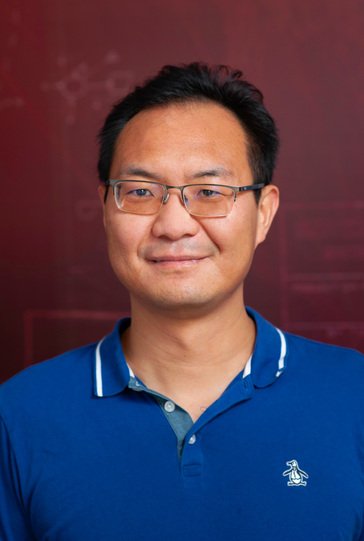
Buyung Kosasih is a Professor in the School of Mechanical, Materials, Mechatronic and Biomedical Engineering at the University of Wollongong. He has held this position since 2000 and focuses on teaching and research in mechanical engineering, including Machine Dynamics, Finite Element Methods, and Renewable Energy Technology. His research spans fluid dynamics in industrial processes, renewable energy systems, and aqueous lubrication. Key projects include 3D-printed surfboard fin optimization and steel coating dynamics. Research interests emphasize experimental and computational fluid dynamics, particularly in renewable energy turbines and tribological systems. Notable awards include the 2013 Outstanding Contribution to Teaching and Learning Award. He has supervised numerous students and led over 20 funded projects, including ARC grants for steel innovation and renewable energy. Collaborative work includes the Steel Research Hub and HVAC/cool roof efficiency studies.
Ardalan Vahidi is a Professor of Mechanical Engineering at Clemson University, joining in 2005 after receiving his Ph.D. from the University of Michigan. His research focuses on optimal control, energy-efficient mobility, connected and automated vehicles, and human bioenergetics during exercise. Education: Ph.D. Mechanical Engineering, University of Michigan, Ann Arbor, 2005 M.Sc. Transportation Safety, George Washington University, 2001 M.Sc. Structural Engineering, Sharif University of Technology, 1998 B.Sc. Civil Engineering, Sharif University of Technology, 1996 Research Interests: His work integrates control theory with transportation systems to reduce energy use and emissions. He explores eco-driving algorithms, vehicle connectivity, and human factors in cycling performance, leveraging both modeling and extensive vehicle-in-the-loop experimentation. Publications Trend: Recent articles emphasize validated experiments on energy-efficient automated driving, cyclist fatigue modeling, and cooperative control strategies, demonstrating a shift toward cyber-physical validation and interdisciplinary sports science applications. Scientific Awards: Best Paper Award, Road User Measurement and Evaluation Committee, TRB 2024 2nd Best Paper Award, IEEE International Automated Vehicle Validation Conference 2023 ASME Automotive and Transportation Systems Best Paper Award 2020 & 2018 IFAC Young Author Award 2019 Advising & Grants: He mentors numerous graduate researchers and postdocs; prospective students are directed to an online form for open positions. His research has been supported by NSF, DOE, DOT, and industry partners, although specific grant details are not listed here. Labs & Teams: He leads the Clemson Vehicle & Energy Systems Laboratory, conducting vehicle-in-the-loop experiments and collaborating with interdisciplinary teams across mechanical engineering, transportation, and sports science.
Karen Panetta is a Professor at Tufts University School of Engineering with appointments in Electrical and Computer Engineering, Computer Science, Mechanical Engineering, and Academic Services. She currently serves as Dean of Graduate Education for the School of Engineering and holds the title of Distinguished Professor. Ph.D. in Electrical Engineering, Northeastern University M.S. in Electrical Engineering, Northeastern University B.S. in Computer Engineering, Boston University Dr. Panetta's research focuses on developing efficient algorithms for simulation, modeling, and signal and image processing for security and biomedical applications. Her work brings together artificial intelligence, machine learning, and visual sensing systems to create solutions for robot vision and biomedical imaging. She develops algorithms inspired by the human visual system to enable machines to 'see' like humans, with applications in homeland security, biomedicine, facial recognition, and search and rescue operations. Her research has significant humanitarian applications, addressing global challenges facing women and children. Dr. Panetta has received numerous prestigious awards including induction into the National Academy of Engineering (2023), the Presidential Award for Science and Engineering Education and Mentoring (2011), and the IEEE Award for Distinguished Ethical Practices (2013). She is a fellow of multiple prestigious academies including the National Academy of Inventors, European Academy of Sciences and the Arts, and IEEE. Member, National Academy of Engineering (2023) Presidential Award for Science and Engineering Education and Mentoring (2011) IEEE Award for Distinguished Ethical Practices (2013) Fellow, National Academy of Inventors Fellow, European Academy of Sciences and the Arts Fellow, Asia-Pacific Artificial Intelligence Association As an educator and mentor, Dr. Panetta founded the nationally acclaimed Nerd Girls program to promote engineering to young students, particularly women. She previously served as worldwide director for IEEE Women in Engineering and editor-in-chief of the IEEE Women in Engineering magazine. Her approach to graduate education emphasizes the importance of building strong collaborative relationships between faculty and students, with a focus on proactive communication and documentation of research progress. Dr. Panetta's humanitarian research applies engineering solutions to global challenges, including developing technology to help doctors find cancerous tumors, security screeners find concealed weapons, and law enforcement agencies find criminals and missing children. Her work demonstrates a commitment to 'Doing The Right Thing' by addressing issues affecting populations with limited resources or 'voice' in society.
Michael Levin is a Vannevar Bush Professor and Distinguished Professor at Tufts University, affiliated with the School of Arts and Sciences (Department of Biology) and School of Engineering (Biomedical Engineering). His research focuses on bioelectricity, developmental biology, and collective intelligence. He leads the Allen Discovery Center and the Tufts Center for Developmental and Regenerative Biology. Education: PhD in Genetics from Harvard Medical School (1996); BS in Computer Science and Biology from Tufts University (1992). Research Interests: Integrates developmental biology, computer science, and cognitive science to study morphogenesis, regeneration, and cancer. Explores bioelectric signaling, synthetic organisms, and AI-driven discovery. Key areas include regenerative medicine, cancer reprogramming, and collective intelligence in biological systems. Publications: Over 600 articles, with recent work on xenobots, neuroevolution, and bioelectric therapies. Themes include bioelectric control of form, AI in biology, and collective intelligence. Awards: INNS Donald O. Hebb Award, AAAS Fellow, and Vox Future Perfect 50 List recognition. Frequently invited to speak at conferences on biology, AI, and consciousness. Advising & Labs: Mentored numerous postdocs and students, including pioneers in bioelectricity and synthetic biology. Lab focuses on interdisciplinary approaches to biological pattern formation and regeneration.
Akram N. Alshawabkeh is the George A. Snell Professor of Engineering and University Distinguished Professor at Northeastern University's College of Engineering, where he also serves as Senior Vice Provost and Director of the PROTECT Superfund Research Center. He holds a PhD in Civil and Environmental Engineering from Louisiana State University (1994), an MS from Jordan University of Science & Technology (1990), and a BE from Yarmouk University (1988). His research focuses on geoenvironmental engineering, soil and groundwater remediation, and electrochemical processes. Alshawabkeh has led major research initiatives, including the PROTECT Superfund Research Center (since 2010) and the CRECE Children's Environmental Health Center (since 2015). He has over 100 peer-reviewed publications and has advised numerous PhD, MS, and undergraduate students. His honors include the ASCE Thomas A. Middlebrooks Award (2014), Fulbright Scholar (2005-2006), and National Science Foundation CAREER Award (2001). His service roles include Chair of the Superfund Research Program Conference (2015), Technical Program Co-Chair for GeoCongress 2008, and editorial board memberships in journals like Journal of Geotechnical and Geoenvironmental Engineering . He has also held leadership positions in professional societies, including Fellow status in the American Society of Civil Engineers (ASCE). Alshawabkeh's work emphasizes interdisciplinary collaboration, addressing environmental health challenges in Puerto Rico and beyond. His research integrates engineering, toxicology, epidemiology, and social science to tackle issues like preterm birth linked to environmental contaminants and karst aquifer remediation.
Mathias Niepert is a Professor at the Institute for Artificial Intelligence within the Faculty of Computer Science, Electrical Engineering and Information Technology at the University of Stuttgart. His research focuses on advancing machine learning techniques with applications in scientific computing, graph neural networks, and medical imaging. He is particularly known for contributions to physics-informed neural networks, equivariant models, and graph learning frameworks. Key research areas include: Scientific Machine Learning for PDEs and molecular modeling Graph neural networks and their theoretical limitations Medical vision-language models and multimodal learning Efficient neural network architectures (transformers, FNOs) Domain knowledge integration in deep learning His work often bridges theoretical foundations with practical applications, as evidenced by extensive publications (2018–2025) on topics like adaptive message passing, equivariant networks, and medical imaging systems. He has contributed to benchmark development through initiatives like PDEBench and pioneered methods for equivariant diffusion models and molecular representation learning. His current projects emphasize: Improving generalization in Fourier Neural Operators Addressing oversmoothing in graph networks Combining physics principles with neural architectures Medical AI applications through multimodal fusion
El Mahdi Chayti is a doctoral researcher at the École Polytechnique Fédérale de Lausanne (EPFL), affiliated with the School of Computer and Communication Sciences and the Department of Computer Science. He works under the Machine Learning and Optimization (MLO) lab, focusing on advanced optimization techniques and machine learning theory. Contact: el-mahdi.chayti@epfl.ch . Current Roles: Doctoral Assistant and PhD Student in Computer and Communication Sciences Research Interests: Machine Learning, Optimization Algorithms, Meta-learning, Second-order Optimization, Energy Forecasting His publications highlight expertise in stochastic and cubic Newton methods, hybrid deep learning models, and personalized collaborative learning. Recent works include Improving Stochastic Cubic Newton with Momentum (2025) and Hybridization of Deep Learning with Physical Knowledge for Energy Forecasting (2019) . Key trends in his research span optimization efficiency , meta-learning frameworks , and integration of domain knowledge into AI models. He emphasizes theoretical guarantees and practical scalability in algorithm design.
Julia Kempe is a Silver Professor of Computer Science, Mathematics, and Data Science at New York University (NYU), holding joint appointments at the Courant Institute and the Center for Data Science (CDS). She serves as Director of the CDS and is on research leave at the CSD, ENS, Paris (2023–24). Her expertise spans interdisciplinary research in quantum computing, machine learning, and data science. She holds PhDs in Mathematics (UC Berkeley, 2001) and Computer Science (École Nationale Supérieure des Télécommunications, Paris, 2001), alongside advanced degrees in theoretical physics and mathematics from prestigious institutions in France and Austria. Research Interests: Data Science, Machine Learning (theoretical foundations and applications to physics), and past contributions to quantum computing. She focuses on robustness in machine learning models, adversarial examples, and interdisciplinary applications of physics-informed AI. Awards and Honors: Knight of the National Order of Merit (France, 2010), Femme en Or de la Recherche (France, 2010), ERC Starting Grant (2007, top-ranked in Europe), and numerous academic fellowships. She is a member of Academia Europaea (2018) and a Fellow of the Asia-Pacific Artificial Intelligence Association (2022). Grants and Leadership: Principal investigator of NSF NRT grants for CDS PhD programs, co-PI on NASA TCAN grants, and leader in NYU’s Senior Leadership Team. She designed NYU’s Data Science undergraduate programs and expanded interdisciplinary collaborations in machine learning and quantum computing. Labs and Teams: Directs the CDS, collaborates with the Courant Institute, and leads research initiatives in Paris. Her work bridges theoretical computer science, physics, and applied data science, emphasizing interdisciplinary innovation.
Amit Chakrabarti is a Professor in the Department of Computer Science at Dartmouth College, part of the School of Arts and Sciences. He holds a B.Tech. from IIT Bombay and a Ph.D. from Princeton University. His research focuses on theoretical computer science, emphasizing computational complexity, data stream algorithms, and approximation algorithms. He has contributed to foundational work in communication complexity, lower bounds, and graph algorithms. Chakrabarti has received prestigious awards including the NSF CAREER Award and the Karen E. Wetterhahn Award. He has organized workshops such as the Banff Communication Complexity and Applications conference and contributed to the IHP thematic program in Paris. He teaches courses like Data Stream Algorithms and Computational Complexity, and has advised numerous graduate and undergraduate students. His current research explores connections between information theory and complexity, memory-efficient graph algorithms, and algebraic techniques in computational complexity. Chakrabarti has served on committees for major conferences (e.g., FOCS, SODA) and editorial roles for Information Processing Letters.
David Doty is a Professor in the Department of Computer Science at the University of California, Davis . His research focuses on the intersection of molecular systems and computation , exploring how natural processes like chemical reactions , DNA nanotechnology , and self-assembly can perform computation. He also investigates connections to theoretical computer science, including distributed computing and algorithmic information theory . Doty's work bridges physics , chemistry , and biology through rigorous computational models like the Tile Assembly Model and Population Protocols . His research program includes software development ( scadnano , ppsim ), theoretical analysis, and collaborations with experimentalists. He teaches courses on theory of computation and molecular computing , and has advised numerous students in his research group. His publications cover topics such as algorithmic self-assembly , chemical reaction networks , and thermodynamic binding networks , with a focus on understanding fundamental computational and physical limits. Key software tools developed by his group include scadnano for DNA design and ppsim for population protocol simulations. Doty's recent research trends explore rate-independent chemical computing , error correction , and stochastic modeling in molecular systems. Current academic activity includes teaching ECS 120 (Undergraduate Theory of Computation), ECS 220 (Graduate Theory of Computation), and ECS 232 (Theory of Molecular Computation). He maintains a research lab in 2306 Academic Surge and continues to publish in leading conferences like DNA Computing and CMSB .
Eung-Joo Lee is an Assistant Professor in the Department of Electrical and Computer Engineering at the University of Arizona, where he also holds affiliations with the Department of Ophthalmology and Vision Science, the BIO5 Institute, and the UA Cancer Center. He serves as an adjunct professor at the University of Nebraska–Lincoln and is a member of the Graduate Faculty. Dr. Lee leads the Vision Systems and Intelligence (VSI) Laboratory and contributes to interdisciplinary research bridging engineering and medicine. Education: PhD in Electrical and Computer Engineering, University of Maryland, College Park, 2021 MS in Electrical Engineering, Korea Advanced Institute of Science and Technology (KAIST), Daejeon, South Korea, 2015 BS in Electrical Engineering, University of Texas at Dallas, 2013 Dr. Lee's research centers on developing computationally efficient and interpretable deep learning models for real-time, low-resource environments, particularly in computer vision and medical imaging. His work addresses perception and decision-making challenges in autonomous and medical systems. He applies cross-disciplinary expertise in engineering and medicine to create lightweight AI solutions. Although no specific publications are listed in the provided text, his research direction suggests strong engagement in areas such as embedded AI, medical image analysis, and real-time computer vision systems, likely published in top-tier venues in machine learning and biomedical engineering. Scientific Service and Recognition: Associate Editor, Journal of Signal Processing Systems (Springer) Editorial Board Member, Scientific Reports (Nature Portfolio) Reviewer for IEEE Transactions on Pattern Analysis and Machine Intelligence, Medical Image Analysis, Nature Machine Intelligence, and others Active participant in major conferences including NeurIPS, CVPR, MICCAI, AAAI, and SPIE Dr. Lee advises research through the VSI Laboratory and contributes to academic leadership via service on the Scientific Advisory Committee for the Body and Imaging Center at the University of Arizona. He has served on numerous program committees, organized workshops, and chaired sessions at international conferences, demonstrating growing leadership in the academic community. He is actively involved in interdisciplinary research collaborations, including past work with Children’s National Hospital and the U.S. Army Research Laboratory, and continues to bridge gaps between engineering and clinical applications.
Steve Whittaker is Professor of Human-Computer Interaction at the University of California at Santa Cruz. He conducts interdisciplinary research at the intersection of social science and computer science, focusing on how technology affects human memory, communication, and personal information management. His current research explores human-centric AI systems, mental health technologies, and digital identity. His research interests center on designing interactive systems that support human needs in digital environments. He investigates how people manage digital information, remember personal experiences through lifelogging, and interact with conversational agents and social robots. His work emphasizes computational well-being, affective computing, and the social implications of technology use. He has made foundational contributions to the fields of personal information management (PIM), computer-mediated communication (CMC), and human-robot interaction. The recent publications reflect a strong trend toward mental health technology, human-AI interaction, and digital well-being. His work spans from theoretical models of emotion and memory to practical systems for mental health apps, chatbots, and immersive visualization. He frequently publishes in top-tier venues such as CHI, CSCW, and IUI, often in collaboration with researchers across disciplines. Lifetime Research Achievement Award from SIGCHI Fellow of the Association for Computational Machinery (ACM) Member of the CHI Academy Lasting Impact Award from ACM CSCW Best Paper Award at CSCW10 Best Paper Award at CHI07 Honourable Mention at ACM CHI 2020 Multiple best paper nominations at CHI, CSCW, and IUI MIT Siegel Prize Steve Whittaker has supervised numerous PhD and Master’s students, though specific names are not listed in the provided text. His research has been funded by major grants from NSF, NIH, and industry partners, enabling long-term studies on digital behavior and system development. He is Editor of the journal Human Computer Interaction and has authored over 200 peer-reviewed publications. His most recent book, The Science of Managing Our Digital Stuff (MIT Press), co-authored with Ofer Bergman, synthesizes decades of research on personal information management. He leads a vibrant research lab at UC Santa Cruz that focuses on human-centered computing, where students and collaborators work on projects involving AI, mental health, digital memory, and social interaction. The lab has produced influential work on lifelogging, email management, telepresence robots, and algorithmic transparency. The team employs mixed methods, combining qualitative studies with system design and evaluation.
Rachid Cherkaoui is a Senior Scientist at École polytechnique fédérale de Lausanne (EPFL), affiliated with the School of Engineering, specifically within the Department of Electrical Engineering. He is actively associated with research units SEL-ENS, EDEY-ENS, and DESL, contributing to the Distributed Electrical Systems Laboratory (DESL). His work focuses on advanced power system optimization, smart grids, and energy market modeling. Ph.D. in Electrical Engineering, EPFL, 1992 M.S. in Electrical Engineering, EPFL, 1983 Dr. Cherkaoui's research interests include electrical power and distribution systems, distributed generation, energy storage, electricity market deregulation, and power system vulnerability mitigation. His work bridges theoretical modeling and real-world applications, particularly in flexibility provision, grid resilience, and market integration of renewable energy. His recent publications (2020–2025) reflect a strong focus on smart grid technologies, energy storage integration, and market mechanisms. Key themes include optimal dispatch of hybrid systems, TSO-DSO coordination, frequency control, and stochastic optimization under uncertainty. His work is frequently published in top-tier journals such as IEEE Transactions on Power Systems and IEEE Transactions on Smart Grid. ABB Swiss Award '83 Senior Member, IEEE Member, CIGRE Task Forces C5-2 IEEE Swiss Chapter Officer since 2005 Dr. Cherkaoui actively supervises doctoral students and collaborates extensively with researchers like Mario Paolone. He has contributed to numerous projects funded by industry, CTI/Innosuisse, and Horizon 2020. His research includes experimental validation and real-time control systems, particularly in hydropower and battery storage applications. He is also involved in national and international energy strategy discussions, including Switzerland's path to carbon neutrality.
Ju Sun is an Assistant Professor at the University of Minnesota, Twin Cities, in the Computer Science & Engineering department. He leads the Group of Learning, Optimization, Vision, Healthcare, and X (GLOVEX) and plays key roles in the UMN Data Science Initiative (DSI), Program for Clinical AI, and AI-CLIMATE institute. Research Focus : Theoretical foundations of machine learning, computer vision, and numerical optimization with applications in healthcare, inverse problems, and medical imaging. Grants : $4.5M+ in funding including NSF ACED Program and NIH R01 grants for constrained deep learning and imbalanced classification. Teaching & Leadership : Featured in UMN seminars and AI institutes, with affiliations across Electrical and Computer Engineering, Health Informatics, and Medical School. Recent Publications address inverse problems, federated learning, imbalanced classification, and phase retrieval using deep generative priors and diffusion models. His group website details these innovations. Scientific Awards : McKnight Land-Grant Professorship (2025–2027) 2021 AAAI New Faculty Highlights Advising : Mentored three PhD graduates now at Meta, Amazon, and UCLA. Collaborations span medicine, materials science, and biomedical engineering, integrating physics-informed constraints into AI.
Babak Hassibi is a Professor of Electrical Engineering and Computing and Mathematical Sciences at the California Institute of Technology (Caltech). He obtained his B.S. from the University of Tehran (1989), M.S. and Ph.D. from Stanford University (1993, 1996), and has held positions at Caltech since 2001, including roles as Assistant Professor, Associate Professor, Professor, and Executive Officer. Education : University of Tehran, B.S. (1989) Stanford University, M.S. and Ph.D. (1993, 1996) Academic Roles : Assistant Professor, Caltech (2001–03) Associate Professor (2003–08) Professor (2008–13) Binder/Amgen Professor (2013–16) Bohn Professor (2016–) Executive Officer for Electrical Engineering (2008–15) Associate Director for Information Science and Technology (2010–12) Research Interests : Babak Hassibi’s work spans Communications , Signal Processing , Control Theory , and Machine Learning . He has contributed to wireless networks, genomic signal processing, multi-antenna systems, robust control, and high-dimensional statistics. His mathematical interests include Random Matrices and Group Representation Theory . Recent Publications highlight his focus on Adaptive Control , Stochastic Optimization , and Quantum Detection . Notable trends include Regret-Optimal Control , Stochastic Mirror Descent , and DNA Microarray Applications . Scientific Awards : Highly Cited Researcher Advising and Grants : He has advised numerous graduate students and postdocs, many of whom now hold prominent positions at institutions like MIT, USC, and Stanford. His research includes collaborations on patents and projects related to Wireless Communications and Genomic Technologies . Labs and Teams : Leads the Hassibi Group at Caltech, which explores nonlinear photonic systems, ultrafast optics, and quantum information processing.