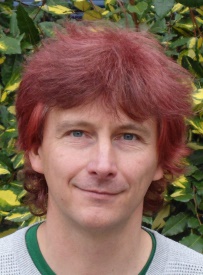
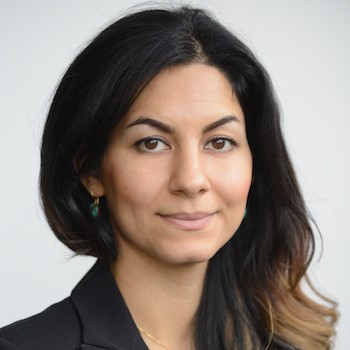
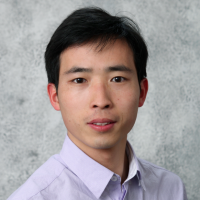
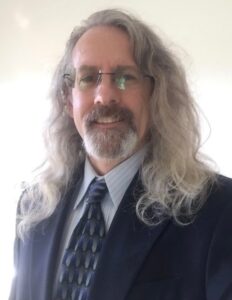
Dr. Mohamed Foudad is a Postdoctoral Researcher in Turbulence Modelling at the Department of Meteorology, University of Reading. His current position focuses on advancing understanding of turbulent processes within atmospheric systems. He is affiliated with the Brian Hoskins building (Office: BH 2L39). Research interests center on turbulence modelling techniques applied to meteorological phenomena, with a particular emphasis on improving numerical weather prediction and climate models through enhanced representation of turbulent flows. His work bridges theoretical fluid dynamics and practical applications in environmental science. No academic awards or grants are explicitly listed in the provided information. Current research activities likely involve collaboration with the department's existing teams but specific lab affiliations or ongoing projects are not detailed here.
Dr. Steven George is a Research Scientist (NCAS) in the Department of Meteorology at the University of Reading. His work focuses on climate modeling, glaciology, and atmospheric processes. He holds a PhD from University College London (2006) in the field of UK windspeed and tropical Atlantic variability. His research explores ice sheet dynamics, climate projections, and the impacts of sea level rise on ecosystems. He collaborates on projects like the FAMOUS-ice GCM and contributes to standards for paleoclimate data (PaCTS 1.0). His publications span over two decades, addressing topics from Antarctic boundary layer winds to storm surge modeling in Australia. Key contributions include advancing coupled ice sheet-climate models and analyzing Greenland ice sheet stability. His interdisciplinary work bridges atmospheric science with marine biology (e.g., Australian fur seal studies) and coastal engineering. Collaborations involve institutions like NIWA (New Zealand) and international teams in paleoclimate research. Recent studies emphasize energy-conserving climate models, extreme event probabilities, and data standardization. His work informs policy-relevant topics such as sea level rise and climate change impacts. George’s research integrates observational data (e.g., ice cores, ozonesondes) with numerical simulations, contributing to both theoretical advancements and applied environmental challenges.
Dr. John A. Gillies holds the academic rank of Research Professor in Geography at the Desert Research Institute (DRI), affiliated with the Division of Atmospheric Sciences. He previously served as Interim Executive Director of the DRI's Atmospheric Sciences Division (2010–2011). His expertise lies in aeolian processes, dust emissions, and boundary-layer flow dynamics across diverse environments, including Antarctic polar deserts and Martian surfaces. Gillies earned his Ph.D., M.S., and B.A. in Physical Geography from the University of Guelph, Ontario. His research focuses on mitigating environmental impacts of aeolian sediment transport through engineered roughness and vegetation management. Key projects include dust emission studies at the Oceano Dunes and development of field wind tunnels and monitoring systems for particulate measurements. Collaborative work explores dust resuspension from volcanic ash and military activities. Publications emphasize innovative mitigation strategies, shear stress partitioning, and high-resolution modeling. Gillies has contributed to patents on engineered roughness elements and advised on dust control for sensitive ecosystems like the Salton Sea and Keeler Dunes.
Homa Kheyrollah Pour is an Assistant Professor in the Department of Geography and Environmental Studies at Wilfrid Laurier University, and holds the Canada Research Chair in Remote Sensing of Environmental Change. Her research focuses on remote sensing applications for understanding environmental changes, particularly in cold regions. Key research areas include lake ice dynamics, satellite-derived environmental monitoring, and the impacts of climate change on subarctic and Arctic ecosystems. She utilizes advanced techniques such as ground-penetrating radar, synthetic aperture radar (SAR), and machine learning algorithms to analyze lake surface temperatures, ice growth patterns, and chlorophyll-a concentrations. Her work emphasizes interdisciplinary approaches, bridging remote sensing, climatology, and hydrology to address challenges in Earth system modeling and environmental stewardship. Notable contributions include studies on lake ice trends in Canada’s North Slave Region, chlorophyll-a monitoring in Lake Ontario, and the development of predictive models for ice break-up events. Dr. Kheyrollah Pour leads the ReSEC Lab (Remote Sensing and Environmental Change Lab), fostering collaborative research and innovation in environmental science. She actively contributes to international climate assessments, including reports on the 'State of the Climate' and Arctic lake ice dynamics.
Prof. Heini Wernli is a Full Professor at ETH Zurich's Department of Environmental Systems Science and Deputy Head of the department. His research focuses on extratropical weather systems, atmospheric transport processes, and diabatic processes influencing weather dynamics. He combines numerical modeling, field experiments, and diagnostic techniques in his work. He earned his physics degree (1989) and doctorate (1995) from ETH Zurich, followed by postdoc roles there. He was a professor at the University of Mainz (2003–2009) before returning to ETH Zurich. His honors include an ERC Advanced Grant, Golden Owl awards (ETH Zurich's top student honor), and teaching awards in Mainz and Rhineland-Palatinate. Education: Bachelor's in Physics, ETH Zurich (1989) Post-graduate degree at NADEL, ETH Zurich (1991) PhD in Atmospheric Science, ETH Zurich (1995) His research group explores weather system predictability, moisture transport, and climate change impacts. Notable projects include studying Arctic cyclones, European hail patterns, and the role of warm conveyor belts in cyclone intensification. Awards: ERC Advanced Grant 'INTEXseas' (2018) ECMWF Fellow (2016) Golden Owl ETH Zurich (2013, 2016) Rhineland-Palatinate Teaching Award (2008) Teaching contributions include courses on environmental fluid dynamics, atmospheric dynamics, and mathematics for systems analysis. He collaborates internationally on projects like the EUREC4A field campaign and Arctic Ocean expeditions.
Dr. Karen Donaldson is a Research Fellow at the University of Edinburgh's School of Engineering, affiliated with the Scottish Microelectronics Centre and Integrated Micro and Nano Systems Research Institute. Her role focuses on experimental and numerical research in interdisciplinary engineering domains, leveraging facilities like the Scottish Microelectronics Centre (Location: 1.08) for advanced investigations. Her research spans robotics for extreme environments, space exploration systems, plasma physics applications, micro/nano-scale technology, biomedical device innovation, and environmental sensing methodologies. Key projects include modular robotic systems for planetary operations, 3D-printed medical solutions during global health crises, and laser-based soil analysis techniques for terrestrial and extraterrestrial applications. Publication analysis reveals two dominant themes: recent applied research in robotics and biomedical engineering (2020-2022), and foundational plasma physics/space science studies (2013-2019). Earlier work extensively explores cyclotron maser mechanisms, auroral kilometric radiation modeling, and fusion-relevant plasma instabilities through scaled laboratory experiments and 3D particle-in-cell simulations. This evolved toward practical implementations including pandemic-response medical devices and Martian soil analysis systems. Scientific Recognition: Elizabeth Georgeson Fellowship for research contributions She leads investigations at the Integrated Micro and Nano Systems laboratory, specializing in developing multifunctional interfaces for space technology and microelectronic applications. No advising relationships or grant details are documented in available sources.
Xiaoyang Zhang is a Distinguished Professor of Geography and Senior Research Scientist at the Geospatial Sciences Center of Excellence (GSCE), South Dakota State University (SDSU). He holds additional roles as Co-Director of GSCE and Graduate Coordinator for the Geography Ph.D. program. Prior to joining SDSU in 2013, he held research positions at institutions such as Boston University, the Chinese Academy of Sciences, and NASA/NOAA-affiliated organizations. Education: Ph.D. in Geography (King's College London, 1999), M.S. in Geography (Nanjing Institute of Geography and Limnology, 1991), B.S. in Geography (Peking University, 1984). Research interests focus on satellite remote sensing applications, including land surface phenology, biomass burning emissions, and climate-ecosystem interactions. His work integrates geostationary and polar-orbiting satellite data to monitor vegetation dynamics and wildfire impacts. He has led over 40 grants totaling millions in funding, emphasizing operational satellite product development for agriculture, air quality, and environmental forecasting. Key achievements include the VIIRS Land Surface Phenology product, NOAA's biomass burning emissions algorithms, and real-time crop monitoring tools. His research has been featured in prominent journals like Remote Sensing of Environment and Nature Climate Change. Awards and recognition include media coverage from SDPB Radio, Environmental Research Web, and The Philadelphia Inquirer for contributions to air quality and wildfire research. He advises over 20 graduate students and postdocs, mentoring projects on crop phenology, fire emissions, and remote sensing methodologies. Labs/Teams: Leads the GSCE's remote sensing group and collaborates with NOAA, NASA, and international institutions on satellite algorithm development and operational monitoring systems.
Fangjun Li is an Assistant Research Professor in the Department of Geography and Geospatial Sciences at the University of South Dakota. His research focuses on wildfire emissions modeling, air quality forecasting, and the application of satellite remote sensing technologies. Li specializes in integrating geostationary and polar-orbiting satellite data to estimate biomass burning emissions and improve operational weather-prediction systems. His work contributes to NOAA's efforts in developing high-resolution smoke simulation frameworks and enhancing the accuracy of fire-related air quality forecasts. Li's research interests include fire seasonality analysis, machine learning-driven emission prediction, and the climatic impacts of wildfires. He has collaborated on projects such as the Unified Forecast System (UFS) and the FIREX-AQ field campaign, advancing methodologies for fire radiative power estimation and smoke plume modeling. His studies address critical issues like the record-breaking 2023 Canadian wildfires and long-term trends in grassland productivity linked to soil moisture variability. Key achievements include developing the Global Biomass Burning Emissions Product (GBBEPx) and evaluating advanced plume rise schemes to mitigate PM2.5 exceedances during extreme wildfire events. Li’s work bridges environmental science, atmospheric modeling, and operational forecasting, with implications for disaster management and climate policy.
Dr. Aritra Banerjee is an Assistant Professor in the Department of Civil and Environmental Engineering at South Dakota State University's Jerome J. Lohr College of Engineering. He holds a Ph.D. in Civil Engineering from the University of Texas at Arlington (2017), an M.S. from the Indian Institute of Technology Roorkee (2014), and a B.S. from the National Institute of Technology Calicut (2011). Previously, he served as an assistant professor at the University of Delaware and as a research scientist in Texas. His research focuses on bio-inspired geotechnics, climate change impacts on infrastructure, unsaturated/expansive soils, numerical modeling of geotechnical systems, soil stabilization, and resilient infrastructure development. His work bridges geotechnical engineering with environmental sustainability challenges. Dr. Banerjee's publications demonstrate consistent focus on geotechnical solutions for climate resilience, particularly through sustainable materials like biopolymers and geosynthetics. Key thematic areas include: soil stabilization techniques, infrastructure resilience under extreme weather, advanced numerical modeling, and sustainable geotechnical materials. Outstanding Reviewer Award for ASCE Journal (2022) Grantsmanship Award (2023, 2024) Graduate Research Fellowship (2014-2016) Civil Engineering Outstanding Graduate Student Award (2017) He leads the BioGeM lab and actively seeks graduate students for research in biogeotechnics and resilient infrastructure. Secured multiple grants including NSF awards totaling over $1.5 million for projects on soil erosion prevention, electric grid resilience, and coastal geotechnics.
Diana Bernstein is an Assistant Professor at the University of Southern Mississippi, specializing in climate change education and research. She earned her Ph.D. in Atmospheric Sciences from Hebrew University and UCLA in 2014, followed by postdoctoral positions at Cornell University and the University of Minnesota Duluth. Her research focuses on climate dynamics, earth system modeling, and ocean-atmosphere interactions. Research interests include: Climate dynamics and earth system modeling Atmospheric aerosols and their impact on climate Air-sea interaction processes Oceanographic modeling of coastal systems Hurricane wave simulation and prediction Recent publications demonstrate a strong focus on hurricane modeling, coastal wave dynamics, and climate impacts in the Gulf of Mexico region, with emerging work on gender equity in geosciences. Articles utilize advanced modeling techniques like WAVEWATCH III and examine climate change impacts on coastal systems.
Lucas C. Wilcox is a Professor in the Department of Applied Mathematics at the Naval Postgraduate School. His research focuses on scientific computation, particularly in the numerical solution of partial differential equations with emphasis on wave propagation and uncertainty quantification using high-order methods. He is active in developing scalable algorithms for adaptive mesh refinement and parallel computing.
William B. Moore is a Professor of Atmospheric and Planetary Sciences at Hampton University, affiliated with the School of Science. He holds a Ph.D. in Geophysics and Space Physics from UCLA (1997). His research focuses on planetary thermal and tidal dynamics, particularly studying Jupiter's moon Io and Earth's early heat-pipe era. He has contributed to NASA missions like Magellan (Venus) and Galileo (Jupiter), and co-founded the Hampton University Severe Weather Research Center. Dr. Moore's work bridges Earth and space sciences, exploring planetary evolution, exoplanet dynamics, and climate impacts on coastal communities. He has authored 60+ publications in journals like Science and Nature , with highly cited papers on mantle convection and planetary atmospheric evolution. His interdisciplinary research also addresses societal challenges, including climate change adaptation in low-elevation regions. Committees: Outer Planets Assessment Group, National Academy of Sciences Solar System Exploration Decadal Survey, Southeastern Universities Research Association Board (Space Science & Technology Chair) Outreach: Public astronomy events, media appearances, and educational initiatives promoting STEM diversity. Key projects include JUICE mission collaboration (ESA's Jupiter icy moons explorer) and studies on Venus tesserae, Ganymede interiors, and Chesapeake Bay vertical land motion monitoring.
Nargiz Sultanova is a Lecturer in applied mathematics and statistics at Federation University Australia, working within the Institute of Innovation, Science and Sustainability (IISS). She holds a PhD and MSc from the University of Ballarat and completed her undergraduate studies at Baku State University in Baku, Azerbaijan. Her research focuses on optimization, particularly nonsmooth optimization and its various applications. Her work spans theoretical mathematical optimization as well as practical applications in water distribution systems. She has published extensively on topics including minimax problems, nonsmooth DC optimization, and water network optimization. Sultanova's publication record shows consistent research output from 2010 through 2021, with particular emphasis on optimization techniques applied to water distribution systems. Her work frequently involves collaboration with researchers including A.M. Bagirov, H. Mala-Jetmarova, and D. Savić, demonstrating strong interdisciplinary connections between mathematical theory and engineering applications. She is a member of the Australian Mathematics Society and ANZIAM, reflecting her active participation in the mathematical community. Her research has appeared in journals spanning mathematics, engineering, and computational science. As a lecturer, she contributes to the academic numeracy development of undergraduate students at regional universities, with publications examining student preparedness and mathematical education in regional Australian contexts.
Vincenzo Fiamma serves as Assistant Professor of Ocean Engineering at the Mediterranea University of Reggio Calabria (UNIRC), where he has been an active member of the NOEL laboratory research team since 2009. Previously, he contributed to the Maritime Engineering Laboratory through the OKEANOS consortium (1998-2008) and participates in Italy's National Group for Defense from Hydrogeological Disasters since 1996. His three-decade career centers on experimental coastal engineering with Professor Boccotti, including foundational work on wave mechanics and energy conversion systems. His research spans Ocean Engineering , Wave Energy Conversion , and Coastal Protection Systems , characterized by innovative field experiments at sea. Key contributions include the development of U-OWC (U-Oscillating Water Column) breakwaters and REWEC (Resonant Wave Energy Converter) devices for dual-purpose coastal infrastructure. His methodology uniquely bridges theoretical modeling with real-sea validation, advancing sustainable solutions for Mediterranean coastal challenges through practical engineering applications. Recent publications (2020-2024) demonstrate evolving expertise from wave mechanics fundamentals to integrated renewable energy systems. His work shows increasing interdisciplinary scope, connecting U-OWC technology with coastal hazard analysis, infrastructure resilience, and environmental impacts. Notable trends include Mediterranean-focused full-scale implementations (e.g., Salerno and Civitavecchia ports), advanced uncertainty quantification in floating structures, and investigations into compound climate hazards like concurrent floods and sea storms. Professor Fiamma has supervised 20 degree theses in maritime engineering and environmental hydraulics while contributing to major national research initiatives. His project portfolio includes multiple biennial Projects of Relevant National Interest (PRIN), notably the 2001 hydrodynamics study of low-crested breakwaters, 2004 coastal protection/wave energy integration project, and 2005 REWEC port breakwater experiment that pioneered wave-to-electricity conversion technologies. As a core member of UNIRC's NOEL laboratory, he directs experimental campaigns on wave energy converters and coastal structures. His earlier foundational work contributed to Professor Boccotti's seminal texts Idraulica Marittima (1997) and Wave Mechanics for Ocean Engineering (2000), establishing theoretical frameworks still referenced in contemporary research on wave group dynamics and coastal processes.
Hani Hamdan is a Professor of Electrical Engineering and Computer Science at CentraleSupélec, part of Université Paris-Saclay. He holds a PhD from Université de Technologie de Compiègne and has held roles including Research Engineer at CETIM, Researcher at CNRS, and Assistant Professor at Sorbonne-Paris-Nord. His research focuses on machine learning, signal processing, robotics, and telecommunications, with contributions to biomedical engineering and sustainable technologies. He leads the COMEDY and MODESTY research groups within the L2S laboratory. Education: PhD in Systems and Information Technologies, Université de Technologie de Compiègne (2005) MSc in Industrial Control, Université Libanaise/UTC (2001) Engineering Diploma in Electricity & Electronics, Université Libanaise (2000) Research Interests: Machine learning for healthcare and environmental applications Signal processing in robotics and communication systems Intelligent communication networks (FSO, IoT security) Data-driven analysis of biomedical systems and civil infrastructure Key Contributions: Innovative clustering algorithms for big data (e.g., bin-EM-CEM) FSO communication system optimizations Robotics rehabilitation systems using ML-enhanced biomechanics Awards: Best Paper Award for Big Data clustering (2018) Outstanding conference organization award (DeSE 2017) CIFRE doctoral scholarship (2002-2005) Lab Affiliations: Laboratoire des signaux et systèmes (L2S), collaborating with CNRS and CentraleSupélec on interdisciplinary projects in signal processing and automated systems.