Torgeir Welo is a Professor at the Department of Mechanical and Industrial Engineering , Norwegian University of Science and Technology (NTNU) . He specializes in metal forming , particularly aluminum alloy structures , with a focus on plastic bending behavior , dimensional stability , and 3D forming technologies . His research also encompasses Lean Product Development , emphasizing knowledge reuse and maximizing customer value in automotive and aerospace applications. Key Research Areas : Metal Forming, Aluminum Processing, Springback Control, Lean Development, Additive Manufacturing, Material Substitution Teaching : Courses on Aluminum Technology , Metal Forming Analysis , and Machine Element Design Publications (15 most recent): Focus on springback monitoring , charge weld evolution , flexible forming , machine learning applications , and circular economy frameworks in metal manufacturing.
Salvatore Ruggieri is a Full Professor in the Department of Computer Science at the University of Pisa, where he teaches in the Master Programme in Data Science and Business Informatics. He is affiliated with the KDD LAB, a joint research group of ISTI-CNR and the University of Pisa, and actively contributes to national and European AI initiatives such as XAI, NoBIAS, TAILOR, and SoBigData.eu. His research focuses on data mining and knowledge discovery, with a strong emphasis on ethical AI. Key areas include discrimination discovery and prevention, fairness, privacy, explainable AI (XAI), causal inference, and classification algorithms. He has led significant projects such as ENFORCE, a national FIRB project on legal and computational enforcement of non-discrimination and privacy rights in ICT systems (2010–2014), and has served as program chair for the XIII Italian Symposium on Artificial Intelligence (2014). The recent publications (2018–2023) highlight a consistent trend in interpretable and fair machine learning, including selective classification, stability of interpretable models, and causal reasoning for fairness. His work often involves collaboration with leading researchers like Dino Pedreschi and Riccardo Guidotti, and appears in top venues such as AAAI, IEEE TKDE, and WIREs. His scientific honors include the award for the best Ph.D. thesis in Theoretical Computer Science from the Italian Chapter of EATCS. Best Ph.D. Thesis in Theoretical Computer Science, Italian Chapter of EATCS He advises and collaborates with numerous researchers in the KDD LAB and has contributed to major grants and research initiatives in AI and data science. He is involved in educational programs, including the National Ph.D. in Artificial Intelligence - Society, and promotes interdisciplinary research at the intersection of computer science, law, and ethics. Ruggieri is a member of the KDD LAB, where he leads research in ethical and transparent AI. He is also part of large collaborative networks such as SoBigData.eu and HumanE-AI-Net, which aim to build socially responsible and human-centered AI systems.
Stephen Shenker is the Richard Herschel Weiland Professor of Physics at Stanford University, where he has been a faculty member since 1998. He previously served as a professor at Rutgers University (1989-1998) and as an Assistant to Full Professor at the University of Chicago (1981-1989). Shenker also directed the Stanford Institute for Theoretical Physics from 1998 to 2009. Shenker's research focuses on quantum gravity, particularly string theory and M theory, with emphasis on nonperturbative aspects. His work has significantly advanced our understanding of gauge theories, conformal field theory, matrix models of string theory, D-branes, and the connection between quantum gravity and quantum chaos. He has made foundational contributions to the field of string theory, including the discovery of Matrix Theory, which provides a nonperturbative definition of String/M theory. His recent publications demonstrate a consistent focus on eternal inflation, the string theory landscape, de Sitter space, and holographic principles, reflecting his ongoing investigation into the deepest questions of theoretical physics and cosmology. Shenker's work often intersects with that of Leonard Susskind, with whom he shares the 2023 Dirac Medal. Member, National Academy of Sciences (2015) Lars Onsager Prize, American Physical Society (2010) Dean's Award for Distinguished Achievements in Teaching, Stanford University (2007) Fellow, American Academy of Arts and Sciences (2006) Fellow, American Physical Society (2003) Fellow, MacArthur Foundation (1987) Shenker has advised numerous doctoral students and postdoctoral researchers at Stanford, contributing significantly to the education of the next generation of theoretical physicists. His teaching excellence has been recognized with multiple awards, including Stanford's Dean's Award for Distinguished Achievements in Teaching.
Matthias Riedl is Associate Professor in the Department of Historical Studies at Central European University (CEU), where he is also a member of the Center for Religious Studies and the Doctoral School of History. He holds affiliations with the Center for Eastern Mediterranean Studies and has taught extensively in comparative political thought and religious history. His academic career includes prior roles as Lecturer in Political Science at the University of Erlangen-Nuremberg, Visiting Assistant Professor at Duke University, and Visiting Lecturer at Tokyo University of Foreign Studies. His educational background includes an M.A. and Ph.D. (summa cum laude) from the University of Erlangen-Nuremberg. His research lies at the intersection of religion and politics, focusing on intellectual history, apocalypticism, and radical religious movements from late antiquity to the early modern period. He has a strong interest in comparative frameworks, including non-Western political thought and religious dissent across cultures. Riedl’s recent publications explore themes such as apocalyptic violence, the political theology of Thomas Müntzer and Joachim of Fiore, and the secularization of religious concepts in modern ideologies. His work bridges historical analysis with philosophical inquiry, often engaging with theorists like Eric Voegelin and Karl Löwith. The articles reflect a consistent focus on millenarian thought, revolutionary agency, and the symbolic continuity of apocalyptic traditions across epochs. Among his scientific contributions are numerous peer-reviewed articles, book chapters, and edited volumes on topics ranging from the ordering of time to the city as a symbolic center. Though no formal awards are listed, his extensive publication record and international academic engagements reflect scholarly recognition. Riedl has supervised numerous doctoral and master’s students on diverse topics including church-state relations, religious violence, and comparative theology. He has directed multiple international summer schools on religion and politics, often in collaboration with institutions like Duke University. His research is supported by long-term projects and interdisciplinary collaborations, particularly through the Eranos Conferences. He is actively involved in research groups and has contributed to collective works on prophets, time, and the secular sphere in theology. His ongoing monograph on Thomas Müntzer underscores his commitment to understanding revolutionary religious thought in historical context.
Dr. Oliver Hampe serves as Scientific Director of the Vertebrate Paleontology and Geology Collections at the Museum für Naturkunde (Museum of Natural History), Leibniz Institute for Evolution and Biodiversity Research in Berlin, Germany. He also holds the position of Head of the Paleontological Preparation Laboratory. His expertise spans extinct aquatic vertebrates, paleopathology, and geoarchaeology, with significant contributions to cetacean evolution research. Hampe completed his studies in Chemistry and Geology-Paleontology from 1981-1987 at universities in Düsseldorf and Mainz, earning his Diploma in 1987. He received his PhD from Johannes Gutenberg University Mainz in 1991 and completed his habilitation for Palaeobiology and Zoology at Humboldt University Berlin in 2003, qualifying him as a Privatdozent. His research focuses on cetacean evolution, particularly Miocene whale fossils from German sites like Groß Pampau, with significant work on periotic bone anatomy. Hampe integrates traditional morphological analysis with advanced imaging techniques including CT scanning to study fossil specimens non-destructively. His paleopathological research examines diseases in fossils, such as osteomyelitis in Tyrannosaurus rex and bone tumors in whale specimens. He also maintains scholarly interest in the history of paleontology, particularly Werner Janensch's work and German expeditions to Tendaguru, Tanzania. Analysis of Hampe's recent publications reveals consistent focus on cetacean evolution, especially baleen whales from the Miocene epoch. His methodological approach frequently combines detailed morphological analysis with geological context to understand evolutionary patterns. He has made significant taxonomic contributions through studies of whale ear bone anatomy and has extended his research to pathological conditions in diverse fossil vertebrates. His interdisciplinary work bridges paleontology with medical imaging techniques and historical studies. As Head of the Paleontological Preparation Laboratory, Hampe oversees the curation and preparation of vertebrate fossil collections. His current research projects include cetacean studies from Groß Pampau, pathology research on dinosaurs and mammals, and investigations into aquatic adaptation in Cetartiodactyla supervised with PhD student Apolline Alfsen. His collaborative approach is evident in numerous publications with international researchers across Europe.
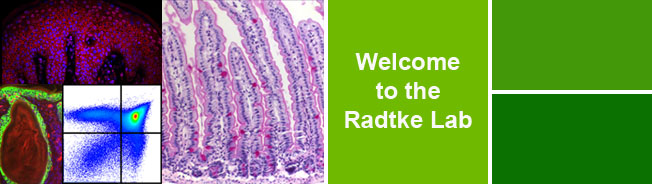
Freddy Radtke is a Full Professor at the School of Life Sciences at École polytechnique fédérale de Lausanne (EPFL), where he leads the Radtke Lab (UPRAD) within the Swiss Institute for Experimental Cancer Research (ISREC). He holds multiple affiliations across EPFL, including in the SSV-ENS and EDMS-ENS programs, reflecting his broad engagement in teaching and doctoral education in life sciences. His research is centered on the molecular mechanisms of stem cell maintenance and differentiation, particularly through the Notch signaling pathway. His work spans several self-renewing systems: the hematopoietic system, skin, and gut. Key findings include the identification of Delta-like 4 as the essential Notch1 ligand for T cell commitment, the tumor suppressor role of Notch1 in skin, and its critical function as a gatekeeper of intestinal progenitor cells by repressing CDK inhibitors. These discoveries have significant implications for understanding cancer development and regenerative processes. The recent publications highlight a consistent focus on Notch signaling across diverse biological contexts—hematopoiesis, skin development, intestinal regeneration, and stem cell systems biology. The keywords and subfields reflect deep mechanistic investigations into cell fate decisions, signal transduction, and tissue homeostasis, with strong translational relevance to cancer and inflammatory diseases. Freddy Radtke has mentored numerous Ph.D. students and is actively involved in teaching courses such as Stem Cells and Organoids and Scientific Project Design in Translational Oncology . His lab conducts research supported by external funding, and he collaborates across disciplines to integrate systems biology with stem cell research. The lab includes scientists, doctoral assistants, technicians, and administrative staff, indicating a vibrant and multidisciplinary research team.
Horatia Muir Watt is a Full Professor at Sciences Po's Law School, where she is a leading figure in private international law and comparative law. She is Co-Director of the Global Governance Studies program and founder of the PILAGG research group. Her scholarship is widely published in top legal journals, and she serves as Director of the Revue critique de droit international privé , the premier French-language journal in her field. She is affiliated with the Institute of International Law and the Institut Universitaire de France. PhD in Private International Law, University of Panthéon-Assas Paris 2 (1985) Agrégation in Private Law, ranked second (1986) Former faculty at University of Tours, Paris XI, and Paris I Panthéon-Sorbonne Appointed to Sciences Po in 2009, instrumental in founding its Law School Her research centers on international private law in global governance , comparative law with new theoretical approaches , and fundamental rights . She critically examines the role of law in transnational disputes, arbitration, migration, and environmental justice. Her work often explores the philosophical and cultural dimensions of legal reasoning, including alterity, translation, and ecological jurisprudence. Her recent publications, spanning 2023–2024, demonstrate a consistent focus on the evolving landscape of private international law. Key themes include jurisdiction in transnational litigation, the recognition of foreign judgments, the impact of war on family law, and the ethics of legal publishing. Her articles appear predominantly in the Revue critique de droit international privé , with additional contributions to journals like Rabels Zeitschrift and Transnational Legal Theory . The body of work reflects a blend of doctrinal precision and critical theory, engaging with EU regulations, comparative methodologies, and global legal challenges. Member of the Institute of International Law (since 2013) Member of the Institut Universitaire de France (since 2018) Horatia Muir Watt has supervised numerous PhD candidates and leads the PILAGG research group, which has produced several influential books with publishers such as Oxford University Press and Edward Elgar. She is part of the core faculty at the Institute for Global Law and Policy (IGLP) and serves on the editorial boards of multiple international legal journals, including the Journal of Private International Law and Transnational Legal Theory . Her work is supported by institutional affiliations and collaborative research projects rather than specific grant mentions in the text. She directs the PILAGG (Private International Law and Global Governance) research group at Sciences Po, which fosters interdisciplinary and critical approaches to transnational law. The group has organized collective research projects resulting in major publications and contributes to shaping contemporary discourse in private international law.
Erik Koch is an apl. Prof. Dr. (Associate Professor) and head of the Research Group Computational Materials Science at the Institute for Advanced Simulation (IAS) , Jülich Supercomputing Centre (JSC) , within Forschungszentrum Jülich , Germany. His research is part of the Helmholtz Program-oriented Funding (PoF IV) under 'Engineering Digital Futures', focusing on enabling computational- and data-intensive science and engineering. He is actively engaged in both research and teaching, leading a group dedicated to understanding quantum materials with strong electronic correlations. His research interests center on the theoretical and computational challenges of strongly correlated electron systems . He investigates phenomena such as orbital ordering , employing advanced numerical techniques including Lanczos diagonalization and analytic continuation . His group develops and applies methods to tackle the many-body problem, particularly using Dynamical Mean-Field Theory (DMFT) to bridge the gap between model systems and real materials, aiming to understand and design novel quantum materials with emergent functionalities. Prof. Koch is deeply involved in academic education. He teaches core and elective courses for the MSc in Simulation Sciences (MSc SiSc), including Applied Quantum Mechanics , Correlated Electrons , Density Functional Theory & Practice , and Solid State Theory . He is the primary organizer of the renowned annual Autumn School on Correlated Electrons , which has been a key international forum for over a decade, covering topics from Kondo physics to quantum topology and entanglement. This demonstrates his significant role in training the next generation of computational physicists. He has no listed scientific awards in the provided text. Prof. Koch leads the Computational Materials Science research group, which collaborates with the Strongly Correlated Systems group at PGI-2/IAS-3. His work is fundamentally tied to the high-performance computing resources at the Jülich Supercomputing Centre, utilizing massively parallel simulations. While specific grants are not mentioned, his research is funded through the Helmholtz Association's Program-oriented Funding. The group's research area is focused on using analytical methods and large-scale simulations to understand and design quantum materials with strong electronic correlations.
Christian Wolff is a University Professor and Chair of Media Informatics at the Institute for Information and Media, Language and Culture at the University of Regensburg. Since April 2022, he has served as the founding Dean of the Faculty of Computer Science and Data Science, while maintaining secondary membership in the Faculty of Languages, Literature and Cultural Studies (SLK). His academic career spans over three decades with significant contributions to multiple disciplines at the intersection of computer science and humanities. Wolff's research interests center around multimedia and multimodal information systems, electronic publishing, and text technology, particularly text mining. His work bridges computer science with digital humanities, legal informatics, and social media analysis. Recent publications demonstrate a strong focus on large language models, sentiment analysis applications across various domains, legal technology innovations, and virtual reality research for cognitive studies. His interdisciplinary approach has produced significant contributions in both technical and humanities domains. His recent publication trends reveal a strategic shift toward applied AI research, particularly in legal technology (LegalTech), social media analysis, and sentiment analysis using large language models. The publications show increasing collaboration across disciplines, connecting computer science with law, political science, literature, and psychology. His work on the digital basis document for legal proceedings represents a major practical application of his research in the German justice system. East Bavarian Cultural Prize Doctoral Award of the University of Regensburg Wolff has led numerous interdisciplinary research projects connecting computer science with humanities and legal studies. His leadership extends to institutional roles including Dean of Research, Vice Dean, and Dean of Faculty positions. He has been instrumental in establishing the new Faculty of Computer Science and Data Science at the University of Regensburg, demonstrating significant impact on institutional development and research infrastructure. Wolff directs research initiatives focused on text technology, digital humanities, and legal informatics. His work with the INDIGO - Internet and Digitization Eastern Bavaria initiative and the TRIO project demonstrates commitment to regional technology transfer and innovation. The interdisciplinary nature of his research groups connects computer scientists with legal scholars, linguists, and social scientists to address complex digital transformation challenges.
David Mohrig is a Professor in the Department of Earth and Planetary Sciences at the Jackson School of Geosciences, University of Texas at Austin, holding the Peter T. Flawn Centennial Chair in Geology. His research focuses on sedimentary deposits, transport processes, and the evolution of terrestrial and submarine landscapes. He employs laboratory experiments, field studies, and remote sensing to investigate channel formation, sediment dynamics, and subsurface deposits. Research Interests: Sedimentary Geology and Stratigraphy Geomorphology of Rivers, Deltas, and Coastlines Submarine Channels and Sediment-Gravity Currents Basin Analysis and Seismic Interpretation Key Contributions: Mohrig’s work integrates experimental methods with field observations to understand sediment transport mechanisms and their preservation in geological records. His research group has advanced understanding of fluvial and submarine processes, including deltaic deposits on Mars and coastal dynamics on Earth. Advising & Grants: Mohrig has advised numerous doctoral, master’s, and undergraduate students. He acknowledges support from grants like the IHS Markit Educational Grant for geoscience software. His lab facilities include state-of-the-art flumes and wind tunnels for sediment dynamics studies. Labs/Teams: The Mohrig Research Group uses specialized facilities such as the Deep Tank and 2D Wind Tunnel to simulate sediment transport and depositional processes. Collaborations span geology, engineering, and planetary science.
Debanjan Mitra is the Voya Financial Fellow and Professor of Marketing at the University of Connecticut School of Business. His research focuses on consumer perception processes, innovation, and the development of metrics for organizations, products, and customers to evaluate their short-term and long-term impact. He employs analytical and econometric methods to study these effects across organizations, product categories, and brands. His educational background includes a Ph.D. in Business Administration (Marketing) from New York University (2004), a Post Graduate Diploma in Management (P.G.D.M.) from the Indian Institute of Management (1990), and a Bachelor of Technology (B.Tech.) from the Indian Institute of Technology (1988). Prior to his doctoral studies, he gained industry experience in marketing positions at Coca Cola and Diageo. Professor Mitra's research interests are multifaceted, covering Innovation, Consumer Perception, Quality Management, New Product Development, Marketing Analytics, Marketing Strategy, and Regulatory Marketing. His work in marketing analytics has provided insights into customer behavior and brand performance, while his research on regulatory marketing explores how firms navigate marketing regulations, particularly in financial markets. He has also made significant contributions to understanding quality from a customer perspective and its role in merger analysis. His publications appear in premier journals such as the Journal of Marketing, Journal of Marketing Research, Marketing Science, and Management Science. The trajectory of his recent work (from 2012 to 2021) shows a consistent focus on the interplay between marketing metrics, regulatory constraints, and innovation, with increasing emphasis on data-driven approaches to marketing strategy. Professor Mitra's scholarly contributions have been recognized with numerous awards: Marketing Science Institute Scholar American Marketing Association’s Varadarajan Award for Early Career Contributions to Marketing Strategy Research Harold H. Maynard Best Paper Award Excellence in Global Marketing Research Award Marketing Science Institute’s Robert D. Buzzell Award INFORMS’ John D. C. Little Award Finalist INFORMS’ Frank M. Bass Award Finalist Academy of Marketing Science’s Emerging Distinguished Scholar He has served as an Associate Editor for the Journal of Marketing and his research has received media coverage in The Wall Street Journal, The Financial Times, Business Week, Forbes, and CNN. Professor Mitra has consulted for many Fortune 500 firms and high-tech start-ups, applying his academic insights to real-world business challenges. In the classroom, he teaches graduate courses including 'Customer Insights', 'Brand Management', and 'Marketing Analytics', as well as PhD courses on 'Marketing Strategy Research' and 'Multivariate Analysis'. His industry experience and academic rigor provide a unique perspective for his students. At the University of Connecticut, Professor Mitra is a core faculty member in the Marketing department within the School of Business, where he continues to advance research in marketing strategy and analytics while mentoring the next generation of marketing scholars and practitioners.
Monica Maly is a Part-Time Associate Professor in Rehabilitation Science within the Faculty of Health Sciences at McMaster University. Her academic profile demonstrates extensive expertise in biomechanics and rehabilitation, with particular focus on knee osteoarthritis research. She maintains an active research program with numerous recent publications spanning rheumatology, biomechanics, and rehabilitation science. Dr. Maly's research interests center on understanding the biomechanical and physiological factors contributing to knee osteoarthritis progression and developing effective interventions. Her work examines knee joint mechanics, muscle strength and capacity, gait analysis, pain management strategies, and the impact of exercise interventions on OA symptoms. She has conducted significant research on sex differences in OA, racial disparities in pain experiences, and the relationship between obesity, inflammation, and joint function. Her methodological approaches include biomechanical analysis, clinical trials, systematic reviews, and innovative technologies like soft robotics for knee bracing. Analysis of her recent publications (2023-2025) reveals a strong focus on understanding knee osteoarthritis mechanisms through biomechanical and physiological lenses, with increasing attention to social determinants of health and health disparities. Her work spans multiple disciplines including rheumatology, biomechanics, rehabilitation science, and public health, demonstrating interdisciplinary collaboration. Key trends include examining racial disparities in pain experiences, developing novel interventions like soft robotic knee braces, and investigating the complex relationships between joint loading, biomarkers, and cartilage changes. Dr. Maly has collaborated extensively with researchers across multiple institutions, as evidenced by her numerous publications in high-impact journals such as Osteoarthritis and Cartilage, Arthritis & Rheumatology, and Clinical Biomechanics. Her work often utilizes data from large longitudinal studies including the Osteoarthritis Initiative and the Canadian Longitudinal Study on Aging. While specific grant information isn't detailed in the provided text, her extensive publication record suggests successful funding of multiple research projects.
Stacey F. Bent is the Jagdeep and Roshni Singh Professor in the School of Engineering at Stanford University, where she serves as Professor of Chemical Engineering with courtesy appointments in Chemistry, Electrical Engineering, and Materials Science and Engineering. She also holds the position of Vice Provost for Graduate Education and Postdoctoral Affairs and is a Senior Fellow at the Precourt Institute for Energy. Her academic journey began with a B.S. in Chemical Engineering from UC Berkeley (1987) followed by a Ph.D. in Chemistry from Stanford University (1992), after which she completed postdoctoral work at AT&T Bell Laboratories and served as an assistant professor at New York University before joining Stanford in 1998. Dr. Bent's research focuses on understanding and controlling surface and interfacial chemistry with applications in semiconductor processing, micro- and nanoelectronics, nanotechnology, and sustainable energy. Her group employs molecular-level approaches to study semiconductor surface functionalization, atomic layer deposition mechanisms, nanoscale light absorption materials, photovoltaic interface engineering, and catalyst/electrocatalyst deposition. Her lab maintains extensive facilities including over ten ALD/MLD reactors, ultra-high vacuum chambers with in situ XPS capabilities, and various characterization tools for materials analysis. Her recent publications reveal strong focus areas in atomic layer deposition techniques, battery interface engineering, catalyst design for syngas conversion, and nanoscale patterning technologies. The research spans fundamental surface science to practical energy applications, with particular emphasis on developing precise materials synthesis methods for advanced electronic and energy systems. Among her numerous accolades are election to the National Academy of Engineering (2020), the ACS Award in Surface Chemistry (2018), and the ALD Innovator Award (2021). She has also received multiple teaching awards including the Tau Beta Pi Award for Excellence in Undergraduate Teaching (2006) and the Stanford Medal for Faculty Excellence Fostering Undergraduate Research (2013). Braskem Award for Excellence in Materials Engineering and Science (AIChE) (2021) ALD (Atomic Layer Deposition) Innovator Award (2021) National Academy of Engineering (2020) ACS Award in Surface Chemistry (2018) Fellow of the American Chemical Society (2013) AVS Fellow (2006) Dr. Bent has mentored over 70 graduate students and postdocs who have gone on to successful careers in academia, industry, and government. Her research group maintains strong collaborations with national laboratories and industry partners, particularly in semiconductor manufacturing and energy technologies. She previously served as Director of the TomKat Center for Sustainable Energy for 10 years and as co-Director of the Center on Nanostructuring for Efficient Energy Conversion (CNEEC), a DOE Energy Frontier Research Center. The Bent Research Group operates state-of-the-art facilities including multiple ALD/MLD reactors capable of depositing over 30 materials, in situ characterization tools, and access to Stanford's shared equipment facilities for advanced materials analysis. The group's international composition (with members from over 10 countries) reflects its global impact in surface science and materials engineering.
Zachary E. Ross is a Professor of Geophysics at the California Institute of Technology (Caltech) and holds the William H. Hurt Scholar distinction since 2021. His research integrates machine learning, computational mathematics, and seismology to analyze earthquakes and fault zones using large seismic datasets. Education B.S., University of California, Davis (2009) M.S., California Polytechnic State University, San Luis Obispo (2011) Ph.D., University of Southern California (2016) His research focuses on high-resolution imaging of fault zones, understanding earthquake sequences in space and time, and applying artificial intelligence to seismic data analysis. He develops scalable algorithms for waveform inversion, ground-motion synthesis, and real-time seismic monitoring. Recent publications highlight his work on neural operators for wave propagation, AI-driven seismicity analysis, and induced earthquake dynamics. He teaches advanced courses including Ge 264 – Machine Learning in Geophysics and Ge 271 – Dynamics of Seismicity . Scientific Awards William H. Hurt Scholar (2021–present)
Jonathan Lear is the John U. Nef Distinguished Service Professor at the University of Chicago , affiliated with the Committee on Social Thought and the Department of Philosophy . He has been teaching since 1996 and is a trained psychoanalyst from the Western New England Institute for Psychoanalysis . His research spans philosophical conceptions of the human psyche , philosophy of psychoanalysis , Kierkegaard , and Ancient Philosophy . Education : PhD in Philosophy from Rockefeller University (1978), with prior studies at Cambridge University . Research Interests focus on the structure of human subjectivity , therapeutic action in psychoanalysis , ethical implications of cultural devastation , and Freudian theory . His most recent work examines post-pandemic mental health and gratitude in ethical frameworks . Scientific Awards include the Andrew W. Mellon Foundation Distinguished Achievement Award and Fellow of the American Academy of Arts and Sciences . He directed the Neubauer Collegium for Culture and Society from 2014–2022 . Grants and Leadership : Served as Roman Family Director at the Neubauer Collegium. Authored numerous peer-reviewed articles on topics like myth in Plato’s Republic , confidentiality in therapy , and Freudian transience .